What a Brand Owner Must Do After a Paddle Is Delisted Under USA Pickleball Standards
For paddle brand owners and importers — the re-spec workflow when a model is removed from the approved list or is at risk.
KEY TAKEAWAYS
- A model "delisted" under USA Pickleball equipment standards is removed from the approved list; you keep selling only inside the published sunset window.
- Re-spec means redrawing the drawings for any changed core, layup, shape or surface, because approval is granted to a specific model name.
- Re-submission normally runs through Certification by Similarity, not a from-scratch application.
- Paddles already in players' hands stay legal for recreational play; the sunset allows sanctioned use until the decertification date.
- Design the replacement against the official limits: deflection 0.05 mm / 0.10 mm, PBCoR 0.43, surface Rz 30 micrometres, spin 2,100 RPM.
Table of Contents
- Why USA Pickleball introduced equipment standards for power paddles
- What delisted and at risk actually mean
- Which models are already delisted, and the compliance timeline
- What you must re-spec when a model is delisted
- How to redraw and re-submit under Certification by Similarity
- How to handle already-shipped old inventory
- The USA Pickleball standards you must design against
- Common re-spec mistakes that get a model rejected again
- Talk to our engineers about your delisted model
If your paddle model is delisted or at risk under USA Pickleball equipment standards, the short answer is this: you must change the drawings and the submission for the affected model, not argue the old approval. Approval is tied to a specific model name and to the exact core, layup, shape and surface that were tested. When a model leaves the approved list, your job as a brand owner or importer is to redraw what changed, re-submit it through the correct path, and plan the old inventory around the sunset date. The steps below are the workflow; every number comes from the official USA Pickleball Equipment Standards Manual, not from any single factory's test data.
Why USA Pickleball introduced equipment standards for power paddles
Thermoformed, edgeless "power" paddles changed the game faster than the rulebook did. These builds stacked thick cores and rigid edges to push exit speed and spin past what the old, lighter paddles produced, and players and officials started asking whether the equipment had outrun the sport. USA Pickleball responded by writing measurable equipment standards instead of relying on a single approval snapshot. The limits target the playability envelope — how much a paddle deflects, how much energy it returns, and how much it grips the ball — so that no model can be approved one year and quietly exceed the envelope the next.
The part that catches brand owners off guard is that the limits move, on a published schedule. The PBCoR ceiling stepped from 0.44 to 0.43 (in force for new certifications from November 2025), and from October 1, 2026 the spin rate becomes a direct pass-or-fail limit: 2,100 RPM, measured by the official dual-camera spin-rate test. The grandfather rule protects paddles already certified — they remain held to the standard in force at the time of their certification, with no retroactive requirement — but every new submission after October 1, 2026 must clear the ceiling. Until September 30, 2026, models that still pass the current surface-roughness and coefficient-of-friction tests can be added to the approved list under the existing rules. A model that cleared the bar at launch can fall outside it later without changing a single thing on the production line. That is why a delisting is rarely a surprise you can talk your way out of; it is a spec you now have to meet again, on paper and in the test lab.
What delisted and at risk actually mean
"Delisted" means the model has been removed from the USA Pickleball approved paddle list. From that point the model may not be used in sanctioned play once the sunset window closes. "At risk" is not an official status — it is the practical warning state a brand owner should read from the market: a competitor or official notice questioning a build, a standard tightening toward your numbers, or a similar model already pulled. Treat at-risk as a planning signal, not a safe harbour.
The useful distinction for inventory is what each state permits. A delisted model still has a published sunset, so already-approved stock is not instantly contraband; an at-risk model is still approved until someone actually moves it. The moment to start the USAPA approved paddle check is the first sign of risk, not the day the letter arrives. Knowing exactly which SKUs are approved, and under which model name, is the foundation of everything below.
Which models are already delisted, and the compliance timeline
As of mid-2026, the models publicly reported as removed from the USA Pickleball approved list include the JOOLA Perseus 14 mm Mod TA-15 and 16 mm Mod TA-15, the Gearbox Pro Power Elongated, and the ProKennex Black Ace Ovation, Black Ace Pro and Black Ace XF, with the JOOLA Gen 3 family decertified. The list keeps moving as testing and enforcement tighten, so confirm every SKU against the live USA Pickleball approved equipment list before quoting it to a channel.
| Date | What changes |
|---|---|
| Nov 2025 | PBCoR ceiling tightened from 0.44 to 0.43 for new certifications |
| Jul 15, 2026 | Official Spin Rate Test SOP distributed to manufacturers |
| Sep 30, 2026 | Last day a paddle can be certified under the surface-roughness / coefficient-of-friction rules alone |
| Oct 1, 2026 | Spin Rate Test effective: 2,100 RPM ceiling for new submissions; paddles certified earlier keep the standard in force at their certification |
The implementation schedule is set out in the official USA Pickleball spin-rate implementation notice.
What you must re-spec when a model is delisted
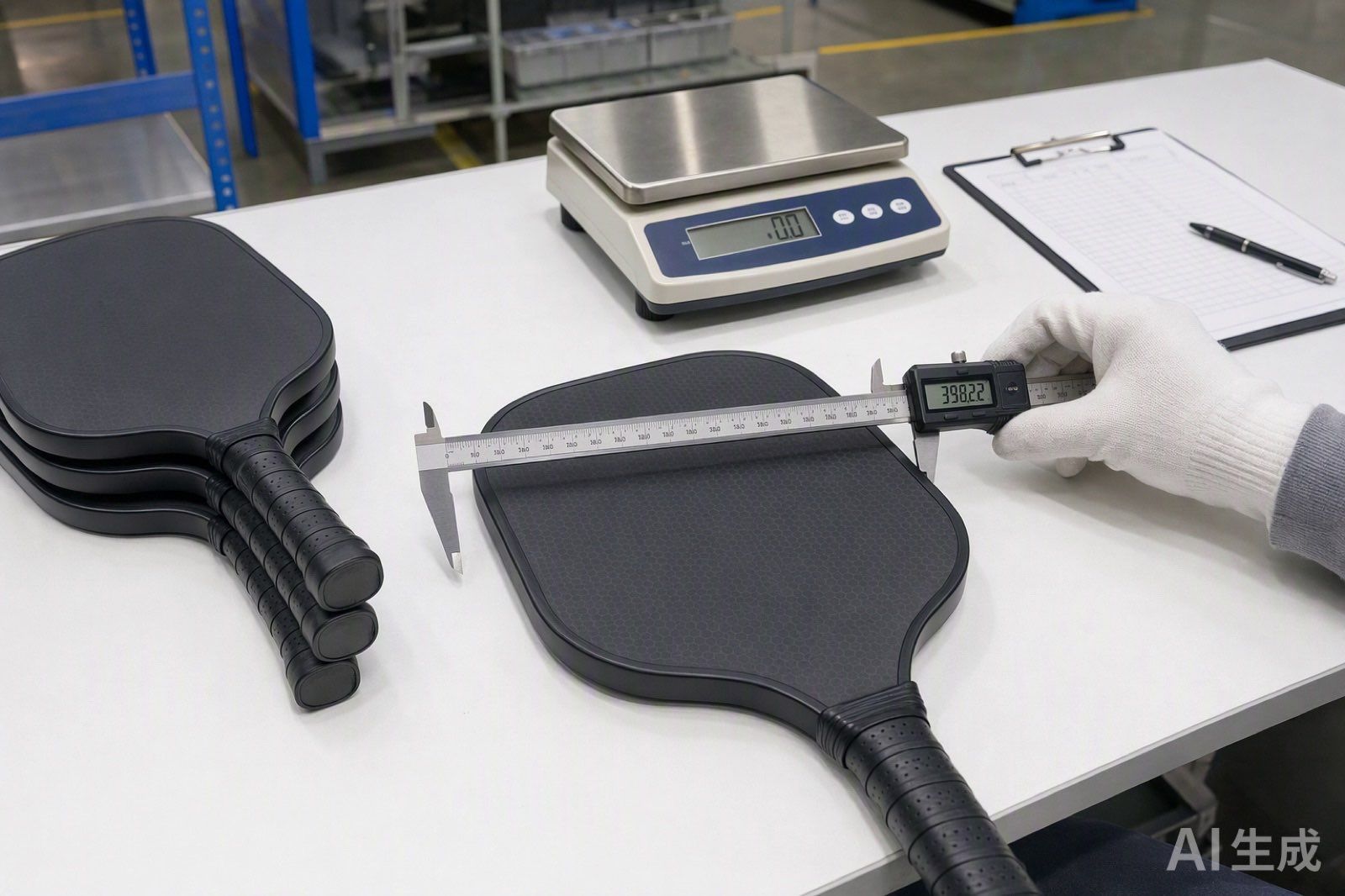
Re-spec is a drawing and submission exercise, not a marketing one. Because approval is model-specific, any change to the core thickness or material, the face layup, the shape, or the surface treatment is a different model and needs its own approval. You must redraw the affected drawings so they show the exact parameters that will be tested, and you must re-submit under the model name that will actually ship. Reusing the old name with a silent change is the fastest way to fail the second time.
In practice the re-spec package is: the updated drawings, the bill of materials that proves the changed parameter, and the submission paperwork that ties the new model name to those documents. For many brands the cleanest route is USAPA approved paddle eligibility check thinking — confirm which parameter moved, then document only that change through Certification by Similarity rather than re-proving the whole paddle from zero.
How to redraw and re-submit under Certification by Similarity
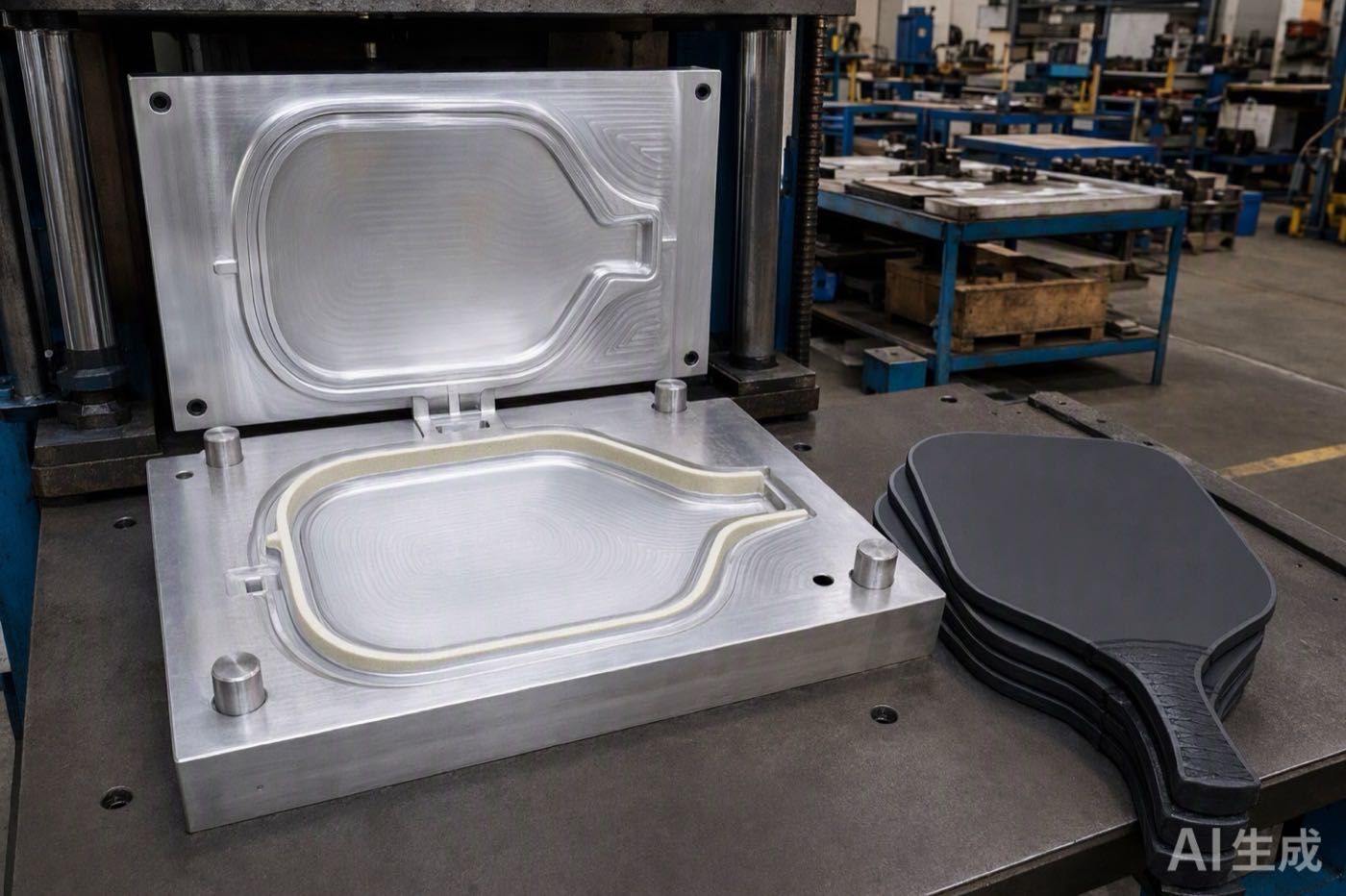
Certification by Similarity is the re-submission path for a model that is close to one already in the system but differs in a defined way. Step one is to identify the single changed parameter — core, layup, shape or surface — and isolate it. Step two is to redraw that part so the drawing states the new value explicitly; a drawing that only implies the change will not survive review. Step three is to submit the changed model under its own name with the similarity evidence attached.
The timing matters because the sunset clock does not pause while you redraw. The typical delisted paddle gets about an 18-month sunset, and power paddles can get a shorter one under rule 2.E.6.f, so the re-submission should start the same week the delisting is announced. Hand the changed drawings and the original approval file to whoever will submit; a missing original approval file is a common reason the similarity claim cannot even be evaluated.
How to handle already-shipped old inventory
Old inventory is the question that scares importers most, and the answer is calmer than the rumour. Paddles already in players' hands stay legal for recreational play, and the sunset period allows continued sanctioned use until the published decertification date. You are not recalling a product that is sitting in a garage; you are planning the window in which the delisted model may still be used in sanctioned events.
The work is communication, not destruction. Tell distributors and warehouses the exact decert date, separate delisted SKUs from the replacement in your stock system, and align any bulk paddle warranty terms to the same date so warranty claims do not outlive the approval. The official USA Pickleball equipment list is the source of truth for the date; quote it in writing to every channel rather than repeating a forum summary.
The USA Pickleball standards you must design against
Whatever you redraw, the replacement must clear the same official envelope. These are the figures from the Equipment Standards Manual Revision 3.0 that a re-specified model is measured against, and the ones your drawings should be annotated to prove. The factory pickleball quality control process is where those numbers get verified before submission, not after.
| Limit | Threshold (Revision 3.0) | What it controls |
|---|---|---|
| Deflection | 0.05 mm at 3 kg; 0.10 mm at 5 kg | Core stiffness under load |
| PBCoR | 0.43 maximum (was 0.44) | Energy returned to the ball |
| Surface roughness | Rz 30 micrometres avg / 33 max; Rt 40 / 44 | Face grip on the ball |
| Friction & gloss | COF 0.1875 max; gloss 80 GU at 60 deg | Surface finish envelope |
| Spin | 2,100 RPM (direct limit for new submissions from Oct 1, 2026) | Spin generation ceiling |
A re-spec that ignores the surface numbers is the usual miss: teams fix the core, then forget that the rougher face that made the paddle popular is also what pushes Rz past 30 micrometres. Annotate both the core and the face on the same drawing set so the submission answers every row above at once. Full text lives on the official USA Pickleball equipment standards page.
Common re-spec mistakes that get a model rejected again
The repeat failures are boring and preventable. First, reusing the old model name after a real change — the standard measures the named model, so a renamed build under the old name is simply wrong on its face. Second, documenting the changed parameter only in prose and never on the drawing, which leaves the reviewer nothing to measure. Third, submitting the whole paddle as new when Certification by Similarity would have covered the one changed part.
A quieter mistake is skipping the defect side of the story. If the delisting risk traces back to a production issue, a pickleball paddle delamination prevention program is what proves the new build will hold the numbers over time, not just on the sample sent to the lab. Reviewers and buyers both read a re-submission as a quality claim, so the evidence has to cover durability, not only the pass sheet.
Talk to our engineers about your delisted model
If you are an importer or distributor holding a model that just left the approved list, the cheapest path is usually a re-spec, not a relaunch. Our engineers redraw the changed core, layup, shape or surface, document it against the Revision 3.0 envelope above, and prepare the Certification by Similarity submission so the replacement clears the standard instead of joining the next delisting round. For a private-label replacement program, our OEM and private-label production page covers tooling, MOQ and branding.
If you are an importer or distributor with a delisted or at-risk paddle, send your current drawings and target market and we will scope the re-spec.
Talk to our engineers about your re-specFrequently Asked Questions
Is a delisted paddle illegal to own or sell immediately?
No. Paddles already in players' hands remain legal for recreational play, and the published sunset allows continued sanctioned use until the decertification date. Plan inventory around that date rather than recalling stock.
Do I need a brand-new approval or just a re-submission?
Usually a re-submission. Because approval is model-specific, a changed core, layup, shape or surface is a new model, but it can go through Certification by Similarity if it is similar to an approved one — you do not re-prove the entire paddle.
What numbers must my re-specified paddle meet?
Deflection 0.05 mm at 3 kg and 0.10 mm at 5 kg; PBCoR 0.43; surface Rz 30 micrometres average (33 max) and Rt 40 (44 max); kinetic friction 0.1875 max; gloss 80 GU at 60 degrees; spin 2,100 RPM for new submissions.
Why did my paddle pass before but fail now?
The limits can tighten after approval. The PBCoR ceiling moved from 0.44 to 0.43 (November 2025) and the spin test becomes a direct 2,100 RPM limit for new submissions on October 1, 2026, so a model approved under the old numbers can fall outside the envelope without any production change.
When does the 2,100 RPM spin limit take effect?
October 1, 2026, for new certification submissions. Paddles certified before that date remain governed by the standard in force at their certification (no retroactive requirement), and until September 30, 2026 paddles passing the current surface-roughness and COF tests can still be certified under the existing rules.
Can I keep the same model name after a change?
No. Approval is tied to the specific model name and its tested build. Any change to the core, layup, shape or surface must ship under a new model name with updated drawings, or the submission will be rejected.