FCL vs LCL for Pickleball Imports: The Container-Loading Math
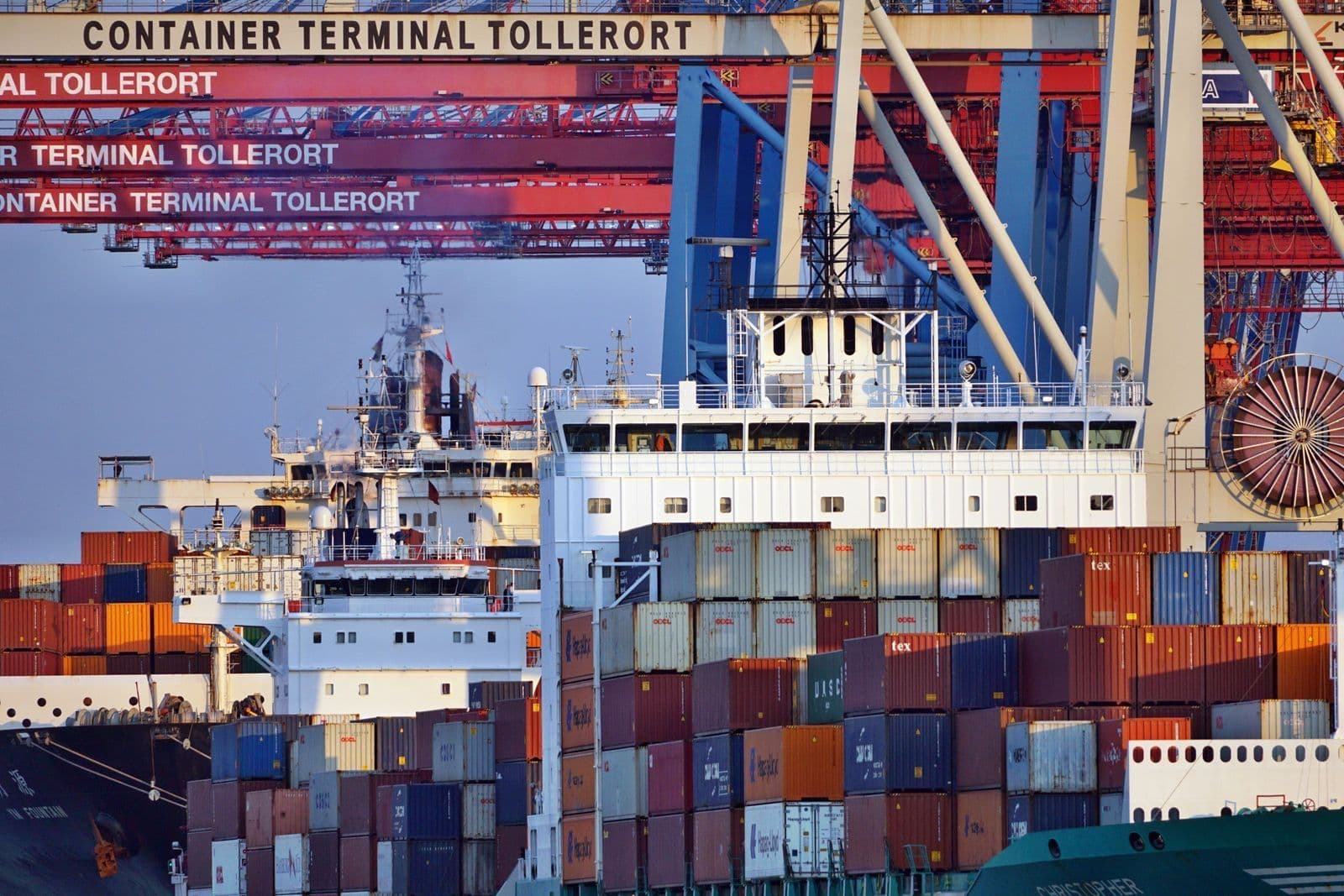
Sooner or later every pickleball brand owner and importer hits the same fork in the road: your factory order is ready, the export desk asks whether you want FCL or LCL, and the wrong answer quietly adds a few thousand dollars to your landed cost. FCL versus LCL is not a paperwork detail — for light, bulky goods like paddles, balls, and nets it is the single biggest freight decision you make on each shipment.
The reason it trips people up is that pickleball gear breaks the usual assumptions of ocean freight. Most cargo runs out of weight before it runs out of space. Pickleball does the opposite: a container packed to the ceiling with paddles and ball cartons weighs a fraction of what the box is legally allowed to carry. That one fact — that pickleball "cubes out" long before it "weighs out" — decides which shipping mode saves you money, which container size to book, and where every wasted centimeter of carton air is costing you. This guide gives you the actual container numbers and a loading calculation you can run yourself before you ever ask a forwarder for a rate.

Key Takeaways
- Pickleball gear cubes out before it weighs out — you hit a container's volume ceiling at roughly a quarter of its legal payload, so CBM (cubic meters), not kilograms, drives your cost.
- LCL is billed on the revenue ton — the greater of your CBM or your weight in tonnes. For pickleball that is almost always the CBM, which makes carton efficiency the lever that matters.
- A 40ft High Cube gives you 76.4 CBM — about 13% more room than a standard 40ft for the same slot cost — so it is usually the best value box for gear that fills space, not weight.
- The rough break-even is around 13–15 CBM: below it LCL usually wins, above it FCL's flat rate usually wins — but the number shifts with your lane and the season's rates.
- Cost is not the only axis. LCL cartons get restacked at the consolidation warehouse, so light pickleball boxes get crushed under heavier co-load — a real risk to retail-boxed paddles.
FCL vs LCL: the one-line answer
FCL (Full Container Load) means you book a whole container — a 20ft, 40ft, or 40ft High Cube — and pay one flat rate whether it leaves half empty or packed to the doors. LCL (Less than Container Load) means your cargo shares a container with other shippers' freight, and you pay only for the space your cartons occupy. The trade is simple to state and easy to get wrong: LCL looks cheaper on a small order because you pay per unit of volume, but its per-CBM rate is higher than the effective per-CBM cost of a full container, so it stops being the bargain the moment your order grows.
For a first sample run or a small test order of a few cartons, LCL is almost always the right call. For a full production run of a paddle line plus ball stock, FCL usually wins on both price and cargo safety. The interesting cases sit in the middle, and that is where the container math below earns its keep.
| Factor | FCL (full container) | LCL (shared container) |
|---|---|---|
| How you're billed | Flat rate per container | Per revenue ton (CBM or tonne, whichever is greater) |
| Best order size | Roughly 15 CBM and up | Below ~13–15 CBM |
| Transit & handling | Sealed door-to-door, fewer touches, faster | Consolidated & deconsolidated at CFS, more handling, slower |
| Damage risk to gear | Low — only your cargo moves | Higher — light cartons stacked under heavy co-load |
| Binding constraint for pickleball | Volume (CBM) | Volume (CBM) |
How LCL is actually billed — the revenue-ton trap
Here is the mechanic that surprises first-time importers. LCL ocean freight is not priced by the kilo and not purely by volume — it is priced on the revenue ton, also written W/M for "weight or measure." Your chargeable quantity is the greater of your volume in cubic meters or your gross weight in metric tonnes, using the standard equivalence that one CBM equals 1,000 kg. Forwarders also apply a minimum, usually one CBM, so even half a cubic meter is billed as a full one.
Run that formula against real pickleball cargo and the outcome is always the same. A cubic meter of boxed paddles or ball cartons weighs nowhere near 1,000 kg — realistically a fraction of that — so the CBM figure is always the larger number, and the weight side of the formula never even comes into play. In plain terms: on an LCL pickleball shipment you are paying for air. Every centimeter of empty headroom inside a master carton, every oversized box, every gap you could have nested a ball bucket into is being billed at the full per-CBM rate. This is why carton efficiency, not weight savings, is the one thing that moves an LCL invoice.
Because pickleball almost never reaches the weight side of the revenue-ton formula, the fastest way to cut an LCL bill is to shrink the box, not the shipment. Ask your factory for the tightest master-carton spec that still protects the goods.
What actually fits: the container numbers that matter
Before you can decide anything, you need the real internal capacity of the three boxes you will be offered. These are standard ISO container figures, consistent across the major carriers — the numbers below come from published carrier and container references, and they are what your cube calculation runs against.
| Container | Internal volume | Max payload | Realistic usable volume* |
|---|---|---|---|
| 20ft dry standard | 33.2 CBM | ~28,200 kg | ~28 CBM |
| 40ft dry standard | 67.7 CBM | ~26,700 kg | ~58 CBM |
| 40ft High Cube | 76.4 CBM | ~26,500 kg | ~65 CBM |
*Usable volume is an estimate — cartons are rigid boxes that leave gaps, so plan on filling roughly 85% of the nominal figure unless your cartons are dimensioned to nest cleanly.
Now apply the payload column to pickleball and watch it become almost irrelevant. Fill a 40ft High Cube's 76 CBM with boxed paddles and ball cartons and the whole load might weigh somewhere in the range of 5,000 to 8,000 kg — against a legal payload of roughly 26,500 kg. You will physically run out of room with about three-quarters of your weight allowance unused. That is the practical meaning of "cubes out," and it carries one clear instruction: for pickleball, choose the container that gives you the most cubic meters per dollar, which is nearly always the 40ft High Cube. Its taller interior buys you 13% more space than a standard 40ft for effectively the same freight slot.
The loading math: a calculation you can run before you get a quote
You do not need a forwarder to estimate how much of a container your order will fill. You need four numbers and one honest input from your factory. The method is the same whether you are loading paddles, balls, or nets.
- Step 1 — unit packed volume. Not the bare product, but the product as it ships: a paddle in its sleeve or retail box, a ball as it sits in the carton.
- Step 2 — units per master carton. This comes straight from your factory's carton specification. It is the number that makes or breaks the whole calculation, so get the real figure, not a guess.
- Step 3 — master-carton volume in CBM. Length × width × height of the outer carton in meters. Apply the ~85% loadability factor here to account for gaps.
- Step 4 — divide. Usable container CBM ÷ carton CBM = cartons per container; multiply by units per carton for total units.
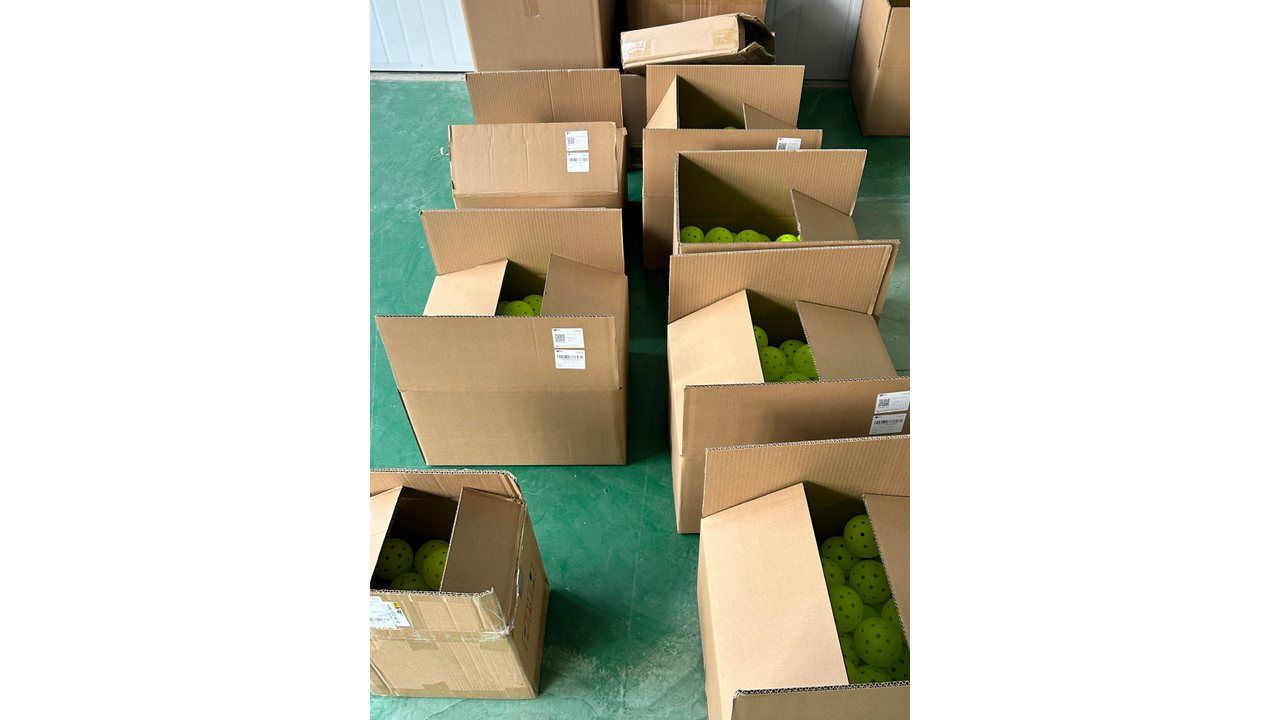
The table below works a realistic example, but read the numbers as an illustration, not a promise. They assume typical master-carton dimensions — the exact counts depend entirely on your packaging, which is why the one figure worth chasing before you book is your factory's confirmed carton spec.
| Item (example carton) | Approx. carton volume | Cartons per 40ft HC (~65 CBM) | Est. units per 40ft HC |
|---|---|---|---|
| Paddles, ~40 per carton | ~0.06 CBM | ~1,080 | ~43,000 |
| Outdoor balls, bulk-packed | ~0.06 CBM / ~100 balls | ~1,080 | ~108,000 |
| Portable nets, boxed | ~0.10 CBM each | ~650 | ~650 |
Two things jump out of that table. First, retail packaging changes everything: the moment those 40 bulk paddles become 40 individually gift-boxed retail units, the carton count can fall by half and your container holds far fewer paddles — retail-ready SKUs cost real container space. Second, balls are dense packers, so a single High Cube can hold a genuinely large quantity — which is exactly why ball orders so often justify FCL on their own.
When FCL beats LCL: finding your break-even
The widely used rule of thumb is that somewhere around 13 to 15 CBM, FCL becomes cheaper than LCL. Below that, you are better off paying only for the space you use; above it, LCL's per-CBM premium adds up faster than a flat container rate. Treat that band as a starting point rather than a law — the exact crossover moves with your trade lane, the season, and how rates are running. In the current rate environment some lanes push the crossover higher, toward 15 to 20 CBM, so confirm it against live quotes for your specific route before you commit.
Map the break-even onto the container table and it becomes intuitive. A 20ft holds about 33 CBM; by the time your order reaches 13 to 15 CBM you are already paying LCL rates on nearly half a small container's worth of volume, and a full 20ft's flat rate usually undercuts that. But price is only half the decision. FCL cargo is sealed at the factory and not touched again until it reaches you, while LCL is unpacked and repacked at a container freight station on both ends. That extra handling is where the damage happens.
Ship pickleball LCL and your light cartons can end up at the bottom of a mixed load under someone's tiles or auto parts. Insist on double-wall master cartons and corner protection for any LCL move — a crushed retail box turns a sellable paddle into a write-off long before it reaches your shelf.
For distributors running repeat programs, there is a further pull toward FCL: predictability. A sealed full container clears customs as a single consignment with your documents only, which tends to move faster and with fewer surprises than a consolidated box whose release waits on every other shipper's paperwork. If you are still weighing the ocean-versus-air question underneath all this, that trade-off is its own decision — our guide on air vs sea freight for pickleball covers when speed is worth the premium.
Which should you choose: FCL or LCL?
Strip away the theory and the choice comes down to order size, packaging fragility, and how often you ship. Here is the honest segmentation.
Choose FCL when: your order is roughly 15 CBM or more; you are shipping retail-boxed paddles or anything easily crushed; you are on a launch timeline that cannot absorb consolidation delays; or you run repeat replenishment where a sealed, single-consignment clearance keeps your supply chain predictable. Ball-heavy orders often reach FCL economics on volume alone.
Choose LCL when: you are moving a first sample or pilot order; your total sits comfortably below 13 CBM; you are testing a new market and want to keep capital tied up in freight to a minimum; or you are shipping a small mix of SKUs that would leave a full container mostly empty. Just budget for sturdier cartons to survive the extra handling.
If you are planning a private-label launch and want the packing side engineered so your cartons cube efficiently from the first run, that is exactly the kind of detail we build into an OEM production plan — carton dimensions get set with the container in mind, not as an afterthought at the loading dock.
For importers and distributors sizing a pickleball order
Send us your target quantities and we'll come back with the confirmed carton spec, the CBM per SKU, and whether your run cubes out as an LCL move or a full 40ft High Cube — so you book the right freight the first time.
Get a container-loading estimate for your order →What we check before your container is loaded
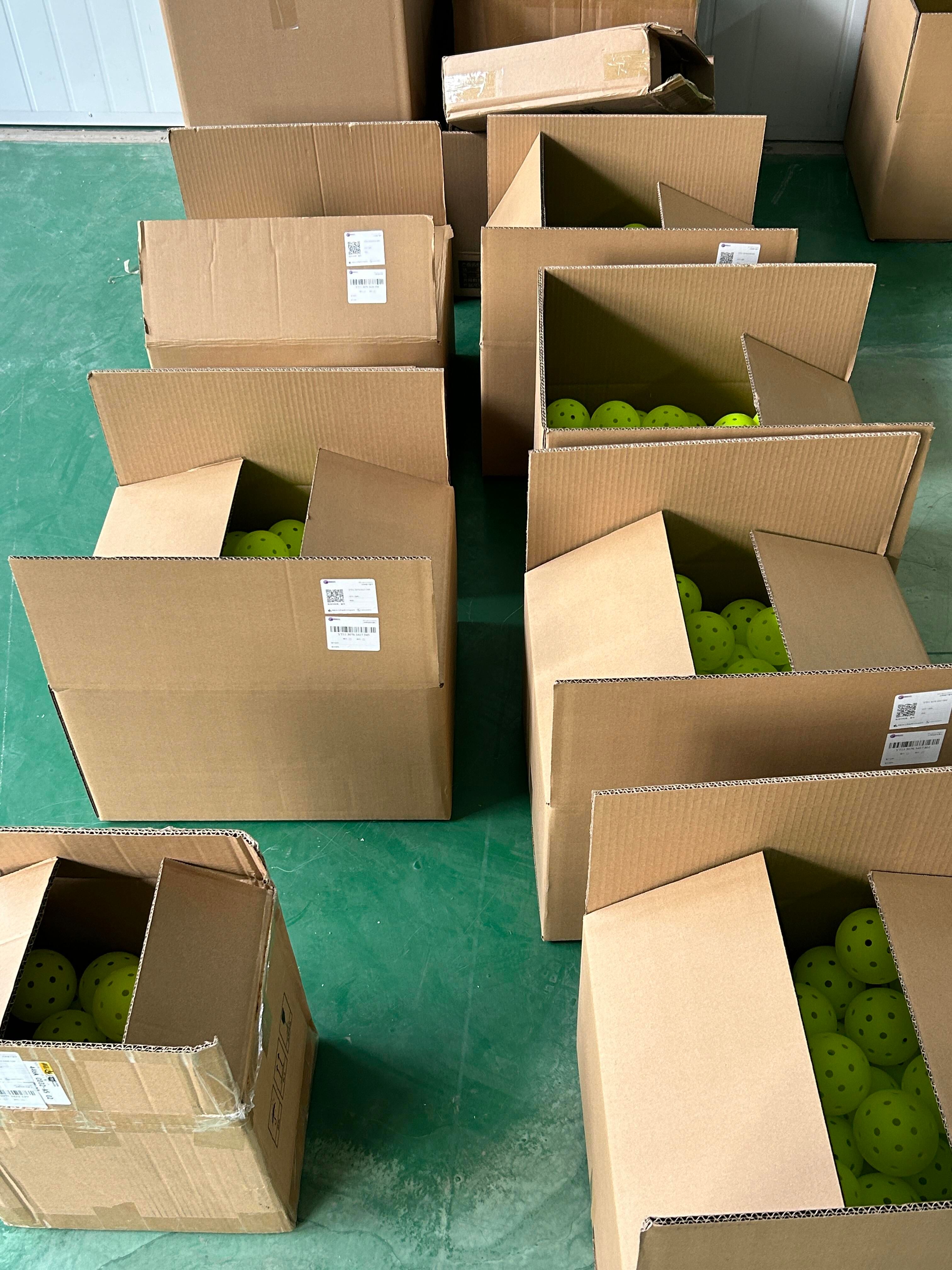
Getting the freight mode right is only useful if the cargo is actually packed the way the calculation assumes. Before a container leaves, these are the checks that keep the plan honest and the goods intact:
- Confirmed carton spec on paper. Outer dimensions, units per carton, and gross weight documented before booking — so the CBM on the packing list matches what was quoted, with no surprise at the wharf.
- A cube calculation before the rate request. We run the loading math first so you know whether the order is an LCL or FCL job before a forwarder ever quotes — you negotiate from the real number.
- Double-wall cartons and corner protection on any LCL move, because light pickleball boxes ride under heavier co-load and crushed retail packaging is a silent margin killer.
- Weight distribution and load photos. A photographed, evenly loaded container is your evidence the order shipped as packed — and your reference if a claim ever arises.
These are the same disciplines that keep a repeat program's costs steady over time. If you want the wider view of what drives your total delivered cost beyond the freight mode itself, our breakdown of what it costs to import pickleball paddles and the realities of sourcing lead times both sit alongside the FCL-versus-LCL call.
The bottom line on FCL vs LCL for pickleball
Because pickleball equipment fills space long before it approaches a container's weight limit, your freight decision is really a volume decision. Estimate your order's CBM from your factory's real carton spec, compare it to the roughly 13-to-15 CBM break-even, and let that — not habit — pick your mode. Small and early: LCL, with cartons built to survive the handling. Full runs and ball-heavy orders: a 40ft High Cube almost every time.
The one number that turns all of this from estimate to certainty is your confirmed carton specification. Nail that down and you can size freight before you ever request a rate — send us your quantities and we will run the container math with you.
Frequently Asked Questions
Is FCL or LCL cheaper for importing pickleball?
It depends on volume. Below roughly 13–15 CBM, LCL is usually cheaper because you pay only for the space you use. Above that, FCL's flat container rate typically wins. Because pickleball cubes out rather than weighs out, your CBM — not your weight — decides where you land.
How many pickleball paddles fit in a 40ft container?
With bulk-packed paddles at roughly 40 per master carton, a 40ft High Cube's usable ~65 CBM holds on the order of 40,000 paddles as a rough estimate. Individually retail-boxed paddles take far more space and can cut that count by half or more, so your packaging drives the real number.
Does pickleball gear ever hit the container weight limit?
Almost never. A 40ft High Cube full of paddles and ball cartons typically weighs 5,000–8,000 kg against a legal payload around 26,500 kg. You run out of cubic space with most of your weight allowance unused, which is why volume, not weight, governs the whole decision.
What is the CBM break-even to switch from LCL to FCL?
The common industry rule of thumb is about 13–15 CBM. It is a starting point, not a fixed rate — the exact crossover shifts with your trade lane and the current rate environment, so confirm it against live quotes for your specific route.
Is LCL risky for retail-boxed pickleball paddles?
Yes, more than for bulk goods. LCL cargo is restacked at consolidation warehouses, and light pickleball cartons can sit under much heavier freight. Retail packaging crushes easily under that load, so double-wall cartons and corner protection are worth the small added cost.
Should I book a 20ft, 40ft, or 40ft High Cube for pickleball?
For volume that fills space before weight, the 40ft High Cube is usually the best value — its taller interior gives about 13% more room than a standard 40ft for effectively the same freight slot. Book a 20ft only when your confirmed CBM genuinely fits inside it.
Want to source this quality for your brand?
Contact our factory directly on WhatsApp for an instant MOQ and pricing quote.