Pickleball Sourcing Calendar: Chinese New Year & Peak-Season Lead Times
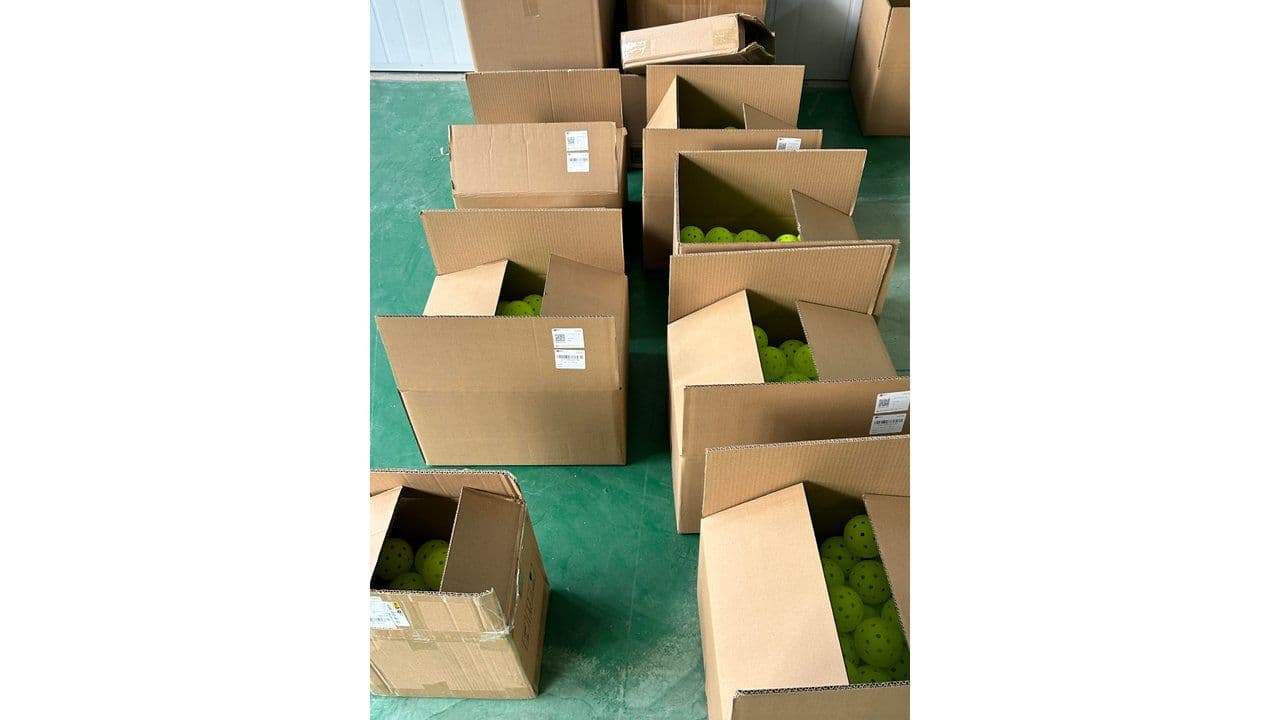
Every year, some pickleball importer emails us in mid-January with an order that "just needs to ship before Chinese New Year." Every year, we have to explain that the entire factory closes in less than three weeks, most of the workforce has already booked home-bound train tickets, and any order not already in production will not sail before mid-March. It's not a scheduling problem — it's a calendar the buyer never internalized. The one true statement about sourcing pickleball goods from China is that the calendar decides your lead time far more than any factory's promised turnaround.
This is the practical sourcing calendar for pickleball paddles, balls, nets, and accessories: what happens around Chinese New Year, what happens in the pre-holiday Q3–Q4 peak-season crunch, when Golden Week creates a smaller version of the same problem, and — critically — when to place orders so the goods land on your shelves in time for your selling season. Dates in this guide are anchored to the coming cycle so you can plan against real weeks, not abstract advice.

Key Takeaways
- Chinese New Year falls on February 6, 2027 — but the factory-effective closure runs from roughly late January through early March, a six-week window in which no new production starts and no container leaves.
- The order deadline to sail before CNY 2027 is typically early December 2026; anything after that means paying for expedited timing at best or delaying to Q1 shipment at worst.
- Peak-season port congestion in China runs August through mid-October as retailers everywhere front-load Q4 inventory — freight rates spike 30–60% and rolled containers are common.
- Golden Week (October 1–7) is a smaller CNY: national holiday, factory closure, logistics slowdown, and it stacks on top of the peak-season rate spike.
- Post-CNY quality tends to dip for the first 2–3 weeks as returning workers ramp back up — plan pre-shipment inspection tighter on any late-February or early-March batch.
- For a summer selling season in the northern hemisphere, working backward from a June retail landing means placing the order by late February — meaning the artwork and spec have to be locked before Chinese New Year, not after.
The annual pattern: what actually happens each quarter
The Chinese manufacturing calendar has a rhythm that repeats every year. Once you see it, the lead-time surprises stop.
Q1: The Chinese New Year gap (January–March)
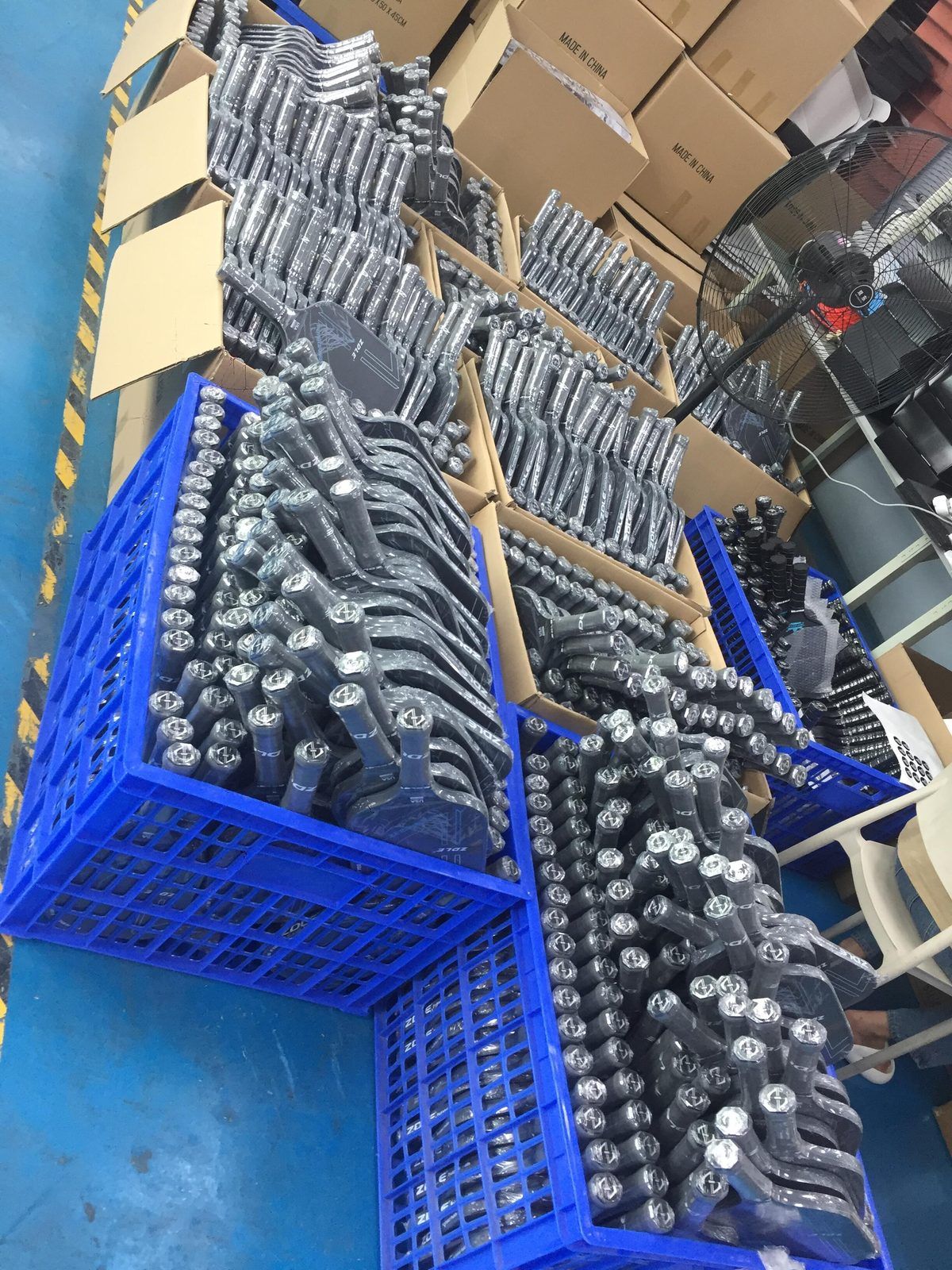
The dominant event of Q1 is Chinese New Year, the country's most important holiday. Officially the public holiday runs one week around the lunar new year, but in practical factory terms the closure is much longer: workers travel home to distant provinces, some for the only visit they'll make all year, and returning to work is staggered over the following month. From roughly two weeks before the holiday, hiring is impossible and existing workers are ramping down rather than starting new orders. From the holiday itself, factories close. For 2–4 weeks after, the return is partial: dormitories fill back up slowly, some workers don't come back at all and are being replaced, and QC on any early-return production is noticeably weaker than the pre-holiday standard.
Q2: The recovery window (April–June)
Q2 is the calmest and most predictable production window of the year. Factories are fully staffed, freight rates are moderate, and lead times are close to their published minimums. This is when established distributors place orders for their summer selling season and, if their volume supports it, book the second half of their annual inventory. For a first-time brand launcher, Q2 is the ideal window to run tooling, sampling, and first production — enough runway for revisions without slamming into the Q3 crunch.
Q3: The pre-peak buildup (July–September)
By late July, the year's biggest sourcing wave is underway. Northern hemisphere retailers are pushing to have Q4 holiday and back-to-school inventory landed before mid-October. Every category of consumer goods leaving China is competing for the same container space, and pickleball equipment doesn't get priority over higher-margin electronics. By August, freight rates rise noticeably; by September, they can spike 30–60% above their annual baseline, and rolled containers — bookings that get bumped from the intended vessel to a later sailing — become common. Factory floors themselves are running full-tilt, which is generally good for lead time but bad for the flexibility to accept last-minute spec changes.
Q4: Golden Week and the last-order window (October–December)
October opens with Golden Week (October 1–7), a national holiday during which factories close for a full week and logistics slow noticeably. It's a smaller version of Chinese New Year and lands right in the middle of peak-season congestion. After Golden Week, the calendar quickly compresses toward the CNY deadline. By November, factories are working through their pre-CNY backlog and taking new orders only for shipment before the closure. December is the last realistic window to place a new order for pre-CNY sailing; by mid-December, most factories start declining new PO's rather than promise deadlines they can't hit.
Chinese New Year 2027: the dates that actually matter
The public-holiday date is one day. The manufacturing-effective closure is six weeks. Here are the dates worth putting into a planning calendar for the 2027 cycle.
| Milestone | Approximate date | What it means for your order |
|---|---|---|
| Last realistic order to ship pre-CNY | Early December 2026 | Later orders will be pushed to Q1 sailing |
| Factory pre-holiday wind-down begins | Mid-January 2027 | Hiring stops, existing workers ramping down travel plans |
| Last container consolidation for pre-CNY sailing | Late January 2027 | Anything not consolidated waits until March |
| Chinese New Year public holiday | February 6, 2027 (Sat) | Full factory closure begins |
| Official statutory holiday ends | Around February 13, 2027 | On paper — but few workers are back yet |
| Practical factory reopening (partial) | Late February 2027 | Staggered return; QC tightening advised |
| Full production capacity restored | Mid-March 2027 | Post-CNY order backlog begins clearing |
The two weeks after CNY are the highest-defect window of the year. Returning workers ramp up on rusty muscle memory, quality-control staff are often still traveling, and any late-January batch that slipped into early-March shipment deserves an extra pass of inspection before it clears.
Peak-season port congestion: what August through October actually looks like
Peak season isn't a factory problem — it's a freight problem. And it's not one that a factory can fix for you.
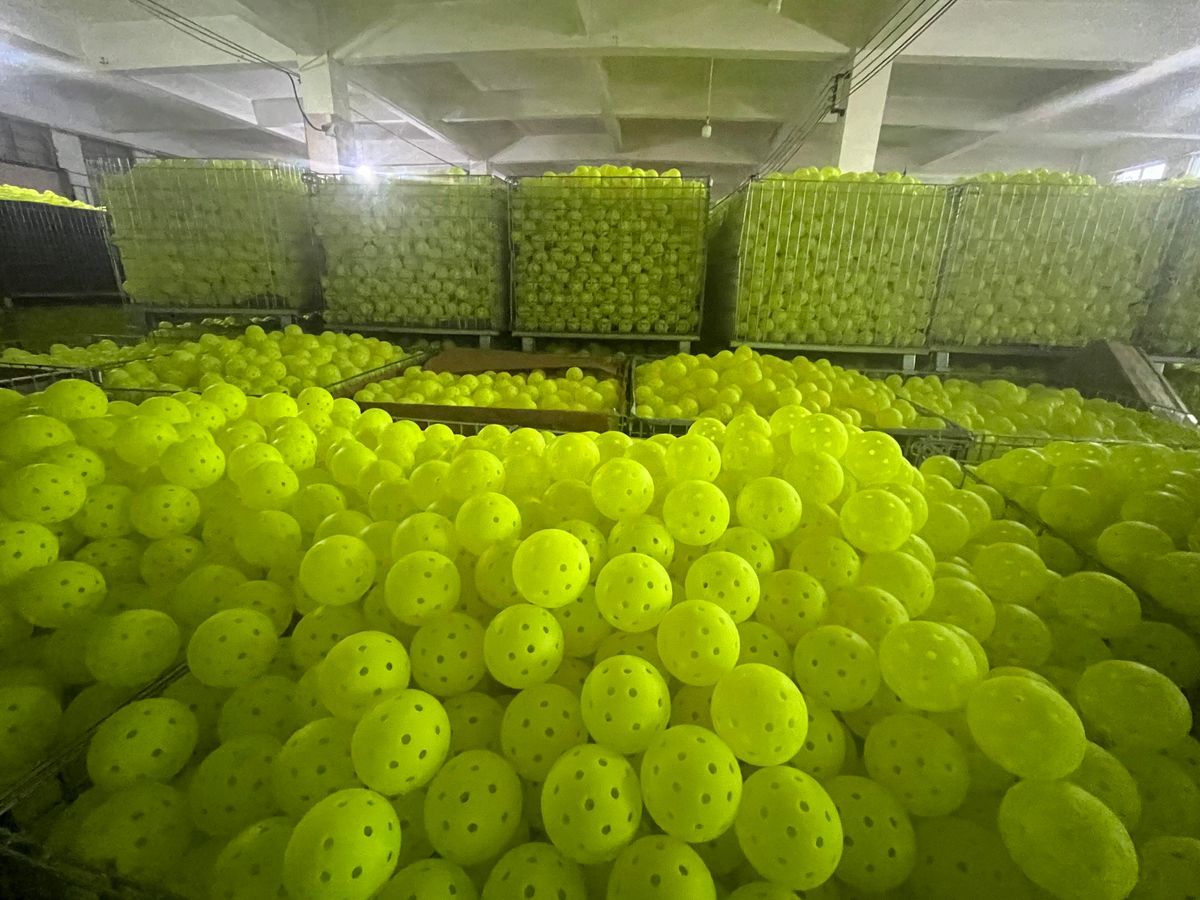
From August onward, every retailer in the northern hemisphere is trying to get their Q4 inventory out of Shenzhen, Ningbo, and Shanghai. Vessel space that costs $X in June costs $1.3–$1.6X in September. Bookings get rolled — you pay for space on the Wednesday sailing and find yourself moved to Saturday because the carrier overcommitted. Ports slow down as they work through volume, meaning your container sits at anchor for days waiting to berth. All of this is normal and it happens every year; what changes is exactly how bad it is, which depends on the year's global freight equilibrium.
Two mitigations actually work. First, book freight earlier than you think you need to — a container booked in July for a September sailing sees fewer rolls than the same booking made in mid-August. Second, decide whether the goods absolutely need to move by sea or whether a portion can go air. Pickleball paddles and balls have a favorable air-freight economy relative to their retail price compared with lower-value bulk goods. The full trade-off between the two modes is in sea vs air freight for pickleball imports.
Golden Week: the mid-peak-season week nobody plans around
Golden Week runs October 1–7 every year — the national day holiday. Factories close for the full week, sometimes with a few days on either side depending on the specific factory's payroll calendar. Logistics slow: freight forwarders operate on skeleton staff, customs offices reduce hours, and container consolidations pause. On its own, Golden Week is manageable. Combined with peak-season congestion — because it lands squarely in the middle of it — Golden Week is where "we'll just push production to the last minute" plans quietly collapse.
Practical planning rule: treat late-September through mid-October as a single connected slowdown, not two separate constraints. Any milestone you were targeting in that window needs to be pulled back to mid-September or pushed to late October, and either way it needs to be committed early.
Working backward from your selling season
Everything above turns into a single planning question: when do you need to place the order so the goods land in time? The math depends on your selling calendar, but the pattern is consistent.
Northern-hemisphere summer season (May–August retail)
To land in the US or Europe by early May, work backward: 28 days sea freight from major China ports plus 5–10 days customs and inland movement pushes vessel departure back to early April. Factory production and finishing needs 30 days on a repeat SKU, more on a new one. So the order needs to be placed and confirmed by late February — meaning the artwork, spec sheet, and any tooling has to be resolved before Chinese New Year, when you can't reach anyone at the factory to finalize. In practice: lock the design in December, place the order early, and let production start immediately after CNY reopening.
Northern-hemisphere holiday season (October–December retail)
To land by early October — before Black Friday preparation begins in earnest — the same math with different weeks: vessel departure by early September, production window of 30+ days, order placement by late July. This lands your production squarely in Q3 peak season, so your freight booking has to be made concurrently with the PO. Rolled containers are the biggest risk here; a two-week roll can mean missing shelf date for the entire season.
Southern-hemisphere summer season (November–February retail in Australia, Southeast Asia)
To land by early October in Sydney, Manila, or Kuala Lumpur, factor slightly shorter sea transit than transpacific routes but similar Q3 congestion out of Chinese ports. Order placement by mid-July gives comfortable margin; anything after early August requires paying for expedited freight or accepting a partial-shipment risk.
Payment terms and the calendar
The typical 30% deposit, 70% balance structure has a calendar wrinkle around CNY. Factories that would happily start production on a 30% deposit in September will often ask for higher deposits — sometimes 50% — on orders placed in November for pre-CNY shipment. The reason isn't distrust; it's cash flow. Workers are paid their year-end bonus around CNY, materials suppliers demand payment before the holiday, and the factory needs the working capital to fund production it will ship before it collects the balance. Push back if you must, but understand what you're pushing back against. The full OEM payment terms and trade assurance discussion is where to build the deposit structure that fits both sides.
Post-holiday QC: the inspection budget for Q1 batches
The pattern of higher-defect batches in the first 2–3 weeks after CNY reopening is consistent enough that any order with production in that window needs a tighter inspection protocol than the same order in Q2. This isn't a factory being lazy — it's the reality of a partially-staffed line with rusty muscle memory. Increase your AQL sampling from 1.5 to 1.0 or tighter for late-February production, extend the pre-shipment inspection window from one day to two, and be willing to reject a batch that would have passed in June. The alternative — accepting the Q1 batch and finding defects at your warehouse — costs orders of magnitude more.
Force majeure and buffer weeks
Everything above assumes a normal year. Real years have typhoons that close Yantian for a week, freight-rate spikes from Suez or Panama disruptions, and occasional US-China trade actions that reshuffle sailing schedules. The distributors who never miss a season are the ones who build two weeks of buffer into their calendar as a matter of policy — not just for their own peace of mind, but because they know that the year they don't buffer is the year the buffer would have mattered. Two weeks of extra inventory is cheap compared with a stockout during the selling window.
The distributor who consistently gets their goods in on time isn't the one negotiating the hardest on freight rates. It's the one who placed the order a week earlier than necessary and paid for a booked container instead of chasing spot space in August.
The one-page annual planning framework
Distilled into a single decision framework for a pickleball importer working with a Chinese source factory on repeat orders:
- Late Q4 (November–December): place any order that must sail before CNY, and finalize designs and specs for orders that will start production in March. Do not wait to negotiate design details in January.
- Late February to early March: place orders for the summer selling season. Confirm production start and add a tighter QC clause for the first month of post-CNY output.
- Late April to May: place orders for Q4 retail landing. Book freight concurrently with the PO to lock capacity before peak-season rate spikes.
- Late July to early August: last window to place a new order for Q4 shelf date. Air-freight fallback should be discussed here, not in September when rates have already tripled.
- Mid-September: confirm freight bookings for all in-production orders. Golden Week is closing in and container space narrows fast after.
- October (post-Golden Week): place any late orders you're willing to see arrive after CNY. Anyone promising pre-CNY sailing at this point is optimistic; take it in writing.
The complete production-side view of what happens between order and shipment — factory timeline, QC checkpoints, packing — is in custom pickleball paddle production timeline. Read together with this calendar, the picture is complete.
Frequently Asked Questions
When is Chinese New Year 2027 and how long do factories actually close?
Chinese New Year 2027 falls on February 6. The official public holiday is one week, but the manufacturing-effective closure runs from roughly mid-January (as workers begin traveling home and hiring stops) through mid-March (when full capacity is restored after staggered returns). Plan for a six-week gap, not a seven-day one.
What is the last date to place an order for pre-CNY shipment?
For a standard 30-day production paddle or ball order sailing before CNY 2027, the practical cutoff is early December 2026. Later orders will typically be pushed to Q1 sailing after mid-March, with the exception of small orders that can be air-freighted at premium cost. Factories start declining new PO's for pre-CNY shipment by mid-December.
Why do freight rates spike in Q3?
Every retailer in the northern hemisphere front-loads Q4 holiday and back-to-school inventory out of Chinese ports at the same time — August through mid-October. Vessel space becomes scarce, carriers oversell bookings and roll containers, and spot rates climb 30–60% above their annual baseline. This happens every year; the magnitude varies with the year's global freight equilibrium.
Is post-CNY production really lower quality?
The first 2–3 weeks after CNY reopening see a statistically higher defect rate than any other period of the year. Returning workers are ramping back up on rusty muscle memory, quality-control staff are often still traveling, and some staff have been replaced entirely with new hires. Tightening AQL sampling and extending pre-shipment inspection for any late-February or early-March batch is a specific counter-measure, not general paranoia.
Should we air-freight during peak-season congestion?
Air freight is a workable partial solution during Q3 peak-season congestion, particularly for higher-margin SKUs where the freight surcharge amortizes cleanly. Full container loads of pickleball goods rarely make economic sense as air freight, but partial shipments — the paddles that must be on shelves for the season opener while the balls and accessories go by sea — are a common mitigation. The mode comparison specific to pickleball goods is in sea vs air freight for pickleball imports.
Why does the factory sometimes ask for 50% deposit on pre-CNY orders?
Cash flow. Factories pay year-end bonuses to workers around CNY, materials suppliers demand payment before the holiday, and the factory needs the working capital to fund production it will ship before collecting the balance. The 50% deposit is a specific pre-CNY practice, not a permanent policy change — the same factory will usually return to 30% deposit terms for Q2 orders.
Does Golden Week really matter or is it just a public holiday?
Golden Week (October 1–7) matters because it lands in the middle of peak-season congestion. On its own it's a manageable one-week closure. Stacked on top of already-scarce container space and elevated freight rates, it becomes a two-week effective slowdown in production and logistics. Any milestone falling in late September through mid-October needs to be pulled forward or pushed back — not planned as if the calendar were continuous.
Want to source this quality for your brand?
Contact our factory directly on WhatsApp for an instant MOQ and pricing quote.