Paddle Holes and Legality: Tooling Release Checks
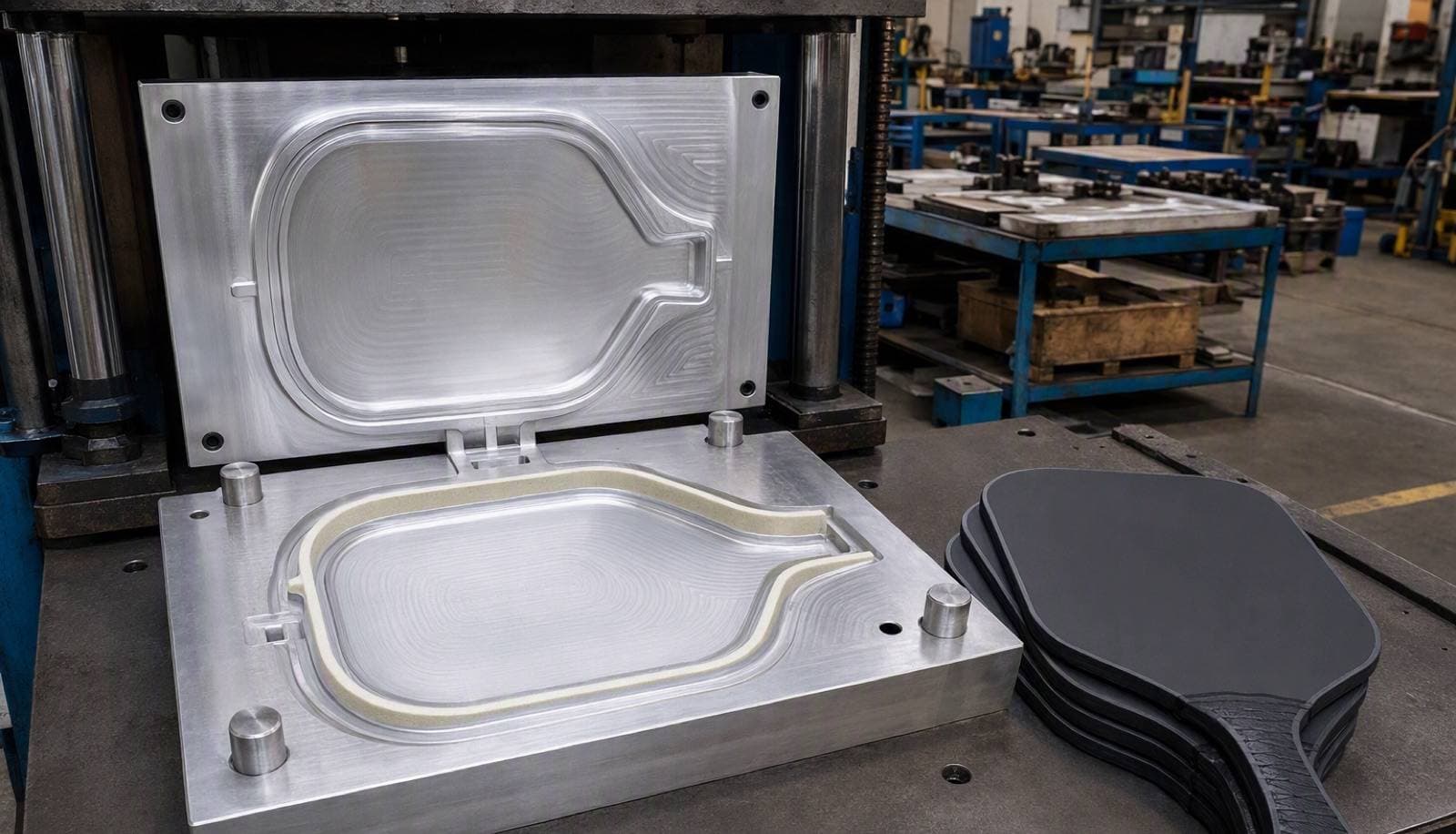
Locate the opening before interpreting the rule
USA Pickleball’s 2026 Rule 3.D.5.a prohibits holes in the hitting surface. That wording does not establish a blanket ban on every opening anywhere in a paddle: a throat cutout must be evaluated as part of the specific model. For a tooling buyer, the first question is where the opening sits, followed by which drawing and construction were approved. Do not release a perforated hitting-face design for USA Pickleball approval on the assumption that an approved throat opening makes it permissible. Official Equipment Standards Manual; USA Pickleball-authored 2026 rulebook, Trackie-hosted mirror.
A listed example makes the distinction concrete. The official register currently shows Amped Pro Air Epic as Pass, while its manufacturer identifies the design’s throat opening. This is evidence about that model, not permission to copy its geometry or an independent finding about aerodynamic performance. The prohibited-surface rule and a model listing answer different questions. Official model entry; manufacturer’s geometry explanation.
| Observed feature | Boundary | Action |
|---|---|---|
| Hitting-face perforation | Rule 3.D.5.a prohibits surface holes | Stop this design for USA Pickleball approval |
| Throat cutout | No blanket exemption or fixed safe zone inferred | Review exact geometry and model |
| Player-drilled opening | Drilling is absent from Rule 3.D.6 permitted alterations | Do not treat it as an allowed modification |
| Outside profile | Combined width + length ≤24 in; length ≤17 in | Check inclusive dimensions; no thickness or weight limit in these rules |
For brand teams comparing documented paddle constructions, view the paddle range before specifying a custom opening.
Reject a retail photograph as a tooling specification
A product photograph can start a discussion, but it cannot define a production opening. Perspective hides the transition from face to handle; a cosmetic border can obscure the skin edge; the displayed product may belong to a different model revision. Treat those as missing information rather than diagnosing a manufacturing fault from the image. Ask for a marked drawing showing the intended hitting face, opening location, complete external profile and material construction before discussing a tool deposit.
The drawing should identify its revision and the model to which it belongs. Request sections through the opening and its perimeter, together with the proposed edge treatment, inspection points and acceptance criteria. These are recommended purchasing records, not published USA Pickleball cutout tolerances. The buyer and supplier must agree measurable limits rather than inventing a universal safe distance from the face. If nobody can locate the hitting surface unambiguously, hold design release and obtain clarification from the approval authority.
An illustrative failure is a quotation that says “same as the photo” while the supplier’s drawing removes material from a different area. The observable problem is a mismatch between documents. Its cause is not established. Resolve which geometry is intended, replace the conflicting record and review the corrected design before paying for tooling.
Freeze the model before releasing tooling
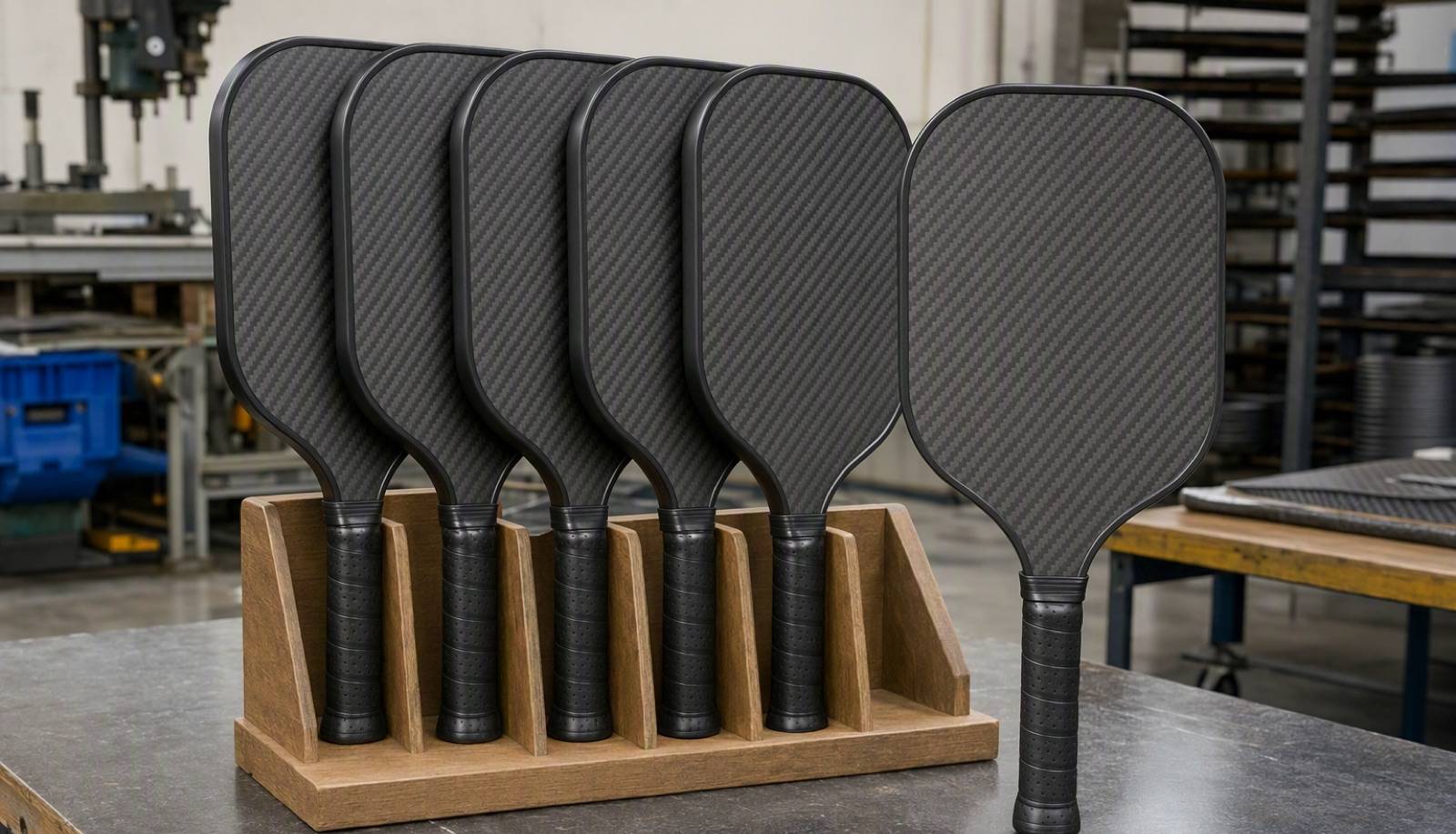
Model identity is another release condition. ESM 2.E.7 requires a distinct model name or number for significant differences, including different cores or surfaces. ESM 2.F.2 also requires produced and sold equipment to match the equipment tested and certified. An existing approval therefore cannot serve as a general license for another construction. Keep the sample identifier, drawing revision, construction description and approval correspondence together so the purchase order refers to a defined product.
Use the existing approved-model lookup guide for register checks. This page adds the engineering record behind that lookup: which submitted build the opening belongs to and whether the production specification still matches it. Private-label artwork, changed geometry and material substitutions should be disclosed for review; do not decide independently that they are insignificant. Ask the approval authority what review or submission is required before accepting the change.
A second illustrative failure is a Pass entry for one named model accompanied by a proposed sample bearing another identity. The visible facts do not establish equivalence. Hold the approval claim until the model relationship and applicable review are documented. Avoid printing approval language on packaging while that link is unresolved.
Inspect the opening against the released drawing
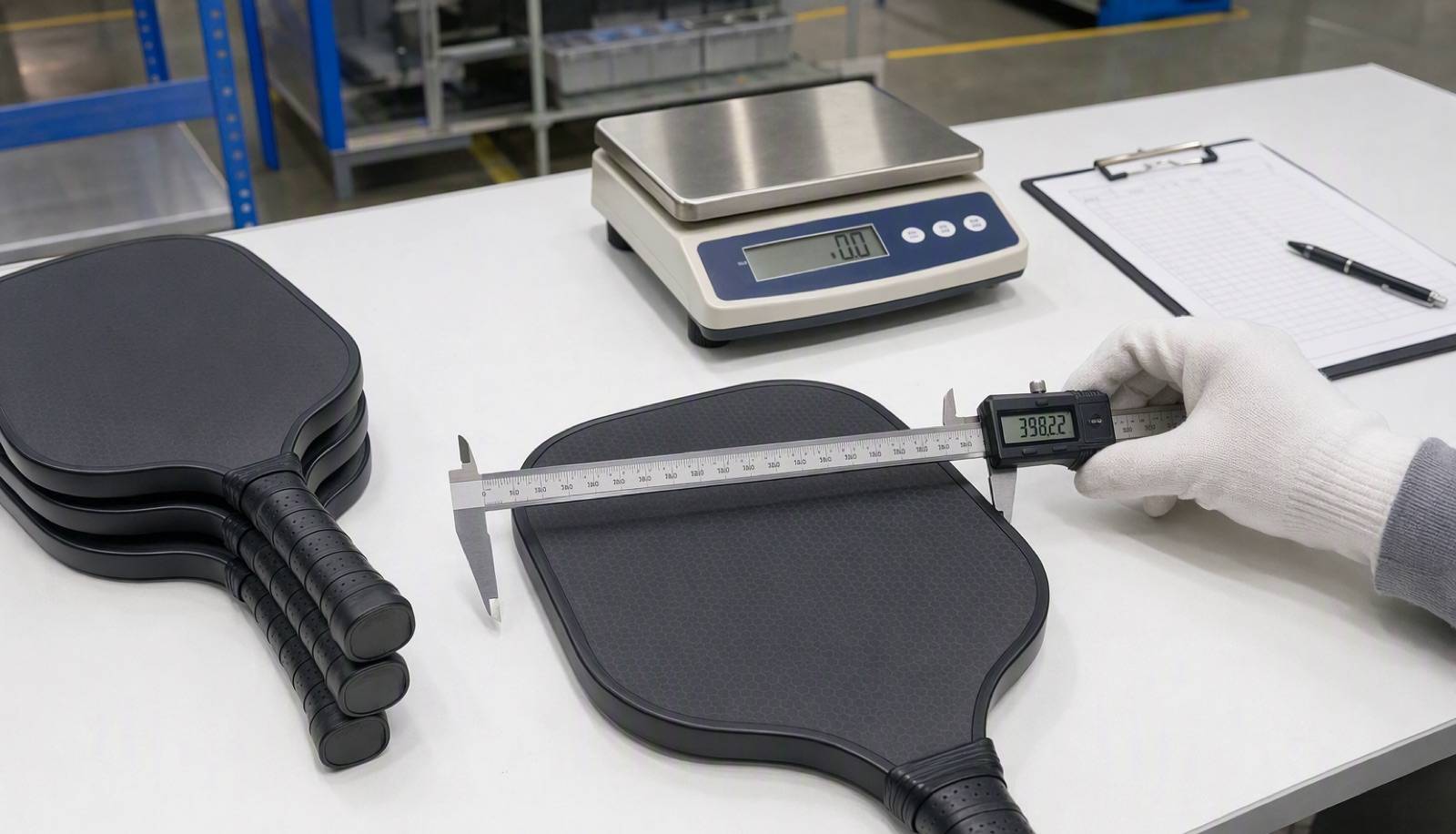
Inspection should follow the released drawing, not a photograph of a competitor’s paddle. Record the actual model marking, opening profile and edge condition against the agreed reference sample. Use the drawing’s specified measurement method and tolerances; this article supplies no validated throat-cutout gauge or fatigue protocol. If the supplier proposes an inspection fixture, require an explanation of what it measures and which acceptance criterion it implements.
A crack, skin break or delamination on the hitting surface is a rules issue. An unexpected exposed layer or rough edge around the opening also warrants a production hold against the agreed specification, but its presence alone does not establish the manufacturing cause or a quantified service-life loss. Photograph the location, retain the affected sample and trace its lot before deciding how to correct it. Keep observation separate from explanation.
For example, a delivered perimeter may differ from the approved sample even though the outside dimensions match. That dimensional match cannot close the discrepancy. Ask whether the change affects construction, document the disposition and obtain the necessary approval review before accepting a replacement lot. Do not use a cosmetic repair to conceal a changed build.
Separate approval from the launch schedule
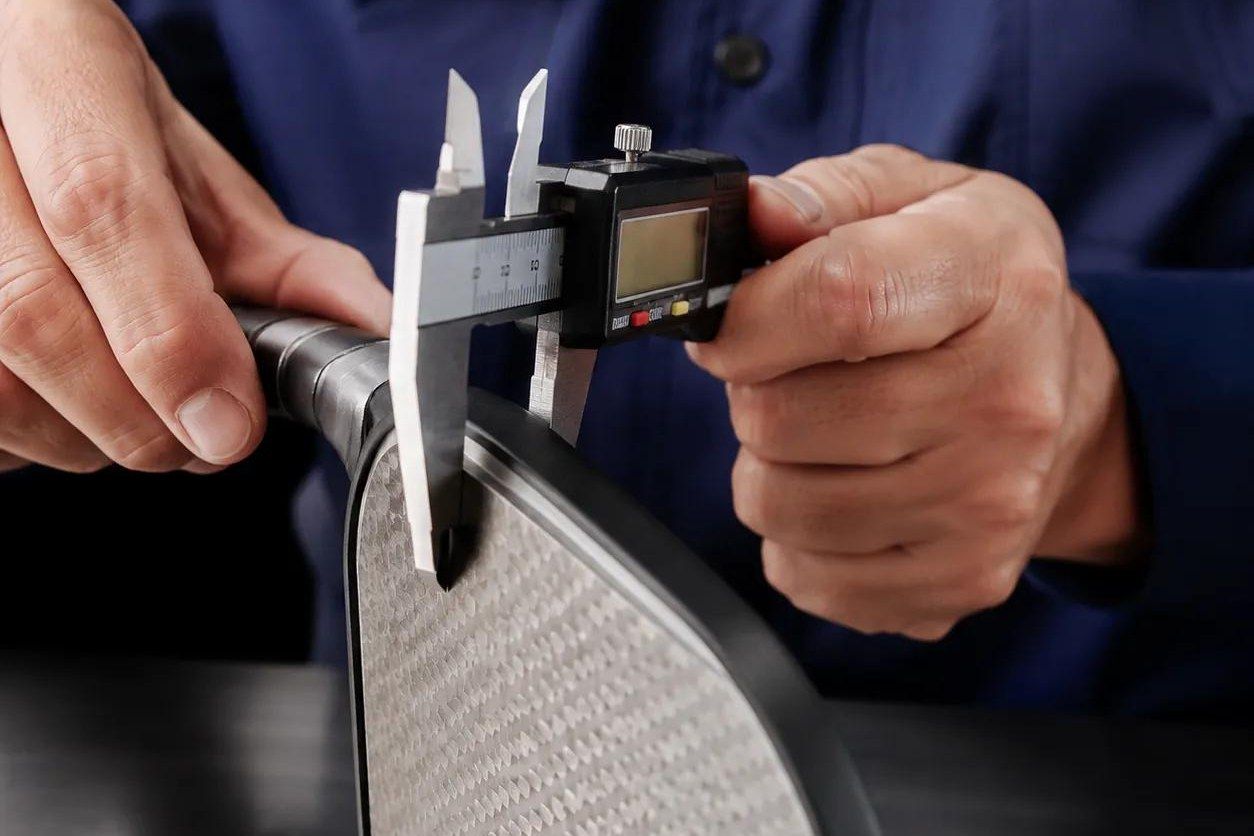
Set the schedule around separate decisions: design review, tooling or fixture work, prototype acceptance, approval review, production and freight. Request a dated responsibility for each stage rather than one undifferentiated delivery promise. Approval is not a production-capacity forecast, and a factory completion date is not an arrival date. Keep the launch commitment conditional on the unresolved reviews; no numeric lead time is established by the public sources used here.
Before comparing a proposed cutout with the 3K carbon-fiber paddle range, ask which documented constructions are actually available. That product link does not promise custom throat tooling, approval or a particular sample program. Confirm model-specific MOQ and specimen availability separately. Obtain a price breakdown covering ownership of tooling, revision charges and approval-related costs. A cheaper unit price does not resolve an undefined model.
The core-legality decoder covers the separate materials and testing discussion. Keep those requirements in the review package, but avoid substituting a core test result for evidence about opening geometry and production identity.
Use a decision checklist before committing the order
Use the checklist below as a proposed order-control method. It is designed to expose missing records before money and inventory depend on them; it is not a certification service or evidence that any supplier has performed these checks. Assign one owner to each unresolved item and require the corrected document before changing a hold to a release. A verbal assurance should not overwrite the drawing revision or approval record in the purchase file.
The final decision is short: stop a prohibited hitting-face opening; review a throat design with the approval authority; release tooling only against a defined and reviewed model. Then verify that production follows that same specification. The checklist remains useful when the opening looks familiar, because familiarity is exactly what can make an undocumented substitution easy to overlook.
- Opening located on a marked, revised drawing?
- Exact model and applicable approval review documented?
- Submitted sample and proposed production construction connected?
- Edge and geometry acceptance criteria agreed?
- Change-control owner and schedule dependencies identified?
Frequently asked questions
Are all pickleball paddles with holes illegal?
No blanket conclusion follows from the presence of an opening. The 2026 rule prohibits holes in the hitting surface; a throat cutout must be evaluated with the exact model and its approval status.
Can I drill holes into an approved paddle?
Do not assume approval survives drilling. Drilling is absent from the permitted player modifications in Rule 3.D.6. Review the proposed change with the approval authority rather than presenting it as an allowed alteration.
Does an approved throat design cover my private-label version?
An approved model does not automatically establish approval for a different identity or construction. Document the model relationship and disclose proposed changes so the approval authority can determine the necessary review.
What should a buyer request before paying for tooling?
Collect a revised drawing, construction description, sample identification, applicable approval review, agreed inspection criteria and ownership of changes. Confirm commercial terms and schedule stages separately; these are proposed purchasing controls, not certification results.
Want to source this quality for your brand?
Contact our factory directly on WhatsApp for an instant MOQ and pricing quote.