USA Pickleball Paddle Rules: The Core Clauses Decoded
On 5 September 2026 we ran a text search across the two documents that decide whether a pickleball paddle is legal in the United States. They are the 2026 USA Pickleball Official Rulebook and the Equipment Standards Manual, Revision 3.0 of January 2025. The word foam appears zero times in either. The word core appears once across both, in a clause about model names.
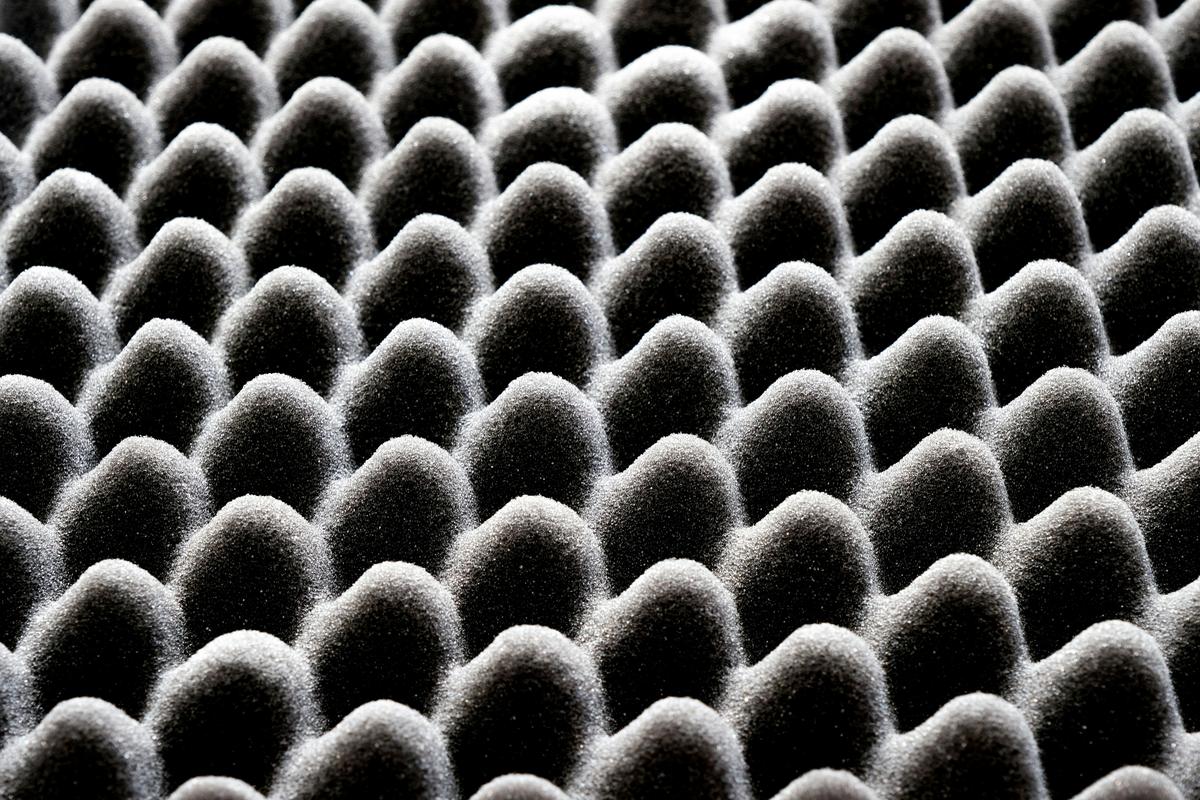
So a foam core is not banned, and it is not blessed either. Approval attaches to a tested model, never to a material class — a model named "Black Ops Foam" held Pass status on the approved list when we read it. What the rules restrict is a property, rigid and non-compressible, plus four measured outcomes. This page decodes the clauses that decide a submission.
Key Takeaways
- No core material is named in either document. "Foam" occurs zero times; "core" occurs once, in ESM 2.E.7.
- Thickness and weight are explicitly unrestricted. Rules 3.D.2 and 3.D.3 cap only the outside dimensions.
- The material clause names a property, not a substance. Rule 3.D.4: rigid, non-compressible, tested per the ESM.
- PBCoR is the ceiling that stands in for a core rule. 0.44 from 1 Nov 2024, tightened to 0.43 from 1 Nov 2025.
- A core swap breaks Certification by Similarity. It rests on an identical-build attestation, so a new core resubmits.
- Delamination sits in two clauses. 3.D.5.a covers a broken surface; 2.F.2.a covers the paddle's whole useful life.
- UPA-A adds a stiffness floor USAP has no equivalent of. Both faces at 46 lb ADF or more.
On this page
USA Pickleball’s own paddle-buying explainer starts where this page does: with the approved list, not the material. It works through face surface and thickness, and never names a legal core.
What the USA Pickleball Rulebook Actually Says About Paddle Cores
Section 3.D runs from 3.D.1 to 3.D.7 and constrains what a referee can see and what a laboratory can measure. Twice, in writing, it declines to constrain the two variables brands argue about most. Rule 3.D.2 caps combined length and width at 24 inches and length at 17 inches, then adds: "There is no restriction on paddle thickness." Rule 3.D.3 is one line long. There is no restriction on paddle weight.
That leaves 3.D.4 as the rulebook's only material clause. It names a property rather than a substance: paddles "must be made of rigid, non-compressible material meeting the criteria specified in the USA Pickleball Equipment Standards Manual." Follow it into the manual and 2.E.1 restates the same test. Neither document lists which materials qualify.
| Clause | What it restricts | What it leaves open |
|---|---|---|
| 3.D.1 Brand and model identification | Marking plus listing on the approved list | Everything about how the paddle is built |
| 3.D.2 Dimensions | 24 in combined length + width; 17 in length | Thickness — stated as unrestricted |
| 3.D.3 Weight | Nothing | Weight — stated as unrestricted |
| 3.D.4 Material | A property: rigid, non-compressible, per the ESM | Which material delivers that property |
| 3.D.5 Prohibited surface features | Eight named surface conditions on the hitting face | Anything under the skin |
| 3.D.6 Allowable alterations | What a player may add after purchase | What the factory builds in |
The Measured Limits That Stand In Place of a Core-Material Rule
Take the material list away and the regulation still bites: it moved the question from composition to performance. ESM 2.E.6.f is the clause that reaches a soft build. It prohibits "springs or spring-like material, flexible membranes or any compressible material that creates a trampoline effect" — then qualifies every word of that with "as measured by and compliance to" the roughness, friction and restitution tests. The prohibition is not on compressible material. It is on a measured effect, and the number is PBCoR.
That ceiling has already moved once: not-to-exceed 0.44 from 1 November 2024, then 0.43 from 1 November 2025 — the current limit, and each certification answers to the standard in force at its date. Alongside it sits the surface limit, an average of 30 microns (0.03 mm) on Rz and 40 on Rt, in six directions per face.
A second cutover lands on 1 October 2026. A spin-rate test at 2,100 RPM then replaces the roughness and friction ceilings, which become measurements of record. USA Pickleball distributed the procedure on 15 July 2026 and published the sentence every brand with a listed model should file: "All certified paddles must comply with the equipment standards that were in effect at the time of certification."
| Test | Limit | In force from | What a core change moves |
|---|---|---|---|
| Rigid, non-compressible (2.E.1 / 3.D.4) | Property test, no numeric threshold published | Current | Everything — this is the clause a soft build answers to |
| PBCoR, trampoline effect (2.E.6.f) | Not to exceed 0.44, then 0.43 | 1 Nov 2024, then 1 Nov 2025 | Directly — core stiffness and rebound are what it measures |
| Surface roughness (2.E.2.a.1) | Rz avg 30 µm, Rt avg 40 µm, six directions per face | Current, until 1 Oct 2026 | Indirectly — face and finish, not the core |
| Spin rate | 2,100 RPM maximum | 1 Oct 2026 | Indirectly — but it replaces the roughness and friction ceilings |
Where Your Core Does Get Named: Model Designation, Similarity and Attestation
The single mention of core material across both documents is ESM 2.E.7: paddles "with different core material, surface material, or other significant differences must have a unique name or number." That reads like housekeeping. It is the hinge of the submission economy, because of what sits beside it in the Equipment Submission FAQ.
USA Pickleball's Equipment Submission FAQ, read 5 September 2026 and unreachable since, defined Certification by Similarity as identical materials, manufacturing and surface finishing to a previously approved paddle. Change the core and that stops being true: the model goes in fresh, on multiple samples and a multi-week lab queue. Certification is not test-only: USA Pickleball's 2024 delisting statement describes "signed attestations by the manufacturer that the samples are structurally and functionally identical" — the paper a core declaration lands on.
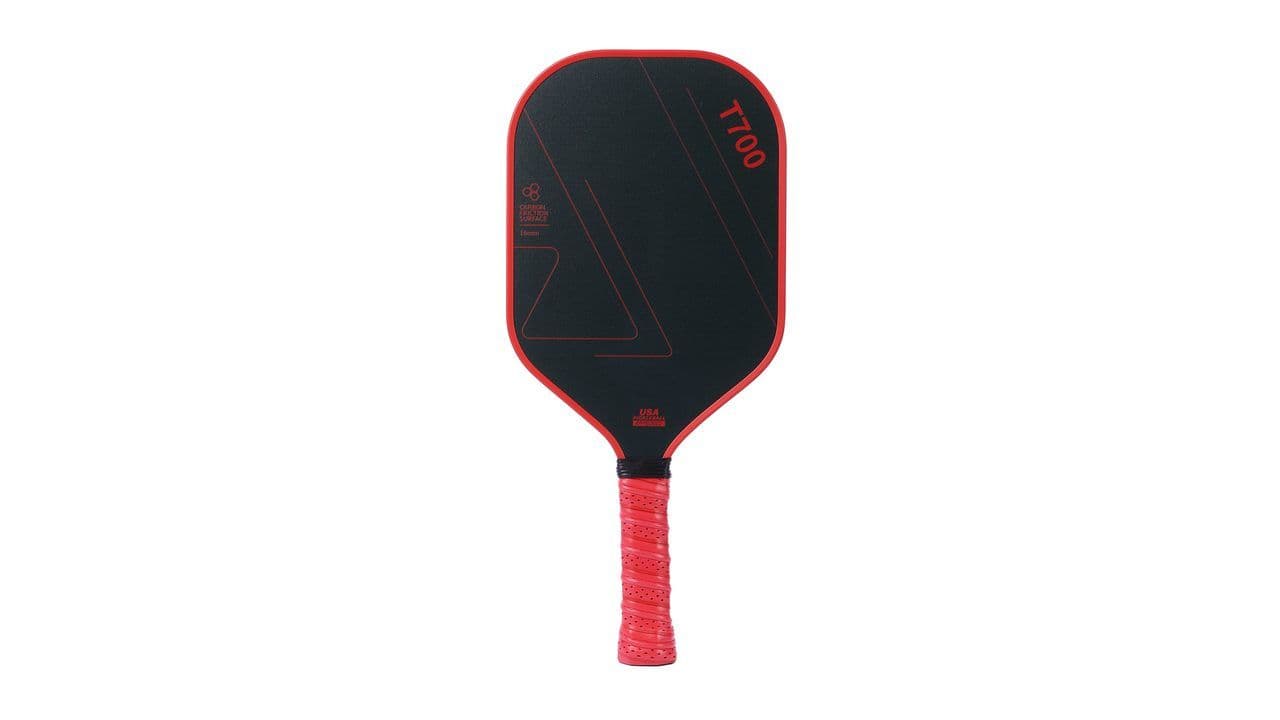
On our own side: the published OEM build envelope is 13 mm and 16 mm polypropylene honeycomb under raw T700 carbon or fiberglass faces, thermoformed unibody or cold-pressed, at a 50-piece paddle minimum. We do not quote moulded foam core tooling.
For brand owners and importers choosing between honeycomb thicknesses and face constructions while a submission budget is still open: we quote the build envelope, the mould and the golden sample, and we say so when a brief sits outside what we run.
Delamination Is in the Rulebook, But Not the Clause Most Brands Mean
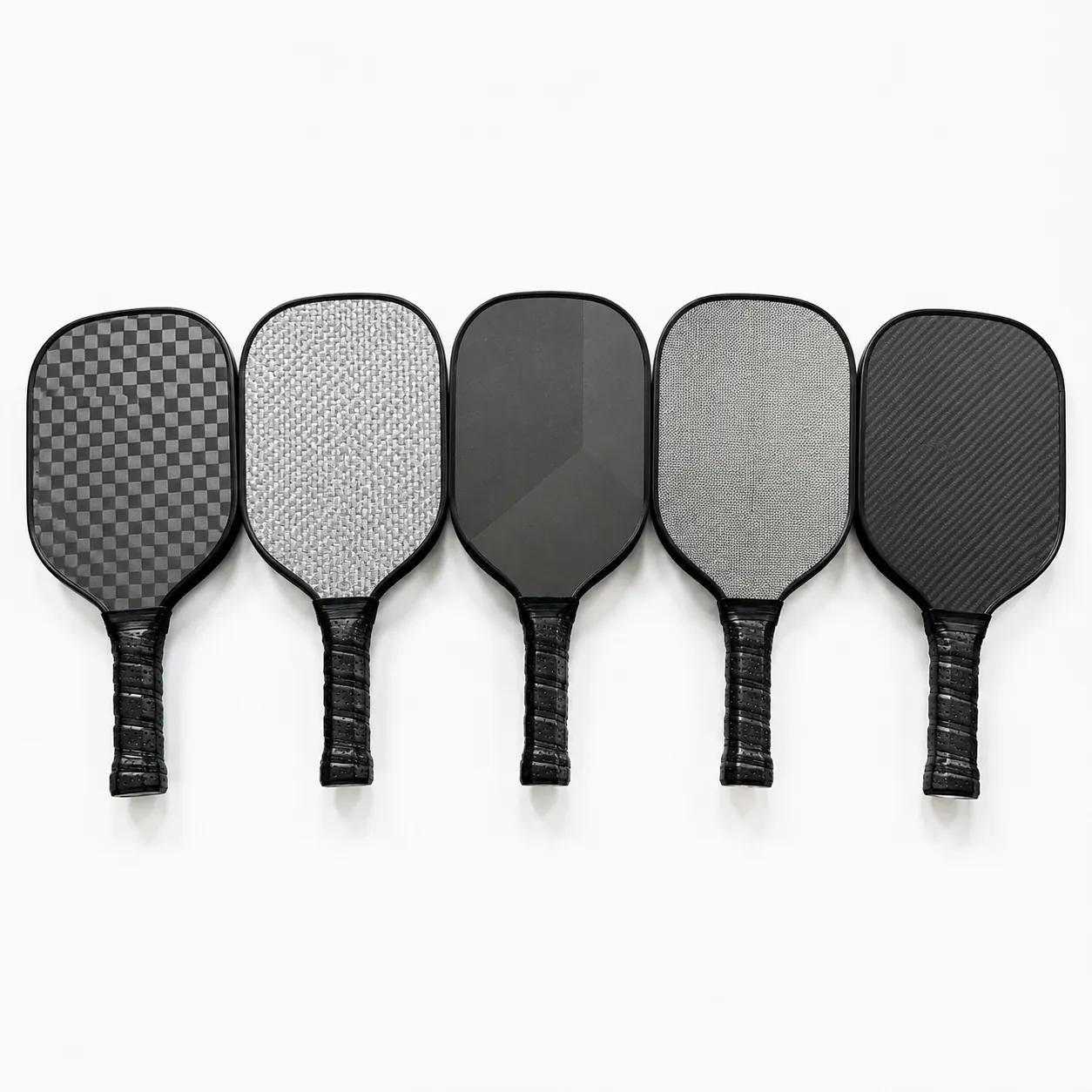
Delamination is named once in the rulebook, in 3.D.5.a, and the qualifier does all the work. Prohibited surface features are "holes, cracks, delamination, or indentations that break the paddle skin or surface." That is a referee's clause. It describes what is visible on a hitting face no longer than 43.18 cm.
The clause that reaches the rest is ESM 2.F.2.a, "Ongoing Compliance and Degrade to Benefit," written for manufacturers instead. It requires a paddle to be "compliant to all requirements over the entire useful life of the paddle," not merely on the day it is tested. Where a construction has "failure modes, break-in periods, degradation or other gradual changes that affect paddle performance," it must stay compliant including "any degradation to benefit," across that whole life. An internal change nobody can see, which lifts PBCoR past 0.43, sits inside that sentence. Causes, inspection and remedies are separate questions, covered in our guides to delamination prevention and club-fleet durability.
How a Listed Paddle Comes Off the List
ESM 2.F.1 lets the board revoke an approval on 18 months' notice. Two triggers are named: a model "has been materially changed by the manufacturer," or it "materially degrades or changes under ordinary use." The seven models announced on 27 December 2024 had 186 days — a fraction of that notice.
Enforcement after launch is not passive. Market compliance samples are "discreetly acquired, screened, and, if necessary, tested at an independent lab." A failure may bring further testing, delisting, or a Notice of Escape that scopes the affected population and runs a Corrective Action Plan. USA Pickleball's FAQ, read 5 September 2026 and unreachable since, limited delisting to sanctioned play. On court, ESM 2.F.3.a scales the penalty by timing: a violation found before the match lets the player switch without penalty; after the match starts it forfeits that match alone; after it ends the result stands.
| Action | What triggered it | Outcome | Announced |
|---|---|---|---|
| PBCoR screening round | Seven models exceeded the new restitution threshold | Sunset from sanctioned play on 1 July 2025 | 27 Dec 2024 |
| JOOLA delisting | Wrong samples submitted under Certification by Similarity | Models de-listed; resubmitted paddles failed testing | 16 May 2024 |
| Facolos Pro Series Elite X | Production version differed from the version submitted; roughness exceeded | Removed from the approved paddle list | 28 May 2026 |
USA Pickleball and UPA-A Do Not Answer the Core Question the Same Way
The second certification body is where a soft build meets a number written for it. UPA-A's Average Deflection Force test loads a paddle face to 0.0625 inches past a 5 lb preload and reads the force; both faces must return 46 lb or more at 70–75 °F. That is a published stiffness floor applied per face, and USA Pickleball has no equivalent — its non-compressible clause carries no number. Spin ceilings diverge from October too: 2,200 RPM at UPA-A against 2,100 RPM at USA Pickleball.
Scope keeps this proportionate. UPA-A certification is required for professional events at PPA and MLP; amateur competition accepts a USAP-listed paddle and does not require it. The 2026 UPA-A schedule is published openly: $10,000 a year per brand, plus $3,000 per paddle over roughly eight weeks on five samples. The body asks manufacturers developing new materials or construction types to book a pre-submission consultation first. USA Pickleball's own fee schedule is account-gated, so treat any figure you read for it as unverified. Our certification comparison covers which market needs which mark.
| Published not-to-exceed ceiling | USA Pickleball (from 1 Oct 2026) | UPA-A (2026) |
|---|---|---|
| Spin rate ceiling | 2100 | 2200 |
Conclusion
The risk here is not that a core gets banned. It is that a brand reads "no core rule" as "no exposure" and commits a mould, because 2.E.6.f, 2.F.2.a and the similarity definition bite after the money is spent. A construction that clears PBCoR at certification and drifts in service is a 2.F.2.a problem; a core changed quietly between golden sample and production is what the published delistings look like from the inside. Take the intended construction to USA Pickleball's Equipment Evaluation Committee or an authorised lab and have it screened as a model, before the mould is cut. Our page on PBCoR testing and paddle compliance covers what that screening measures.
Frequently Asked Questions
Are foam-core pickleball paddles legal in USA Pickleball play?
Foam-core models can be and are certified: a model named "Black Ops Foam" held Pass status on the approved paddle list, re-checked 10 September 2026. Approval attaches to the tested model, not to a core material, which neither governing document names.
What is considered an illegal pickleball paddle?
One not listed as Pass on the approved paddle list, or one breaking a Section 3.D clause. That means over 24 inches combined or 17 inches long, or carrying a prohibited surface feature such as rough texturing or a break in the skin. Thickness and weight are unrestricted.
Does changing the core require a new certification?
In practice yes. ESM 2.E.7 requires a unique model name or number for a different core material, and Certification by Similarity rests on an attestation that samples are structurally and functionally identical to an approved paddle. A core change therefore goes in as a full submission.
Is a delaminated paddle automatically illegal?
Only where it breaks the skin or surface, which is the wording of Rule 3.D.5.a. Internal change that leaves the face intact is handled under ESM 2.F.2.a, requiring compliance across the paddle's useful life including any degradation that improves performance.
What changes for paddle certification on 1 October 2026?
Paddles submitted from that date must measure 2,100 RPM or less on the new spin-rate test, and the roughness and coefficient-of-friction ceilings become measurements of record. USA Pickleball states that certified paddles comply with the standards in effect when they were certified.
Want to source this quality for your brand?
Contact our factory directly on WhatsApp for an instant MOQ and pricing quote.