Choose the cleaning method for the exact paddle model and finish. Selkirk describes a water-dampened lint-free cloth for general wiping and a cleaning block for its raw-carbon faces. That does not authorize a block on every paddle labelled carbon. For a club rack, give each model its own care card: the permitted cloth, liquid or block, the written instructions, and the point where staff stop.
A shared cleaning station creates a particular trap. A tool permitted for one returned paddle can migrate straight to the next, although the second paddle has a different coating. Resolve that permission before cleaning; a darker face or a similar logo is not a substitute for model identification.
Related material-specific care discussion: How to Clean Durable Grit Pickleball Paddles, Johnkew Pickleball. This does not grant permission for another paddle model.
Identify the model and the face before choosing a tool
Start with the model name and the version or market shown on the paddle and its purchase record. Keep a photograph of its identifying marks with the care instructions. If the same range has changed construction, a page for a different revision does not settle the method for the unit on your desk.
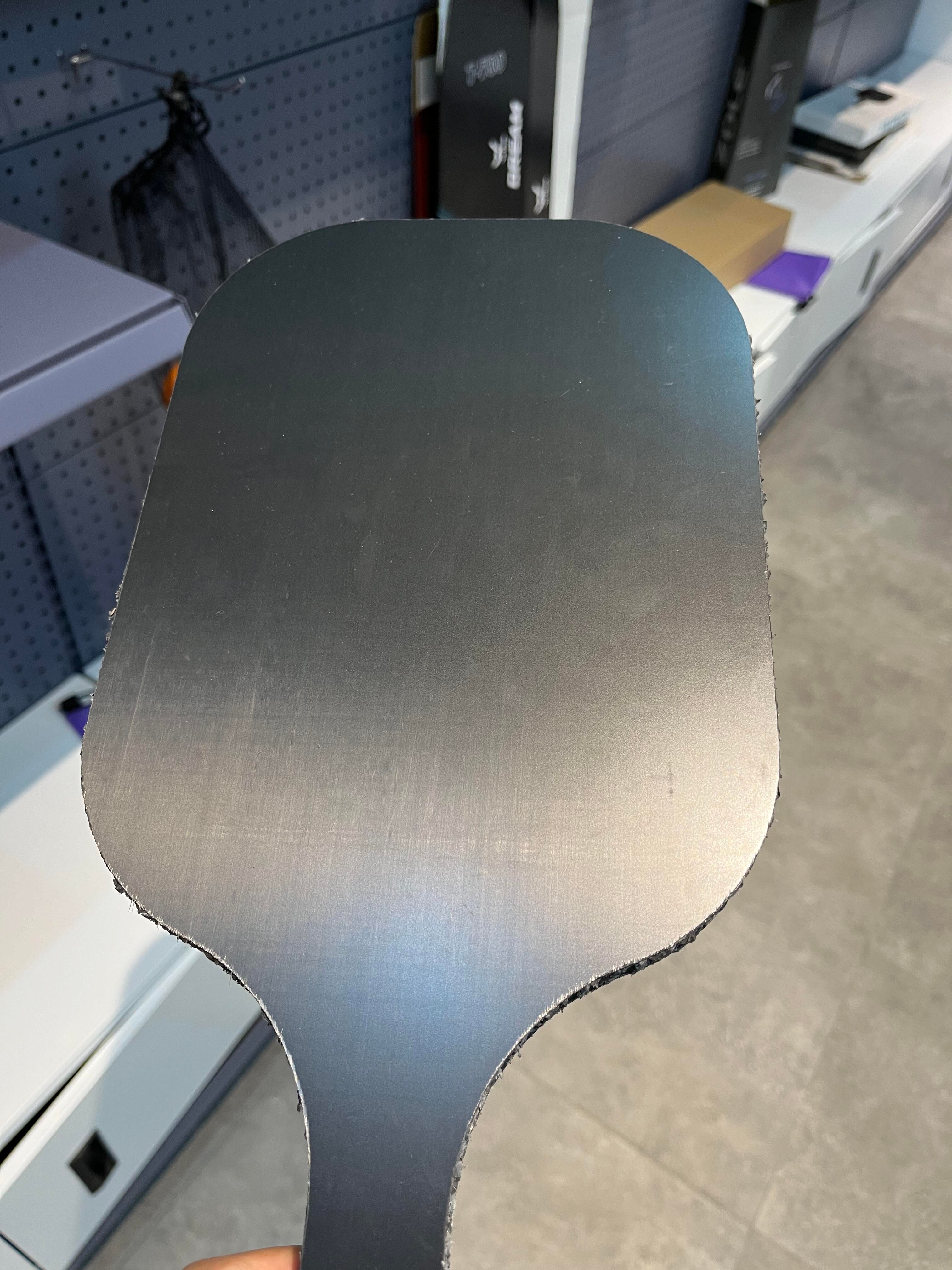
Then distinguish the face material from the finish that the cleaner touches. A carbon-fibre face can have a surface treatment; “carbon” alone is not a care instruction. Do not infer that an eraser is suitable because the paddle looks black, feels rough or resembles a raw-carbon model.
The distinction matters even for a tool sold as gentle. Bodhi’s PROeraser instructions exclude painted-grit faces and flag possible incompatibility with some etched or infused grit technologies. The tool maker directs users back to the paddle manufacturer’s recommendations. A broad product description and a specific exclusion must be read together.
If staff cannot identify the finish, do not assign that paddle to the block tray. Record the missing model or revision and leave the cleaning method unresolved. That is a decision about tool use, not a declaration that the paddle is defective or unsafe to play with.

Match cloth, mild soap and block to the written instructions
Selkirk’s care guide separates ordinary wiping from raw-carbon cleaning. Its general surface method uses water and a lint-free cloth; its raw-carbon section describes a carbon-fibre cleaning block. Its cleaning article also describes a small amount of mild soap or detergent with water and a microfiber cloth. These are examples of published manufacturer methods, not interchangeable permissions for other makes or every finish.
| What the instructions establish | Method to put on the card | What this does not permit |
|---|---|---|
| Water-dampened cloth is allowed | The specified gentle wipe, with the stated drying step | Immersion or an unlisted household cleaner |
| Mild soap is explicitly allowed | The maker’s soap-and-water method | Inventing a stronger concentration or solvent substitute |
| The identified raw face permits the named block | The permitted dry block and the maker’s motion/pressure directions | Transferring the permission to a coated or unidentified face |
| The tool is prohibited or compatibility is unknown | Exclude that tool; use another expressly permitted method or leave the method pending | Treating a small hidden trial as manufacturer approval |
Make the restriction easy to see. A card reading “cloth only under current instructions” is more useful at a busy desk than a long material description that leaves the tool choice open. Keep the source link and date checked behind that short instruction so someone can resolve a later revision.
When two pages appear to conflict, compare their product scope before choosing. A general care page, a raw-carbon cleaning article and an accessory listing may describe different surfaces or tools. Until the instructions clearly cover your model, do not resolve the difference by selecting the more aggressive method.
Clean gently, dry, then record what remains
Once the card names a permitted method, follow that method without adding an improvised second treatment. Keep the working cloth free of other cleaning products. If the directions call for a damp cloth, dampen the cloth rather than turning the job into rinsing the paddle under a tap. Selkirk specifically warns against immersion because water can enter a honeycomb core.
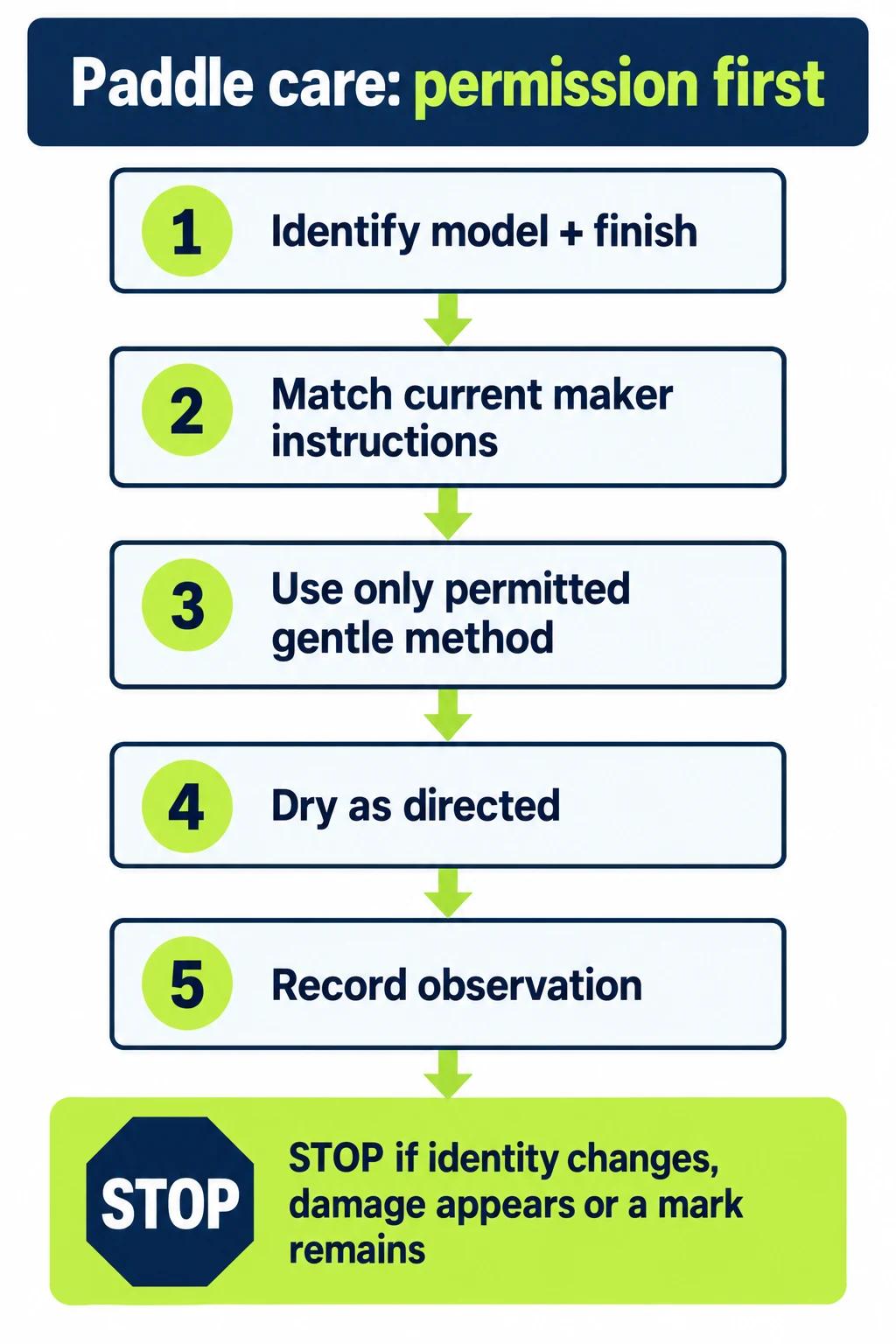
- Confirm identity and permission. Match the paddle to its card and prepare only the listed tool.
- Use the permitted gentle method. Follow the stated motion and pressure; a stubborn mark is not permission to press harder or introduce a solvent.
- Complete the drying step. Selkirk’s cleaning article calls for air drying. Follow the applicable model’s instructions before storage.
- Record the observation. Note whether residue remains, whether staff noticed damage, and which method was used. Keep a reported change in feel separate from the cleaning result.
Stop if the model or finish no longer matches the card, an instruction is unclear, or visible damage calls for a condition review. Do not sand, recoat or scrub harder to make an unexplained patch look uniform. Cleaning removes deposits; this guide supplies no test that can diagnose the cause of every persistent mark.
A clean face also cannot clear a loose handle or a suspected internal fault. Put those observations through the club’s condition and warranty workflow. Conversely, normal graphic wear does not prove that staff damaged a paddle while cleaning it. Preserve what was observed without inventing a cause.
- 1 Identify model + finish
- 2 Match current maker instructions
- 3 Use only permitted gentle method
- 4 Dry as directed
- 5 Record observation
- STOP if identity changes, damage appears or a mark remains
Give every club model its own care card
The following rack is an illustrative operating example, not three tested products. Its instructions are assumed for the example. Apply the same reasoning to the actual model documentation in your fleet.
| Paddle record | Established instruction | Staff decision |
|---|---|---|
| Model A, identified raw-carbon revision | Its maker permits a specified dry rubber block | Use that block as directed; keep its permission on A’s card |
| Model B, identified coated face | Its maker permits a damp cloth and prohibits the block | Use the cloth method; A’s block permission does not transfer |
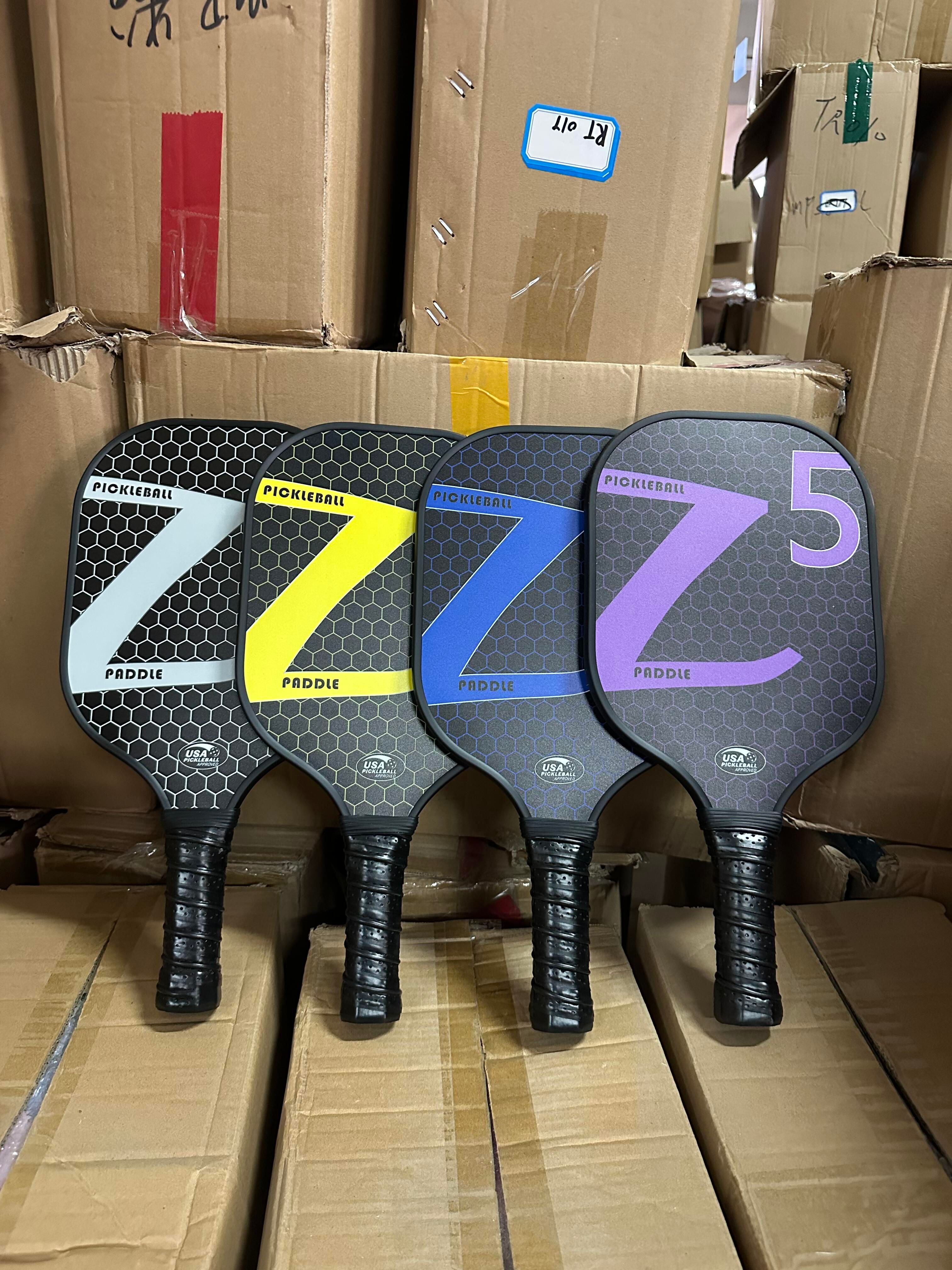
| Model C, “carbon” label, revision unknown | No instruction matching the actual unit has been established | Leave tool selection pending and identify C; do not assume A’s method |
The changed condition is the instruction for the actual finish. If A’s record turns out to describe another revision, its block permission becomes unresolved. If C is subsequently identified and its maker explicitly authorizes a method, staff can add that method and release the cleaning task. Neither change requires guessing from appearance.
Keep a compact card with these fields: fleet model ID; exact version or market; stated face/finish; care-source link and date checked; permitted tool or liquid; prohibited actions; drying instruction; and who maintains the record. Link individual paddle IDs to that model record rather than copying an outdated instruction onto every asset label.
Use the care card at the issue-and-return station
Separate tools by permission, not just by convenience. A club can label a block for the models whose cards allow it and keep it away from the cloth-only group. This is a proposed operating control: it does not establish cleaning efficacy or prevent every handling error.
At return, staff match the model, complete the permitted care task and record any unresolved observation. The next shift should be able to see whether the paddle awaits identification, has been cleaned, or needs a condition review. “Looks clean” and “ready for issue” remain different findings.
For grips, use the applicable grip directions separately. Selkirk, for example, recommends wiping and drying the handle after play. Do not assume a face-cleaning product is also suitable for a grip, and do not call this routine sanitizing. A club’s hygiene requirement needs its own supported procedure and product compatibility assessment.
The rental fleet guide handles serviceable stock and replenishment. If you are specifying a future private-label paddle, request the care instructions for that exact proposed construction alongside its model record. Review OEM paddle options before submitting the model, finish and intended club use for an availability check. This article does not offer the cleaning blocks described above or promise an immediate quotation.
Conclusion
A club cleaning station works best when the method follows an identified paddle, rather than the same tool following every return. Establish the model and finish, record the actual permission, use the gentle method and stop when the information or condition no longer fits. The completed care card is the result; cleaner appearance is not proof of restored texture, structural soundness or disinfection.
Frequently asked questions
Can I use a block on any carbon-fibre paddle?
No. Confirm the actual finish and the paddle maker’s permission for the intended block. A carbon label alone does not establish compatibility.
What if a mark remains after permitted cleaning?
Record it and stop escalating the treatment. Persistent appearance alone does not identify wear, contamination or structural damage.
Does this routine sanitize rental paddles?
No disinfection efficacy is established here. Keep hygiene requirements separate from these manufacturer care examples.