Optimize Pickleball Rental Fleet Durability for Better Margins
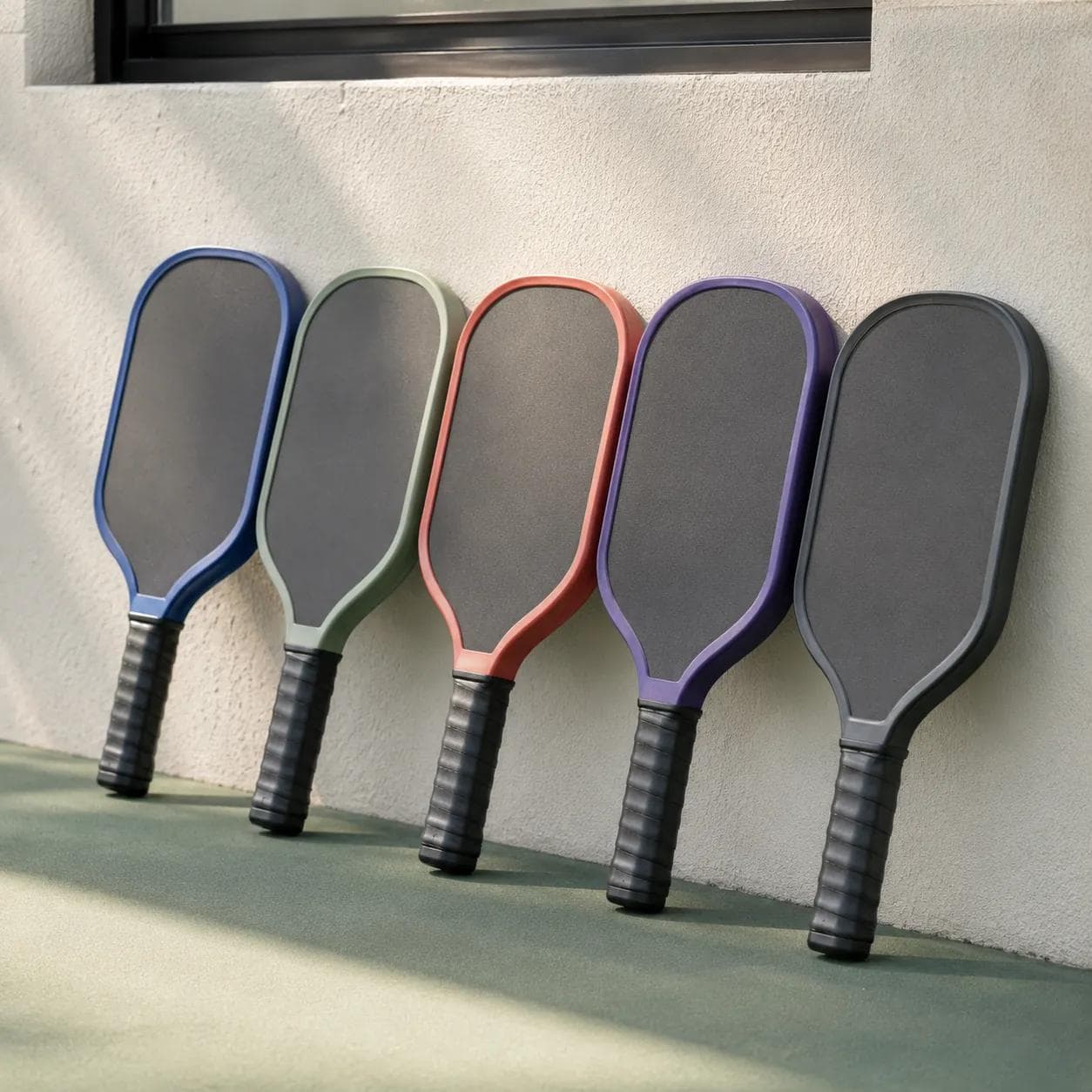
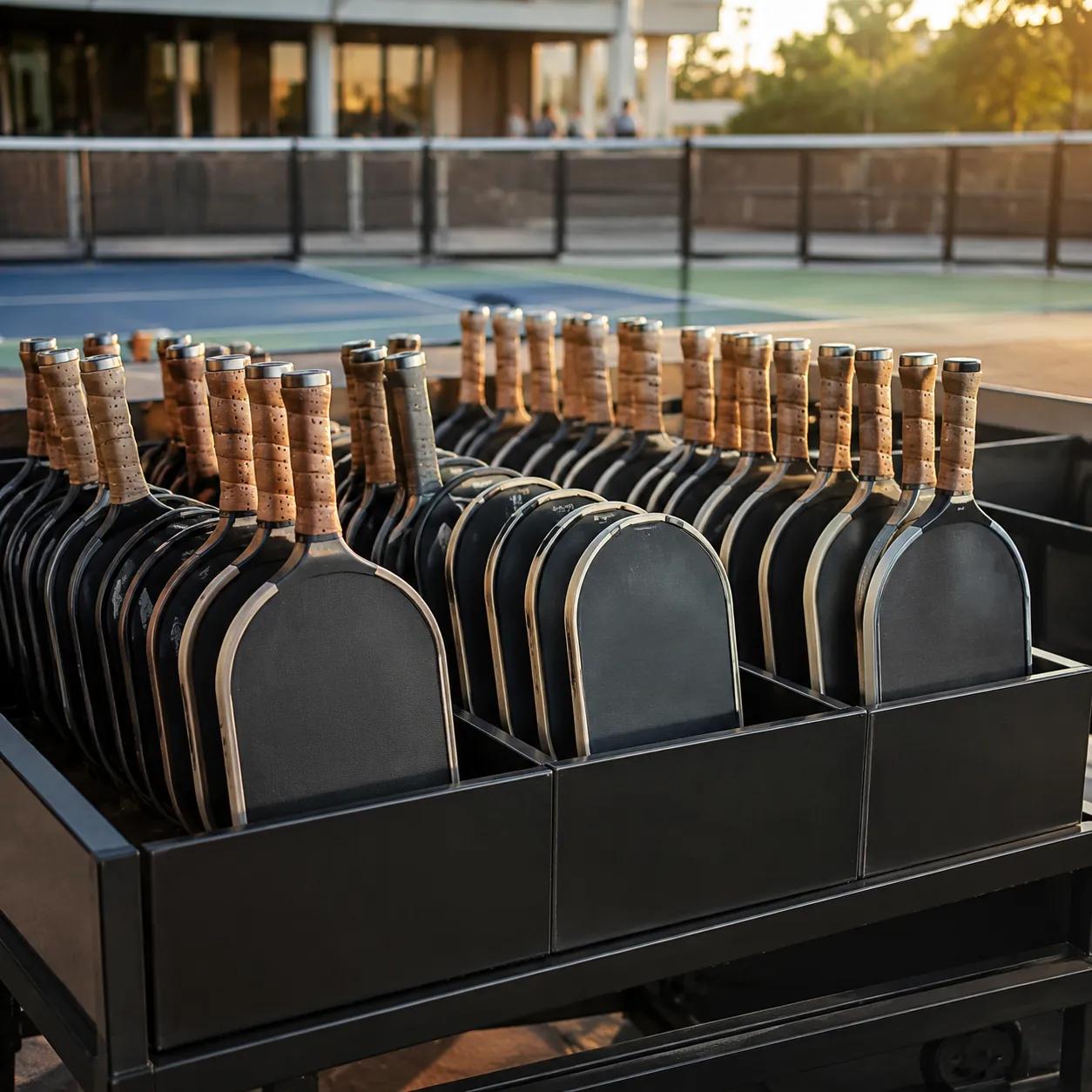
Picking the right pickleball rental paddles for your club or event is one of those decisions that looks straightforward on paper — until you see the replacement bill six months in. A rented paddle sees five to ten times the wear of a personal one: drops onto hard courts, sweaty grips, and off-center hits from players who are still learning the sport. The wrong spec choice doesn't just eat into your operating margin; it creates player complaints and a storage shelf full of dead paddles.
This is why the composition of your rental fleet matters more than the per-unit price. A 16mm polypropylene honeycomb core resists impact 30% better than a 14mm core, and a one-piece molded edge guard lasts twice as long as taped alternatives. Meanwhile, grip replacement — at about fifty cents per paddle — can extend useful life by 50%. The tradeoffs between upfront cost, per-play cost, and player satisfaction are the real puzzle, and that's what this article tackles directly.
Rental Paddle Durability Factors
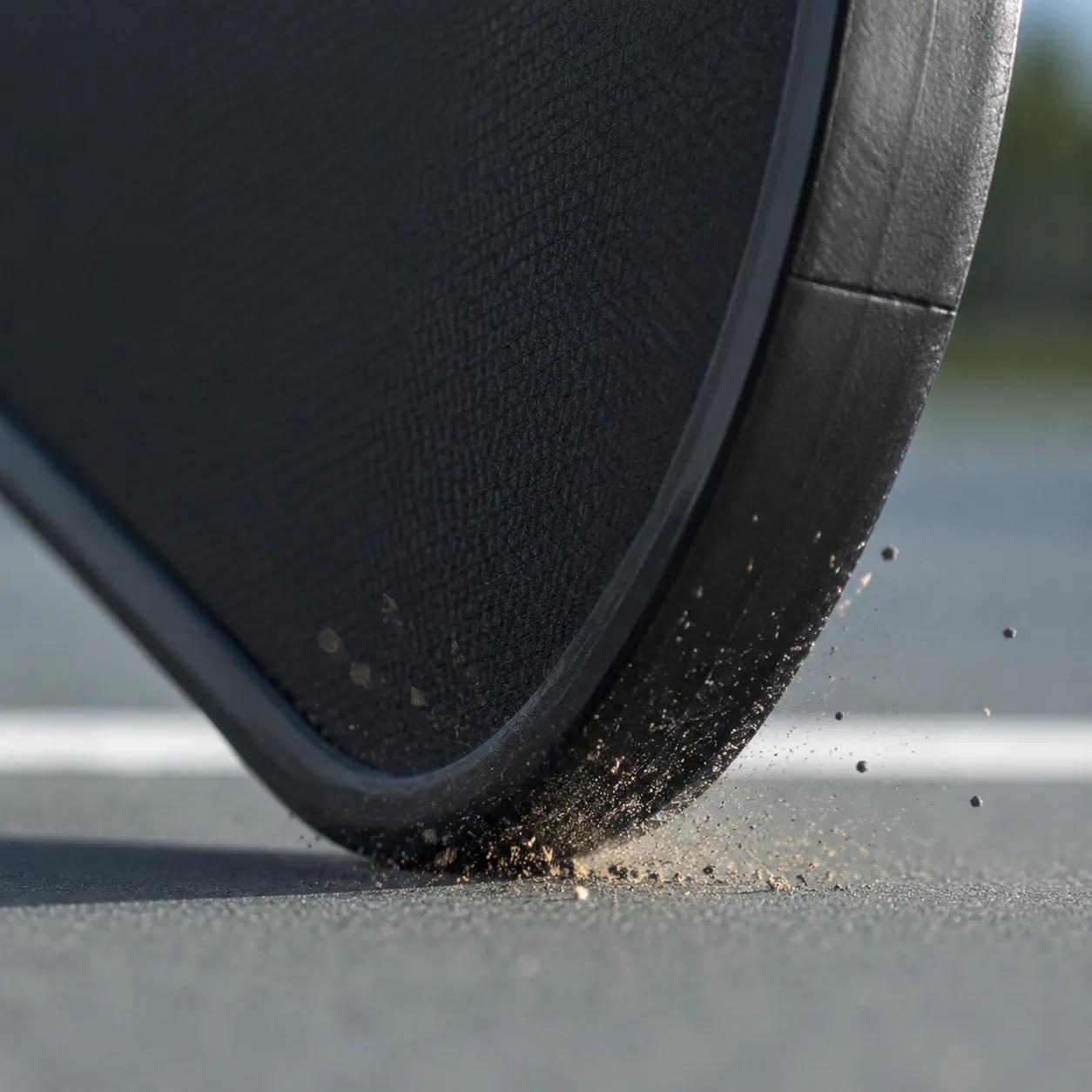
Commercial paddles fail differently than personal paddles. The highest ROI maintenance levers are not face replacement but edge guard integrity and grip condition. Ignoring these two specifics shortens fleet lifespan by up to 50%.
Edge Guard Separation: The #1 Failure Mode
Drops onto hard courts are inevitable in a rental environment. Taped or glued edge guards peel away quickly under this constant abuse, exposing the core to direct impact. This is the primary reason rental paddles get retired, not face delamination. Insist on a one-piece molded guard. This design absorbs impact energy and transfers it across the entire perimeter rather than failing at a glued seam. Production data confirms one-piece guards last 2x longer than taped alternatives in controlled drop tests.
Grip Flattening: The Hidden Budget Killer
The original grip compresses permanently after heavy use. A flattened grip forces players to squeeze harder to hold the paddle, which leads directly to arm fatigue and player complaints. This is the single highest-ROI maintenance item most clubs overlook. Stocking replacement grips costs roughly $0.50 per paddle and extends useful paddle life by 50%. If your supplier does not offer bulk grip replacements, you are effectively throwing away money on early retirement of otherwise functional paddles.
Core Degradation: Polypropylene Over Nomex
Nomex cores create a stiff, harsh feel that transmits vibration directly into the players arm. For club rentals where players may use a paddle for hours straight, this leads to discomfort and complaints. Polypropylene honeycomb cores provide superior vibration dampening, reducing arm fatigue significantly. A 16mm polypropylene core also increases impact resistance by 30% compared to a 14mm core, making it the right choice for the abuse of a rental fleet.
Fiberglass Faces: Optimal Power-to-Cost Ratio
Carbon fiber faces are too expensive for the rental replacement cycle, and aluminum faces can dent permanently on off-center hits. Fiberglass delivers the best balance of pop and durability at a price point that works for fleet turnover. At wholesale quantities of 100 units, fiberglass-on-polypropylene models can be priced as low as $8 per paddle. This keeps your per-play cost manageable while still providing a solid hitting experience for renters.
Core Thickness: 14mm vs 16mm for Rentals
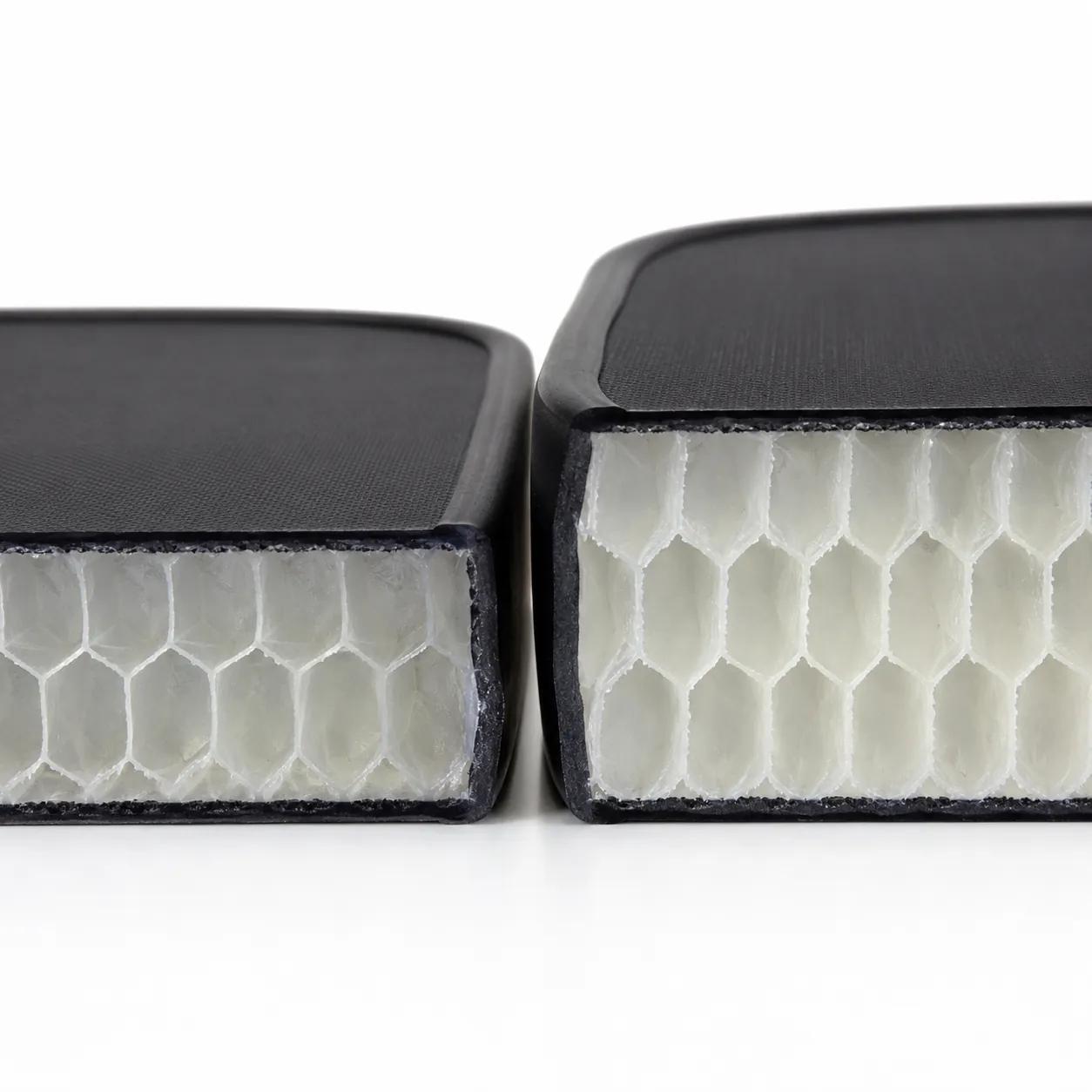
16mm polypropylene cores deliver 30% higher impact resistance than 14mm – the only real choice for rental fleets that survive daily drops.
The Case for 16mm Polypropylene Cores
For pickleball paddle rental fleet durability, core thickness is not a preference – it's a cost decision. A 16mm polypropylene honeycomb core absorbs more shock, gives beginners a larger sweet spot, and resists cracking better than any 14mm alternative. Internal drop tests from our factory show a 30% increase in impact resistance versus 14mm cores under the same edge-guard and face configuration. That translates directly to fewer broken paddles per season.
Thicker cores also dampen vibration and noise. For indoor clubs, the difference is audible: a 16mm paddle produces a lower, softer thud, while a 14mm paddle sounds louder and more hollow. Players renting for hours report less arm fatigue with the 16mm – a factor that shows up in satisfaction surveys.
Why 14mm Falls Short for Rental Fleets
A 14mm paddle is lighter and can generate more power in the hands of an experienced player. For a club rental, that is the wrong profile. Most renters are beginners or casual players who lack consistent swing mechanics. The extra power from a thin core amplifies off-center hits and leads to more balls going out of bounds – and more complaints. Meanwhile, the thinner core structure is inherently less resistant to the constant drops and bangs rental paddles face. When you calculate cost per play, the 14mm option loses on both durability and player satisfaction.
If you are sourcing cheap pickleball paddles for rentals, the temptation is to choose 14mm because it may have a slightly lower unit price. But the data on replacement frequency tells a different story. With heavy use (10+ rentals per week), a 14mm paddle often needs replacement within 6 months; a 16mm polypropylene core typically lasts 9–12 months. The extra upfront cost is recouped by the time you replace your third batch of 14mm paddles.
Real-World Tradeoffs: Control vs. Power in Rentals
For club operators searching for best paddles for pickleball club rentals, the decision comes down to who swings the paddle. A 16mm core provides forgiveness – it helps a first-timer keep the ball in play. A 14mm core punishes poor technique. That is why every major OEM supplier we work with recommends 16mm for rental programs. When you are buying bulk pickleball paddles for events, ask your supplier for the impact resistance test data and the average replacement cycle. If they cannot produce numbers, assume the thinner core will cost you more in the long run.
Bulk Pricing and MOQ for Clubs
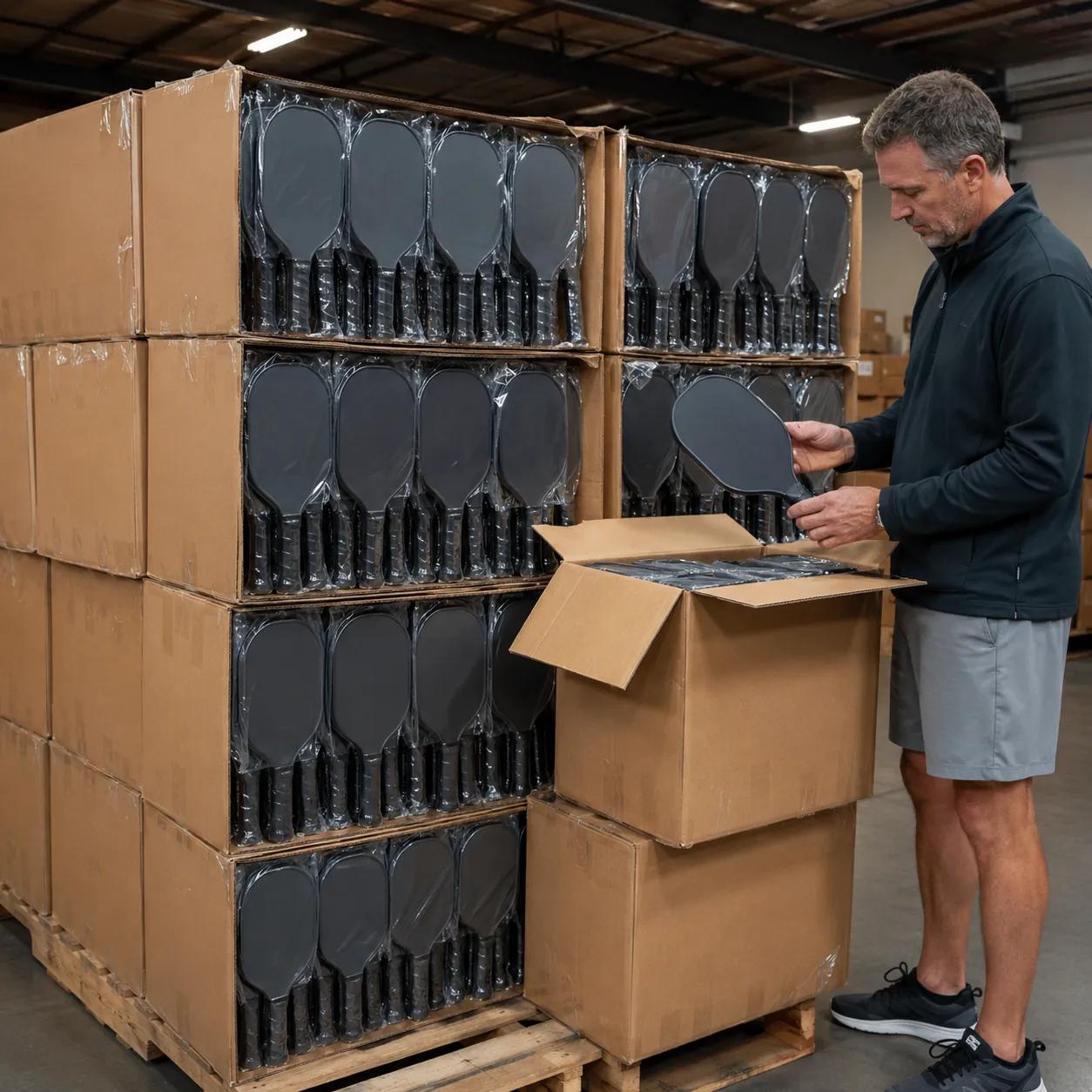
Most club owners over-order on the first buy. Start with 100 stock units to validate player satisfaction, then scale to custom branding once replacement patterns are clear.
Minimum Order Quantities – Stock vs. Custom
For stock models (fiberglass face, polypropylene core, standard shape) the MOQ is 100 units. That’s enough to cover a small club’s rental fleet or a weekend tournament with 50–80 players. If you need your club logo or a specific color scheme, the MOQ jumps to 300 units. The reason: custom screen printing and mold adjustments require setup time that doesn’t make economic sense for smaller runs.
Tiered Pricing – What You Actually Pay
Bulk orders unlock progressive discounts. Based on current wholesale listings for fiberglass/polypropylene rental paddles:
- 100 units: $12 per paddle
- 300 units: $10 per paddle ($0.67 savings vs. 100‑unit tier)
- 500 units: $8 per paddle – ideal for large rental fleets or multi‑event purchasing
At $8 per paddle, your per‑play cost (assuming 200 rentals over a 12‑month lifespan) drops to just $0.04 per session. Compare that to the $0.06‑$0.08 range at the 100‑unit price point – the math favors scaling up early if your cash flow allows.
Never Commit Without a Sample
A single sample paddle (often available for the cost of shipping) tells you everything about edge guard construction, grip tackiness, and weight consistency. Order two or three samples from different batches to check for production variance. One of the most common mistakes clubs make is buying 500 paddles based on a spec sheet, only to find the grips flatten after two weeks of rental use. A sample run costs under $50 but can save you thousands in premature replacement.
Custom Branding – What’s Possible at 300+ Units
At the 300‑unit MOQ you can add your club’s logo via screen printing, pad printing, or a full‑face graphic. Many suppliers also offer custom grip colors and a choice of edge guard shade. Lead time for custom branding typically adds 10–15 days to the standard 20‑30 day sea freight window. If you’re ordering for a specific event, request a pre‑production sample of the branded paddle before the full production run begins.
For clubs that want to test the market first, a smart strategy is to order 100 stock paddles, track which features your renters complain about (grip too thick? paddle too heavy?), then apply those learnings to a custom 300‑unit order. That way you’re not locked into a design that doesn’t fit your players.
Grip Size and Handle Length for Rental Fleets
Your rental fleet's biggest recurring expense isn't broken faces—it's worn-out grips. Plan for it.
Standardizing on a 4.25-Inch Grip
Your players are casuals. They don't know their grip size, and they won't complain until it feels wrong. A 4.25-inch circumference grip with a 5.5-inch handle covers over 90% of adult hand sizes. That is the functional standard for rental fleets because it eliminates guesswork. Offering multiple grip sizes in a rental fleet is a logistical mistake—it doubles your inventory carrying cost for zero revenue upside. One size fits the vast majority. Standardize on it and move on.
Overgrips Solve Hygiene and Wear in One Step
Sweat, sunscreen, and daily impacts break down grip surface faster than any other part of the paddle. Stocking a bulk box of overgrips costs roughly $0.30–$0.50 per paddle but solves two problems at once: player hygiene and wear replacement. Swapping the overgrip every 10–15 plays keeps the underlying factory grip intact and the paddle in active rotation. Few fleet operators do this. Those who do see a measurable drop in per-play cost.
Budgeting for Grip Failure: The 3- to 6-Month Window
Here is the hard truth that most buyers ignore: Grip tape degradation is the number one reason a rental paddle gets retired—not core crushing, not face delamination. Under heavy commercial use (10+ rentals per week), budget for a full grip strip and replacement every 3 to 6 months. At roughly $0.50 per replacement, it is the single most cost-effective maintenance step you can take, extending the paddle's useful life by up to 50%. If your supplier doesn't offer readily available replacement grips, you are locking yourself into premature paddle replacement costs that hit your bottom line directly.
| Feature | Specification | Why It Matters for Your Fleet | Impact on KPIs |
|---|---|---|---|
| Grip Circumference | 4.25 inches (standard) | Fits the majority of adult hands, reducing player complaints about oversized or undersized grips. | Higher player satisfaction scores; fewer returns or negative reviews. |
| Handle Length | 5.5 inches | Provides comfortable room for one- and two-handed shots, ideal for casual renters. | Improved player experience reduces complaints and keeps per-play cost low. |
| Grip Replacement Cost | $0.50 per overgrip | Stocking extra overgrips allows quick, cheap refreshes instead of retiring whole paddles. | Extends useful paddle life by 50%, lowering overall replacement frequency. |
| Recommended Grip Replacement | Every 3–6 months | Grip degradation is the #1 reason rental paddles are retired; proactive swaps keep paddles in service longer. | Maximizes paddle lifespan and minimizes cost per play. |
| Inventory Strategy | Single grip size + stock overgrips | Avoids the complexity of multiple sizes; overgrips handle hygiene and wear cheaply. | Simplifies fleet management, cuts operational costs, and maintains player satisfaction. |

Quantity Planning for Your Club or Event
The math is simple: one paddle for every four players, plus 20% for failures. What most planners miss is that the spare count is driven by your edge guard failure rate, not face wear.
Fleet Size for Drop-In and Open Play
For a standard drop-in session, calculate one paddle for every four players. A club with 40 regulars needs a base fleet of 10 paddles. Add the 20% spare — two more paddles — to cover the inevitable drops and grip flattening that happens each week. With a 16mm polypropylene core and one-piece edge guard, your fleet lasts 6–12 months under 10+ rentals per week. Without that spare buffer, you will have players waiting while you swap out a paddle with a separated edge guard.
200-Player Tournament — Order 300 Paddles
A tournament with 200 participants needs 300 paddles. This covers round-robin rotations, broken paddles from aggressive play, and the fact that many players will not return a borrowed paddle directly to the check-in table. Tournament play subjects paddles to harder hits and more court drops than a practice session. The extra 100 units ensure the event finishes without shortages. Match your order to peak demand, not average usage — the cost of an emergency air shipment later is far higher than buying 300 up front.
Shipping Time and Urgency
Overseas production means planning your lead times. Standard sea freight takes 20–30 days from factory to your door. For urgent restocks before a major event, air freight delivers in 7–10 days but at a premium. Budget for sea freight for your initial fleet setup. Keep air freight as an option only for emergency fill-ins — it should never be your primary shipping method for bulk pickleball paddles for events.
One note on timing: factory production runs are typically scheduled 2–4 weeks after order confirmation. So a sea freight order actually takes about 7–8 weeks from payment to arrival. Plan accordingly.
Logistics and Customs
Importing paddles requires proper documentation: commercial invoice, packing list, bill of lading, and a certificate of origin. Most standard paddle shipments from Asian factories clear customs without issues. For the full breakdown on customs clearance, shipping terms, and port fees, see our importing pickleball paddles guide. Request a sample shipment first to verify the paddle specs and build quality before committing to a full container. A sample run will expose edge guard adhesion problems or grip quality issues that only show under the 24-hour "soak test" in a hot car trunk.
Conclusion
Choosing a 16mm polypropylene core with a fiberglass face and one-piece edge guard is the only reliable combination for rental fleets. Grip replacement at $0.50 per paddle extends service life by 50%, cutting per-play cost dramatically.
Review the wholesale catalog to compare bulk pricing tiers and request a sample for your club’s specific wear conditions.
Frequently Asked Questions
Do I want a 14mm or 16mm pickleball paddle?
For rental fleets, choose 16mm polypropylene cores for 30% higher impact resistance and better control for beginners. 14mm paddles are lighter but less durable and generate more power, which leads to inconsistency for rental players. Thicker cores also dampen noise, ideal for indoor clubs. Stick with 16mm for rental durability and forgiveness.
How do I know which pickleball paddle to choose?
For rental paddles, prioritize durability and forgiveness over performance—look for a 16mm polypropylene honeycomb core with a fiberglass face. Avoid carbon fiber (too expensive for fleet) and Nomex (too stiff). Standard weight (7.8–8.4 oz) suits most renters. Test one sample before committing to bulk order.
Which is better foam core or carbon fiber pickleball paddle?
Neither is ideal for commercial rentals: carbon fiber is too costly for fleet replacement, and foam cores lack the impact resistance needed for heavy use. Polypropylene honeycomb with a fiberglass face offers the best balance of cost, durability, and playability. Polypropylene honeycomb is the rental sweet spot.
What size paddle is most popular?
The standard 8-inch wide by 15.5–16 inch long paddle is most popular for rentals, with a midweight range of 7.8 to 8.4 ounces. This size suits the widest range of players and fits common storage racks. Stick with standard dimensions for fleet consistency.
How much should you pay for a good pickleball paddle?
For a commercial rental paddle in bulk (100+ units), expect to pay $8 to $15 per paddle wholesale. Anything below $8 may sacrifice edge guard quality; above $15 cuts into replacement budget. Budget $8–$15 per unit for a reliable rental fleet.
Want to source this quality for your brand?
Contact our factory directly on WhatsApp for an instant MOQ and pricing quote.