Pickleball Paddle Handle Length: Long vs Standard, and How to Spec It
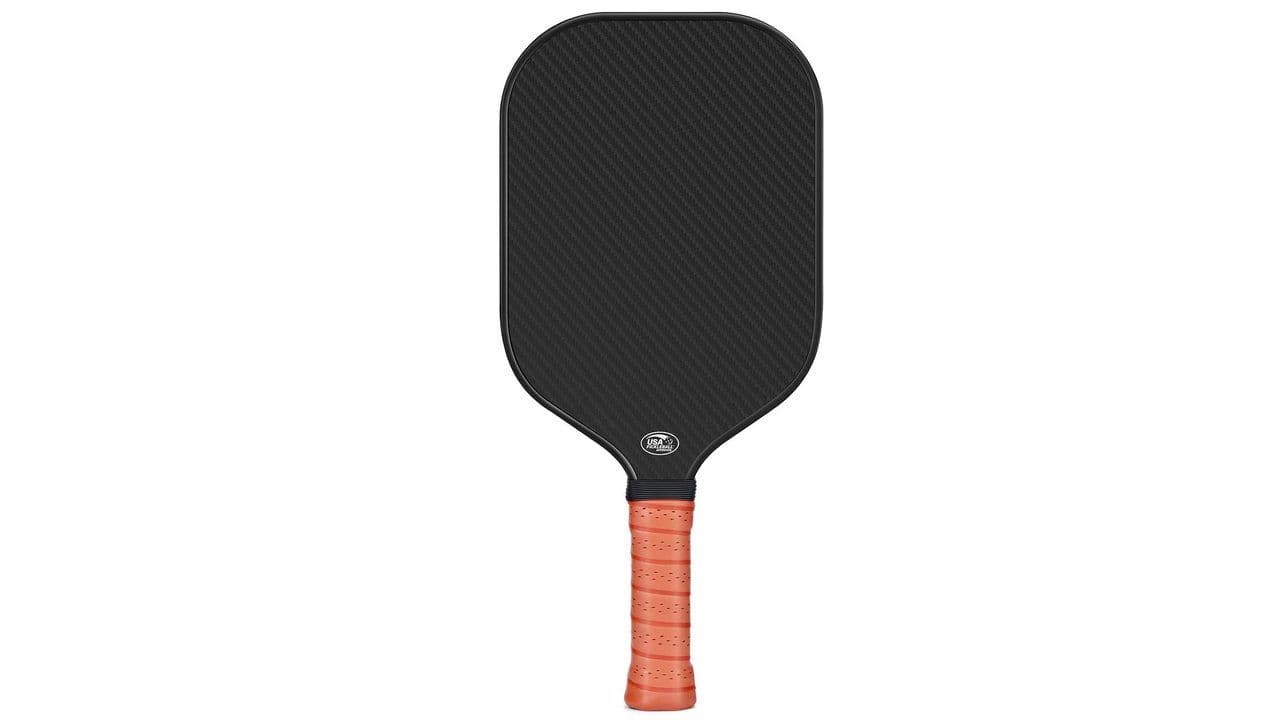
Handle length is the spec buyers feel first and understand last. Pick up two paddles, and the one with the longer handle instantly reads as "more of a player's paddle" — but ask why, and most people land on "more reach" and stop there. That's a fraction of what the number does. Handle length quietly decides whether a two-handed backhand has room to work, how high on the face the sweet spot sits, and — because the sport's rulebook fixes the paddle's outer dimensions — how much hitting surface you give up to get that longer grip in the first place.
This explainer covers what handle length actually is (and why it is not grip size), the geometry that makes it a trade against face area, what a longer handle changes in play, and how it ripples into swing weight, twist weight, and the build itself. It is written for anyone speccing a paddle line rather than picking one off a wall — because on the factory side, handle length is a mold decision, a grip-wrap decision, and a compliance decision all at once, not a slider you drag after the fact.

Key Takeaways
- Handle length is the length of the grip from the throat to the butt cap — how much room your hands have. It is a different spec from grip size, which is the circumference your fingers wrap around. A paddle can have a long, thin handle or a short, fat one.
- Standard handles run about 4.5 to 5.0 inches; long handles start around 5.5 inches. The gap sounds tiny, but the top hand of a two-handed backhand lives inside that inch.
- USA Pickleball caps a paddle at 17 inches long and 24 inches combined length plus width, so handle length is zero-sum: every inch of handle is an inch of hitting face you don't have. A longer handle means a shorter, and slightly higher, face.
- A longer handle gives a two-handed backhand real room, adds a little reach, and moves the sweet spot up the face — where the paddle is moving fastest, so it can feel like more power. It also shrinks the usable face for one-handed control players.
- Handle length is tied to shape and to the other weights. Long handles pair with elongated paddles, which run higher swing weight and lower twist weight — so a long-handle spec is really a whole feel, not one dimension.
- On the build side, handle length changes the mold, the grip-wrap length, the throat, and how close the paddle sits to the legal length limit. Spec it up front; it is not something a factory can shift late without new tooling.
Handle length is not grip size
The two specs get mixed up constantly, and they describe completely different things. Handle length is how long the grip is, measured from the throat of the paddle — where the handle meets the face — down to the end of the butt cap. It sets how much room your hand, or hands, have to sit on the paddle. Grip size is the circumference of that handle, the distance around it, and it sets how far your fingers wrap toward your palm. One is a length; the other is a thickness. You can have a long thin handle, a short fat one, or any combination.
The distinction matters because they solve different problems. Grip size is fitted to hand size and is adjustable after the fact — an overgrip adds circumference, and a player who guesses wrong can build a 4-1/8-inch grip up to a 4-1/2 in a couple of wraps. Handle length is not adjustable; the throat is where it is, molded in. That asymmetry is why grip size is a comfort spec a buyer can tune, while handle length is a design spec that has to be right in the tooling. If you're still sizing the circumference, that's a separate decision covered in the pickleball grip size guide — this article is only about length.
The 24-inch rule makes handle length a trade-off
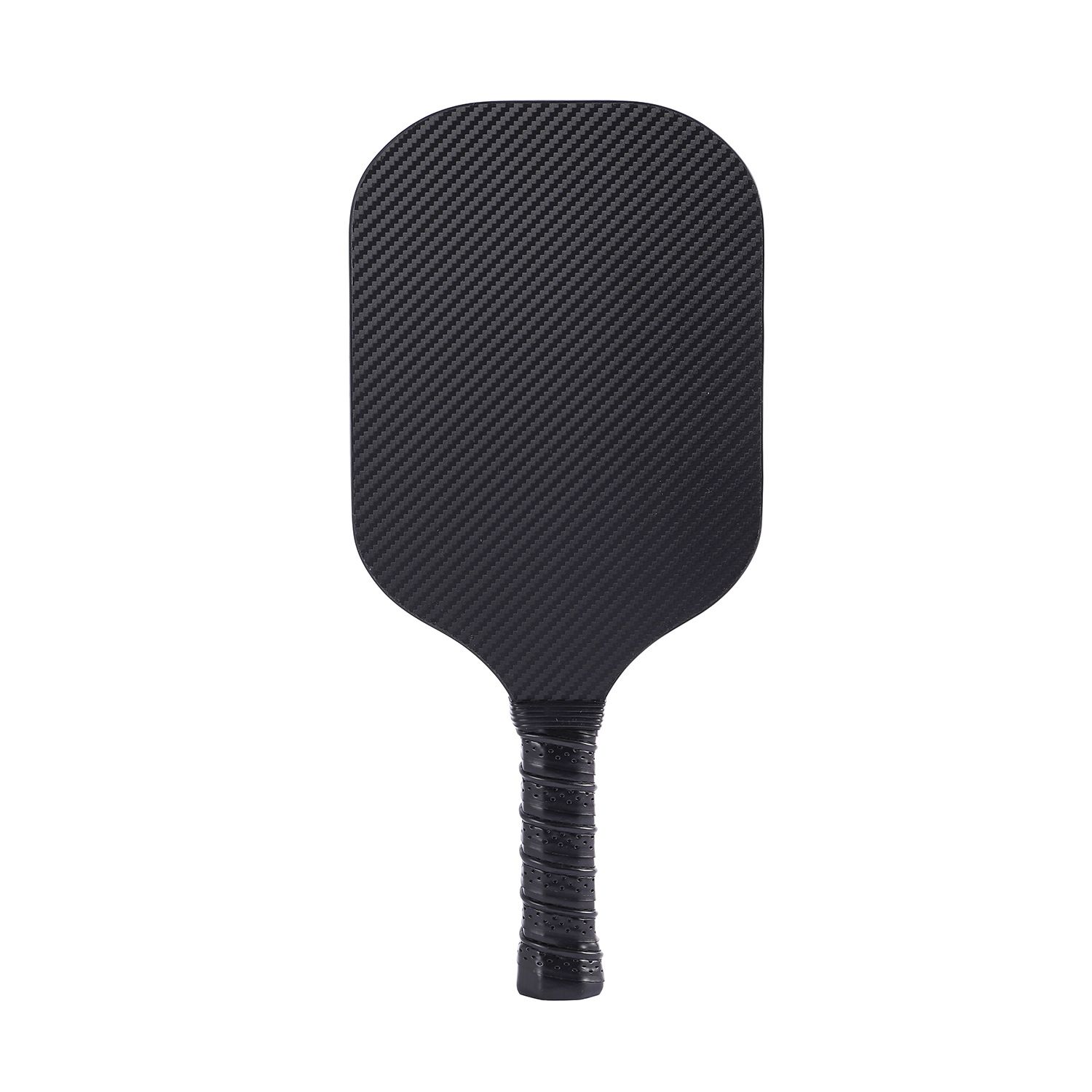
Here's the fact that reframes the whole spec: you don't get handle length for free. USA Pickleball's equipment standards cap a paddle at 17 inches in total length, and cap length plus width combined at 24 inches — measured over everything, edge guard and end cap included. Total length is handle plus face. So within that fixed 17-inch budget, every inch you add to the handle is an inch you take from the hitting face. Handle length is zero-sum against face length.
That single constraint explains most of what follows. Move a standard 4.5-inch handle out to 5.5 inches, and — holding total length constant — the face gets an inch shorter. On a 16.5-inch elongated frame, a 4.5-inch handle leaves 12 inches of face; a 5.5-inch handle leaves 11 — a full inch of hitting surface traded for grip room. A shorter face has less surface below the center, which pushes the effective sweet spot higher up the paddle and makes it smaller. So a "long handle" paddle isn't just a paddle with more grip; it is a paddle with a shorter, higher face, and the two changes always travel together. Anyone who tells a buyer a longer handle is pure upside is ignoring the geometry.
One market note worth carrying into a spec: the center of gravity has drifted long. What counted as a "long" 5.5-inch handle a few years ago is now the modal length on many performance lines, so the 4.5-to-5.0-inch "standard" is increasingly a control-and-beginner choice rather than the default. Benchmark the competitors your SKU sits next to before you decide what "standard" should mean for your buyer.
What a longer handle changes in play
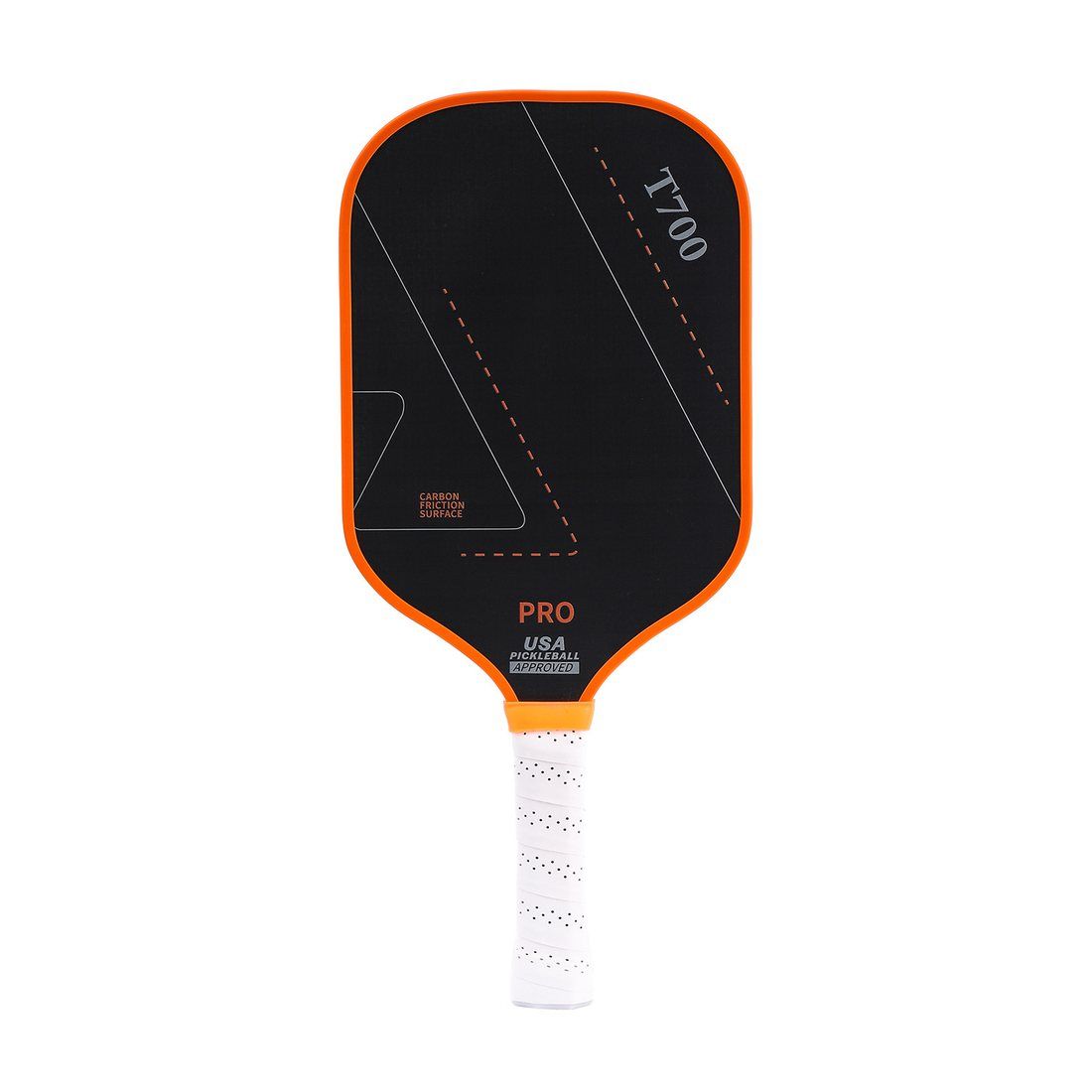
The single biggest reason to go long is the two-handed backhand. On a 4.5-inch handle, a player hitting with two hands ends up crowding the throat — the top hand runs out of grip and sits partly on the paddle face, and the two wrists fight each other. A handle in the 5.0-to-5.5-inch range gives that top hand somewhere to live, which is what turns a cramped two-hander into a smooth, drivable one. If a meaningful share of a paddle's buyers hit two-handed backhands — and at the intermediate-and-up level, many do — handle length stops being a preference and becomes a fit requirement.
Two more effects come with the length. First, reach: a longer handle places your hand lower on the paddle, extending the coverage arc your swing sweeps without touching the legal length limit — something taller players and singles players value on the stretch. Second, where the sweet spot sits: because the face is shorter and higher, the sweet spot rides higher up the paddle — and since the top of the face is the part moving fastest through a swing, contact there delivers more head speed, which reads as more power. The flip side is that the higher, smaller sweet spot is less forgiving for a player who makes contact low and central. The trade is real in both directions.
| Handle length | Feel & who it fits | Cost of the choice |
|---|---|---|
| ~4.5 in (short/standard) | Longest face, biggest and most centered sweet spot; loved by one-handed and control players | Cramps a two-handed backhand; slightly less reach |
| ~5.0 in (medium) | The common middle: room for an occasional two-hander without giving up much face | Compromise both ways — not the biggest face, not the roomiest handle |
| 5.5 in+ (long) | Full room for a two-handed backhand, most reach, sweet spot high on the face | Shortest, highest, smallest face; least forgiving for low-central contact |
Handle length pulls swing weight and twist weight with it
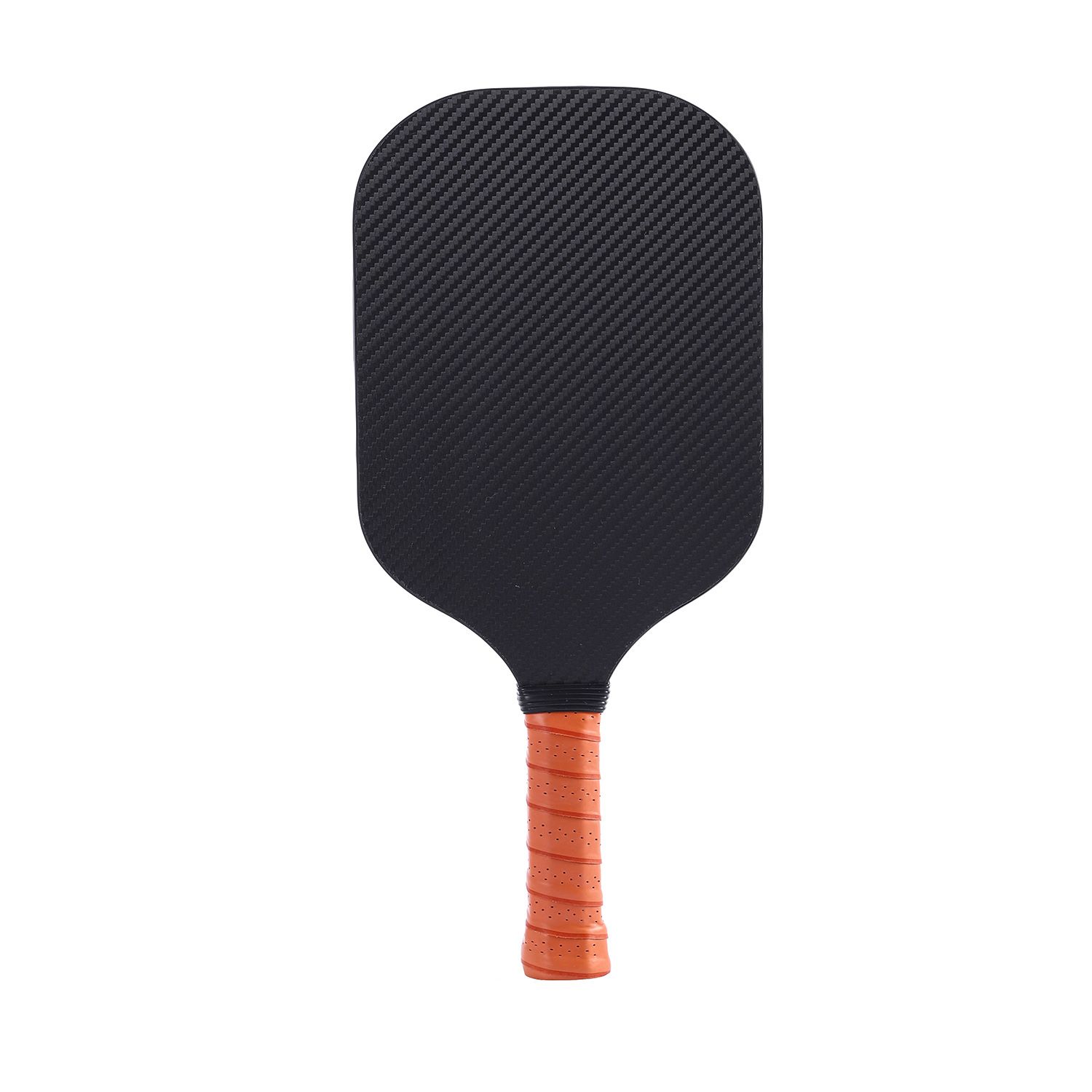
Handle length rarely changes on its own. Because the outer dimensions are capped, a long handle almost always sits on an elongated shape — the face gives up width to keep some length after the handle takes its share. And elongated shapes carry their own weight signature: they push mass farther from the hand, so their swing weight runs higher — power-oriented elongated paddles commonly cluster in the 120-to-125-plus range — while their twist weight runs lower. A long-handle paddle therefore tends to feel head-heavier and more powerful, and to be less stable on off-center hits, than a short-handle widebody.
That is why you can't spec handle length in isolation. Add an inch of handle and you have quietly signed up for a longer, narrower, more head-heavy paddle unless you deliberately counteract it — which usually means perimeter weighting to claw twist weight back, at the cost of yet more swing weight. The clean way to think about it: handle length is one lever on a linked system. If you want the full picture of the other two levers, they are covered in twist weight explained and swing weight explained. Speccing a long handle without deciding how you'll manage the twist-weight drop is how a paddle ends up powerful but shanky.
Ask a supplier for handle length, total length, and shape together — never handle length alone. A "5.5-inch handle" on a 16.5-inch elongated frame is a different paddle than the same handle on a stubbier build, because the face and the weights change with it.
What changes at the factory when you spec handle length
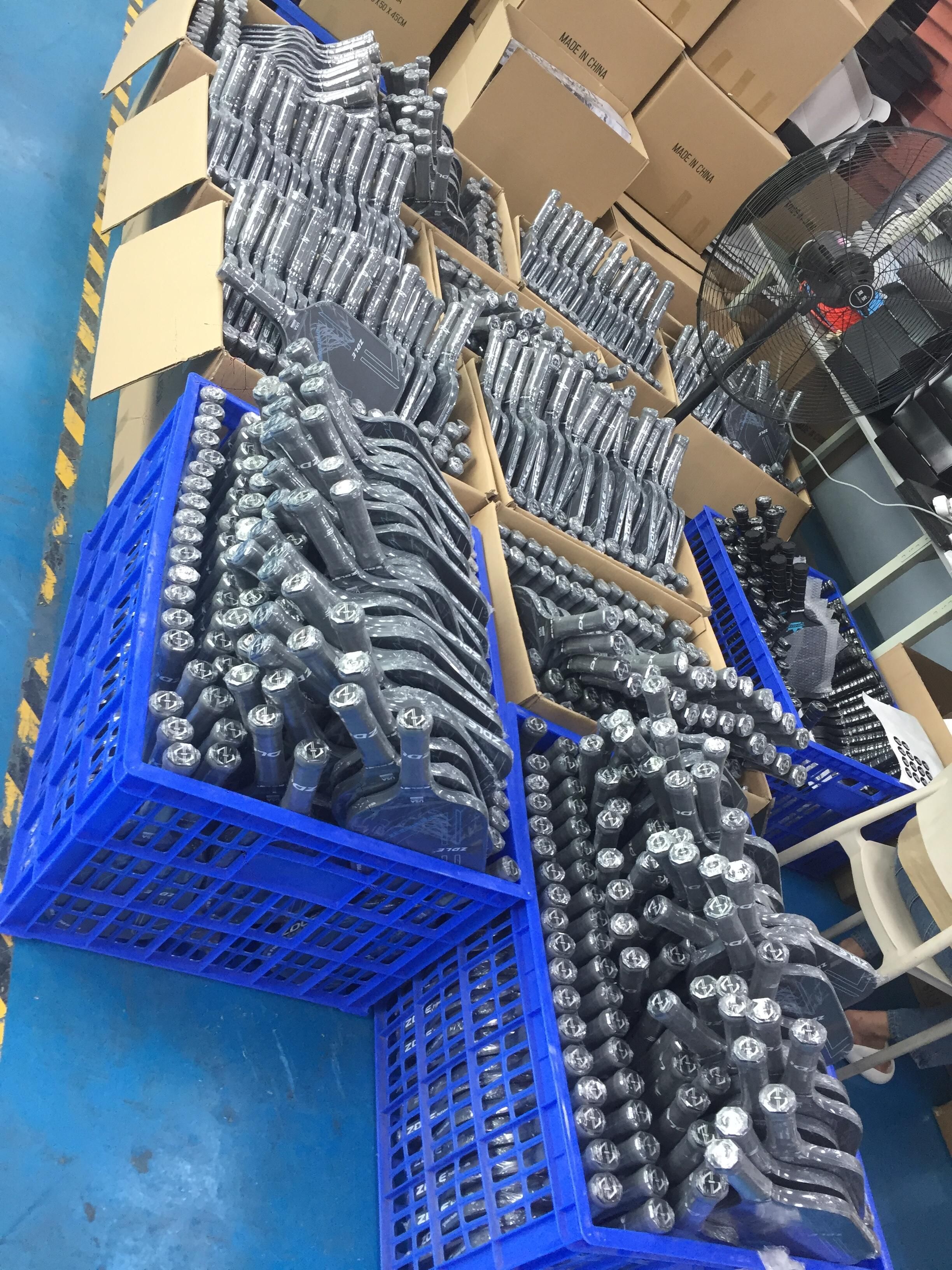
On the sourcing side, handle length touches four things a buyer should nail down before tooling starts. The mold. The handle and throat are formed with the paddle; a 4.5-inch and a 5.5-inch handle are two different molds, not a setting. Deciding late means new tooling and a new sample round, so handle length belongs in the first spec conversation, not a revision. The grip wrap. A longer handle needs a longer grip, which is more wrap material per paddle and a different cut length on the line — small per unit, real across a container.
The throat and structure. Where the handle meets the face is a stress concentration; lengthening the handle changes that junction's geometry, and it's a spot to watch in sampling for stiffness and for the kind of failure discussed in paddle durability. Total-length compliance. Because the handle counts toward the 17-inch total, a long handle on a long face can push a paddle toward the legal limit — the measurement is taken over the edge guard and end cap, so the QC gauge has to include them. A build that measures fine bare can fail once the bumper and cap are on. Spec the total length with a tolerance, and check it assembled. This is the kind of detail worth confirming against a real carbon paddle spec before committing a mold.
Speccing handle length into a line
Turn the trade-off into a build decision by starting from who buys the SKU, the same way you would for shape or core. Handle length should follow the player, not a spec-sheet fashion.
| Target player | Handle length | Why |
|---|---|---|
| Beginner / rec, one-handed | ~4.5 in | Biggest, most centered sweet spot; forgiveness matters more than reach |
| All-court intermediate | ~5.0 in | Room for an occasional two-hander without surrendering much face |
| Two-handed backhand player | 5.25-5.5 in+ | Top hand needs the room; below this it crowds the throat |
| Singles / tall / reach-first | 5.5 in+ on an elongated frame | Maximum extension and head speed; accepts the smaller face |
Two rules keep a line coherent. First, don't offer every length on every model — pick the handle that matches each shape's intent, so an elongated power SKU runs long and a widebody control SKU runs short. Offering a 4.5-inch handle on an elongated frame or a 5.5 on a stubby widebody usually produces a paddle that fights itself. Second, if a single model needs to serve both camps, that is a two-SKU decision (a standard-handle and a long-handle version off related molds), not one paddle trying to average the difference.
Who each handle length is — and isn't — for
A long handle (5.5 in+) is for players with a two-handed backhand, singles and reach-oriented players, and anyone chasing extension and top-of-face power. It is not for pure control players, one-handers, or beginners who need the largest, most centered sweet spot they can get — for them the shorter face is a daily tax they'll feel on every mishit.
A standard handle (~4.5 in) is for one-handed players, dinkers and finesse games, and newer players who benefit from maximum forgiveness. It is not for two-handed backhands, which it cramps, or players whose game is built on reach and drive. The 5.0-inch middle exists precisely because most club players sit between these poles — but "in the middle" is a real choice with real costs on both sides, not a way to avoid choosing. Spec the length to the player you're actually selling to.
Getting handle length right before the mold is cut
Handle length looks like a minor dimension and behaves like a major one. It decides whether a two-handed backhand works, trades directly against face size under the 24-inch rule, drags swing weight and twist weight along with it, and — because it is molded in — has to be right before tooling, not after. The buyers who get it wrong are the ones who treated it as an afterthought: they picked a length off a trend, discovered it fought the shape or the weights, and had to re-tool. The ones who get it right start from the player, decide the length and the shape together, and manage the weight consequences on purpose.
So before you sign off on a paddle, answer three questions in order: Who plays this SKU, and do they hit with two hands? What total length and shape does that imply, and what face does the handle leave behind? And how will you keep the twist weight from cratering once the handle goes long? Get those three right and handle length becomes a deliberate feature. Skip them and it becomes the reason your sample doesn't feel like the paddle you imagined.
Frequently Asked Questions
What is a standard pickleball paddle handle length?
A standard handle runs roughly 4.5 to 5.0 inches, measured from the throat to the end of the butt cap. Long handles start around 5.5 inches. The difference sounds small, but it is exactly the range where a two-handed backhand's top hand runs out of room, so the inch matters more than it looks.
Is handle length the same as grip size?
No. Handle length is how long the grip is; grip size is the circumference — how far your fingers wrap around it. A paddle can have a long thin handle or a short fat one. Grip size can be built up with an overgrip after purchase, but handle length is molded in and can't be changed.
Does a longer handle give more power?
Indirectly. A longer handle shortens the face and moves the sweet spot higher, where the paddle head is moving fastest, so contact there delivers more head speed. Long handles also usually sit on elongated shapes that carry higher swing weight. Both effects read as more power — at the cost of a smaller, higher sweet spot.
Why does a longer handle mean a smaller hitting surface?
USA Pickleball caps total paddle length at 17 inches and combined length plus width at 24 inches. Total length is handle plus face, so within that fixed budget, every inch added to the handle is an inch taken from the face. A longer handle always leaves a shorter, and slightly higher, hitting surface.
Do I need a long handle for a two-handed backhand?
Effectively, yes. On a 4.5-inch handle, the top hand of a two-handed backhand crowds the throat and the wrists interfere. A handle of about 5.0 to 5.5 inches or longer gives that hand room to sit and drive, which is why two-handed players almost always prefer a longer handle.
Can a factory change handle length after the first sample?
Not easily. The handle and throat are formed in the mold, so a different length is a different tool and a fresh sample round, not a quick edit. Handle length belongs in the first spec conversation. It also counts toward the legal total length, so confirm the assembled paddle — edge guard and end cap included — measures within the limit.
Want to source this quality for your brand?
Contact our factory directly on WhatsApp for an instant MOQ and pricing quote.