Pickleball Paddle Twist Weight: Why Off-Center Hits Still Go Straight
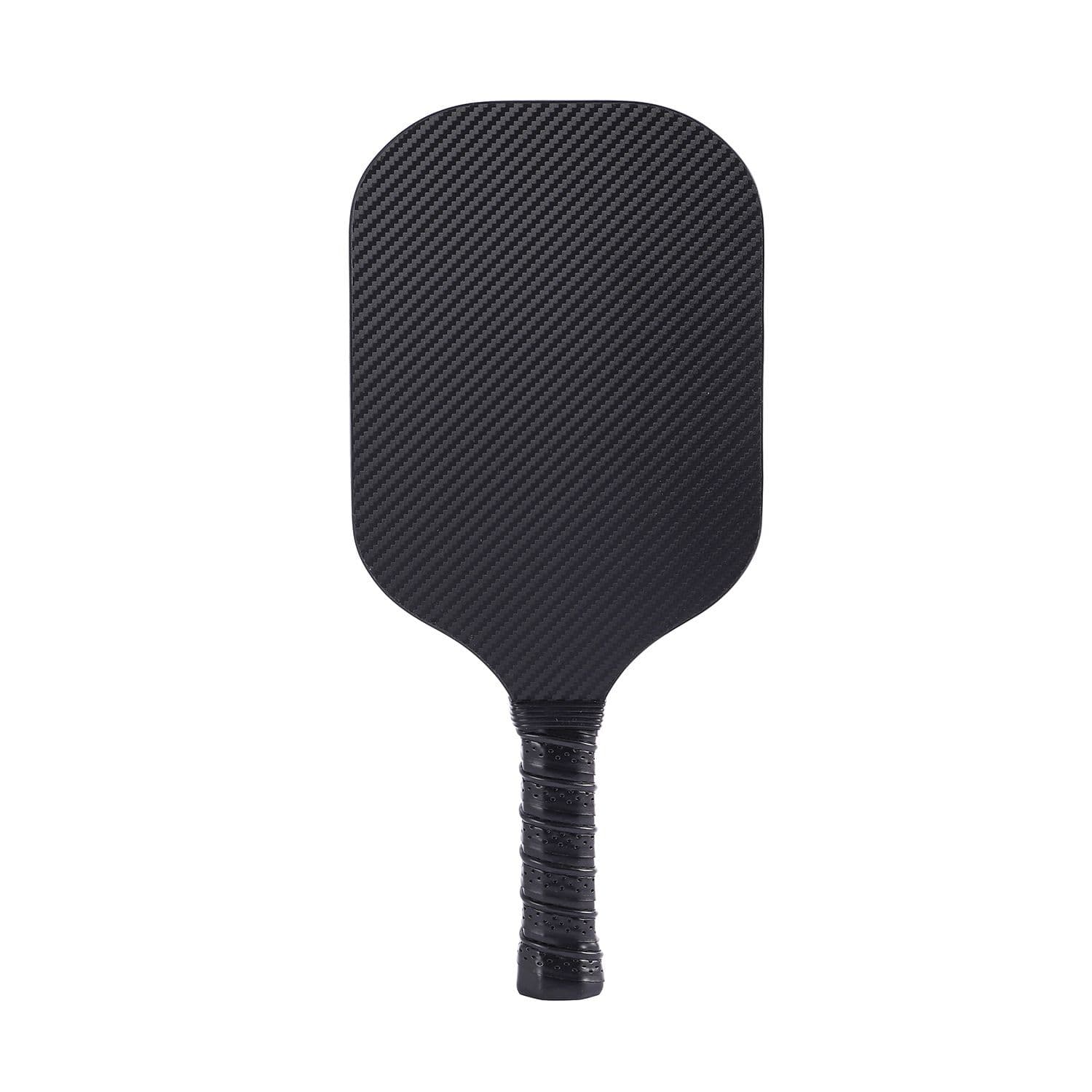
Twist weight is the spec that went from lab jargon to marketing bullet in about two years, and most listings that print it can't explain it. Brands quote a number, buyers nod, and nobody says what it does. Here's the short version: twist weight is why one paddle punishes an off-center hit and another shrugs it off. Two paddles can weigh the same, swing the same, and feel completely different on a ball caught toward the edge — and twist weight is the difference.
This explainer breaks down what twist weight actually measures, why it decides off-center forgiveness, what raises or lowers it in the build, and how to spec it into a paddle line on purpose. It's the third of the three weights that describe a paddle — static weight, swing weight, and twist weight — and it's the one that most directly maps to the "big sweet spot" feel buyers ask for without knowing the number behind it.

Key Takeaways
- Twist weight is the paddle's resistance to twisting in your hand when you hit off-center — technically the moment of inertia about the long axis running from the handle up through the middle of the face. Higher twist weight means off-center hits stay truer.
- It's the number behind the "big sweet spot" feel. A paddle doesn't literally grow a larger sweet spot; a higher twist weight makes mishits lose less speed and direction, which plays like a bigger one.
- Twist weight rises when mass sits far from the long axis — out at the 3 and 9 o'clock edges. Wider paddles and perimeter-weighted builds have higher twist weight; narrow, head-light paddles have lower.
- It's one of three separate weights: static weight (what a scale reads), swing weight (how heavy it feels to swing, about the handle), and twist weight (off-center stability, about the long axis). A paddle can be light yet high in twist weight, or heavy yet low.
- Shape sets the ceiling. USA Pickleball caps length plus width at 24 inches, so you can't widen a paddle indefinitely to chase twist weight — a widebody gains stability but gives up reach, an elongated shape does the reverse.
- Spec twist weight to the player. Recreational, doubles, and control-first lines benefit most from high twist weight; singles and reach-first players may accept lower twist weight for a longer, more maneuverable paddle.
What twist weight actually measures
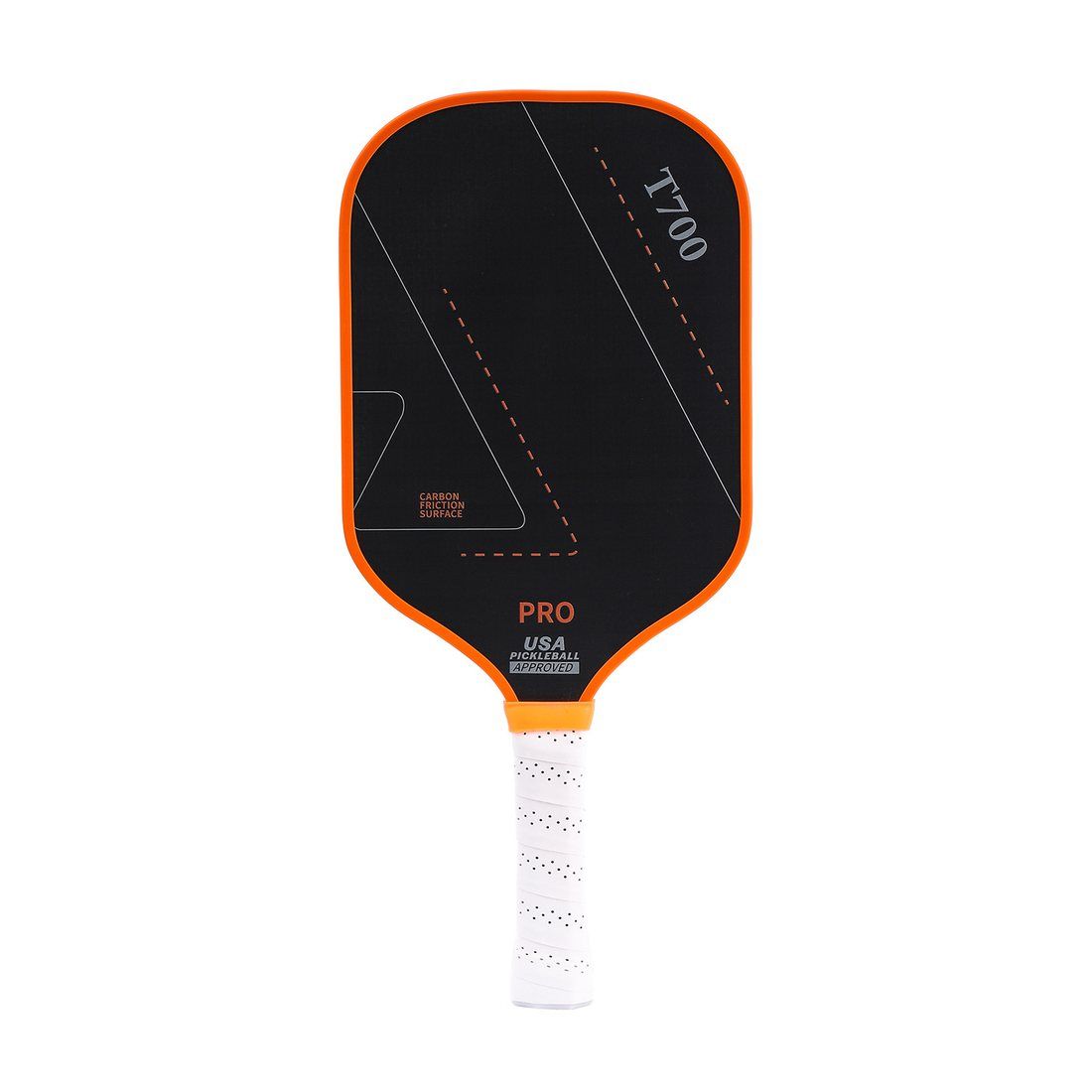
Physically, twist weight is a moment of inertia — the paddle's resistance to rotating about the long axis that runs from the butt of the handle up through the center of the face. When you strike a ball dead-center, there's no twisting force. When you catch it toward the 3 or 9 o'clock edge, the impact tries to rotate the face around that axis, and twist weight is what resists that rotation. A paddle with high twist weight barely flinches on an edge hit; one with low twist weight rolls in your hand, and the ball sprays off-line and slow.
It's measured in mass-times-distance-squared units (commonly kg·cm²), and typical pickleball paddles fall in a band roughly from the low-6 to mid-7 range, with higher numbers being more stable. The exact figure matters less than the direction: given two paddles you're comparing for a line, the higher twist weight is the more forgiving one on mishits. That's the whole practical meaning of the number, and it's why it's worth understanding rather than just copying from a spec sheet.
Why it plays like a bigger sweet spot
Ask a buyer what they want and "a bigger sweet spot" comes up constantly. The sweet spot isn't really a fixed patch of the face, though — it's the region where a hit keeps most of its speed and stays on-line. Twist weight expands that region without changing the paddle's dimensions: a higher twist weight means an off-center hit loses less pace and less direction, so more of the face plays "sweet." Two paddles with the same face size can have very different effective sweet spots purely because one resists the off-center twist better.
That's why twist weight matters more as players get better and rally speeds climb. At the kitchen line in fast hands battles, most blocks and resets are caught somewhere other than dead center — and a high-twist-weight paddle keeps those defensive touches alive instead of spraying them. For a recreational or club line, high twist weight is pure forgiveness that flatters an inconsistent contact point. Either way, it's the spec that turns "I keep shanking it" into "this paddle just feels solid," and it pairs with the core and face choices in paddle core cell size and raw carbon vs fiberglass faces.
What raises and lowers it in the build
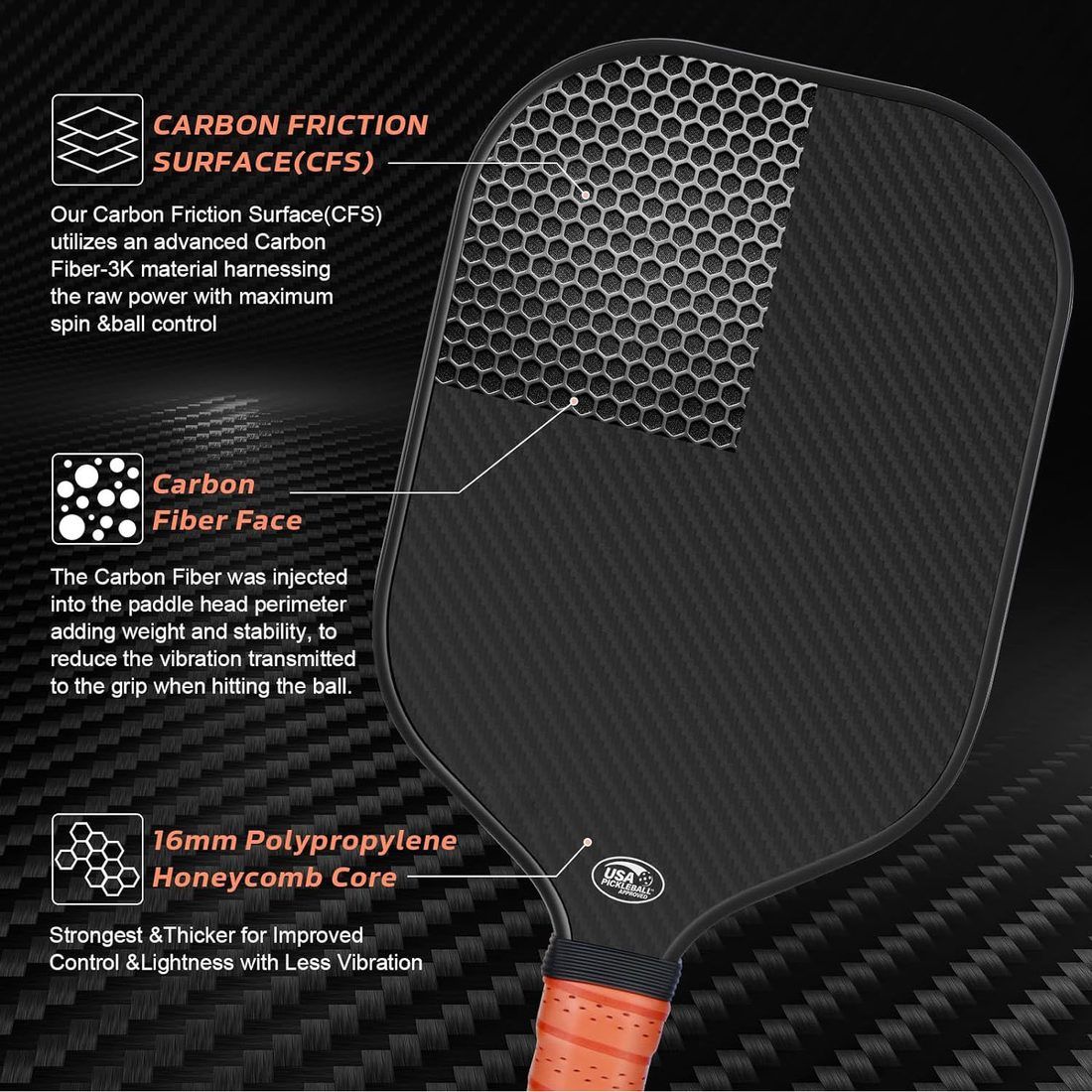
The lever is distance from the long axis. Because twist weight scales with mass times the square of its distance from that axis, weight placed near the side edges counts far more than weight near the center. Three build choices move it. Width: a wider face carries its material further from the axis, so widebody shapes run higher twist weight than narrow elongated ones. Perimeter weighting: mass concentrated at the edges — heavier edge material, perimeter-weighted molds, or foam-injected edge walls — raises twist weight efficiently. Edge weights at 3 and 9 o'clock: adding weight at the side positions is the most targeted way to raise twist weight, because those positions are farthest from the long axis.
The reason edge tuning is powerful is that it lets you raise twist weight without piling on swing weight. Weight added at 12 o'clock (the top) drives swing weight up hard and makes the paddle feel head-heavy; weight added at 3 and 9 raises twist weight with a much smaller swing-weight penalty. That's why perimeter-weighted and foam-edge builds — the same construction family as Gen 3 foam-wall paddles — became the standard route to forgiving paddles. It's a placement problem, not just a "how much mass" problem.
The three weights, side by side
Twist weight only makes sense next to the other two. They're independent axes, and a good spec sheet names all three because a paddle can sit high on one and low on another.
| Weight | What it is | What it affects |
|---|---|---|
| Static weight | What a scale reads | Overall heft; raw plow-through |
| Swing weight | Inertia about the handle | How heavy it feels to swing; maneuverability vs power |
| Twist weight | Inertia about the long axis | Off-center stability; effective sweet spot |
The full picture of the second column — how swing weight trades maneuverability against power — is its own subject in swing weight explained, and how thickness feeds all of this is in paddle weight and thickness. The point here is that twist weight is not a restatement of the other two; you can move it largely on its own by where you put edge mass.
Ask a supplier for all three weights, not just static weight. A factory that can only tell you the paddle weighs 8.0 ounces is describing a scale reading, not how the paddle plays. Swing weight and twist weight are what a player actually feels.
The shape ceiling and the trade-offs
You can't chase twist weight without limit, because USA Pickleball caps a paddle at 17 inches long and 24 inches combined length plus width. That fixed budget is why shape is a trade-off, not a free choice: spend it on width and you get a widebody with high twist weight but shorter reach; spend it on length and you get an elongated paddle with more reach and a longer swing arc but lower twist weight. There's no shape that's simply "better" — there's the shape that fits the player, and the USA Pickleball equipment standards set the box you're optimizing inside. The full shape comparison is in elongated vs widebody paddle shapes.
The other trade-off is against swing weight and maneuverability. Push twist weight up with a lot of edge mass and, even placed at 3 and 9, some of it feeds swing weight and total weight, which can make the paddle feel more sluggish in fast exchanges. The art of a good forgiving paddle is getting the twist weight high while keeping the swing weight in a range the target player can still whip around. That balance is exactly what a sample play-test settles — the spec sheet gets you close, the hitting confirms it.
Speccing twist weight into a line
Turn the physics into a build decision by starting from the player, the same way you would for the core. Match the twist-weight target to who buys the SKU.
| Target player | Twist weight | How to get there |
|---|---|---|
| Beginner / club / doubles control | High | Widebody shape, perimeter weighting, edge foam |
| All-court intermediate | Medium-high | Standard/hybrid shape with moderate edge mass |
| Singles / reach-first / power | Lower accepted | Elongated shape for reach; accept less off-center margin |
Write the twist-weight target into the spec sheet alongside static and swing weight, shape, core, and face — the full document lives in the custom paddle specs checklist. Then confirm it on a sample: measure the three weights, and put the paddle in the hands of someone who fits the target player to check that the forgiveness is really there. A number on paper and a paddle that feels solid on a shank are two different confirmations, and you want both before a production run.
Best for / not for: chasing high twist weight
High twist weight is forgiveness, and forgiveness is right for most players but not a free lunch for all of them.
| Spec high twist weight | Twist weight matters less |
|---|---|
| Beginner and club lines where forgiveness sells | Reach-first singles paddles where length is the priority |
| Doubles and control paddles built around hands battles | Ultra-light paddles where any added edge mass is unwelcome |
| Any SKU whose reviews will mention "sweet spot" and "shanks" | Budget promo paddles where added tooling for edge mass isn't worth it |
Frequently Asked Questions
What is twist weight on a pickleball paddle?
It's the paddle's resistance to twisting in your hand on an off-center hit — the moment of inertia about the long axis running from the handle through the center of the face. Higher twist weight means an off-center hit loses less speed and stays truer to your aim. It's measured in kg·cm², with higher numbers being more stable and forgiving.
Is higher twist weight always better?
For forgiveness, yes — higher twist weight makes mishits more stable, which is what most players want. But you can't raise it without limits: shape is capped by USA Pickleball's length-plus-width rule, and adding edge mass to raise twist weight also adds some swing weight. The goal is high twist weight while keeping swing weight in a range the target player can still swing quickly, not the highest possible number.
How is twist weight different from swing weight?
They're different axes of rotation. Swing weight is the inertia about the handle — how heavy the paddle feels to swing, trading maneuverability against power. Twist weight is the inertia about the long axis up the face — how stable it is on off-center hits. A paddle can be low in swing weight yet high in twist weight, or the reverse, so a good spec names both.
Does a wider paddle have higher twist weight?
Generally yes. A wider face carries its mass further from the long axis, and twist weight scales with the square of that distance, so widebody shapes run higher twist weight than narrow elongated ones. The catch is the legal length-plus-width cap: a wider paddle is a shorter paddle, trading reach for stability. Width is one of the main levers for twist weight, alongside perimeter and edge weighting.
Can twist weight be added after the paddle is built?
To a degree — adding lead tape at the 3 and 9 o'clock edge positions raises twist weight, which is how players tune retail paddles. For a manufacturer, though, it's better designed in through shape, perimeter weighting, and edge construction, so the paddle ships with the target forgiveness rather than relying on the end user to modify it. Design it into the spec, and treat tape as fine-tuning, not the plan.
Should every paddle in my line have high twist weight?
No. High twist weight suits beginner, club, and doubles-control SKUs where forgiveness sells. A singles or reach-first paddle deliberately spends its length-plus-width budget on reach instead, accepting lower twist weight. Match the twist-weight target to each SKU's player, the same way you match core and shape — a line usually carries a spread, not one setting.
Want to source this quality for your brand?
Contact our factory directly on WhatsApp for an instant MOQ and pricing quote.