Elongated vs Widebody vs Standard Pickleball Paddle Shapes
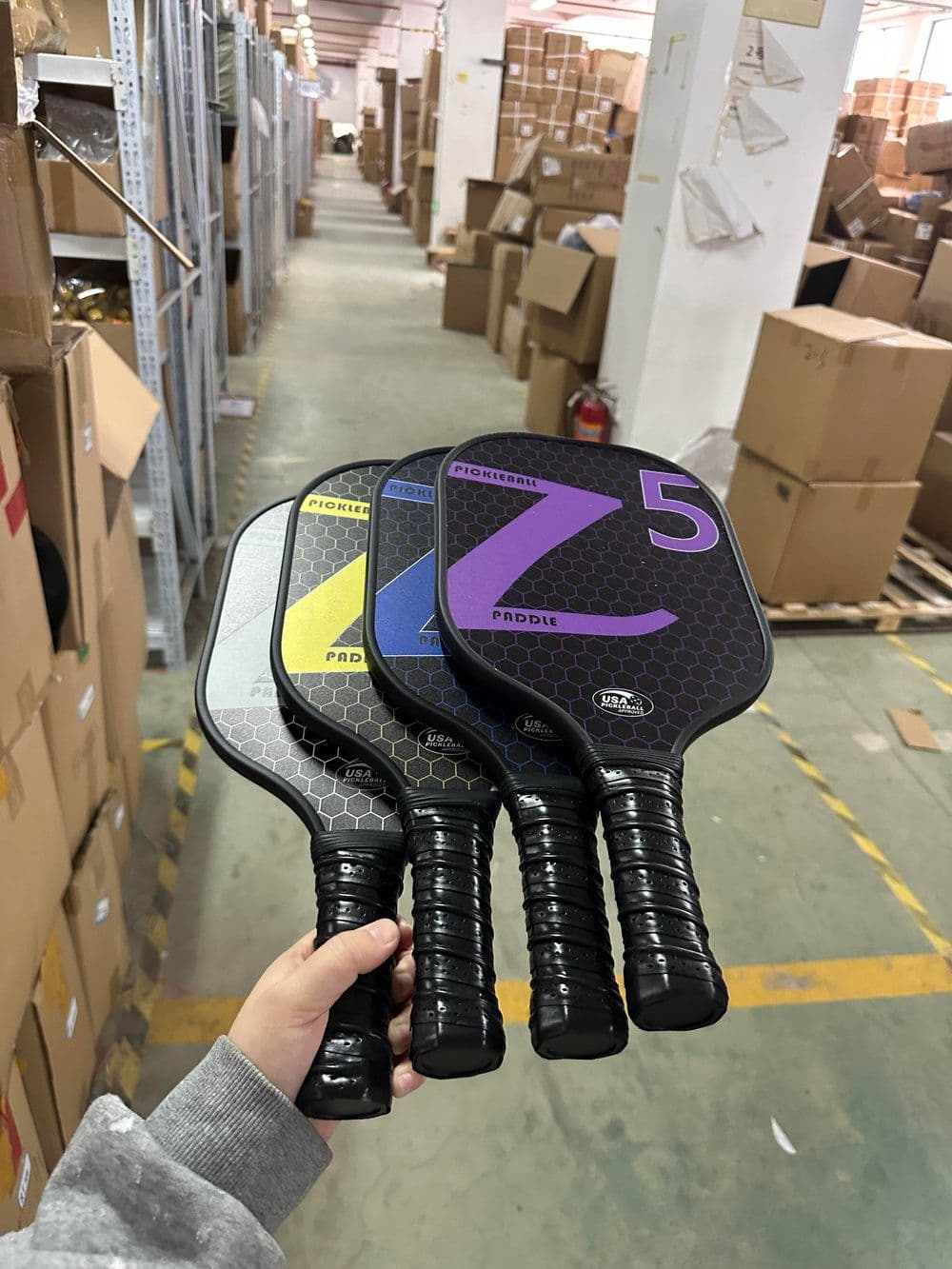
Most buyers pick a paddle shape by looking at what sells for someone else, then wonder why their line doesn't move the same way. Shape is not a styling choice — it decides who the paddle is for. An elongated paddle rewards a different player than a widebody, and stocking the wrong shape for your customer base is how a "great" paddle sits on the shelf. Before you lock a spec sheet with any factory, you need to know exactly what each shape does on court and which buyer it's built for.
Every legal pickleball paddle lives inside one hard limit — length plus width can't exceed 24 inches, and length caps at 17 inches. Inside that box, moving the outline longer or wider trades reach for control, and power for forgiveness. This guide breaks down the three working shapes — elongated, widebody, and standard — by what actually changes for the player, so you can build a product line that matches your market instead of copying a competitor's catalog.
Key Takeaways
- All three shapes share one legal envelope: length + width ≤ 24 in, length ≤ 17 in. The differences live in how you distribute that budget.
- Elongated (~16.5 × 7.5 in) buys reach, leverage, and spin at the cost of a smaller, higher sweet spot — a paddle for confident, aggressive players.
- Widebody / standard (~15.75–16 × 8 in) gives the biggest sweet spot and the most forgiveness — the safest choice for beginners, rec clubs, and house-brand volume.
- Handle length rides with shape: elongated paddles usually carry a longer handle for two-handed backhands, which shortens the face and shifts feel.
- For a first house-brand SKU, lead with a 16 × 8 in widebody in a 16 mm thermoformed build — it satisfies the widest slice of players and returns the fewest "doesn't feel right" complaints.
- Shape interacts with core thickness, swing weight, and handle length. Spec them together, or you ship a paddle that measures right and plays wrong.
The one rule every shape has to obey
Before shape becomes a marketing story, it's a compliance box. USA Pickleball caps the combined length and width of a paddle at 24 inches, with a maximum length of 17 inches. There is no thickness limit and no weight limit, but that 24-inch envelope is fixed — so every shape decision is really a decision about how to spend those inches.
That's why the three shapes exist. Spend more of the budget on length and you get an elongated paddle: more reach and leverage, less width. Spend it on width and you get a widebody: a fatter, more forgiving face with less reach. Sit in the middle and you get a standard classic shape. Nothing here is free — every inch you add to one dimension you take from the other. Understanding that trade is the whole game, and it's the same discipline that governs a proper custom paddle spec sheet: you're allocating a fixed budget, not chasing every number at once.
Elongated: reach and power for confident players
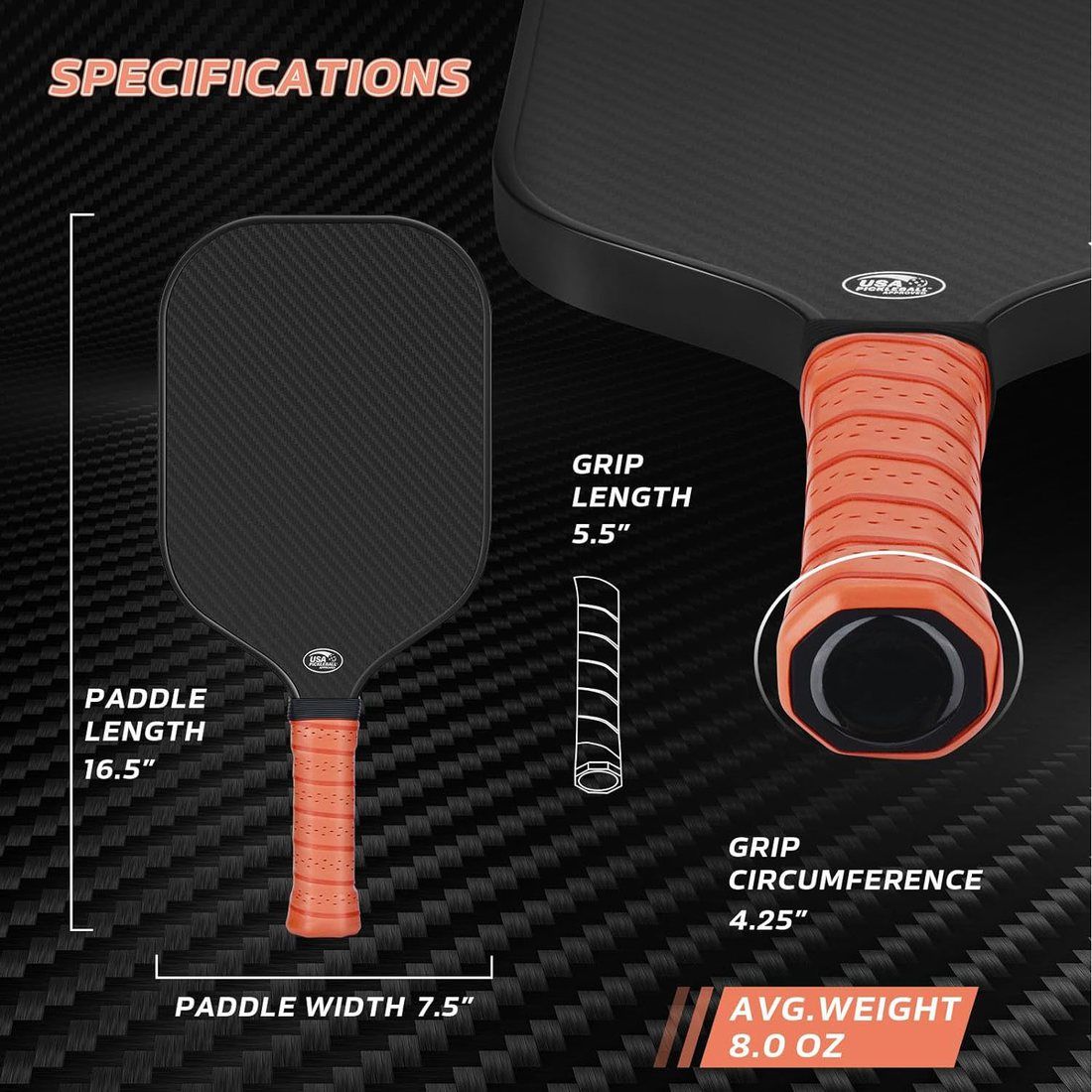
An elongated paddle typically runs around 16.5 inches long by 7.5 inches wide. The extra length does three things at once. It adds reach at the net and on the stretch, which singles players and aggressive doubles players value. It moves mass further from the hand, so the paddle head carries more leverage into a drive — that's the "power" reputation. And the longer face gives spin-heavy players a bigger arc to brush up the ball.
The cost is precision. Because the width shrinks to stay legal, the sweet spot gets narrower and sits higher toward the tip. Off-center hits punish you more, and the extra swing weight is slower to maneuver in fast hands-battles at the kitchen. This is not a beginner's paddle. Put an elongated shape in the hands of a new player and they'll shank the ball off the narrow face and blame the paddle. Sell it to a 4.0-and-up player and they'll tell you it's the best control-and-power paddle they've owned.
Elongated is a specialist SKU, not a volume driver. It sells to players who already know their game — position it that way and it moves; sell it as your all-rounder and it comes back.
Widebody and standard: the forgiving workhorse
The widebody shape spends the budget the other way: roughly 15.75 to 16 inches long by a full 8 inches wide. That width is the most valuable real estate in the paddle world because it creates the largest, lowest, most central sweet spot. A player who catches the ball slightly off-center still gets a clean, controlled shot instead of a mishit. The paddle is also easier to whip around in fast exchanges because more of its mass sits closer to the hand.
"Standard" and "classic" usually describe the same forgiving footprint — the shape the sport grew up on. For most of the buyers walking into a sporting-goods store or joining a rec club, this is the correct paddle, and it isn't close. It flatters imperfect technique, it's comfortable at the net, and it produces the fewest complaints. If you're building a house brand and can only launch one shape, this is the one: it fits the widest band of players and protects you from the "this paddle feels weird" returns that quietly eat margin.
The three shapes side by side
Read this as a line-building matrix. Each row is a real trade you're making on behalf of a specific customer, not a spec bragging point.
| Factor | Elongated | Widebody / Standard |
|---|---|---|
| Typical footprint | ~16.5 × 7.5 in | ~15.75–16 × 8 in |
| Sweet spot | Smaller, higher toward the tip | Larger, lower, more central |
| Reach | More | Less |
| Power / leverage | Higher (mass further out) | Moderate, easier to control |
| Maneuverability | Slower in hand battles | Faster, quicker to reset |
| Forgiveness | Low — punishes off-center | High — flatters mishits |
| Best-fit player | 4.0+, singles, spin/power | Beginner to intermediate, rec, doubles |
| Role in your line | Specialist / premium SKU | Volume anchor / first SKU |
The bottom two rows are the ones that decide inventory. Match "best-fit player" to who actually buys from you, and let "role in your line" set your order quantities — deep on the widebody, shallow and deliberate on the elongated.
Shape is only half the paddle — the specs it pulls with it
The single biggest mistake in building a paddle line is treating shape as an isolated dimension. It isn't. Change the shape and three other specs move with it, and if you don't spec them together you'll ship a paddle that measures correctly and plays wrong.
- Handle length: Elongated paddles usually carry a longer handle (5.25–5.5 in) so two-handed backhands have room. But a longer handle eats into the face, shrinking the hitting area even more. A widebody typically runs a shorter handle to maximize face.
- Swing weight: Length pushes mass away from the hand, which raises swing weight and makes the elongated paddle feel heavier and more powerful even at the same static weight. Spec this deliberately — see how swing weight actually works before you sign off.
- Core thickness: A thicker 16 mm core adds control and dampening; a thinner 13–14 mm core adds pop. Pairing a thin, poppy core with an already-powerful elongated shape can make a paddle no rec player can control. Balance them — the weight and thickness trade-off compounds with shape.
- Face material: A raw carbon face adds spin and touch; the surface you choose changes how much the shape's spin advantage actually shows up on court.
How to build the shape mix for your market
Once you understand the trade, line planning gets simple: match the shape depth to who buys from you. A few real patterns:
- House brand / mass retail: Anchor on widebody 16 × 8 in. Make it 70–80% of your buy. Add one elongated model as a "pro" SKU to give the range credibility, but don't over-order it.
- Club / facility fleet: Widebody only. Fleet and rental players are mixed-ability and rotate paddles constantly — forgiveness beats every other trait, and a narrow elongated face generates complaints and mishits.
- Enthusiast / specialty brand: Lead elongated for reach, spin, and the "serious player" story, and offer a widebody for customers who demote themselves to comfort. Here the mix can flip toward elongated.
- Junior / school programs: Widebody, lighter static weight, shorter handle. The bigger sweet spot builds confidence fast; power and reach are irrelevant at that level.
What we lock before a shape goes into production
Because we build all three shapes to a signed spec sheet rather than pulling from a fixed catalog, every shape decision gets pinned down on paper before tooling and pressing begin. On each paddle order we confirm:
- Outline and legality: Length + width measured against the 24-inch limit, with length under 17 in, so the finished paddle is approval-eligible from the start.
- Handle length and its face cost: Confirmed against the shape so the effective hitting area matches what the buyer expects, not just the outline number.
- Static weight and swing weight: Both targeted and sampled, because shape shifts swing weight even when static weight is on spec.
- Core thickness and face: Matched to the shape's character so a powerful shape doesn't get an uncontrollable core.
- Golden sample sign-off: One approved physical paddle per shape becomes the reference the whole batch is checked against.
Ask any factory to put these five on the spec sheet before you pay a deposit. A supplier that can only quote you a shape by name, without committing to handle length, swing weight, and a signed sample, is selling you a guess.
Conclusion
Shape isn't about which paddle is best — it's about which buyer you're building for. Elongated spends the legal envelope on reach, leverage, and spin for confident players, and punishes everyone else. Widebody and standard spend it on a big, forgiving sweet spot that flatters the majority of buyers, which is exactly why it should anchor almost any house brand's line. Get the shape wrong for your customer and no amount of premium carbon rescues the SKU.
Plan the shape mix around who actually buys from you, spec handle length, swing weight, and core alongside the outline, and sign off a physical golden sample per shape before production. Do that and each paddle in your line has a clear owner instead of competing with itself on the shelf.
Frequently Asked Questions
What is the difference between an elongated and a widebody pickleball paddle?
An elongated paddle (around 16.5 × 7.5 in) trades width for length, giving more reach, leverage, and spin but a smaller sweet spot. A widebody (around 16 × 8 in) trades length for width, giving a larger, more forgiving sweet spot that suits most recreational players.
What paddle shape is best for beginners?
A widebody or standard shape around 16 × 8 inches is best for beginners because the larger, more central sweet spot forgives off-center hits and builds confidence. Elongated paddles have a narrower face that punishes mishits and suit advanced players.
What is the maximum legal size for a pickleball paddle?
Under USA Pickleball rules, a paddle's combined length and width cannot exceed 24 inches, and length cannot exceed 17 inches. There is no limit on thickness or weight. Every shape must fit inside this envelope to be approval-eligible.
Which paddle shape should I choose for my house brand?
Lead with a widebody around 16 × 8 in as your volume anchor, since it fits the widest range of players and returns the fewest complaints. Add an elongated model as a lower-volume "pro" SKU for credibility, but keep its order quantity modest.
Does paddle shape affect power and spin?
Yes. An elongated shape moves mass further from the hand, raising swing weight and leverage for more power, and its longer face gives a bigger arc for spin. A widebody keeps mass closer to the hand for control and maneuverability at the cost of reach and top-end power.
Want to source this quality for your brand?
Contact our factory directly on WhatsApp for an instant MOQ and pricing quote.