7 Specs to Lock Before You Order Custom Pickleball Paddles
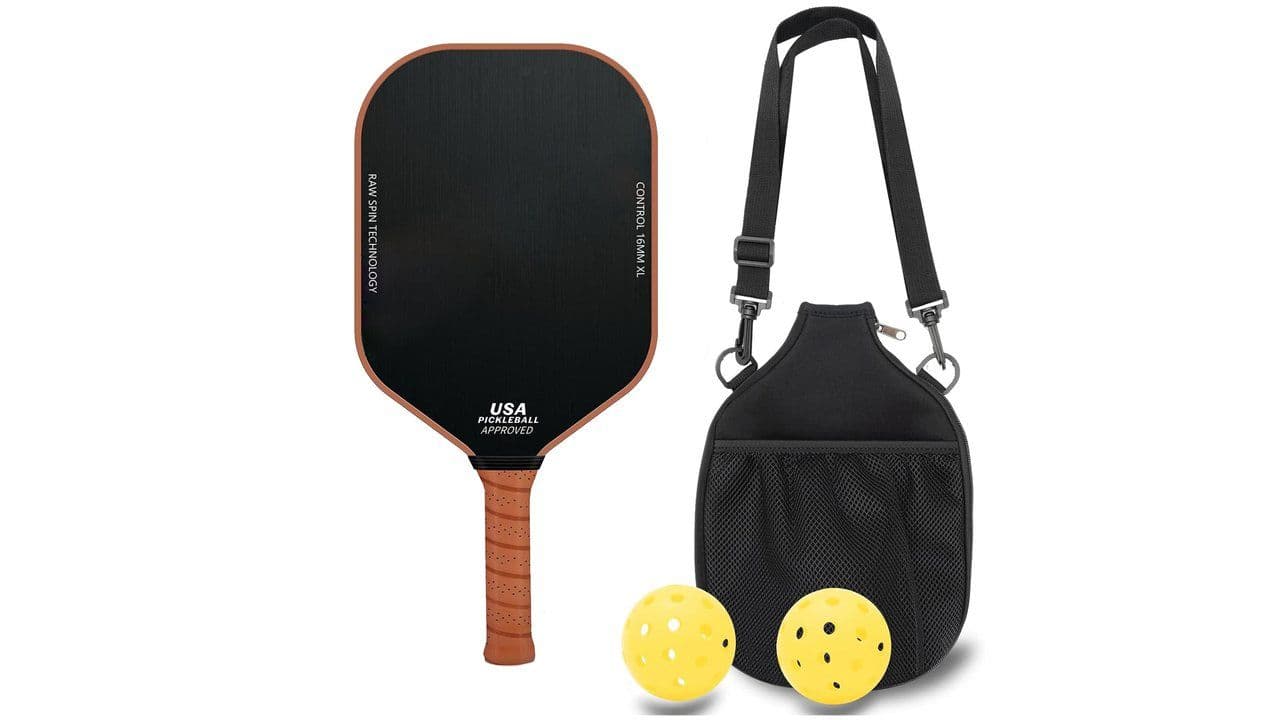
Most custom pickleball paddle orders go wrong before production starts, in the gap between "make it like this sample" and a written spec. Seven numbers decide how the paddle plays and how consistent the batch is, and if you don't lock them, the factory picks them for you — usually the cheapest option that still looks right. This checklist is the spec sheet to settle before you pay a deposit: core thickness, face material, surface, construction, shape, weight, and grip. Lock these seven and the paddle that ships matches the paddle you approved.
Each spec below comes with the decision that matters and the trade-off behind it. Treat it as the tech-pack outline for your next custom run — fill in a value for every line, and don't leave any of them as "supplier's standard."
Key Takeaways
- Lock seven specs before deposit: core thickness, face material, surface, construction, shape, weight, and grip.
- Core thickness sets power vs control: 13–14 mm plays punchier, 16 mm plays softer and more forgiving.
- Face material is a price tier, not a quality ladder: fiberglass entry, T300 mid, raw T700 premium.
- Surface texture must stay under the USA Pickleball roughness limit when new and after wear.
- Spec weight and swing weight, not just static weight, so feel is consistent across the batch.
- Write a value for every line; anything left as "supplier standard" becomes the cheapest option by default.
The 7 specs to lock
1. Core thickness
Lock this: 16 mm for control and all-court SKUs; 13–14 mm for a power model.
The polypropylene honeycomb core's thickness is the biggest single lever on feel. A 16 mm core is softer, more forgiving, and easier to control at the net; a 13–14 mm core hits punchier and faster but with a smaller margin for error. Pick per SKU, because this one number changes the paddle's whole character. See the weight and thickness guide for the full breakdown.
2. Face material
Lock this: Fiberglass for entry, T300 for mid-tier, raw T700 carbon for premium — and get the grade in writing.
The face is a price-and-performance tier, not a ladder from bad to good. Raw T700 carbon holds spin texture and crispness longest; T300 is real carbon at a lower cost; fiberglass is the lively, cheap entry face. The trap is relabeling — "3K carbon" describes a weave, not a strength grade, so a paddle can look premium and use T300. Specify the grade and ask for a material certificate. The face-material guide covers how to verify it.
3. Surface texture
Lock this: Peel-ply raw carbon, verified under the USA Pickleball roughness limit when new and after wear.
Spin comes from the surface, and the surface is the easiest thing to fake in a sample. A sprayed-on grit can feel grabbier on day one, then wear smooth in months and drift past the legal roughness ceiling. A peel-ply raw-carbon texture is built into the cured face and lasts far longer. Confirm the texture method and a roughness reading; the surface and spin guide explains the limits.
4. Construction
Lock this: Thermoformed for premium/power lines (with proven core control); cold-pressed for budget and repair-friendly SKUs.
Thermoformed unibody paddles deliver more power, a bigger sweet spot, and an edge that won't peel — but the same heat-and-pressure process can crush a flawed core and fail early if it isn't controlled. Cold-pressed is cheaper, repairable, and lower-risk on the core. The deciding factor is whether the supplier can prove core control. Weigh both in the construction guide.
5. Shape
Lock this: Standard/widebody for beginners and control; elongated for reach and power players.
Shape sets reach, sweet-spot size, and maneuverability. A widebody or standard shape gives a bigger, more forgiving sweet spot and quicker handling — ideal for rec and beginner lines. An elongated shape adds reach and drive power but shrinks the sweet spot, suiting advanced and singles players. For a full range, carry one of each rather than forcing one shape across every skill level.
6. Weight and swing weight
Lock this: A static weight (about 7.6–8.3 oz) AND a target swing weight and balance per SKU.
Static weight alone doesn't describe feel — two 8.0 oz paddles can feel a category apart depending on where the mass sits. Spec the swing weight (roughly 105–124 for most lines) and balance point too, and require them to be held consistent across the batch. That consistency, not the average number, is what stops "this one feels different" returns. The swing weight guide shows how it's tuned.
7. Grip size and length
Lock this: Grip circumference (about 4.0–4.25 in) and handle length to match your target player.
Grip is the cheapest spec to get wrong and the first thing a player feels. Circumference affects comfort and wrist action; a longer handle suits two-handed backhands, a shorter one frees the hitting hand. Set the circumference, handle length, and overgrip so the finished paddle feels right in the hand it's built for. The grip size guide has the measurements.
Put it together: one spec line per SKU
A complete custom paddle order names a value for all seven specs, per SKU. Here's how the seven map to a simple three-model line.
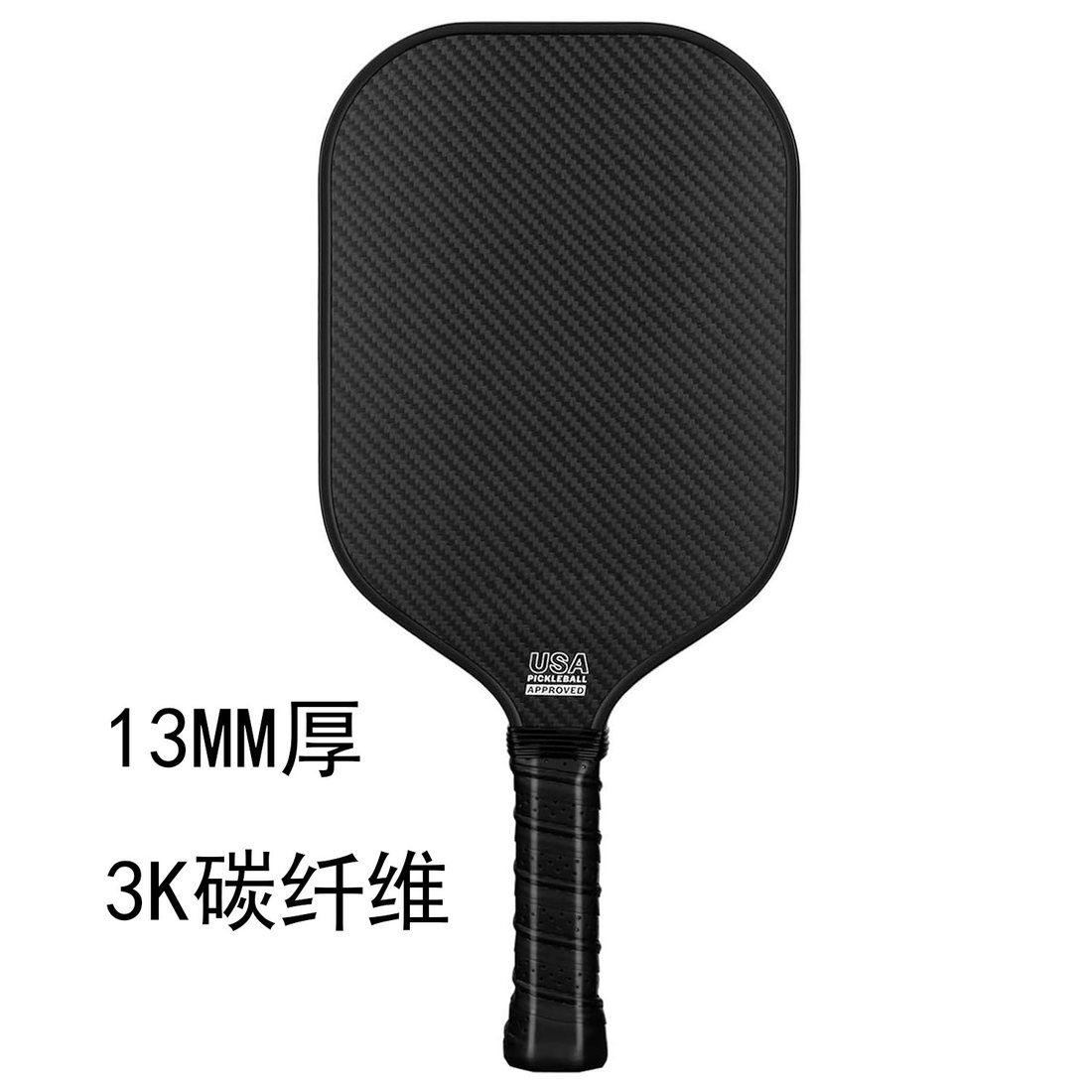
| Spec | Control model | Power model |
|---|---|---|
| Core | 16 mm | 13–14 mm |
| Face | Raw T700 | Raw T700 |
| Shape | Widebody | Elongated |
| Swing weight | Light–average | Heavy |
There is no governing-body limit on most of these specs — only the playing-surface roughness is capped, by USA Pickleball's equipment standards — so the rest are design choices you own. Make them on purpose.
What we lock with you before production
Because a vague spec becomes the cheapest default, every custom order starts by pinning all seven values in writing. Before a deposit, we confirm:
- A full spec sheet per SKU: core, face grade, surface, construction, shape, weight/swing weight, and grip — no blanks.
- A signed golden sample: the approved paddle becomes the reference the batch is measured against.
- Material certificate: the carbon grade documented to source, so T700 is T700.
- Tolerances, not just targets: the acceptable range for weight, swing weight, and surface, so the batch stays consistent.
Ask any factory to fill in all seven specs before quoting. A supplier that wants to leave half of them as "standard" is choosing your paddle for you.
Conclusion
Seven specs separate a custom paddle you designed from one the factory defaulted. Core thickness and shape set the feel; face material and construction set the tier and durability; surface sets legal spin; weight, swing weight, and grip set consistency and comfort. Write a value for each, attach a signed golden sample, and require tolerances — then the paddle that lands in your warehouse is the one you approved, batch after batch.
If you're scoping a custom line, build the spec sheet from these seven lines before you ask for a quote. Our team fills in every value with you and locks it to a golden sample, so nothing is left to "standard."
Written by the PickleOEM team — a source pickleball factory in China producing carbon paddles and rotomolded balls for international brands and importers. We lock every custom paddle spec to a signed golden sample before production.
Frequently Asked Questions
What specs do I need to order custom pickleball paddles?
Lock seven: core thickness, face material and grade, surface texture, construction, shape, weight and swing weight, and grip size. Leaving any as "supplier standard" hands the choice — usually the cheapest one — to the factory.
What core thickness should I choose?
Use 16 mm for control and all-court paddles and 13–14 mm for power models. Thicker plays softer and more forgiving; thinner hits punchier with a smaller margin for error.
Why spec swing weight and not just static weight?
Two paddles at the same static weight can feel a category apart, because feel depends on where the mass sits. Specifying swing weight and balance — and holding them across the batch — keeps the feel consistent.
Is there a legal limit on paddle specs?
Mainly the playing-surface roughness, which USA Pickleball caps. Most other specs — core, shape, weight, grip — are open design choices, so confirm current equipment standards for the surface and own the rest.
Want to source this quality for your brand?
Contact our factory directly on WhatsApp for an instant MOQ and pricing quote.