Pickleball Paddle Swing Weight: What It Is and How to Spec It
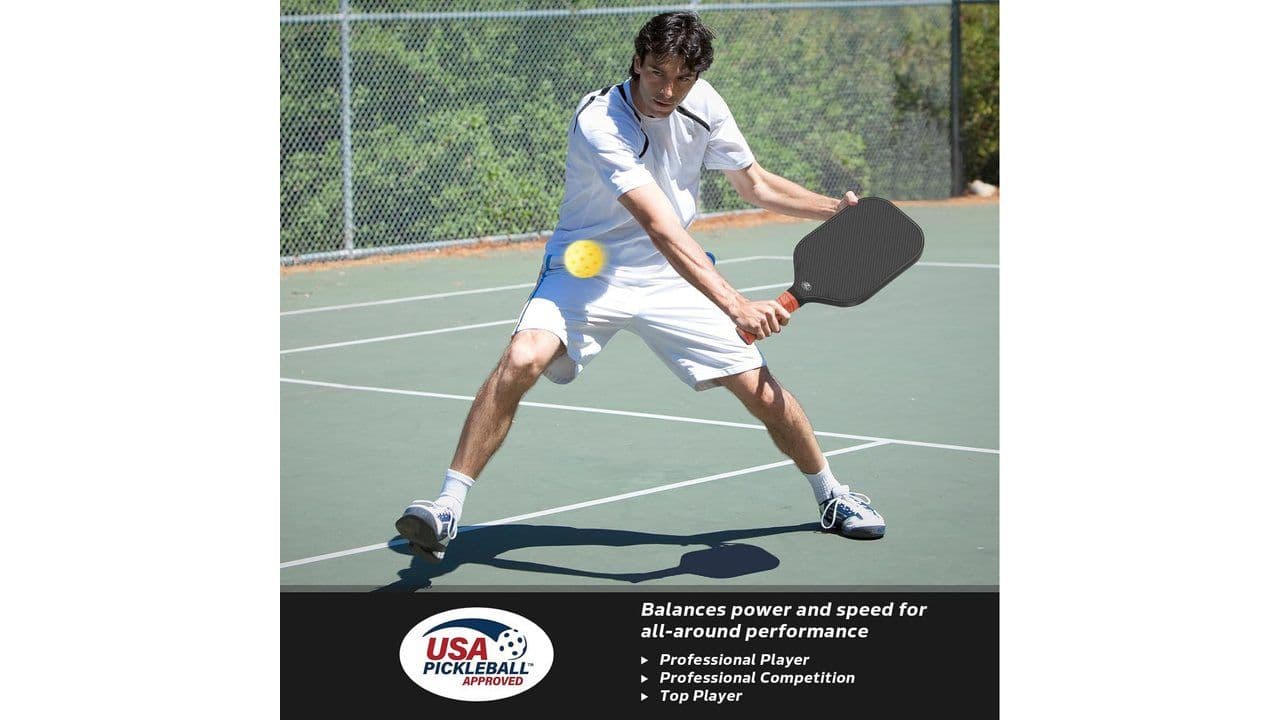
Swing weight is how heavy a pickleball paddle feels while you swing it — not what it reads on a scale. Two paddles can both list 8.0 oz and feel completely different in the hand, because swing weight depends on where the mass sits, not just how much there is. For anyone speccing a paddle line, this is the metric that decides whether your customers call the paddle "fast and easy" or "heavy and tiring," and it's the one most factory quote sheets leave off entirely.
The number itself runs on a scale of roughly 90 to 130. Lower feels quick and maneuverable; higher feels powerful but slower to move. Static weight, balance point, and twist weight all feed into how a paddle plays, and a buyer who understands the difference can tune feel on purpose instead of hoping a batch comes out consistent. Here's what each metric means, how it's set on the production line, and which numbers fit which player.
Key Takeaways
- Swing weight measures how heavy a paddle feels in motion; it depends on weight distribution, not just static weight.
- Typical range is about 90–130: very light 90–104, light 105–111, average 112–118, heavy 119–124, very heavy 125+.
- Static weight is just the scale reading — two 8.0 oz paddles can have very different swing weights and feel.
- Balance point sets the trade-off: head-heavy adds power and plow-through; handle-heavy or even feels faster in the hand.
- Twist weight is resistance to twisting on off-center hits — higher means a more stable, forgiving face.
- For sourcing, spec swing weight and balance, not just static weight, and check that they stay consistent across a batch.
What swing weight actually measures
Swing weight is the paddle's resistance to being swung — its rotational inertia around the point where you hold it. The further the mass sits from your hand, the harder the paddle is to accelerate, and the higher the swing weight. It's the same physics that makes a hammer held at the end feel heavier than the same hammer held near the head.
That's why distribution beats raw weight. Move a few grams from the handle to the top of the face and the scale barely changes, but the paddle feels noticeably heavier to swing. This is the gap that trips up buyers who spec only "8.0 oz" — two paddles at that weight can land a full category apart on swing weight, and play like different products.
The swing weight scale, by category
Swing weight is reported as a unitless number, usually measured on a dedicated swing-weight cradle. Here's how the common bands play on court.
| Swing weight | Category | How it plays |
|---|---|---|
| 90–104 | Very light | Quickest hands, least power |
| 105–111 | Light | Fast, control-friendly |
| 112–118 | Average | Balanced all-court feel |
| 119–124 | Heavy | More power, slower to move |
| 125+ | Very heavy | Most plow-through, most tiring |
These bands come from paddle-testing labs that swing every model on the same rig; the widely used reference figures are published by retailers like Pickleball Central's lab. There's no governing-body limit on swing weight, so it's a tuning choice, not a compliance one.
Static weight, balance point and twist weight
Swing weight doesn't stand alone. Three related numbers describe how a paddle distributes its mass, and together they explain the feel a customer reviews.
Static weight
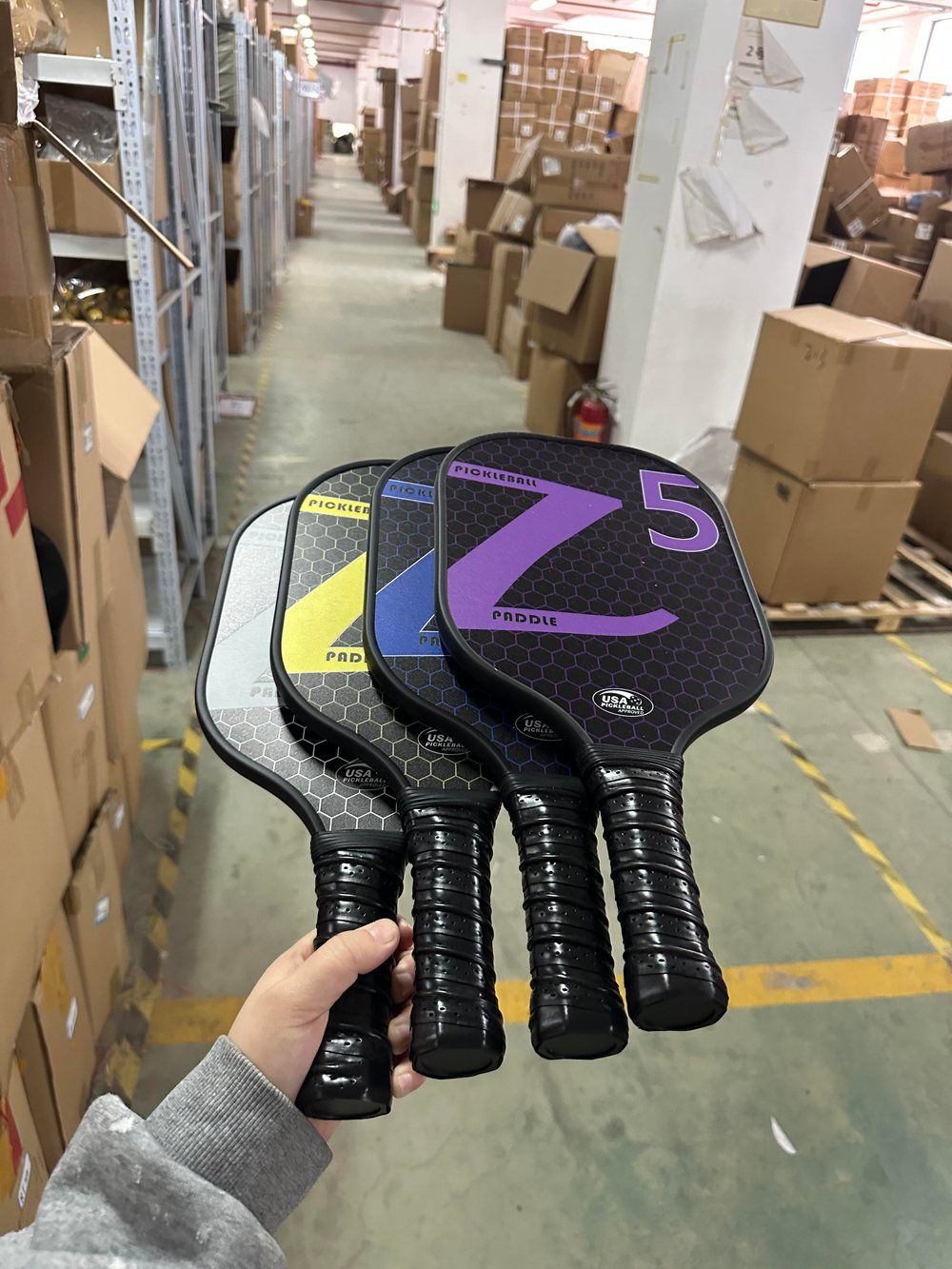
This is the scale reading — typically 7.3 to 8.5 oz for a pickleball paddle. It's the only weight most spec sheets list, and on its own it tells you very little about feel. Use it as a starting constraint, then look at how that weight is placed. A reliable factory holds static weight to a tight tolerance per SKU; loose tolerance is the first sign of inconsistent paddles. The weight and thickness spec sets this baseline.
Balance point
The balance point is where the paddle would sit level on a single finger — the line where head and handle weigh the same. A higher (head-heavy) balance pushes swing weight up and adds plow-through on drives. A lower (handle-heavy) balance drops swing weight and quickens hands at the net. It's the main lever a maker uses to hit a target feel without changing the static weight.
Twist weight
Twist weight measures how well the face resists rotating when you hit off-center. Higher twist weight means a more stable, forgiving paddle — a mishit near the edge wobbles less and stays on line. Wider paddle shapes and perimeter weighting raise it. For a brand selling to recreational players, twist weight is an underrated way to make a paddle feel "easy to play."
How swing weight is set on the production line
Swing weight isn't an accident of the build — it's tuned. A few grams in the right place move it a whole category, which is exactly why batch consistency matters so much.
- Core thickness: A thicker 16 mm core spreads mass differently than a 13 mm core, shifting both feel and swing weight even at the same static weight.
- Handle counterweight: Weight added inside the handle lowers the balance point and the swing weight, quickening the paddle without making it lighter.
- Edge and perimeter weighting: Mass around the rim raises twist weight and stability; mass near the top raises swing weight and power.
- Grip and overgrip: Even the grip adds handle-end weight, so the finished, gripped paddle is what should be measured — not the bare blank.
The risk in production is drift: if mass placement isn't controlled, swing weight scatters across a batch and customers receive paddles that feel different from the one they tried. That inconsistency, not the average number, is what generates returns.
Which swing weight fits which player?
Match the number to the buyer, and spec it per SKU instead of letting it fall where it may.
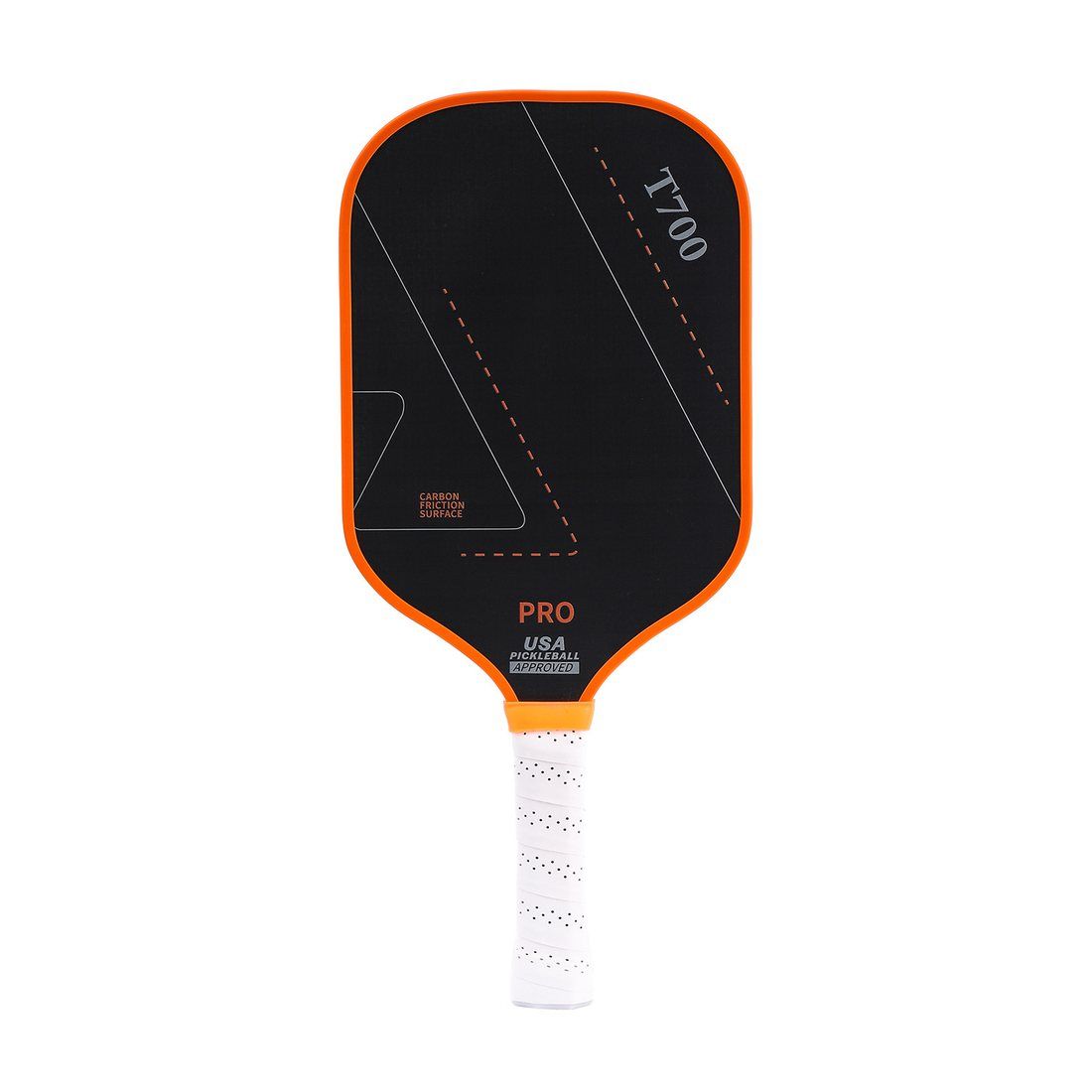
- Beginners and rec players: Light to average (about 105–116) — easy to maneuver, forgiving, less arm fatigue over long sessions.
- Control and dink-focused players: Light to average with a slightly higher twist weight for stability at the net.
- Power and singles players: Heavy (about 119–124) for plow-through, accepting slower hands as the trade.
- A 3-SKU brand line: Offer a light "control" model, an average "all-court" model, and a heavy "power" model — one swing-weight band each.
What we check on swing weight before shipment
Because feel lives in the distribution, not the scale, the inspection has to look past static weight. Every paddle order runs through the same checks before the balance is released:
- Static weight tolerance: Each paddle weighed to the SKU spec (around 8.0 oz) so the baseline is consistent.
- Balance point: Checked against the target so head/handle distribution stays on spec across the batch.
- Gripped, not bare: Measured as the finished paddle with its grip on, the way the customer holds it.
- Batch sampling: Swing weight sampled across the run so feel doesn't drift from first carton to last.
Ask any paddle supplier to quote a target swing weight and balance, not just static weight. A factory that can only tell you the scale number can't promise the paddle will feel the same from one container to the next.
Conclusion
Swing weight is the spec that explains why two identical-weight paddles feel nothing alike: it captures where the mass sits, and that's what your hand feels on every swing. Pair it with balance point and twist weight and you can design feel on purpose — quick and forgiving for beginners, heavy and powerful for singles players. Static weight is only the starting line. Spec the distribution, hold it tight across the batch, and your customers get the paddle they expect every time.
If you're building a paddle line, decide a target swing weight and balance for each SKU before sampling, then verify both on the finished, gripped paddle. Our team tunes paddle feel to spec and checks it per batch, so the feel a buyer approves is the feel that ships.
Written by the PickleOEM team — a source pickleball factory in China producing carbon paddles and rotomolded balls for international brands and importers. We tune paddle weight, balance, and swing weight to spec and inspect every order before shipment.
Frequently Asked Questions
What is a good swing weight for a pickleball paddle?
Most players do well in the 112–118 "average" band, which balances power and maneuverability. Beginners often prefer lighter (105–116); power and singles players go heavier (119–124). Match it to the buyer, not a single ideal.
What's the difference between swing weight and static weight?
Static weight is the scale reading; swing weight is how heavy the paddle feels in motion, based on where the mass sits. Two paddles at 8.0 oz can have very different swing weights and play nothing alike.
What is twist weight in a pickleball paddle?
Twist weight is the face's resistance to rotating on off-center hits. Higher twist weight means a more stable, forgiving paddle — mishits near the edge stay truer. Wider shapes and perimeter weighting raise it.
Can a factory tune swing weight to a target?
Yes. Handle counterweight, core thickness, and perimeter weighting all shift swing weight and balance without changing static weight much. The key is holding the target consistently across the whole batch.
Want to source this quality for your brand?
Contact our factory directly on WhatsApp for an instant MOQ and pricing quote.