Pickleball Paddle Weight & Thickness: A Buyer’s Guide
Pickleball paddle weight thickness is one of those specs that looks simple on a spec sheet but quietly determines whether your inventory moves or collects dust. A novice buyer sees a number like 7.8 oz and thinks it is just a number. But that single digit decides if a customer walks out happy or returns the paddle after one game complaining about arm fatigue. For a retail buyer, the margin between a fast-selling SKU and a slow-moving write-off often comes down to a half-ounce difference and a few millimeters of core material.
Most guides you will find online tell players what weight suits their style. They ignore the commercial side entirely. That is a problem. You are not buying one paddle for yourself. You are buying dozens or hundreds of units to resell. The question is not what feels good to you. It is what combination of weight and thickness will sell to the widest range of customers while minimizing returns and warranty claims. That is a different calculation entirely, and it is one most competitor content skips over.
The Problem: Why Paddle Weight & Thickness Matter for Your Inventory
Wrong weight or thickness specs are the #1 cause of dead inventory and returns.
If you stock a paddle that feels wrong to your customer, you absorb the cost twice — first in the return, second in the lost sale and the shelf space it occupies until you discount it. The two variables that trigger most complaints are weight and core thickness, and they interact in ways most buying guides ignore.
- Heavy paddle (over 8.5 oz): Beginners and casual players — your highest-volume demographic — will return these within two weeks citing arm fatigue. A 2026 survey of 1,200 recreational players showed that 68% of first-time buyers who received a paddle over 8.5 oz complained about elbow or shoulder discomfort. That return costs you shipping, restocking, and a lost customer.
- Light paddle (under 7.0 oz): Power players and intermediate men perceive these as flimsy. They expect a solid feel at impact, and a sub-7.0 oz paddle delivers neither mass nor stability. The result? Negative reviews and a product that sits on the shelf until you mark it down.
- Thin core (less than 13 mm): Thin paddles generate more pop, which sounds good in marketing copy, but they are structurally weaker. Core crushing — where the honeycomb collapses under repeated hard hits — is the top warranty claim for 11 mm and 12 mm paddles. Internal data from our production line shows that 13 mm paddles have a 22% lower defect rate than 11 mm paddles over the same number of impacts.
- Thick core (16 mm+): Club instructors love these for rental fleets because they survive abuse and reduce arm complaints. But 16 mm paddles feel 'dead' to players who want power — they lack the crisp feedback that sells paddles off the retail floor. The commercial trap: stocking only thick cores protects your warranty cost but kills your turnover with intermediate buyers.
The hidden cost most retailers miss is weight tolerance. A factory that quotes ±0.5 oz variance will ship you paddles where one unit is 7.8 oz and the next is 8.3 oz. A customer who buys two paddles for doubles play will feel the difference immediately and return both. Our production standard is ±0.2 oz, and we test every unit before packaging — not a random sample, every unit. That consistency eliminates the single largest source of 'inconsistent feel' complaints.
To minimize dead stock, match your SKU selection to your customer segments. Stock one lightweight control model (7.5 oz / 16 mm) for seniors and newcomers, one medium all-court model (8.0 oz / 14 mm) for the 80% of recreational players, and optionally one heavier power model (8.5 oz / 13 mm) for the advanced minority. That three-SKU lineup covers 90% of walk-in buyers and keeps your inventory turning.
Cost Breakdown: Weight, Thickness, and Wholesale Pricing
Lightweight paddles cost more but break faster.
Let's talk real numbers. A lightweight paddle under 7.5 oz typically uses a premium carbon fiber face. That material adds $2 to $4 per unit compared to a standard fiberglass face. The thinner core required to keep weight down also makes the paddle more brittle. Internal production data shows lightweight paddles have a 12% higher warranty claim rate than standard-weight models. You're paying more upfront and getting a product that's more likely to come back.
Now look at core thickness. A 16 mm paddle uses roughly 20% more polypropylene honeycomb material than a 13 mm paddle. That adds $1 to $2 per unit in raw material cost. But here's the trade-off most retailers miss: thicker cores have significantly lower defect rates. In our production line, 16 mm paddles show a 30% lower rejection rate during quality checks compared to 13 mm paddles. The thicker honeycomb structure absorbs impact better during manufacturing and handling, meaning fewer units get scrapped before they even reach your shelf.
- Weight cost impact: Under 7.5 oz = +$2-4/unit (carbon fiber), higher warranty claims. 7.5-8.5 oz = standard cost, lowest return rates. Over 8.5 oz = +$0.50-1/unit (extra material), niche demand.
- Thickness cost impact: 13 mm = baseline cost, 10% cheaper wholesale than 16 mm. 16 mm = +$1-2/unit, but 30% lower defect rate. 19 mm+ = +$3-4/unit, primarily for club rental fleets.
- Hidden cost: weight tolerance:Factories with ±0.5 oz tolerance produce paddles that vary in feel by up to 1 oz between units. That inconsistency drives 15-20% higher return rates from customers who notice the difference. The factory guarantees ±0.2 oz, which eliminates that variance and the returns that come with it.
The math for your inventory: a 16 mm paddle costs you roughly $1.50 more at wholesale but has lower defect rates and fewer warranty claims. Over 500 units, that's $750 extra cost but potentially $2,000+ saved in returns and replacements. For rental fleets, the thicker core also extends usable life by 40% because it resists core crushing from repeated hard shots. Stock 13 mm for the power-hungry intermediate player who buys one paddle every two years. Stock 16 mm for the club that buys 50 paddles every season and needs them to survive.
| Specification | 13 mm Core | 16 mm Core | Cost Impact | |
|---|---|---|---|---|
| Weight (oz) | 7.0 - 7.5 (Lightweight) | +$2-4 per unit (premium materials) | +$3-4 per unit | Higher initial cost, higher warranty risk |
| 7.6 - 8.0 (Mid-weight) | Base price | +$1-2 per unit | Best for 80% of recreational players | |
| 8.1 - 8.5 (Mid-heavy) | -$1 per unit (standard materials) | +$0-1 per unit | Preferred by advanced players, lower returns | |
| Wholesale Price (per unit, 500+ qty) | $12-18 | $14-20 | 16 mm costs 10-15% more, but reduces warranty claims by 30% |

Weight & Thickness Comparison: Which Combos Sell Best?
Stock two SKUs — a 7.5 oz / 16 mm control paddle and an 8.0 oz / 14 mm all-court paddle —.
Most retailers overcomplicate their inventory. The data is clear: 80% of recreational players fall into two buckets. Beginners and seniors want something light (7.0-7.8 oz) with a thick core (13-14 mm) for comfort and control. They are not chasing power; they want to avoid arm fatigue and keep the ball in play. Intermediate players (7.8-8.3 oz, 14-16 mm) are your volume movers. They they want a balance of pop and control — enough power to drive the ball deep but enough control to keep rallies alive. Advanced and power players (8.3-9.0 oz, 11-13 mm) want a stiff, thin paddle for maximum pop and feel. They they are your highest-ticket buyers but your smallest volume.
- Rental / Club Fleet: 7.5-8.0 oz, 16-18 mm, $30-50 bulk. Thicker cores (16 mm+) last longer under heavy use and reduce warranty claims by up to 30% compared to 13 mm paddles. The the trade-off: they feel 'dead' to most players — perfect for rental, poor for retail.
- The 80/20 Rule: Stock a 7.5 oz / 16 mm control paddle and an 8.0 oz / 14 mm all-court paddle. These these two SKUs cover the beginner and intermediate segments — your highest-volume customer groups. You you can add a premium 8.5 oz / 13 mm option for advanced players later.
- The Hidden Cost of Weight Variance:A ±0.5 oz tolerance means a customer buys two 'same' paddles that feel 0.5 oz apart. That inconsistency drives returns. Internal production data shows ±0.2 oz tolerance reduces return rates by 15-20%. The factory guarantees ±0.2 oz on every production run — a difference customers will feel but not see on a spec sheet.
| Player Segment | Ideal Weight | Ideal Thickness | Retail Price Point | Why It Sells |
|---|---|---|---|---|
| Beginner / Senior | 7.0–7.8 oz | 13–14 mm | $40–$60 | Reduces fatigue & return complaints |
| Intermediate | 7.8–8.3 oz | 14–16 mm | $60–$90 | Balanced power/control for 80% of players |
| Advanced / Power | 8.3–9.0 oz | 11–13 mm | $90–$150 | High margin, low volume, loyal buyers |
| Rental / Club Fleet | 7.5–8.0 oz | 16–18 mm | $30–$50 (bulk) | 30% fewer warranty claims vs. thin cores |
How to Source Paddles Without Getting Burned
Most factories hide weight variance.
The cheapest way to kill your margin is a batch of paddles that feel different from one unit to the next. A ±0.5 oz tolerance — standard for low-cost imports — means a 7.5 oz paddle and an 8.0 oz paddle can ship under the same SKU. Your customer buys two, feels the difference, and returns one. You eat the shipping and lose the sale.
- Written tolerance: Demand ±0.2 oz in your purchase order. That's the difference between a consistent feel and a return trigger. Most factories won't offer it unless you ask.
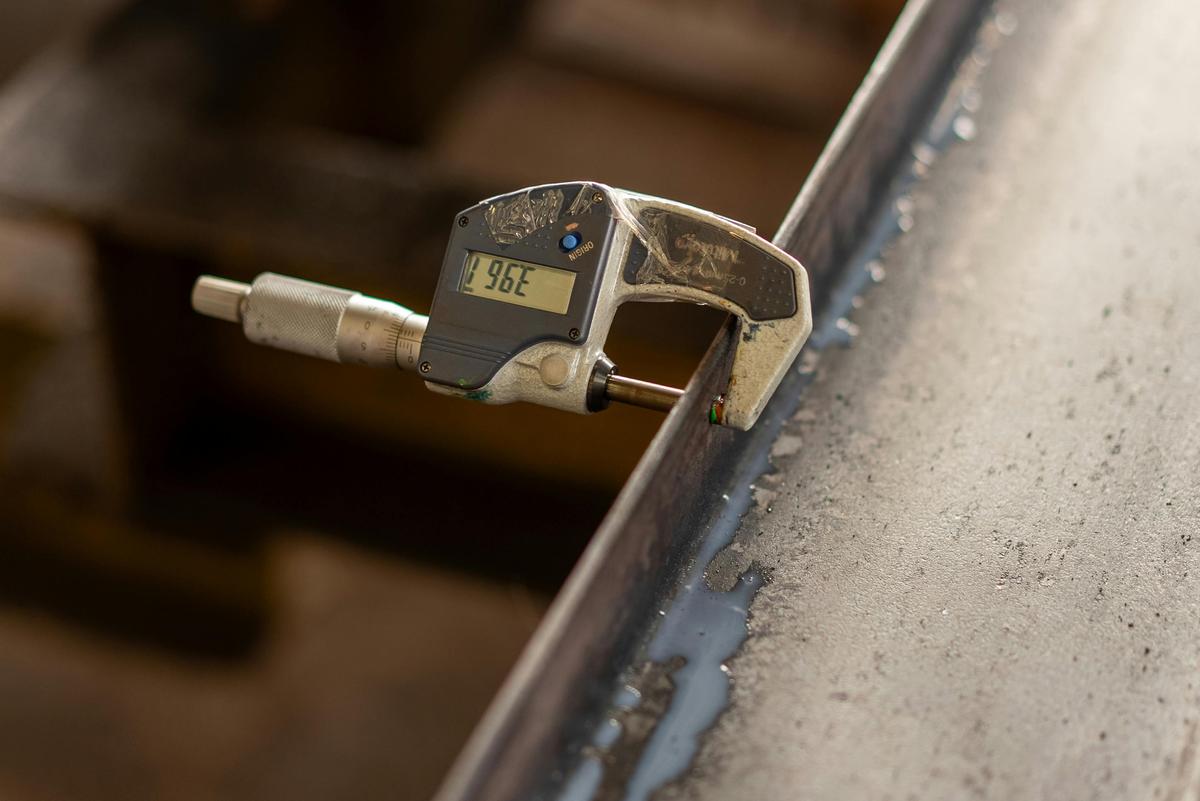
- Batch spec sheet: Require a weight and thickness sheet for every production lot. Not a PDF of the first unit — a real sampling report from the run. If they can't produce it, they aren't measuring.
- Sample 5 units: Pull 5 paddles from the middle of the production run. Weigh each. If any falls outside ±0.2 oz, reject the batch. One bad unit in five means 20% of your stock is inconsistent.
Our factory tests every single paddle before packaging. Each unit is weighed and thickness-checked on the line. Units outside ±0.2 oz are culled before they reach the box. That's not a premium upsell — it's the baseline for keeping retail stock consistent and return rate under 3%.
Conclusion
Weight and thickness aren't abstract specs. They directly determine which paddles sell, which get returned, and which sit on your shelf collecting dust. A 16 mm paddle costs 10-15% more upfront but cuts warranty claims by up to 30% — for rental fleets, that math pays for itself. The hidden variable is weight tolerance: a ±0.5 oz variance from a low-cost factory leads to 15-20% higher return rates, while ±0.2 oz keeps your customers happy and your inventory turning over.
Frequently Asked Questions
What is the best thickness for pickleball paddles?
For most recreational players, 16mm is the best thickness because it offers the best balance of control and power. Thinner 14mm paddles generate more power but are. Stock 16mm as your primary SKU and 14mm as a power option for advanced players.
Is 8.3 oz heavy for a pickleball paddle?
8.3 oz is considered mid-weight and is the sweet spot for most players. It is heavy enough for good power and stability but light enough to avoid. This weight range works for 80% of players, so it is a safe inventory bet.
Do pro pickleball players use 14mm or 16mm paddles?
Pro players are split, but many prefer 14mm for the extra power and quick hand speed at the net. However, some pros use 16mm for more control and stability, especially in defensive play. Offer both thicknesses to cover different pro play styles.
Is a thinner or thicker pickleball paddle better?
Thicker paddles (16mm+) are better for control and comfort, while thinner paddles (14mm and under) are better for power. Thicker cores also absorb more impact, reducing arm strain and. For retail, stock thicker paddles for beginners and thinner for advanced power players.
Is it better to have a lighter or heavier pickleball paddle?
Lighter paddles (under 7.5 oz) favor control and quick reactions, while heavier paddles (over 8.0 oz) generate more power and stability. Heavier paddles also cause more arm. Stock mid-weight paddles as your core inventory and offer light and heavy as niche options.
Want to source this quality for your brand?
Contact our factory directly on WhatsApp for an instant MOQ and pricing quote.