Polypropylene vs Nomex Pickleball Paddle Cores for Retailers
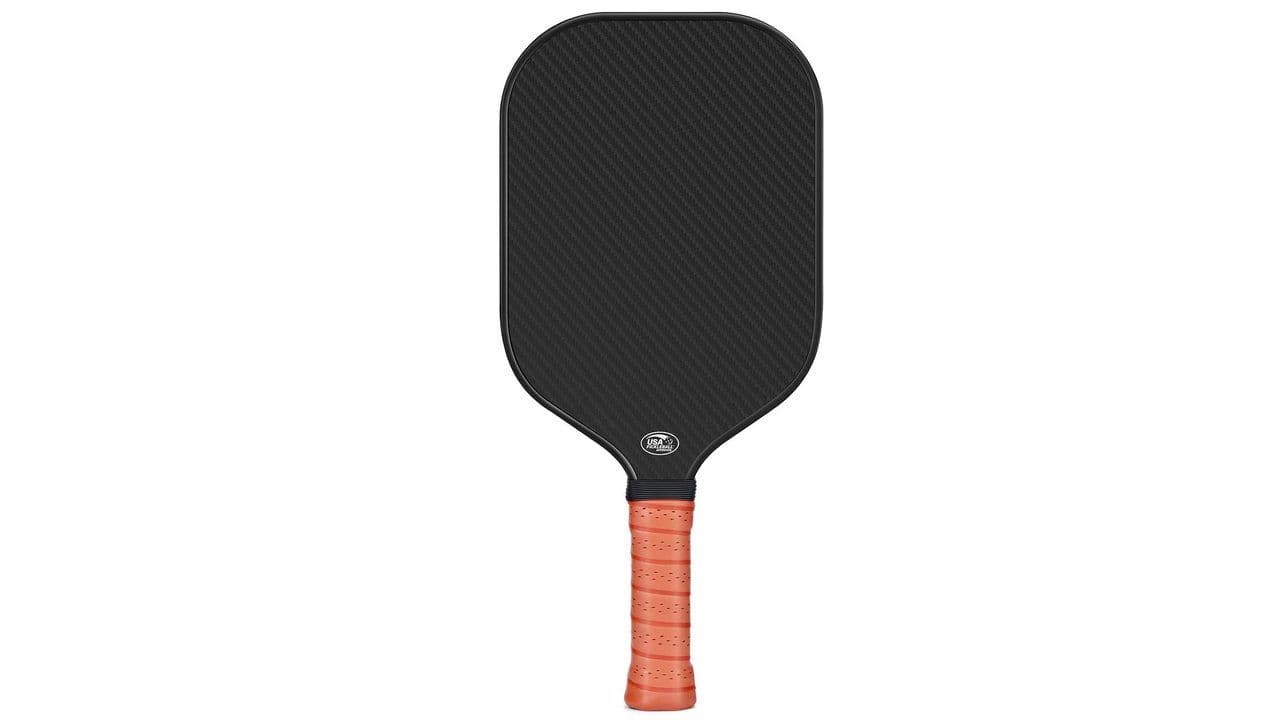
Ask ten suppliers what a paddle is made of and you will hear the same three buzzwords — "T700 carbon," "polypropylene core," "thermoformed" — with almost no explanation of what they actually do. For anyone building a private-label line, pickleball paddle materials are not marketing garnish; they are the levers that decide whether your paddle plays like a control paddle or a power paddle, whether it passes USA Pickleball testing, and whether it survives a season without the face peeling off the core.
This guide breaks down the real material stack the way a factory sees it: the face, the core, the bond that holds them together, and the construction method that changes how all three behave. The goal is to make you fluent enough to write a spec instead of repeating a supplier's slogan back to them — because "T700" on a quote sheet tells you almost nothing until you know what it does and, just as usefully, what it does not.

Key Takeaways
- A paddle is two material systems — a face (the skin) and a core (the honeycomb) — bonded together. The face drives feel and spin; the core drives feel and power. Neither works without the other.
- "T700" means stronger, not stiffer. T700 and T300 carbon are both standard-modulus fibers at roughly 230 GPa — the same stiffness. T700's edge is tensile strength (~4,900 vs ~3,530 MPa), which buys durability, not a harder hit.
- Polypropylene honeycomb is the modern default core because it is forgiving and quiet; Nomex is harder, louder, and more powerful; aluminum is largely obsolete.
- Material choices are boxed in by the rules: USA Pickleball caps surface roughness (about 30 µm Rz) and, since November 1 2025, caps power via a PBCoR limit of 0.43. A "spin" coating or a too-hot face can fail either one.
- The same materials behave differently depending on construction — thermoformed unibody paddles resist the face-peeling delamination that plagues older cold-pressed builds.
A paddle is two material systems, not one
Almost every modern pickleball paddle is a sandwich: two thin composite face sheets pressed onto a honeycomb core, with a foam or plastic edge holding the perimeter and a handle running out of the bottom. That is the whole object. When a spec sheet lists a single "material," it is usually naming only the face and staying quiet about the core — which is the half that most shapes how the paddle feels at contact.
Understanding a paddle as two cooperating systems is the mental model that makes everything else make sense. The face is the skin the ball touches: it sets spin potential, initial pop, and how the paddle reads on off-center hits. The core is the structure underneath: it sets dwell time, forgiveness, sound, and how much energy returns to the ball. You cannot fix a dead-feeling core with a fancier face, and you cannot rescue a harsh, uncontrollable face by thickening the core. Getting a paddle right means specifying both halves on purpose.
Face materials: carbon, fiberglass, graphite, and the T700 myth
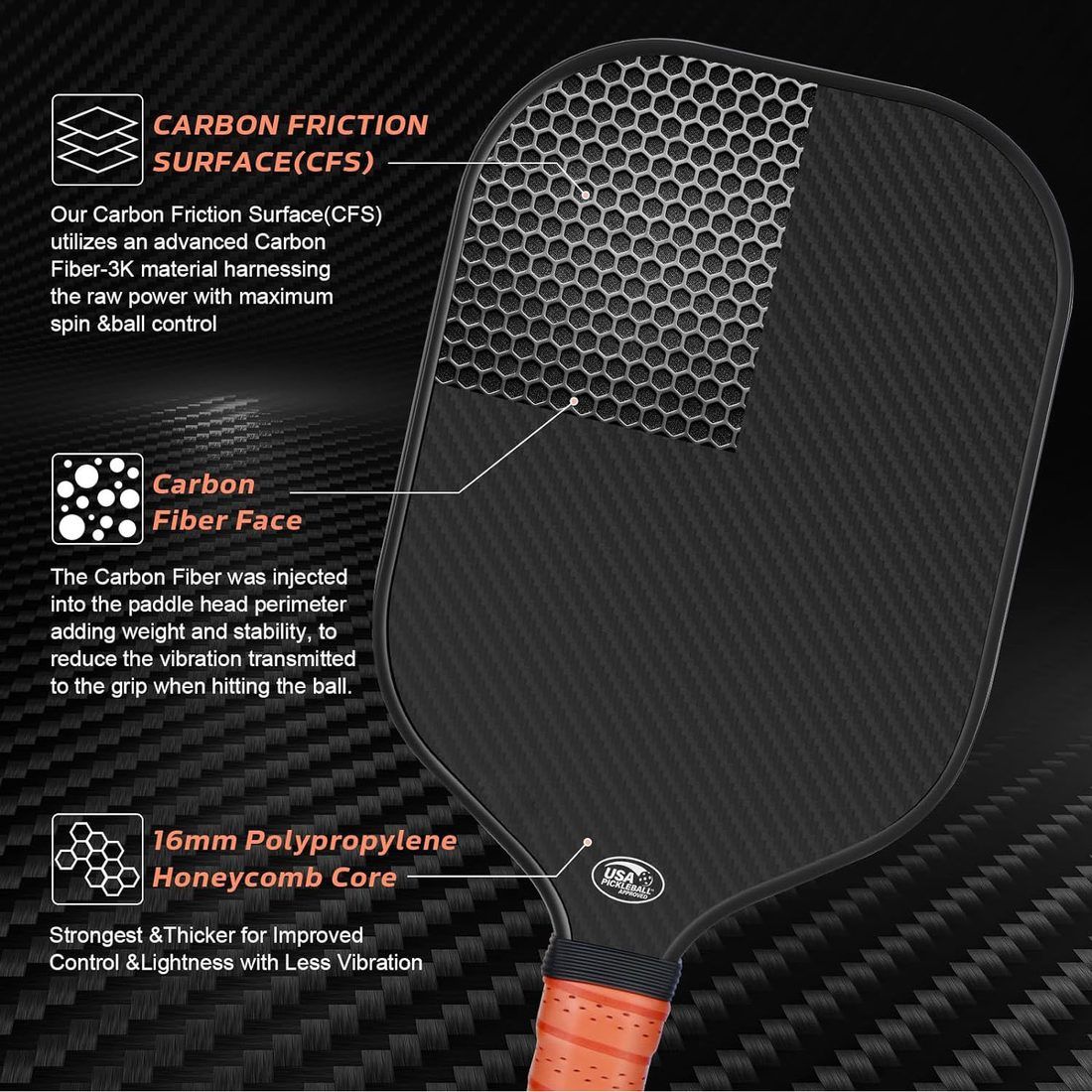
The face is where most of the marketing noise lives, so it is worth being precise. Carbon fiber is the premium default: a lightweight composite of carbon filaments each only 5 to 10 microns thick, delivering an excellent strength-to-weight ratio and the muted, controllable feel that skilled players favor. Its trade-off is honest — a carbon face generally produces less raw power than fiberglass, in exchange for control, touch, and a durable surface that holds its spin texture.
Fiberglass (often labeled "composite") is the power face: it flexes more at impact and springs the ball off harder, at the cost of the pinpoint control and spin a carbon face gives. Graphite is an older term for a very thin carbon skin over the core — light and control-oriented, and largely folded into the "carbon" category today. Newer entrants like Kevlar aramid faces chase a softer, more muted feel.
Now the myth worth killing on your own quote sheets: "T700" does not mean "stiffer" or "more powerful." T700 and T300 are both standard-modulus carbon grades with a modulus of roughly 230 GPa — meaning they are equally stiff. What separates them is tensile strength, where T700 (~4,900 MPa) beats T300 (~3,530 MPa). That extra strength buys durability and a thinner, lighter lay-up, not a harder hit. A buyer paying a premium for "T700" expecting more pop is paying for the wrong reason. The deeper breakdown lives in our guide to raw carbon T700 vs T300 vs fiberglass faces.
| Face material | Plays like | Spin & control | Best for |
|---|---|---|---|
| Raw carbon fiber | Muted, controlled; less raw power | Highest — grit holds up | Control/spin lines, premium tier |
| Fiberglass / composite | Poppy, powerful | Lower control & spin | Power lines, value tier |
| Graphite (thin carbon) | Light, control-oriented | Good control | Lightweight control builds |
| Kevlar / aramid | Soft, muted, dampened | Good control, quieter | Feel-focused premium niche |
One material decision on the face has a compliance consequence: how you create the grit that generates spin. A raw carbon face gets its texture from the weave and a peel-ply finish, which produces durable grip without adding a coating. A sprayed-on or painted "spin" grit can exceed the roughness ceiling or wear unevenly — and that is a leading cause of a paddle getting de-listed after launch. If spin is your selling point, engineer it into the face, don't spray it on; the mechanics are covered in paddle surface grit and spin.
Core materials: polypropylene, Nomex, aluminum, and foam walls
The core is the half buyers under-specify and players feel the most. Three honeycomb materials have historically defined the category, and one newer construction is reshaping it.
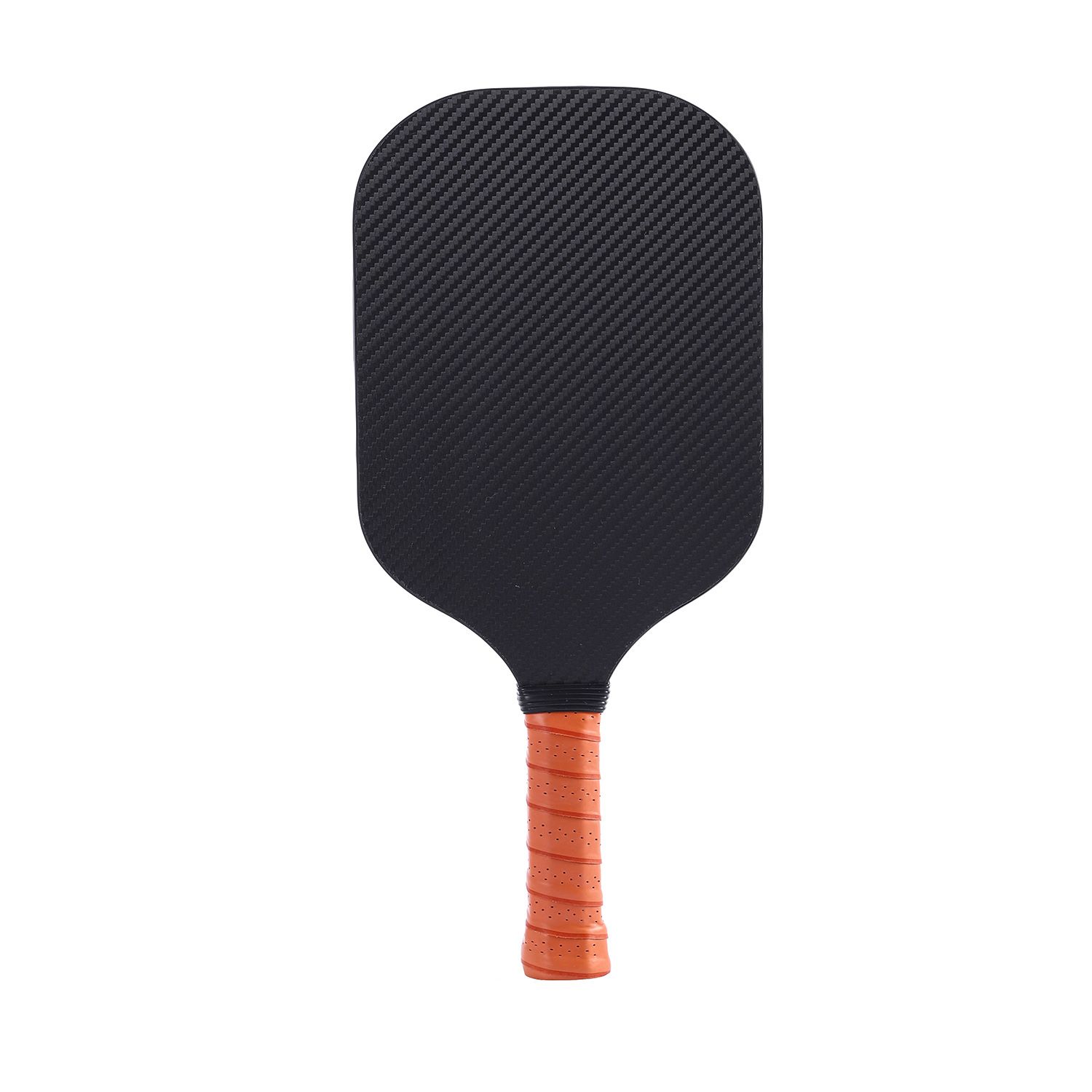
Polypropylene (PP) honeycomb is the modern default for good reason: it is a plastic honeycomb that flexes slightly at impact, which gives a softer, quieter, more forgiving feel and the long dwell time that control players want. It spans the widest range of playing characteristics, which is why the vast majority of today's paddles use it. Nomex honeycomb — an aramid-paper honeycomb dipped in resin — is the old-school power core: harder, denser, and louder, with a crisp pop that a niche of players still prefer but that reads harsh to many. Aluminum honeycomb is largely obsolete for a practical reason: it dents, and pairing it with a carbon face invites galvanic corrosion that weakens the bond over time.
Two core dimensions matter as much as the material. Cell size — the width of each honeycomb cell, commonly in the 6 to 10 mm range — trades power for control: larger cells flex more and add pop, smaller cells firm up and add control. Core thickness, usually around 13 to 16 mm, does the opposite of what people assume: thicker cores play softer and more controlled, thinner cores play firmer and more powerful. Both are covered in honeycomb cell size. The newest wrinkle is the foam-injected edge wall, where foam is added around the perimeter to enlarge the sweet spot and stabilize off-center hits — a construction change, not a new honeycomb.
| Core material | Feel | Noise / power | Status |
|---|---|---|---|
| Polypropylene honeycomb | Soft, forgiving, long dwell | Quieter, balanced power | Modern default |
| Nomex honeycomb | Hard, crisp | Loud, high pop | Niche / legacy |
| Aluminum honeycomb | Firm, tinny | Moderate | Largely obsolete (dents, corrosion) |
How construction changes the same materials
Identical face and core materials can produce a durable paddle or a warranty problem depending on how they are assembled. The traditional method is cold pressing: the face sheets are glued to the core and pressed at room temperature, with a separate edge guard added around the rim. It works, but the glue line between face and core is the weak point — under repeated impact and heat it can let go, and the face begins to separate from the core. That separation is delamination, the single most common material failure in pickleball paddles and the one that turns a returned paddle into a refund.
Thermoforming is the newer answer: the whole paddle — face, core, and a foam-filled perimeter — is hot-pressed into a single unibody with no separate edge guard. The result is a more rigid, more consistent build that resists delamination far better, because there is no cold glue line waiting to fail. The material trade-offs still apply, but the construction removes a failure mode. The full comparison is in thermoformed vs cold-pressed paddles. For a buyer, the lesson is that "carbon paddle" is an incomplete spec — how the carbon is bonded to the core matters as much as the carbon itself.
Staying legal: materials inside the USA Pickleball box
Material freedom ends where the rulebook begins, and a paddle that plays beautifully but fails testing is unsellable to any serious channel. USA Pickleball does not dictate which materials you use, but it constrains what they may do. The physical envelope is fixed — combined length and width within 24 inches, length within 17 inches — so material choices cannot buy you a bigger hitting surface. The surface is capped for roughness (around 30 µm Rz) and reflection, which is the limit a sprayed spin coating tends to breach.
The newest constraint is about power. As of November 1 2025, USA Pickleball enforces a Paddle-Ball Coefficient of Restitution (PBCoR) limit of 0.43 — a dynamic test that measures the paddle-ball collision more directly than older static deflection checks, and one that has de-listed paddles which grew too "hot" after break-in. For a materials decision, that means a hot core-and-face combination that clears at launch can drift out of bounds as it breaks in. Building to sit comfortably inside the limit, not right on the line, is how you avoid a de-listing that pulls your SKU from every sanctioned shelf.
Matching materials to what you're selling
There is no single "best" material — there is the right stack for the paddle you're bringing to market. Reasoning backward from the buyer is what turns a material list into a product:
- Control / spin line: raw carbon face with a peel-ply grit, polypropylene core, thicker build (~16 mm), smaller cell. Muted, forgiving, spin-friendly, and comfortably legal.
- Power line: a stiffer face (fiberglass or a thin, thermoformed carbon), thinner core, larger cell — but validate it against the PBCoR limit before you commit tooling.
- Value tier: fiberglass or graphite face on a polypropylene core, cold-pressed to hit a price — accept the delamination risk and cover it with QC and warranty terms.
- Durability-first (rental, club, school): thermoformed unibody, polypropylene core, raw carbon face — the build that survives the most impacts with the fewest returns.
If you are turning one of these into an actual private-label paddle, the material spec is the first thing we lock before tooling — it is built into every OEM paddle program so the face, core, construction, and compliance all get decided on purpose rather than defaulted by the factory.
For brand owners and distributors speccing a paddle line
Tell us how the paddle should play — control, power, or spin — and we'll come back with the exact face, core, cell size, and construction to hit it, tested against the current USA Pickleball limits before any tooling is cut.
Spec a paddle with our material team →What we check on materials before production
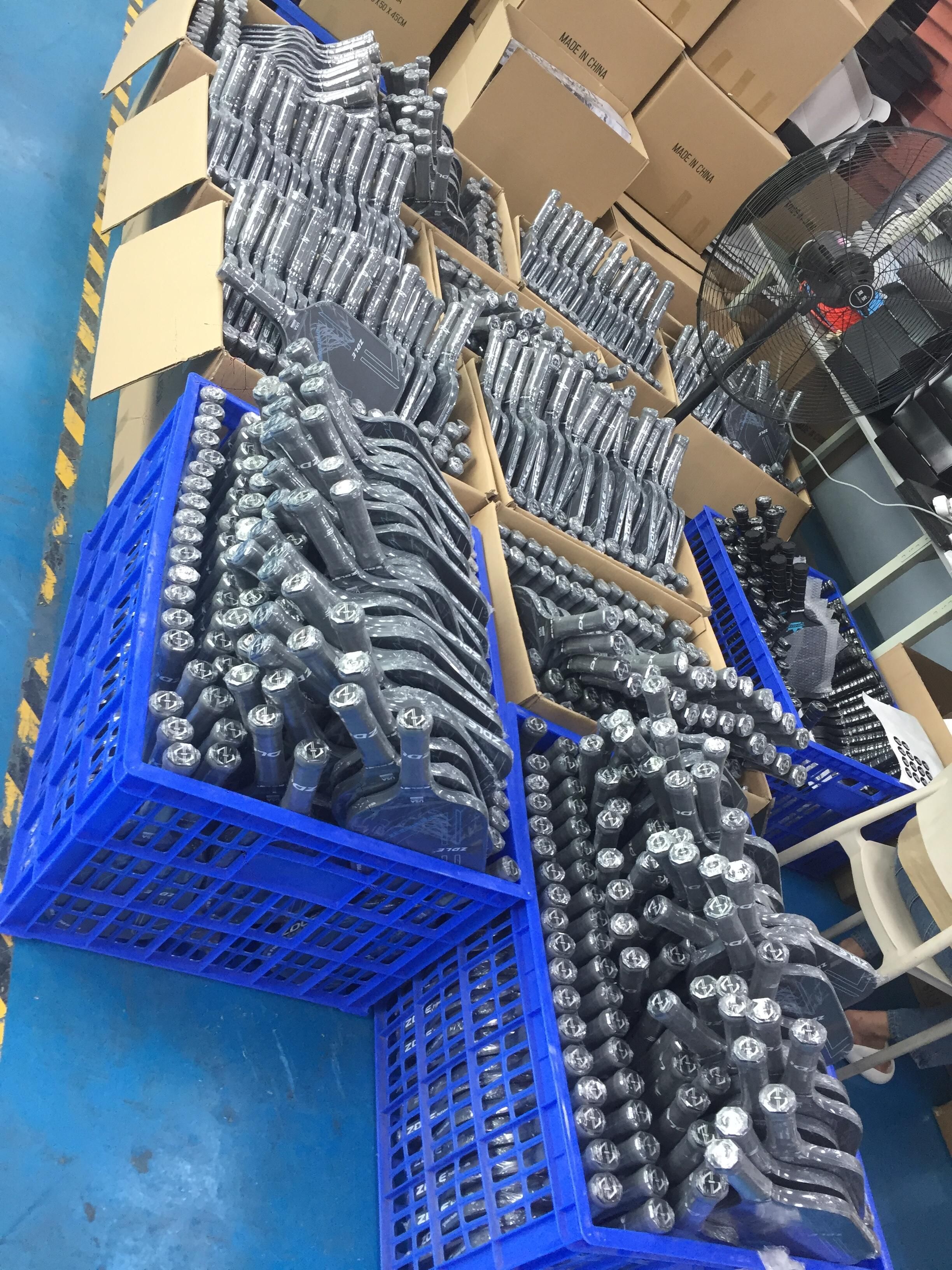
A material spec is only real if the factory can prove the paddle matches it. Before a design goes into production, these are the material checks that keep the finished paddle honest:
- Fiber grade and weave verified, not just labeled. "T700 3K" is a claim until it is confirmed against the supplier's material certificate — the difference between grades is real, and so is the temptation to overstate it.
- Core material, cell size, and thickness measured on the actual sample, because a swapped core is invisible from the outside and changes how every paddle in the run plays.
- Surface roughness checked against the USA Pickleball ceiling so the spin texture that sells the paddle does not disqualify it.
- Bond integrity under stress — flexing and impact-cycling a thermoformed sample to confirm the face will not delaminate once it is in a customer's hand.
Reading a spec sheet instead of a slogan
Pickleball paddle materials come down to a short, honest set of decisions: a face that sets spin and feel, a core that sets power and forgiveness, a bond and construction method that decide whether the paddle lasts, and a rulebook that quietly caps all of it. Once you can name what each material actually does — and separate T700's real advantage from its marketing — you can write a spec that produces the paddle you intended instead of the one a factory found easiest to build.
That fluency is also your best defense against a supplier's slogans. Send us the way you want the paddle to play, and we will translate it into a material stack that is both on-brand and on the right side of the standards.
Frequently Asked Questions
What are pickleball paddles made of?
A composite face (usually carbon fiber or fiberglass) bonded to a honeycomb core (usually polypropylene), with a foam or plastic edge and a handle. The face sets spin and initial pop; the core sets feel, forgiveness, and power.
Is T700 carbon better than T300?
T700 is stronger, not stiffer. Both are standard-modulus grades at roughly 230 GPa, so they flex the same; T700's higher tensile strength (~4,900 vs ~3,530 MPa) buys durability and a lighter lay-up, not more power. Paying extra for T700 expecting a harder hit is paying for the wrong reason.
What is the best core material for a pickleball paddle?
Polypropylene honeycomb suits most paddles because it is forgiving, quiet, and versatile. Nomex is harder and more powerful but louder and harsher; aluminum is largely obsolete because it dents and corrodes against a carbon face.
Which paddle material gives the most spin?
A raw carbon fiber face, where the spin texture comes from the weave and a peel-ply finish rather than a sprayed coating. Sprayed "spin" grit can exceed the USA Pickleball roughness limit or wear off, so engineered texture both lasts longer and stays legal.
Do paddle materials affect USA Pickleball approval?
Indirectly. USA Pickleball regulates performance, not materials, but your material and construction choices decide whether the paddle meets the surface roughness limit and the PBCoR power limit of 0.43 in effect since November 2025. A too-rough or too-hot build fails regardless of how good the materials are.
Why do carbon paddles delaminate?
Delamination is the face separating from the core, usually at the glue line in cold-pressed paddles under repeated impact and heat. Thermoformed unibody construction, which hot-presses the whole paddle into one piece with no separate glue line, resists it far better.
Want to source this quality for your brand?
Contact our factory directly on WhatsApp for an instant MOQ and pricing quote.