Raw Carbon vs T300 vs Fiberglass Pickleball Paddle Faces
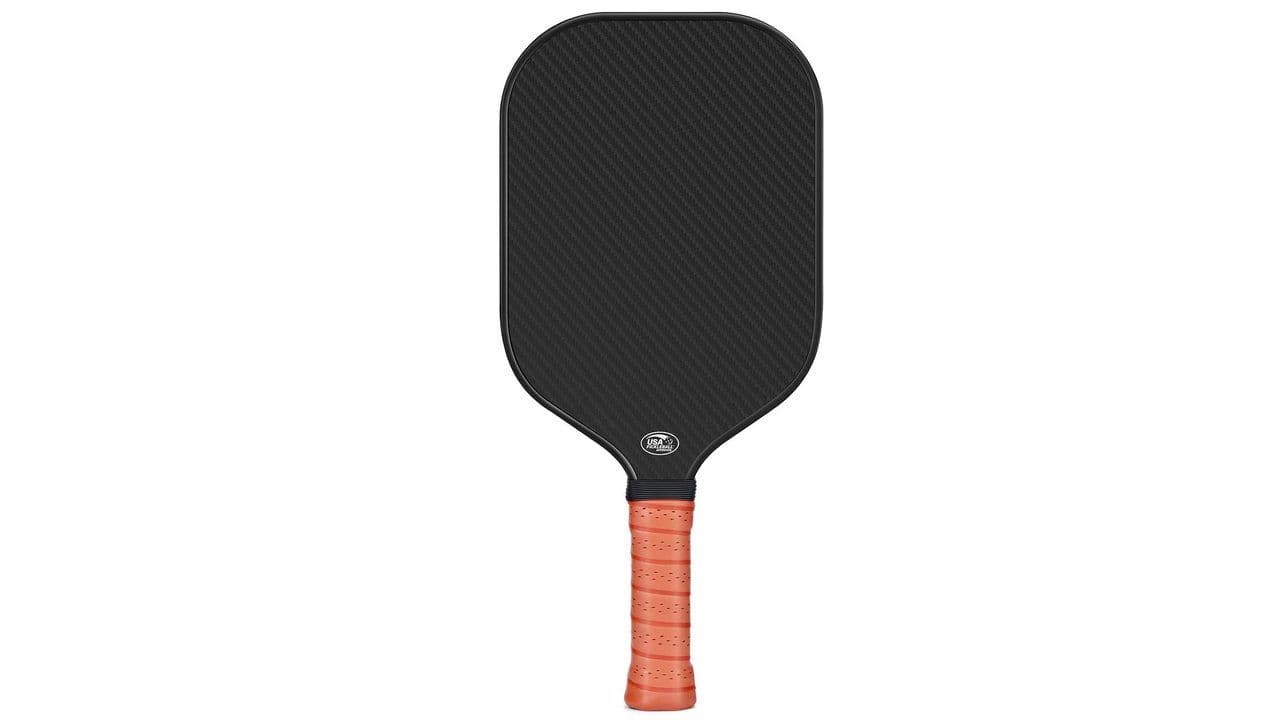
Every paddle quote you get will say "T700 carbon" somewhere. It's the most over-claimed spec in the business, and it's quietly sorting your suppliers into the ones who know what they're selling and the ones repeating a number off a competitor's listing. A raw carbon fiber pickleball paddle face is not automatically better than a T300 or a fiberglass one — it's better for a specific buyer, at a specific price, doing a specific job. Mix that up and you'll either overpay for a grade your customers can't feel, or underspec a paddle that loses its grip by week six.
There's also a confusion baked into the labels that costs importers real money. "T700" and "3K" are not the same kind of spec — one is a fiber strength grade, the other is a weave pattern — and neither one, on its own, tells you how much spin the paddle generates. This sorts out what each face material actually does, which spec to verify in a sample, and how to match the face to your product tier instead of to whichever number sounds most premium.
Key Takeaways
- T700 and T300 are carbon fiber tensile grades; T700 is stronger (about 4,900 MPa vs 3,530 MPa) and holds a crisp face longer. Fiberglass is more flexible with more "pop."
- "3K / 12K / 18K" describes the weave pattern, not the strength grade — a 3K T700 and a 3K T300 can look identical and perform very differently.
- Spin comes from surface texture, not the fiber grade. Any grade can be textured to the USA Pickleball legal limit; a worn or sprayed texture is what kills spin over time.
- Power and control track core thickness (13–14 mm plays punchier, 16 mm plays softer) and swing weight more than the face label.
- Tier guide: fiberglass for entry/rec, T300 for mid-tier control, raw T700 for premium and tournament lines.
- Verify the grade in a sample — a relabeled T300 sold as T700 is the most common quality swap. Ask for the material certificate and a peel test.
What "raw carbon," T700, T300 and fiberglass actually mean
Before you can compare faces, you have to untangle two specs that get jammed together on every spec sheet. They sit on different axes, and confusing them is how buyers end up paying premium money for a mid-grade paddle.
Tensile grade: T300 vs T700
T300 and T700 are Toray-origin naming for carbon fiber tensile strength. T700 tests around 4,900 MPa, T300 around 3,530 MPa — roughly 39% stronger. One myth worth killing first: both grades share the same tensile modulus of about 230 GPa, so they are equally stiff — a T700 face is not more rigid than a T300 one. What the higher strength buys is durability: the face resists micro-fatigue and going soft under repeated impact, holding its crisp response and spin texture longer. So T700 is the stronger, longer-lasting grade, not the stiffer one; T300 is a step down in strength but cheaper and still a real carbon face.
Weave pattern: 3K, 12K, 18K
3K, 12K and 18K count how many filaments sit in each tow of the weave — it's a look-and-layup spec, not a strength rating. A 3K weave gives that tight, fine checkerboard surface buyers recognize as "premium carbon." Here's the trap: a paddle can be "3K" and still be T300 underneath. The weave you see and the grade you pay for are different things, so never accept "3K carbon" as proof of T700.
"Raw" carbon vs fiberglass
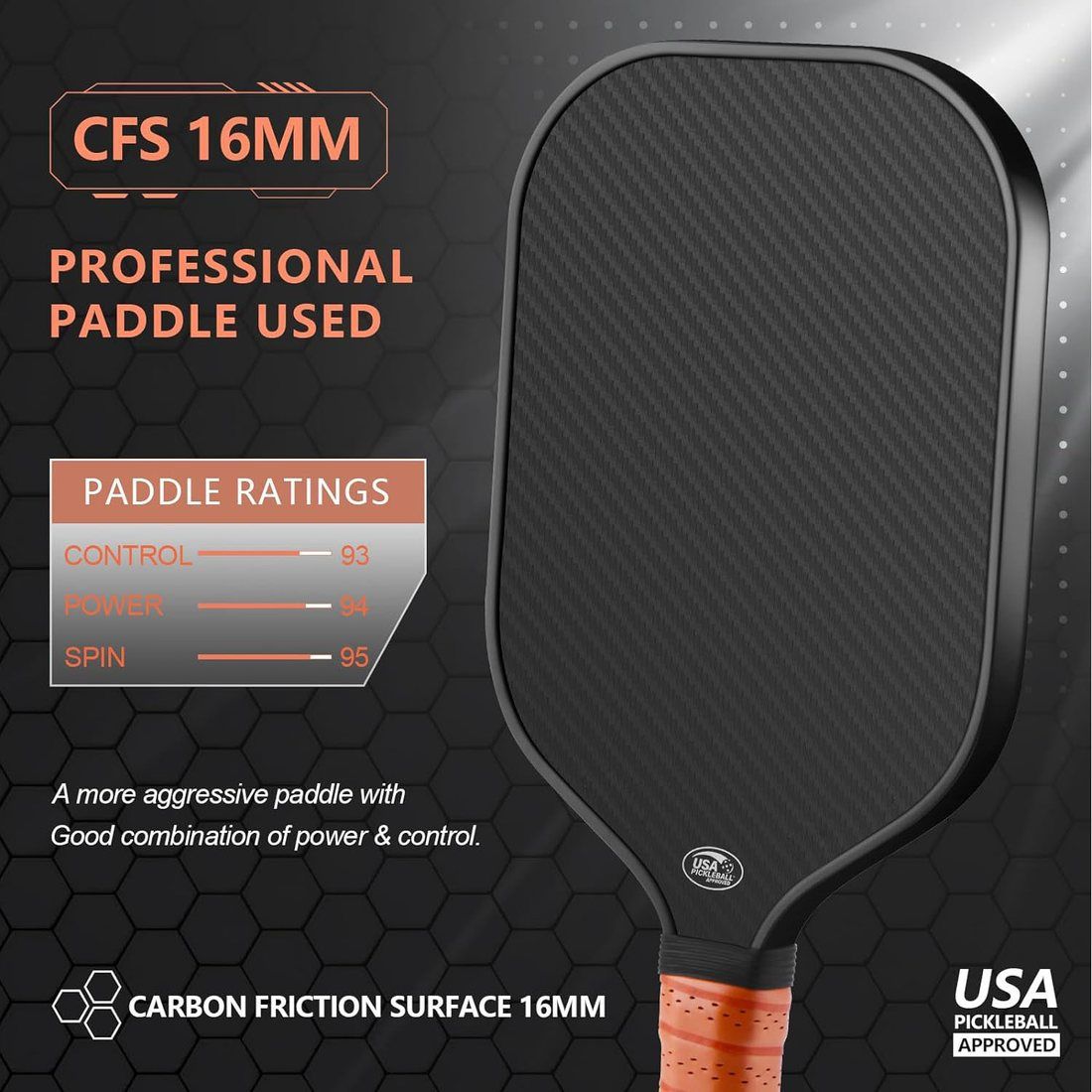
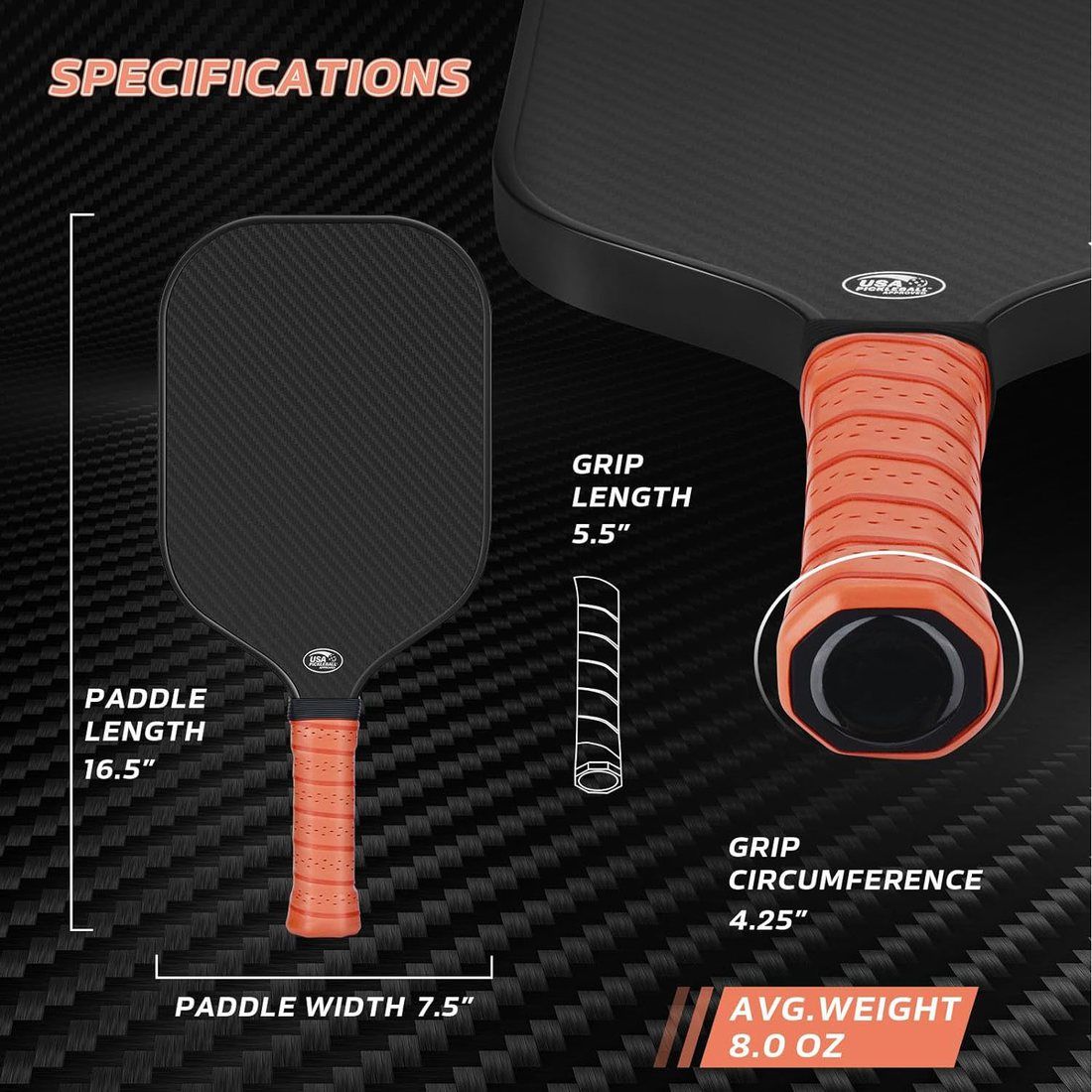
"Raw carbon" means the carbon weave is the hitting surface itself, finished with a peel-ply texture rather than painted — that texture is what generates spin. Fiberglass is a different material entirely: more flexible, livelier, with more natural pop, but softer feel and shorter texture life. It's the classic entry-tier face. This factory's paddles run a 3K carbon face with a Carbon Friction Surface and a T700 frosted finish, on a 16 mm polypropylene honeycomb core — so the comparison below is written from a line that builds both carbon and entry faces, not from one camp.
Face materials compared, spec by spec
Read this as a sourcing matrix. Each row is a property your customers will feel on court or complain about in a review.
| Property | Raw T700 carbon | T300 carbon | Fiberglass |
|---|---|---|---|
| Tensile strength | ~4,900 MPa | ~3,530 MPa | Lower; more flexible |
| Feel | Crisp, controlled | Controlled, slightly softer | Lively, more pop |
| Texture / spin life | Longest-lasting | Good | Wears fastest |
| Relative cost | Highest | Mid | Lowest |
| Best tier | Premium, tournament | Mid-tier control | Entry, rec, club fleets |
Notice what the table doesn't promise: more spin from carbon. Grade affects durability and feel, not spin on its own. That's the next section, and it's where most buyers get sold a story. The core material under the face shapes feel as much as the carbon does.
Spin: it's the texture, not the grade
A supplier who says "T700 gives more spin" is selling you a grade, not physics. Spin is created by the surface texture biting the ball, and texture is applied — by peel-ply on raw carbon, or by grit and finish — within a legal ceiling.
USA Pickleball caps how rough a face can be — an average of 30 µm on Rz and 40 µm on Rt, measured in six directions with a Starrett SR160 tester (and no single reading above 33 µm Rz or 44 µm Rt) — so no legal paddle gets an unlimited spin advantage from texture alone. What separates a good carbon face is how long that texture survives. Raw T700 with a peel-ply finish holds its bite far longer than a sprayed-on grit that sheds after a few months and can drift out of compliance as it wears. If a sample's spin comes from a coating you can scratch with a fingernail, that's a returns problem waiting to happen — confirm it stays within the approved roughness window when new and after wear.
Power vs control: the core decides more than the face
Buyers credit the face for power, but the honeycomb core under it does most of that work. Get the core spec right and the face is the finish, not the engine.
- 16 mm core: Softer, more control and dwell time, more forgiving — the go-to for control-oriented and all-court lines. This factory's standard build.
- 13–14 mm core: Punchier and more powerful, less forgiving — a "power" SKU for advanced players.
- Swing weight: Where the mass sits changes perceived power more than the fiber grade. Two paddles with the same T700 face can feel completely different.
So when a customer asks for "more power," the answer is usually a thinner core or a weight tweak, not a jump from T300 to T700. Use the weight and thickness spec as your real power lever.
Which face for which price tier?
Match the face to where the SKU sits in your line, not to the most impressive number. Here's the clean split.
| Choose this face if… | Material |
|---|---|
| Entry price, rec players, club rental fleets, color variety | Fiberglass |
| Mid-tier control paddle at a sharp price | T300 carbon |
| Premium and tournament lines, durable spin, brand credibility | Raw T700 carbon |
| A 3-tier line that covers beginners to advanced | All three, one per price band |
What we check on a carbon paddle order before shipment
The relabeling risk is real: T300 finished to look like T700 is the most common swap in this category. Because we build the carbon faces in-house, every carbon order runs through the same verification before the balance is released:
- Material certificate: The carbon grade is documented to source, so a T700 order is T700 — not a relabeled T300.
- Surface roughness: Texture is checked against the USA Pickleball limit when new, so the paddle ships compliant, not borderline.
- Weave consistency: The 3K face is inspected for even layup and no resin-rich patches that create dead spots.
- Core bond: Face-to-core adhesion is checked to head off the delamination that ends a paddle's life early.
- Weight band: Each paddle is weighed to the SKU's spec so swing weight stays consistent across the batch.
Ask any paddle supplier to put the grade in writing and back it with a peel test. If "T700" can't survive a basic QC check, it was a marketing word, not a material.
Matching the face grade to your paddle tier
Raw T700, T300 and fiberglass aren't a ladder from worst to best — they're three price-and-performance tiers. T700 buys durability and lasting spin texture for premium lines, T300 delivers carbon control at a sharper cost, and fiberglass earns its place in entry and rental SKUs. The face grade decides feel and longevity; the surface texture decides spin; the core decides power. Spec all three on purpose and you build a line that holds up, instead of paying for a label your customers can't feel.
If you're planning a multi-tier paddle range, start by deciding the face per price band, then lock the grade with a material certificate and a sample peel test. Our team builds carbon and entry faces on the same line and can help you match each SKU to the right material and core.
Frequently Asked Questions
Is a T700 carbon paddle better than T300?
T700 has higher tensile strength (about 4,900 vs 3,530 MPa), so it holds a crisp face and its spin texture longer. T300 is cheaper and still a true carbon face — better for mid-tier control SKUs where cost matters.
Does carbon fiber give more spin than fiberglass?
Not by material alone. Spin comes from the surface texture, which any face can carry up to the USA Pickleball limit. Carbon's edge is that its texture lasts longer; fiberglass tends to smooth out and lose spin sooner.
Is 3K carbon the same as T700?
No. 3K is a weave pattern (filaments per tow); T700 is a tensile strength grade. A paddle can be 3K and still use T300 fiber, so always confirm the grade separately from the weave.
How do I verify a paddle is really T700?
Ask for the carbon material certificate traced to the source, and run a sample peel test. Relabeling T300 as T700 is the most common swap, so don't accept the "3K carbon" look as proof of grade.
Which face should an entry-level paddle use?
Fiberglass. It's the lowest cost, offers lively pop that beginners enjoy, and comes in wide color options for retail packs. Save raw T700 for your premium and tournament SKUs.
Want to source this quality for your brand?
Contact our factory directly on WhatsApp for an instant MOQ and pricing quote.