Gen 3 Foam-Wall Pickleball Paddles: What Brands Are Switching To
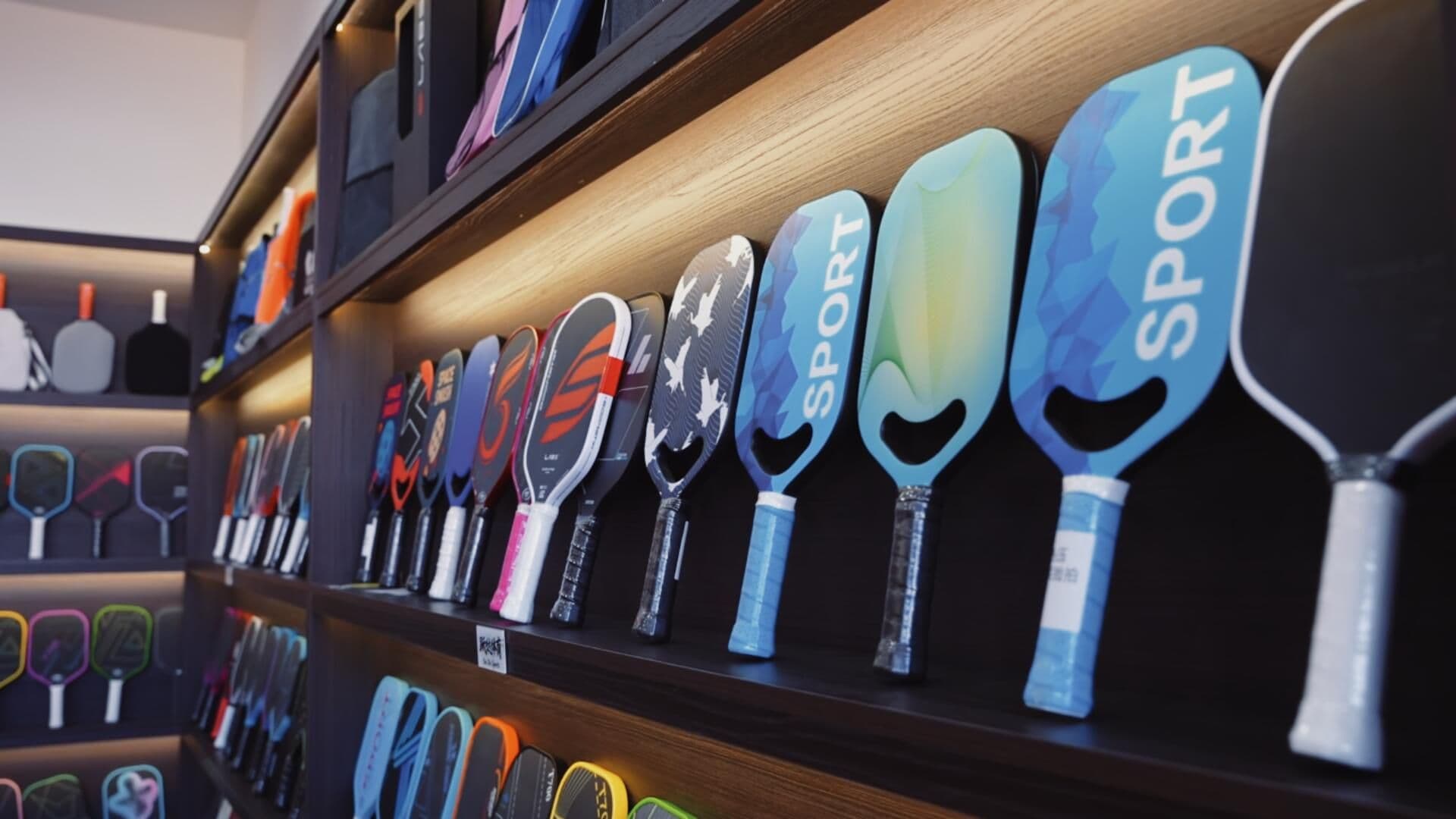
Walk any 2026 trade catalog and half the paddles are stamped "Gen 3." Your customers are asking for it, your competitors are advertising it, and your current supplier may be quietly still shipping you Gen 1. The problem is that "generation" is a marketing label, not an industry standard — so before you pay a premium or re-spec your line, you need to know what's actually different inside the paddle, which claims hold up, and where the early versions of this construction burned brands who moved too fast.
This breaks down what foam-wall and unibody construction really change, how the "Gen 1 / 2 / 3" ladder maps to real manufacturing, why brands are switching, and the durability trap that de-listed some early thermoformed paddles. It's written for someone deciding whether to move a product line — so the goal is a sourcing decision you can defend, not hype.
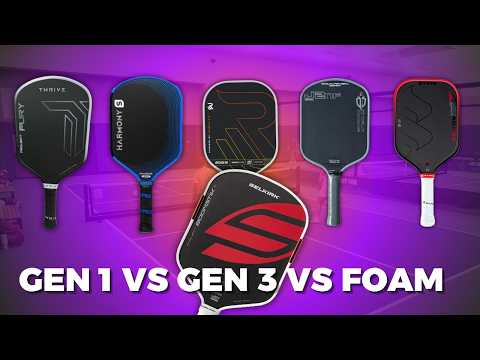
Key Takeaways
- "Gen" numbers are marketing, not a standard body's rating — what matters is the construction underneath: cold-pressed (Gen 1), thermoformed unibody with foam-injected walls (Gen 2/3), and added core tech on top.
- Foam-injected perimeter walls fill the hollow edge of the core, stiffen the frame, and enlarge the sweet spot — the main on-court reason players feel more power and forgiveness.
- Thermoformed unibody construction wraps the face and edge in one piece, which is stronger at the edge but concentrates stress at the throat if the process isn't controlled.
- Early thermoformed paddles had a real problem: some gained power as the core broke down, then failed or got de-listed — a warning that foam-wall done badly is worse than Gen 1 done well.
- The premium is real: more material, tighter tooling, and higher QC sensitivity raise unit cost, so switching only pays if your price tier and buyers actually reward it.
- Spec-lock foam density, thermoforming temperature/pressure, and delamination testing — a foam-wall paddle lives or dies on process control, not on the label.
What "Gen 3" actually refers to
There is no governing body issuing "generation" numbers — brands coined them to describe a construction shift, and the labels drift from company to company. Cut through the marketing and there are really three build approaches, and most "Gen 3" claims are a combination of the second plus an extra feature.
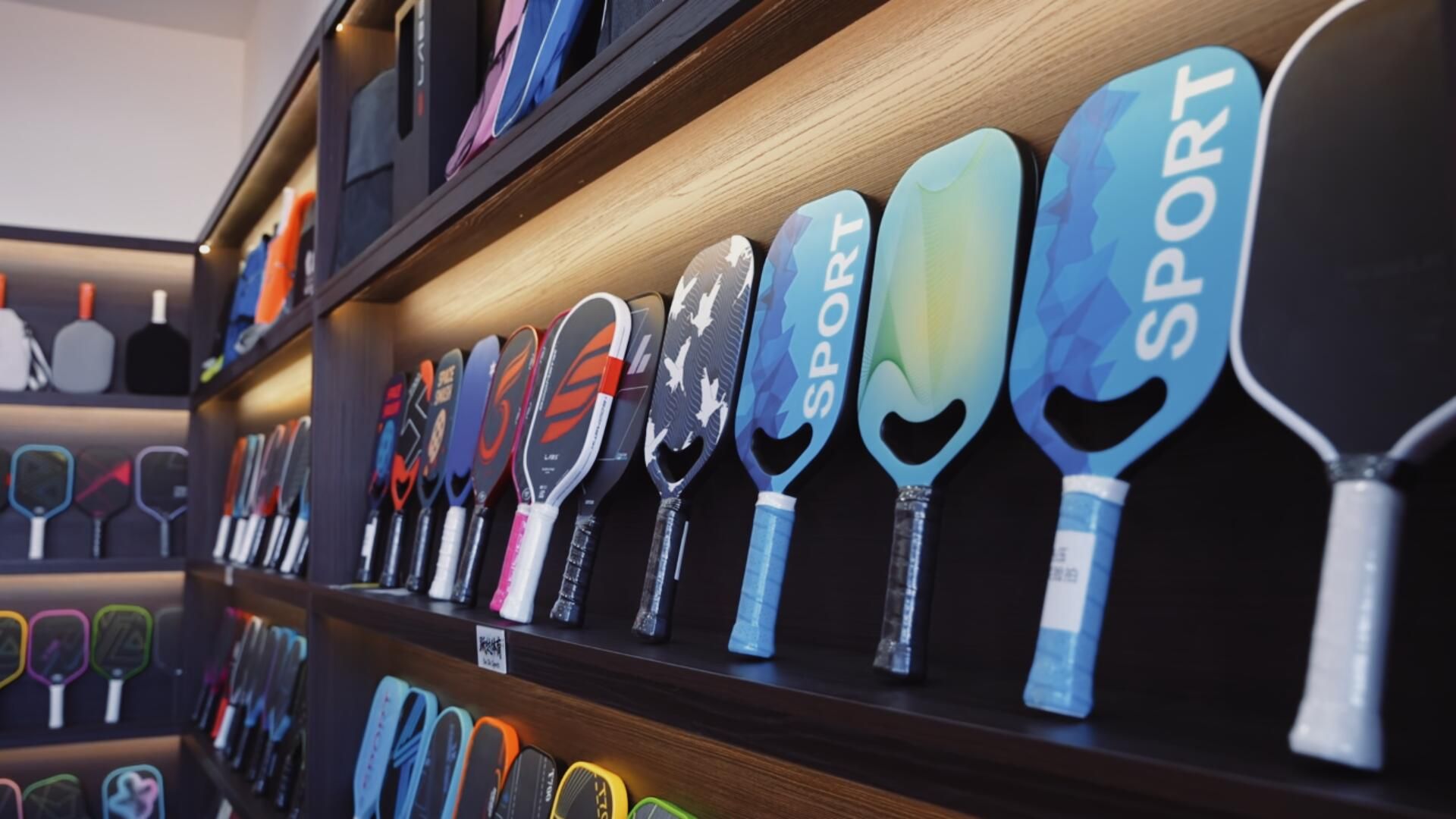
- Gen 1 — cold-pressed: Face, honeycomb core, and edge foam are pressed and glued together, then wrapped with a separate edge guard. Proven, cheaper, easy to make consistently — but the glued edge is a delamination point and the sweet spot is smaller.
- Gen 2 — thermoformed unibody + foam walls: The carbon face is heat-formed to wrap the whole perimeter in one piece (unibody), and expanding foam is injected into the perimeter to fill the hollow edge. Bigger sweet spot, stiffer frame, more pop.
- "Gen 3" — Gen 2 plus a core feature: The unibody/foam-wall base with an added twist: denser or tuned foam, a reinforced throat, floating or gel core layers, carbon-forward weighting. This is where the marketing lives, and where claims most need verifying against a sample.
So when a buyer asks for "Gen 3," the useful translation is: a thermoformed unibody paddle with injected foam walls and some core enhancement. The full construction contrast is in thermoformed vs cold-pressed paddles, and the face-material side in raw carbon T700 vs T300 vs fiberglass.
Why foam-injected walls change the paddle
The foam wall is the single most consequential part of the switch, and it's worth understanding physically because it's what your customers are actually feeling when they say a paddle "has a bigger sweet spot."

In a Gen 1 paddle, the honeycomb core stops short of the edge and the perimeter is essentially hollow under the edge guard. That soft, empty rim is dead area — hit it and the ball dies. Foam injection fills that perimeter with expanding foam that bonds the face to the frame all the way to the edge. Two things follow: the paddle gets stiffer, which transfers more energy to the ball as power, and the responsive area extends closer to the edges, which is the enlarged sweet spot players notice on off-center hits.
Foam density is a spec, not a given. Too light and the wall does little; too dense and the paddle turns harsh and heavy. The same "foam wall" label can hide very different paddles depending on the density the factory injected.
This is why two "Gen 3" paddles at different prices can feel nothing alike — the foam formulation and density are where cost is cut or protected. When you source, foam density belongs on the spec sheet next to face material and core thickness, or you're leaving the paddle's whole character to the factory's discretion.
Gen 1 vs foam-wall: the sourcing comparison
Read this as a decision matrix for your line, not a verdict that newer is better. Each row is a real trade you're making when you move from cold-pressed to foam-wall unibody.
| Factor | Gen 1 cold-pressed | Foam-wall unibody (Gen 2/3) |
|---|---|---|
| Edge construction | Glued core + separate edge guard | One-piece wrapped face, foam-filled edge |
| Sweet spot | Smaller, softer edges | Larger, more forgiving off-center |
| Power | Moderate, softer feel | Higher, stiffer response |
| Main failure risk | Edge-guard delamination | Face/foam delamination, throat cracks if under-processed |
| Unit cost | Lower; easy to make consistently | Higher; more material and tighter process control |
| QC sensitivity | Forgiving | High — small process drift shows up as field failures |
| Best-fit tier | Entry, rec, rental, price-led SKUs | Mid-to-premium, performance-led SKUs |
The row that decides most switches is QC sensitivity. Gen 1 forgives a sloppy line; foam-wall unibody does not. That single fact is behind both the excitement and the horror stories in this construction.
The durability trap brands walked into
Anyone sourcing this construction has to know the cautionary tale, because it's still repeating with new factories. When thermoformed foam-wall paddles first surged, a batch of them had a strange, appealing-sounding flaw: they got more powerful over the first few weeks of play. That wasn't a feature — it was the core beginning to break down and de-bond, which softened the response into extra pop right before the paddle failed or drifted out of its approved spec. Several high-profile models were pulled or de-listed.
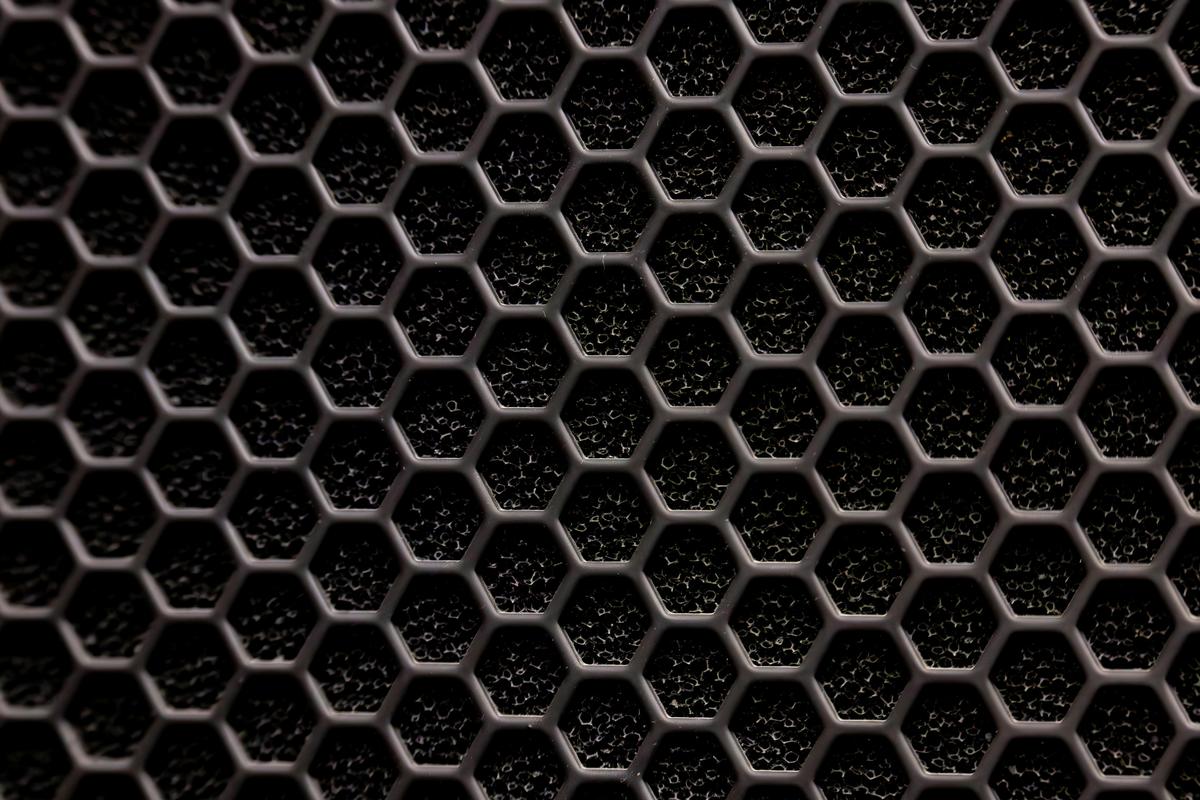
The lesson for a buyer is precise: the risk in foam-wall construction is not the design, it's process control. Thermoforming needs the right temperature and pressure to bond the face without cooking it brittle; foam has to cure at the right density and adhere fully; the throat — where the handle meets the head — is a stress concentration that cracks if the wrap is thin or rushed. A factory that nails these makes a paddle that's genuinely better than Gen 1. A factory chasing the trend without the process makes a paddle that's worse and fails under warranty.
That's why delamination testing is non-negotiable on this construction — the prevention playbook is in pickleball paddle delamination prevention, and the material choices that feed into it are in pickleball paddle materials.
Should you switch your line?
Newer construction is not automatically the right move — it depends on who buys your paddles and what they'll pay. Use this to place the decision.

| Move to foam-wall if… | Stay with Gen 1 if… |
|---|---|
| Your buyers are intermediate-to-advanced players | You sell entry-level, rec, or rental fleets |
| Your price tier supports a real premium | You compete mainly on lowest landed cost |
| You can enforce delamination QC on your supplier | You can't closely control production quality |
| "Bigger sweet spot / more power" sells your brand | Durability and simplicity are your promise |
For many house brands the answer isn't either/or — it's a tiered line: Gen 1 for the entry SKU where price wins, foam-wall unibody for the performance SKU where feel justifies the markup. The spec detail that keeps both consistent is captured in a custom paddle specs checklist, and the weight/balance trade-offs in paddle swing weight explained.
Conclusion
"Gen 3" is a story about construction, not a certification you can trust on sight. Underneath the label is a real and worthwhile shift: thermoformed unibody frames with foam-injected walls genuinely enlarge the sweet spot and add power over glued Gen 1 paddles. But the same construction, made without process discipline, fails faster than the paddle it replaced — the de-listed early models are the proof. The design isn't the risk; the factory's control of thermoforming, foam density, and the throat is.
So source the process, not the marketing. Decide whether your buyers and price tier actually reward the upgrade, put foam density and delamination testing on the spec sheet, and sample before you commit a line. Do that and "Gen 3" becomes a defensible product claim instead of a label you're hoping holds up under warranty.
Frequently Asked Questions
What is a Gen 3 pickleball paddle?
It's a marketing term, not an official rating. In practice it means a thermoformed unibody paddle with foam-injected perimeter walls plus an added core feature such as tuned foam density or a reinforced throat. The label varies by brand, so verify the actual construction against a sample.
What do foam-injected walls do in a paddle?
Injected foam fills the hollow perimeter of the core, bonding the face to the frame all the way to the edge. This stiffens the paddle for more power and extends the responsive area, giving a larger, more forgiving sweet spot on off-center hits. Foam density controls how strong the effect is.
Are thermoformed paddles more durable than cold-pressed?
They can be, but only when made with proper process control. The one-piece wrapped edge is stronger than a glued edge guard, yet poorly controlled thermoforming and foam curing caused early models to de-bond and fail. Durability comes from the factory's process, not the construction type alone.
Why did some paddles get more powerful then fail?
A power increase during break-in usually means the core is de-bonding, which softens the response before the paddle fails or drifts out of its approved spec. Several early thermoformed models were de-listed for this. Treat a "gets better with use" power gain as a warning sign, not a feature.
Should I switch my brand's paddles to foam-wall construction?
Switch if your buyers are performance players and your price tier supports the premium, and if you can enforce delamination QC on your supplier. Stay with Gen 1 for entry, rec, and rental SKUs where price and simplicity win. Many brands run both as a tiered line.
Want to source this quality for your brand?
Contact our factory directly on WhatsApp for an instant MOQ and pricing quote.