Pickleball Paddle Core Explained: Polypropylene Honeycomb Cell Size and the Power-vs-Control Trade-off
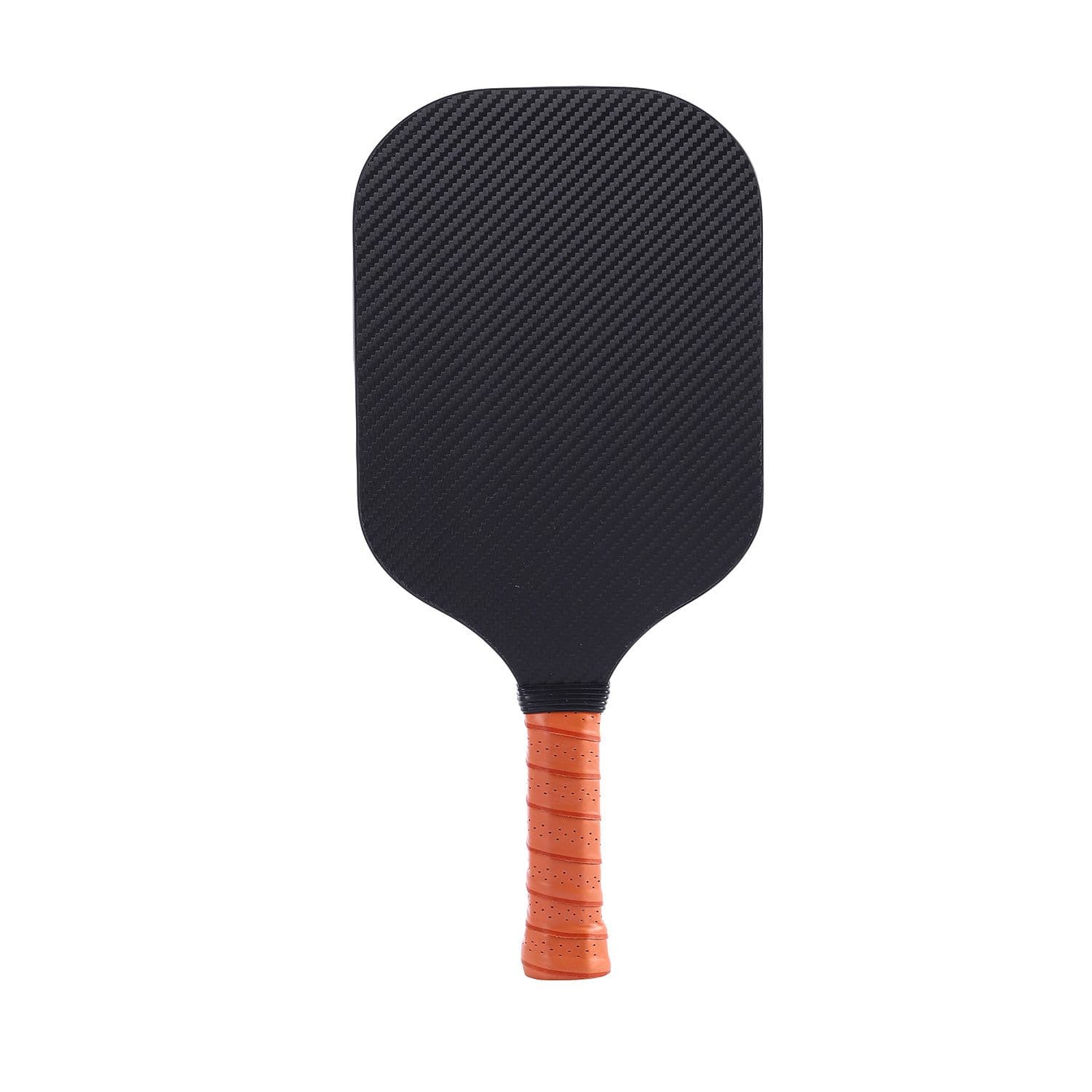
Buyers spec'ing a pickleball paddle line fixate on the face — raw T700 carbon, T300, fiberglass — and treat the core as an afterthought: "16mm polypropylene honeycomb," copied from a competitor's listing. That's backwards. The core is the bigger lever on how a paddle plays. Two paddles with identical carbon faces can feel like different sports depending on what's underneath, and the single spec that decides it — honeycomb cell size — is the one almost no brand prints on the box.
This is the explainer we give brand owners who want to spec a core on purpose instead of cloning a number. It covers what the polypropylene honeycomb core actually is, how cell size sets the power-versus-control trade-off, how core thickness stacks on top of that, how the face and core work as a system, and how to write a core spec that matches the player you're selling to — not just the paddle you're copying.

Key Takeaways
- The core is a polypropylene honeycomb — extruded plastic in six-sided cells that act as tiny shock absorbers. It damps vibration and drives feel more than the carbon face most buyers obsess over.
- Cell size is the spec that decides power versus control: smaller cells near 6mm give a denser, more controlled feel with a bigger sweet spot; larger cells near 10mm give more pop and rebound but a smaller sweet spot and less consistency. Roughly 8mm is the common middle.
- Core thickness stacks on top of cell size: a thinner core around 13mm plays poppy and punchy, a thicker core around 16mm plays soft and forgiving with a larger sweet spot.
- Face and core are a system, not two separate specs — a raw carbon face on a thick small-cell core is a control paddle; a fiberglass face on a thin large-cell core is a power paddle. Mismatch them and the paddle feels incoherent.
- Spec the core to the player you sell to. Control-first club and 3.0–4.0 players want thick small-cell cores; power-first singles and banger profiles want thinner large-cell cores. One core rarely serves both, which is why a real line carries at least two.
- Cheap cores fail in predictable ways — crushed cells, dead spots, delamination at the face-core bond. A written cell-size and thickness spec plus a crush and dead-spot check at QC is how you keep a line consistent batch to batch.
What the core actually is
Under the carbon or fiberglass face of nearly every modern paddle is a honeycomb — a sheet of polypropylene extruded into a grid of six-sided cells, standing on end like a slice of beehive. Polypropylene won this category over the older alternatives (aluminum and Nomex) for one reason: it damps shock. The cell walls flex microscopically on impact and absorb vibration instead of transmitting it into your hand, which is why a poly-core paddle feels softer and quieter than the harsh aluminum cores of a decade ago. The trade-off is stiffness — polypropylene is less rigid than aluminum or phenolic Nomex, so a poly core relies on the face and the cell geometry, not the base material, to tune its response.
Because the base material is fixed, the two dimensions you actually control are the geometry of that honeycomb — how big each cell is — and how thick the sheet is. Those two numbers, more than the face, are what a player feels as "powerful," "controlled," "dead," or "lively." The face material and the surface texture set spin and durability, covered in raw T700 vs T300 vs fiberglass faces and paddle surface grit and spin; the core sets the feel. Get the core wrong and no face saves the paddle.
Cell size: the spec nobody prints
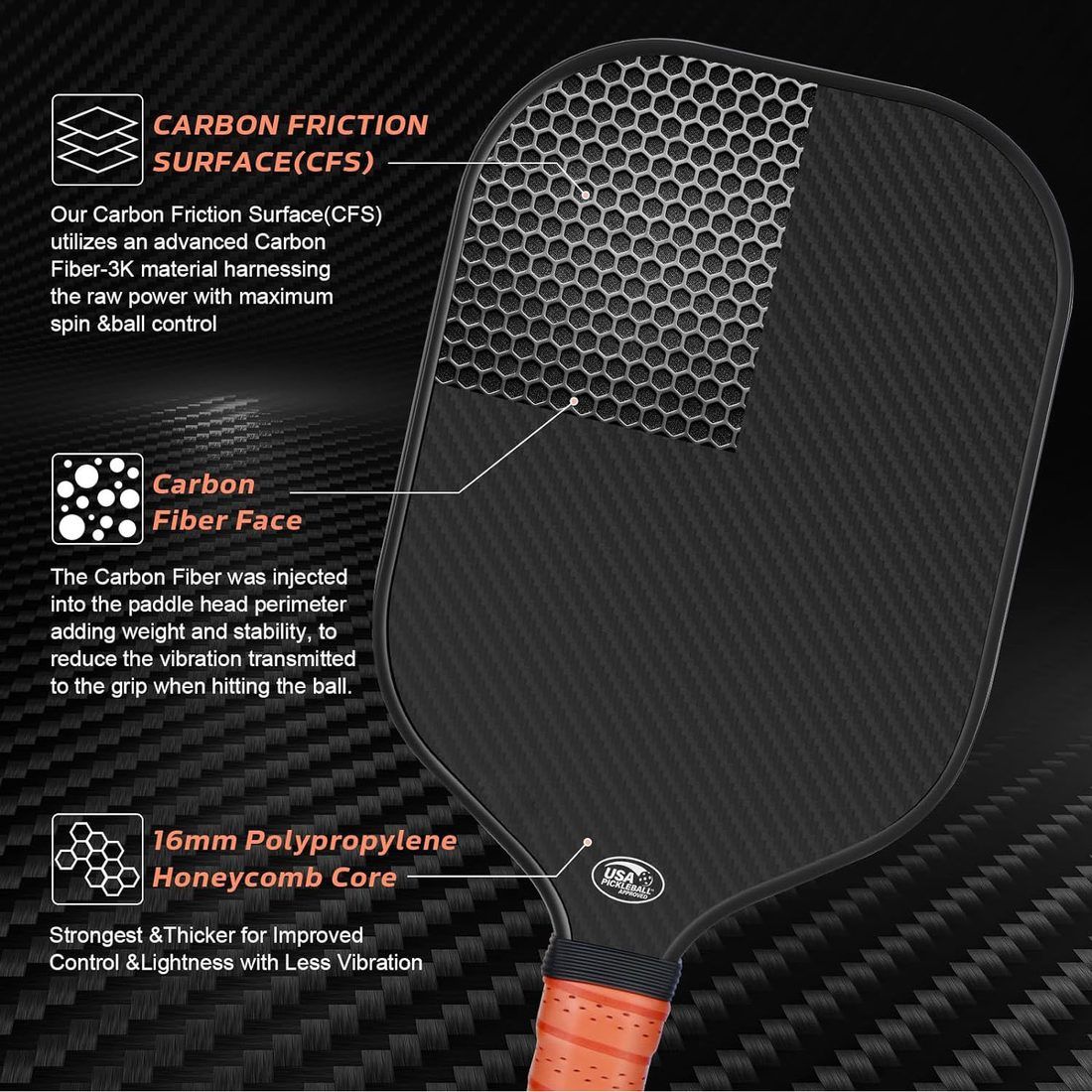
Cell size is the diameter of a single hexagonal cell in the honeycomb, and it runs roughly from 6mm to 10mm across the market. It gets almost no marketing attention, yet it's the core's most important spec. The physics is straightforward: smaller cells mean more cell walls packed into the same area, which means a stiffer, more uniform hitting surface; larger cells mean fewer walls and more room to flex, which means more trampoline and more pop.
A core near 6mm cells plays dense and controlled. More walls under the face spread the load, so the sweet spot is larger and the response is consistent shot to shot — the ball goes where you aimed. The cost is raw power; a small-cell core gives up some rebound. A core near 10mm cells is the opposite: fewer walls let the face flex more on impact, adding pop and rebound, but the sweet spot shrinks and off-center hits get less predictable. About 8mm is the common middle most brands default to because it splits the difference. None of this is a quality difference — a well-made 6mm control core and a well-made 10mm power core are both "good"; they're just built for different players.
| Cell size | Feel | Sweet spot | Best for |
|---|---|---|---|
| ~6mm (small) | Dense, controlled, quiet | Larger, consistent | Control players, dinkers, club fleets |
| ~8mm (standard) | Balanced | Medium | All-court players, safe default |
| ~10mm (large) | Poppy, lively, louder | Smaller, less forgiving | Power players, singles, bangers |
Ask a supplier for the core's cell size before you approve a sample. If they can't answer, they're buying core sheet without spec'ing it — which means your paddle's feel is whatever the core vendor shipped that month, and it will drift between batches.
Thickness stacks on top of cell size
Core thickness is the spec buyers do know, and it works alongside cell size rather than instead of it. The two common thicknesses are around 13mm and 16mm. A thinner 13mm core puts the face closer to the ball with less material to absorb the hit, so it plays poppy and punchy — more power, more feedback, a smaller margin for error. A thicker 16mm core adds material between face and ball, softening the hit into a slower, more controlled response with a larger sweet spot. Thickness is why a 16mm paddle feels "planted" and a 13mm paddle feels "quick."
Cell size and thickness compound. A 16mm small-cell core is the maximum-control build — soft, forgiving, deadened; a 13mm large-cell core is the maximum-power build — lively, punchy, demanding. Most coherent paddles pair the two in the same direction. Where thickness also changes the numbers is swing weight and balance, because a thicker core adds material out toward the face; that interaction is its own spec decision, covered in paddle weight and thickness and swing weight explained. The short version: decide cell size and thickness together, as one feel target, not as two boxes to fill independently.
Face and core are one system
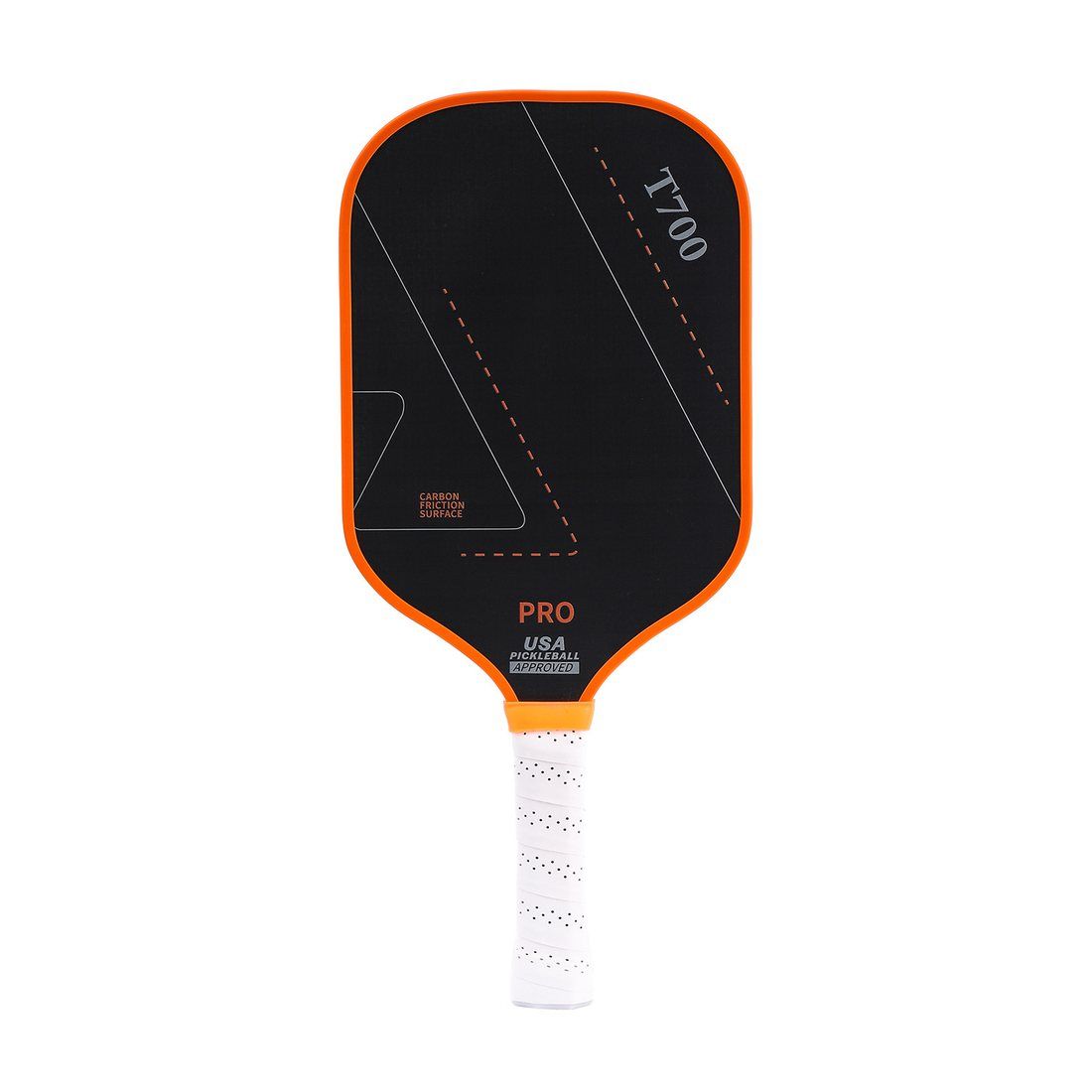
The face and core are not independent line items — they're a system, and matching them is where a coherent paddle comes from. A raw T700 carbon face is stiff and grippy; put it on a thick small-cell core and you get a precise, controlled paddle that still bites the ball for spin. A fiberglass face is more flexible and lively; put it on a thin large-cell core and you get an accessible power paddle that rewards beginners with easy pop. Problems start when the specs fight each other — a stiff control face on a thin power core reads as harsh and pingy, and buyers return it saying it "feels cheap" even though every component is fine on its own.
This is also where construction method matters. A thermoformed unibody paddle, where the face wraps the core and the perimeter is foam-injected, plays stiffer and more connected than an older cold-pressed paddle where the face is glued to a cut core — the same core sheet behaves differently depending on how it's bonded. The face-core-construction interaction is the whole subject of thermoformed vs cold-pressed paddles and the newer edge-foam builds in Gen 3 foam-wall paddles. Spec the core, the face, and the construction as one decision, or the paddle will feel like three parts that never met.
Speccing a core for your product line
Start from the player, not the paddle you want to copy. Who buys this SKU, and how do they play? A club buying rental and beginner paddles wants forgiveness — thick, small-cell, control-biased. A brand chasing 4.5+ tournament players building a power SKU wants a thinner, larger-cell core with a stiff face — and, if it will be sold as tournament-legal, a finished paddle that still clears the current USA Pickleball equipment standards. Most real lines carry at least two cores because one build cannot serve a dinker and a banger. Trying to split the difference on a single SKU usually produces a paddle that satisfies neither.
| Target player | Cell size | Thickness | Face pairing |
|---|---|---|---|
| Club / rental / beginner | ~6–8mm | 16mm | Fiberglass or T300 carbon |
| All-court 3.5–4.5 | ~8mm | 16mm | Raw T700 carbon |
| Power / singles / banger | ~8–10mm | 13–14mm | Raw carbon, stiff build |
Write the core spec into the same sheet you use for the rest of the paddle — cell size, thickness, face material, construction method — so the factory builds to a documented target rather than a vibe. The full paddle version of that document is in the custom paddle specs checklist, and the material-by-material reasoning behind each choice is in pickleball paddle materials. A sample against that spec, play-tested by someone who fits the target player, is the only real approval — a spec sheet can read perfect and still play wrong.
How cores fail — dead spots, crush, and delamination
A core that's spec'd right can still ship wrong, and the failure modes are specific enough to test for. Dead spots are the most common complaint: a patch of the face that returns noticeably less energy, usually from crushed or uneven cells under the bond. Tap a suspect paddle across the face and a dead zone sounds and feels flat next to the live area. Cell crush comes from over-pressing during lamination — the honeycomb gets compressed, the paddle plays dead overall, and no amount of face quality brings it back. Delamination is the bond between face and core letting go, which starts as a faint rattle or a soft spot and ends as a face lifting at the edge.
All three are catchable before a container ships. A tap test across a grid of the face flags dead spots; a weight-and-thickness check flags crushed cores that measure thin; a flex-and-listen check flags early delamination. Spelling out "no dead spots on a 9-point face tap, core thickness within tolerance, no delamination rattle" in the inspection scope turns a vague "check quality" into a pass-fail the factory owns. The broader paddle QC discipline — golden sample, AQL sampling, drop and edge-guard tests — is the same one that protects any paddle order and is worth running on a first core build.
Best for / not for: is a custom core worth it?
Speccing a core on purpose costs more attention than copying "16mm polypropylene" off a competitor. It pays off for some buyers and is overkill for others.
| Worth speccing on purpose | A stock core is fine |
|---|---|
| Brands building a multi-SKU line with distinct control and power models | A single entry-level SKU where 8mm / 16mm middle-of-the-road is exactly right |
| Anyone whose customers describe feel in reviews — feel is a core decision | Promotional or event paddles where price beats performance tuning |
| Sellers targeting a specific level (beginner club vs 4.5 tournament) | Very low volumes where tooling a distinct core won't amortize |
Frequently Asked Questions
What cell size should I choose for a control paddle?
Lean small — around 6mm cells — paired with a 16mm thickness. Smaller cells pack more walls under the face, which enlarges the sweet spot and makes the response consistent shot to shot, the two things control players value most. You give up some raw power, which is the correct trade for a dinking, resetting, placement-first player.
Does a bigger cell really add power?
Yes, within limits. Larger cells near 10mm leave more room for the face to flex on impact, which adds trampoline and rebound. The cost is a smaller sweet spot and less predictable off-center hits. Cell size is a genuine power lever, but it works with thickness and face stiffness — a large cell in a 13mm core with a stiff face is a real power build, while a large cell alone won't rescue an otherwise dead paddle.
Is 16mm always more control than 13mm?
Generally yes. A 16mm core puts more material between the face and the ball, softening the hit into a slower, more forgiving response with a larger sweet spot, while 13mm plays poppier and punchier with a smaller margin for error. Thickness and cell size compound, so a 16mm small-cell core is the maximum-control build and a 13mm large-cell core is the maximum-power build.
Why is polypropylene the standard core material?
Polypropylene damps shock and vibration far better than the older aluminum and Nomex cores, so it feels softer and plays quieter — a real advantage as the sport moved toward touch and noise-sensitive venues. It is less stiff than those materials, so the paddle relies on cell size, thickness, and face to tune response, but for feel and vibration control polypropylene honeycomb remains the market default.
What causes dead spots in a paddle?
Dead spots are usually crushed or uneven honeycomb cells under the face, often from over-pressing during lamination or a weak face-core bond. A patch of the face returns less energy and sounds flat on a tap test. They are a manufacturing-consistency problem, catchable before shipment with a face-tap check across a grid — which is why a dead-spot test belongs in the inspection scope on any paddle order.
Can one core work for both power and control players?
Rarely well. An 8mm / 16mm middle build is the closest to a universal core and is a sound single-SKU choice, but a dinking control player and a singles banger genuinely want opposite cores. Most real paddle lines carry at least two builds for that reason — trying to serve both with one core usually produces a paddle neither group prefers.
Want to source this quality for your brand?
Contact our factory directly on WhatsApp for an instant MOQ and pricing quote.