Pickleball Paddle Grit & Spin: Spray vs Peel-Ply Surfaces
Spin sells paddles, and that's exactly why the surface texture on a pickleball paddle is the easiest place for a supplier to make a sample feel amazing and a production run go wrong. A sprayed-on grit can feel grabbier than raw carbon the day it arrives — then smooth out in two months and, as it wears unevenly, drift past the USA Pickleball roughness limit that keeps it legal. So the surface is two problems at once: how much spin it generates, and how long it stays both spinny and compliant. Pick the wrong texture for your market and you ship a paddle that either loses its bite or loses its approval.
There are three real options on the table — peel-ply raw carbon, sprayed grit, and the newer "durable grit" ceramic and diamond surfaces — and they trade spin, longevity, and compliance risk against each other. This breaks down how each one actually works, the exact USA Pickleball limits a legal face has to stay under, and which texture to spec so your paddle is still legal and grippy after a season, not just in the unboxing.
Key Takeaways
- USA Pickleball caps surface roughness at about 30 microns average peak height (40 microns peak) and kinetic friction at 0.1875 — exceed it and the paddle is decertified.
- "Raw carbon" is really a peel-ply texture: a rough release layer is pressed onto the face and removed after curing, leaving a hardened-resin grip.
- Sprayed grit feels grabbiest when new but wears fastest — the coating smooths out and can lose bite (and compliance) within months.
- Peel-ply raw carbon lasts longer than spray but still fades as the resin chips off against the ball over time.
- Durable-grit surfaces (ceramic or diamond-infused) hold spin longest, but some pass UPA and fail USAP roughness — confirm which sanction your market needs.
- Spec the texture for spin after wear, not just when new, and verify roughness and friction on a sample before you commit.
The USA Pickleball limits a legal face must stay under
Before comparing textures, fix the ceiling in your head. Spin is regulated, so no legal paddle gets an unlimited grip advantage — and a paddle that's too rough doesn't get an edge, it gets pulled.
The current standard caps surface roughness at roughly 40 microns on the highest peak, or about 30 microns on the average peak height, and the average coefficient of kinetic friction at 0.1875. Push texture past that and the result isn't more spin on the approved list — it's instant decertification. These thresholds are periodically revised, so treat them as a moving target and confirm the current numbers on the USA Pickleball equipment standards before a production run. The practical point for sourcing: a "maximum spin" paddle that brags about being rougher than everyone else is often bragging about being illegal.
How each surface texture is made
"Texture" isn't one thing. The three methods are built differently, and that's what drives their spin and durability.
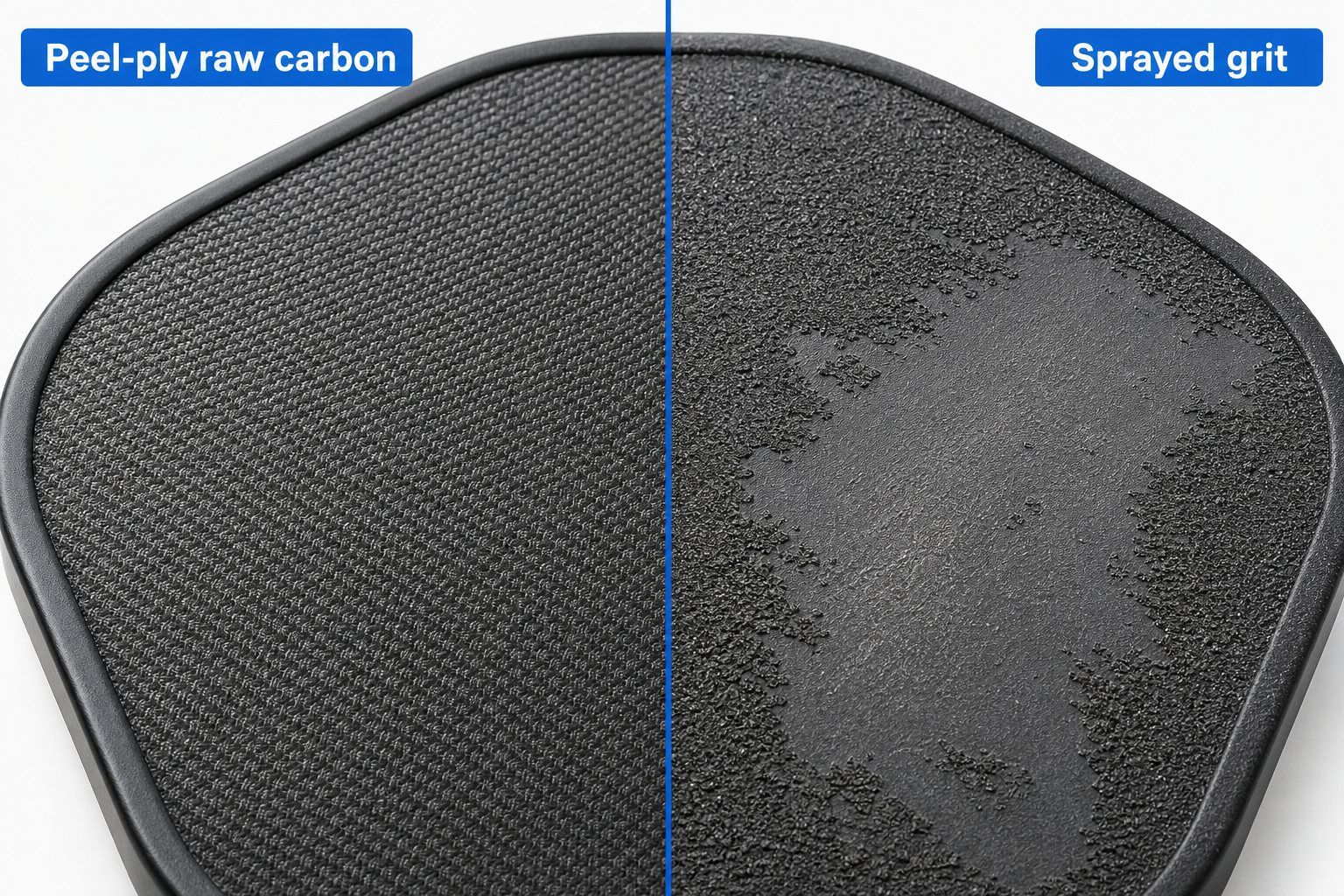
Peel-ply raw carbon
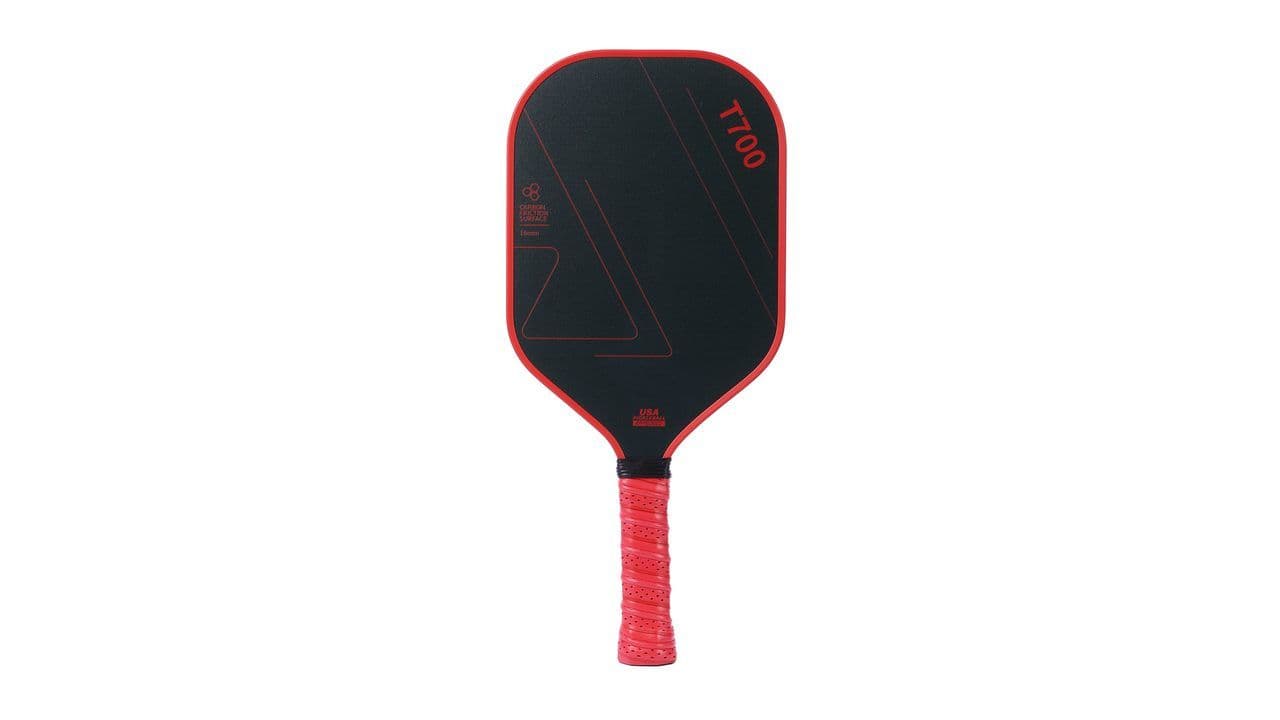
What gets marketed as "raw carbon" is a peel-ply texture. A rough release fabric is pressed onto the carbon face during curing and peeled off afterward, leaving a sandpaper-like pattern in the hardened resin. It's a structural texture, part of the face itself, which is why it holds up better than a coating. This factory's carbon faces use exactly this approach — a Carbon Friction Surface with a T700 frosted finish — so the grip is built into the cure, not painted on after.
Sprayed grit
Sprayed grit is a coating — paint with abrasive particles — applied on top of the face. Fresh, it can out-grip raw carbon and feel fantastic in a demo. The problem is it's a layer sitting on the surface, so repeated ball contact wears it down, it smooths out, and spin drops off faster than buyers expect. It's the cheapest way to make a sample feel grippy, which is exactly why you should be suspicious of a spray-grit paddle that wows you on day one.
Durable grit (ceramic / diamond)
The 2024–2026 answer to wear is "durable grit": harder particles — ceramic or diamond dust — embedded into the texture so it survives the ball longer. It holds spin the longest of the three. The catch is compliance: some of these surfaces are approved for UPA events but exceed the USAP roughness limit, so a paddle can be "tournament legal" in one sanctioning body and not the other.
Spin vs durability vs compliance, compared
Here's the trade laid out. Read it for what your customers will feel three months in, not just on arrival.
| Surface | Spin when new | Durability | Compliance |
|---|---|---|---|
| Peel-ply raw carbon | High | Good; fades slowly | Easy to keep USAP-legal |
| Sprayed grit | Highest at first | Low; smooths out | Can drift as it wears |
| Durable grit (ceramic/diamond) | High | Longest-lasting | Some pass UPA, fail USAP |
The honest pick for most lines is peel-ply raw carbon: strong spin, slow fade, and the easiest texture to keep inside the legal window. It's the same logic as choosing the carbon grade under the texture — durability is what protects your margin.
Why texture fades — and what it costs you
All texture wears, because of a simple mismatch: the hardened resin or coating isn't as hard as the ball. Every contact chips a little off, and over a season the face goes smooth.
That's a returns problem disguised as a wear problem. A player who bought your paddle for spin notices when it stops biting, and a sprayed-grit face that felt incredible at purchase is the most likely to generate that complaint. Durable grit pushes the fade out the longest; peel-ply sits in the middle and stays legal; spray fades first. When you're costing a paddle, the texture's lifespan belongs in the math next to the unit price — a face that needs replacing in three months isn't cheap, it's expensive on a delay.
What we check on paddle texture before shipment
Texture is where a compliant sample can hide a non-compliant run, so it gets checked directly rather than trusted. Every carbon paddle order runs through the same surface checks before the balance is released:
- Roughness window: Surface is checked against the USA Pickleball limit (around 30 microns average) when new, so the paddle ships legal, not borderline.
- Texture type: Peel-ply versus coating is confirmed, because a sprayed sample swapped for a cheaper run is a common quality slip.
- Evenness: The face is inspected for uniform texture with no smooth or resin-rich patches that create dead spots.
- Wear behavior: Texture durability is considered against the SKU's market, so spin life matches what buyers expect.
Ask any paddle supplier whether the grip is peel-ply or sprayed, and what the surface measures when new. If the spin is a coating you can scratch off, it's a sample trick, not a durable, approved surface.
Conclusion
Spin comes from surface texture, and texture is the easiest spec to fake in a sample and the hardest to keep legal in production. Sprayed grit wins the unboxing and loses the season; peel-ply raw carbon gives strong spin that fades slowly and stays inside the USA Pickleball limit; durable ceramic and diamond grits last longest but can cross the line into UPA-only territory. Spec the texture for how it plays after wear, confirm it sits under the roughness and friction caps, and you ship a paddle that's still grippy and still legal when the season's half over.
If you're choosing a surface for a paddle line, ask for the texture method and a roughness reading on a sample, and check spin both new and worn. Our carbon faces use a peel-ply friction surface tuned to stay legal, and our team can help you match the texture to your market and sanction.
Frequently Asked Questions
What is the USA Pickleball surface roughness limit?
Roughly 40 microns on the highest peak or 30 microns average peak height, with kinetic friction capped at 0.1875. Exceeding it decertifies the paddle. Confirm current figures on the USA Pickleball equipment standards, as they're periodically revised.
Is peel-ply or sprayed grit better for spin?
Sprayed grit grips most when new but wears fast and can lose compliance. Peel-ply raw carbon gives strong spin that fades slowly and stays legal more easily, which makes it the better choice for most production lines.
Why does paddle spin fade over time?
The textured resin or coating isn't as hard as the ball, so each contact chips a little away. Over a season the face smooths out and grip drops — fastest on sprayed grit, slowest on ceramic or diamond durable grit.
Is durable grit legal for tournaments?
It depends on the sanction. Some ceramic and diamond surfaces are approved for UPA events but exceed the USAP roughness limit, so a paddle can be legal in one body and not the other. Check the sanction your market plays under.
How do I verify a paddle's surface is compliant?
Ask whether the grip is peel-ply or sprayed and get a roughness reading on a sample when new. Confirm it sits under the USA Pickleball roughness and friction limits, and check that spin holds after simulated wear.
Want to source this quality for your brand?
Contact our factory directly on WhatsApp for an instant MOQ and pricing quote.