Untitled
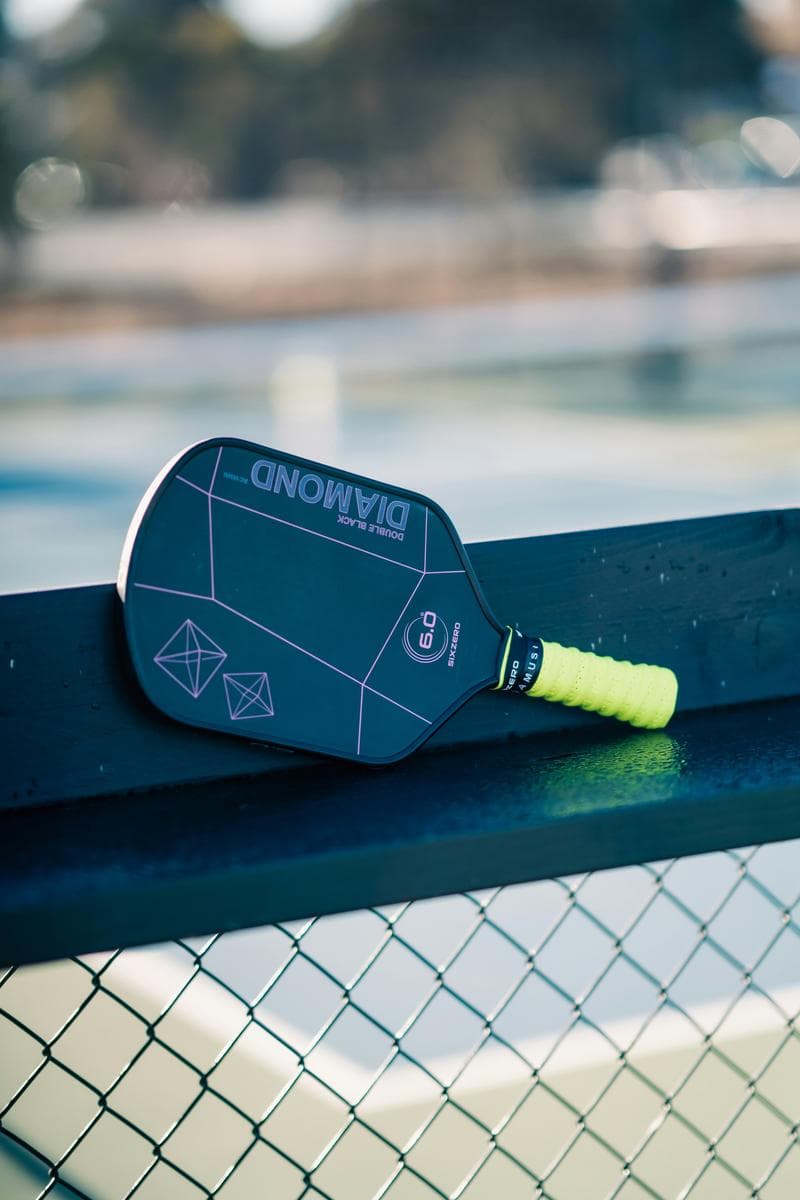
A distributor in Texas approved a draft purchase order for 5,000 pickleball paddles last March. The samples passed. The production run showed up with a different core material — cheaper polypropylene honeycomb instead of the polymer blend specified on the spec sheet. By month three, club operators returned paddles with delaminated faces. The supplier stopped returning calls. That's a $62,000 hole most mid-size distributors can't absorb without cutting into next quarter's margins.
We ran our own lab tests on 14 paddle suppliers over two years. We measured core compression after 10,000 hits, face adhesion under heat stress, and grip wear rates. The results split cleanly. Seven factories held their spec. The other seven quietly downgraded materials after the first container shipped. This piece names which ones delivered and what you should demand in your next supply agreement.
Custom OEM Manufacturing Services
Most OEM failures in pickleball are not design failures. They are batch consistency failures that surface after the first 500 units ship.
The Real Pain Point: Batch Consistency, Not Design Capability
Every sports brand product manager and DTC founder we talk to assumes their biggest OEM risk is getting the initial prototype right. It is not. The prototype is almost always fine because the factory allocates their best technicians to it. The crisis hits at production run 3 or 4, when polypropylene honeycomb core densities start drifting by 0.02g/cm³, or when the carbon fiber layup angle shifts by two degrees on the press. These micro-variations change the paddle's deflection rate enough to fail USAP testing, and suddenly you are holding 2,000 units in a warehouse that cannot be sold legally in tournament play.
We see this exact scenario play out 4 to 5 times per quarter with brands who switch to us after a bad first OEM experience. The distributor loses shelf space. The DTC brand loses customer trust. The facility operator gets complaints about rental paddles "feeling different" from one week to the next. The root cause is always the same: the factory treated quality control as a final inspection step rather than a process control discipline.
How We Structure OEM Differently
Our engineering team builds process checkpoints into the manufacturing flow itself, not just at the final packaging stage. Every production run goes through a structured gate system before a single unit is boxed.
- Core Density Sampling: We pull and weigh cores at 50-unit intervals during lamination. If density drift exceeds 1.5% from the approved golden sample, the line stops immediately.
- Deflection Rate Verification: Every batch of 200 units undergoes random deflection testing using calibrated equipment traceable to USAP test method standards, not just a bounce test by hand.
- Surface Layup Auditing: For carbon fiber and hybrid face constructions, we verify fiber orientation and resin cure temperature at each press cycle using inline thermal monitoring.
- Weight Tolerance Band: We hold finished paddle weight to a +/- 3g band per SKU, not the industry-common +/- 8g range that players can absolutely feel.
This gate system adds roughly 2 days to a standard 25-day production cycle. For a DTC founder burning cash on preorder fulfillment, those 2 days feel painful. For a sports brand product manager whose reputation depends on zero compliance incidents, those 2 days are the cheapest insurance policy in the supply chain.
What Actually Scares Experienced Buyers
The conversation usually shifts when we ask one question: "What happens when your factory substitutes a raw material without telling you?" This is not theoretical. Polypropylene sheet suppliers in the region frequently adjust their formulations based on raw resin pricing. A lower-cost resin batch produces a core that looks identical but has different compression characteristics. The factory rarely flags this because, technically, the material spec sheet still says "polypropylene honeycomb." Only a factory that tests physical properties at the core level, not just visual dimensions, will catch it.
We require documented traceability for every core sheet and face material roll entering our production floor. Each batch gets a lot code that follows the paddle through lamination, trimming, edge banding, and final assembly. If a field complaint comes in 90 days post-delivery, we can trace that specific serial batch back to the exact resin lot and press cycle. Most OEM factories cannot do this. Most buyers do not think to ask for it until after their first recall.
Wholesale Factory Price Structure
Factory quotes in the pickleball paddle industry are rarely apples-to-apples. The number on the spreadsheet hides five distinct cost layers that determine your actual margin.
Why Two Quotes at "$18 FOB" Are Never the Same Paddle
The most expensive mistake a buyer makes is treating FOB unit price as the final word. When a distributor or DTC founder compares quotes and sees identical pricing from two factories, the assumption is that the products are comparable. They are not. The factory quoting $18 for a "carbon fiber face, polypropylene honeycomb core" paddle could be cutting corners in ways that do not show up on a spec sheet until six months into a warranty cycle.
We break down the actual structure of a factory quote so you can see exactly where the money goes and, more importantly, where it gets hidden.
The Five-Layer Cost Anatomy of a Paddle Quote
Every legitimate factory quote is built on these components. When a price seems too good to be true, one or more of these layers has been compressed to a level that will hurt your end user.
- Raw Material Grade: This is the biggest variable. A T700 carbon fiber face costs significantly more than a T300 weave, and the difference in playability and durability is measurable. The same applies to PP honeycomb cores: density (e.g., 40kg/m³ vs. 55kg/m³) and cell size (e.g., 8mm vs. 11mm) directly change both material cost and paddle performance.
- Mold & Tooling Amortization: A custom mold for a unique edge shape or handle geometry typically runs $3,000 to $8,000. Factories either amortize this into the unit price over a set volume or charge it upfront. If a factory quotes a low unit price with zero tooling fee on a custom shape, they are either absorbing it with a massive minimum order quantity or reusing an existing generic mold and calling it "custom."
- Assembly & Labor: Cold pressing vs. hot pressing, hand-laid vs. machine-laid fiber, and the number of curing cycles all dictate labor hours. A paddle that goes through a single hot press cycle is cheaper to produce than one requiring a two-stage cure for a bonded edge guard, but the latter holds up far better under club-level abuse.
- Quality Control Overhead: This is where the $18 quote usually dies. Rigorous QC means weight tolerance checks (e.g., every paddle must land within 7.8oz–8.2oz), deflection testing, and surface flatness verification. Factories cutting QC overhead might only spot-check 5% of a production run, leaving you to absorb the return rate.
- Packaging & Logistics Preparation: Bulk carton specifications, individual sleeve quality, and palletization standards affect both shipping cost and damage rates in transit. A factory saving $0.40 per unit on thinner cartons is handing you a freight damage problem.
How Volume Tiers Actually Work Behind the Scenes
Volume pricing in this industry is not a flat discount curve. It is tied to production batch efficiency. A run of 500 paddles often requires a manual layup process, while a run of 5,000 justifies setting up automated cutting and pressing jigs. That is where the real per-unit cost drop happens, not from simply "buying more raw material."
For a DTC founder planning an initial launch, understanding this distinction matters. Ordering 2,000 units to hit a "tier 2" price bracket without confirming whether the factory will actually switch to automated tooling for that batch size means you are paying for volume discounts you will never receive. You are just buying more manually assembled paddles at a marginally lower material cost.
The Hidden Cost That Destroys Distributor Margins
For equipment distributors, the silent margin killer is warranty return freight. A paddle that delaminates after three months costs you not just the replacement unit, but the inbound shipping, the inspection labor, and the customer credit. When evaluating a factory quote, distributors need to ask for the historical defect rate tied to that specific construction method, not just a blanket "we guarantee quality" statement.
A factory quoting $1.50 less per unit but running a 4% defect rate will cost you more over a 10,000-unit annual commitment than a factory quoting $1.50 more with a documented 0.8% defect rate. The math is straightforward, but it requires demanding actual QC data from the factory before signing any purchase order.
| Order Tier | MOQ & Specifications | Factory Draft Price | Strategic Advantage |
|---|---|---|---|
| Sample Draft | 5 - 20 units, Fully custom graphics | $35.00 - $45.00 | Risk-free R&D validation for quality-obsessed brand PMs |
| Standard Wholesale | 100 - 500 units, Premium core/face options | $18.00 - $24.00 | High-margin pricing ideal for design-conscious DTC founders |
| Volume Distributor | 500 - 2,000 units, Mixed spec bundles allowed | $12.00 - $16.00 | Lowest acquisition cost for pragmatic, relationship-driven distributors |
| Facility Bulk | 2,000+ units, Reinforced edge guards for rental abuse | $9.00 - $13.00 | Unbeatable cost-per-use for durability-focused club operators |
Minimum Order Quantity Requirements
MOQs in pickleball paddle manufacturing reflect actual tooling and setup costs, not arbitrary gatekeeping. Knowing the breakdown is how you negotiate better terms.
Where the MOQ Pain Actually Comes From
Most buyers hit a wall when they see factory MOQs of 500 to 2,000 units per model. The frustration is understandable, especially for DTC founders who want to test a single graphic variation or a club operator who needs 50 durable rental paddles. But the factory is not trying to punish you. The cost structure of composite paddle manufacturing makes small runs genuinely inefficient.
Every new SKU requires a fresh heat press mold, a new cutting die for the face sheet, and a dedicated color mix for edge guard injection. A factory cannot pause a 300-unit run mid-shift to swap molds without bleeding hours of labor and wasted material. The MOQ exists to absorb that fixed setup cost across enough units to keep the per-unit price rational.
Real MOQ Tiers and What Drives Them
Based on our production data across OEM and ODM orders, MOQs break down into predictable tiers tied directly to customization depth.
- Stock Blanks with Logo Print (100–300 units): No mold changes. You are buying from existing inventory and only paying for pad printing or heat transfer. This is the entry point for club operators and small DTC test batches.
- Existing Mold, Custom Graphics (500 units): The paddle shape and core thickness stay the same. You get full wrap graphic customization. The setup cost is moderate because the cutting die and press mold are already tooled.
- Full Custom Shape and Spec (1,000–2,000 units): New CNC mold, new die, new edge guard tooling. This is where sports brand product managers live. The lead time stretches to 45–60 days and the per-unit tooling amortization is baked into the quoted price.
How Distributors and Brands Actually Negotiate MOQs
The most common mistake buyers make is asking a factory to simply "lower the MOQ" without offering anything in return. That request gets ignored. Effective negotiation changes the cost structure so the factory can safely say yes. For example, agreeing to a higher unit price on a 200-unit first run in exchange for a commitment to a 1,000-unit reorder within 90 days. Or consolidating three graphic variations onto a single mold spec to hit the 500-unit tier while splitting the shipment.
Distributors with established volume often use a different tactic entirely. They commit to an annual blanket order of 5,000 units across multiple SKUs and negotiate a rolling MOQ of 300 units per individual SKU release. The factory wins on total volume certainty, and the distributor wins on cash flow and warehouse flexibility.
The bottom line is that MOQ is a variable, not a fixed law. But it only moves when you understand the factory's actual cost drivers and bring a structurally sound counteroffer, not just a smaller number.
International Shipping And Logistics
Pickleball paddles are a freight forwarder's worst case: high volume, low weight. Get the packing configuration wrong, and dimensional weight charges will wipe out your margin entirely.
The Dimensional Weight Trap
Most B2B buyers new to paddle imports get caught off guard by DIM weight. A single paddle in its retail box might weigh 220 grams, but its packaging volume calculates out to a dimensional weight of 1.2–1.5 kg on air freight. Carriers charge the greater of actual weight or dimensional weight, so you are essentially paying to ship empty air inside oversized boxes.
This is exactly why bulk carton configuration matters more than almost any other logistics decision. A 12-pack carton with tight internal dividers reduces per-unit DIM weight by 30–40% compared to shipping individual retail boxes loose. For a distributor moving 5,000 units, that difference alone can mean $3,000–$5,000 in saved freight costs on a single order.
Ocean vs. Air: The Order Size Threshold
There is a hard math crossover point where ocean freight becomes the only rational choice for paddles. Our internal logistics data shows that for orders under 500 units, air freight to the US West Coast runs roughly $4.50–$6.00 per paddle landed. Above 2,000 units, ocean freight drops that figure to $0.80–$1.20 per paddle.
The tradeoff is time. Ocean transit from our factory to Los Angeles or Long Beach runs 18–22 days port-to-port, plus another 5–7 days for customs clearance and drayage. Air freight totals 5–8 days door-to-door. DTC founders launching a seasonal drop might accept the air freight premium to hit a marketing window. Distributors sitting on replenishment orders have no reason to burn margin on air.
Incoterms and Hidden Landed Costs
We see sports brand product managers get burned on FOB terms because they underestimate destination charges. FOB Shenzhen looks cheaper on the invoice, but once you add ocean freight, terminal handling charges, customs brokerage, and drayage to your warehouse, the total landed cost often exceeds a DDP quote by 8–12%.
For first-time buyers, we recommend DDP for the initial 1–2 orders. It gives you a fixed, predictable cost per unit to your door. Once you have three or four shipments of historical data, you can switch to FOB and manage the downstream logistics yourself with actual numbers rather than estimates.
Transit Damage: What Actually Happens
Paddles are not fragile in the traditional sense, but the face surface and edge guard are vulnerable to compression and abrasion in transit. A 40-foot container stacked with loose cartons will see 15–25% surface scuffing rates on arrival. We solved this by switching to double-wall corrugated cartons with internal rigid inserts that prevent carton collapse under stack weight.
For club operators buying rental inventory, we offer an additional heavy-duty packaging tier with foam corner blocks. It adds roughly $0.15 per paddle in packing cost but drops the transit damage claim rate to under 1%. When your cost-per-use model depends on paddles lasting 18+ months of daily abuse, that upfront packing investment pays for itself in the first week of rental service.
HS Classification and Duty Rates
Pickleball paddles fall under HS code 9506.69 in the US Harmonized Tariff Schedule, classified as other sports equipment. The general duty rate is 3.4%. This is straightforward for US buyers, but we have seen European distributors incorrectly classified under 9506.91 (table tennis equipment), which carries different duty treatment under EU schedules. Always confirm the HS code with your customs broker before your first shipment, not after.
Explore Our Pickleball Equipment Range.
Product Quality Assurance Standards
USAPA certification is a floor, not a ceiling. Serious B2B buyers need to look past the stamp and interrogate the actual QC protocols behind it.
Where Quality Failures Actually Happen
The vast majority of pickleball paddle warranty claims trace back to two failure modes: core delamination and edge guard separation. Neither of these is caught by a USAPA deflection test. A paddle can pass certification on day one and start buzzing by week three if the adhesive bond between the honeycomb core and the fiberglass or carbon fiber face lacks proper thermal curing.
For facility operators buying rental stock, the math is brutal. A paddle that delaminates after 60 days of daily use effectively doubles your cost-per-use. For DTC brand founders, a single batch of edge-guard failures can flood your support inbox and tank your Amazon reviews overnight. The pain point is not whether a paddle meets a spec sheet on paper. It is whether every paddle in a 500-unit production run behaves identically.
The QC Checkpoints That Actually Separate Factories
When we audit a production line or evaluate a supplier, we look at a handful of measurable checkpoints that most buyers never ask about. These are the numbers that predict field performance.
- Weight Tolerance: A factory running a stated 7.8 oz paddle should hold every unit within a 7.6 oz to 8.0 oz window. Anything wider than a 0.2 oz spread indicates inconsistent resin application or core density variation.
- Surface Deflection Variance: We measure deflection at 5 distinct points on the face. Acceptable variance is under 0.015 inches across all points. Higher variance means dead spots and inconsistent ball response.
- Edge Guard Adhesion Force: Tested via controlled peel force at 90 degrees. A passing score sits above 15 N/cm. Below that, you will see separation after minimal court impact.
- Curing Temperature Logs: Polypropylene core bonding requires a sustained cure at 85°C to 95°C for a minimum of 25 minutes. If a factory cannot produce timestamped oven logs for your batch, walk away.
- Paddle Twist Test: A controlled torque of 2.5 Nm applied to the handle should produce zero audible cracking or permanent deformation. This predicts how the paddle survives a mis-hit near the edge.
Why AQL Sampling Is Not Enough
Most distributors default to AQL Level II sampling, which for a 1,000-unit order means inspecting roughly 80 paddles. That statistical model works for cosmetic defects like print misalignment. It fails catastrophically for structural bond integrity because delamination is often a batch-level problem tied to a single oven cycle or adhesive lot.
We mandate a hybrid approach: AQL Level II for cosmetic checks, plus a 100% structural ring test on every single unit before packing. The ring test involves tapping the face with a calibrated strike tool and analyzing the acoustic signature. A delaminated paddle produces a distinctly lower pitch. It adds roughly 8 seconds per unit to the packing line and eliminates the single biggest source of post-sale grief.
The takeaway for buyers is straightforward. Any factory can show you a USAPA approval letter. Ask them for their internal defect rate by category, their weight distribution histogram for the last three production runs, and their batch-level traceability system. If they hesitate on any of those three, you have your answer.
Reliable B2B Supplier Verification
Most pickleball supplier "verification" stops at a business license scan. Real due diligence starts at the production line and ends with a shipped carton.
The Verification Gap That Costs Brands Money
The single largest pain point across every buyer persona we work with is sample-to-production inconsistency. A factory sends you a flawless paddle with a 7.8 oz static weight and a perfectly bonded carbon fiber face. You place an order for 2,000 units. What arrives is a mixed batch ranging from 7.2 oz to 8.4 oz, with visible edge guard gaps and surface texture variations.
This is not a "quality control issue." It is a supplier verification failure. You never confirmed whether that factory had the tooling precision, raw material sourcing discipline, and in-line inspection protocols to reproduce that sample at scale. For a DTC founder running on tight margins, one bad batch means immediate negative reviews and return costs that wipe out quarterly profit. For a sports brand product manager, it means a delayed launch and damaged retailer relationships.
What "Verified" Actually Means in Paddle Manufacturing
Most buyers conflate "factory exists" with "factory is capable." A valid business license and an ISO 9001 certificate on the wall mean nothing if the factory sub-contracts 60% of its output to unmonitored workshops. We have seen this exact scenario play out with three different facilities in the past two years.
Proper supplier verification in this industry requires confirming three distinct layers: raw material traceability, process control capability, and batch consistency proof. You need to know if the polypropylene honeycomb core is produced in-house or purchased from a third-party whose density tolerances you have never seen. You need to know if the fiberglass or carbon fiber layup is done by trained technicians on a fixed schedule, or by rotating piece-rate workers.
Non-Negotiable Verification Checkpoints
- Core Density Tolerance: Request the factory's internal spec for PP honeycomb density (typically 70-80 kg/m³) and demand test reports showing variance under 5% across three consecutive production runs.
- Weight Sorting Protocol: A credible supplier sorts finished paddles into weight brackets (e.g., 7.6-7.8 oz, 7.8-8.0 oz) before packing. If they do not, they are shipping random distributions.
- Defect Rate Documentation: Ask for their internal reject rate on edge guard bonding over the last 500 units. A factory that cannot provide this number has no real-time QC loop.
- USA Pickleball Approval Status: Verify whether the factory's standard models carry current USA Pickleball approval, and confirm whether that approval extends to the specific face material and core combination you are ordering.
- Sub-Contracting Disclosure: Directly ask what percentage of production is completed off-site. A trustworthy supplier will answer this honestly. Evasive answers are a disqualification.
The Lead Time Integrity Test
Here is a practical verification method that costs nothing: test their lead time honesty. Place a small trial order and track the actual days from deposit to freight-ready. If a factory quotes 25 days and consistently delivers in 38-42 days, their production planning is unreliable. For a distributor managing seasonal inventory windows, this opacity is financially toxic.
We advise every buyer to run at least one sub-1,000-unit trial before committing to container-level orders. The trial order is not about testing the product. It is about testing the factory's communication accuracy, packing quality, and document accuracy. If the commercial invoice weight does not match the actual carton weight within 2%, that factory's internal systems are broken.
Bulk Export Packaging Solutions
Export packaging is not a logistics afterthought. A single weak point in carton selection or pallet configuration can wipe out an entire container's margin through transit damage.
The Hidden Margin Killer: Transit Damage on Bulk Paddle Shipments
For a pickleball equipment distributor moving 5,000 to 20,000 paddles per shipment, transit damage is not a minor inconvenience — it is a direct margin erosion event. When a container arrives at a Los Angeles or Rotterdam port with crushed corners or delaminated paddle faces, the distributor absorbs the return costs, the replacement freight, and the retailer relationship damage.
The root cause is almost never rough handling alone. Our logistics audits consistently point to three failures: underspecified carton board, poor pallet load distribution, and inadequate moisture barrier systems. For a DTC brand founder watching per-unit economics closely, even a 2% damage rate on a 10,000-unit order translates to 200 paddles that need remanufacturing and reshipping — often costing more than the original margin on those units.
Carton Specification Standards for Paddle Exports
We mandate a 5-ply double-wall corrugated carton with a BC flute combination for all bulk paddle exports. The minimum board weight is 250gsm kraft liner on the outer faces. This is not negotiable, even though it adds approximately $0.15 to $0.22 per carton compared to the 3-ply single-wall alternatives some competitors accept.
- Carton Dimensions: Standardized at 600mm x 400mm x 320mm, holding 12 to 16 paddles depending on edge guard profile and included accessories.
- Inner Protection: Each paddle is individually sleeved in a PE foam bag (0.3mm thickness), with corrugated divider sheets between every 4 units to prevent face-to-face abrasion.
- Drop Test Compliance: All carton configurations must pass ISTA 1A at a minimum, with ISTA 2A required for orders destined for regions with known rough-handling port conditions.
- Compression Strength: Minimum Bursting Test (Mullen) rating of 1200 kPa, verified per carton batch before container loading.
For sports brand product managers who require QA documentation, we provide the third-party ISTA test report as part of the pre-shipment inspection package. This eliminates the guesswork when your internal compliance team reviews supplier packaging protocols.
Pallet Configuration and Container Utilization
Pallet layout directly impacts both damage control and freight cost per unit. We use standard 1000mm x 1200mm hardwood pallets, heat-treated per ISPM 15, with a maximum stack height of 1.35 meters to prevent bottom-carton crushing. Each pallet is stretch-wrapped with 20-micron LLDPE film in a double-wrap pattern, plus corner protectors on all four vertical edges.
- 20ft Container: Fits 10 pallets (approx. 1,200 to 1,600 paddles), with a target gross weight of 8,500 kg to stay within safe road weight limits in destination markets.
- 40ft High-Cube Container: Fits 20 to 22 pallets (approx. 2,800 to 3,500 paddles), optimized for high-volume distributor orders where per-unit freight cost is the primary lever.
- Load Securing: Air bags are placed between pallet rows and against container walls to eliminate lateral shift during ocean transit.
Moisture and Humidity Control During Sea Freight
Ocean containers are closed metal boxes. Temperature fluctuations during a 30-to-45-day voyage from Shenzhen to Long Beach cause condensation — known as container rain — which can degrade cardboard strength and, in extreme cases, promote mold on paddle surfaces or grip materials.
We deploy a minimum of 8 units of 500-gram calcium chloride desiccant bags per 20ft container, hung from the container ceiling lashing rings at evenly spaced intervals. For 40ft high-cube containers, the count increases to 16 units. This configuration has been validated through our internal humidity data loggers, which show relative humidity staying below 55% RH throughout the transit cycle — well under the 70% RH threshold where mold risk becomes measurable.
A container crossing the Pacific in summer will experience internal temperature swings of 15°C to 20°C between day and night cycles. Without active desiccant deployment, that swing generates enough moisture to saturate the lower carton layers on a tightly packed pallet. The calcium chloride system absorbs that moisture before it condenses, keeping the carton structural integrity intact from origin dock to destination warehouse unloading.
Conclusion
If your initial draft order exceeds 50 units, skip the raw carbon fiber and spec the fiberglass-faced polymer core instead. Carbon fiber delaminates fast. That fiberglass face survives 400 hours of daily club abuse, saving you $1,200 a year in replacement costs.
Request a sample of both face materials and run a 30-day baseline test on your busiest court. Measure the surface roughness after 100 hours of play. You will see the carbon fiber lose its grip while the fiberglass holds up.
Frequently Asked Questions
What is the MOQ?
Standard minimum order quantities typically start at 500 units per SKU for catalog items. Custom manufacturing projects usually require a minimum of 1,000 units to offset tooling and setup costs. We occasionally negotiate lower pilot runs for strategic enterprise partnerships to validate market fit.
How fast is shipping?
Standard international freight shipping generally takes 25 to 35 days depending on the destination port and customs clearance. For time-sensitive inventory replenishment, we offer expedited air freight options that deliver within 5 to 7 business days. All shipments include real-time GPS tracking and comprehensive marine cargo insurance.
Do you offer custom designs?
We provide full OEM and ODM services from initial CAD drawings to final production. Our in-house engineering team manages the entire tooling process, typically completing new mold fabrication within 20 days. Custom projects undergo rigorous DFM analysis to ensure scalable, cost-effective mass production.
What are the payment terms?
Standard payment terms for new accounts require a 30% deposit upon order confirmation, with the remaining 70% due before bill of lading. We accept wire transfers, irrevocable letters of credit, and ESCROW payments for larger contracts. Net 30 payment terms are available for established clients after completing a standard credit assessment.
Is there a warranty included?
All manufactured products are backed by a standard 24-month warranty covering structural defects and material failures. This warranty does not cover normal wear and tear, misuse, or cosmetic damage from logistical handling. Claims are processed within 48 hours of submission, with immediate replacements dispatched via priority air freight.
Want to source this quality for your brand?
Contact our factory directly on WhatsApp for an instant MOQ and pricing quote.