When Is Pickleball Gear a Children's Product? CPSIA
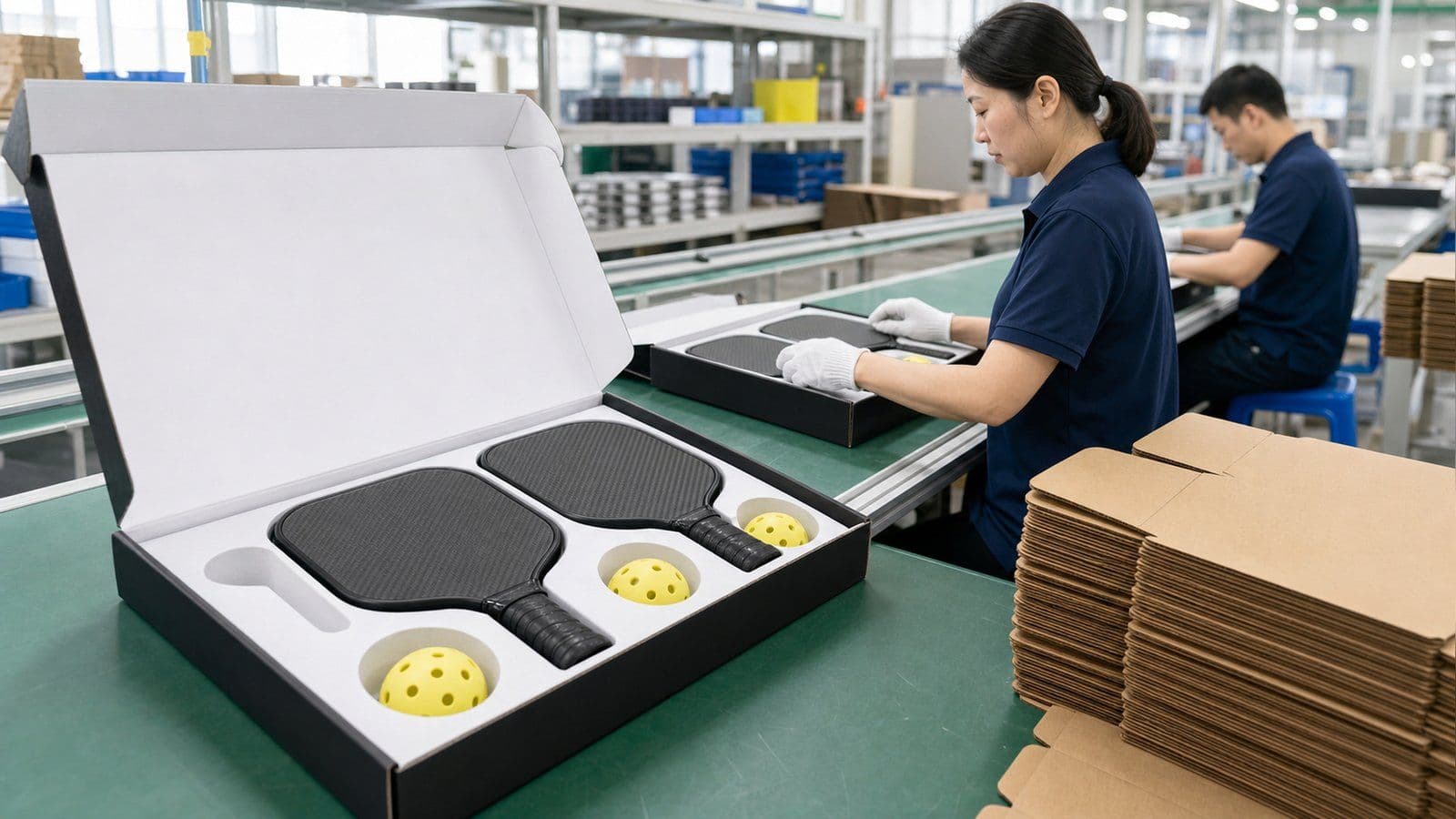
An adult-sized pickleball paddle is not a children's product under CPSIA. A short-handle paddle built for a nine-year-old almost certainly is, even in plain black with no cartoon on it. That is the whole answer, and the line between those two SKUs is drawn in one paragraph of the Code of Federal Regulations that almost nobody writing about CPSIA quotes.
The paragraph is 16 CFR 1200.2(d)(8), titled "Sporting Goods and Recreational Equipment," published at 75 FR 63077 on 14 October 2010. Search "CPSIA sporting goods" and page one returns testing laboratories explaining what testing involves. The determination that decides whether you need any of it is the part that is missing, and it is the part that has to be settled while the handle length is still a number on a drawing.
A SKU inside scope needs third-party testing at an accredited laboratory, a Children's Product Certificate, a permanent tracking mark and a periodic testing programme. A SKU outside scope needs none of those. This page walks the determination, quotes the text that decides it, and states what follows in each direction. It covers the United States only; our market-by-market safety article covers how CE and REACH sit alongside it.
Key takeaways
- A children's product is one "designed or intended primarily for children 12 years of age or younger." 16 CFR 1200.2(a)(1) settles it on four statutory factors weighed together, never on one.
- Adult-sized sporting equipment stays out of scope even when children use it. 16 CFR 1200.2(d)(8): "Sporting equipment, sized for adults, are general use items even though some children 12 years of age or younger will use them."
- Two things pull equipment in: sizing and decoration. The same paragraph puts recreational equipment in scope when it is "sized to fit children 12 years of age or younger and/or … decorated with childish features by the manufacturer."
- An age label does not settle it in either direction. 16 CFR 1200.2(c)(1): "The manufacturer's label, in and of itself, is not considered to be determinative."
- In scope means an accredited third-party lab plus a certificate under 15 U.S.C. 2063(a)(2), and a permanent tracking mark under 15 U.S.C. 2063(a)(5), in force since 14 August 2009.
- The limits are 100 ppm total lead, 90 ppm lead in surface coatings and 0.1% for eight phthalates — and ASTM F963-23 on top, but only where the article is a toy.
- 16 CFR Part 1130 is not the tracking label rule. It is the consumer registration rule for 20 categories of durable infant and toddler product. Sources that cite it for tracking marks are citing the wrong part.
On this page
- What CPSIA regulates, and the one question that decides everything
- The four statutory factors, read together
- What the regulation says about sporting goods
- Three SKUs, three answers
- Why the age label on your box does not settle it
- If it is a children's product: certificate, accredited lab, periodic testing
- The substantive limits that then apply
- Tracking marks, and the rule that is not the tracking rule
- What to settle before the junior SKU is tooled
- Conclusion
- Frequently asked questions
Before the analysis, the agency's own framing is worth two minutes. This is the Consumer Product Safety Commission's business-education video on the Children's Product Certificate — the regulator explaining the document it will ask you for, rather than a laboratory explaining the service it sells. What it does not cover is the determination that comes first, which is where this page starts.
What CPSIA Regulates, And The One Question That Decides Everything
The definition is one sentence. Under 16 CFR 1200.2(a)(1), and section 3(a)(2) of the Consumer Product Safety Act behind it, "a children's product means a consumer product designed or intended primarily for children 12 years of age or younger."
Everything CPSIA asks of a manufacturer hangs off that sentence. The regulation says so directly at 16 CFR 1200.2(b)(2): products that are specifically not intended for children 12 or younger "are not subject to the CPSIA's lead limits, tracking label requirement, and third-party testing and certification provisions." Three obligations, all switched by one determination.
Out of scope does not mean unregulated. A general use product still falls under 15 U.S.C. 2063(a)(1) wherever a consumer product safety rule applies to it: the manufacturer or private labeler "shall issue a certificate" certifying compliance "based on a test of each product or upon a reasonable testing program" and specifying each applicable rule. That is the General Certificate of Conformity, and the difference that matters commercially is that it does not require an accredited third-party laboratory.
One more thing the regulation is explicit about: this is not a category judgement. 16 CFR 1200.2(a)(2) says the determination "depends on factual information that may be unique to each product and, therefore, would need to be made on a case-by-case basis." Pickleball equipment is not in scope or out of scope. Individual SKUs are.
The Four Statutory Factors, Read Together
16 CFR 1200.2(a)(1) sets out the four factors that decide whether a product is primarily intended for children 12 or younger:
"(i) A statement by a manufacturer about the intended use of such product, including a label on such product if such statement is reasonable. (ii) Whether the product is represented in its packaging, display, promotion, or advertising as appropriate for use by children 12 years of age or younger. (iii) Whether the product is commonly recognized by consumers as being intended for use by a child 12 years of age or younger. (iv) The Age Determination Guidelines issued by the Commission staff in September 2002 and any successor to such guidelines."
Paragraph (c) adds the instruction most summaries drop: the four factors "must be considered together as a whole." There is no scoring, no majority, no single test. A product can satisfy one factor and still be out of scope, or fail one and still be in.
The third factor is where a physical product is actually judged, and the regulation lists what CPSC looks at.
Under 16 CFR 1200.2(c)(3)(i), the considerations that distinguish a children's product include "small sizes that would not be comfortable for the average adult," "exaggerated features (large buttons, bright indicators) that simplify the product's use," "safety features that are not found on similar products intended for adults," "colors commonly associated with childhood (pinks, blues, bright primary colors)," "decorative motifs commonly associated with childhood (such as animals, insects, small vehicles, alphabets, dolls, clowns, and puppets)," features that do not enhance utility "but contribute to its attractiveness to children," and play value.
Two of those seven are decisions a paddle brand makes on purpose. Sizing is one. Graphics are the other.
Two things that feel decisive and are not: shelf placement and channel. 16 CFR 1200.2(c)(2)(ii) says a product displayed in a store's children's section "may be a factor in making an age determination, but is not determinative," and adds that the Commission "evaluates products more broadly than on a shelf-by-shelf or store-by-store basis." On channel, 16 CFR 1200.2(d)(7) and (d)(9) both state that selling or renting a general use product in bulk into schools or summer camps "would not necessarily convert a general use product into a children's product" — unless the packaging itself says or implies the product is for them.
What The Regulation Says About Sporting Goods
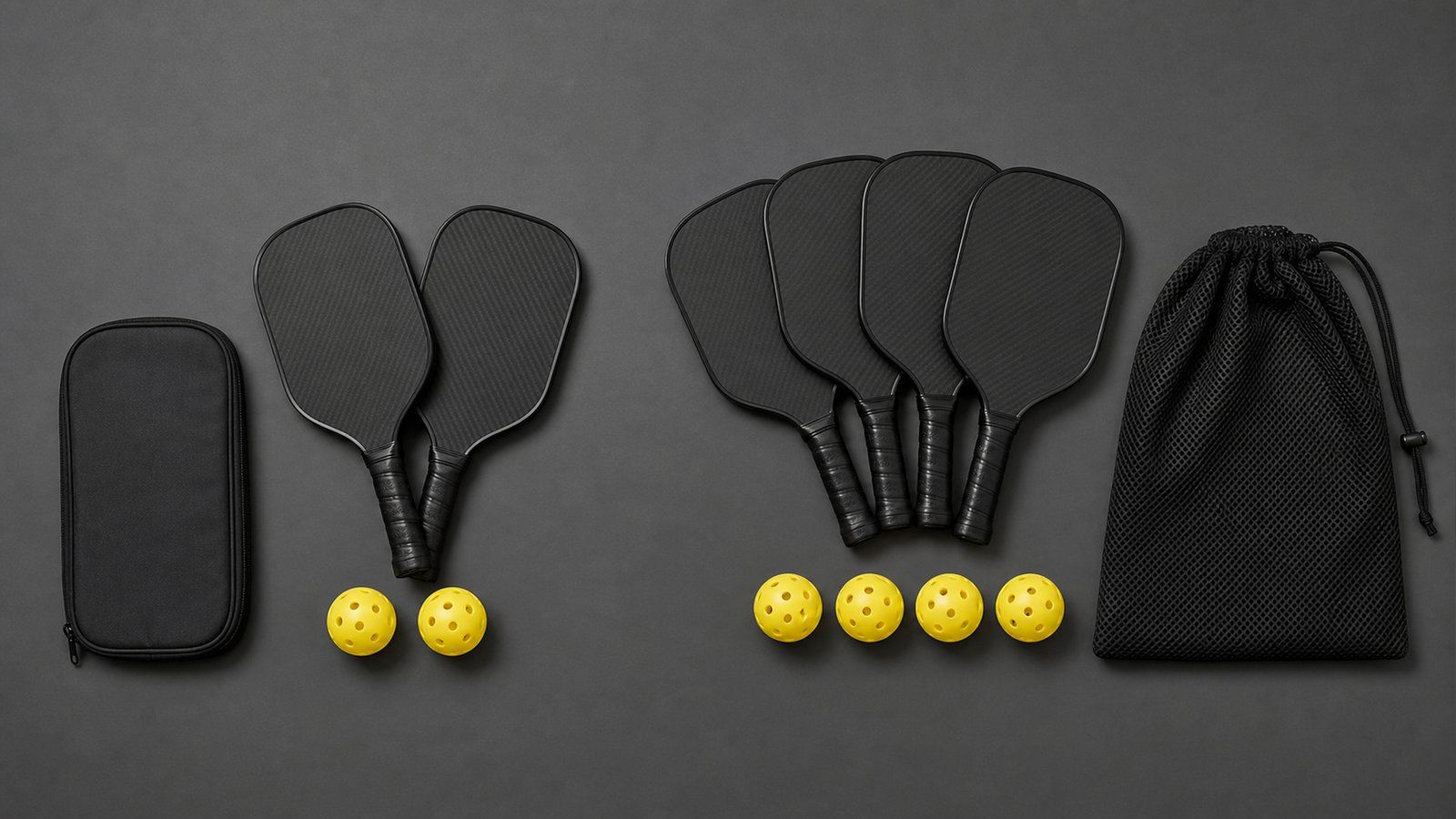
16 CFR 1200.2(d) gives worked examples by product category, and paragraph (8) is written for this reader. Here it is in full:
"Sporting Goods and Recreational Equipment—Sporting goods that are intended primarily for consumers older than 12 years of age are considered general use items. Sporting equipment, sized for adults, are general use items even though some children 12 years of age or younger will use them. Unless such items are specifically marketed to children 12 years of age or younger, or have extra features that make them more suitable for children 12 years of age or younger than for adults, they would be considered general use products. If children 12 years or younger would mainly use the product because it would be too small or inappropriate for older children to use, then it likely would be considered a children's product. Likewise, recreational equipment, such as roller blades, skateboards, bicycles, camping gear, and fitness equipment are considered general use products unless they are sized to fit children 12 years of age or younger and/or are decorated with childish features by the manufacturer."
Read it as a sequence of tests rather than a paragraph.
Default: out. Adult-sized sporting equipment is a general use item. The regulation says this even where children under 12 do in fact use it, which disposes of the anxiety most importers actually have — that a paddle a ten-year-old plays with becomes a children's product because a ten-year-old plays with it. It does not.
Trigger one: marketed to children. "Specifically marketed to children 12 years of age or younger." That is factor (ii) of the statutory four, applied to this category.
Trigger two: extra features suited to children. Features "that make them more suitable for children 12 years of age or younger than for adults." Comparative, not absolute — the question is whether the feature serves a child better than an adult.
Trigger three: too small for anyone older. "If children 12 years or younger would mainly use the product because it would be too small or inappropriate for older children to use." This is the one that catches short-handle junior paddles, and it is a physical test, not a marketing one.
Trigger four: childish decoration. The final sentence puts recreational equipment in scope when it is "decorated with childish features by the manufacturer." Note the last three words. Decoration applied by the manufacturer counts; a sticker a child adds afterwards does not.
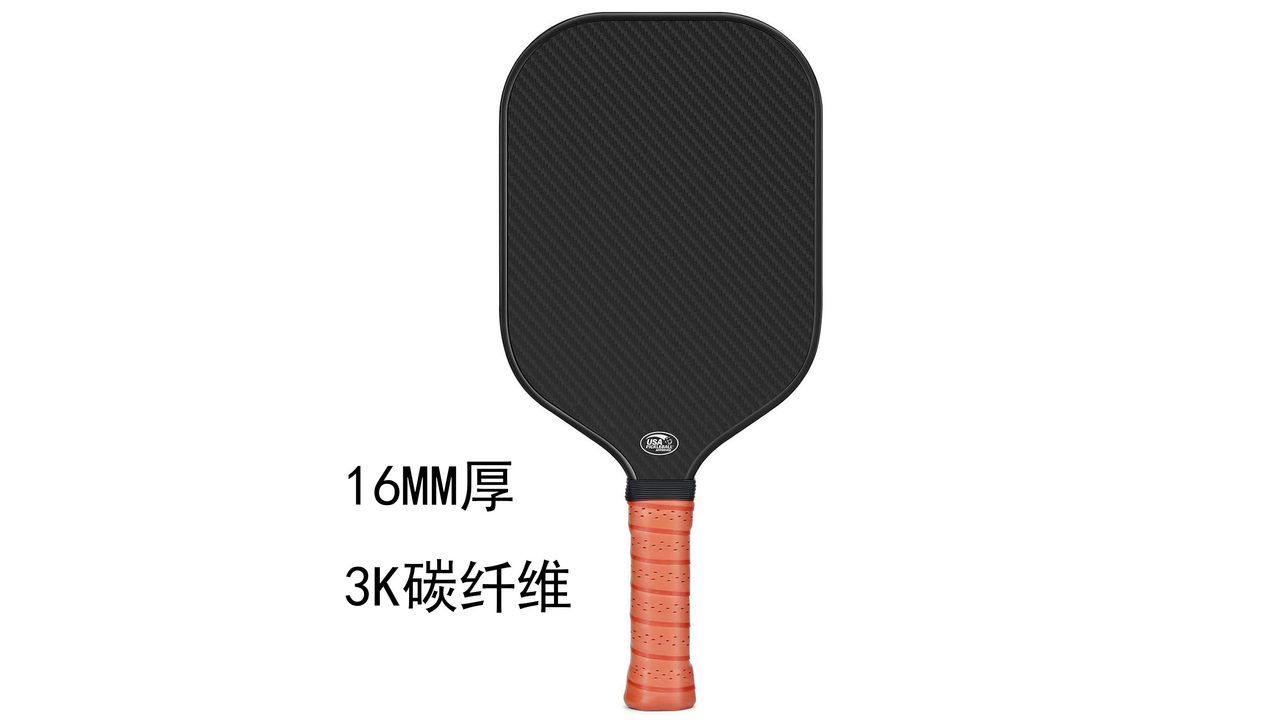
A junior paddle can therefore be pulled in twice over — once on sizing, once on graphics — and the two are independent. A short-handle paddle in plain black is in scope on sizing alone. A full-size adult paddle printed with cartoon animals is arguably in scope on decoration alone.
Three SKUs, Three Answers
The table below applies the four factors and paragraph (d)(8) to four products a pickleball brand plausibly ships in one season. These are readings of the regulation on stated facts, not determinations — 16 CFR 1200.2(a)(2) reserves the determination to a case-by-case analysis of each product's own facts, and CPSC is the body that makes it.
| SKU as specified | Sizing test, (d)(8) | Decoration and marketing | Verdict on these facts |
|---|---|---|---|
| Full-size paddle, adult handle, plain graphics | Adult-sized; older users are the main users | No childish motif, no child imagery in ads | General use. The (d)(8) default holds |
| Short-handle paddle sized for a 9-year-old, plain black | Too small for older players to use comfortably | None — but decoration is not required | Children's product on the sizing trigger alone |
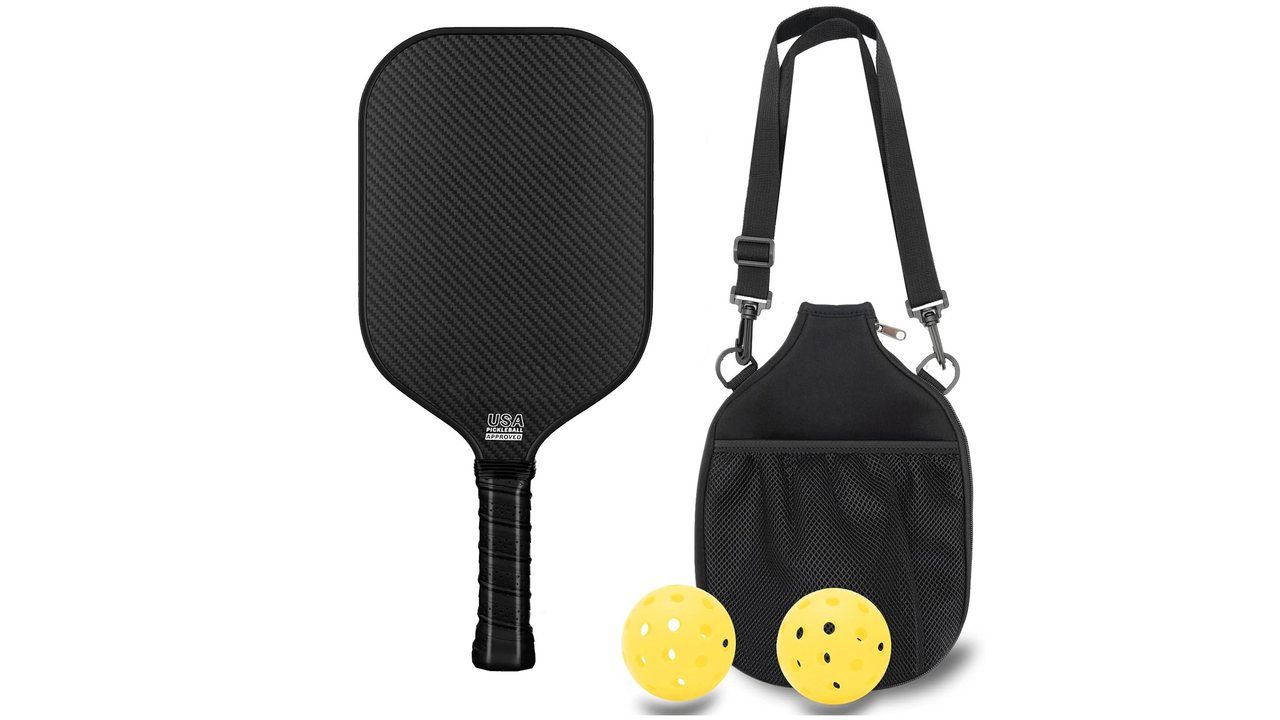
| Junior starter set: short paddles, balls, cartoon-print bag | Short paddles fail the same sizing test | Cartoon motif applied by the manufacturer | Children's product on two independent triggers |
| Adult paddle sold in bulk to a school programme | Adult-sized; channel does not change the product | Plain packaging making no child claim | General use per 1200.2(d)(7) and (d)(9) |
The pattern worth taking away is that sizing does the work. Marketing and decoration can pull a product in, but they are choices a brand can reverse at artwork stage. A handle length cannot be reversed after the mould is cut.
For brands and importers deciding what a junior or starter line is built to, at the point where the sizing decision is still reversible. Our OEM page sets out the build envelope we actually run — raw T700 carbon and fiberglass faces on 13 mm and 16 mm polypropylene honeycomb cores, thermoformed or cold-pressed — which is where handle length, grip circumference and artwork all get specified. Tell us the age band you are building for and we will walk through what the sizing and graphics decisions do to the scope question before anything is tooled.
See the OEM build envelopeWhy The Age Label On Your Box Does Not Settle It
The most common piece of advice in this category is to print "Ages 14+" on a junior box and treat the question as closed. The regulation addresses that practice by name.
16 CFR 1200.2(c)(1): "A manufacturer's statement that the product is not intended for children does not preclude a product from being regulated as a children's product if the primary appeal of the product is to children 12 years of age or younger, as indicated, for example, by decorations or embellishments that invite use by the child, being sized for a child or being marketed to appeal primarily to children."

Three words carry the weight: "being sized for a child." A label cannot outvote a handle. If the physical product is built for a nine-year-old hand, the label sits alongside that fact rather than overriding it.
The rule runs the other way too, which importers use less often and should.
The same paragraph notes that "a label indicating that a product is for ages 9 and up does not necessarily make it a children's product if it is a general use product," because such a label "may recommend 9 years old as the earliest age for a prospective user, but may or may not indicate the age for which the product is primarily intended." It closes flatly: "The manufacturer's label, in and of itself, is not considered to be determinative."
So an adult-sized paddle carrying a "suitable from age 9" line on the back of the box has not thereby become a children's product. The label is one of four factors and the product is still adult-sized.
What a label does do is make your position legible. The regulation asks whether a manufacturer's statement is "reasonable" and "reasonably consistent with the expected use patterns for a product." A statement that matches the physical product and the artwork supports your reading; one that contradicts them is evidence against you.
If It Is A Children's Product: Certificate, Accredited Lab, Periodic Testing
Once a SKU is in scope, 15 U.S.C. 2063(a)(2) sets the route.
Before importing for consumption or warehousing, or distributing in commerce, any children's product subject to a children's product safety rule, the manufacturer — and the private labeler, if the product bears a private label — must submit "sufficient samples of the children's product, or samples that are identical in all material respects to the product, to a third party conformity assessment body accredited under paragraph (3)," and then issue a certificate based on that testing.
Two details in that sentence are easy to skip and expensive to skip. The obligation lands on the private labeler as well as the manufacturer, so a brand that puts its name on a factory's paddle owns the certificate. And it bites before import, not before sale.
What goes in the certificate is prescribed. 16 CFR 1110.11(a) requires a unique identifier — a GTIN, model number, registered number, serial number, SKU or UPC — plus a description sufficient to match the product to the certificate; every applicable rule identified separately rather than in a bundle; the certifier's name and full postal address, email and telephone; a named individual responsible for records, with contact details; and the date, to at least month and year, and place of manufacture with the manufacturer's full address. Paragraph (a)(6) then asks for the most recent date and place of testing, naming each third party conformity assessment body the certificate depends on with its own full address.
That last field is the one that fails most often in practice, because it requires the brand to know and state where its paddles were actually made.
Certification is not a one-off. 16 CFR 1107.21 sets maximum intervals for periodic testing, and the interval you get is bought with the programme you run.
| Programme | What it requires | Max interval (years) | Authority |
|---|---|---|---|
| Basic periodic testing plan | A written periodic testing plan alone | 1 | 16 CFR 1107.21 |
| Production testing plan | Documented process controls on the production line | 2 | 16 CFR 1107.21 |
| ISO/IEC 17025 laboratory | Testing performed at an accredited laboratory | 3 | 16 CFR 1107.21 |
The regulation constrains the choice rather than handing it over. Whatever interval is selected must be short enough that, if the tested samples pass, there is "a high degree of assurance that the other untested children's products manufactured during the testing interval comply with the applicable children's product safety rules."
And a change resets the clock. Under 16 CFR 1107.23, when a children's product undergoes a material change the manufacturer "must submit a sufficient number of samples of the materially changed children's product for testing by a third party conformity assessment body and issue a new Children's Product Certificate." A new core supplier, a new paint system, a new grip compound — each is a candidate material change, and each is the kind of substitution a factory can make quietly between runs.
Locking the bill of materials at golden sample approval is what keeps a certificate valid.
The Substantive Limits That Then Apply
Testing measures something. For a children's product these are the numbers, each with the authority that sets it and the date it took effect.
| Requirement | Limit (with unit) | Applies to | Authority and in force from |
|---|---|---|---|
| Total lead content | 100 ppm by weight | Any part of a children's product | 15 U.S.C. 1278a(a)(2)(C); 14 Aug 2011 |
| Lead in surface coating | 0.009% (90 ppm) of dried film | Paint and similar coatings | 16 CFR 1303.1(a); 14 Aug 2009 |
| Eight specified phthalates | 0.1% concentration each | Children's toys and child care articles | 16 CFR 1307.3; 82 FR 49982, 27 Oct 2017 |
| Toy safety standard | ASTM F963-23 in full | Articles that are toys | 16 CFR 1250.2(a); 89 FR 3351, 18 Jan 2024 |
| Small-ball ban | Fails at 1.75 in (44.4 mm) template | Balls intended for children under 3 | 16 CFR 1500.18(a)(17) |
Two boundaries in that table are worth stating out loud, because collapsing them is the standard mistake.
A children's product is not automatically a toy. ASTM F963-23 becomes mandatory through 16 CFR 1250.2(a), which says "Each toy must comply with all applicable provisions of ASTM F963-23." A junior paddle is sports equipment; that it is in CPSIA scope does not by itself make it a toy and does not by itself pull in F963.
A cartoon-printed play set marketed for imaginative play is a different argument. The link runs the other way as well: 16 CFR 1200.2(a)(2) says toys and articles subject to the small-parts rules at 16 CFR Part 1501 and in ASTM F963 "would fall within the definition of children's product."
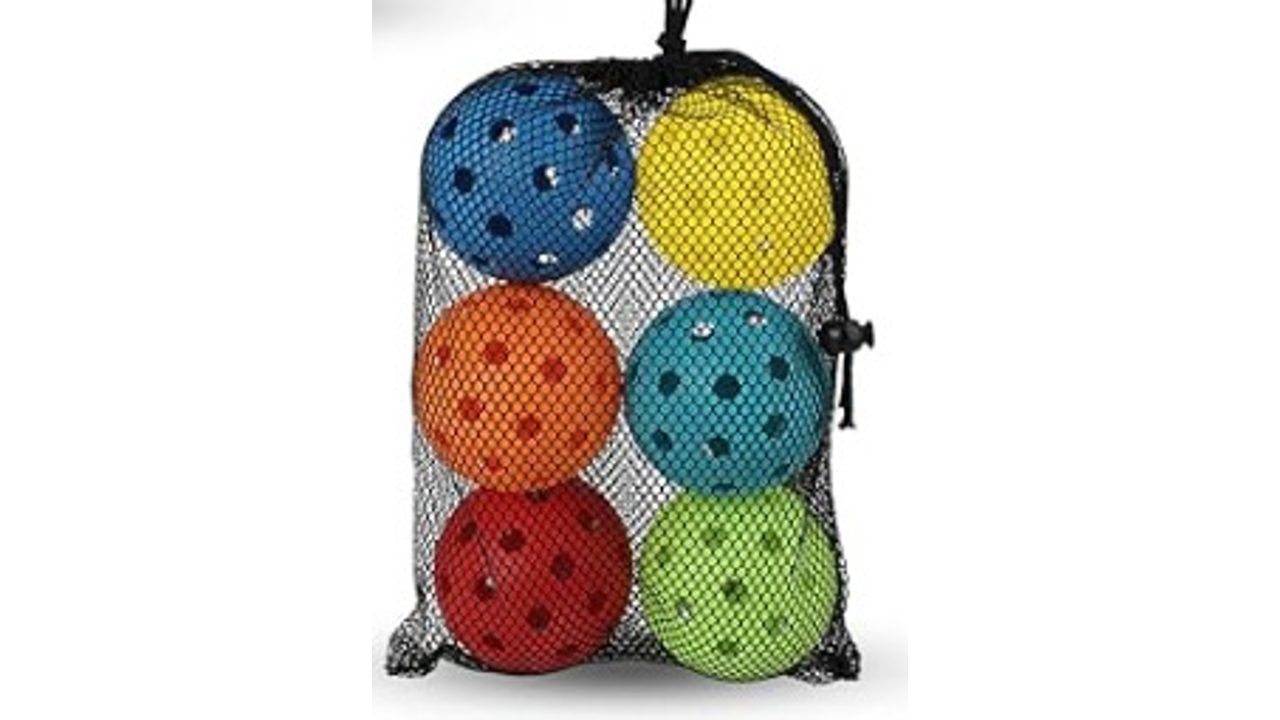
The small-ball rule reads on age, not on category. 16 CFR 1500.18(a)(17) bans any ball "intended for children under three years of age" that passes entirely through a 44.4 mm hole in a 6 mm template, and defines "ball" broadly enough to include "any spherical, ovoid, or ellipsoidal object that is designed or intended to be thrown, hit, kicked, rolled, dropped, or bounced." A regulation pickleball is far too large to fall through that template.
The exposure in a starter set is not the ball; it is anything smaller that can come off — a grip end cap, a bag pull, a printed token.
Tracking Marks, And The Rule That Is Not The Tracking Rule
The tracking mark is statutory, not regulatory, and that is the source of most of the confusion around it. 15 U.S.C. 2063(a)(5)(A), added by section 103 of the CPSIA of 2008:
"Effective 1 year after August 14, 2008, the manufacturer of a children's product shall place permanent, distinguishing marks on the product and its packaging, to the extent practicable, that will enable— (i) the manufacturer to ascertain the location and date of production of the product, cohort information (including the batch, run number, or other identifying characteristic), and any other information determined by the manufacturer to facilitate ascertaining the specific source of the product by reference to those marks; and (ii) the ultimate purchaser to ascertain the manufacturer or private labeler, location and date of production of the product, and cohort information."
In force since 14 August 2009. Note the two audiences: the mark has to work for you, tracing a unit back to a run, and for the buyer holding the paddle, who must be able to read the manufacturer or private labeler, the place and date of production, and the cohort. A factory-internal code that only your quality team can decode satisfies the first limb and fails the second.
CPSC has issued no regulation prescribing a format. Its own business guidance asks for three things — that the marks "Are visible and legible," that they "Are permanently affixed to the product and its packaging, to the extent practicable," and that they "Provide certain identifying information" — and stops there. No size, no symbol, no prescribed field order.
The same guidance goes further and gives you a safe harbour most importers never use: "The information may be in code form as long as the consumer knows who to contact in order to interpret the code and ascertain the required information." A moulded run code is therefore compliant on its face, provided the packaging or the product tells the buyer who to ask. That converts a judgement call into a documented allowance. It also means the mark is a design decision rather than a compliance template: a moulded date wheel and run code in the butt cap, or a printed lot line under the clear coat, both work if they survive to the buyer. The mechanics of building that code are the same ones covered in our note on lot traceability and batch coding.
Now the correction. A recurring claim in this space is that 16 CFR Part 1130 is the tracking label rule.
It is not. 16 CFR 1130.2(a) defines the products Part 1130 covers as durable infant or toddler products "intended for use, or that may be reasonably expected to be used, by children under the age of 5 years" — a reach test, not a marketing test — and lists them: full-size and non-full-size cribs, toddler beds, high chairs, booster and hook-on chairs, bath seats, gates and enclosures, play yards, stationary activity centers, infant carriers, strollers, walkers, swings, bassinets and cradles, children's folding chairs and stools, baby changing products, infant bouncers, infant bathtubs, bed rails, crib mattresses, nursing pillows and infant support cushions.
Twenty categories, none of them sporting goods. What Part 1130 requires, at 1130.3(a)(1), is a postage-paid consumer registration form supplied with each such product — a recall mechanism, not a marking rule.
If a source cites Part 1130 for your tracking marks, it has not read either provision. The obligation you owe is in the statute.
What To Settle Before The Junior SKU Is Tooled
Four decisions, in the order they stop being reversible.
Write the scope determination down, with the four factors applied. Not a conclusion — the reasoning. Handle length and grip circumference against the age band; what the artwork does and does not depict; what the packaging and the ad copy claim; which of the seven considerations at 1200.2(c)(3)(i) the product exhibits.
If CPSC or a retailer's compliance team asks why you treated a SKU as general use, this file is the answer, and 16 CFR 1200.2(a)(2) makes clear the answer has to be factual and product-specific.
Decide sizing and graphics together, and know which one you can still move. Graphics change at artwork approval for the cost of a new print film. Handle length changes for the cost of a mould. If a junior SKU is going to be in scope on sizing anyway, the cartoon print costs you nothing extra in compliance terms; if the sizing keeps you out, the print can put you back in for no commercial gain.
Design the tracking mark into the tool, not onto a sticker. The statute wants permanence and wants the retail buyer to be able to read the manufacturer or private labeler, the place and date of production and the cohort. A moulded run code with a date wheel in the butt cap survives the paddle's life; a label under the grip wrap does not survive a re-wrap.
What we check before a junior spec is signed off — and where we stop
Name who holds the certificate and the test reports. 15 U.S.C. 2063(a)(2) puts the obligation on the private labeler as well as the manufacturer, so a brand cannot outsource the certificate along with the production.
Settle in the purchase order who commissions the third-party testing, who is named as the certifier in the 16 CFR 1110.11 fields, who holds the reports, and what happens to the certificate on a material change under 16 CFR 1107.23 — a new core supplier or a new paint system triggers a retest and a fresh certificate, and the 100 ppm lead and 0.1% phthalate limits are measured on whatever is actually in the part.
What a factory can confirm is the bill of materials, the sizing and the mark; what only you can settle is the scope determination and who signs the certificate. That boundary is worth agreeing before the first sample, and it is the part of the OEM specification conversation that costs nothing to have early.
Conclusion
Two costs, and they are not symmetric. Being in scope costs money on a schedule you can plan: an accredited lab, a certificate, a tracking mark, a periodic test every one, two or three years depending on the programme you run. Being wrong about scope costs money you cannot plan, at a moment you do not choose, on stock already made to a mould you cannot change.
So before the next junior quotation goes out, have four things written down and be ready to put them in front of a factory. The age band the SKU is built for, in years, with the handle length and grip circumference that follow from it. Whether the artwork carries any of the childish motifs listed at 16 CFR 1200.2(c)(3)(i), and whether you are willing to change them. Which party will be named as certifier in the 16 CFR 1110.11 fields, and who commissions the third-party testing. And what counts as a material change under 16 CFR 1107.23 for this build, so a quiet substitution between runs does not silently void the certificate.
A factory can confirm the bill of materials, the sizing and the mark. The scope determination and the certificate are yours. Bring those four answers to the first specification conversation and the rest is scheduling.
Frequently Asked Questions
Is a pickleball paddle a children's product under CPSIA?
An adult-sized one is not. 16 CFR 1200.2(d)(8) states that sporting equipment sized for adults is a general use item "even though some children 12 years of age or younger will use them." A paddle sized so only younger children would mainly use it is a different answer.
Does printing "Ages 14+" keep a junior paddle out of scope?
No. 16 CFR 1200.2(c)(1) says a manufacturer's statement that a product is not intended for children "does not preclude" regulation as a children's product where it is sized for a child, and concludes that the label "in and of itself, is not considered to be determinative."
Who has to issue the Children's Product Certificate — the factory or the brand?
Both are named. 15 U.S.C. 2063(a)(2) puts the obligation on every manufacturer of the children's product "and the private labeler of such children's product if such children's product bears a private label." A brand cannot outsource the certificate with the production.
How often does a certified children's product have to be retested?
16 CFR 1107.21 allows a maximum of one year under a basic periodic testing plan, two years with a documented production testing plan and process controls, or three years when testing at an ISO/IEC 17025-accredited laboratory. A material change under 1107.23 restarts certification regardless.
Is 16 CFR Part 1130 the CPSIA tracking label rule?
No. Part 1130 governs consumer registration forms for 20 categories of durable infant or toddler product listed at 16 CFR 1130.2(a) — cribs, strollers, high chairs and similar. The tracking mark comes from 15 U.S.C. 2063(a)(5), in force since 14 August 2009.
Does selling adult paddles to a school make them a children's product?
Not by itself. 16 CFR 1200.2(d)(7) and (d)(9) both state that bulk distribution through channels targeting children in educational settings "would not necessarily convert a general use product into a children's product" — unless the packaging expressly states or implies it is for them.
Does a junior paddle have to meet ASTM F963?
Only if it is a toy. 16 CFR 1250.2(a) requires that "Each toy must comply with all applicable provisions of ASTM F963-23." Being a children's product and being a toy are different determinations, and sports equipment is not automatically the latter.
Want to source this quality for your brand?
Contact our factory directly on WhatsApp for an instant MOQ and pricing quote.