Paddle Covers and Sleeves: The OEM Spec Nobody Writes Down
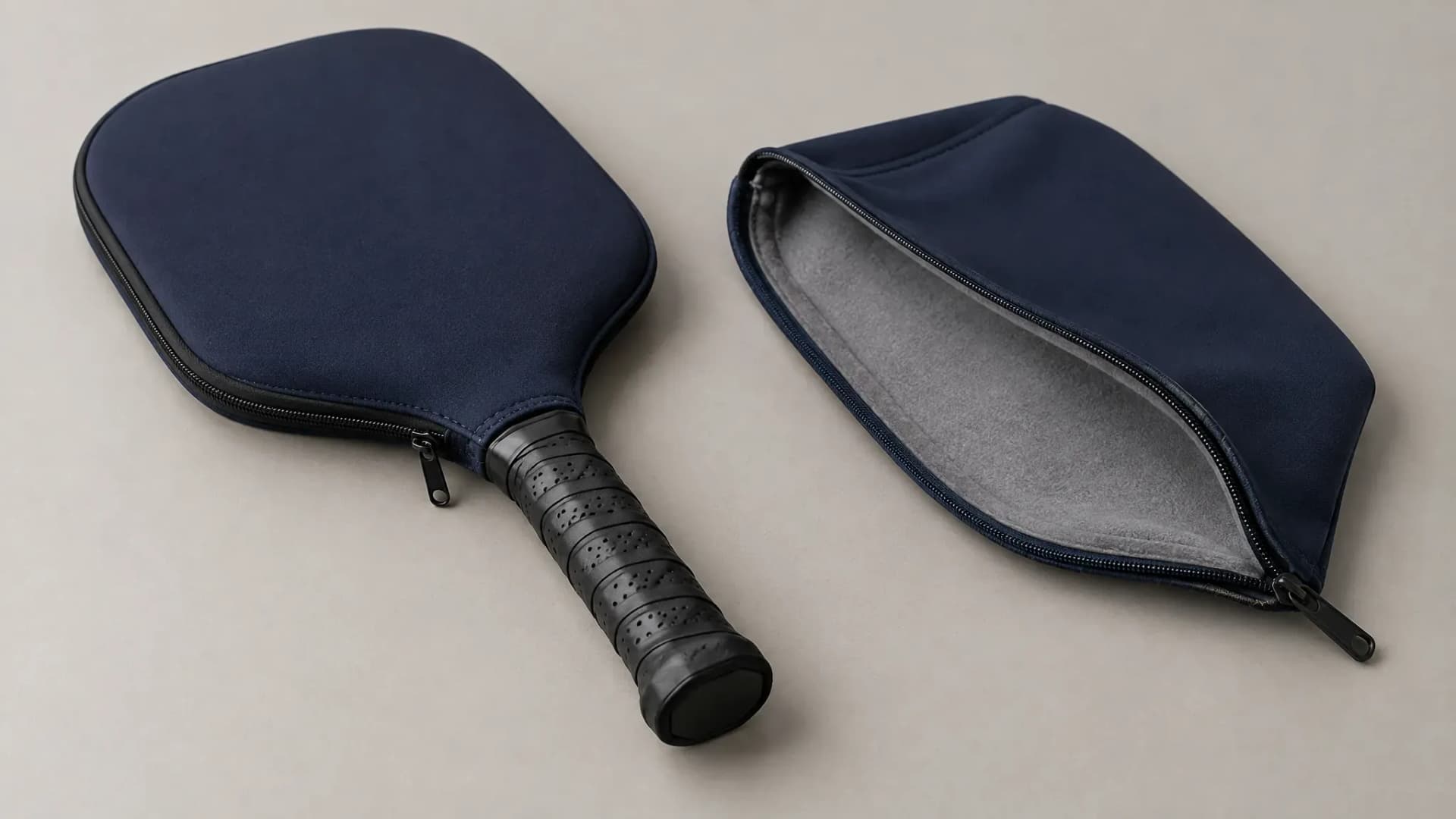
A pickleball paddle cover described as “universal” still needs a fit specification. For a retailer ordering original equipment manufacturer (OEM) accessories, approve the finished internal shape, material layers, closure and decoration together. Then quote the color split, minimum order quantity (MOQ), packed dimensions and production milestones against that same sample.
- Test the actual paddle family, including its guard and shoulder shape.
- Ask for fabric mass and foam thickness separately; a fabric label cannot replace either.
- Separate zipper strength from color-transfer acceptance.
- Require a dated quote for each color allocation and approval milestone.
This independent textile-training video illustrates a crocking test; agree the test method and acceptance criteria separately.

Specify the finished fit before the fabric
Start with the paddles the cover must hold. Record finished head width, shoulder outline, thickness and edge profile. Mark where the opening sits around the neck. Flat measurements cannot establish clearance around a thick rim or narrow zipper opening. Fit the finished sample with the intended paddle, close it without forcing the slider and remove it without catching the face.
The approval evidence should name particular paddle families and record compatibility limits. Treat each limit as part of the drawing, including exclusions. List compatible models on the approved drawing rather than accepting “fits most” as a purchase condition.
Write a material stack, not a marketing label
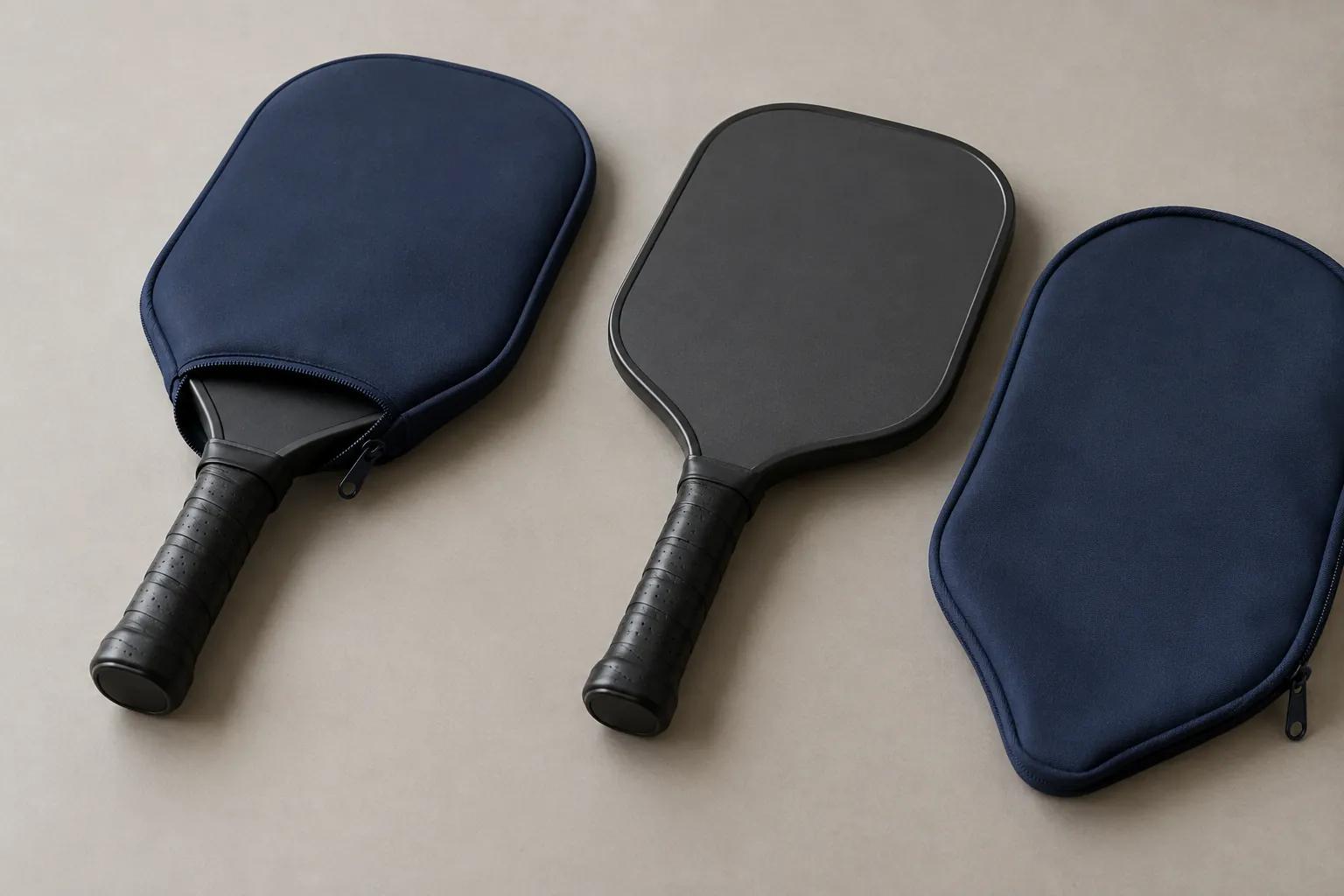
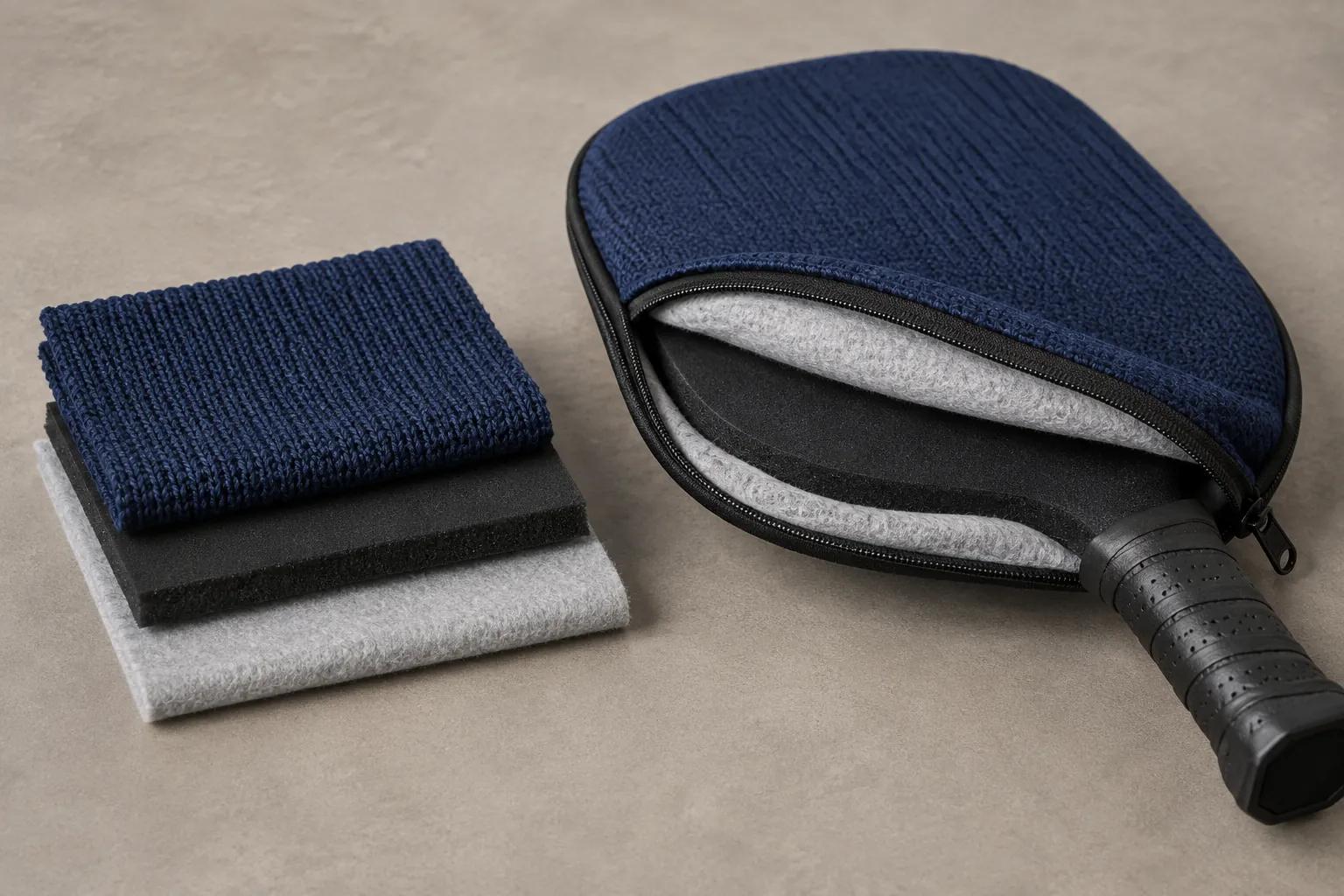
For material options, request outer fabric, backing, padding and lining as separate bill-of-materials entries. A soft sleeve and a structured zip case need different approvals. Record foam thickness in mm and fabric mass in g/m² on the supplier sheet; neither figure is supplied here. For fabric mass testing, ASTM lists D3776/D3776M. Specify the specimen basis, including whether it contains backing.
Specify the outer material and liner separately in an RFQ, a request for quotation. That prevents a liner substitution from hiding behind an unchanged outer-material name. Require matching layer identification on the swatch.
| Construction | Specify | Approval evidence | Choose when |
|---|---|---|---|
| Soft sleeve | Outer, foam, lining, internal shape | Fit sample and layer swatch | Compact accessory bundle |
| Canvas cover | Fabric mass, backing, seam finish | Specimen report and closed-cover fit | Fabric finish matters |
| PU-faced case | Face material, backing, liner | Finished appearance and rub report | Structured presentation matters |
Put the closure on the approval sample
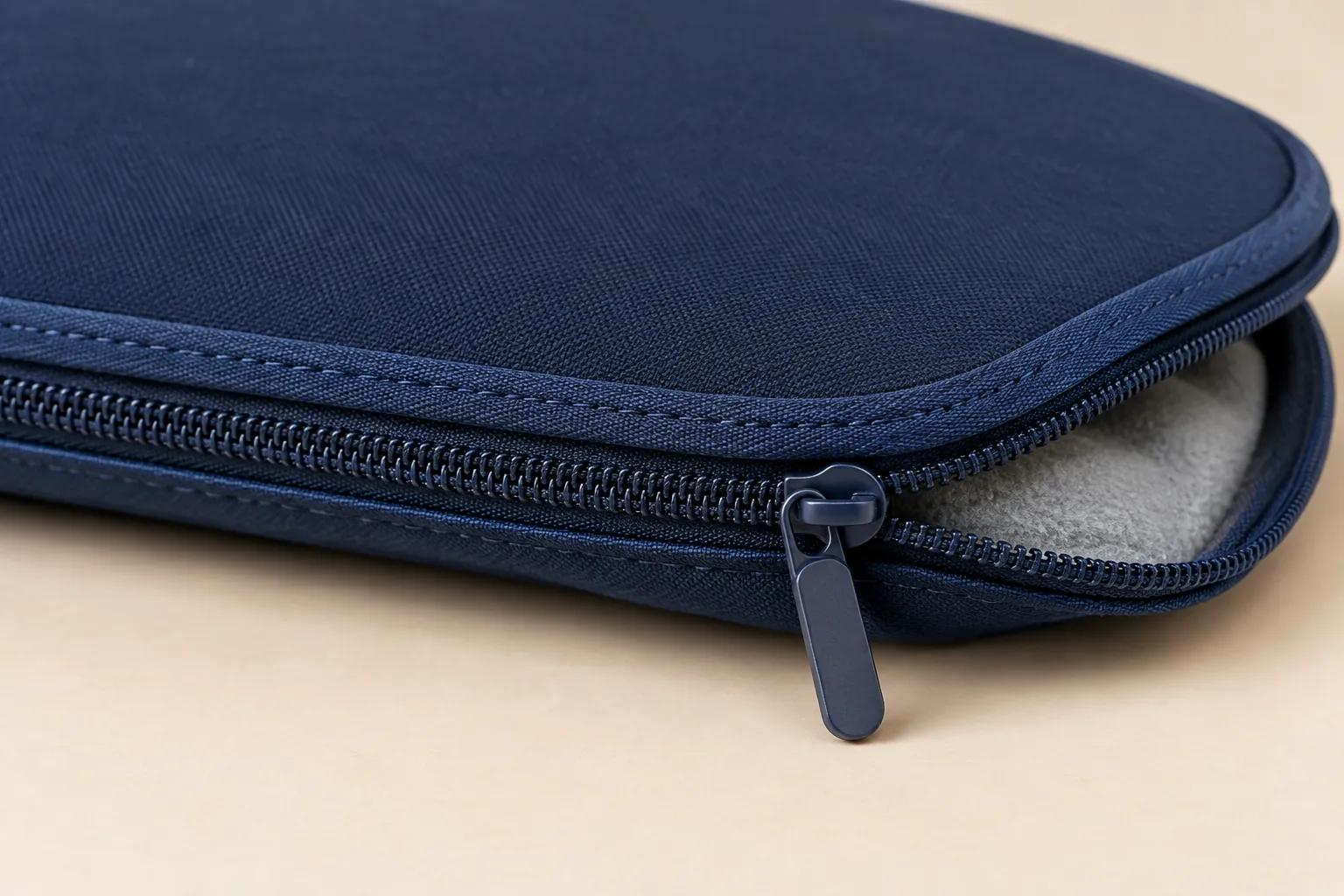
Approve the zipper route, chain, slider and pull together. A component test cannot prove that the sewn cover clears the paddle shoulder. Ask the supplier to identify the applicable strength test under ASTM D2061 and agree the required test report before ordering. The method name alone does not supply a pass load.
For a sleeve without a zipper, approve opening recovery and retention with the same paddle. Photograph the liner and seam ends. Keep a retained sample; approve changes to the pull or seam position.
Approve the decoration on the actual cover
Specify print or embroidery, artwork placement and the final color reference. Approve the decorated assembly; a fabric swatch cannot show stitching through the liner. For color transfer, AATCC TM8 covers dry and wet rubbing. Agree the required grade and specimen with the lab. It does not certify a complete case as waterproof.
Keep the paddle branding method and cover decoration on separate approval records. That prevents the paddle artwork approval from releasing an accessory whose thread color, print placement or liner differs from the sample.
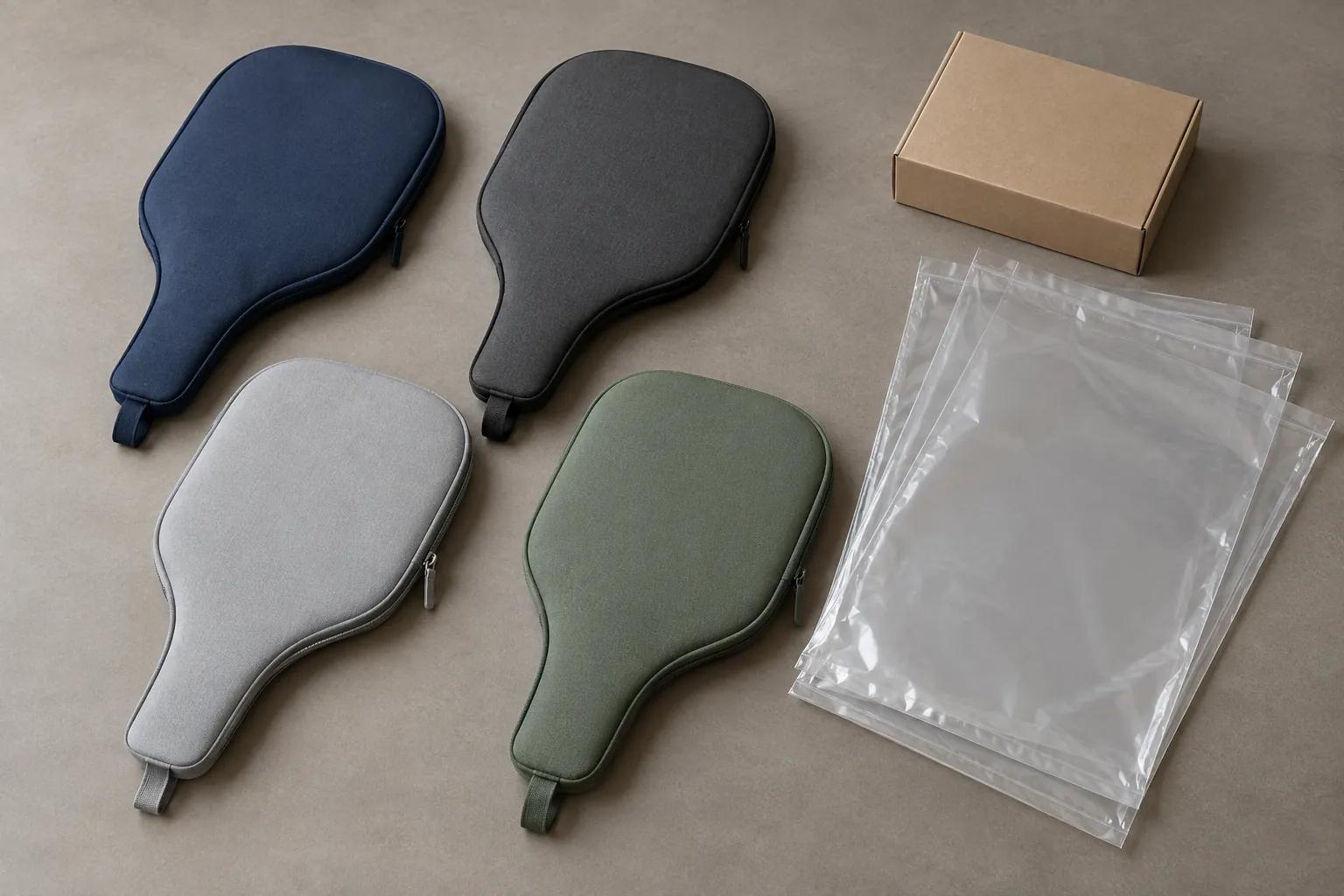
Share the paddle family, cover construction and color split for a MOQ discussion.
Discuss the bundle specificationSeparate the minimum order from the color split
Request MOQ per construction, color and artwork. Then ask whether mixed colors share an order minimum. Compare unit prices only after fixing those allocations and the same packing specification. List the price structure: decoration setup, repeat-order charges and freight terms. No verified company accessory quote supplies those figures. A cheap total-order offer may leave a small color allocation unpriced; obtain that split before comparing the landed bundle cost. Ask whether reserved fabric supports repeat orders under the agreed order minimum.
Make the lead-time clock start at a named approval
Ask for production lead time after material, fit and artwork approvals, plus a separate dispatch date and freight estimate. Require the supplier to name pending inputs. A quoted delivery period starting at deposit cannot be compared with one starting at sample approval. Record which changes reset the clock, particularly a new liner, zipper route or color allocation. If the paddle is ready but cover artwork remains unsigned, ask whether the supplier can dispatch separately and who pays the extra freight.
| Field | Require in writing | Release decision |
|---|---|---|
| MOQ | Per material, color and artwork | Approve the allocation |
| Production lead time | Start event, completion date, pending inputs | Accept dates after approvals |
| Packing | Carton dimensions, quantity, gross mass | Compare identical bundle contents |
| Testing | Method, specimen, agreed pass grade | Approve report scope |
Inspect the bundle before locking the carton
Approve the shipped configuration: cover alone, paddle inside it, or separate retail pack. Check that the pull and seams cannot rub the paddle face in that configuration. Record packed dimensions and gross mass from the actual trial carton. Connect those fields to the private-label packaging specification; an accessory fit sample does not approve the transit pack.
If the closure faces the hitting surface inside a tight bundle, change its orientation or protective packing before approving the carton, then photograph the revised arrangement.
Release the order against a signed cover specification
Attach the drawing revision, approved material swatches, decorated sample photos and acceptance criteria to the purchase order. Require approval for substitutions. When discussing a bundle from the paddle and accessory catalog, confirm whether the requested cover construction is actually available before accepting an accessory delivery date. This framework does not establish a stocked cover SKU.
If the supplier proposes a replacement material after sign-off, compare the complete revised assembly against the retained sample and obtain written approval before releasing production.
Choose the construction, then release it
Choose the compact sleeve for a simple bundle or a structured case when its presentation justifies the construction. Release either only against the same paddle-fit sample, decoration approval and dated quote.
Frequently Asked Questions
Does a universal cover fit every paddle?
No fit claim proves every shape. Approve the intended paddle models, thickness and edge profile on a finished sample.
What MOQ should a buyer request?
Request separate minimums for construction, color and artwork, then ask whether mixed allocations share an order minimum. Use a current written quote.
What determines cover production lead time?
Ask which material, fit and artwork approvals start production, and which changes reset it. Separate production completion from dispatch and freight.
Does a rubbing test certify waterproofing?
No. AATCC TM8 evaluates color transfer by rubbing. Any water-resistance claim needs its own agreed method and finished-cover specimen.
Want to source this quality for your brand?
Contact our factory directly on WhatsApp for an instant MOQ and pricing quote.