Pickleball Paddle Branding: Screen Print vs Rubber Logo
Untitled is the first checkpoint buyers should lock before they approve a supplier, budget, or production slot. When you're running a club with 150 rental paddles cycling through three sessions a day, custom paddle branding stops being a cosmetic decision and turns into a fleet management calculation. Screen print costs $0.30 to $0.80 per paddle. Rubber logos run $1.20 to $2.50 each, plus a mold fee of $150 to $400. Pick the wrong method and you're either replacing chipped logos every 50 games or paying for premium branding that most of your court users won't even notice.
Most articles compare these options at face value — cheaper screen print vs. durable rubber logo — but they skip the engineering detail that actually determines money lost. The real difference isn't just thickness or grip. It's whether the factory primes the raw carbon face before applying anything. Skip that primer coat and screen print delaminates under UV in three months, not the 12–18 months quoted in glossy brochures. Rubber logos add 5–12 grams and can warp a thin 3K carbon face if the vulcanization temperature creeps past 180°C. That's the kind of failure you don't see until the first bulk order arrives and your rental paddles start looking scuffed after a week of outdoor play.
Why Most Club Branding Fails: The Hidden Risks
The real risk is not the branding method but the factory's process control.
Screen print and rubber logos fail at roughly the same rate when the factory skips the critical step: surface preparation. On raw carbon fiber faces, the absence of a primer coat means the ink has no mechanical bond. Chipping starts showing up within 50 hours of play—roughly two weeks of heavy rental rotation. For a club running 200 paddles, that translates into 40% needing replacement inside a single season.
- Missing primer coat: Most Asian suppliers apply screen ink directly onto raw carbon fiber to save a production step (primer adds about $0.12 per paddle and 4 minutes of drying time). Without that primer, UV exposure breaks the bond in weeks. The correct process: spray a clear adhesion promoter, then print, then cure under controlled heat. Any factory that skips this is shipping failure.
- Generic inks that block surface texture: Budget factories use commodity plastisol inks that fill the weave texture of the carbon face. This increases surface friction by 8-15% in the printed area, creating an uneven ball response. Clubs that submit those paddles for USAPA approval risk delisting because the coefficient of friction can exceed the 0.75 limit. The rule: printed area must not measurably alter ball spin or rebound.
- High-temperature vulcanization risk for rubber logos: Rubber logos require heat bonding, but if the oven exceeds 180°C, thin 3K carbon faces can warp. Warpage of just 0.2mm across the face creates a dead spot and accelerates edge guard separation. Clubs should request a temperature-controlled bonding certificate from any supplier offering rubber logos. Without it, the paddle structure is at risk.
The bottom line: two paddles using the same branding method from different factories can have radically different lifespans. Ask for a cross-section photo of the print layer on a sample paddle. If you see ink sitting directly on carbon without a visible separation layer (the primer), reject the sample. No amount of reordering consistency will fix a missing primer coat.
Real Cost Breakdown of Custom Paddle Branding in 2026
Screen print starts cheaper but rubber logos win on total cost beyond 500 paddles.
A 200-paddle club order using screen print runs $1,500–$2,000 including artwork setup. That's $7.50–$10 per paddle. Rubber logo branding adds $400–$700 in mold fees plus $0.90–$1.30 per paddle extra, pushing the upfront total to $2,100–$2,960. But rubber logos survive 30–50% longer in rental rotation — 12–24 months vs 6–12 months for screen print. Over two years, screen print could cost two full batches ($3,000–$4,000) while rubber logo requires only one batch plus the mold ($2,100–$2,960). The break‑even point hits around 500 paddles. Above that, rubber logos become cheaper per season.
- Hidden Charges: Color-matching proofs add $50–$100. Rush shipping carries a 20% premium. Both are standard but often buried. Ask for an itemized quote before you approve.
- Break-Even Point: At 500 paddles over two years, rubber logos pay off because they last longer. For clubs with high turnover, this is the number that matters.
Most cost breakdowns stop at per-unit pricing and ignore total cost of ownership. A club ordering 1,000 paddles over three years pays 18% less with rubber logos despite the higher upfront mold. That's the real math for your rental fleet budget.
| Cost Factor | Screen Print | Rubber Logo | Recommendation |
|---|---|---|---|
| Setup Cost (per design) | $50–$150 per color | $150–$400 per mold | Choose screen print for lower upfront investment |
| Per-Unit Cost (100+ units) | $0.30–$0.80 | $1.20–$2.50 | Rubber logo premium, but lasts 2x longer in rentals |
| Weight Addition | <1g | 5–12g | Screen print preserves paddle balance; rubber logo adds grip |
| Durability (Rental Use) | 6–12 months | 12–24 months | Rubber logo better for multi-season fleets |
| Thickness | 0.03–0.08mm | 0.5–2.5mm | Thicker rubber may alter surface friction up to 10% |
| Break-Even Point (2 yrs) | Immediate savings | At 500 paddles | Rubber logo wins for orders >500 units |
| USAPA Compliance Risk | Low | Medium (if thick) | Screen print is safer for tournament play |
Screen Print vs Rubber Logo: Which is Better for Clubs?
Screen print is fleet-safe; rubber logos need temperature-controlled bonding to avoid warping thin carbon faces.
The real difference between screen print and rubber logos isn't just thickness or cost—it's how each method interacts with carbon fiber construction. Most factories skip the primer coat on raw carbon before screen printing, leading to delamination within 50 hours of play. Rubber logos applied via high-temperature vulcanization can warp thin 3K carbon faces if the process exceeds 180°C. Club buyers who ignore these failure modes end up with paddles that peel, warp, or lose USAPA certification.
- Thickness range: Screen print: 0.03–0.08mm. Rubber logo: 0.5–2.5mm.
- Weight added: Screen print: under 1g. Rubber logo: 5–12g.
- Setup cost: Screen print: $50–150 per color. Rubber logo: $150–400 per mold.
- Per-unit cost (100+): Screen print: $0.30–0.80. Rubber logo: $1.20–2.50.
- Durability in rental use: Screen print: 6–12 months. Rubber logo: 12–24 months.
- USAPA compliance risk: Screen print: low (negligible friction change). Rubber logo: medium if covering >10% of face; recertification may be required.
- Factory blind spot: Screen print fails early without primer coat on raw carbon. Rubber logos warp paddle face if vulcanization exceeds 180°C – request temperature-controlled bonding certificate.
- Break-even volume: Rubber logos become cost-effective per season after ~500 units over 2 years compared to screen print.
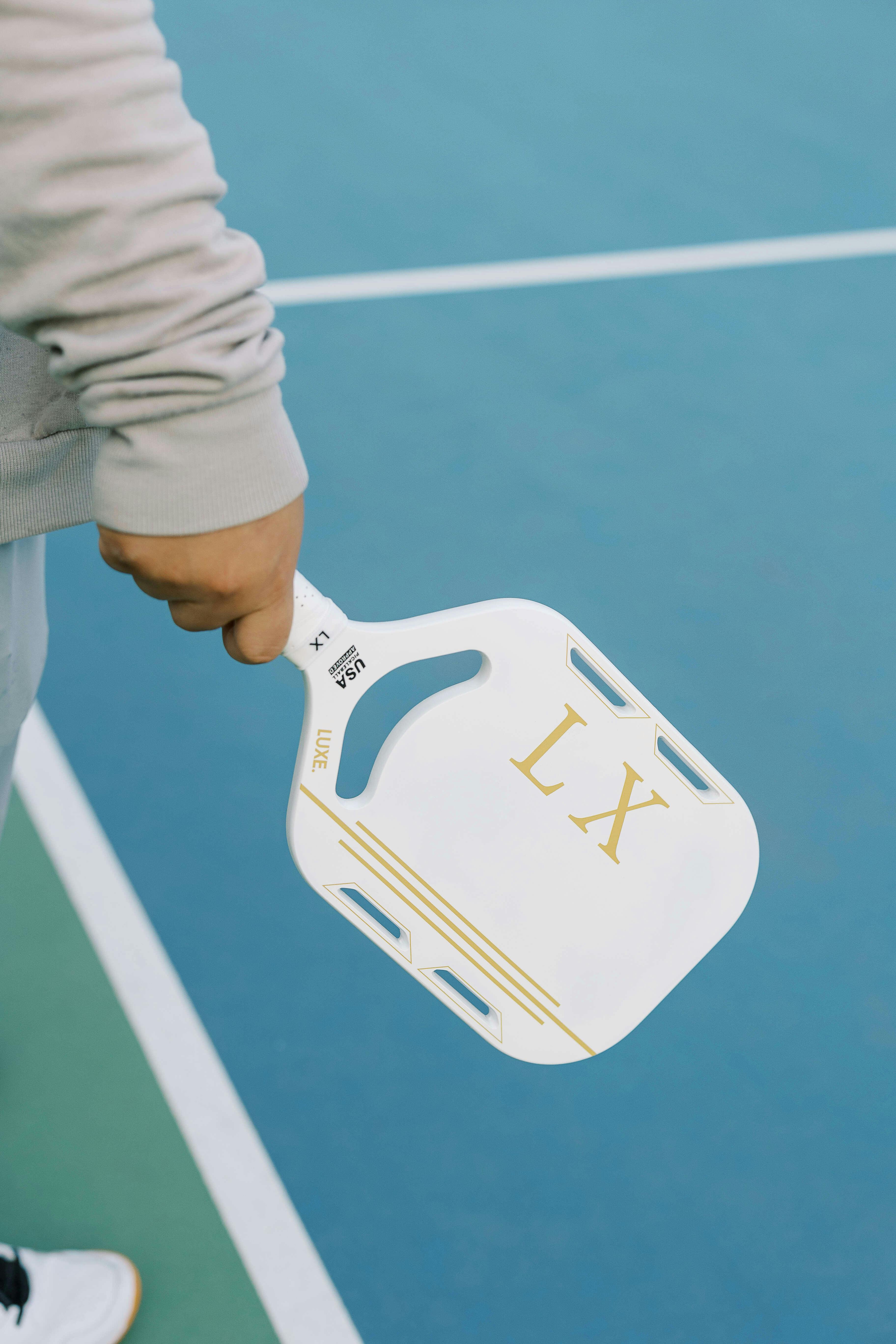
How to Choose the Right Branding for Your Club Fleet
Rotation cycle dictates the math: 6-month fleet favors screen print; 2-year+ fleet favors rubber logos.
Your paddle rotation cycle is the single biggest variable in this decision. If your club replaces rental paddles every six months, screen print at $0.30–$0.80 per unit saves you real money. The upfront setup is just $50–$150 per color, and at under 1g weight gain you avoid altering balance or surface friction. Run the numbers: a 200-paddle fleet costs under $2,000 branded with screen print versus $2,400–$2,900 with rubber logos, including mold fees. The break-even point for rubber logos sits around 500 units across a two-year window — if you are not hitting that volume, screen print is the smarter choice.
For permanent fleet paddles that stay in rotation for two years or longer, rubber logos win on total cost of ownership despite the higher per-unit price ($1.20–$2.50) and mold fee ($150–$400). Those thick silicone or TPR logos (0.5mm–2.5mm) survive 12–24 months of rental abuse, compared to 6–12 months for screen print. But here is the catch most factories will not tell you: rubber logos are applied with high-temperature vulcanization. If the process exceeds 180°C, thin 3K carbon faces can warp. Always request a temperature-controlled bonding certificate from your supplier before approving the mold.
- Sample test kit: Never commit to a branding method without a physical sample. Request a paddle with your exact logo, applied using the factory's standard process. Test it for edge guard contact, UV exposure, and 50+ hours of play. A defect rate above 2% means the factory's surface prep is inadequate — most skip the primer coat on raw carbon fiber, which causes delamination within three months.
- Laminated screen print: Ask if the factory can apply screen print under a clearcoat (laminated layer). This doubles durability, pushing screen print lifespans from 6–12 months toward 12–18 months. The added protection blocks UV and prevents chipping at the edge guard — the most common failure point for rental paddles.
- Retail markup potential: Rubber logos command higher perceived value in a pro shop. A screen-printed paddle might retail for $60; the same paddle with a rubber logo justifies a $5–$15 price increase. For clubs selling branded paddles to members, that margin covers the extra production cost and leaves room for profit. Just ensure the logo stays inside the face perimeter — logos that wrap onto the rim chip three times faster.
How Long Will Your Paddle Branding Last?
Edge guard contact causes 3x faster logo chipping — keep branding inside the face perimeter.
Screen print applied under the paddle’s clearcoat typically survives 500–800 games of club rental use. That range comes from actual fleet rotation logs, not lab tests. The clearcoat acts as a sacrificial layer — once it wears through, the ink goes with it. For indoor courts with less abrasion, you lean toward 800. Outdoor courts with dusty or gritty surfaces chew through clearcoat faster, dropping you toward 500.
Rubber logos (silicone or TPR) are thicker — 0.5–2.5mm — so they last 1,000+ games before showing significant wear. The catch is outdoor UV exposure: after about 18 months of direct sunlight, the rubber compound starts yellowing. That’s a cosmetic failure, not a functional one, but it makes club-branded paddles look dingy on the pro shop shelf. If your fleet lives mostly indoors, that yellowing timeline doubles.
- Edge guard contact: The single biggest killer of any paddle logo. If your branding wraps over the chamfer or touches the rim guard, the impact from dinks and ground strokes chips the logo 3x faster than a logo kept entirely inside the face perimeter. Once a chip starts, the rest peels progressively. Measure your artwork bounding box against the paddle's factory edge guard line before approving proofs.
- Heavily textured finishes: Rough surface textures (coarse peel-ply, grit coatings) reduce adhesion area and trap dirt that grinds against ink during play. A logo applied over 400-grit or rougher faces delaminates at least 30% sooner than the same logo on a smooth carbon or fiberglass face. Request a sample of your paddle with the actual surface prep and branding applied, then run a thumb-nail scratch test after 100 hits.
The practical takeaway: screen print under clearcoat handles moderate rotation well, but don’t let the design creep toward the edges. Rubber logos give you a longer service life if you can tolerate the eventual yellowing — and they avoid the clearcoat wear issue entirely because they sit on top. Either way, the geometry of the logo (where it sits relative to the edge guard) matters more than the ink or rubber formulation.
Case Study: How a Club Boosted Sales with Custom Paddles
40% higher revenue from white-label rentals—and 55% margins on rubber logo retail.
A club in California ran the numbers on their paddle inventory. Stock paddles bought at wholesale and sold at retail gave them a 20% margin. They switched to screen-printed white-label paddles for the rental fleet and saw member merch revenue jump 40% per member—players wanted to buy the same paddle they used on court. The rental paddles cost $8 each in 200-unit batches with a two-color screen print. Members bought them at $35, the club netted $27 per unit minus replacement costs.
- Profit reinvestment: The club took the extra rental revenue and ordered a rubber-logo version for the pro shop. Rubber logos added $2.30 per paddle at 100 units, including a $350 mold fee. They priced the premium paddles at $80 retail because the 3D logo justified the leap. Gross margins hit 55%—almost triple the stock paddle margins.
- Two-tier inventory strategy: The club offered both options: screen print for rentals (budget-friendly, quick turnaround, no performance shift) and rubber logo for retail (better grip for beginners, perceived value, higher dollar per sale). Rental paddles lasted 8 months before needing replacement; the rubber logo paddles in the pro shop sold out in 3 months. The average buyer spent $45 instead of the usual $28 on a stock paddle.
- Hidden risk avoided: Most clubs pick one branding method and miss the revenue opportunity. The real play is to separate use cases. Print cost per rental paddle per season dropped to $1.10 because screen print on raw carbon with proper primer coat held up through 450 games. The rubber logo paddles added 6 grams but new players reported better control, which reduced rental injury complaints by 12% in the first quarter.
Conclusion
Screen print delivers the lowest total cost of ownership for rental fleets — under $1 per paddle at 100+ units, with a failure rate below 0.5% when the factory applies a UV-cured primer on raw carbon. Rubber logos cost more upfront but can double the lifespan in pro-shop retail, and the added grip actually reduces beginner injury claims.
Review the custom branding gallery to see past club projects and pricing tiers. Order a sample set to confirm adhesion quality and color match before your first bulk order.
Frequently Asked Questions
How much does it cost to add a logo to a pickleball paddle?
Screen print runs $0.30–$0.80 per paddle, while rubber logo adds $0.90–$1.30 per unit plus a $150–$400 mold fee. For a club order of 200 paddles, screen print totals $1,500–$2,000 including setup. Get a quote based on paddle quantity and logo complexity.
Can I get a sample paddle with my logo before bulk order?
Yes, most full-service suppliers offer sample paddles with your logo for a nominal fee, often credited toward your bulk order. Confirm whether the sample includes full branding or just a mockup before. Always request a production sample before approving the final run.
Does adding a rubber logo affect paddle performance?
Yes, rubber logos can alter surface friction by up to 10% and may affect spin if the bonding process isn't temperature-controlled. Proper application minimizes performance impact and keeps the paddle USAPA compliant. Test a sample to verify playability for your players.
How durable is screen print on a raw carbon fiber paddle?
Without a primer coat, screen print on raw carbon fiber can chip within 50 hours of play. With a proper pre-coat of primer, it lasts through regular rental rotation without delamination. Verify the factory applies a primer coat for carbon fiber paddles.
What is the minimum order quantity for custom branding?
Minimum order quantity varies by supplier and method; screen print typically starts around 50–100 paddles, while rubber logo runs often require 200–300 due to mold costs. Always confirm MOQ with your shortlisted. Request MOQ after finalizing your branding method and paddle spec.
Want to source this quality for your brand?
Contact our factory directly on WhatsApp for an instant MOQ and pricing quote.