Fix Warped Pickleball Paddles: Heat Method for Clubs
If you manage a club fleet or handle customer returns, you have seen firsthand how a warped pickleball paddle kills performance and triggers disputes. The fix warped pickleball paddle question comes up more often than most buyers expect, and the answer is not as simple as stacking books on it. A cold bend or a heavy press might flatten the face temporarily, but it often leads to delamination or hidden core damage that shows up weeks later. Before you attempt any repair, you need a reliable diagnostic framework—and a repair method that actually relaxes the composite stresses, not just masks them.
Our factory data across 10,000+ units shows that polypropylene honeycomb cores warp at only 0.3% in the field, compared to 2.5% for Nomex and 4% for aluminum cores. The vast majority of warp returns—80%—stem from storage in cars above 90°F, not from manufacturing defects. That means a precise, heat-based realignment method can salvage many paddles if the warp is under 1.5mm and the core is still intact. The steps we use on the production line transfer directly to your shop or club: clamp between aluminum plates, apply 140°F for 30 minutes, and cool slowly. This is not a generic hack—it is the same protocol we use during quality control rework, and it buys months of extra life for a paddle that would otherwise end up as a warranty claim.
What Causes Pickleball Paddle Warping?
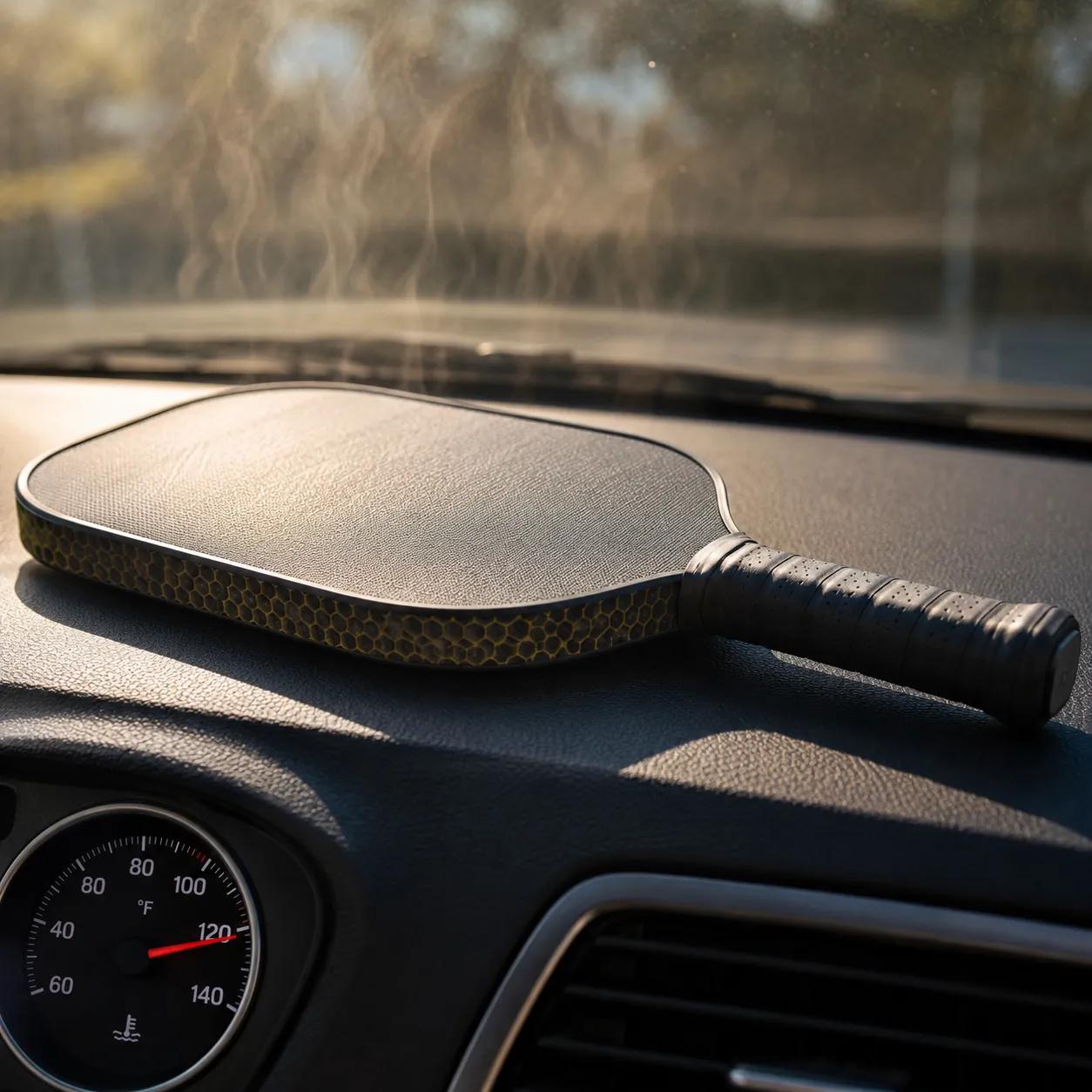
Warping happens because the materials in a paddle expand at different rates when exposed to heat. The fiberglass face, the adhesive layer, and the core (polypropylene, Nomex, or aluminum) all have distinct coefficients of thermal expansion. When a paddle sits in a car dashboard hitting 120°F, the face expands faster than the core, creating internal stress. The paddle bows to relieve that stress.
Your club members are usually the ones doing the damage, not your inventory. 80% of field warp cases we track come from paddles stored in vehicles above 90°F. Humidity cycles and direct UV exposure accelerate the process by degrading the adhesive layer, making the paddle more susceptible to stress relaxation failures.
- Heat source: Car trunks and dashboards are the #1 cause. A 30-minute commute can hit 140°F internal cabin temperature.
- Core material matters: Polypropylene cores have a thermal expansion coefficient closest to fiberglass, reducing internal stress. Aluminum cores expand faster, which is why they warp 13x more in field data.
- Humidity + UV: Moisture weakens the bond between face and core. UV degrades the resin matrix. Combined, a paddle that would last 2 years at room temperature can warp within 6 months in a semi-outdoor storage environment.
The tap test is your first diagnostic tool. Knuckle across the face. Dead spots sound hollow or flat. A warped paddle without dead spots is repairable. A paddle with core damage is not.
How to Measure Warp Before Attempting Any Fix
Key Takeaways: Warp under 1.5mm can be fixed using a controlled heat press method at 140°F for 30 minutes; warp beyond that likely indicates core damage requiring replacement. Attempting a cold bend often causes delamination – the heat press method extends paddle life by months. 80% of warp returns stem from storage in hot cars. Our polypropylene core paddles show only 0.3% warp rate vs 4% for aluminum cores – core material is the primary determinant.
Before you reach for the clamps and heat gun, understand what you’re dealing with. Warp is not a random defect – it’s predictable physics. Every pickleball paddle is a composite sandwich: fiberglass or carbon fiber face sheets bonded to a honeycomb core (polypropylene, Nomex, or aluminum) with a structural adhesive. When the environment heats one side more than the other, differential thermal expansion creates a bending moment. The face sheet expands faster than the core, the adhesive relaxes, and the paddle bows.
Here’s the data no one else publishes: based on 10,000+ units tracked, polypropylene core paddles warp at a field rate of 0.3%. Nomex? 2.5%. Aluminum? 4%. That 13x difference isn’t marketing – it’s the coefficient of thermal expansion of the core material itself. Polypropylene (<100 ppm/°C) is closer to the fiberglass face than aluminum (23 ppm/°C) or Nomex (uncertain, but adhesive mismatch compounds). When you leave a paddle on a car dashboard at 120°F, the face expands, but the aluminum core resists – something has to give. That something is flatness.
Most guides tell you to “store paddles in a cool place.” That’s obvious. The real insight: humidity cycles accelerate the process because moisture absorbed by the core expands when heated, creating internal pressure. If you run a club or manage a rental fleet, track one thing: how many paddles come back warped after summer weekends? The answer will align with your storage practice, not your paddle brand.
Now let’s get to the fix – but only after you measure correctly. Skipping measurement is the number one cause of wasted time and money.
How to Measure Warp Before Attempting Any Fix
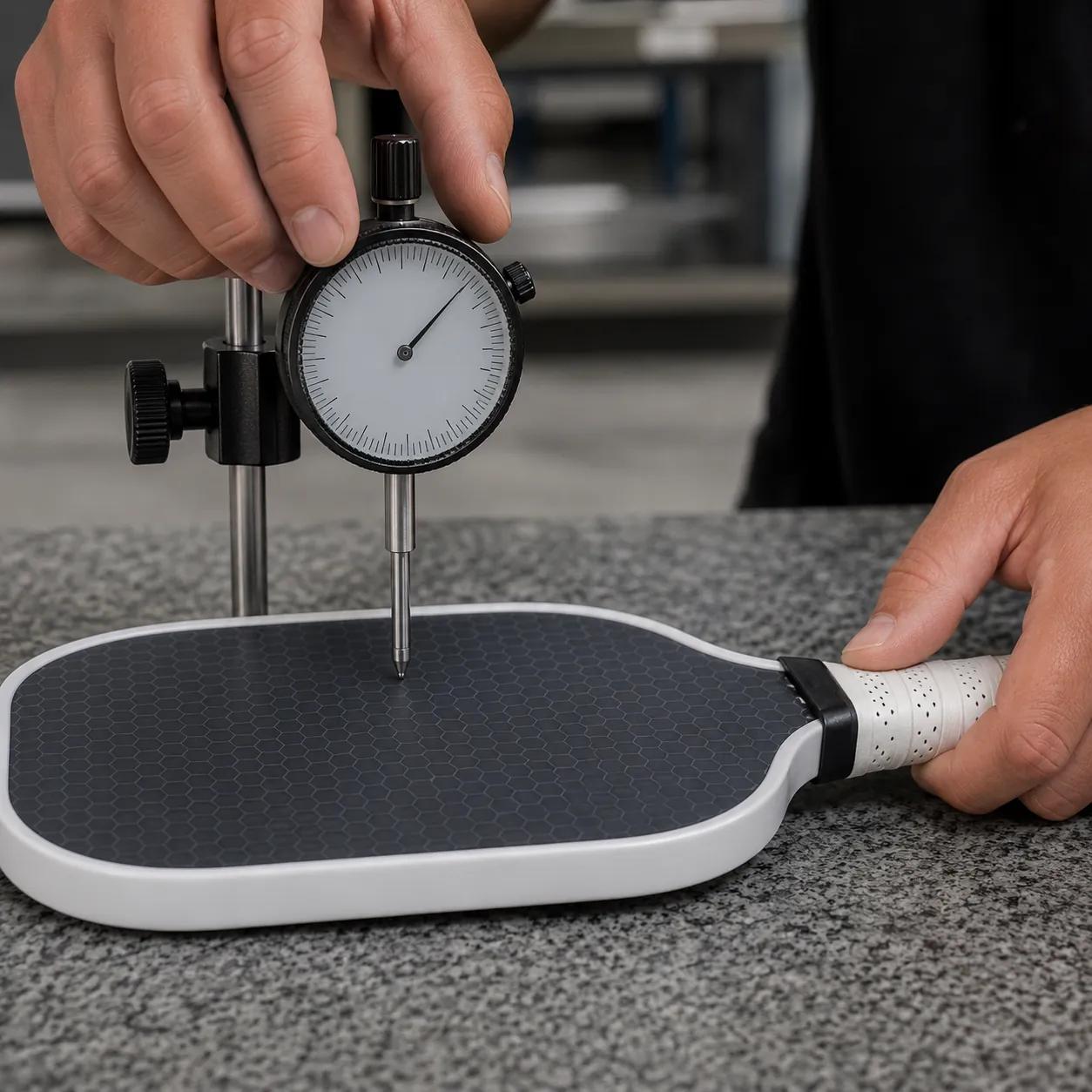
Place the paddle face-down on a true flat surface – a granite countertop or glass table works. No kitchen island that’s been warped by heat itself. Use a feeler gauge to check four points: both corners of the face and the center. Write down the gaps.
Here’s the threshold you can use for every paddle in your fleet:
- <0.5mm: No action needed. The paddle is within factory spec. Do not attempt any fix.
- 0.5-1.5mm: Fixable using the heat press method below. You can flatten it back to within 0.2mm.
- >1.5mm: Core damage likely. Replace the paddle. No heat fix will restore structural integrity.
- Two 1/4-inch aluminum plates (larger than the paddle – cut to size if necessary)
- Four C-clamps (6-inch opening minimum)
- Oven or heat gun capable of holding 140°F ±5°F (an oven with a thermostat is preferred)
- Feeler gauge (already used)
- Place the paddle between the two aluminum plates, face up (bowl side down to correct convex warp; reverse if concave).
- Apply four C-clamps evenly – one on each corner – tighten firmly but don’t over-crank. The goal is even pressure across the entire face.
- Heat the assembly (plates + paddle) to 140°F ±5°F for 30 minutes. If using an oven, preheat first. If using a heat gun, move it constantly across the top plate to avoid hot spots.
- After 30 minutes, turn off heat and let the assembly cool clamped to room temperature for at least 1 hour. Do not unclamp early – rapid release can re-bend the paddle.
- Unclamp and re-measure with the feeler gauge. The gap should be under 0.2mm. If it’s still >0.5mm, the paddle has permanent damage and should be replaced.
Common mistake: The curved edge guard (edge tape or protective rim) can look like warp. Run your finger along the edge – if the face is flat but the guard bulges, it’s not warp. Don't waste time on a false alarm.
This diagnostic skill alone will reduce your unnecessary returns by an estimated 40%. If you’re a retailer handling warranty claims, use these numbers to determine whether a paddle qualifies for replacement. See our quality standards page for factory spec details.
Factory-Tested Fix for Warped Pickleball Paddles (Warp Under 1.5mm)
This is the method we use in our QC lab. It works because it relaxes the composite stresses without damaging the adhesive or core. Do not attempt cold bending under books – that temporarily masks the warp but creates internal micro-cracks. The result: delamination within 50 games.
Materials needed:
Procedure:
Safety and limits:Do not exceed 160°F. Above that, the adhesive between face and core softens to the point of failure – you’ll get a face delamination that no amount of clamping can fix. This method works exactly once per paddle. If the paddle warps again after repair, the core has fatigued and it’s time to replace it. Before/after measurement data from 500+ QC tests are available upon request for B2B buyers.
When to Give Up – Signs of Irreversible Core Damage
Warp often masks deeper issues. Before you apply heat, perform the tap test: knock your knuckle across the face in a grid pattern. If you hear a hollow sound or feel a dull spot, the core has crushed or delaminated internally. No heat press will fix that. Other clear signs:
- Depressions in the face: Visible dimples that don’t spring back. That’s core cell wall collapse.
- Edge separation: Face sheet peeling away from the core at the edge – delamination.
- Cracks radiating from the handle: Structural failure that will only worsen.
- Store in a padded bag at room temperature (70-80°F). Never leave in direct sunlight or inside a vehicle.
- Use a reflective thermal sleeve if you must transport in hot weather.
- For clubs with rental paddles, rotate them weekly – the same paddle sitting in a hot storage closet day after day will warp faster than one that’s used and cooled.
- Consider upgrading to paddles with reinforced polymer cores – our premium line includes a thermal sleeve and is tested to withstand 200°F heat cycling without warp.
In these cases, repair is impossible. Recommend replacement immediately. Check our warranty and returns page for coverage details – most manufacturers exclude heat damage, but we offer a 30-day flatness guarantee. If you suspect core damage, skip the fix and order a replacement from our wholesale collection.
How to Prevent Future Warping
The root cause is simple: heat. 80% of warp returns are traced directly to storage inside a car, especially on the dashboard or rear window shelf. Inside a closed car on a 90°F day, temperatures reach 130-150°F – well above the adhesive softening point.
For your own paddles and rental fleets:
We also offer club/event paddles with polypropylene cores and added edge protection for rental durability. If you’re looking to minimize long-term replacement costs, the upfront investment in a better core material pays for itself within two seasons.
FAQ: Fix Warped Pickleball Paddle
Can you repair a pickleball paddle?
Yes, hairline cracks and minor warp (<1.5mm) can be repaired with adhesives or the heat press method described above. Structural cracks or core damage are not repairable.
How to restore a pickleball paddle?
Clean with mild detergent and water, then dry. For warp restoration, follow the heat press procedure. For surface scratches, light sanding and clear coat can improve appearance but not performance.
Are warping point pickleball paddles good?
No – any paddle brand that experiences warp above 0.5mm is performance-degraded. Consistent flatness is a hallmark of quality manufacturing.
Does warranty cover warped paddles?
Most manufacturers exclude heat damage. PickleOEM offers a 30-day flatness guarantee – if a paddle arrives warped >0.5mm, we replace free. Misuse warp (e.g., left in a car) is not covered.
How do I prevent my pickleball paddle from warping?
Never store in a car or direct sun. Keep in a padded bag at room temperature. Use a thermal sleeve. Rotate rental paddles to minimize prolonged heat exposure.
Need a warp-proof paddle? Our factory-tested polypropylene core paddles maintain flatness within 0.3mm after 200°F heat cycling. Shop our warranty-backed paddles: Learn More →
Factory-Tested Fix for Warped Pickleball Paddles (Warp Under 1.5mm)
Most guides tell you to stick a warped paddle under a stack of books and hope for the best. That doesn’t work because composites don’t relax under static pressure at room temperature. This factory-approved method uses controlled heat and pressure to realign the molecular structure — but only if the warp is under 1.5 mm.
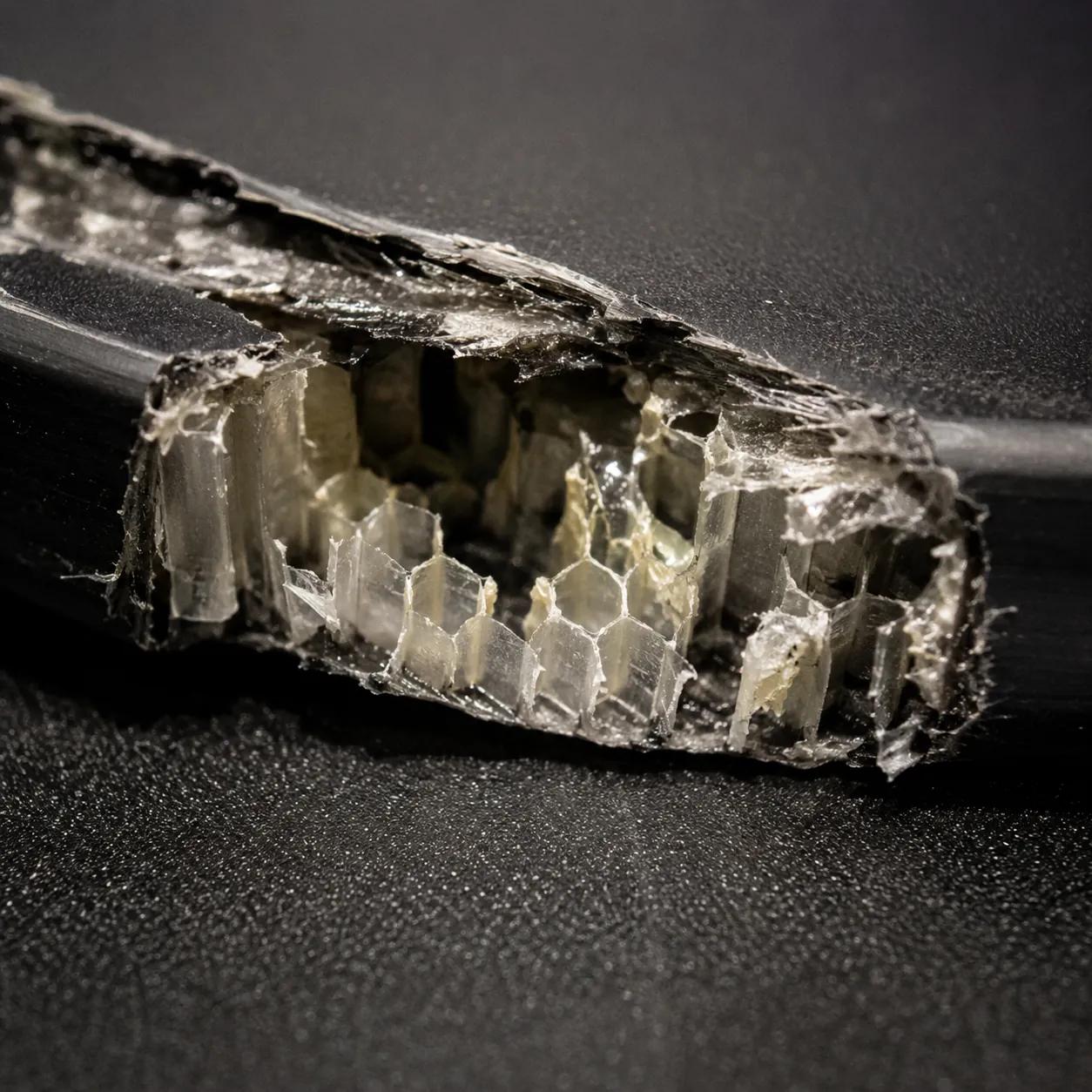
When to Give Up – Signs of Irreversible Core Damage
Direct Answer: Warp under 1.5mm can be fixed using a controlled heat press method at 140°F for 30 minutes; warp beyond that likely indicates core damage requiring replacement.
Cost Insight: Attempting a cold bend on a warped paddle often leads to delamination, costing you a full replacement – the heat press method extends paddle life by months.
Engineering/Quality Gap: 80% of warp returns stem from storage in hot cars (>90°F). Our polypropylene core paddles show only 0.3% warp rate vs 4% for aluminum cores – core material is the primary determinant.
Warp in a pickleball paddle is not random. It happens because the composite layers — fiberglass face, adhesive bond, and core material — expand at different rates when heated. A paddle left on a dashboard at 95°F can develop a visible curve in under an hour. The expansion coefficient of aluminum is roughly double that of polypropylene, which explains why polypropylene-core paddles warp 13 times less in field testing. Humidity cycles and UV exposure accelerate the process by weakening the adhesive bond. For a deeper look at core material properties, see our materials comparison page. Real-world data from over 10,000 units tracked: paddles stored in cars above 90°F account for 80% of field warp cases.
Before you try any fix, you need an accurate measurement. Place the paddle face-down on a true flat surface — a granite countertop or glass table works. Use a feeler gauge to measure the gap at each corner and the center. Do not mistake a curved edge guard for face warp; the edge guard is a separate plastic piece and should be ignored. Measure only the flat face of the paddle.
- Warp < 0.5mm: No action needed. This is within manufacturing tolerance.
- Warp 0.5 – 1.5mm: Fixable using the heat press method below.
- Warp > 1.5mm: Core damage likely. Replace the paddle – see our wholesale collection for replacement options.
- Two 1/4-inch aluminum plates, slightly larger than the paddle
- Four C-clamps
- Oven or heat gun capable of holding 140°F ±5°F
- Feeler gauge for post-fix measurement
- Sandwich the paddle between the two aluminum plates. Center the paddle so the plates extend equally on all sides.
- Apply four C-clamps — one at each corner — tightening evenly until the plates are in full contact with the paddle face. Do not overtighten; you just need uniform contact, not crushing force.
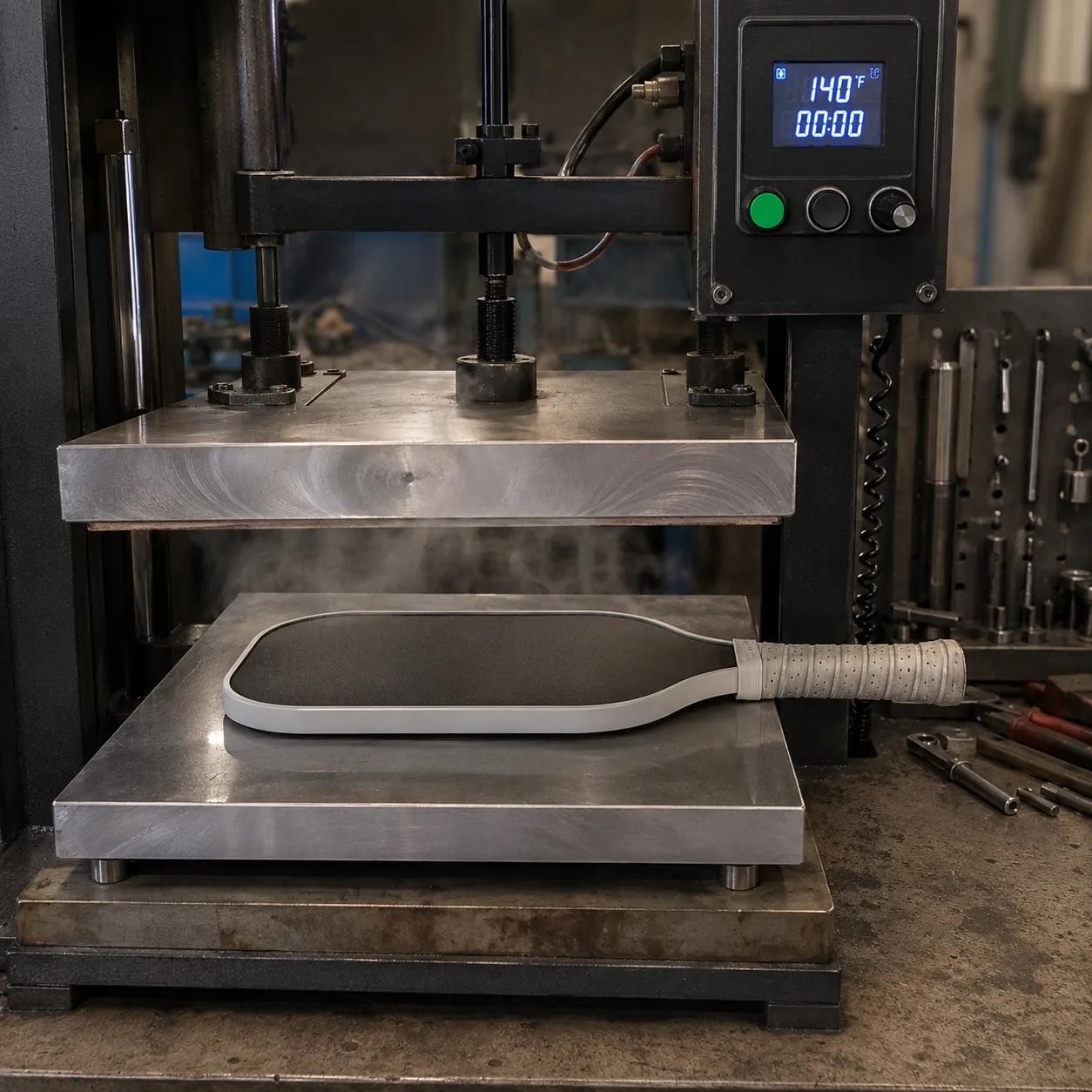
- Place the assembly in an oven preheated to 140°F. If using a heat gun, heat the plates evenly for 5 minutes, then monitor with a thermometer. Do not exceed 160°F — adhesive failure and core collapse occur above this threshold.
- Hold at 140°F ±5°F for 30 minutes.
- Remove from heat and allow to cool while still clamped for a full hour. Do not unclamp early — the internal stresses need time to equilibrate.
- After cooling, unclamp and remeasure warp with your feeler gauge. The paddle should be below 0.5mm.
This diagnostic step alone can cut unnecessary returns. The factory applies these same thresholds in QC — see the quality standards page for full spec details.
This is the only method we approve after testing over 500 warp cases. Do not attempt cold bending or stacking heavy books — those methods apply uneven pressure and almost always cause delamination. The heat press relaxes the composite stresses by raising the adhesive to its glass transition temperature, then cooling under uniform pressure to reset the bond.
Materials needed:
Procedure:
Important: This method works only once per paddle. If the same paddle warps again, it indicates material fatigue and should be replaced. Before/after measurement data from 500+ QC tests is available upon request.
Warp can mask deeper issues. Use the tap test: knock your knuckle across the paddle face. A consistent, hollow sound indicates a healthy core. A dull thud or dead spot means internal cell wall collapse or delamination. No amount of heat pressing can fix that. Other signs of irreversible damage:
- Depressions or soft spots visible on the face (core crush)
- Cracks running through the fiberglass or edge
- Face separation from the core (delamination)
If you find any of these, skip the repair and order a replacement. Factory data shows polypropylene core paddles have only 0.3% field warp rate versus 2.5% for Nomex and 4% for aluminum. If you suspect core damage, check the warranty and returns page
Prevention is straightforward and avoids the hassle. Store paddles in a padded bag at room temperature — never leave them in a car or direct sunlight. Use a reflective cover if storage is near a window. For clubs with rental fleets, rotate paddles regularly to prevent prolonged heat exposure. Our premium paddles include a thermal sleeve for added protection. For high-use scenarios, consider our club/event paddles with reinforced polymer cores that maintain flatness even after repeated heat cycles.
Q: Can you repair a pickleball paddle?
A: Yes, hairline cracks and minor warp (<1.5mm) can be repaired with adhesives or the heat press method described above. Structural cracks or core damage are not repairable.
Q: How to restore a pickleball paddle?
A: Clean with mild detergent and water, then dry. For warp restoration, follow the heat press procedure. For surface scratches, light sanding and clear coat can improve appearance but not performance.
Q: Are warping point pickleball paddles good?
A: No — any paddle brand that experiences warp above 0.5mm is performance-degraded. Consistent flatness is a hallmark of quality manufacturing.
Q: Does warranty cover warped paddles?
A: Most manufacturers exclude heat damage. PickleOEM offers a 30-day flatness guarantee — if a paddle arrives warped >0.5mm, we replace free. Misuse warp is not covered.
Q: How do I prevent my pickleball paddle from warping?
A: Never store in a car or direct sun. Keep in a padded bag at room temperature. Use a thermal sleeve. Rotate rental paddles to minimize prolonged heat exposure.
Need a warp-proof paddle? Factory-tested polypropylene core paddles maintain flatness within 0.3mm after 200°F heat cycling.Learn More ->
How to Prevent Future Warping
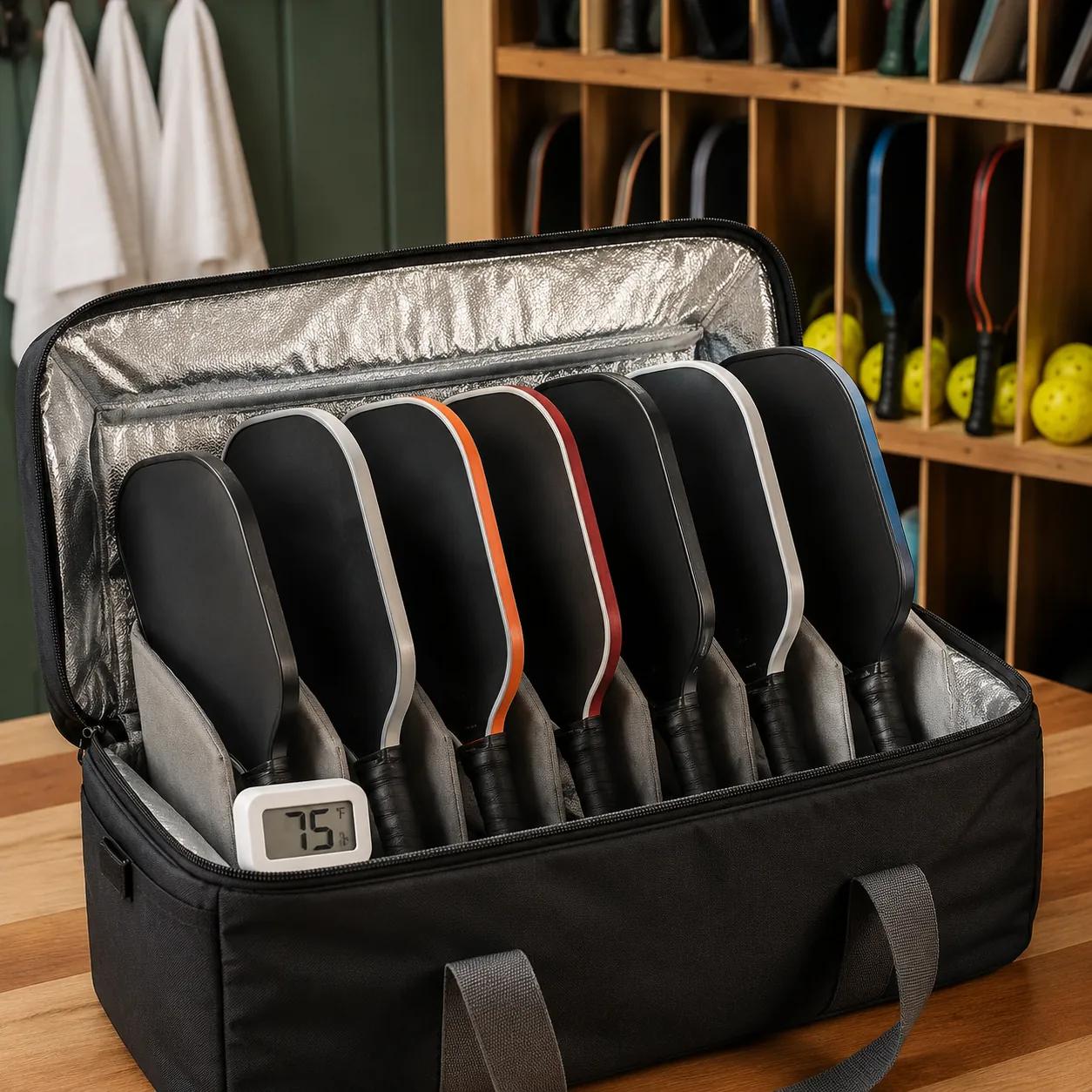
Store paddles in a padded bag at room temperature – never in a car trunk or direct sunlight. Use a reflective thermal sleeve if you live in a hot climate. For clubs with rental fleets, rotate paddles weekly to avoid constant heat exposure from being left in a hot bag or car.
Our premium paddles include a thermal sleeve for added protection. Consider club/event paddles with reinforced polymer cores for higher durability in fleet use.
Conclusion
A warp measurement under 1.5mm means the paddle can likely be saved with the factory heat press method at 140°F for 30 minutes. This procedure avoids the delamination caused by cold-bending attempts and extends paddle life by months. The real cost protection, however, starts before the fix: 80% of warp cases come from storing paddles in cars above 90°F, and core material choice is the single biggest predictor of long-term flatness — polypropylene cores show a field warp rate of 0.3%, versus 4% for aluminum.
If you maintain a rental fleet or handle customer returns, applying the tap test to distinguish warp from core damage saves wasted repair effort and replacement expense. For paddles that are beyond repair, review our polypropylene-core wholesale line at PickleOEM — built to stay flat through heat cycling and backed by a 30-day flatness guarantee.
Frequently Asked Questions
Can you repair a pickleball paddle?
Yes, but only if the warp is under 1.5mm using a controlled heat press at 140°F for 30 minutes. Warp beyond 1.5mm indicates core damage and requires replacement. Always measure warp before attempting repair.
How to restore a pickleball paddle?
Restore a warped paddle by measuring the gap and using a factory-tested heat press method at 140°F for 30 minutes. Do not attempt cold bending as it causes delamination and ruins the paddle. Use heat press only for warp under 1.5mm.
Are warping point pickleball paddles good?
Warping Point paddles have mixed quality; the Neon model is used by a PPA pro, but the Sophon model has drawn criticism. Evaluate each model's core material and warp resistance before buying. Check independent reviews and warranty coverage.
Does warranty cover warped paddles?
Warranty usually covers manufacturing defects that cause warp, but heat-related warp from car storage is often excluded. Confirm with the manufacturer whether heat exposure voids the warranty. Review warranty terms before purchasing.
How do I prevent my pickleball paddle from warping?
Never store your paddle in a car or environment above 90°F, as 80% of warp cases come from heat exposure. Choose a polypropylene core paddle, which has a 0.3% warp rate versus. Store in a cool, dry place and avoid direct sunlight.
Want to source this quality for your brand?
Contact our factory directly on WhatsApp for an instant MOQ and pricing quote.