Export Carton Marking for Pickleball Shipments: The Origin Rules That Hold Containers
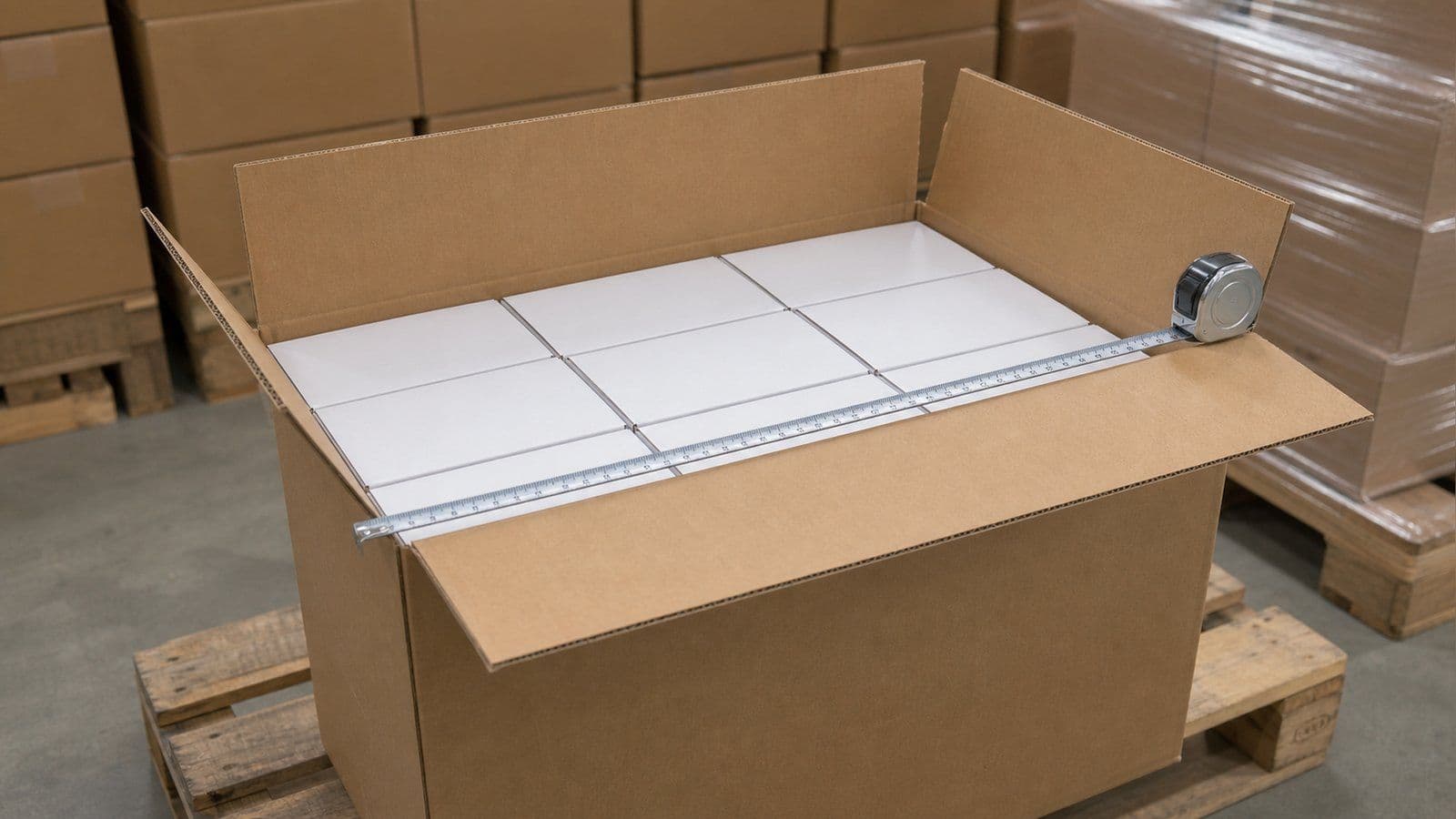
A carton marking clause is one of the shortest paragraphs in a purchase order and one of the few that can cost you the entered value of the shipment. The rule that governs it is not a packing convention. It is 19 U.S.C. 1304, and on 18 December 2025 the US Department of Justice announced a $54.4 million False Claims Act settlement in which one of the resolved allegations was that imported merchandise "was not marked with the country of origin, and the company failed to pay marking duties owed to CBP."
That case involved tungsten carbide, not pickleball paddles. The statute does not care. Every carton of paddles, balls or net systems arriving from a Chinese factory is subject to the same marking law, and the marking has to be correct at the moment of importation — not fixable later at the warehouse, not negotiable with the broker.
This article covers the outside of the carton: the mark block your factory stencils or prints, and the country-of-origin marking that US law puts underneath it. Codes printed on the product itself for quality traceability and recall are a separate subject with separate rules, and they are not covered here.
- The main mark and side mark block is commercial convention. Country-of-origin marking is law — 19 U.S.C. 1304(a) and 19 CFR 134.11. Confusing the two is the most common error in supplier-side guidance.
- If your US company address is printed on the carton, the origin statement must appear in close proximity to it and in at least comparable lettering size, preceded by "Made in" or "Product of" (19 CFR 134.46).
- Failure to mark carries a duty of 10 per centum ad valorem that cannot be remitted (19 U.S.C. 1304(i)), on top of any other duty owed.
- If CBP issues a marking notice on Customs Form 4647 and you do not cure it within 30 days, the port director demands liquidated damages equal to the entered value of the goods (19 CFR 134.54(a)).
- Handling symbols follow ISO 780:2015, which sets an overall symbol height of 100 mm, 150 mm or 200 mm for normal purposes (Clause 3.4).
- The marking must survive normal distribution and store handling and be readable "without strain" (19 CFR 134.41(b)) — which is a durability specification, not a design preference.
- What a shipping mark actually is, and what it is not
- What US law requires on the carton, section by section
- The carton marking block: a spec you can paste into the PO
- Handling symbols: what ISO 780:2015 actually specifies
- The marking errors that actually stop a shipment
- Getting it right before the container closes
- Frequently asked questions
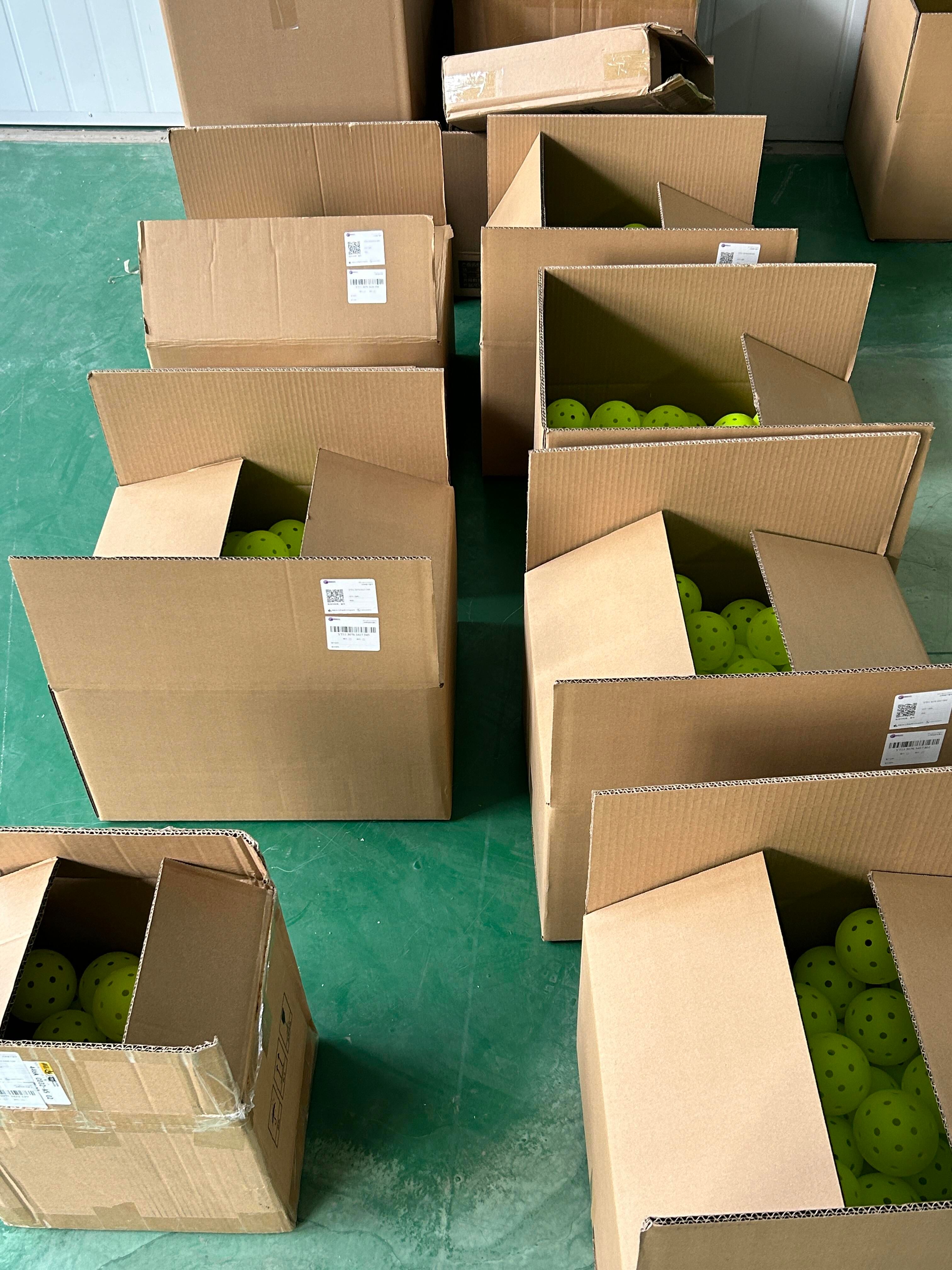

What a Shipping Mark Actually Is, and What It Is Not
Ask six sourcing agencies what a shipping mark is and you get six versions of the same field list: consignee, purchase order number, destination port, carton number, net weight, gross weight, dimensions. That list is accurate and it is also the least important thing about carton marking, because none of those fields is required by any statute.
The mark block is a commercial instrument. It exists so a forklift driver in Ningbo, a tally clerk at the terminal, a customs examiner and a receiving supervisor at your warehouse can all identify the same box without opening it. Its format is whatever you and your factory agree it is. You can change the field order, drop the destination port, add a SKU line. No one will stop the shipment.
The legal layer sits underneath the block, not inside it
Country-of-origin marking is a different animal. 19 U.S.C. 1304(a) requires that "every article of foreign origin (or its container) imported into the United States shall be marked in a conspicuous place as legibly, indelibly, and permanently as the nature of the article (or container) will permit," so as to indicate to the ultimate purchaser the English name of the country of origin. 19 CFR 134.11 restates it in the same words.
Read that sentence twice, because two phrases in it do the work. "Or its container" is why cartons are in scope at all. "The ultimate purchaser" is why the analysis differs between the transport carton and the retail box — and that difference is the single thing most guidance on this topic gets wrong.
Transport carton versus retail package
A master carton of 60 paddles that gets opened at a distribution centre and never seen again by a consumer is not the container in which the goods reach the ultimate purchaser. A printed colour box holding one paddle on a retail peg is. Both may need marking, for different reasons and to different standards.
| Layer | Who reads it | Governed by | If it is wrong |
|---|---|---|---|
| Main mark and side mark block | Terminal staff, forwarder, your warehouse | Your PO and the packing list. No statute. | Misrouted or unreconcilable cartons; a commercial dispute, not a legal one |
| Country-of-origin statement on the carton | CBP at examination; the ultimate purchaser where the carton reaches them | 19 U.S.C. 1304; 19 CFR 134.11, 134.22, 134.41, 134.46 | Marking notice, 10% marking duty, liquidated damages at entered value |
| Handling symbols | Anyone physically moving the box | ISO 780:2015 (voluntary standard) | Crush and moisture damage; a claim against your cargo insurance, not a customs event |
One practical consequence: when a supplier tells you the shipping mark "meets export requirements," they have told you nothing about compliance. They have told you the block matches the packing list. Those are unrelated statements, and only one of them is checked at the border.
There is a further wrinkle for pickleball goods specifically. Paddles and balls are small, branded and often sold in their own printed retail packaging, which means the retail box is frequently the container that reaches the ultimate purchaser. Where the article itself is excepted from marking, 19 CFR 134.22(a) puts the obligation on "the outermost container or holder in which the article ordinarily reaches the ultimate purchaser" — so if the paddle is not marked, the retail box must be, whether or not the master carton is.
What US Law Requires on the Carton, Section by Section
Four provisions do almost all the work. It is worth knowing them by number, because a broker or a factory will occasionally tell you something is required when it is not, and the section number is how you settle it in one email.
19 CFR 134.11 — the base obligation
Conspicuous, legible, indelible, permanent, in English, naming the country of origin, at the time of importation. "At the time of importation" is the phrase that removes the option of fixing it in the US warehouse before distribution. The goods have to arrive correct.
19 CFR 134.46 — the close proximity rule
This is the provision that catches private-label importers, and it is worth quoting. Where the words "United States" or "American," the letters "U.S.A.," or the name of any US city or location appear on an imported article or its container and may mislead the ultimate purchaser as to origin, then:
"there shall appear legibly and permanently in close proximity to such words, letters or name, and in at least a comparable size, the name of the country of origin preceded by 'Made in,' 'Product of,' or other words of similar meaning."
Two independent tests, both of which have to pass. Close proximity — in CBP's applied practice this means the same panel, not the same carton. Comparable size — the origin statement cannot be set in 8 mm type beneath a 40 mm brand address.
The trap is that this rule bites precisely when the carton looks most professional. A plain brown box with a stencilled block rarely triggers it. A carton printed with "PICKLE BRAND CO., PORTLAND, OREGON" in your brand typeface almost always does, because you have just put a US locality on an imported container.
19 CFR 134.22(c) — containers bearing a US address
The companion provision reaches the same result from the container side: a container "bearing the name and address of an importer, distributor, or other person or company in the United States shall be marked in close proximity to the U.S. address to indicate clearly the country of origin of the contents," with wording such as "Contents made in France." For a carton of imported paddles carrying your Oregon address, "Contents Made in China" adjacent to that address is the compliant construction.
19 CFR 134.41(b) — how permanent is permanent
The regulation gives a functional test rather than a materials list, and this is the part factories most often under-deliver:
"The marking must survive normal distribution and store handling. The ultimate purchaser in the United States must be able to find the marking easily and read it without strain."
Note what is absent: no approved ink list, no mandated label stock, no CBP certification of adhesives. Anyone who tells you a particular label is "CBP-approved" is selling something. The regulation prescribes definite marking methods only for the narrow article classes in 19 CFR 134.43 and for goods subject to specific Commissioner rulings. For everything else, the test is behavioural — does it still read after the journey.

How CBP applies these rules together is visible in its own published rulings. In HQ 734491 (13 April 1992), a distributor asked whether marking imported auto parts on the part or its inner bag was sufficient when the retail carton carried the company's Indianapolis address. CBP's analysis ran through 134.46, 134.26 and 134.24(c) together — the presence of the US address on the outer carton pulled the whole repackaging operation into scope rather than leaving the inner marking to stand on its own. The commodity is irrelevant to the reasoning; the structure of the problem is identical for a printed paddle carton.
The Carton Marking Block: A Spec You Can Paste Into the PO
Here is the part every incumbent article stops short of. Knowing the field list does not get correct cartons; a written specification does. Below is a block structure and the dimensional constraints that make it work, in a form you can lift into a purchase order or an artwork brief.
Main mark — the end panel that faces out
| Line | Content | Minimum character height | Why this line exists |
|---|---|---|---|
| 1 | Consignee name or agreed buyer code | 25 mm | Sortation at the terminal and at your DC door |
| 2 | Purchase order number | 20 mm | The only field that reconciles the carton to a commercial document |
| 3 | Item or SKU description, plus colour where the SKU splits by colour | 15 mm | Lets a receiver segregate mixed pallets without opening cartons |
| 4 | Destination port and final destination city | 15 mm | Matters on consolidated LCL loads where cartons are split at CFS |
| 5 | C/NO. n OF N | 20 mm | Sequential numbering; must match the packing list exactly |
| 6 | MADE IN CHINA | Comparable to any US address on the same panel; never smaller | The statutory line — 19 U.S.C. 1304(a), sized per 19 CFR 134.46 |
Character heights above are ordinary stencil and flexo practice for a master carton with an end panel in the 300–450 mm range; scale them proportionally on a smaller box rather than shrinking the origin line first. The one rule that is not adjustable is line 6, whose size is set relative to whatever else is on that panel.
Side mark — the panel nobody reads until there is a dispute
- N.W. — net weight in kilograms, two decimals
- G.W. — gross weight in kilograms, two decimals
- MEAS. — outside dimensions as L × W × H in centimetres, in that order
- QTY — units in this carton, stated in the same unit of measure as the commercial invoice
- Repeat of C/NO. n OF N, so a carton lying on its end is still identifiable
Weights and measurements printed on the carton are what a forwarder reconciles against the bill of lading when a container is weighed and the figures disagree. If your factory rounds gross weight to the nearest kilogram while the packing list carries two decimals, you have manufactured a discrepancy that surfaces at the worst possible moment.
Placement and print constraints
- Main mark on two opposite end panels, side mark on one long side. A carton with marks on one panel only becomes anonymous the moment it is stacked the wrong way round.
- Keep a clear margin of at least 30 mm from any carton edge, flap join or strapping line. Marks printed across a flap split in half when the box is opened and re-taped.
- English only for the statutory line. 19 U.S.C. 1304(a) specifies the English name of the country of origin. A Chinese-character origin line is not a substitute, though it may sit alongside.
- Waterproof, non-smearing ink on unlaminated kraft. This is how you satisfy 134.41(b) in practice rather than in principle.
- No pencil, no handwriting, no last-minute stickers on the statutory line. A hand-written origin statement fails "indelibly and permanently" on its face.
For importers and private-label brand owners placing a wholesale paddle or ball programme rather than a one-off retail purchase. Our OEM page states the construction we quote against — raw T700 carbon and fiberglass faces on 13 mm and 16 mm polypropylene honeycomb cores, thermoformed unibody or cold-pressed — and the golden-sample approval step that precedes production. The block spec above is written to be pasted into that same purchase order, so the carton artwork and the paddle spec are approved on one document rather than two.
See what an OEM programme coversHandling Symbols: What ISO 780:2015 Actually Specifies
The umbrella, the wine glass and the two upward arrows are not decoration and they are not arbitrary. They are specified in ISO 780:2015, Packaging — Distribution packaging — Graphical symbols for handling and storage of packages, fifth edition, dated 1 December 2015, which cancelled and replaced ISO 780:1997 and defines seventeen graphical symbols.
The standard is voluntary. Nothing at the border requires it. What it buys you is a defensible position on a damage claim and a shared vocabulary across a chain where, as the standard's own introduction puts it, handling instructions in the language of the country of origin are "of no value at all if people handling the packages are illiterate."
The size rule nobody quotes
Clause 3.4 is unambiguous, and it is the number missing from every sourcing-blog treatment of this subject:
"For normal purposes the overall height of the graphical symbols shall be 100mm, 150mm or 200mm."
Depending on the size or shape of the package the symbols may be larger or smaller provided visibility is retained, and the horizontal-to-vertical ratio may be altered to enhance visibility so long as the original meaning survives. But 100 mm is the floor for a normal case. Set against that, the 25 mm "FRAGILE" symbol a factory drops into an artwork file to fill a gap is not a small deviation — it is a quarter of the specified minimum.
Display and placement
Clause 3.2 says that for large packages, symbols "should preferably be stencilled directly on the package or may appear on a label," printed, painted or otherwise reproduced as specified, and that they need not be framed by border lines. Clause 3.6 makes placement mandatory for specific symbols — the centre-of-gravity symbol, for example, is required on heavy packages and should appear on all six sides where possible, at minimum on the four lateral sides relating to its actual location.
For paddles and balls, the practically relevant set is short: keep dry, this way up where the carton has a defined orientation, and a stacking limit where the corrugate grade will not take an unlimited column. Note the scope exclusion — ISO 780 does not cover instructions specific to handling dangerous goods, so a consignment moving with lithium batteries in a ball machine programme sits under a different regime entirely.

The Marking Errors That Actually Stop a Shipment
Before the list: a disclosure. This article does not publish a first-hand account of one of our own shipments being held for a marking defect, because no such case is documented in our published material, and inventing a plausible one would be worth less to you than the public record. The public record is better evidence anyway — it is dated, attributable and verifiable.
What the federal record actually shows
On 18 December 2025 the Department of Justice announced that Ceratizit USA LLC agreed to pay $54.4 million to resolve False Claims Act allegations relating to evaded customs duties on tungsten carbide products, covering conduct from August 2020 through March 2024. Most of that case concerns transshipment and misclassification. But the settlement also resolved allegations, in DOJ's words, "that certain of the merchandise imported by Ceratizit was not marked with the country of origin, and the company failed to pay marking duties owed to CBP before distributing the unmarked products to consumers within the United States."
The lesson for a paddle importer is not the headline number, which reflects tariff evasion at a scale no small brand approaches. It is the structural point: unmarked goods and unpaid marking duties are treated as a distinct, chargeable failure, pleadable alongside the bigger allegations, years after the containers cleared.
The four errors, and what each one costs
| Error | Rule engaged | Exposure |
|---|---|---|
| Origin printed on a different panel from the US brand address | 19 CFR 134.46 | Marking notice; re-marking under supervision before release |
| Origin present but in markedly smaller type than the US address | 19 CFR 134.46 (comparable size) | Same as above; artwork reprint on the next run |
| Origin on a sticker that rubs off, or ink that smears on damp kraft | 19 CFR 134.41(b) | Fails "survive normal distribution and store handling" |
| Goods repacked into US retail cartons that conceal the origin marking | 19 CFR 134.26 | Certification breach; the importer must certify repacking will not conceal origin and must notify onward repackers |
That last row deserves its own sentence, because it is the one a growing private-label brand walks into without noticing. Under 19 CFR 134.26(a), an importer whose goods will be repacked into retail containers after release must certify to CBP that the new container will not obscure or conceal the origin marking — or will itself be marked — and must notify any subsequent purchaser or repacker in writing of the same obligation. Sending bulk paddles to a third-party fulfilment house that puts them in your own branded boxes is a repacking operation. The certification obligation follows the goods.
What CBP does when it finds a defect
The mechanics are set out in 19 CFR 134.51 and 134.54, and the sequence is worth knowing because there is a window in it.
- Step 1. On examination, if articles or containers are found not legally marked, CBP notifies the importer on Customs Form 4647, or its electronic equivalent, to arrange marking, or to return released goods to CBP custody for marking, exportation or destruction (19 CFR 134.51(a)).
- Step 2. You mark under supervision, export, or destroy. This is the window. It closes.
- Step 3. If within 30 days of the redelivery notice — or such longer period as allowed for good cause — the importer does not properly mark or redeliver, the port director demands liquidated damages equal to the entered value of the articles not properly marked or redelivered (19 CFR 134.54(a)).
Separately and independently, 19 U.S.C. 1304(i) provides that where goods are not marked at importation and are not exported, destroyed or marked under customs supervision before liquidation, there shall be levied "a duty of 10 per centum ad valorem, which shall be deemed to have accrued at the time of importation, shall not be construed to be penal, and shall not be remitted wholly or in part." That last clause is the one to absorb. It is not a fine you can petition down. On a $120,000 FOB container of paddles, the marking duty alone is a five-figure number attached to a printing decision.
Getting It Right Before the Container Closes
Everything above becomes useful at exactly one moment: while the cartons are still on the factory floor and a reprint costs a delay rather than a re-delivery. The following is the documented procedure a marking specification should drive — not a description of any particular order.
The decision path for your origin line
- Does any US name, city or state appear on the carton? If no — a plain "MADE IN CHINA" line in the main mark block, legible and permanent, satisfies the base obligation. If yes, continue.
- Is the origin statement on the same panel as that US text? If no, move it. Same carton is not the test; same panel is (19 CFR 134.46).
- Is it at least comparable in size to that US text? If your brand address is set at 20 mm, the origin line is set at 20 mm. Not 12 mm.
- Will the goods be repacked in the US into retail boxes? If yes, the 134.26 certification path applies and your fulfilment partner needs written notice.
- Will the article itself be unmarked? If yes, the outermost container reaching the ultimate purchaser must carry the origin (19 CFR 134.22(a)) — for pickleball goods that is usually the printed retail box, not the master carton.
The pre-shipment check
Marking is a natural addition to a pre-shipment inspection because it is verified by photograph rather than by measurement, and it is cheap to check compared to what it costs to miss. Four things belong on that checklist:
- A photograph of every printed panel of one carton per SKU — not one hero shot of a stack, which hides the panel where the origin line was supposed to go.
- C/NO. sequence reconciled against the packing list, including the total N. A packing list saying 480 cartons against cartons numbered to 486 is a discrepancy a customs officer will find faster than you will.
- N.W. / G.W. / MEAS. reconciled against the packing list and the commercial invoice, at the same decimal precision.
- A rub test on the origin line — a thumb, some water, ten seconds. If it moves, it does not survive normal distribution, and 134.41(b) is a functional test.
Two scheduling facts govern whether any of this is actionable. Carton artwork has to be approved before the printing plate is cut, which on a private-label programme is the earliest hard deadline in the order — earlier than the paddle spec freeze, because printed cartons have their own production run. And the correction window after a CBP marking notice is the 30 days in 134.54(a), not the transit time. We do not publish a single lead-time figure for carton artwork approval here, because it varies with whether the box is stock brown or custom printed; ask for it as a dated milestone on the production schedule rather than accepting it as "before shipment."
Our published guidance on pre-shipment AQL inspection for pickleball orders covers how that inspection is structured; marking verification sits inside it rather than beside it. Once the container sails, the next opportunity to influence the outcome is customs clearance, where the options are narrower and more expensive.
Who carries the risk
Commercially, the factory prints what your PO says. Legally, 19 U.S.C. 1304 addresses the importer, and the marking duty under 1304(i) is levied on the entry — which is yours. An FOB or EXW sale puts the marking risk on your side of the line the moment the goods are loaded, whatever the artwork approval email said. That asymmetry is the reason the marking clause belongs in the PO with the specification, not in an email thread with the artwork.
Two limits on scope, stated plainly. Everything above concerns imports into the United States. The EU and UK impose their own labelling obligations under a separate framework — our note on EU and UK import compliance covers that ground, and a carton built to satisfy CBP does not automatically satisfy either. And correct marking says nothing about correct classification; if the tariff line is wrong, the HS code for pickleball paddles is a separate problem with a separate remedy.
What To Do Next
Take the block spec above, paste it into your next purchase order as a numbered marking clause, and add one sentence naming which panel carries the origin line relative to your company address. That single sentence resolves the failure mode that 19 CFR 134.46 exists to catch, and it costs nothing.
Then set the pre-shipment check to require a photograph of every printed panel rather than a stack shot. The two changes together move carton marking out of the category of things you discover at the border and into the category of things you signed off in China.
If you are specifying a private-label programme and want the marking clause built into the production brief from the start, that is a conversation worth having before the artwork goes to plate rather than after.
Frequently Asked Questions
Is a shipping mark legally required on export cartons?
The main mark and side mark block is commercial convention, not law. What is legally required for US imports is the country-of-origin marking under 19 U.S.C. 1304 and 19 CFR Part 134. Your carrier and your PO drive the rest.
Does the country of origin have to be on the outer carton?
It depends on which container reaches the ultimate purchaser. Where the article itself is excepted from marking, 19 CFR 134.22(a) requires the outermost container in which it ordinarily reaches that purchaser to be marked. If your carton carries a US address, 134.22(c) requires the origin adjacent to it regardless.
What size does the "Made in China" text have to be?
There is no fixed millimetre figure. Under 19 CFR 134.46 it must be in at least comparable size to any US locality or address on the same panel, and under 134.41(b) readable without strain. In practice: match your brand address type size.
What is the penalty for unmarked imports?
19 U.S.C. 1304(i) imposes a duty of 10 per centum ad valorem that cannot be remitted. Separately, failing to mark or redeliver within 30 days of a CBP marking notice triggers liquidated damages equal to the entered value under 19 CFR 134.54(a).
How big should handling symbols be on the carton?
ISO 780:2015 Clause 3.4 specifies an overall height of 100 mm, 150 mm or 200 mm for normal purposes, with variation allowed if visibility is retained. The standard is voluntary, but 25 mm symbols are well below what it contemplates.
Can I fix incorrect marking after the goods arrive in the US?
Sometimes, under supervision. 19 CFR 134.51 lets CBP notify you on Form 4647 to mark, export or destroy. But 134.11 requires correct marking at the time of importation, and the 1304(i) marking duty applies where the cure does not happen before liquidation.
Does a Chinese-language origin statement count?
No. 19 U.S.C. 1304(a) requires the English name of the country of origin. A Chinese line may appear alongside it, but cannot replace it. This catches factories reusing a domestic-market carton design for an export run.
Want to source this quality for your brand?
Contact our factory directly on WhatsApp for an instant MOQ and pricing quote.