Importing Pickleball Paddles to Europe & UK: The CE Myth
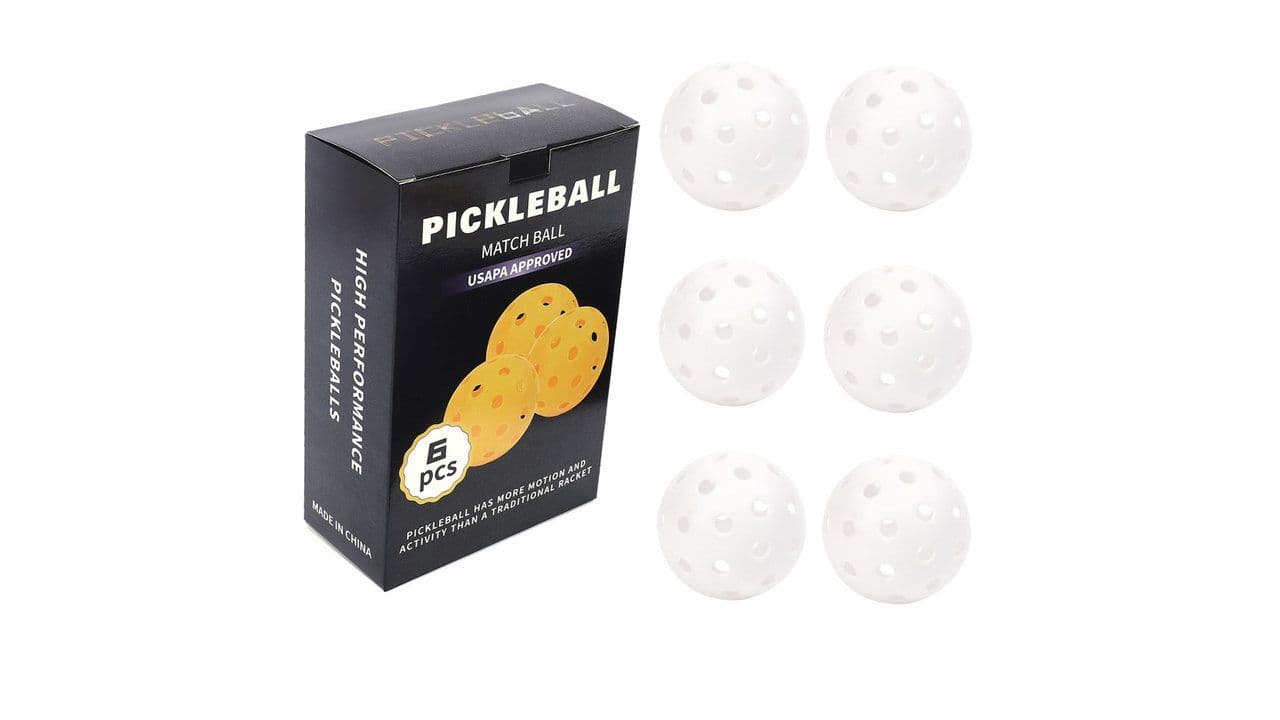
A supplier offering to print a CE mark on your pickleball paddles is offering you something that does not exist. There is no CE directive that covers a racquet, no notified body that assesses one, and no certificate anybody can issue for one. If you accept that logo, you have added an unlawful marking to a product that never needed it — and you still have not done the one thing the European Union actually requires before your container can be sold.
That real requirement is a named person, established in the EU, whose address goes on your packaging. Nobody at your factory can be that person. It is decided before the purchase order, it changes your artwork, and it is the single most common reason a first European shipment sits in a warehouse unsellable.
This guide sets out what actually applies when you import pickleball paddles and balls into the EU and the UK: the in-scope determination, the four real obligations under the EU's General Product Safety Regulation, what a factory can and cannot put in your technical file, and why Great Britain and Northern Ireland answer the same question two different ways.
Key takeaways
- A pickleball paddle is not a CE-marked product. CE marking is triggered by a specific directive — toys, PPE, machinery, radio. None covers a racquet. The UK's own list of marking-covered goods runs to 18 categories and sports equipment is not one of them.
- What applies instead is Regulation (EU) 2023/988, the General Product Safety Regulation, in force since 13 December 2024. It is the residual regime: it catches everything no sector-specific law covers.
- You must have an economic operator established in the EU before the goods are placed on the market. Article 16(1) is a prohibition, not a recommendation, and a manufacturer in China cannot fill the role.
- A technical file is mandatory and must be kept for 10 years. Your EU importer must hold their own copy for 10 years as well.
- Put your brand on the paddle and you become the manufacturer in law, with every Article 9 duty that follows — this is the clause private-label buyers miss most often.
- Great Britain is a separate regime. GPSR does not reach it; the General Product Safety Regulations 2005 do. Northern Ireland follows the EU. UKCA is not triggered for a paddle either.
Regulatory positions in this article were read from primary sources on 14 August 2026 and are stated with the article and page they came from. This is not legal advice — classification and market-placement decisions for your specific SKU belong with your customs broker and your own legal counsel.
On this page
- The Short Answer: Your Paddle Is Not a CE-Marked Product
- What Actually Applies: GPSR and the In-Scope Test
- The Obligation That Blocks Your Shipment: an EU Responsible Person
- The Technical File: What Goes In It and Who Signs It
- Marking, Labelling and What Your Listing Must Show
- Great Britain Is a Different Regime, and Northern Ireland Is a Third
- What to Do Before You Place the Order
- The Bottom Line
- Frequently Asked Questions

The Short Answer: Your Paddle Is Not a CE-Marked Product
CE marking is not a general quality badge and it is not a way of saying "this product is safe for Europe." It is a declaration that a product complies with a specific piece of EU harmonisation legislation that covers that product category. Toys have one. Personal protective equipment has one. Machinery, radio equipment, gas appliances, pressure equipment, lifts — each has a directive or regulation, each has its own conformity assessment route, and the CE mark is the visible output of having followed it.
Sporting goods do not have one. There is no Racquet Directive. A pickleball paddle sold to adults is not a toy, not PPE, not machinery, and not radio equipment, so no harmonisation legislation attaches, so there is nothing to declare conformity with and nothing to mark.
You do not have to take that on trust, because the regulators publish the lists. The UK government's guidance on placing manufactured goods on the market in Great Britain names every category the conformity-marking rules cover: toys, pyrotechnics, recreational craft and personal watercraft, simple pressure vessels, electromagnetic compatibility, non-automatic weighing instruments, measuring instruments, measuring container bottles, lifts, equipment for potentially explosive atmospheres, radio equipment, pressure equipment, personal protective equipment, gas appliances, machinery, equipment for use outdoors, aerosol dispensers, and low voltage electrical equipment. Read it twice looking for a racquet. It is not there.
The standards side agrees. EN 71-1, the mechanical and physical properties standard that sits under the Toy Safety Directive, states its own boundary in its scope clause: "This European Standard does not cover musical instruments, sports equipment or similar items but does include their toy counterparts." Sports equipment is excluded by name.
Where the toy question genuinely bites
There is one real exception and it is worth knowing precisely, because getting it wrong in the other direction is expensive too. The Toy Safety Directive covers products designed or intended for use in play by children under 14. A full-size adult paddle is not that. A junior paddle marketed as sports equipment for young players is generally still sports equipment.
But a brightly coloured paddle-and-ball set sold in a toy aisle, packaged for small children, marketed as a play item — that is a different product with a different classification, and it does pull in toy-safety testing and a genuine CE mark. The determining factor is how the product is designed, presented and marketed, not what material it is made from. If any part of your range is aimed at young children as play, that SKU needs its own determination and it is the one place in your catalogue where a CE mark may be correct.
What to say to a supplier who offers to add a CE logo. Ask which directive they are declaring conformity with, and ask to see the declaration of conformity naming it. There is no correct answer for an adult paddle, and the question ends the conversation politely. A factory willing to print a mark it cannot support with a declaration is telling you something about how it treats every other claim on your specification.

What Actually Applies: GPSR and the In-Scope Test
If no sector law covers your product, EU law does not stop caring about it. It hands it to the residual regime: Regulation (EU) 2023/988 of 10 May 2023 on general product safety, universally called the GPSR. Article 52 sets the date it bit: "It shall apply from 13 December 2024."
The scope test is one sentence in Article 2(1), and it is the sentence that decides your product: the Regulation "applies to products that are placed or made available on the market insofar as there are no specific provisions with the same objective under Union law." Read the two halves together and the logic is clean. Sector law first. Whatever it does not reach, GPSR reaches. A pickleball paddle has no sector law, so GPSR governs it completely.
This is why "GPSR certification" — sold as a package by a number of consultancies — is a category error. GPSR does not create a certificate, a mark or an approval body. It creates duties. Nobody signs off that you have done them. You either can produce the evidence when a market surveillance authority asks, or you cannot.
The four obligations that actually fall on you
Strip the Regulation down to what a paddle importer has to do differently on Monday morning, and it resolves into four obligations. They are not four articles — the statute spreads them across a dozen — but they are four distinct pieces of work, with four different owners and four different deadlines, and each one is the subject of a section below.
- 1. Name an economic operator established in the Union. Article 16(1) makes this a precondition of placing the product on the market at all, not a filing you catch up on later. Your factory cannot be it. This is the one that physically stops a container, and it is the subject of the next section.
- 2. Analyse the risk and hold the technical documentation. Article 9(2) requires that before placing the product on the market you "carry out an internal risk analysis and draw up technical documentation containing at least a general description of the product and its essential characteristics relevant for assessing its safety." Note the tense: before, not on request. The retention periods are where importers get caught.
- 3. Mark the product so it can be traced, and label it so the buyer can act. Article 9(5) requires a type, batch or serial number "easily visible and legible for consumers", and the identity and contact duties put names and addresses on the packaging. This is an artwork decision, which is why it has to be made before plates are cut.
- 4. Report accidents, and keep the supply-chain trail that lets you. Article 20 requires notification through the Safety Business Gateway without undue delay once you know of an accident caused by your product — a duty that only exists after you have shipped, and the one most importers have made no arrangement for.
What unites the four is that none of them produces a certificate and all of them produce evidence. That is the mental shift the CE-marking question obscures: there is no gate to pass, so there is nothing to buy, and the only test is whether the file exists on the day somebody asks for it.
Applying the same test to the rest of the container
The test is per product, not per shipment, and a mixed pickleball container will not come back with one uniform answer. Run each line through the same question — is there specific EU law with the same objective?
| Line item | Sector law with the same objective? | Practical result |
|---|---|---|
| Adult paddles | None | GPSR in full. No CE mark. |
| Outdoor and indoor balls | None | Identical position to paddles. GPSR in full, no CE mark, same responsible-person duty. |
| Nets, posts, bags, buckets | None in normal configurations | GPSR. Treat as separate products with their own file entries. |
| A paddle set presented as a children's play item | Yes — Toy Safety Directive | Toy route, real testing, genuine CE mark. Determine per SKU on how it is marketed. |
| A mains- or battery-powered ball machine | Yes — electrical and, where fitted, radio and battery rules | Entirely different route from the rest of the container. Handle separately and early. |
Balls deserve one line of emphasis because buyers assume otherwise: a pickleball is in exactly the same position as a paddle. No CE mark, no certificate, full GPSR duties including the responsible person. Tournament approvals from a sporting federation are a commercial and competitive matter — they sit alongside this framework and never substitute for it, a distinction covered in our guide to which pickleball certification your market actually needs.
One thing GPSR does require of the product itself, quietly: it must be safe. That is a substantive duty with no paperwork attached, which makes it easy to skim past. Splintering edge guards, a grip that sheds material, a face that delaminates into sharp fragments, lead used as a weighting method — these are the failure modes an authority acts on, and they are decided at design and process level long before any document is written.
The Obligation That Blocks Your Shipment: an EU Responsible Person
This is the section that costs money when it is discovered late, so it is worth reading the actual sentence. Article 16(1) of the GPSR:
"A product covered by this Regulation shall not be placed on the market unless there is an economic operator established in the Union who is responsible for the tasks set out in Article 4(3) of Regulation (EU) 2019/1020 in respect to that product."
Shall not be placed on the market. Not "should have," not "is advisable." Without this person in place, the legal act of selling your paddles into the EU is not available to you. The goods can be manufactured, shipped, cleared and sitting in a warehouse in Rotterdam, and still cannot lawfully go on sale.
Who is allowed to be it
The list is closed. Article 4(2) of Regulation (EU) 2019/1020, which GPSR imports wholesale, gives four options and no others:
- A manufacturer established in the Union. Not applicable if your paddles are made in Asia.
- An importer, where the manufacturer is not established in the Union. For most readers of this page, this is the answer — and it is you, or your EU distributor.
- An authorised representative holding a written mandate from the manufacturer to perform the Article 4(3) tasks on its behalf. This is the route brands use when they sell direct into the EU without an EU-established importer.
- A fulfilment service provider established in the Union, in respect of the products it handles, and only where none of the three above is established in the Union.
Note what is absent from that list: your factory. A manufacturer outside the EU cannot be the responsible person, cannot be appointed as one, and cannot solve this for you no matter how cooperative it is. What a factory can do is supply the evidence the responsible person needs to hold. Naming that limit plainly is more useful than any assurance to the contrary, and a supplier who claims otherwise has misread the same closed list you just read.
What the role actually commits someone to
The four tasks in Article 4(3) are the real weight, and anyone agreeing to be your responsible person should see them before saying yes:
- Verify that the technical documentation has been drawn up, keep it available to market surveillance authorities for the required period, and produce it on request.
- On a reasoned request from an authority, provide all information and documentation necessary to demonstrate the product's conformity — in a language that authority easily understands.
- Inform the authorities where there is reason to believe the product presents a risk.
- Cooperate with the authorities and take corrective action to remedy non-compliance or mitigate the risk.
GPSR then adds a duty on top, in Article 16(2), that is easy to under-read: the responsible person must regularly check that the product still complies with its technical documentation and its marking obligations, and must, on request, "provide documented evidence of the checks performed." This is not a one-time filing. It is an ongoing verification duty that has to leave a paper trail — which in practice means production-run checks, not a folder created once at launch.
What happens if there is no responsible person
The first consequence is commercial and it arrives long before any regulator does. Marketplaces and EU distributors now ask for responsible-person details as a condition of listing or of taking stock, so the practical outcome of not having one is usually a listing you cannot activate or a distributor who will not take delivery — with goods already paid for and sitting in a warehouse.
The enforcement consequence sits behind that. Market surveillance authorities can require corrective action, withdrawal or recall of a non-compliant product. On penalties, be careful of pages that quote a single EU-wide fine, because no such figure exists: Article 44 leaves penalties to national law, requiring only that Member States lay down rules that are "effective, proportionate and dissuasive." That means the exposure for the same failure differs by Member State, and it is a question for local advice rather than for a number quoted in an article.
And the role has to be visible on the goods. Article 16(3) requires the responsible person's name, registered trade name or trade mark, and contact details including postal and electronic address, to be "indicated on the product or on its packaging, the parcel or an accompanying document." That is an artwork decision. Discover it after your printing plates are made and you are re-tooling packaging for a legal reason, which is the avoidable version of this problem.
For importers and private-label brands placing a first EU or UK order: once you know who your responsible person will be, the remaining question is which file inputs have to be captured while your run is still open. Send us your SKU list and target market on WhatsApp and we will tell you plainly which of those we can document for your build and which stay your legal responsibility — the second list is longer than most suppliers admit.
Ask about file inputs on WhatsAppThe Technical File: What Goes In It and Who Signs It
Article 9(2) requires that, before placing a product on the market, manufacturers "carry out an internal risk analysis and draw up technical documentation containing at least a general description of the product and its essential characteristics relevant for assessing its safety." Where the risks make it appropriate, it must also contain an analysis of possible risks and the solutions adopted — including the outcome of any test reports — and the list of European standards applied.
The European Commission's own guidance on this, published in the Official Journal on 21 November 2025 as Commission notice C/2025/6233, puts it in plainer language than the Regulation does: you must carry out an internal risk analysis, meaning a proper risk assessment of the product, and you must draw up technical documentation to document it. There is no template, no submission and no approval. The file is yours, and it has to be good enough to defend.
The retention periods people underestimate
Three clocks run, and they run for different parties:
| Who | What they hold | How long | Source |
|---|---|---|---|
| Manufacturer (or the brand deemed to be it) | The technical documentation, kept up to date | 10 years after the product is placed on the market | Art. 9(3) |
| EU importer | Their own copy of that documentation | 10 years after they place it on the market | Art. 11(6) |
| Any economic operator | Who supplied them, and who they supplied | 6 years | Art. 15(5) |
| Any economic operator | Risk description, complaints, corrective measures | 10 years | Art. 15(4) |
Ten years is longer than most paddle models exist, longer than most supplier relationships last, and considerably longer than the average small importer keeps supplier emails. The practical consequence is that the file cannot live in a WhatsApp thread with a sales representative who may have changed jobs twice by the time an authority asks. It needs to be a set of documents you hold yourself, in your own storage, per SKU and per production run.
The clause private-label buyers keep missing
Article 13(1) is short and it reorganises the entire question of who is responsible:
A person is "deemed to be a manufacturer for the purposes of this Regulation and shall be subject to the obligations of the manufacturer set out in Article 9 where that natural or legal person places a product on the market under the natural or legal person's name or trademark."
Print your logo on the paddle and, in EU law, you are the manufacturer. Not the reseller of somebody else's product — the manufacturer, carrying the Article 9 duties: the risk analysis, the technical documentation, the 10-year retention, the traceability marking, the complaint register, the accident notification. The factory in China is your supplier, and the file is yours.
Almost every reader of this page who is launching a private-label brand is in that position and has not been told. It is not a reason to avoid private label — it is a reason to build the documentation into the programme from the first sample instead of assembling it in a panic when a marketplace or a distributor asks.
Where we stop: four things no supplier can do for you
We are not going to list the file inputs a factory can hand over, because every paddle factory would give you the same list and the list is not the hard part. The useful half of this division of labour is the other one — the things no supplier can do for you, which is where importers actually lose time. Four of them:
- Be your responsible person. Closed list, four options, none of them a non-EU manufacturer.
- Sign the risk analysis on behalf of a brand that owns the product. Once Article 13(1) makes you the manufacturer, the assessment is yours to adopt. A supplier can contribute the technical inputs; it cannot assume your legal position.
- Determine your customs classification. Paddles sit in Harmonized System heading 9506 covering sports and outdoor game equipment, and the subheading we see used for finished paddles is 9506.99 — the residual "other sports equipment" line, not the racquet lines at 9506.51 and 9506.59, because a paddle is not a strung racquet. Classification is still a binding decision for your customs authority, not for a supplier, so confirm the full EU CN or UK commodity code with your broker before you declare. Our HS code guide for pickleball paddles and the customs clearance walkthrough cover the mechanics.
- Warrant that your artwork is compliant. The factory prints what the artwork file says. If the responsible person's address is missing from that file, it will be missing from 3,000 boxes.
The sourcing consequence is narrower than it looks. Every one of those four failures is a documentation failure, and they all share a timing property: each becomes unfixable at a different moment. The batch code has to be applied while the run is live, because retrofitting an identifier onto finished stock is not realistic at container volume. The responsible person's address has to be in the artwork file before plates are cut, or it is missing from every box in the container. The risk analysis can be adopted at any point, but only by you.
So the question to ask a supplier is not "can you supply documentation" — everyone says yes — but "at what point in your process does each record get created, and what happens if I ask for it after the run closes?" A factory working from written specifications and per-run inspection records answers that with dates; one working from photographs and verbal changes answers it with reassurance. Our guides to pre-shipment AQL inspection, golden-sample approval and pickleball quality control cover when those records get generated, and a documented OEM paddle programme starts from a written specification rather than a sample photo.
Marking, Labelling and What Your Listing Must Show
The paperwork above is invisible until an authority asks. This part is visible on every unit and is what an inspector or a marketplace compliance team looks at first. Five separate obligations converge on your artwork, and they are best handled as one brief to your designer before tooling. The field-by-field version of that brief — which line sits on which pack surface, under which article, and what Great Britain and Northern Ireland ask instead — is in our GPSR and UKCA artwork labelling guide.
| What must appear | Where it may go | Source |
|---|---|---|
| A type, batch or serial number, or other identifying element — "easily visible and legible" for consumers | On the product; on packaging or an accompanying document only where size or nature does not allow | Art. 9(5) |
| Manufacturer's name or trade mark, postal and electronic address, plus the single contact point where different | On the product; where not possible, packaging or accompanying document | Art. 9(6) |
| Importer's name or trade mark and postal and electronic address, without obscuring the manufacturer's information | On the product; where not possible, packaging or accompanying document | Art. 11(3) |
| Responsible person's name and contact details including postal and electronic address | On the product, its packaging, the parcel or an accompanying document | Art. 16(3) |
| Clear instructions and safety information, in a language easily understood in the destination Member State | With the product — unless it can be used safely and as intended without them | Art. 9(7) |
Two of these regularly surprise buyers. The first is that an electronic address is required, not optional — a postal address alone does not satisfy Article 9(6), and a physical address plus a website homepage is not obviously an electronic contact address either. The second is the language rule: it is set by the Member State where the product is made available, so a range sold across several EU markets is a multi-language artwork problem, not a single-panel one. Plan panel space for it at the packaging design stage — the practical constraints are covered in our guide to private-label pickleball packaging.
Selling online: what the listing itself must display
Article 19 covers distance sales and it is routinely missed because it governs the web page rather than the product. Where products are offered online, the offer itself must clearly and visibly indicate at least:
- The manufacturer's name, registered trade name or trade mark, and the postal and electronic address at which they can be contacted.
- Where the manufacturer is not established in the Union — which is the situation for anyone importing from Asia — the name, postal and electronic address of the responsible person.
- Information allowing identification of the product, including a picture of it, its type and any other product identifier.
- Any warning or safety information that would be affixed to the product or its packaging.
If you sell through your own webshop into the EU, that is a template change on every product page. If you sell through a marketplace, expect the platform to collect the same data before it lets you list, and to suspend listings where it is missing — which is the mechanism by which most small importers first find out this obligation exists.
When something goes wrong: the accident duty
Article 20 sets up an obligation most importers never plan for and it is worth knowing before the phone call rather than after. The manufacturer must notify, through the EU's Safety Business Gateway, any accident caused by a product it has placed on the market — "without undue delay from the moment it knows about the accident" — to the authorities of the Member State where it happened. The scope is occurrences that resulted in death, or in serious adverse effects on health and safety, permanent or temporary, including injuries.
Importers and distributors who learn of such an accident must inform the manufacturer without undue delay. And remember who the manufacturer is under Article 13(1): if the paddle carries your brand, the notification duty is yours. That means having a route from a customer complaint to a decision-maker who knows this obligation exists — worth writing into your returns process, alongside the complaint register that Article 9(12) requires you to keep in any case.
Great Britain Is a Different Regime, and Northern Ireland Is a Third
Every GPSR explainer ends with a sentence like "note that GPSR does not apply to Great Britain," and stops. That sentence is true and the impression it leaves is false, because a reader comes away thinking Great Britain has no general product safety requirements. It has had them since 2005.
The instrument is the General Product Safety Regulations 2005 (SI 2005/1803), which remain in force. They carry a general safety requirement in regulation 5 and a set of obligations on producers and distributors in regulations 7 to 9. The structure is familiar because the EU regime grew out of the same directive, but the two have now diverged: the UK version has no Article 16 responsible-person requirement and no equivalent of the Safety Business Gateway. You do not need a GB-established responsible person the way you need an EU-established one.
Does UKCA apply to a paddle?
No — and for the same reason CE does not. UKCA is the UK's conformity marking for the same closed set of product categories, and sports equipment is not among them. The gov.uk A-to-Z of product safety guidance for businesses, last updated 2 March 2026, indexes 19 sectors — aerosols, construction, cosmetics, toys and so on — with no entry for sports equipment or sports and leisure, and it tells you what to do when none of them fits: "If none apply, you must comply with the general product safety regulations." That is a direct instruction from the UK regulator, and for a pickleball paddle it is the operative one.
For completeness on the marking question, because it is the source of a lot of confusion in supplier conversations: the UK's guidance on using the UKCA marking, last updated 7 April 2026, confirms that under the Product Safety and Metrology (Amendment) Regulations 2024, "the UK continues to recognise the CE marking, alongside or in place of the UKCA marking, for the Great Britain market," with no end date stated. So even for the categories where a mark is genuinely required, CE remains acceptable in Great Britain. For a paddle, the question does not arise at all.
Northern Ireland follows the EU
Northern Ireland is the trap for anyone thinking of "the UK" as one market. Under the Windsor Framework, EU product rules apply in Northern Ireland. For a pickleball paddle, that means the GPSR position described in this article — including the EU-established responsible person and the Article 19 listing requirements — applies to goods placed on the Northern Ireland market, even though the same goods sold in England, Scotland or Wales fall under the 2005 regulations instead.
| Question | EU (27) | Great Britain | Northern Ireland |
|---|---|---|---|
| Governing instrument | Regulation (EU) 2023/988 | GPSR 2005 (SI 2005/1803) | EU rules via the Windsor Framework |
| CE or UKCA mark on a paddle | Neither — no directive applies | Neither — not a marking-covered category | Neither |
| Responsible person established in-market | Required (Art. 16) | No equivalent requirement | EU requirement applies |
| Technical documentation, 10-year retention | Required (Art. 9(2), 9(3)) | Producer duties apply; no identical file-and-term rule | Required |
| Online listing disclosure set | Required (Art. 19) | No direct equivalent today | Required |
Why this page has a short review window
The UK position is the least stable part of this article and you should treat it that way. On 31 March 2026 the Department for Business and Trade and the Office for Product Safety and Standards opened two consultations proposing to replace the General Product Safety Regulations 2005 with a new core framework aligned more closely with the EU rules — including obligations on online marketplaces and a supply-chain structure with new duties on producers and onward suppliers — alongside a consolidated enforcement regime with civil monetary penalties. Both closed on 23 June 2026, and the powers to make the resulting legislation come from the Product Regulation and Metrology Act 2025.
Nothing in that has changed the law as at the date this article was researched, 14 August 2026. But it means the Great Britain column of the table above is the one most likely to move, and that a GB divergence which currently works in an importer's favour may narrow. If you are building a compliance process now, build it to the EU standard and you will be ahead of whatever the UK adopts. This page is scheduled for review by February 2027, or sooner if the UK response to those consultations is published first.
What to Do Before You Place the Order
The sequence matters more than the checklist, because some of these decisions change the artwork and others change the specification — and every one of them is cheap now and expensive after tooling.
- Decide who your responsible person is, in writing, before the PO. If you have an EU-established company, it is probably you. If not, you are appointing an authorised representative with a written mandate covering the Article 4(3) tasks. This decides an address that must appear on your packaging.
- Determine each SKU separately. Adult paddles and balls take the GPSR route. Anything marketed to young children as play, and anything powered, takes a different route and needs its own answer before you commit tooling.
- Specify the traceability element in the build spec. Decide the batch or model coding scheme and where it is physically applied, so it is produced on the line rather than retrofitted.
- Write the full label set into the artwork brief. Manufacturer identity, importer identity, responsible person, traceability code, instructions and safety information in the destination languages — as one brief, before plates are made.
- Ask the factory for the file inputs while the run is live. Build specification, material declarations, inspection records, any test reports. These are far harder to obtain six months after shipment than during production.
- Pin the construction in the specification before you ask for the file. The technical documentation has to describe a specific product, so the specification has to be settled first — face material, core type, core thickness — the constructions we quote against run 13mm and 16mm polypropylene honeycomb — edge and handle construction, and total weight tolerance. We do not publish a full catalogue spec range here because material and thickness options are quoted per programme against what you are building; the point for compliance is narrower and worth stating on its own. Every one of those choices is an entry in the Article 9(2) description, so a specification that is still moving during production guarantees a technical file that does not match what shipped.
- Set up storage that will outlive the product. Ten years, per SKU, per run, in a system you control rather than a chat thread.
- Confirm classification with your broker, not with your supplier, and not with this page.
- Sequence the compliance work against your production lead time, not after it. We do not publish a single lead-time figure because it moves with model complexity, tooling, colour count and season — ask for it per programme. What matters here is the ordering: appointing a responsible person and finalising artwork are calendar items that must close before the production window opens, because both change what gets printed. A buyer who starts compliance when production ends has added a re-label cycle to the schedule.
The failure mode this sequence prevents is specific and common: goods arrive correct in every physical respect, and cannot be sold because a name and an address are missing from a printed panel. The paddles are fine. The compliance work is a re-label at destination cost, or a reprint, on stock you have already paid for.
For brands and importers who have settled their responsible person and now need the build decisions written down: our OEM page lists the constructions we quote against — raw T700 carbon and fiberglass faces, 13mm and 16mm polypropylene honeycomb cores, thermoformed unibody or cold-pressed. Bring your responsible person's name and address to the first artwork round, not the last, and the label problem above never happens.
See the OEM construction optionsThe Bottom Line
The risk in this subject is not that you will fail to obtain a CE mark. It is that you will spend money obtaining something that does not exist, feel compliant, and ship a container that cannot lawfully go on sale because no economic operator established in the Union is named on it.
Get three things right and the rest is administration: name your EU responsible person before the purchase order, hold a technical file you could defend for ten years, and put the required identities and traceability code on the artwork before the plates are made. Treat Great Britain as a separate market with its own instrument and Northern Ireland as EU territory for this purpose.
One closing caution, offered because the consequence falls on you rather than on us. Everything above is the general position for a standard adult pickleball paddle or ball, read from primary sources on 14 August 2026. Your SKU, your marketing, your channel and your destination Member State can all move the answer — a junior line marketed as play, a powered accessory, a bundled kit. Those determinations are worth an hour of a customs broker's or product-compliance lawyer's time before they are worth a container of stock.
Frequently Asked Questions
Do pickleball paddles need a CE mark to be sold in the EU?
No. CE marking is triggered by specific EU harmonisation legislation, and none covers racquets or sports equipment of this kind. A paddle sold to adults falls under the General Product Safety Regulation instead, which carries duties but no mark and no certificate.
Can my Chinese factory act as my EU responsible person?
No. Article 4(2) of Regulation (EU) 2019/1020 gives a closed list of four: an EU-established manufacturer, an importer, a mandated authorised representative, or in limited cases a fulfilment service provider. A non-EU manufacturer is not on it.
Is there such a thing as GPSR certification?
No. The GPSR creates obligations, not a certificate or an approval body. Nobody can certify you as GPSR compliant. What matters is whether you can produce the technical documentation, the responsible-person details and the check records when a market surveillance authority asks.
Do I need a responsible person for the UK as well?
Not for Great Britain. The General Product Safety Regulations 2005 apply there and contain no equivalent requirement. Northern Ireland follows the EU rules under the Windsor Framework, so goods placed on the NI market do need an EU-established responsible person.
How long do I have to keep the technical documentation?
Ten years after the product is placed on the market, under Article 9(3). An EU importer must keep their own copy for 10 years after they place it on the market, under Article 11(6). Supply-chain traceability records run for six years.
Does putting my own brand on the paddle change my obligations?
Substantially. Under Article 13(1) you are deemed the manufacturer when you place a product on the market under your own name or trademark, which brings every Article 9 duty with it — risk analysis, technical file, retention, traceability marking and accident notification.
What about pickleballs — is the answer different from paddles?
No. Balls sit in the same position: no sector-specific EU law, so GPSR applies in full, with the same responsible person, technical file and marking duties. Federation approvals for tournament play are a separate commercial matter and never substitute for this.
Want to source this quality for your brand?
Contact our factory directly on WhatsApp for an instant MOQ and pricing quote.