GPSR & UKCA Labeling for Pickleball Packaging
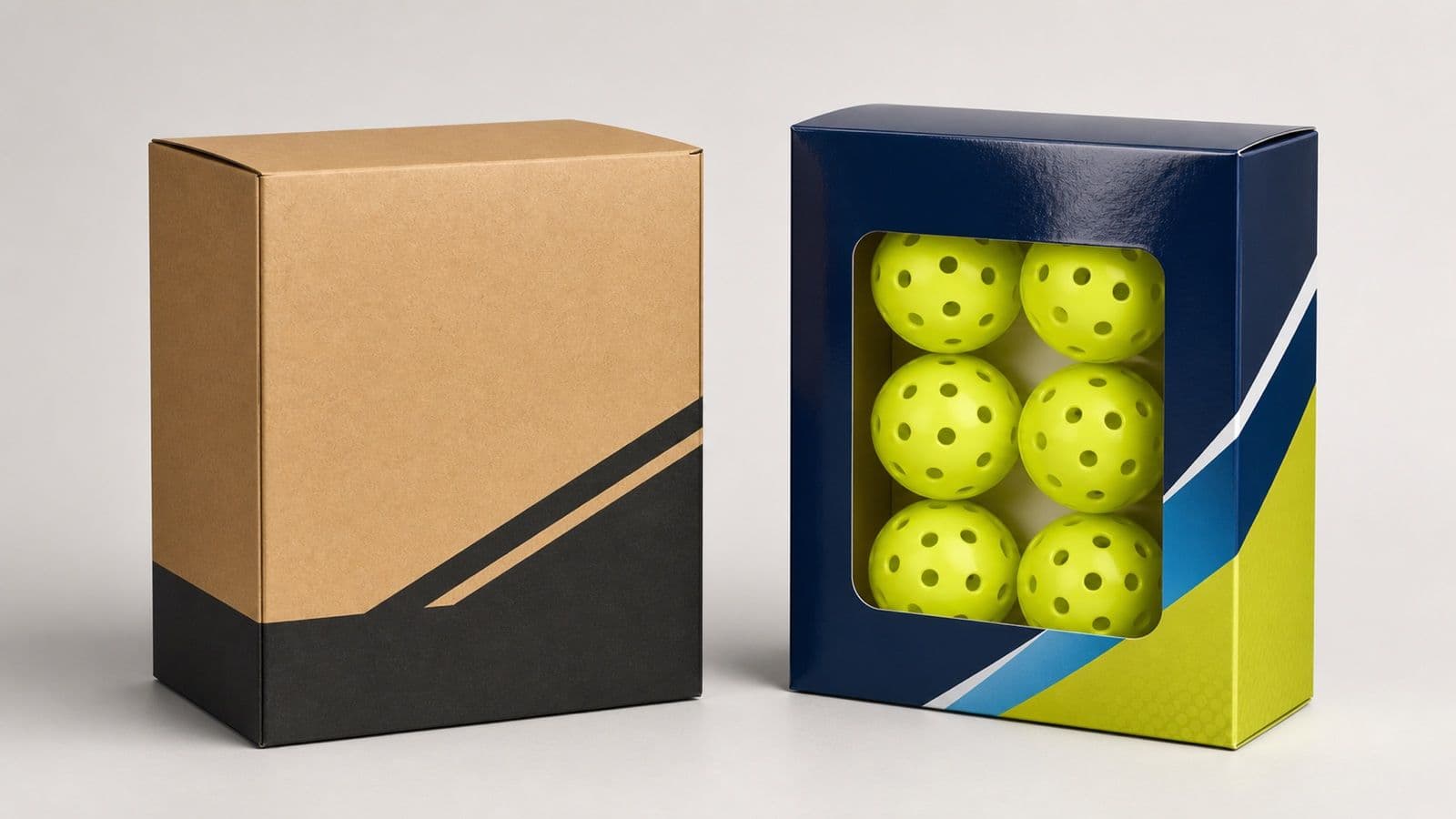
The artwork is with the printer, the proof looks right, and someone in the EU asks whether the box carries the names and addresses the law now requires. For a paddle or a tube of balls sold in the EU, five blocks of identification text have to be there — and material and sorting marks are a second rulebook, covered below.
The manufacturer's name or registered trade mark, with a postal address and an electronic address. A type, batch or serial number a consumer can read. The name and contact details of an economic operator established in the Union. The importer's own name and addresses, where an importer is in the chain. And instructions and safety information in the language of the country of sale. Regulation (EU) 2023/988 has applied since 13 December 2024, when it replaced the old general product safety directive.
Great Britain is where the assumption breaks: a pickleball paddle carries no UKCA mark and no CE mark, and what Great Britain asks for instead sits in one sub-paragraph of a 2005 statutory instrument.
This page is the artwork version: which lines land on which surface, under which article. Import routes and technical files sit in our EU and UK import compliance guide.
Key Takeaways
- The hierarchy is product first, packaging second. Article 9(6) allows the box only "where that is not possible", so a colour box is a fallback the artwork has to justify.
- No EU-established responsible person, no sale. Article 16(1), and the name goes on the product, packaging, parcel or an accompanying document under 16(3).
- Great Britain: name, address and batch, and nothing about email. General Product Safety Regulations 2005, regulation 7(4)(a).
- Northern Ireland follows the EU rulebook, with one relief: the responsible operator may be established in NI or the EU.
- A second EU rulebook sits on the same box. Regulation (EU) 2025/40 has applied since 12 August 2026: GPSR says who is identified, PPWR how the material is marked.
On this page
For the regime stated before it is applied to a pack, the European Commission’s own e-academy session sets out what the General Product Safety Regulation changed and which operator it makes responsible for what. The artwork-level detail starts below it.

The Five Blocks, And Which Pack Surface Carries Them
Five blocks are in play:
- the manufacturer's name and two addresses, postal and electronic (Art. 9(6));
- a type, batch or serial number "easily visible and legible for consumers" (Art. 9(5));
- the EU responsible person's name and contact details (Art. 16(1) and 16(3));
- the importer's own name and both addresses, without obscuring the manufacturer's (Art. 11(3));
- instructions and safety information in the language of the market (Art. 9(7)).
Who owes which one is worked through in our EU and UK import compliance guide. This page is about where they physically land.
Article 9(6) puts the block on the product, "where that is not possible" on its packaging, and only then in an accompanying document. That order is a hierarchy, not a menu. A paddle face or butt cap takes a laser or pad-print mark, so moving the block to the colour box is a choice the artwork has to justify. For Article 9(5) it is the weaker answer, because the clause reaches for the product first.
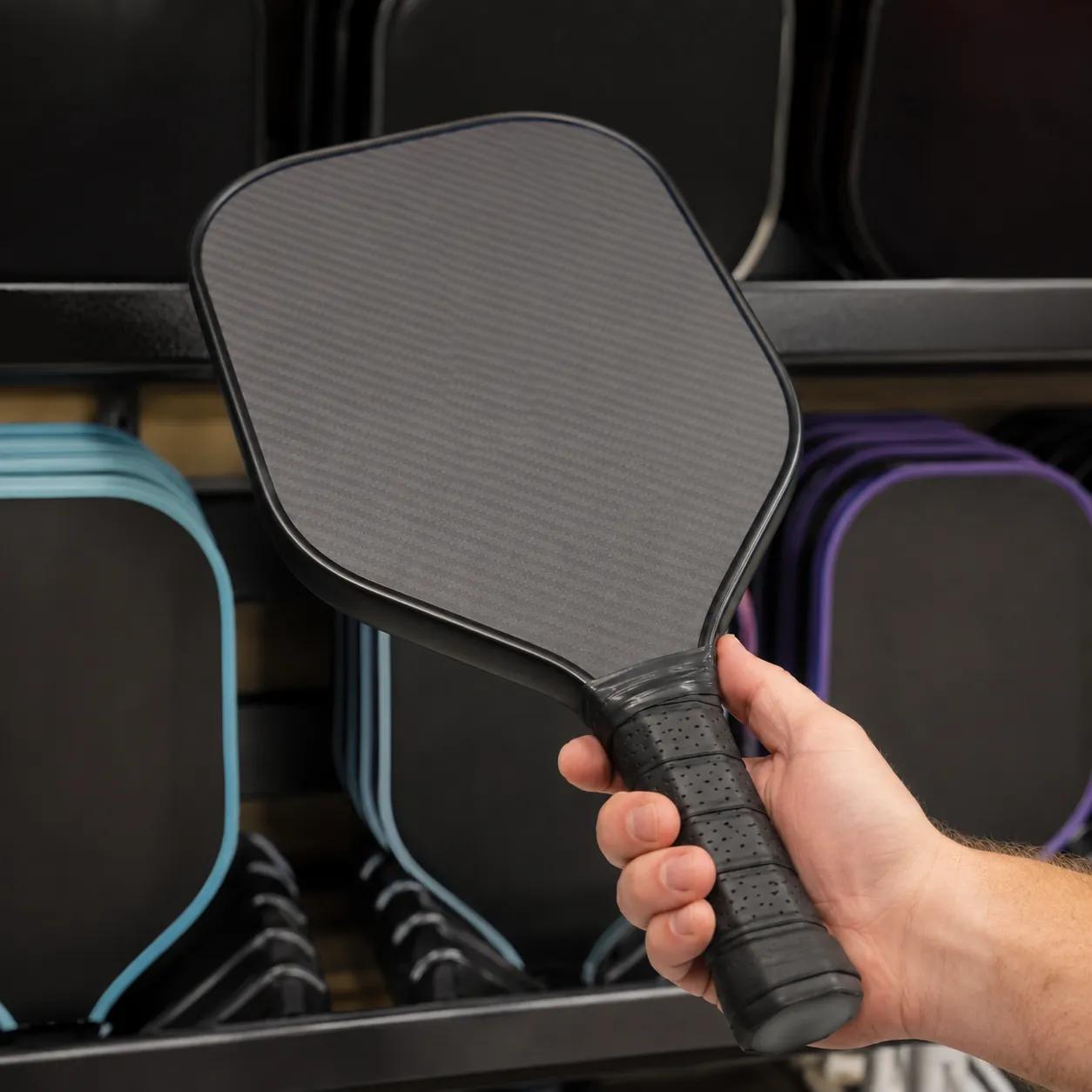
The master carton is a third thing again: the element has to be legible for consumers, and nobody opens a master carton in a shop. Articles 9(6) and 11(3) carry no such consumer-legibility wording, and Article 16(3) expressly allows "the parcel" — but an information block the buyer never sees is not a position worth defending. Print the blocks on the retail unit; the carton carries origin and shipping marks under a separate specification.
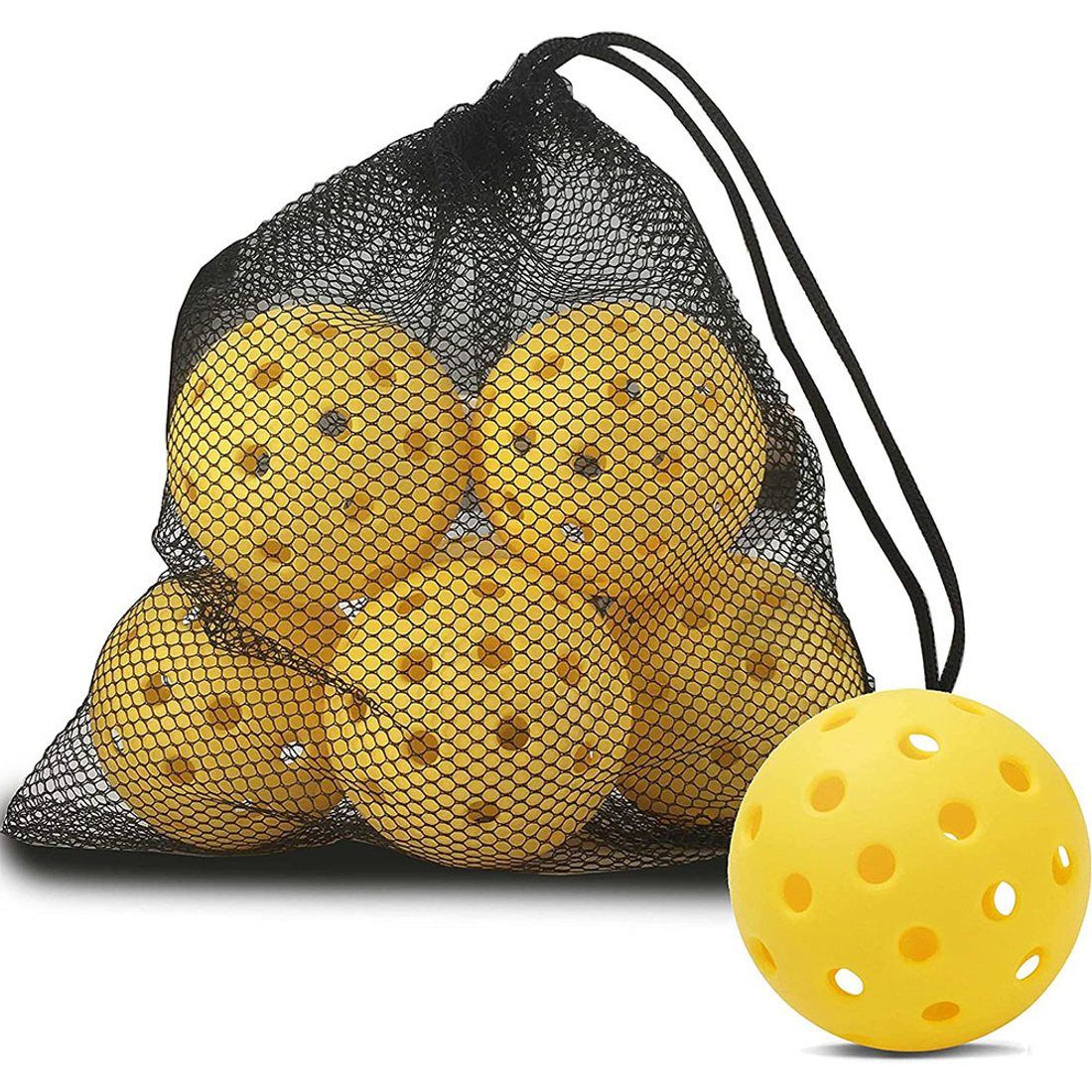
Ball packs are where the hierarchy bites. Article 9(5) allows the packaging or an accompanying document exactly where "the size or nature of the product does not allow" the mark on the product — and that escape is written for the product, not for the pack somebody chose. A ball takes a printed model and batch code. A 6-piece mesh bag has no printable panel worth the name, so the blocks move to a hang tag or an insert card shipping inside the bag; a 36-piece bucket, with a full curved label area, has no such excuse.
What the block actually reads (placeholders in italic; US brand, EU importer):
Manufacturer: Brand Owner Inc., 400 Example Ave, Austin TX 78701, USA — hello@brandowner.com
EU responsible person and importer: Example Sports BV, Keizersgracht 1, 1015 CJ Amsterdam, Netherlands — compliance@examplesports.eu
Model PB-16TC · Batch 2609-A
Where the EU importer is also the responsible person, that second line does double duty for Article 11(3) and Article 16(3).
One Artwork, Three Rulebooks: EU, Great Britain, Northern Ireland
Northern Ireland applies the GPSR, with one useful difference: the responsible operator may be established in NI or the EU, per the government's own Northern Ireland factsheet, updated 4 November 2025. A Belfast address answers Northern Ireland. It does not answer France.
Great Britain runs on the General Product Safety Regulations 2005. Regulation 7(4)(a) asks for "an indication by means of the product or its packaging" of the producer's name and address and the product reference or batch, qualified by "except where it is not reasonable to do so". No electronic address, no responsible person, no distributor verification duty.
The practical answer is one artwork printed to the EU column, the superset. The alternative is three SKUs of one paddle and a warehouse keeping them apart.
No UKCA or CE mark reaches a paddle in either market: conformity marking attaches to named sectors and sports equipment sits in none of them, as our import compliance guide works through with the gov.uk sector list and the toy-law boundary. One dated caveat on the Great Britain column: the Product Regulation and Metrology Act 2025 lets ministers replace the 2005 regulations. The DBT and OPSS consultation on a new framework closed on 23 June 2026, with no replacement instrument in force as at 2 September 2026.
| Artwork field | EU | Great Britain | Northern Ireland | Clause |
|---|---|---|---|---|
| Manufacturer name or registered trade mark | Required | Required (producer name) | Required | GPSR Art. 9(6); SI 2005/1803 reg. 7(4)(a) |
| Manufacturer postal address | Required | Required | Required | GPSR Art. 9(6); SI 2005/1803 reg. 7(4)(a) |
| Manufacturer electronic address | Required | Not required | Required | GPSR Art. 9(6) |
| Type, batch or serial number | Required, legible to the consumer | Product reference or batch | Required, legible to the consumer | GPSR Art. 9(5); SI 2005/1803 reg. 7(4)(a) |
| Responsible person block | Required, established in the Union | No equivalent requirement | Required, established in NI or the EU | GPSR Art. 16(1), 16(3) |
| Importer name and addresses | Required where an EU importer places it | No equivalent requirement | Required | GPSR Art. 11(3) |
| Instructions and safety information, local language | Required unless safe use needs none | Risk information, no language rule stated | Required unless safe use needs none | GPSR Art. 9(7); SI 2005/1803 reg. 7(1) |
| UKCA or CE conformity mark | Not applicable: GPSR Art. 2(1), no EU harmonisation law covers sports equipment | Not applicable: no sports-equipment sector | Not applicable: no sports-equipment sector | EU: GPSR Art. 2(1). GB/NI: gov.uk sector marking table (20 Aug 2026) |
| Artwork field group | EU (fields) | Great Britain (fields) | Northern Ireland (fields) |
|---|---|---|---|
| Manufacturer identity | 3 | 2 | 3 |
| Traceability element | 1 | 1 | 1 |
| Responsible person | 3 | 0 | 3 |
| Importer identity | 3 | 0 | 3 |
The other EU packaging rulebook
GPSR decides who is identified on the box. Regulation (EU) 2025/40, the packaging and packaging waste regulation, decides what the box is made of and how it is marked for sorting, and it reaches "all packaging, regardless of the material used". It has applied since 12 August 2026 — three weeks before this page was written.
Two dates land on artwork. The harmonised material-composition sorting label under Article 12(1) bites from 12 August 2028, or 24 months after the implementing acts, whichever is later. And by 12 February 2027, packaging inside an extended producer responsibility scheme may be identified "only by means of a corresponding symbol in a QR code or other standardised, open, digital-marking technology". A printed scheme symbol on a 2027 reprint is the wrong form. Article 12(8) bars misleading sorting marks today. None of this touches the identification blocks: it is a second checklist against the same box.
Six Checks Before The Artwork Goes To Print
Run these in order: steps one and two decide whose name is printed.
- Settle who the manufacturer is in law. If your brand goes on the paddle, Article 13(1) deems you the manufacturer and the Article 9 block carries your details.
- Name the EU responsible person and get the mandate in writing. An importer already in your chain is the cheapest answer; a representative needs the mandate signed before you print their address.
- Write both addresses for every operator named — postal and electronic.
- Decide where the batch code is applied — paddle, colour box or accompanying document — and specify it on the purchase order, not the artwork file.
- Count the languages, do not just check them. Article 9(7) leaves the determination to each member state, so the number comes from your market list: Belgium's official EU languages are Dutch, French and German; Finland's are Finnish and Swedish. Two markets, five languages, before Germany or Spain — plan the panel, or plan a leaflet.
- Mirror the pack in the listing. Article 19 requires it, and whoever approves artwork rarely writes the listing.
| Line to check | Who supplies it | Where it may sit | Clause |
|---|---|---|---|
| Manufacturer name and two addresses | Brand owner, if the brand is on the paddle | Product, else packaging, else document | Art. 9(6), 13(1) |
| Type, batch or serial number | Factory, from the production record | Product; packaging only if the product cannot carry it | Art. 9(5) |
| Responsible person name and contact details | Importer or mandated representative | Product, packaging, parcel or document | Art. 16(1), 16(3) |
| Importer name and two addresses | The EU importer of record | Product, else packaging, else document | Art. 11(3) |
| Instructions and safety information | Brand owner, translated per market | With the product, in the local language | Art. 9(7) |
| Listing fields on the online offer | Whoever runs the storefront | Product detail page, before purchase | Art. 19 |
For importers and private-label brands taking a paddle or ball programme into the EU: we print the retail packs — colour boxes, premium boxes, buckets. The fields above are a production input here, and the batch-code method is yours to specify on the PO. Published minimums: 50 pcs paddles, 1,000 pcs balls.
What A Printer Can Verify On A Proof
Three things a printer can verify on a proof: both identification blocks legible at print size, the batch-code method matching the purchase order, and nothing required falling under a fold or a varnish. Whether the responsible-person mandate is signed is not among them, and neither is the retention clock — 10 years for the technical documentation under Article 9(3), 6 years for supply-chain traceability under Article 15(5). Those stay with the brand.
Three Failures That Send Printed Boxes Back
The importer label pasted over the manufacturer block
A distributor receives stock without their own details, prints a sticker, and puts it on the tidiest blank area — usually the factory's name panel. Article 11(3) closes that door: an added label must not obscure information required by Union law on the manufacturer's label. The fix is a second relabelling pass.
The pack that cannot carry the block
A mesh bag with a woven brand label has nowhere for five blocks, and the usual reading is that it therefore escapes them. Article 9(5) allows the packaging or an accompanying document only where "the size or nature of the product does not allow" the element on the product itself — the escape is written for the product, not for the pack somebody chose. The duty moves to a hang tag or an insert card travelling inside the bag; it does not evaporate. Article 12(1) then puts the same verification duty on the distributor who receives the pallet.
The box is right and the listing is wrong
Article 19 requires the online offer to carry the same identification the pack does, plus an image and product identifier. Marketplaces police it at listing level, so a compliant pack can sit behind a suspended listing while the artwork approver believes the job is finished.
Conclusion
Before the proof is released, on the GPSR identification half: manufacturer named with both addresses, and a batch or serial element a consumer can read. An EU-established responsible person with contact details, and importer details added without obscuring anything. Safety text in the right languages, and the same identification on the listing. Packaging-material marking under Regulation (EU) 2025/40 is a separate check. Great Britain needs producer name, address and batch, no conformity mark; Northern Ireland follows the EU column, with an operator in NI or the EU.
Every clause above was read at its official source on 2 September 2026; the Great Britain column moves first. Our batch and lot coding guide covers the traceability element itself, the private-label packaging guide covers pack formats, and our OEM programme page lists what we print in-house.
Frequently Asked Questions
Can my UK company be the EU responsible person?
Not for the EU market: Article 16(1) requires an economic operator established in the Union. For the Northern Ireland market the government factsheet accepts an operator established in NI or the EU, the only place a UK address answers.
Does the batch number have to be on the paddle itself?
Article 9(5) puts it on the product, and allows the packaging or an accompanying document only where size or nature does not permit. A paddle face and butt cap both permit it, so packaging-only placement is a decision you should be able to justify.
What is exempt from the GPSR?
Article 2(2) sets a closed list: medicinal products, food, feed, living plants and animals and GMOs, animal by-products, plant protection products, ridden or travelled equipment operated by a service provider, certain aircraft, and antiques. Sports equipment appears on none of them, so a paddle or a ball is in scope.
Can the master carton carry the identification block?
Treat it as no. Article 9(5) requires the traceability element to be legible for consumers, and nobody opens a master carton in a shop. Articles 9(6) and 11(3) set no consumer-legibility test and Article 16(3) allows "the parcel", so the drafting is less one-sided there — but a block the buyer never sees is not a position worth defending. Print on the retail unit.
Can a QR code replace the printed block?
No. Article 21 lets operators "additionally" make the same information available digitally, "without prejudice to Article 9(5), (6) and (7), Article 11(3) and Article 16(3)". A digital label sits on top of the printed one, never instead of it.
Does Great Britain require an email address on the pack?
No. Regulation 7(4)(a) of the General Product Safety Regulations 2005 asks for the name and address of the producer plus the product reference or batch, subject to a reasonableness qualifier. The electronic-address duty is an EU one, under Article 9(6).
Want to source this quality for your brand?
Contact our factory directly on WhatsApp for an instant MOQ and pricing quote.