Rotomolded vs Injection-Molded Pickleball Balls: Which to Source
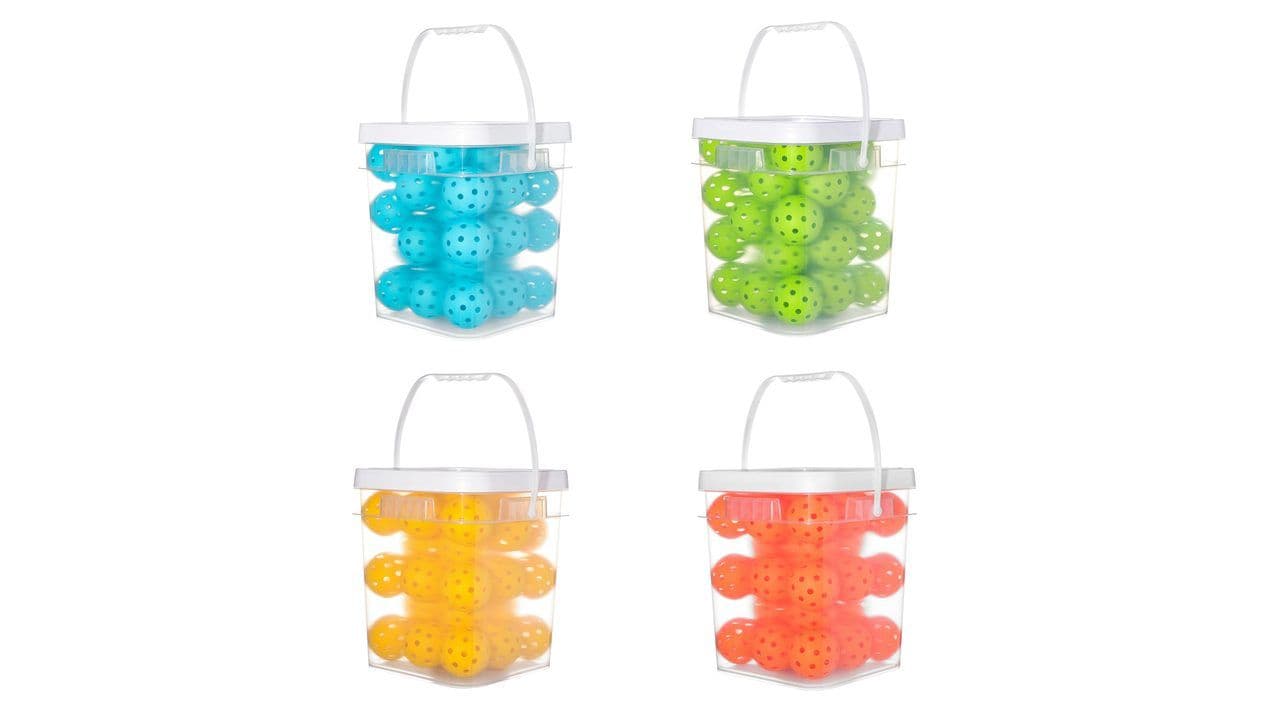
Anyone sourcing rotomolded pickleball balls in volume hits the same fork early: a seamless one-piece ball that costs more per unit, or a two-piece injection ball that quotes lower and ships faster. The price gap looks like the whole decision. It isn't. The seam, the wall thickness, and the court surface your buyers play on decide how many of those balls crack inside 60 days — and cracked balls come back as returns, not repeat orders.
Here is the part most quote sheets hide: the two processes don't just differ in cost, they produce a different ball. One flies straighter and survives rough asphalt; the other feels softer, comes in more colors, and is cheaper to scale. Pick the wrong one for your market and you either overpay for durability a beginner club never needed, or you save 20% and eat a return wave. This breaks down both processes against the specs that actually move, so you can match the ball to the buyer instead of to the cheapest line on the quote.
Key Takeaways
- Rotomolded balls are one piece with uniform walls — they fly straighter and resist cracking on rough outdoor courts. Injection balls have a visible seam that becomes the first crack point.
- Injection molding runs cheaper per unit and scales faster, with more color options and an indoor 26-hole version rotomolding doesn't typically offer.
- "More durable" is not settled by process alone: the US Open's official ball (Franklin X-40) is injection molded, while many tournament directors prefer rotomolded for flight consistency.
- USA Pickleball spec for an approved outdoor ball: 2.874–2.972 in diameter and 24.3–26.2 g, with roughly 40 holes.
- Rotomolded suits premium, tournament, and rough-court markets. Injection suits budget bulk, rec clubs, indoor 26-hole SKUs, and multi-color retail packs.
- Before you compare unit price, compare breakage rate — a ball that fails in three weeks costs more than one priced 15% higher that lasts a season.
How each ball is actually made
The two balls start from the same plastic — high-rebound PE — and end up completely different because of how the sphere forms. Get this right and every spec difference downstream makes sense.
Rotomolding: one piece, no seam
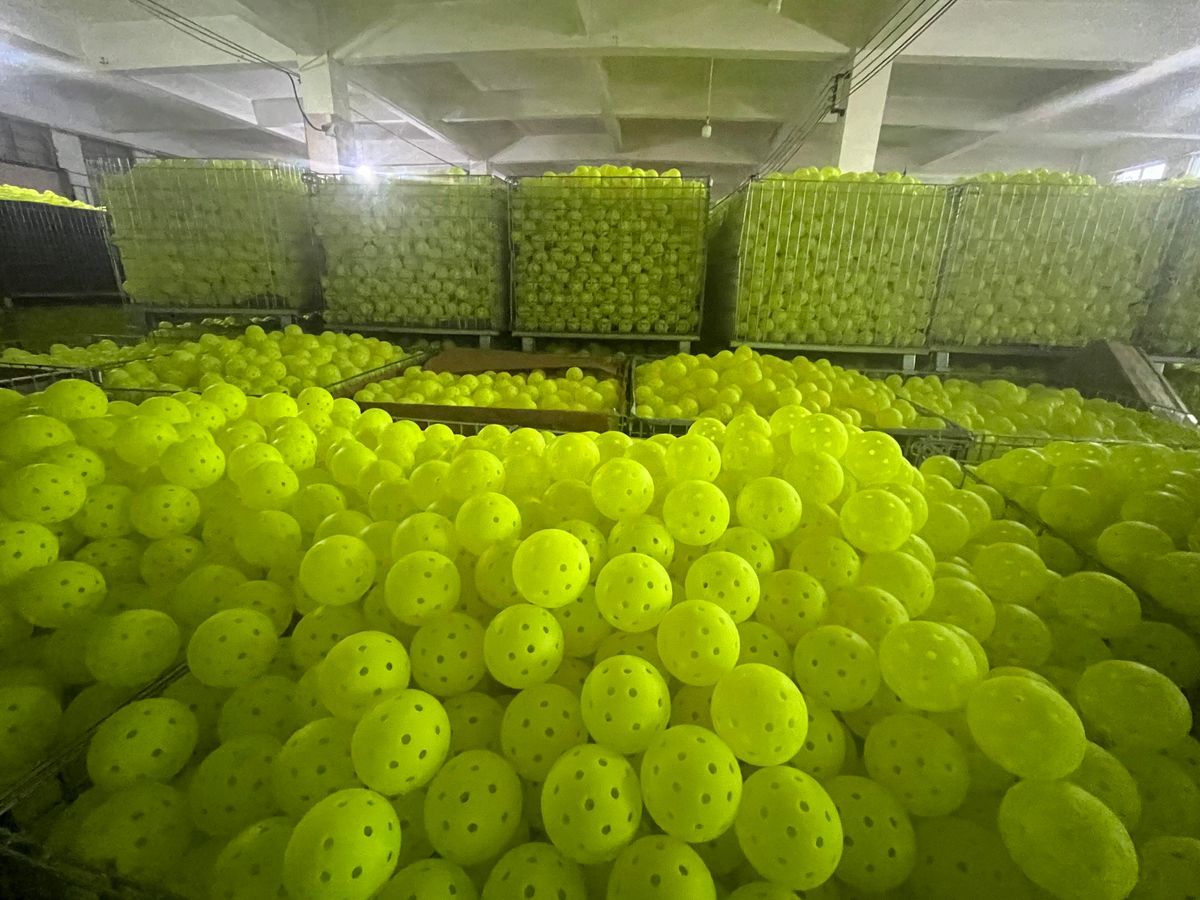
In rotational molding, PE powder goes into a heated mold that turns on two axes. The plastic melts and coats the inside wall evenly as the mold rotates, then cools into a hollow one-piece sphere. The holes are precision-drilled after the ball is solid. There is no join line anywhere on the surface, and the wall thickness stays close to uniform all the way around. That uniformity is the whole point: weight sits evenly, so the ball tracks straight and bounces predictably.
Injection molding: two shells, one seam
Injection molding shoots molten plastic into two half-shell cavities, each already carrying half the holes, then fuses the halves together. It's fast and cheap to repeat once the tooling exists, which is why injection balls scale to large quantities easily and come in more colors. The trade-off is built into the method: that fused equator is a seam, and a seam is a structural line. Under hard play and temperature swings, cracks tend to start there first.
The seam is not a cosmetic detail. On an injection ball it is the single most likely place a crack begins, which is why seam quality should be the first thing you inspect in a sample.
Rotomolded vs injection: the spec comparison
This table is the decision spine. Read it as a sourcing matrix, not a popularity contest — each row maps to a real cost or a real complaint your buyers will raise.
| Factor | Rotomolded | Injection molded |
|---|---|---|
| Construction | Seamless one piece | Two shells fused at a seam |
| Wall thickness | Uniform | Can vary shell to shell |
| Flight & bounce | Straighter, more consistent | Slight wobble possible if shells imbalance |
| First failure point | General cracking after heavy use | The seam, usually first |
| Hole / use options | 40-hole outdoor | 40-hole outdoor or 26-hole indoor |
| Color range | Fewer (yellow, green, orange, red) | Wider, including pink, blue, purple |
| Unit cost | Higher; slower to produce | Lower; fast to scale |
| Best-fit buyer | Premium, tournament, rough-court markets | Budget bulk, rec clubs, indoor, multi-color packs |
One row matters more than the rest for a distributor: first failure point. A seam crack is a return; a return is a refund plus a shipping write-off plus a buyer who doesn't reorder. Price the ball on that, not on the FOB cell alone — the same logic that governs defect rates in paddle QC applies to balls.
Which one actually lasts longer outdoors?
This is where the internet gets sloppy. Some guides call rotomolded "more durable," others say injection "lasts longer." Both are half right, and the confusion costs buyers money when they take one blog's verdict as gospel.
The honest answer: durability depends on what fails first in your conditions. On rough asphalt and concrete, the uniform wall of a rotomolded ball spreads impact and resists splitting — it tends to crack later and more gracefully. A cheap injection ball with an uneven seam can split there early. But a well-made injection ball is no pushover: the official ball of the US Open, the Franklin X-40, is injection molded and survives elite tournament play. So "injection" alone doesn't mean fragile — poor seam welding does.
Cold weather is the real separator. PE stiffens as temperature drops, and a brittle ball plus a seam plus a hard winter court is the classic crack-on-first-hit complaint. If your buyers play outdoors in cold climates, the seamless construction earns its premium. In warm, year-round markets, a quality injection ball closes much of the gap. Match the ball to the climate, not to a forum opinion.
Indoor vs outdoor, 26 vs 40 holes
Process choice and hole count are linked, and getting the SKU mix wrong leaves you holding the wrong inventory. Here's how the two map to real court use.
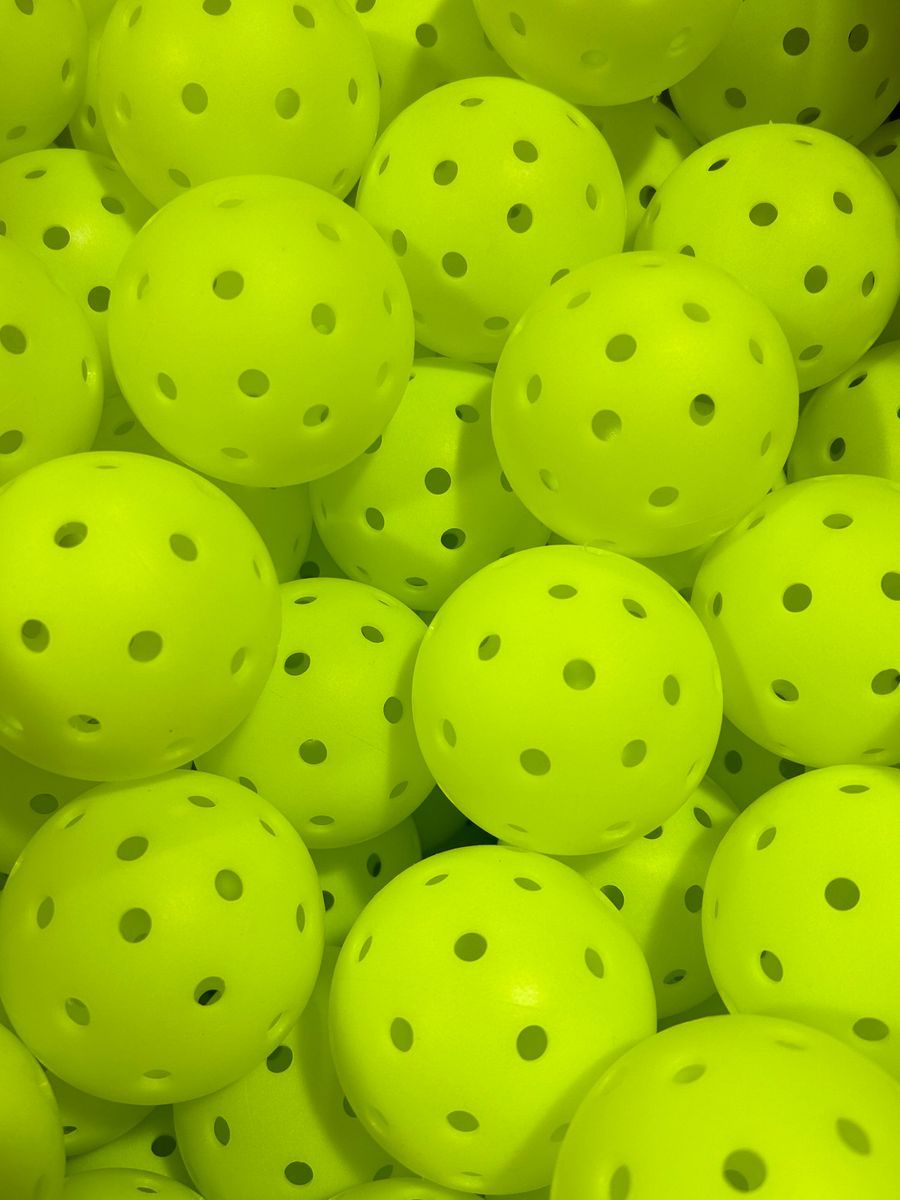
- 40-hole outdoor: The standard for outdoor play and the only configuration rotomolding typically runs. The smaller, denser hole pattern cuts wind drift and pairs with a harder plastic for asphalt. This is your core outdoor SKU in either process.
- 26-hole indoor: Larger holes, softer feel, lighter touch for gym floors — almost always injection molded. If you serve indoor clubs or schools, this is a separate SKU you can only source on the injection side.
- Glow / night versions: Luminous outdoor balls are a fast-moving retail add-on for evening community play; they run on both processes but sell as a novelty premium.
Practical takeaway for a catalog: if you want one process to cover both indoor and outdoor demand, injection gives you the 26-hole and 40-hole range under one supplier. If your market is outdoor-only and quality-sensitive, lead with rotomolded 40-hole and skip the indoor line.
What the choice does to your cost and margin
The unit-price gap is real but it's the wrong number to anchor on. Run the math on landed cost per playable ball, not cost per ball shipped.
A rotomolded ball costs more to make — rotational molding is slower and more labor-intensive, so the per-unit quote sits above injection. Injection wins the spreadsheet on day one. The reversal happens in the field: if an injection batch returns at a higher crack rate because of weak seams, every cracked ball carries its share of freight, the refund, and the goodwill hit. A ball that costs 15% more but fails far less often can be the cheaper ball over a season.
Two levers move the real number more than process choice. First, packaging and freight: balls usually ship in buckets or cases, and a cracked lid or a crushed carton damages stock before it sells. Second, the shipping mode — the sea-vs-air decision swings landed cost more than the rotomolded-versus-injection premium on most ball orders. Decide durability for your market first, then optimize freight around it.
Is rotomolded or injection right for your business?
There is no universally "better" ball — there is the right ball for your buyer and your climate. Use this to place your order on the correct side of the line.
| Source rotomolded if… | Source injection if… |
|---|---|
| You sell to tournament organizers or serious players | You sell budget bulk to rec clubs or schools |
| Your market plays on rough or cold outdoor courts | You need indoor 26-hole SKUs |
| Flight consistency is your brand promise | You want wide color ranges for retail packs |
| A return wave would hurt more than a higher unit cost | Lowest landed cost is the buying criterion |
What we check on every ball batch before it ships
Process is only half the quality story; the other half is what gets inspected before the buckets are sealed. Because we run both rotomolding and injection lines in-house, every outdoor ball batch goes through the same checks regardless of method:
- Weight tolerance: Sampled against the USA Pickleball window of 24.3–26.2 g; balls drifting outside band are pulled, because weight scatter shows up as inconsistent bounce on court.
- Diameter and roundness: Checked to the 2.874–2.972 in (about 7.4 cm) range; out-of-round balls roll and bounce off-line and trigger complaints.
- Seam weld (injection): The fused equator is pressure- and flex-checked, since a weak weld is the number-one crack origin on a two-piece ball.
- Wall and hole consistency: Hole drilling and wall thickness are spot-checked so flight stays straight; ragged hole edges get rejected.
- Bounce test: A sample drop test confirms rebound is consistent across the batch before sign-off.
Ask any ball supplier for these checkpoints in writing. If they can't describe how they verify weight band, roundness, and seam integrity on a sample, the quote is just a number with no quality behind it.
Conclusion
Rotomolded and injection balls solve different problems. Rotomolded gives you one-piece construction, straighter flight, and an edge on rough or cold outdoor courts, at a higher unit cost. Injection gives you lower cost, faster scale, wider colors, and the indoor 26-hole option, with the seam as its weak point. The right pick is the one that matches your buyers' courts and your tolerance for returns — and the breakage rate, not the FOB price, is the number that decides which is actually cheaper.
If you're weighing the two for a specific market, start by sampling both against the checkpoints above and comparing crack rates after real play, not just the quote sheet. Our team runs both processes and can help you match the ball — and the SKU mix — to where your customers actually play.
Frequently Asked Questions
Are rotomolded pickleballs better than injection molded?
For outdoor and tournament play, rotomolded usually wins on flight consistency and crack resistance thanks to its one-piece wall. Injection balls are cheaper, come in more colors, and offer indoor 26-hole versions, so "better" depends on your market.
Why do injection molded pickleballs crack at the seam?
Injection balls are two shells fused at a seam, and that join is the weakest line on the surface. Hard play and temperature swings concentrate stress there, so a poorly welded seam tends to split first.
What are the USA Pickleball specs for an approved outdoor ball?
An approved ball typically measures 2.874–2.972 inches in diameter and weighs 24.3–26.2 grams, with around 40 holes. Confirm current requirements on the USA Pickleball equipment list, as standards are periodically updated.
Is 40-hole or 26-hole right for my market?
Use 40-hole balls for outdoor play; the dense pattern resists wind on asphalt. Use 26-hole balls for indoor gym floors, where a softer, slower ball plays better. Many catalogs stock both as separate SKUs.
Which is cheaper to source in bulk?
Injection molding has the lower unit cost and scales faster, so it usually wins on the quote. Rotomolded costs more per ball but can be cheaper over a season if it returns at a lower crack rate. Compare breakage, not just FOB price.
Want to source this quality for your brand?
Contact our factory directly on WhatsApp for an instant MOQ and pricing quote.