What Pickleballs Are Made Of: A Sourcing Guide to Ball Plastics and Resins
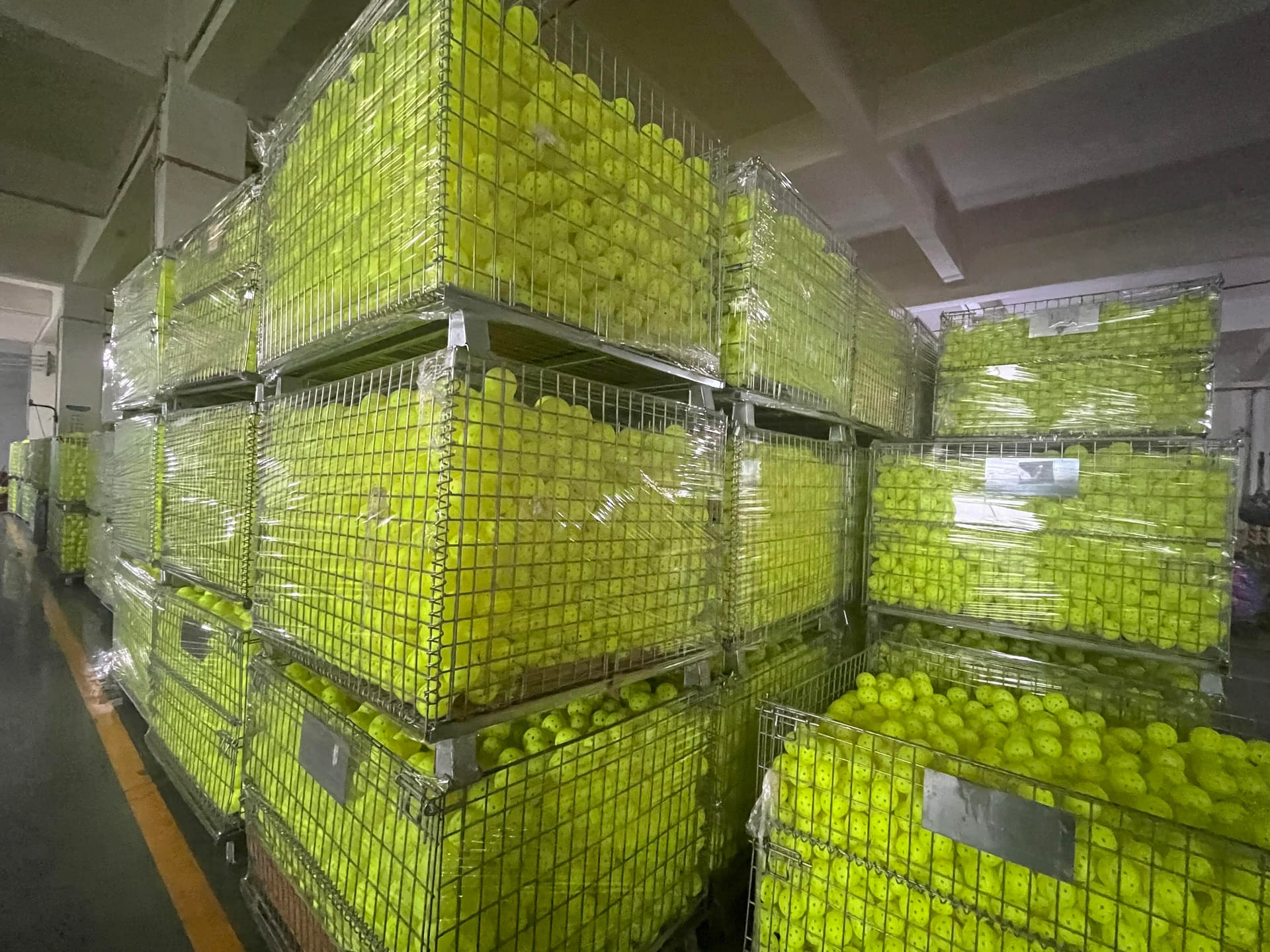
Ask what a pickleball is made of and the honest answer is a short word with a long footnote: plastic. Nearly every ball on a court is a molded polyethylene shell, and the interesting part is everything the word "plastic" hides — which grade of polyethylene, how hard it was compounded, what color and UV additives went into the melt, and whether the resin was virgin or reground scrap. Those choices are invisible on a finished ball and they decide whether it survives a season or splits in week two.
Here is the detail most buyer guides skip: USA Pickleball does not regulate the material at all. Its equipment standard sets performance windows — a hardness of 40 to 50 on the Durometer D scale, a bounce of 30 to 34 inches, a weight between 0.78 and 0.935 ounces — and leaves the recipe to the factory. Two balls can both read "USAPA approved, 40-hole outdoor" and be built from different resins that age nothing alike. This guide is about that recipe: the plastics behind indoor and outdoor balls, the additives that never reach the spec sheet, and how to write a material spec so a bulk order behaves the way the sample did. The molding process — rotational versus injection — we cover separately in how pickleballs are made.

Key Takeaways
- Almost all pickleballs are polyethylene (PE). Outdoor balls use a harder, higher-density grade; indoor balls use a softer, more flexible one. A minority use polypropylene, and the cheapest use regrind or PVC blends.
- USA Pickleball specifies performance, not material: hardness 40–50 Durometer D, bounce 30–34 inches, weight 0.78–0.935 ounces. The plastic recipe is the factory's call, which is why "approved" balls vary so much.
- Hardness is a plastic decision. A harder resin plays faster and survives abrasion but turns brittle in cold; a softer resin lasts longer in cold but goes mushy in heat.
- The additives you never see — color masterbatch, UV stabilizer, and the ratio of virgin to reground resin — drive fade, cold-crack resistance, and batch-to-batch consistency.
- Cheap balls fail on material: thin walls, high regrind content, or a resin that is too hard for the climate. The failure shows up as cracking and going out-of-round, not as a bad bounce on day one.
- Because the standard is silent on material, a private-label buyer has to write the resin spec themselves — grade, durometer target, UV package, and virgin content — or accept whatever the factory runs that week.
The plastic behind almost every ball
The base polymer in the overwhelming majority of pickleballs is polyethylene. It is cheap, food-safe in its virgin form, easy to mold, and it takes bright color well — the same reasons it fills the plastics world from milk jugs to kayaks. Within polyethylene there is a real spread of grades, and the grade is where a ball's character is set before a single hole is drilled.
High-density polyethylene (HDPE) is the stiff end of the family: rigid, abrasion-resistant, and the reason a good outdoor ball can bounce off rough concrete without deforming. Rigid HDPE on its own actually measures around 60 to 80 on the Shore D scale, well above the ball window, so outdoor balls use a softer, rotomolding-grade polyethylene compound tuned down into the 40-to-50 range rather than the hardest HDPE off the shelf. Low-density and linear-low-density grades (LDPE and LLDPE) are more flexible and forgiving, which suits indoor balls and the softer feel players want on a gym floor. A ball maker is not choosing one polymer versus another so much as dialing a point along this stiffness range and then compounding it to hit the durometer window. You can read the raw-material side of that trade-off in the polyethylene grades used across rotational molding, and the general property profile of high-density polyethylene itself.
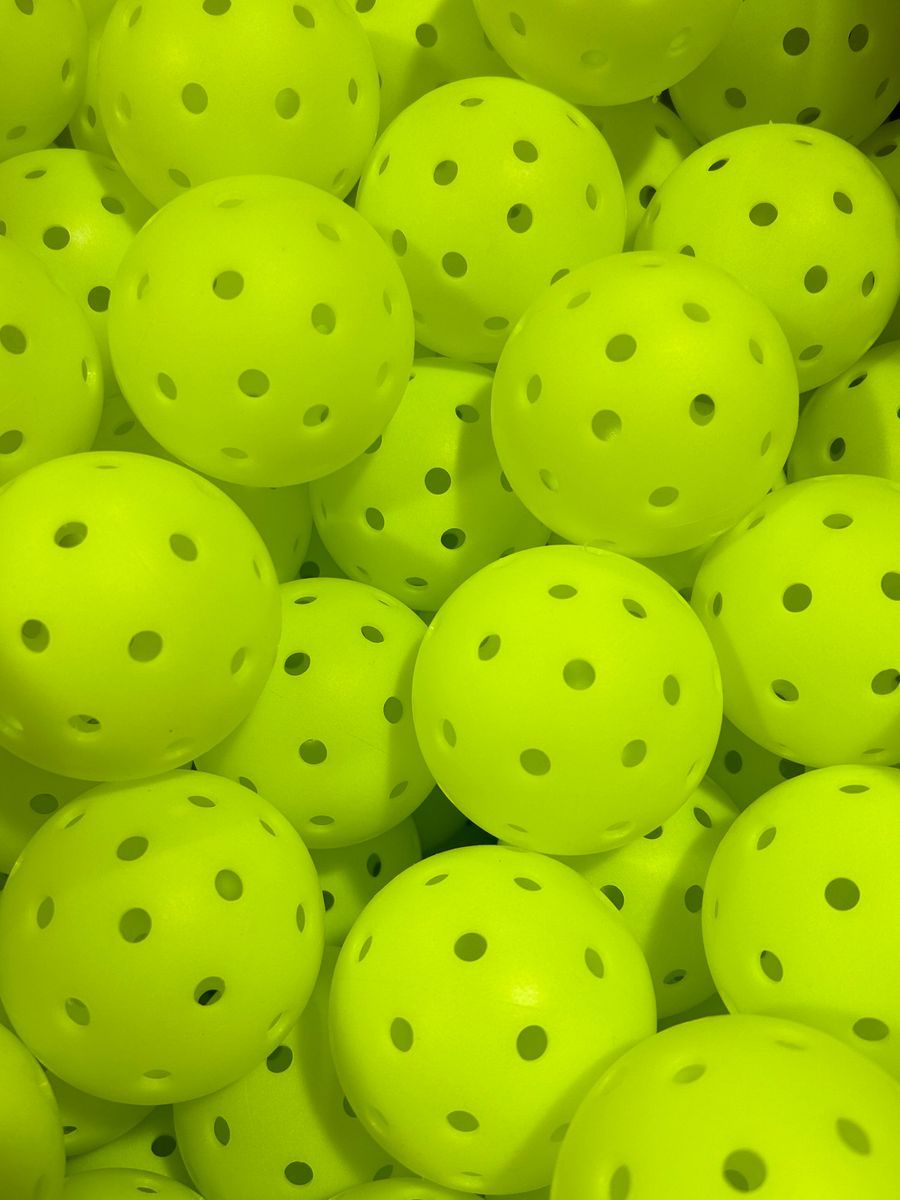
Two other materials show up. A share of outdoor balls are made from polypropylene (PP), which is stiffer and a little more heat-tolerant than HDPE; you will see sources describe outdoor balls as "PP" and others as "HDPE," and both are correct depending on the maker. At the bottom of the market are balls blended with PVC or, more commonly, heavy regrind — reground scrap plastic mixed back into the melt. Regrind is legal and normal in small ratios, but a ball that is mostly regrind loses the consistency that makes it round and durable. The table below is the practical map buyers need.
| Material | Character | Typical use | Sourcing flag |
|---|---|---|---|
| HDPE (high-density PE) | Stiff, abrasion-resistant, fast | Outdoor tournament and practice balls | Can turn brittle in cold if over-hardened |
| LDPE / LLDPE (low-density PE) | Flexible, softer feel, quieter | Indoor 26-hole balls | Too soft a blend dents and loses bounce |
| Polypropylene (PP) | Stiff, more heat-tolerant than PE | Some outdoor balls | Confirm which polymer you are actually buying |
| Regrind / PVC blend | Inconsistent, variable density | Bargain and no-name bulk balls | The usual cause of early cracking and out-of-round |
Where hardness comes from: outdoor vs indoor
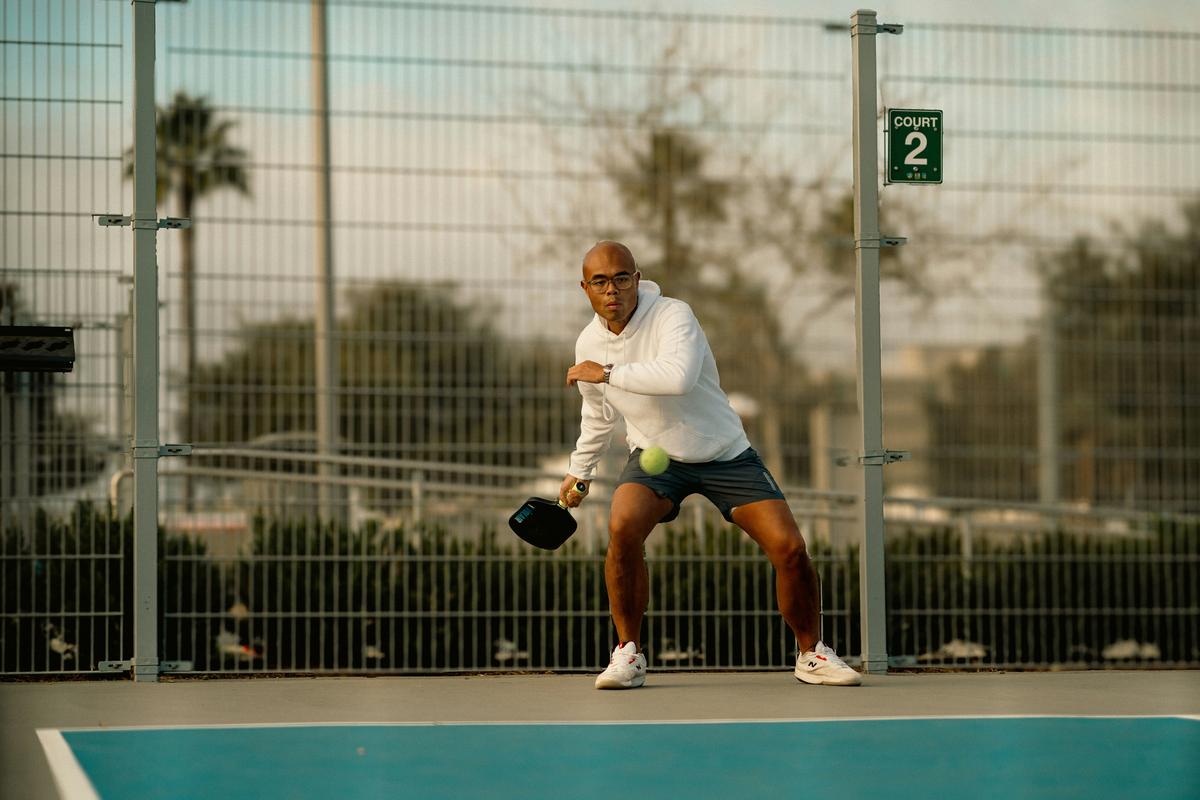
The single biggest difference between an indoor and an outdoor ball is not the number of holes — it is how hard the plastic is. Outdoor balls are compounded harder because they play against wind and abrasive surfaces: a stiff shell keeps its shape off rough asphalt and cuts through a breeze instead of ballooning in it. Indoor balls run softer because a smooth gym floor and still air let a more flexible ball behave, and the extra give buys control, a quieter impact, and a fraction more dwell time on the paddle face for spin.
The USA Pickleball window pins hardness between 40 and 50 on the Durometer D scale, measured at a controlled 70 degrees Fahrenheit (give or take 5), the same conditioning temperature as the bounce test — figures worth quoting exactly from the USA Pickleball equipment standards, because that controlled temperature is the catch. Plastic gets harder and more brittle as it cools. A ball measured at 48 Durometer D in a lab at 77 degrees is a different, more fragile object at 40 degrees on a February morning, which is exactly why balls that feel bulletproof in summer shatter in cold-weather play. The hardness on the spec sheet is a single-temperature snapshot of a property that moves with the weather.
| Attribute | Outdoor ball | Indoor ball |
|---|---|---|
| Plastic tendency | Harder, higher-density PE (or PP) | Softer, lower-density PE |
| Feel and sound | Firm, loud "click," fast | Softer, quieter, more control |
| Holes | 40 smaller holes (wind) | 26 larger holes |
| Common failure | Cracking, especially in cold | Denting, going soft |
This is why there is no single "best" hardness. A ball optimized for July tournaments in Arizona and a ball optimized for October league nights in Minnesota want different resins, and a buyer serving both climates is really specifying two products. The hole-count and construction side of the same split is covered in indoor versus outdoor pickleball balls.
Why the same plastic ages differently
Identical resin can produce a durable ball or a fragile one depending on how it is molded, because the process controls where the plastic ends up. Injection-molded balls are made as two half-shells and welded together at the equator, which leaves a seam — and that seam is the weak line most cheap outdoor balls split along under repeated impact. Rotationally molded balls are formed as a single continuous shell with no seam at all, so there is no built-in fault line to fail first. The wall thickness is also more even when the melt is distributed around the whole mold rather than injected into two halves.
The practical upshot for a material buyer: a mediocre resin in a seamless one-piece ball often outlasts a better resin in a seamed two-piece ball, because construction removes the failure point before the plastic is even tested. We run our outdoor balls one-piece in-house for exactly this reason, and the full trade-off between the two methods sits in rotomolded versus injection-molded balls.
The additives that never show on the spec sheet
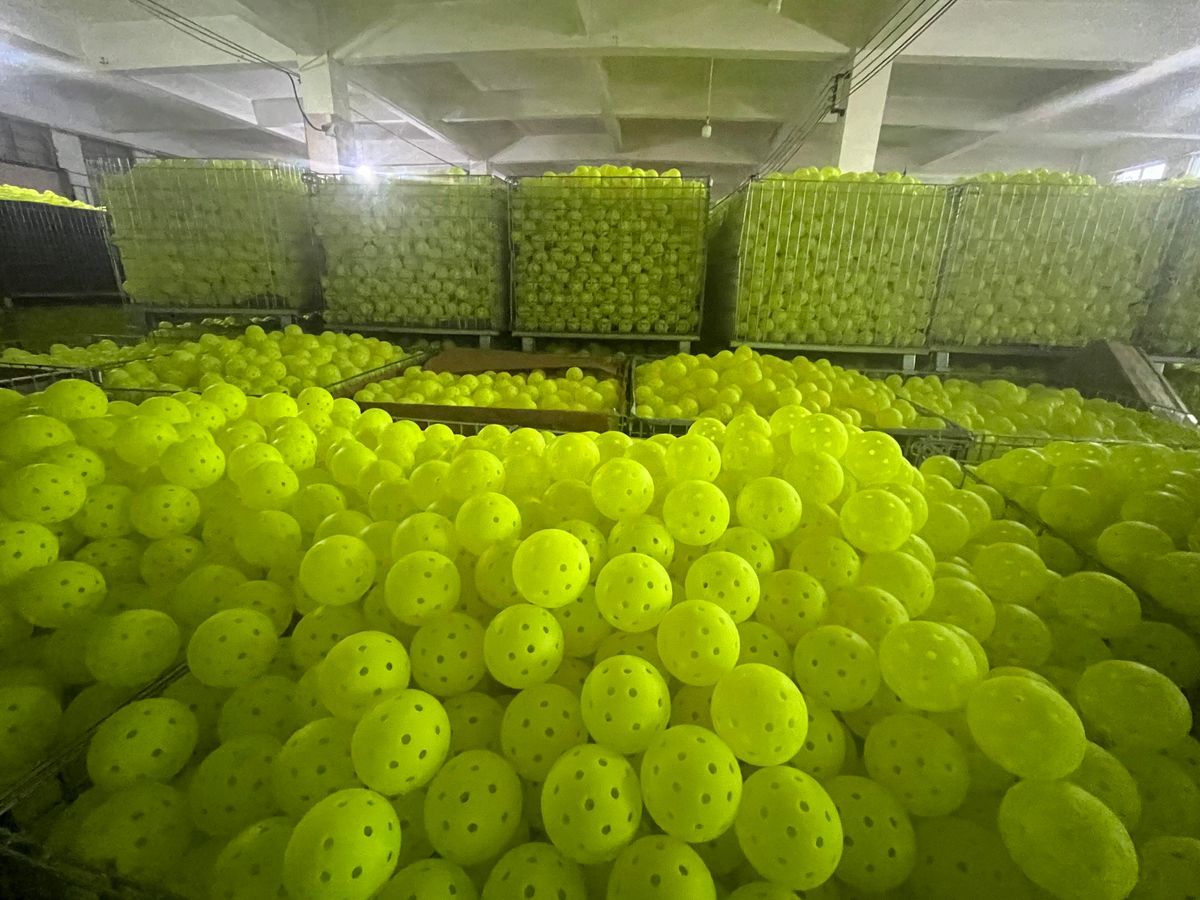
Base resin is only part of the recipe. Three additives decide how a ball looks, lasts, and holds up in the sun, and none of them appear on a typical product listing.
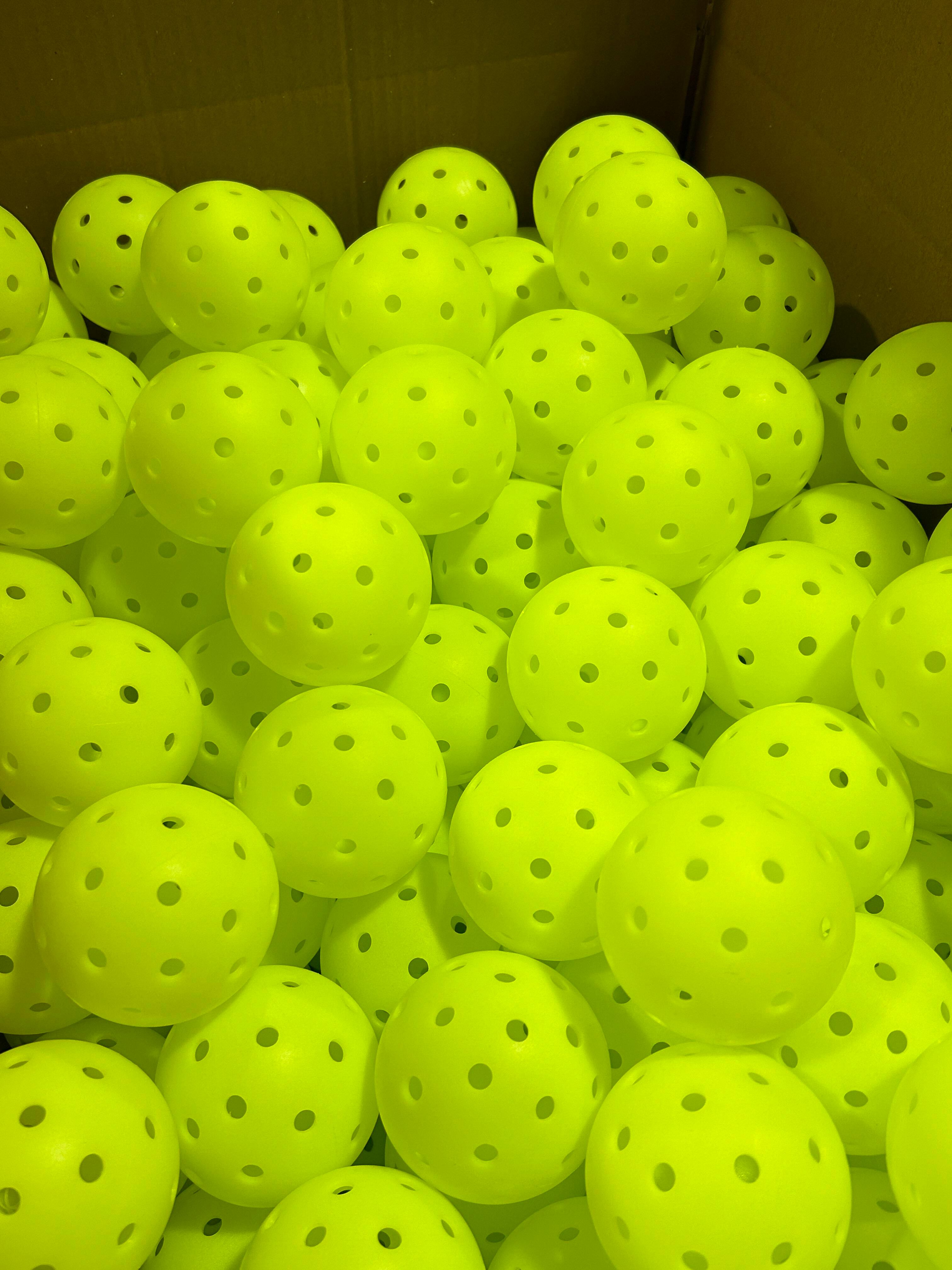
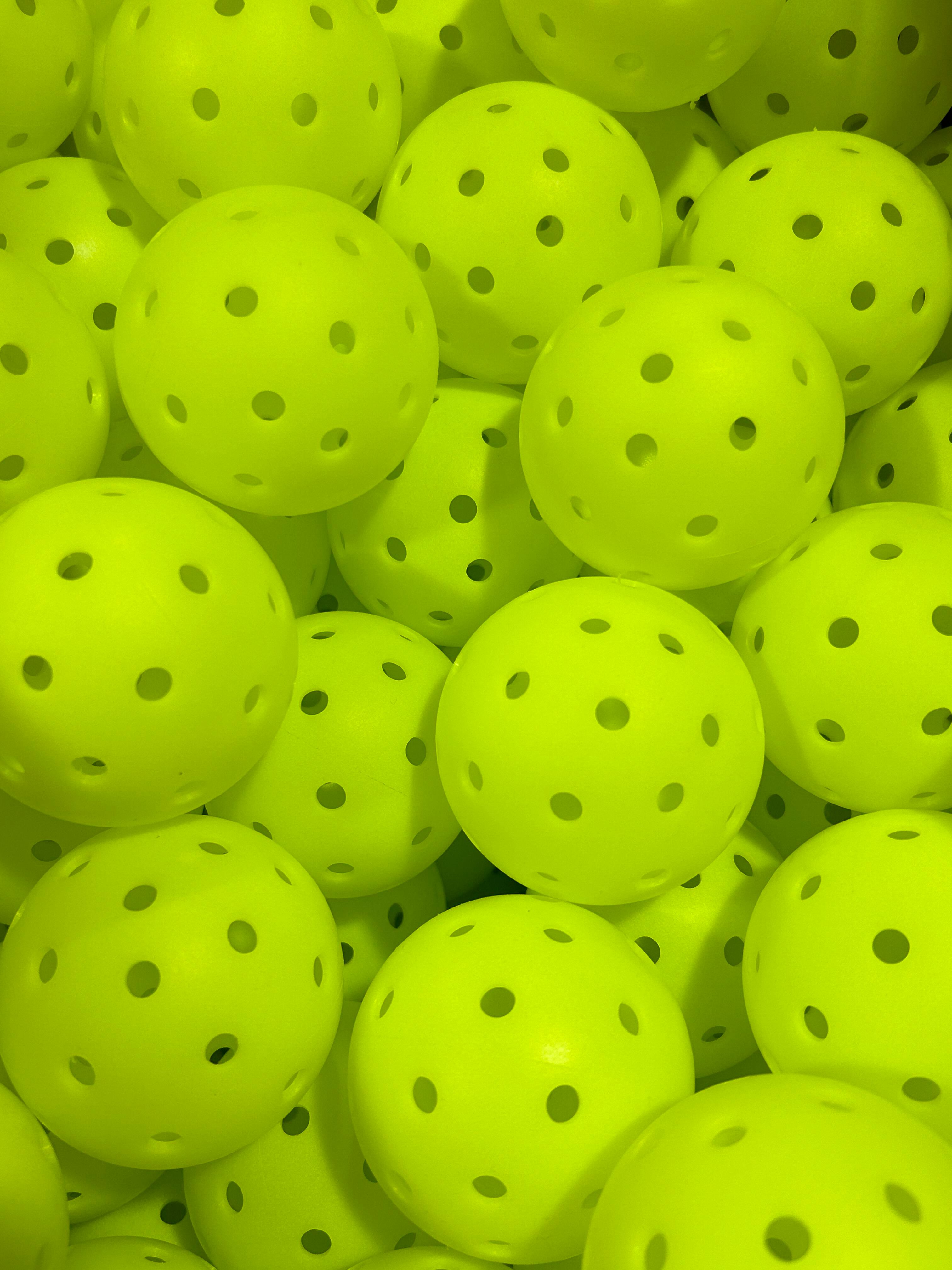
Color masterbatch. The vivid optic yellow and green of most balls comes from a pigment concentrate blended into the melt, not paint on the surface, so the color runs all the way through the wall and cannot scuff off. The pigment choice affects how visible the ball stays against sky, court, and low light — a topic worth its own read in pickleball ball colors and visibility. For food-contact-grade safety and markets governed by rules like CPSIA, the colorant and base resin should be certified non-toxic; a serious factory can produce that documentation on request.
UV stabilizer. Outdoor balls live in sunlight, and unprotected polyethylene chalks, fades, and embrittles under UV over time. A UV stabilizer package slows that down. It is cheap to add and easy to leave out, which is one reason bargain outdoor balls fade and crack a season before better ones do.
Virgin-to-regrind ratio. This is the quiet one. Every time reground scrap goes back into the melt, the polymer chains shorten a little and the batch drifts. A disciplined factory caps regrind at a low, consistent percentage; a cost-cutting one lets it climb whenever scrap piles up, which is why two cartons of the "same" cheap ball can behave differently. If you are running a private-label program, the resin grade, UV package, and virgin-content floor are things you specify — our OEM and private-label ball program is built around writing that material spec down rather than leaving it to whatever runs that week. Leave them unspecified and you have delegated your product's durability to the factory's purchasing department.
What the plastic choice means for durability
Every common way a ball dies traces back to a material or process decision. Cracking comes from a resin too hard for the temperature, thin or uneven walls, or a molding seam. Going out-of-round comes from uneven wall thickness and inconsistent cooling — the shell relaxes unevenly and the ball wobbles. Going soft comes from a low-density blend or too much regrind, so the ball loses its bounce and starts to dent. None of these show up on the first hit; they surface in weeks two through six, which is exactly when a bulk buyer has already committed to the pallet.
A worked case makes it concrete. A club in a cold northern market orders a hard, fast tournament-grade outdoor ball because the summer reviews are glowing. Play moves into October, morning temperatures drop into the 40s, and the same balls — unchanged — begin cracking within a few sessions because the stiff resin has crossed into brittle territory. The fix was a material spec, not a brand: a slightly lower durometer target within the legal 40-to-50 window, and a resin chosen for cold toughness. The buyer who asks "what durometer, and how does it behave cold?" avoids the whole episode; the buyer who asks only "is it approved?" does not. The full inspection side of this — how bounce, roundness, seam, and weight get measured before a batch ships — is in our wholesale ball QC guide.
What's changing: greener and next-gen materials
Polyethylene will dominate for years, but the material edge of the sport is moving, and buyers who plan two seasons out should track it. Three directions are real today:
- Bio-based and compostable balls. Products built from wheat-straw and rice-husk polymer blends aim to break down in roughly 100 days, answering the pile of cracked plastic every club throws away. The trade-off today is durability and, usually, the lack of tournament approval.
- Recycled-content balls. Some makers now market balls that last several times longer than a standard ball or fold recycled polymer back in responsibly — the sustainability story here is about lifespan as much as feedstock, since a ball that lasts longer is thrown away less often.
- 3D-printed elastomer lattices. The most experimental direction replaces a molded shell with a printed thermoplastic-elastomer lattice, pitched as far quieter and highly durable. It is early, priced high, and not a bulk-sourcing option yet — but it is where the quiet-ball demand may push the category.
The honest read for a distributor or club buyer: none of these has displaced the standard polyethylene tournament ball on price, durability, and approval all at once. They are worth sampling and worth watching, not worth betting a season's inventory on yet.
How to spec the plastic when you source
Because USA Pickleball leaves the material open, the buyer who writes a real material spec gets a consistent ball and the buyer who does not gets a lottery. This is the checklist we work through with a private-label order, and it is the same set of questions worth putting to any supplier.
- Name the polymer and grade. "Outdoor plastic" is not a spec. Ask for the resin family and grade, and get the durometer target in writing within the 40–50 Durometer D window.
- Set a virgin-content floor. State the maximum acceptable regrind percentage. This single line prevents most batch-to-batch drift.
- Require a UV package for outdoor balls. Confirm a UV stabilizer is in the compound if the balls will live in sun.
- Match hardness to climate. Cold-weather markets take the lower end of the durometer range; hot, fast courts take the higher end.
- Ask for non-toxic documentation. For retail and children's-market compliance, get the colorant and resin certified against the standard your market enforces.
- Lock the sample, then guard it. Approve a sample, then require that mass production match its weight, hardness, and roundness — the drift between a golden sample and the pallet is where material substitution hides.
Who this matters most for: private-label brands and clubs buying at volume, where an unspecified resin turns into a recurring return problem. Who can skip it: a rec group buying a bag of practice balls, where the venue match and USA Pickleball approval status settle the decision and the resin grade is noise. If your name is going on the ball or your season depends on it, spec the plastic. If not, buy the approved ball that fits the venue and move on. The certification side of that decision is in sourcing USAPA-approved balls.
Conclusion
A pickleball is a polyethylene shell, but the sentence that matters is the footnote: which grade, how hard, what additives, how much virgin resin. USA Pickleball checks the ball performs; it never checks what it is made of, so the material is the one lever a buyer controls and the place cheap balls cut corners you cannot see until the second month.
Treat the plastic as a spec you write, not a mystery you accept. Name the resin, set the durometer to the climate, cap the regrind, and demand the sample and the pallet match. Do that and the material stops being a source of surprise returns and starts being a competitive edge you built on purpose.
Frequently Asked Questions
What are pickleballs made of?
Almost all pickleballs are a molded polyethylene (plastic) shell with drilled holes. Outdoor balls use a harder, higher-density polyethylene; indoor balls use a softer, lower-density grade. A minority use polypropylene, and the cheapest use regrind or PVC blends. The plastic is colored all the way through with a pigment blended into the melt.
Are pickleballs HDPE or polypropylene?
Both exist. Many outdoor balls use high-density polyethylene (HDPE); some use polypropylene (PP), which is stiffer and a bit more heat-tolerant. Indoor balls are typically softer low-density polyethylene. Because USA Pickleball regulates performance rather than material, either polymer is acceptable as long as the ball meets the hardness, bounce, and weight windows.
Why are outdoor pickleballs harder than indoor ones?
Outdoor balls face wind and abrasive surfaces, so they are compounded from a harder, higher-density plastic that keeps its shape and cuts through a breeze. Indoor balls use a softer plastic because smooth floors and still air reward control and a quieter, springier feel. The harder outdoor plastic plays faster but is more prone to cracking, especially in cold weather.
Does USA Pickleball require a specific plastic?
No. The equipment standard sets performance windows — hardness 40 to 50 on the Durometer D scale, bounce 30 to 34 inches from a 78-inch drop, and weight 0.78 to 0.935 ounces — but does not specify the material. That is why two approved balls can be built from different resins and last very differently, and why a private-label buyer should write their own material spec.
Why do cheap pickleballs crack so fast?
Usually a material or process shortcut: too much reground scrap in the resin, thin or uneven walls, a molding seam that splits, a resin too hard for cold weather, or no UV stabilizer in an outdoor ball. None of these show on the first hit — they surface in weeks two through six, after the bulk order has shipped.
Are there biodegradable or eco-friendly pickleballs?
Yes, a few. Compostable balls made from wheat-straw and rice-husk blends aim to break down in about 100 days, and some makers sell longer-life or recycled-content balls. The current trade-off is durability and tournament approval — most eco balls are not yet on the approved list — so they suit rec and practice use more than sanctioned play for now.
Want to source this quality for your brand?
Contact our factory directly on WhatsApp for an instant MOQ and pricing quote.