Wholesale Pickleball Ball QC: Bounce, Roundness, Seam & Weight
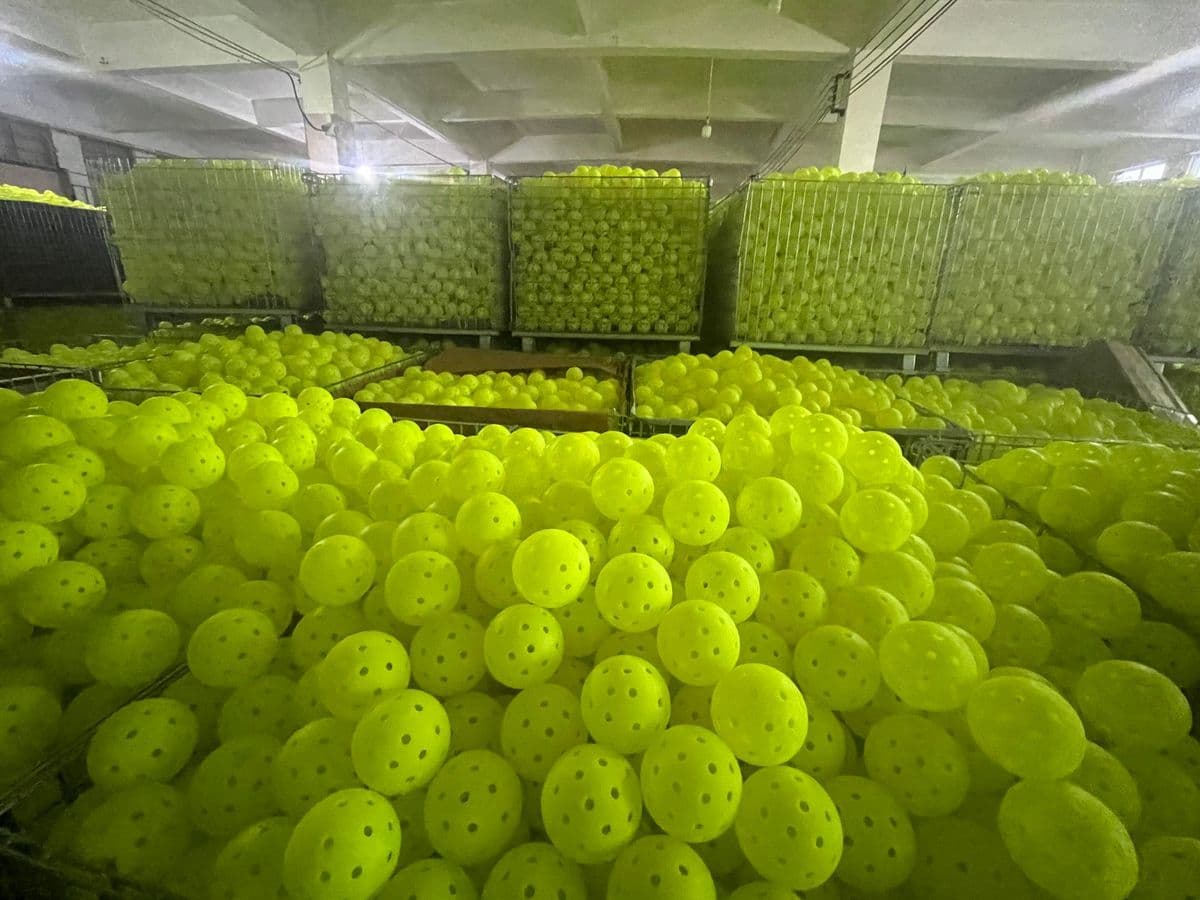
Balls are the line most distributors under-inspect and over-lose on. They're cheap per unit and ship by the thousand, so the temptation is to skip the QC that a paddle order would get. That's exactly why a bad ball batch is so expensive: you find out after the container clears, when out-of-round, under-bounce, or cracked balls come back as returns across dozens of accounts at once. The unit price saved nothing. This is how you spec and inspect a ball order on the four things that actually fail — bounce, roundness, seam, and weight — so a batch problem gets caught at the factory, not on the court.
Every one of these four has a measurable window, a real failure mode, and a simple check you can put in writing before you pay. Get them onto your QC sheet and a supplier either meets them or tells you they can't — both answers are worth knowing before the balance payment goes out.
Key Takeaways
- Four checks catch nearly every ball defect: bounce (rebound), roundness (out-of-round), seam integrity, and weight — inspect all four on a sample before final payment.
- USA Pickleball windows to spec against: 24.3–26.2 g weight, 2.874–2.972 in diameter, and a 30–34 in bounce when dropped from 78 in onto granite.
- On injection (two-piece) balls the seam is the number-one crack origin; on rotomolded (one-piece) balls, wall and hole consistency matter more.
- Weight scatter across a batch — not just the average — is what shows up as inconsistent bounce and player complaints. Sample multiple balls, not one.
- Use AQL sampling on volume ball orders instead of eyeballing a handful; define acceptable defect counts before the batch is made.
- Put the four windows and the sampling plan in your PO. A supplier who can't state how they verify them is quoting a price with no quality behind it.
Spec the ball before you inspect it
You can't QC against a standard you never wrote down. Before any inspection, your purchase order should state the target windows the batch will be measured against. For an outdoor ball intended to sell as tournament-grade or approval-eligible, those windows come straight from the USA Pickleball equipment standard.
| Property | Spec window | Why it matters |
|---|---|---|
| Weight | 24.3–26.2 g | Off-weight balls fly and bounce inconsistently |
| Diameter | 2.874–2.972 in | Out-of-spec size affects fit and play |
| Bounce | 30–34 in (from 78 in drop) | Rebound defines the ball's pace and feel |
| Hardness | 40–50 on a Durometer D scale (typical) | Too soft dents; too hard cracks in cold |
| Roundness | Within diameter tolerance on all axes | Out-of-round balls roll and bounce off-line |
Standards get revised, so confirm the current numbers on the USA Pickleball equipment list before you print a PO. But the structure is stable: a weight window, a size window, a bounce window, and a roundness tolerance. If you're still deciding which ball to spec in the first place, the rotomolded vs injection decision and the indoor vs outdoor split come before QC — you inspect against the spec you chose there.
Bounce: the test that reveals the whole batch
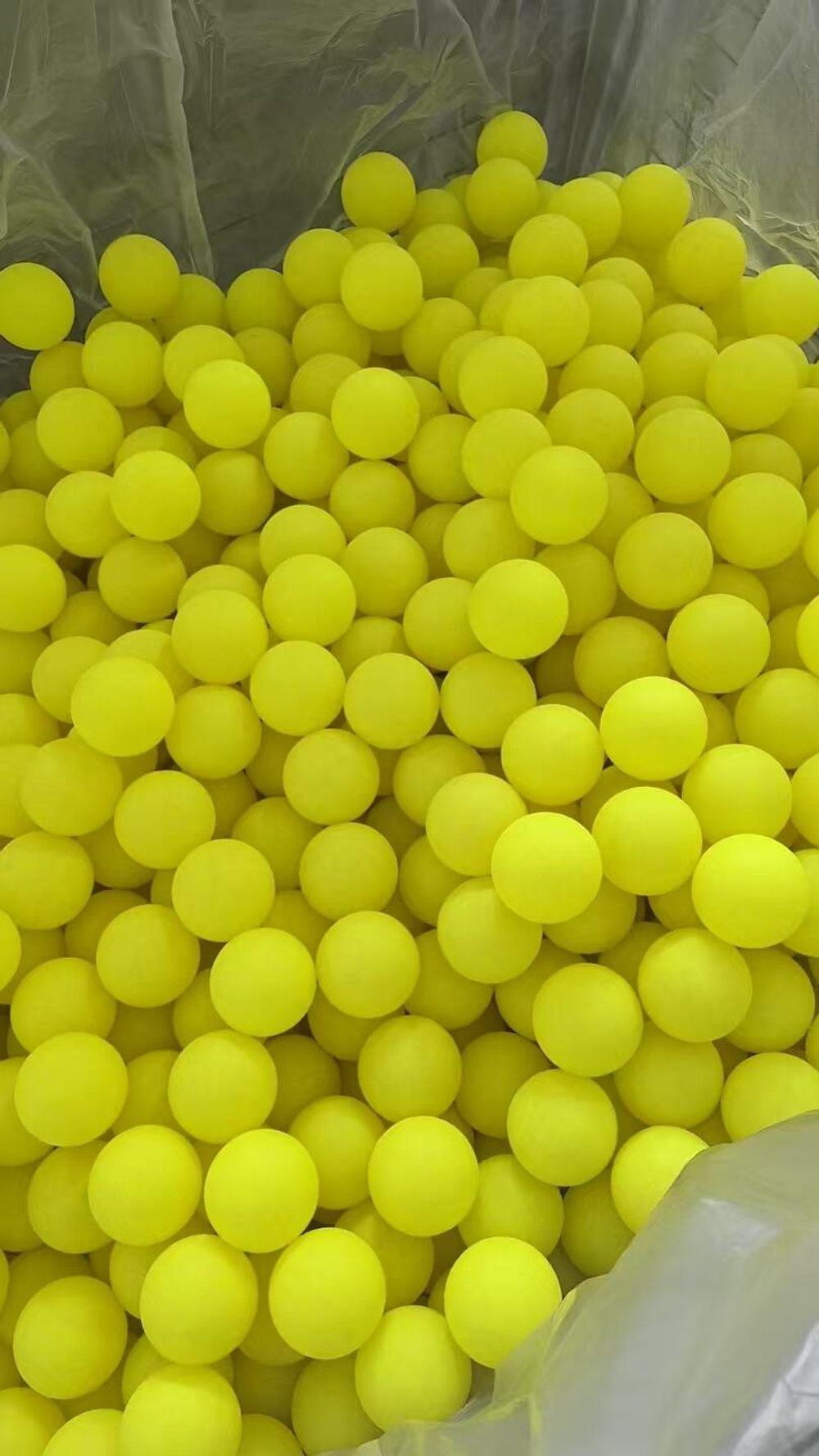
Bounce is the fastest signal of a consistent batch because it's the sum of weight, wall thickness, hardness, and material quality. The standard test drops the ball from 78 inches onto a granite surface at room temperature; an approved outdoor ball rebounds roughly 30 to 34 inches. What matters for QC isn't just hitting the window on one ball — it's how tightly the sample clusters.
Drop ten balls from the same batch. If they scatter across a five-inch range, the plastic or the wall thickness is inconsistent, and your buyers will feel it as some balls playing "dead" and others playing "hot." A tight cluster within an inch or two means the process is under control. This is the check that separates a factory running real process control from one that mixed regrind into the batch to cut cost. Temperature matters here too: PE stiffens in cold and bounces higher, so always note the test temperature — a ball tested warm and shipped to a cold market plays differently on court.
Roundness: the defect that reads as "cheap"
An out-of-round ball rolls in a curve and bounces off its intended line, and players read that instantly as a low-quality ball even if they can't name why. Roundness fails for two reasons: molding shrinkage that leaves the sphere slightly egg-shaped, or a warped ball that cooled unevenly. On rotomolded balls it usually traces to uneven wall thickness; on injection balls, to mismatched shells.
The check is simple and cheap: measure diameter across several axes on sampled balls with a caliper or a go/no-go ring gauge. A ball that measures 2.90 inches one way and 2.94 the other is out of round even if both readings sit inside the size window. Spin a suspect ball on a flat surface — a good ball spins clean, an out-of-round one wobbles. Put a roundness check on the QC sheet explicitly, because it's the defect a supplier is most likely to wave through as "within size."
Seam and wall: where the ball actually cracks
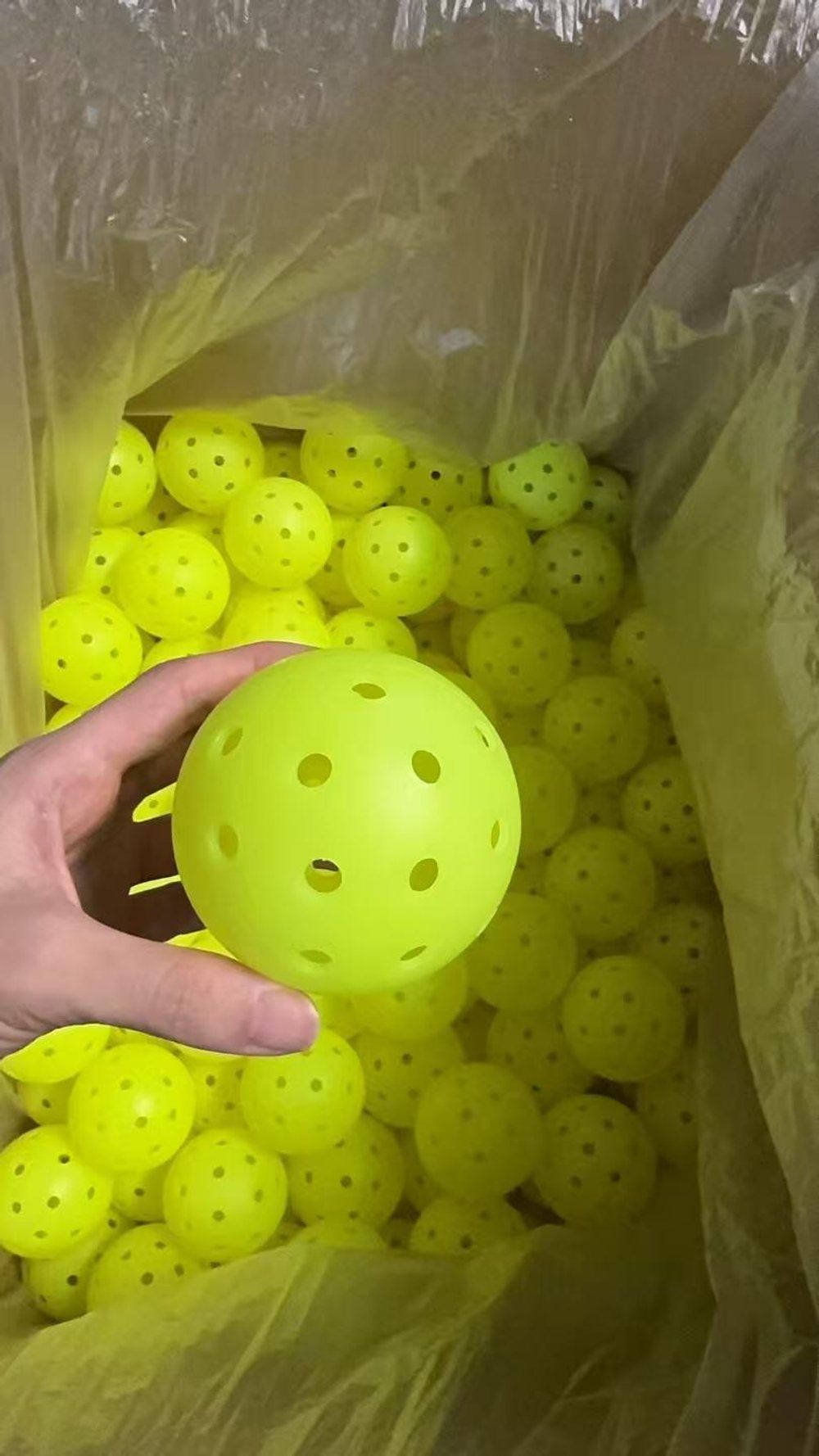
This check depends on how the ball was made, and getting it wrong is what turns into a return wave 60 days after the sale. On a two-piece injection ball, the fused equator is a seam, and the seam is the single most likely place a crack begins. Inspect it directly: run a fingernail around the equator on sampled balls feeling for a raised, sharp, or uneven ridge, and flex-test a few to confirm the weld holds. A visible or rough seam line is a reject — it will split under hard play and cold.
On a one-piece rotomolded ball there's no seam, so the failure mode shifts to wall thickness and hole quality. Check that walls are uniform (a ball that feels heavier on one side has thick-thin walls) and that the precision-drilled holes have clean, un-cracked edges — a ragged hole edge is a stress riser that starts a crack. Whichever process you sourced, name the right failure mode on the QC sheet: seam integrity for injection, wall and hole consistency for rotomolded. This is the same defect-first logic that drives paddle quality control — you inspect where the product actually fails, not everywhere equally.
A ball that passes weight, size, and bounce but has a weak seam will still come back as a return. Crack resistance is a separate check — never assume the spec window covers it.
Weight: sample the spread, not one ball
Weight is the easiest property to measure and the easiest to fake confidence on. A supplier hands you one ball, it reads 25 grams, and everyone nods. That tells you nothing about the batch. What you need is the spread: pull a sample across different cartons and weigh each on a scale accurate to 0.1 g. If the batch clusters tightly inside 24.3–26.2 g, good. If balls scatter from 23.8 to 26.5, the batch is out of control even if the average looks fine — and weight scatter is exactly what players feel as inconsistent bounce.
Weight drift usually means the material mix changed mid-run or the process wasn't held steady — the same warning sign as a loose bounce cluster, from a different angle. Two cheap tools cover it: a 0.1 g scale and a sampling plan that pulls from multiple cartons rather than the top of one box the supplier chose.
Sample it properly with AQL, don't eyeball it
On a 10,000-ball order you can't test every ball, and testing "a few" tells you nothing statistically. The professional answer is AQL (Acceptable Quality Level) sampling: a defined plan that dictates how many balls to pull for a given lot size and how many defects trigger a rejection of the whole batch. It turns "they looked fine" into a pass/fail you agreed on in advance.
- Set the AQL in the PO: A common consumer-goods choice is 2.5 for major defects and 4.0 for minor — agree the numbers before production, not after.
- Pull the sample across the lot: The plan sets a sample size (for example ~200 units on a large lot); draw them from multiple cartons so the sample represents the whole run.
- Classify defects: A crack or a failed seam is major; a scuff or slight color variation is minor. The plan allows a fixed count of each before the lot fails.
- Inspect before the balance payment: Whether your own QC or a third party, the check happens while you still hold leverage — the same principle as a full pre-shipment AQL inspection.
The ball QC checklist we run before packing
Because we rotomold outdoor balls in-house, every batch clears the same checks before the buckets and cases are sealed. Use this as the template for your own QC sheet regardless of who you source from:
- Weight sweep: Sampled across cartons on a 0.1 g scale against the 24.3–26.2 g window, watching the spread, not just the mean.
- Diameter and roundness: Measured on multiple axes to the 2.874–2.972 in window; wobble-tested for out-of-round.
- Bounce cluster: Drop test from height at a noted temperature, checking that the sample lands in a tight rebound band.
- Wall and hole check: Uniform wall thickness and clean, crack-free drilled holes — the rotomolded failure mode.
- AQL sign-off: Defect counts recorded against the agreed AQL before the batch is released.
Ask any ball supplier to describe these checkpoints in writing. If they can't tell you how they verify weight spread, roundness, and crack resistance on a sample, the quote is a number with no quality behind it — and on a high-volume, low-margin line, that's the number that eats your season in returns.
Conclusion
Ball QC comes down to four measurable things — bounce, roundness, seam or wall integrity, and weight — each with a window you can write into a PO and a check you can run on a sample. The mistake that costs distributors real money isn't buying the wrong ball; it's buying the right ball and never verifying the batch, then discovering the scatter after the container clears. Sample properly, watch the spread and not just the average, and inspect against the seam or wall depending on how the ball was made.
Put the four windows and an AQL plan in your purchase order, and run the checks — or have a third party run them — before the balance payment leaves. That single discipline turns a ball order from a gamble on a low unit price into a controlled buy with a defect rate you agreed to in advance.
Frequently Asked Questions
What weight should a pickleball be?
A USA Pickleball approved ball weighs between 24.3 and 26.2 grams. For QC, sample multiple balls across cartons and check the spread, not just the average — tight clustering inside the window matters more than any single reading.
How do you test a pickleball's bounce?
Drop the ball from 78 inches onto a granite surface at room temperature; an approved outdoor ball rebounds roughly 30 to 34 inches. Test several balls from the batch and confirm they cluster tightly — a wide scatter signals inconsistent material or wall thickness.
Why do pickleballs crack, and how do I catch it in QC?
On two-piece injection balls, cracks start at the fused seam; on one-piece rotomolded balls, at uneven walls or ragged hole edges. Inspect the seam for a rough or raised ridge, flex-test a sample, and check hole edges and wall uniformity depending on how the ball was made.
What AQL should I use for a pickleball order?
A common consumer-goods choice is AQL 2.5 for major defects and 4.0 for minor defects, agreed in the purchase order before production. Cracks and failed seams count as major; scuffs and slight color variation as minor. The plan sets how many defects fail the lot.
How can I tell if a pickleball is out of round?
Measure the diameter across several axes with a caliper — a ball that reads differently on different axes is out of round even if each reading is within the size window. You can also spin it on a flat surface: a true ball spins clean while an out-of-round one wobbles.
Want to source this quality for your brand?
Contact our factory directly on WhatsApp for an instant MOQ and pricing quote.