Indoor vs Outdoor Pickleball Balls: Holes, Specs & SKUs
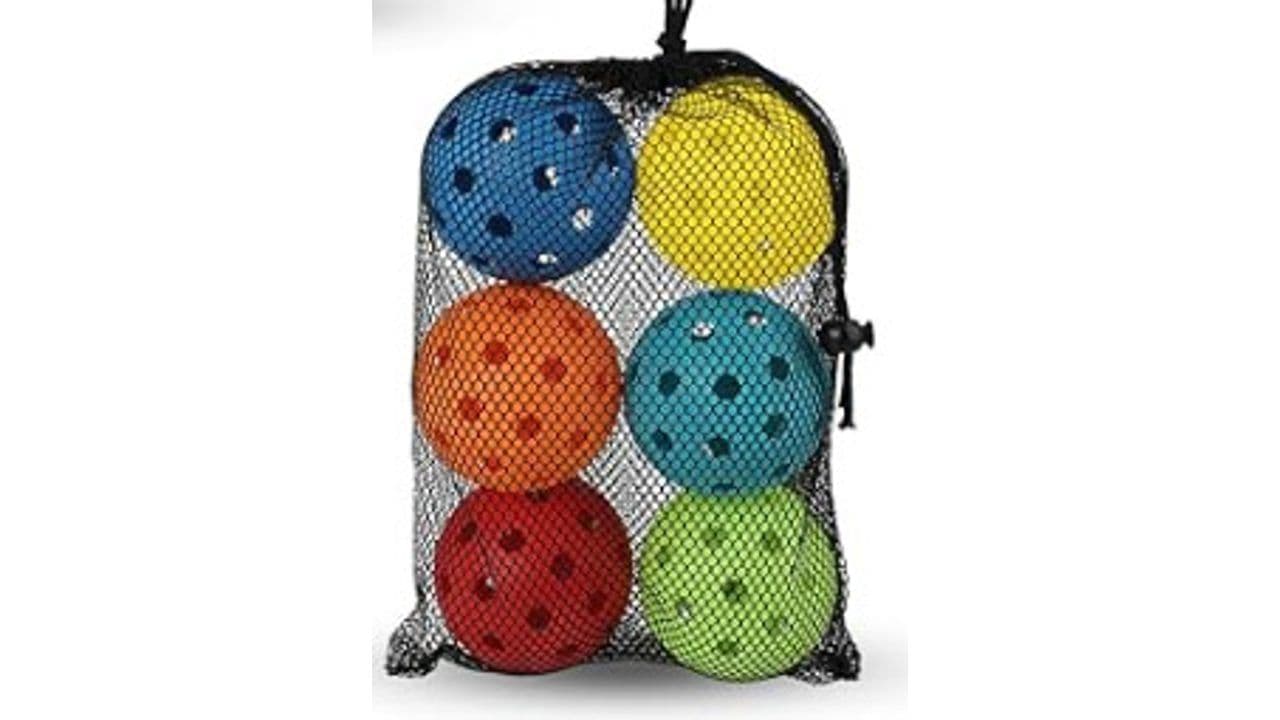
The fastest way to lose money stocking pickleball balls is to treat indoor and outdoor as one SKU. They aren't interchangeable, and a buyer who plays on a gym floor will return an outdoor ball as "too hard and loud" just as fast as an outdoor player will reject an indoor ball that floats in the wind. Indoor vs outdoor pickleball balls differ in hole count, hardness, weight, and the plastic itself — and each difference exists to solve a specific court problem. Stock the wrong one for your market and you're not saving on inventory, you're funding returns.
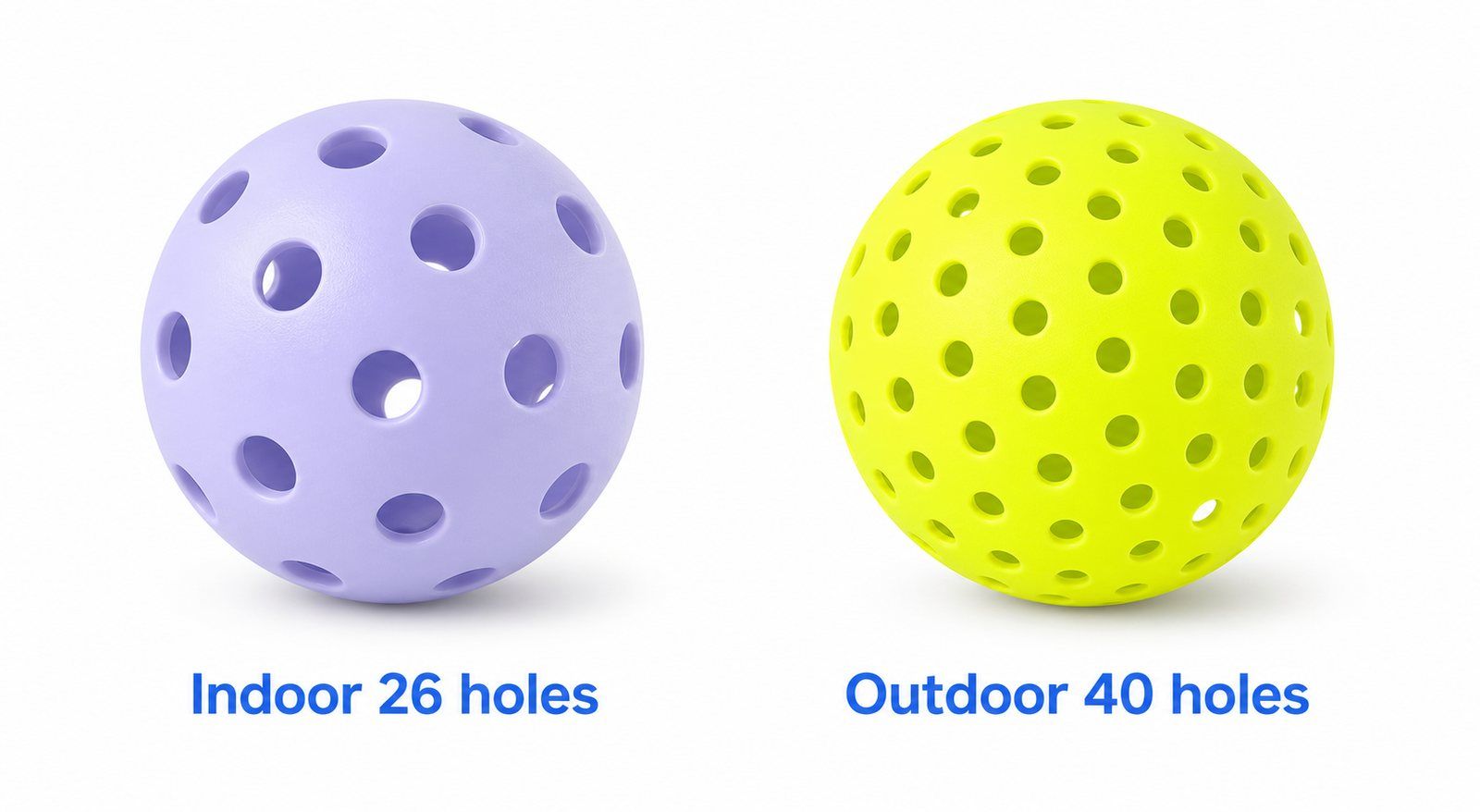
The shorthand everyone repeats is "26 holes indoor, 40 holes outdoor," and that's the right starting point — but the hole count is a symptom of deeper choices about wind, surface, and feel. This breaks down what actually separates the two balls, which spec to check against the USA Pickleball standard, and how to decide which SKUs your catalog needs instead of guessing.
Key Takeaways
- Indoor balls have 26 larger holes (~0.43 in); outdoor balls have 40 smaller holes (~0.282 in) — indoor holes run about 40% wider.
- Outdoor balls use harder plastic to survive asphalt and cut wind; indoor balls use softer resin for grip and a quieter, controlled bounce on gym floors.
- Weights are close (about 21–26 g / 0.8–0.9 oz); outdoor balls run a touch heavier (~0.925 vs ~0.917 oz) to push through wind.
- USA Pickleball approval expects a hardness of about 40–50 on the Durometer D scale at 70°F — confirm it on any ball you source.
- Outdoor 40-hole is the higher-volume SKU and the typical rotomolded product; indoor 26-hole is almost always injection molded.
- Most catalogs need both as separate SKUs — lead with outdoor 40-hole, add indoor 26-hole only if you serve gyms, schools, or clubs.
Why the two balls exist: wind and surface
Every difference between the two balls traces back to one fact: outdoor courts have wind and rough asphalt; indoor courts don't. Design the ball around that and the spec sheet writes itself.
Outdoor balls fight two enemies — gusts that push a light ball off line, and concrete that grinds the surface. So they get 40 small, densely packed holes to cut wind drift, a harder plastic to survive the court, and a touch more weight to hold a true line. Indoor balls have neither problem. On a controlled gym floor the priority flips to feel and grip, so they run fewer, bigger holes, a softer resin, and a lighter, quieter bounce that players can place. One ball is built to endure; the other is built to behave.
Indoor vs outdoor, spec by spec
Here's the side-by-side a buyer actually needs. Read it as a stocking guide, not trivia.
| Spec | Outdoor | Indoor |
|---|---|---|
| Holes | 40, small (~0.282 in) | 26, large (~0.43 in) |
| Plastic | Harder, durable | Softer resin, more grip |
| Weight | Slightly heavier (~0.925 oz) | Slightly lighter (~0.917 oz) |
| Bounce / feel | Harder, livelier, louder | Softer, controlled, quieter |
| Usual process | Rotomolded or injection | Injection molded |
| Best for | Outdoor courts, tournaments, rec | Gyms, schools, winter clubs |
The process row links to a separate decision worth its own look: on the outdoor side you still choose between rotomolded and injection-molded balls, which changes durability and cost independent of the hole count.
The specs that decide approval and returns
Two numbers separate a ball that passes and sells from one that comes back. Both are easy to verify in a sample and easy to skip if you're only looking at price.
- Hardness (Durometer D): USA Pickleball approval expects roughly 40–50 at 70°F. Too soft and the ball plays dead; too hard and it cracks in the cold. This is the spec most cheap balls miss.
- Weight band: Around 21–26 g. Scatter inside a batch shows up as inconsistent bounce, which is the complaint that drives returns even when each ball is "in spec" on its own.
- Temperature behavior: Harder outdoor plastic gets brittle in cold weather. If your market plays outdoors in winter, confirm the ball is rated for it before you commit to a container.
A supplier who can quote you the durometer target and weight tolerance up front is a different proposition from one who just quotes a unit price. Match it with the QC discipline you'd expect on any equipment order.
Which SKUs does your catalog actually need?
You don't need every variant — you need the ones your buyers play with. Use their courts to pick.
| Stock outdoor 40-hole if… | Add indoor 26-hole if… |
|---|---|
| Your market plays mostly outdoors (most do) | You supply gyms, schools, or community centers |
| You want one high-volume hero SKU | Your region has a cold-weather indoor season |
| You sell to tournaments and rec leagues | Buyers ask for a softer, quieter ball |
What we check on a ball order before shipment
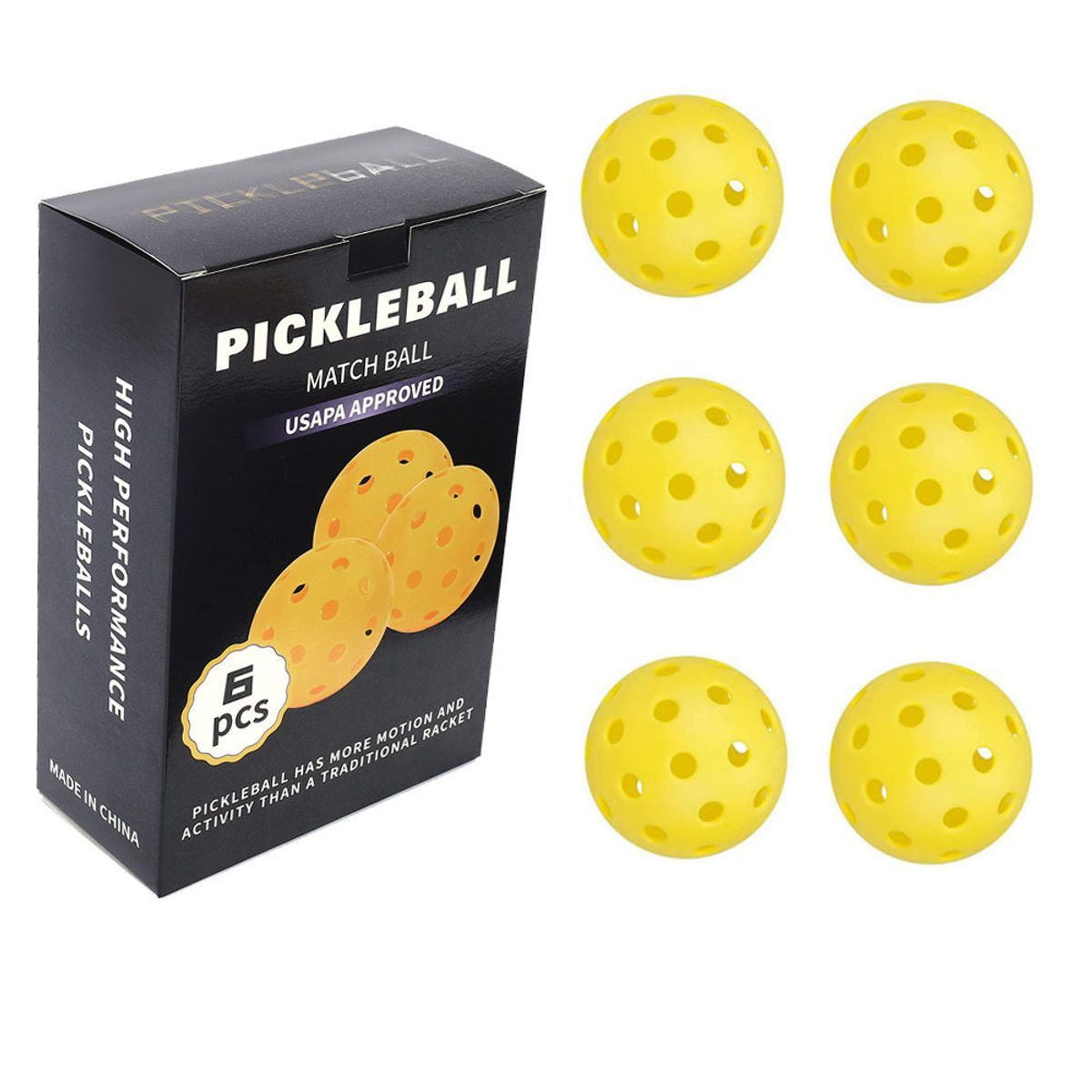
Indoor or outdoor, the inspection is what keeps a batch from coming back. Every ball order runs through the same checks before the buckets are sealed:
 yellow balls" style="width: 100%; height: auto; max-width: 620px; border-radius: 8px; display: block; margin: 0 auto;" loading="lazy" />
- Hardness: Sampled against the 40–50 Durometer D window so the ball plays right and passes approval.
- Weight tolerance: Checked to the 21–26 g band; outliers are pulled because weight scatter ruins bounce consistency.
- Roundness and hole drilling: Confirmed so flight stays true; out-of-round or ragged holes get rejected.
- Bounce test: A sample drop test verifies rebound is consistent across the batch.
Ask any ball supplier to confirm hardness and weight tolerance in writing. If they can't, you're buying a number, not a tested ball.
Conclusion
Indoor and outdoor pickleballs are two products solving two court problems: outdoor balls use 40 small holes and harder plastic to beat wind and asphalt, indoor balls use 26 larger holes and softer resin for grip and a quiet, controlled bounce on gym floors. Lead your catalog with the outdoor 40-hole SKU because that's where the volume is, and add indoor 26-hole only when your buyers actually play inside. Whichever you stock, the durometer hardness and weight tolerance — not the unit price — decide whether the batch sells or comes back.
If you're planning a ball lineup, start by mapping your buyers' courts to SKUs, then lock the hardness and weight specs with a sample. Our team builds outdoor 40-hole balls in both rotomolded and injection constructions and can help you size the right SKU mix.
Frequently Asked Questions
What's the difference between indoor and outdoor pickleballs?
Outdoor balls have 40 small holes and harder plastic to beat wind and rough courts; indoor balls have 26 larger holes and softer resin for grip and a controlled bounce on gym floors. They are not interchangeable.
Why do outdoor balls have 40 holes and indoor 26?
More, smaller holes help an outdoor ball cut through wind and fly straight. Indoor courts have no wind, so those balls use fewer, larger holes tuned for a softer, more controllable bounce.
Can I use an outdoor ball indoors, or the reverse?
You can, but it plays poorly. An outdoor ball feels too hard and loud on a gym floor; an indoor ball is too light and floaty outside in any wind. Stock both if you serve both settings.
What hardness should an approved pickleball be?
USA Pickleball approval expects roughly 40–50 on the Durometer D scale at 70°F. Confirm current requirements on the official equipment list, as standards are periodically updated.
Which ball should a new brand stock first?
Start with the outdoor 40-hole ball — it's where most play and volume sit. Add an indoor 26-hole SKU later if you supply gyms, schools, or clubs with indoor seasons.
Want to source this quality for your brand?
Contact our factory directly on WhatsApp for an instant MOQ and pricing quote.