Buying Pickleball Balls in Bulk: Cost Per Ball, Channels & Season Sizing
Buying pickleball balls in bulk is a per-ball price game, and the spread is wider than most buyers expect: the same class of 40-hole outdoor ball runs about $3 per ball in a retail 12-pack, near $1 in a 100-ball bulk bag, and under a dollar at factory volume. A club that burns through a few hundred balls a season is choosing between a $900 line item and a $250 one — for balls that bounce the same. The catch is that "the same" is doing a lot of work in that sentence, because durability, not sticker price, decides what a ball actually costs you per game.
This guide covers the per-ball math across the four bulk channels, how many balls different buyers actually need, and the durability arithmetic that makes some cheap balls the most expensive thing on your order. Specs, tolerances, and market compliance are covered separately in our wholesale ball specs and MOQ guide — this page is about the money.

Key Takeaways
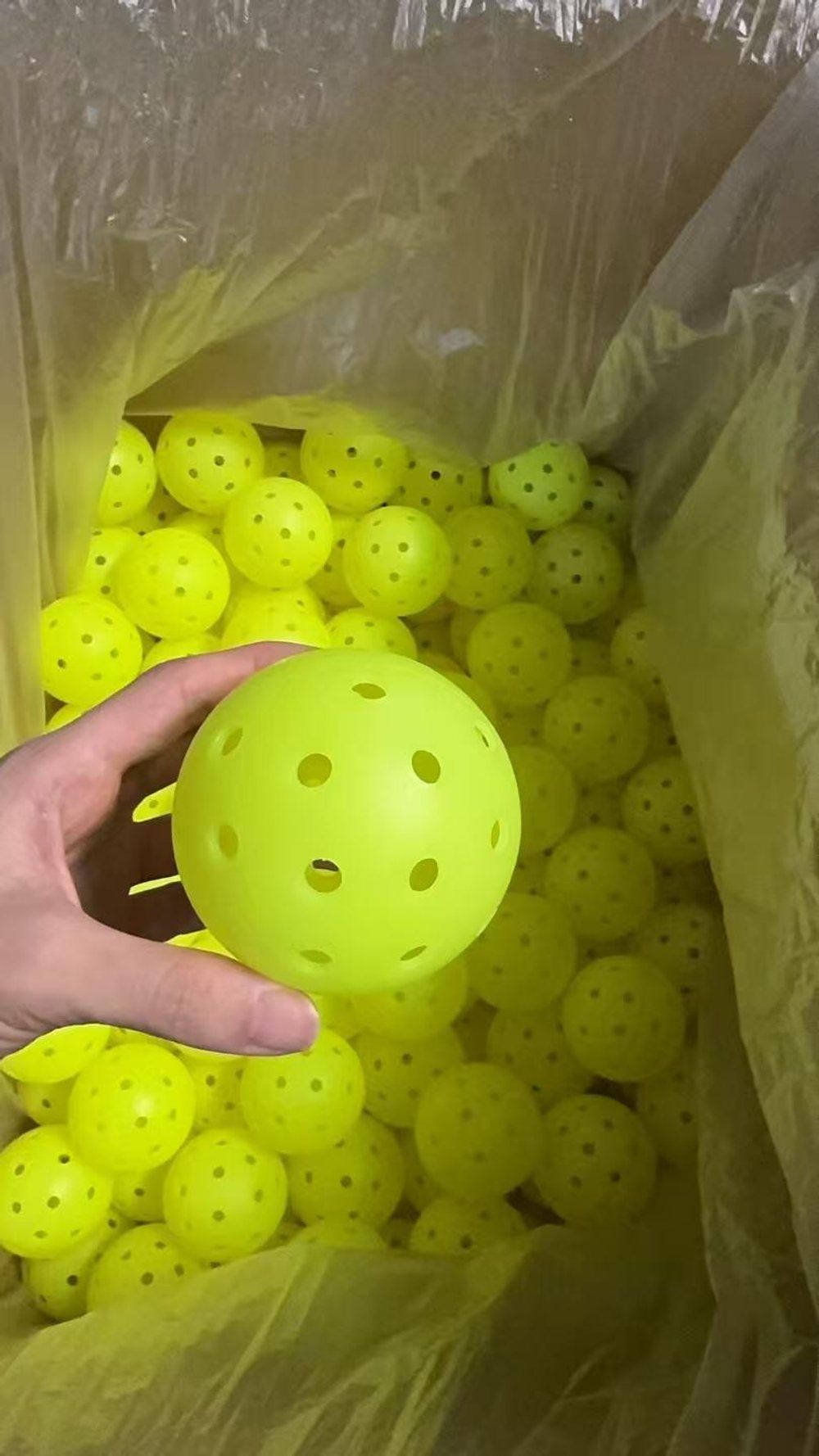
- Per-ball price by channel: roughly $2.50–$3.50 in retail multipacks, $1.00–$1.50 in 100-ball bulk bags, $0.50–$1.20 factory-direct — the channel can triple or third your cost.
- Volume breaks start mattering around 100 balls; factory-direct pricing needs case or carton commitments, typically 500–1,000 balls minimum.
- Cost per game beats cost per ball: a $1 ball that cracks in 3 games costs more per session than a $2.50 ball that survives 15.
- One-piece rotomolded balls have no seam to split — seam failure is the most common death of a cheap two-piece outdoor ball.
- Clubs and facilities should order a season at a time, not a month: ball attrition is constant, freight per ball collapses with volume, and balls don't expire.
- If the balls will carry your logo or brand, only the factory channel works — retail and distributor stock is someone else's brand.
What bulk pickleballs cost per ball
Ball pricing is a volume ladder with four rungs. The prices below are typical market ranges for 40-hole outdoor balls this year; indoor 26-hole balls generally run slightly cheaper at every rung. Brand-name tournament balls sit at the top of each range, unbranded or private-label balls at the bottom.
| Channel | Typical per-ball price | Realistic minimum |
|---|---|---|
| Retail multipack (3–12 balls) | $2.50–$3.50 | None |
| Amazon / bulk bags (50–200 balls) | $1.00–$1.50 | ~50 balls |
| Wholesale distributor (cases) | $1.20–$2.00 | Case quantities |
| Factory-direct (cartons/pallets) | $0.50–$1.20 FOB | 500–1,000 balls |
Two notes on reading that table honestly. The factory row is an FOB price — ocean freight, duty, and inspection add to it, and those fixed costs are exactly why the channel only makes sense at carton volume. And the Amazon bulk-bag row hides the widest quality variance of the four: some 100-ball bags are respectable practice balls, others are seconds that go out of round in a week. The distributor row costs more per ball precisely because someone has already filtered that variance for you.
How many balls you actually need
Most first bulk orders are sized wrong in the same direction: too small. Balls are consumables with steady attrition — outdoor balls crack, soften, and go out of round with play — and they neither expire nor take much storage space. Ordering a month's supply four times costs you three extra freight charges and three chances for a stockout mid-league. Order for the season.
The sizing logic is simple: courts × sessions × attrition. Outdoor league play commonly opens a fresh ball per court per session, and hard hitters retire balls faster than rec players. The table below gives working numbers buyers can adjust up or down; a cold-climate club should size up, since plastic cracks faster in cold air.
| Buyer | Typical burn rate | Sensible order |
|---|---|---|
| Rec group, 2–4 courts weekly | 10–20 balls/month | 50–100 per season |
| Club league, 6–8 courts | 40–80 balls/month | 250–500 per season |
| Indoor facility, daily open play | 60–120 balls/month | 500–1,000 per season |
| Tournament organizer | 1 ball per match, fresh | Matches × 1.2 spare factor |
| Retailer / reseller | Sell-through, not attrition | Start 500+, reorder on data |
A worked example makes the freight point concrete. An 8-court club that burns 60 balls a month needs roughly 400 balls for a 6-month season. Bought monthly in 50-ball bags at $1.30 a ball plus shipping each time, the season costs about $560. Bought once at case volume through a distributor at $1.20, about $500 with one freight charge. Bought as a single 500-ball factory carton at $0.80 landed, about $400 — and the club owns the surplus going into next season. Same balls on court every week; a 29% spread in what the season cost.
The durability math: cost per game
Per-ball price is the wrong unit. The right one is cost per game, and it flips cheap-versus-premium more often than buyers expect. Independent testing consistently finds large durability gaps between outdoor balls: some well-known tournament balls are notorious for cracking in cold weather or going out of round within a few sessions, while others survive weeks of hard play — multi-brand ball tests now track exactly this. Run the arithmetic: a $1.00 ball that dies in 3 games costs 33 cents a game. A $2.50 ball that lasts 15 games costs 17 cents. The "cheap" ball is twice as expensive to actually play with.
| Ball | Price per ball | Games before retirement | Cost per game |
|---|---|---|---|
| Bargain bulk-bag ball | $1.00 | 3 | $0.33 |
| Mid-range seamless ball | $1.50 | 12 | $0.13 |
| Premium tournament ball | $2.50 | 15 | $0.17 |
The game counts above are illustrative arithmetic, not lab results — plug in your own numbers from a two-week sample. The pattern they show is real, and it has a useful corollary: the sweet spot for a practice fleet is usually the middle row, a durable unbranded ball, not the premium tournament SKU. Pay the tournament premium only where sanctioning demands it.
Construction drives most of that gap. Two-piece outdoor balls are molded as halves and welded — and that seam is where they die, splitting along the weld under repeated impact. One-piece rotomolded balls have no seam at all: the ball comes out of the mold as a single continuous wall, which is why rotomolded and injection-molded balls age so differently on outdoor courts. For a fleet buyer, seamless construction is not a spec-sheet nicety; it is the difference between replacing a quarter of your balls monthly and replacing a tenth.
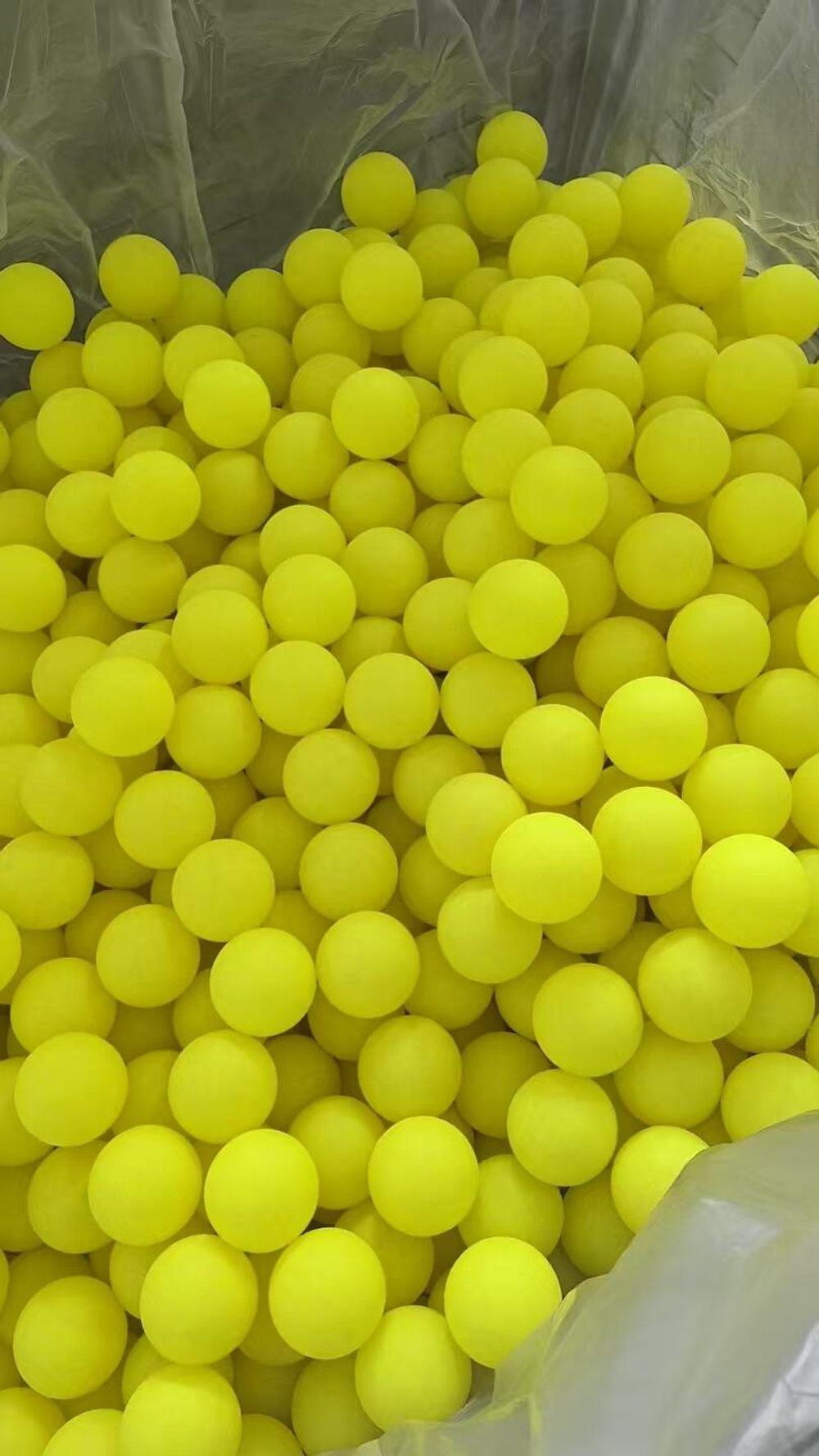
One warning for bulk buyers chasing the bottom of the price table: if a quote comes in dramatically under the $0.50 floor, the wall is thinner or the resin is regrind, and the balls will play soft and die early. Ask the supplier for the ball's weight and hardness numbers against the USA Pickleball window before you commit — a legitimate factory has them on file, and a ball that misses the official equipment standards can't be used for sanctioned play at all.
Where to buy: the four channels
The channel logic for balls mirrors the paddle market, and we've mapped that side in detail in the guide to buying pickleball paddles in bulk. The short version for balls, channel by channel:
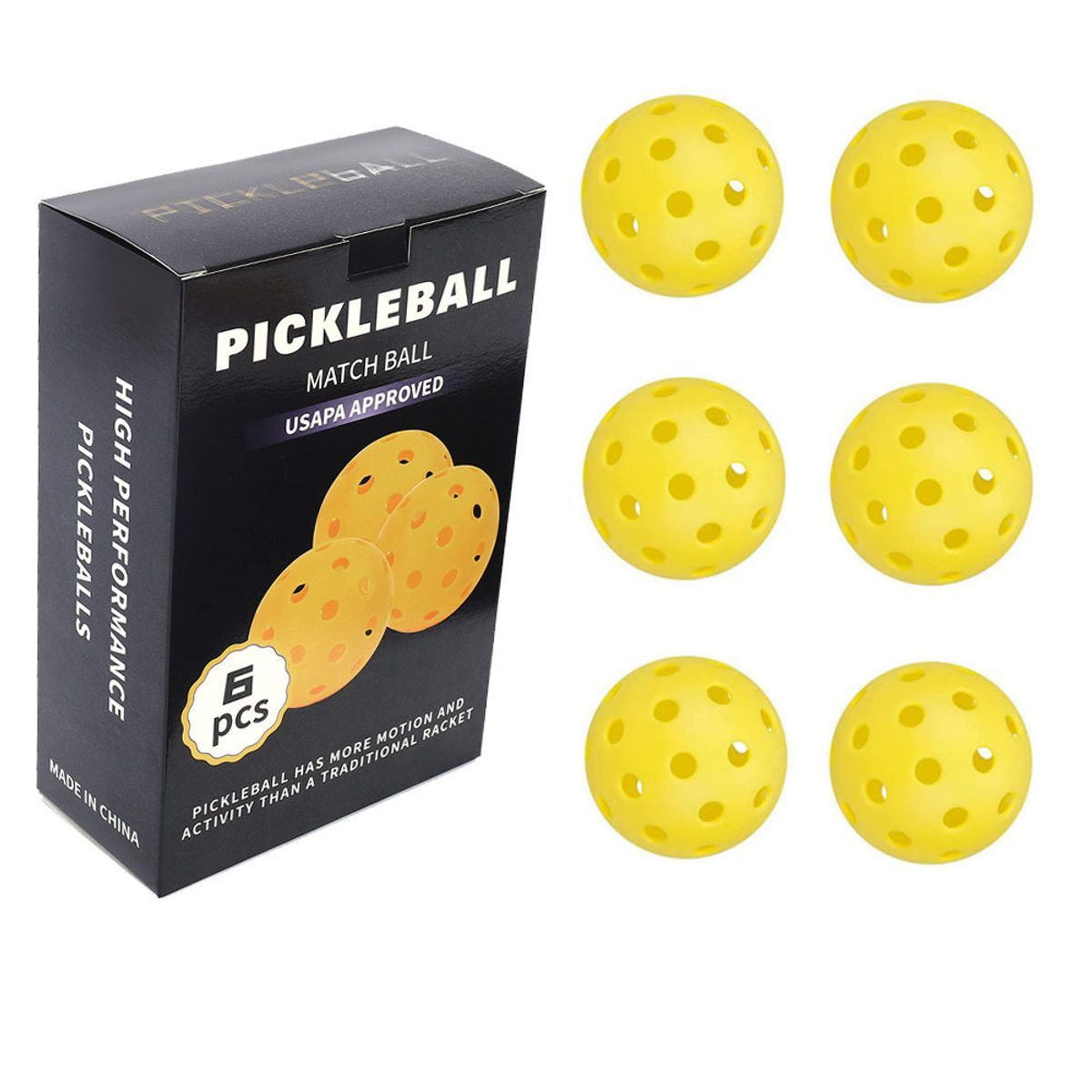
- Amazon and bulk bags: fastest, fine for practice stock. Quality varies bag to bag; buy one bag and play it for two weeks before ordering ten.
- Wholesale distributors: case pricing on known brands, days-not-weeks shipping. The right restock channel for retailers and the safe channel for tournament stock.
- Brand wholesale programs: ball makers sell cases direct to clubs and shops at dealer pricing. You get a warranted, recognizable ball — at the top of the bulk price range.
- Factory-direct: the lowest per-ball number and the only channel that prints your logo on the ball. Needs carton volume, 30–60 days of lead time, and a spec conversation up front.
For clubs and facilities, the practical split is: distributor cases for tournament-branded balls, factory-direct for the everyday fleet. For resellers, the decision is brand strategy, not logistics — reselling a known ball trades margin for shelf recognition, while a private-label run on our tournament-grade outdoor ball platform keeps the margin and builds your name instead of someone else's. And if the plan is branded balls as merchandise or league giveaways, custom logo pickleballs carry their own MOQ and print-method logic worth reading first.
The pre-order checklist
Five checks before any bulk ball order, each one a common way first orders go wrong:
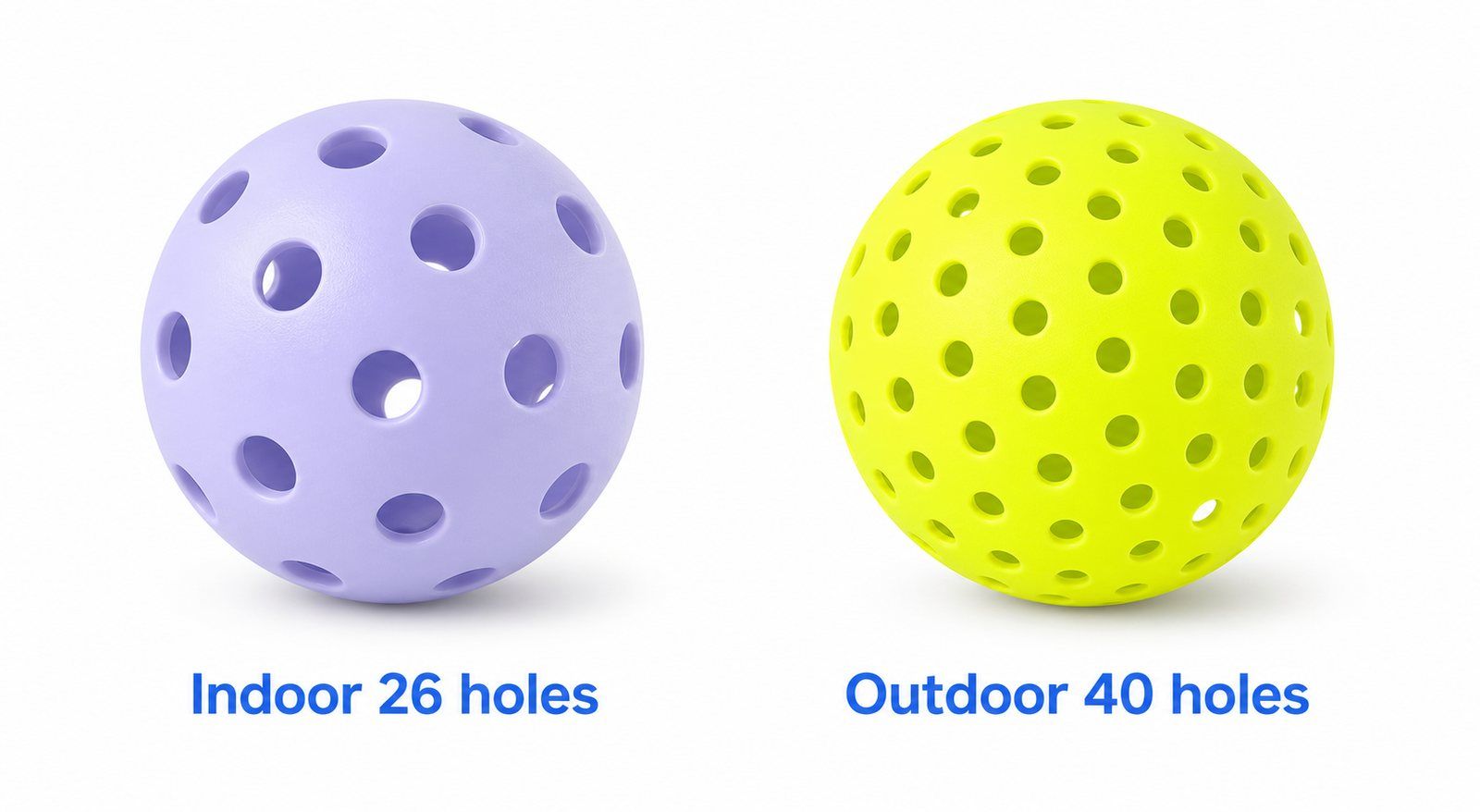
- Venue match: 40-hole for outdoor, 26-hole for indoor — a mixed facility needs both SKUs, and the split matters more than the brand. The indoor versus outdoor ball differences are construction-level, not cosmetic.
- Sanctioning: tournament play needs a ball on the USA Pickleball approved list. Practice fleets don't — paying the approved-ball premium for rec stock is wasted money.
- Sample first: at factory volume, pay for a sample carton and play it for two weeks. A $50 sample catches the problem a $2,000 order would have delivered by the pallet.
- Climate check: if your courts see cold mornings, ask how the resin handles low temperatures. Hard, cold-brittle balls crack early; a slightly softer durometer spec survives northern seasons better.
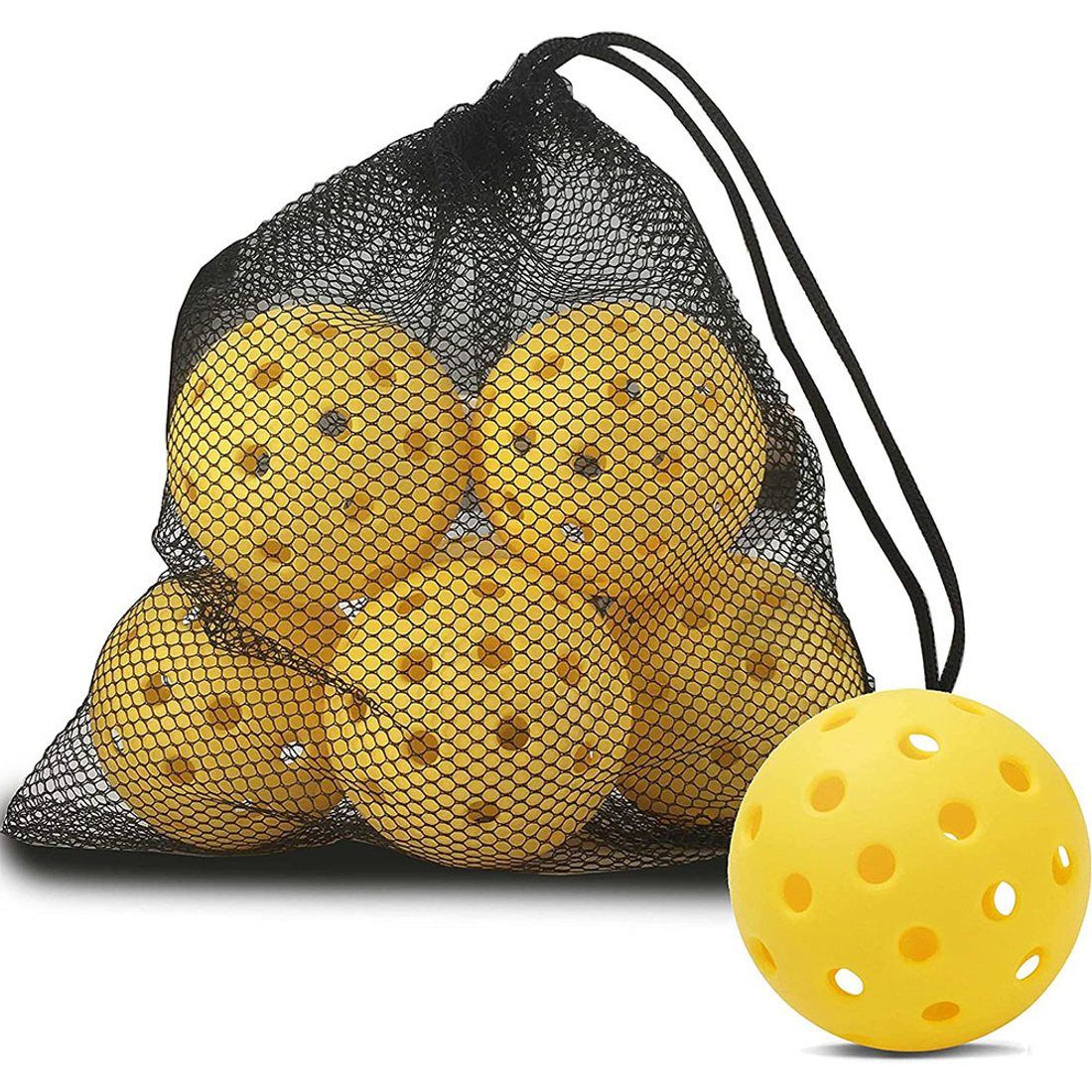
- Packaging format: bulk poly bags are cheapest per ball; buckets and retail boxes cost more but sell or store better. Decide where the balls end up before you pick the pack.
Storage and lifespan: can you over-order?
The question behind season-sized orders: do unplayed balls go bad in the box? Practically, no — the plastic doesn't degrade on a shelf the way grip tape or rubber does, and a carton stored indoors will play the same next spring. What does kill stored balls is heat and sunlight. A shipping container, a car trunk in July, or a sun-facing storage window will warp and embrittle balls before they ever meet a paddle; UV exposure also fades the optic colors players track the ball by.
So the storage rules are short: keep cartons indoors at room temperature, off concrete that freezes, and out of direct sun. Under those conditions, over-ordering is a working-capital question, not a spoilage risk — which is exactly why the season-at-once order in the sizing section is safe to place. If storage space is the constraint, note that bulk poly bags pack roughly twice as many balls into the same closet as buckets do.
Conclusion
Bulk ball buying rewards two habits: sizing the order to the season instead of the month, and judging balls by cost per game instead of cost per ball. Those two decisions routinely cut a club's ball budget by a third without changing anything the players notice.
If you know your courts and your monthly burn, you already have the numbers this guide needs — run them against a case quote and a factory quote, and the right channel for your volume will be obvious.
Frequently Asked Questions
How much do pickleball balls cost in bulk?
Typically $1.00–$1.50 per ball in 50–200 ball bulk bags, $1.20–$2.00 through distributors by the case, and $0.50–$1.20 FOB factory-direct at 500+ balls. Retail multipacks run $2.50–$3.50 per ball.
How many pickleballs does a club need per season?
A 6–8 court club league typically burns 40–80 balls a month, so 250–500 per season is a sensible single order. Balls don't expire, and one large order beats four small ones on freight.
Are cheap bulk pickleballs worth it?
Only if they last. Judge cost per game, not per ball: a $1.00 ball that cracks in 3 games costs more per session than a $2.50 ball lasting 15. Seamless one-piece construction is the durability spec to ask about.
What is the minimum order for factory-direct pickleballs?
Most factories quote from 500–1,000 balls, usually one carton per color or print design. Custom logo runs can carry higher minimums per design, and lead time runs 30–60 days plus freight.
Do bulk pickleballs need USA Pickleball approval?
Only for sanctioned tournament play. Practice fleets, rec programs, and giveaways don't require an approved ball, and skipping the approval premium on non-tournament stock is a legitimate saving.
Want to source this quality for your brand?
Contact our factory directly on WhatsApp for an instant MOQ and pricing quote.