Wholesale Pickleball Balls: Specs, MOQ & Compliance
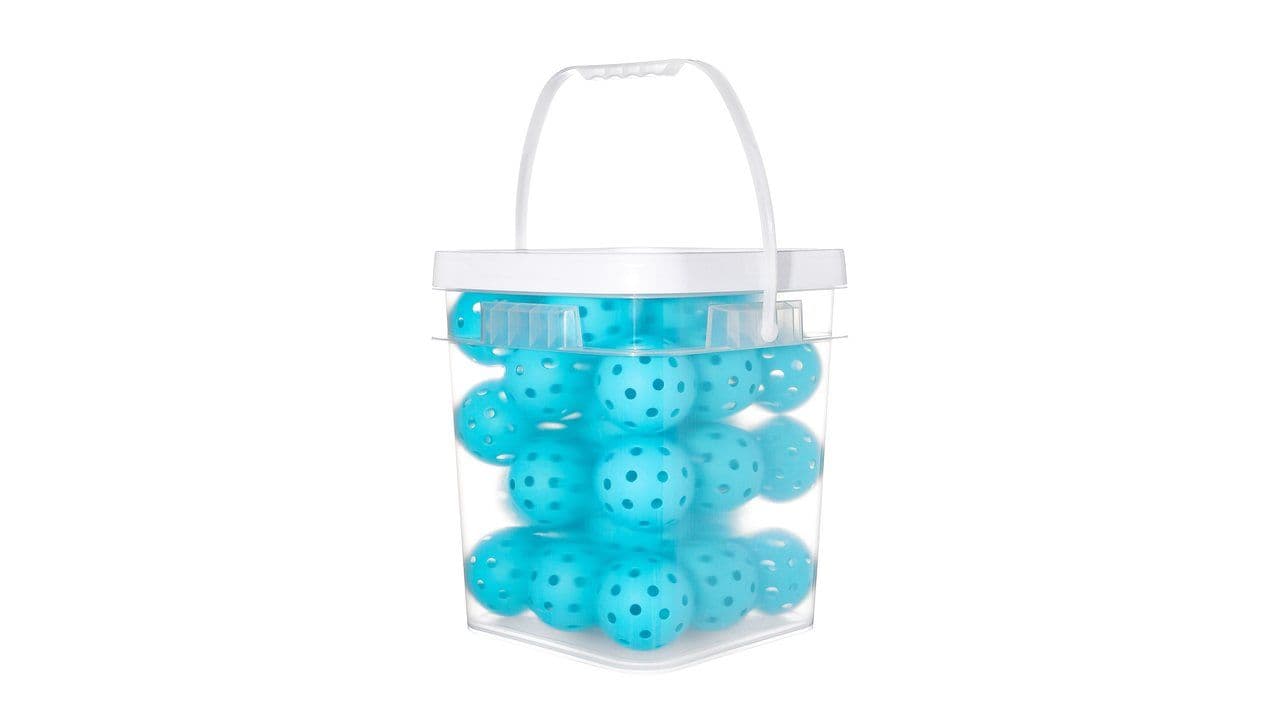
Sourcing wholesale pickleball balls looks simple until the first container arrives out-of-round, under-bounce, or missing the approval your market needs to sell them. Balls are a high-volume, low-margin line, so the spec sheet and the compliance box matter more than the unit price — a cheap ball that cracks or fails a standard costs more in returns than it ever saved. This is the category overview: the ball types and their specs, the packaging that fits each channel, the compliance that varies by market, and the MOQ reality, so you order the right ball in the right pack with the right paperwork.
Pickleballs split into outdoor 40-hole and indoor 26-hole, and outdoor balls further split by how they're molded. Each choice changes durability, feel, and cost. Pair that with the dimension and hardness specs a sellable ball has to hit, and you have the full sourcing picture in one page.
Key Takeaways
- Outdoor balls have 40 small holes and harder plastic; indoor balls have 26 larger holes and a softer resin.
- Outdoor balls are rotomolded (seamless, durable) or injection molded (seamed, cheaper); indoor is usually injection.
- A sellable ball measures about 2.874–2.972 in across, weighs 24.3–26.2 g, and runs roughly 40–50 on the Durometer D hardness scale.
- Packaging drives the channel: bulk poly bags for clubs, buckets for facilities, mesh 6-packs and retail boxes for stores.
- Compliance varies by market — USA Pickleball approval, plus EU and US requirements depending on how the ball is sold; confirm per market.
- MOQ is usually set per color; start with a sample order, then a mixed-color first run before committing to full quantities.
Ball types, specs and MOQ at a glance
Start with the category matrix. Each row is a ball you can stock; the columns are the decisions that come with it.
| Ball type | Process | Durability | Best channel |
|---|---|---|---|
| Outdoor 40-hole, rotomolded | Seamless one-piece | Highest | Premium, tournament |
| Outdoor 40-hole, injection | Two-piece, seamed | Good, seam-dependent | Budget bulk, rec |
| Indoor 26-hole | Injection, softer resin | Moderate (gym use) | Gyms, schools, clubs |
The outdoor 40-hole ball is the volume SKU for most catalogs, and on that line the rotomolded vs injection choice changes durability and cost more than anything else. Add indoor 26-hole only if you serve gyms — the indoor vs outdoor guide covers when it's worth a separate SKU.
The specs a sellable ball must hit
Four numbers separate a ball that plays right and passes approval from one that comes back. Verify them on a sample, not just on the quote.
- Diameter: about 2.874–2.972 in (roughly 7.4 cm) and round — out-of-round balls roll and bounce off-line.
- Weight: 24.3–26.2 g; scatter inside a batch shows up as inconsistent bounce even when each ball is "in spec."
- Hardness: roughly 40–50 on the Durometer D scale at 70°F — too soft plays dead, too hard cracks in the cold.
- Holes: 40 for outdoor, 26 for indoor, drilled clean and evenly spaced for true flight.
These figures track the USA Pickleball equipment standards; confirm the current numbers there before a production run, since the standard is periodically updated.
Packaging: match the pack to the channel
The same ball sells in different packs to different buyers, and the wrong pack stalls in the warehouse. Pick the format your channel actually moves.
| Packaging | Typical pack | Best for |
|---|---|---|
| Bulk poly bag | 100–250 | Clubs, high-volume resellers |
| Bucket | 36–50 | Facilities, coaching, ball machines |
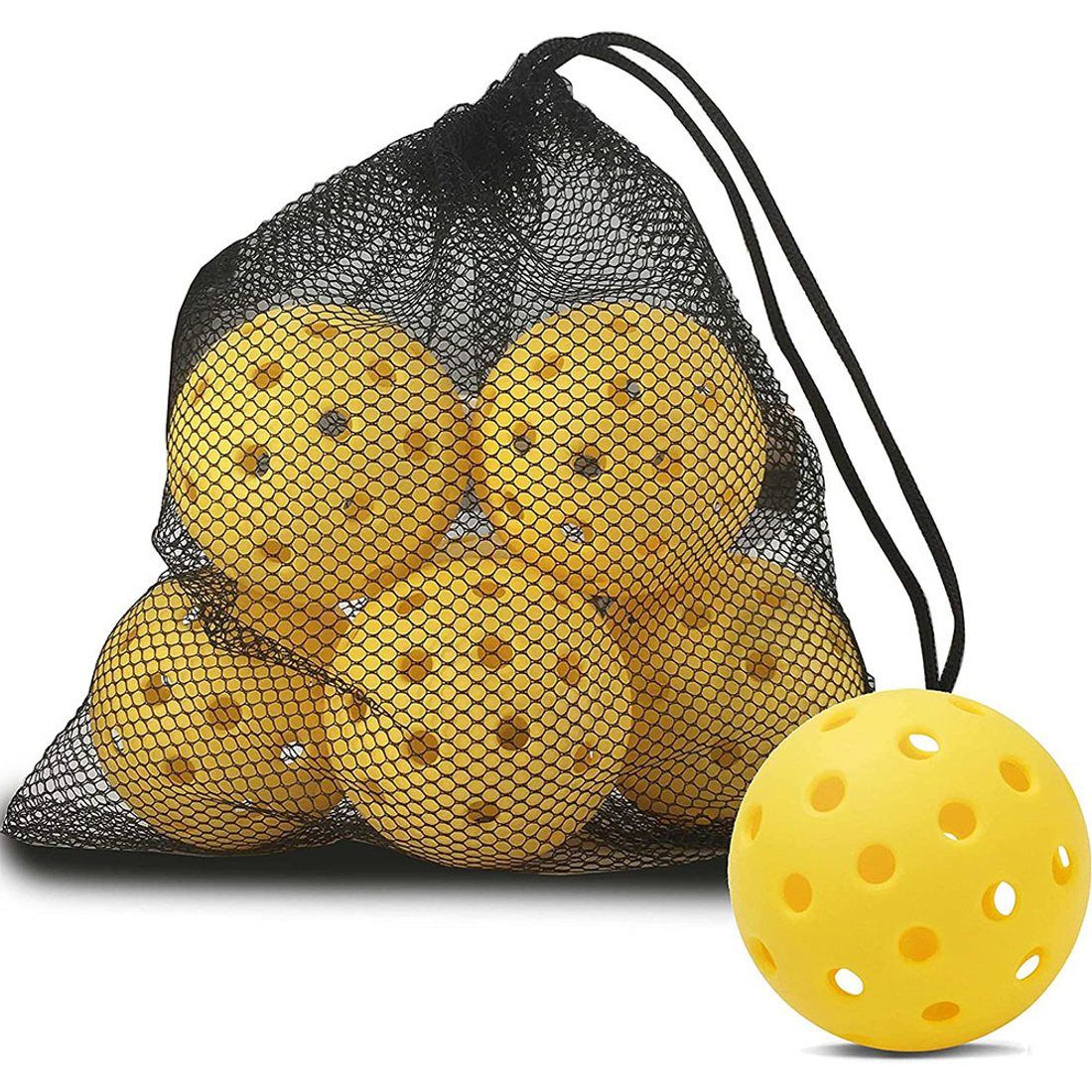
| Mesh bag | 6–12 | Retail multipacks, online |
| Retail box | 3–6 | Shelf retail, gift, branded SKUs |
Retail boxes and mesh bags carry your branding and barcodes; bulk bags and buckets win on cost per ball. A cracked bucket lid or a crushed carton damages stock before it sells, so the pack's own durability is part of the spec.
Compliance varies by market
Compliance depends on where and how you sell, and it's the box buyers skip until customs or a marketplace flags it. Treat the points below as a starting checklist, not legal advice.
- Play approval: For competitive sale, buyers often want a ball on the USA Pickleball approved list; some markets reference other sanctioning bodies. Confirm which your market expects.
- EU sale: Goods sold in the EU may need to meet REACH chemical rules, and may require CE-related checks depending on how the product is classified.
- US sale: If a ball is marketed or packaged as a children's product, CPSIA testing and labeling can apply, depending on the product type and the importer's role.
Requirements vary by product, channel, market, and the importer's role, so confirm current obligations with a customs broker or the relevant authority before you ship.
MOQ and how to start small
MOQ on balls is usually set per color, because each color is a separate material batch. That's the number to negotiate, and there's a sensible way to de-risk a first order.
Order a sample set first to verify diameter, weight, hardness, and bounce in hand. Then place a smaller mixed-color first run — a few hundred per color is common, supplier-dependent — before committing to full quantities or custom retail packaging. That sequence catches a spec problem while it's cheap, instead of discovering it across a full container. Warning: a supplier quoting a very low price with no sample step is the one most likely to ship out-of-spec balls.
What we check on a ball order before shipment
Because the spec lives in numbers a buyer can't see across a sealed carton, every ball order runs through the same checks before packing:
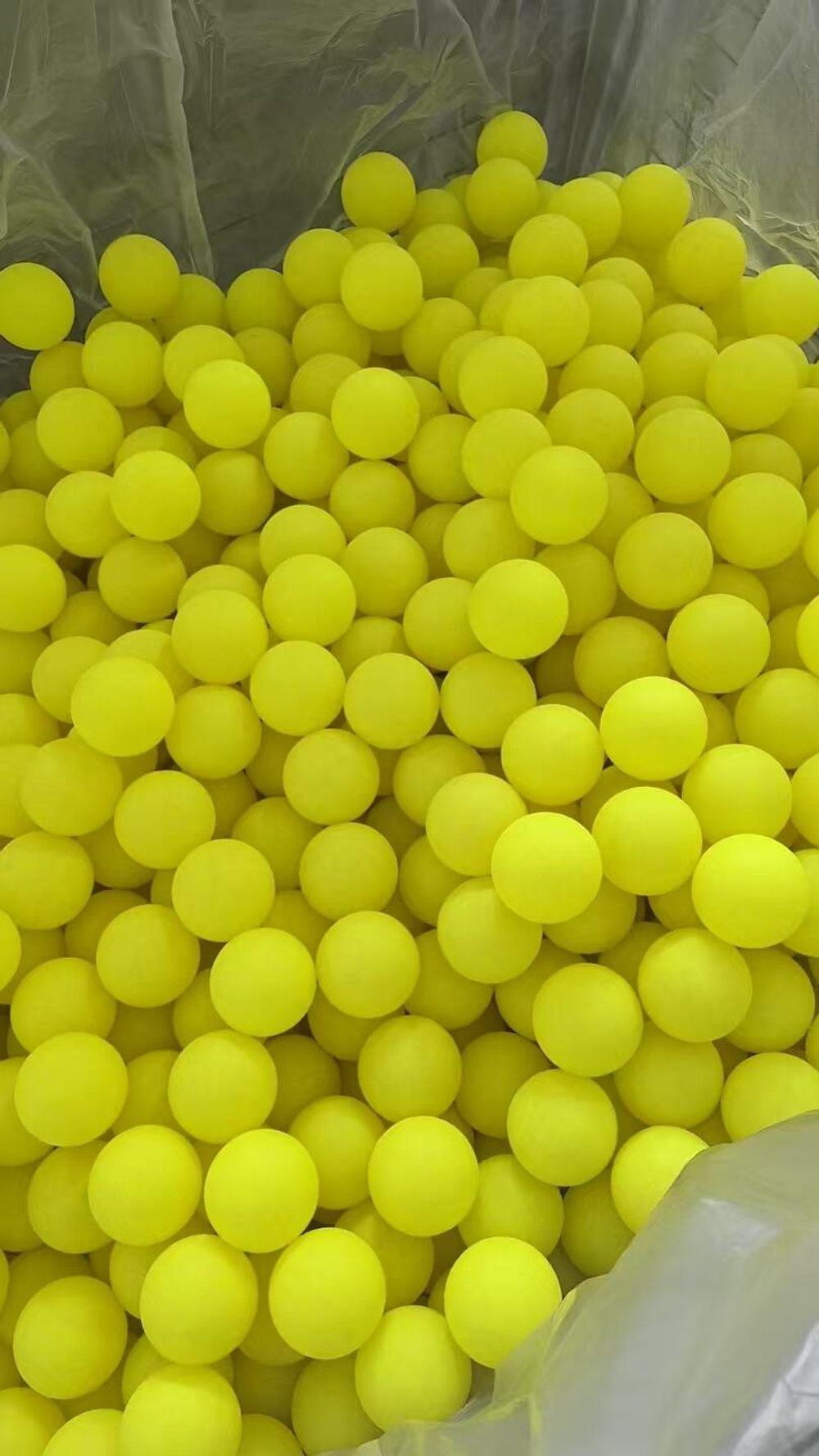
- Hardness: sampled against the 40–50 Durometer D window so the ball plays right and passes approval.
- Weight and roundness: checked to the 24.3–26.2 g band and for true sphericity; outliers are pulled.
- Hole drilling and seam: clean, even holes; on injection balls, the seam weld is flex-checked.
- Packaging integrity: bucket lids, mesh zippers, and carton marks reconciled to the packing list.
Ask any ball supplier to confirm hardness and weight tolerance in writing and to support a pre-shipment check. The same QC discipline you'd expect on paddles applies to balls.
Conclusion
Wholesale pickleball balls reward getting the boring details right: pick outdoor 40-hole or indoor 26-hole, choose rotomolded or injection on the outdoor line, hit the diameter, weight, and hardness specs, match the pack to your channel, and clear the compliance your market needs. MOQ is per color, so sample first and scale in steps. Do that and a low-margin, high-volume line becomes a reliable reorder instead of a return wave.
If you're building a ball lineup, start with a sample set against the specs above, then a mixed-color first run. Our team makes outdoor 40-hole balls in rotomolded and injection constructions and packs them bulk, bucket, mesh, or retail to fit your channel.
Written by the PickleOEM team — a source pickleball factory in China producing rotomolded balls and carbon paddles for international brands and importers. We make outdoor 40-hole balls in both constructions and inspect every order to the USA Pickleball specs before shipment.
Frequently Asked Questions
What specs should wholesale pickleball balls meet?
About 2.874–2.972 in diameter, 24.3–26.2 g weight, 40–50 on the Durometer D hardness scale, and 40 holes (outdoor) or 26 (indoor). Verify them on a sample and confirm current USA Pickleball standards.
What's the MOQ for wholesale pickleballs?
It's usually set per color, since each color is a separate batch — often a few hundred per color, supplier-dependent. Start with a sample set, then a mixed-color first run before committing to full quantities.
Do imported pickleballs need certification?
It depends on the market and how they're sold. Competitive buyers often want USA Pickleball approval; EU sale may involve REACH, and US sale may involve CPSIA if marketed for children. Confirm with a customs broker.
Which packaging should I order?
Match it to your channel: bulk bags for clubs, buckets for facilities and ball machines, mesh 6-packs and retail boxes for stores. Retail packs carry your branding and barcodes; bulk wins on cost per ball.
Want to source this quality for your brand?
Contact our factory directly on WhatsApp for an instant MOQ and pricing quote.