Pickleball Ball Colors: The Best Color for Visibility Indoors, Outdoors & Low Light
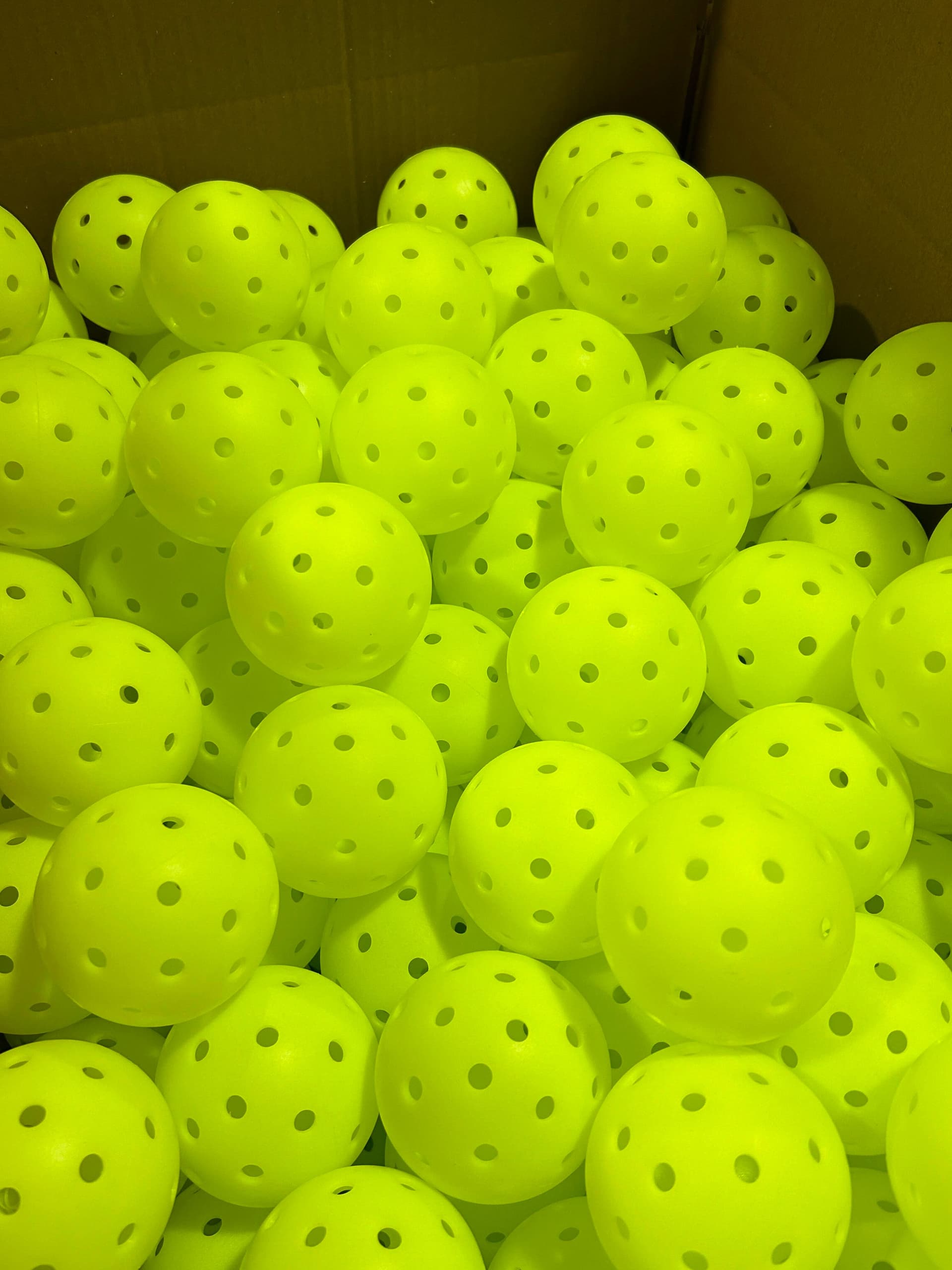
Optic yellow is the default pickleball color, and most of the time it's the right one — but not always, and "always yellow" is the mistake that costs a brand returns. The honest short answer: pick the color by where the ball gets played. Yellow wins on outdoor courts in daylight. White beats it on pale indoor floors. Neon green pulls ahead at dusk and under weak gym lights. For a private-label brand, color is two decisions at once — visibility for the player, and a sourcing choice at the factory.
This guide covers which color actually plays best in each venue, why optic yellow became standard, what the color science says, and how to spec a ball color for a private label without tripping the tournament-legality rule. Color changes nothing about how the ball flies — same plastic, same holes, same bounce. It changes whether a player can see it, and that alone drives which SKU sells.

Key Takeaways
- Optic yellow is the outdoor daylight default because it contrasts hard against blue and green courts. It's the safe standard, not the universal best.
- White often beats yellow on pale indoor floors and on lobs against a bright sky, where yellow washes into the background.
- Neon green is the low-light pick — dusk, overcast, dim gyms — because human vision peaks near 555 nanometers, right in the green band, so a green ball reads brightest when light is scarce.
- Orange and other specialty colors earn their place against specific backdrops: bright white gym floors, dark surfaces, or snow.
- Color does not change how the ball plays — same material, hole pattern, and bounce. It only changes visibility, which is the whole point.
- USA Pickleball doesn't mandate a color, but a tournament-legal ball must be a single uniform color; two-tone training balls aren't approved for sanctioned play — a real constraint when you spec a private-label color.
The short answer: best color by venue
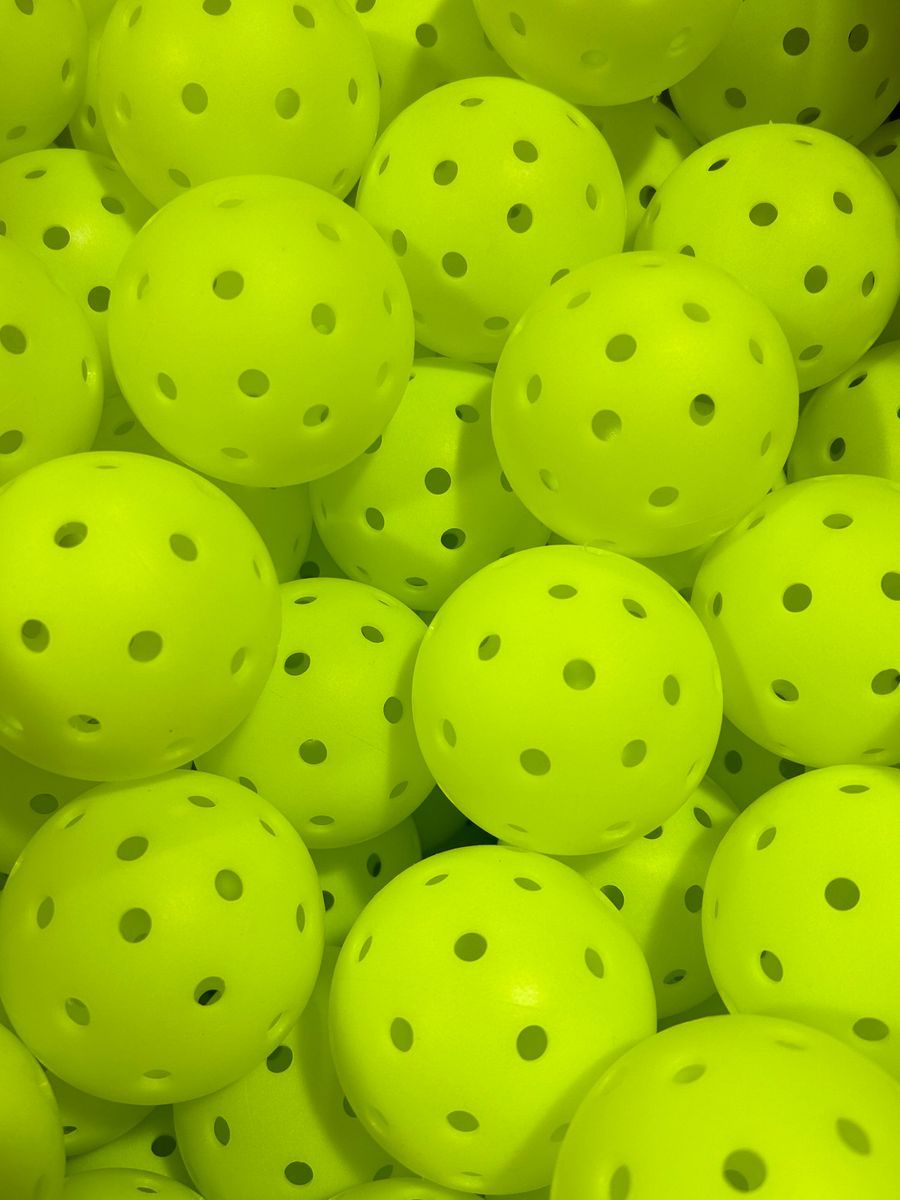
Match the color to the light and the surface behind the ball. There's no single "best" color, only the best color for a setting, and the table below is the working version of that. A program running both outdoor courts and a shared gym often stocks two colors rather than forcing one to cover both — a small cost that beats a season of players squinting.
| Setting | Best color | Why |
|---|---|---|
| Outdoor, full daylight | Optic yellow | Hard contrast against blue/green courts |
| Outdoor, dusk / overcast | Neon green | Peak eye sensitivity in low light |
| Lob against bright sky | White | Yellow washes into sky glare |
| Indoor, light floor, good light | White | Yellow loses contrast on pale wood |
| Indoor, dim or dark surface | Neon green | Brightest to the eye when light is weak |
| Bright white gym floor | Orange | Cuts through a light, busy background |
Why optic yellow became the default
Yellow won outdoors for one reason: contrast. A pickleball court is usually blue or green, sometimes gray, and optic yellow sits far enough from all three on the color wheel that the ball separates cleanly from the surface. Add strong daylight and the yellow reads bright and sharp, which is why tournament outdoor balls and the reference balls a private label benchmarks against are almost all optic yellow. It's the reliable choice, and reliability is why it became the box a buyer ticks without thinking.
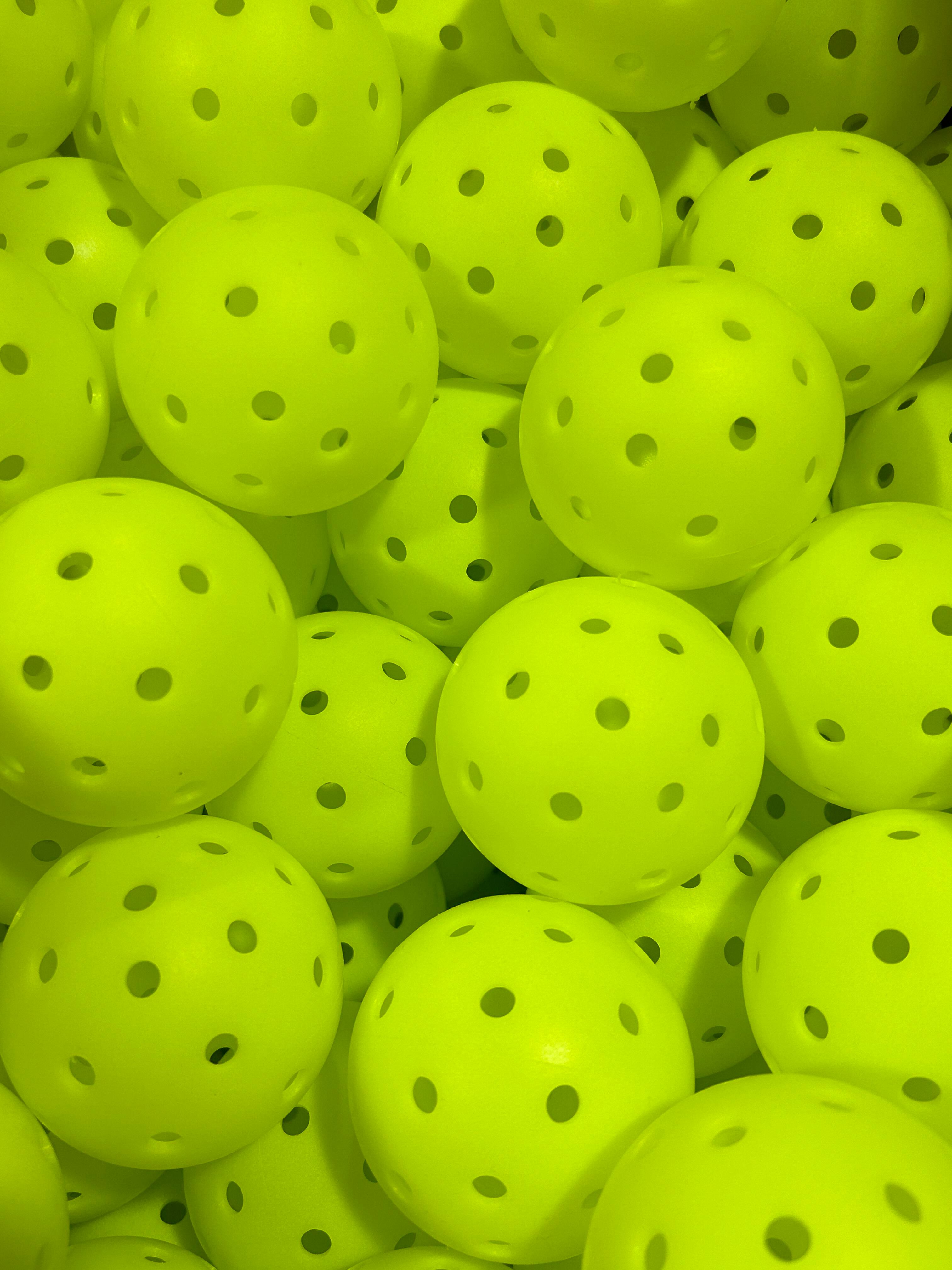
The catch is the one every yellow-only buyer eventually hears about. On a high lob tracked against a bright sky, yellow loses its edge — the ball and the glare occupy nearby brightness, and players lose the ball for a beat at the top of its arc. It's a narrow failure, but a real one, and it's the first crack in the "always yellow" habit. Yellow is the best default. It is not the answer to every shot in every light.
Where yellow loses: indoors and overhead
Take the same yellow ball inside onto a pale maple gym floor and the contrast collapses. Light wood is close enough to yellow in tone that the ball stops popping, and a color that dominated outdoors becomes average indoors. On a bright, light-surfaced indoor court, white usually tracks better — the reason indoor play historically leaned white before neon options spread. This is also why the indoor versus outdoor ball split is about more than hole count; the visibility math flips indoors too.
Then there's low light — the dim municipal gym, the 7 p.m. outdoor session under weak court lights, the overcast afternoon. Here neon green takes over, and the reason is physiological, not marketing. For darker courts and evening play, green is the color that stays visible longest as the light drops, which pushes it ahead of yellow for any venue where lighting is the weak link. Programs that play into the evening feel this immediately.
The color science in one number
The human eye's daylight sensitivity peaks at a wavelength of about 555 nanometers, which sits in the yellow-green band. That single fact explains most of this article: colors near that peak look brighter to us at a given light level than colors further away, and green edges out pure yellow as light dims because the eye's sensitivity shifts slightly toward shorter wavelengths in low light. It's why a neon green ball seems to glow at dusk while a yellow one goes flat — the peak of human visual sensitivity is doing the work, not the dye.
This is the contrarian bit worth knowing: yellow is the tradition, but green is closer to the color the eye sees best. Yellow holds the outdoor-daylight crown on contrast against blue courts, not because it's the most visible pigment in the abstract. Once you separate "highest contrast against this court" from "brightest to the eye," the whole color question gets easier to reason about — and easier to spec.
Specialty colors and the two-tone trap
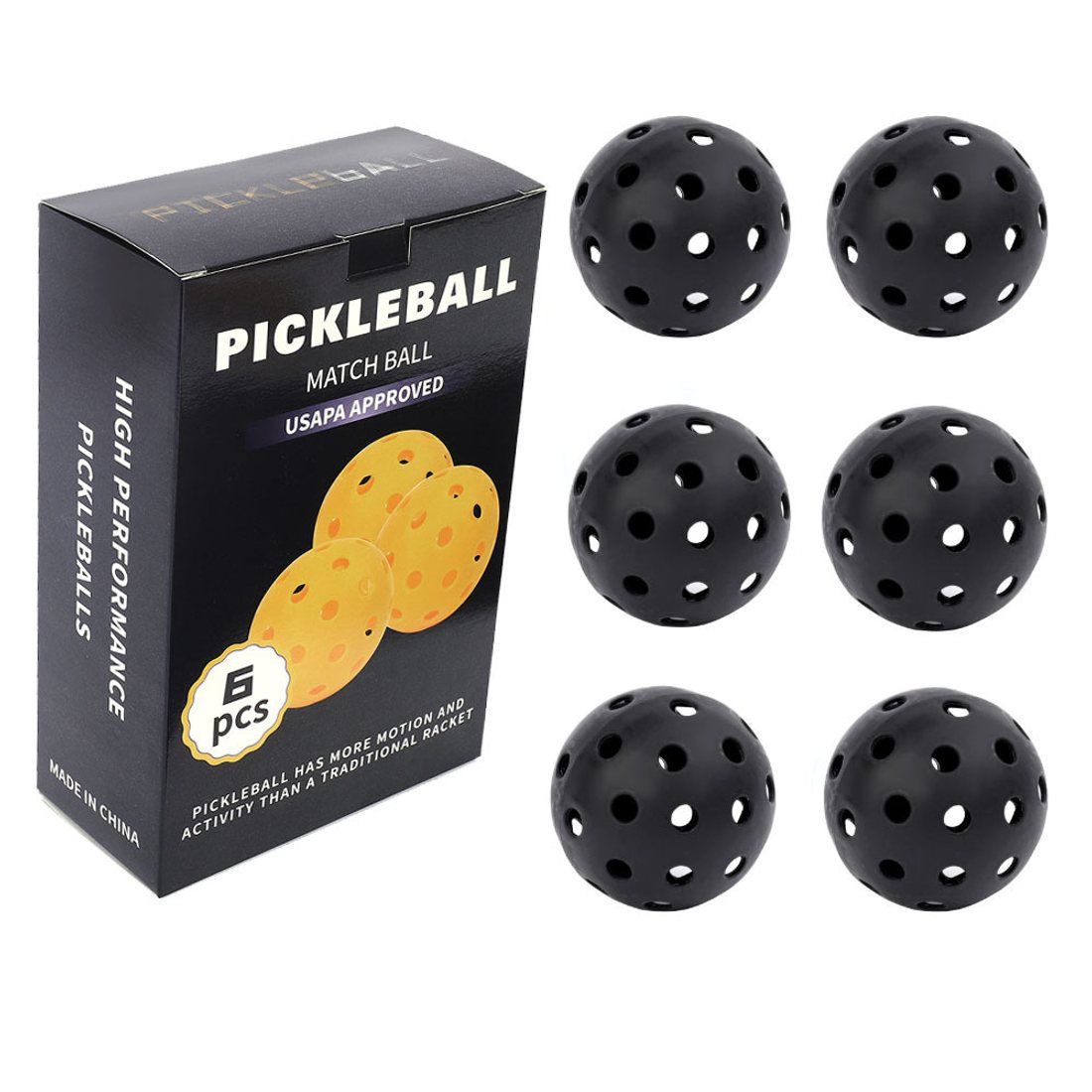
Beyond the big three — yellow, white, green — orange, purple, and pink each solve a specific contrast problem. Orange cuts through a bright white gym floor. Bolder colors help against busy or dark backdrops where standard yellow gets lost. These aren't gimmicks; they're contrast tools for a specific room. A club with an unusual floor color is exactly the buyer who should ignore the default and pick the color that separates from their surface.
Two-tone balls are the trap. A yellow-and-green split-color ball makes spin easier to read and is genuinely useful for coaching, but a ball has to be a single uniform color to be tournament-legal, so a two-tone ball can't serve sanctioned play. If a brand wants both a training SKU and a match SKU, that's two products, not one clever ball. Deciding that split before tooling a color is cheaper than discovering it after a customer's league rejects the ball.
Speccing color for a private label
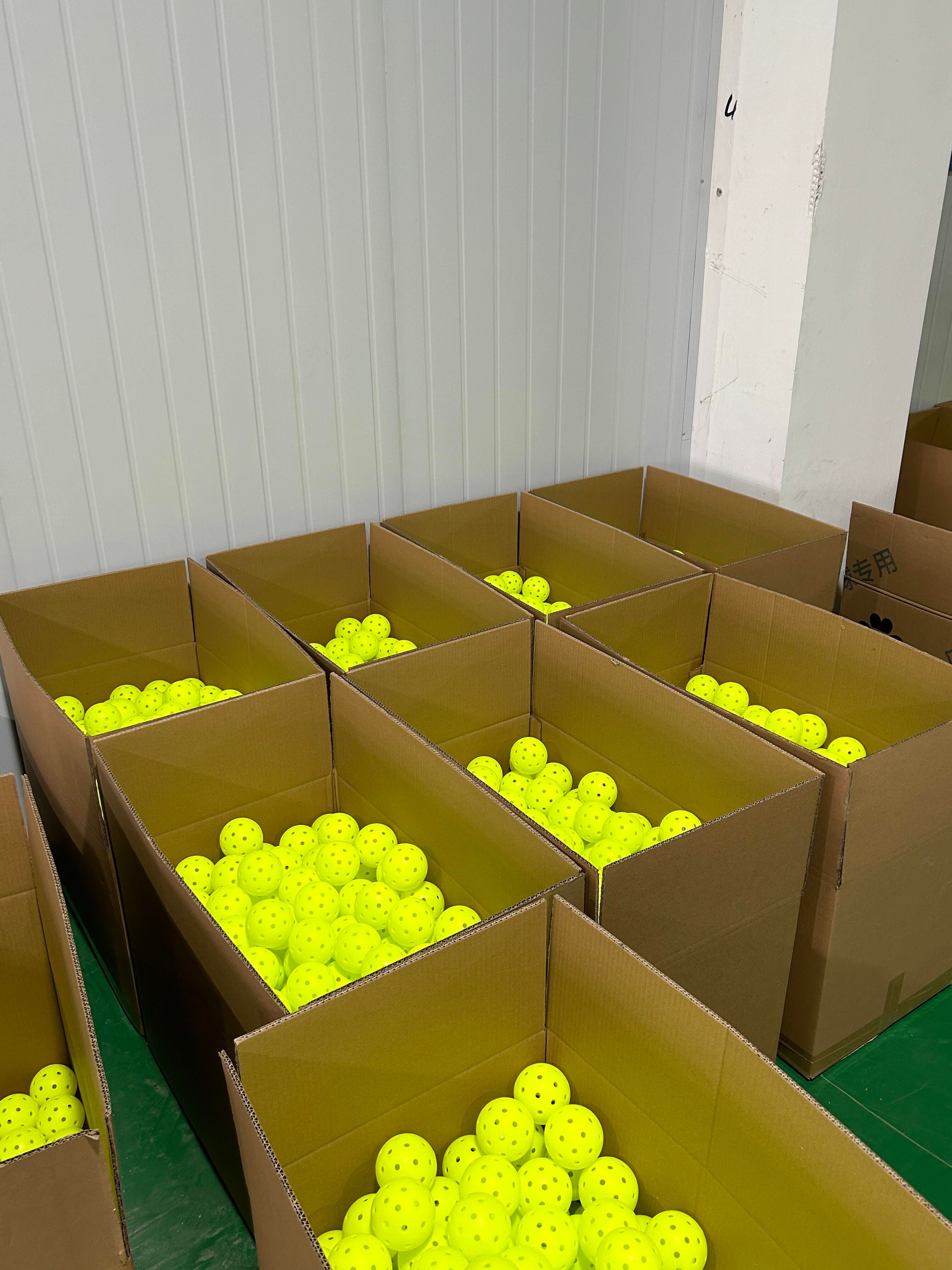
For a brand, color is a sourcing decision with three moving parts. First, match the color to your market's venues — a Sun Belt outdoor market wants optic yellow, a northern market with evening indoor leagues may want neon green, and a broad distributor may need both. Second, keep it tournament-legal: one uniform color, on the approved-spec ball, which is the same discipline covered in sourcing USA Pickleball approved balls. Third, treat each color as its own production batch with its own minimum, because color is set in the resin, not added later. Our private-label color program handles that batching, and the general order thresholds are in wholesale ball specs and MOQ.
| Color | Best market fit | Sourcing note |
|---|---|---|
| Optic yellow | Outdoor daylight markets; the safe default SKU | Highest demand; easiest to pair with a dark logo |
| Neon green | Evening leagues, dim gyms, overcast regions | Strong second SKU for mixed-venue distributors |
| White | Light-floor indoor programs | Logo needs a colored outline to read |
| Orange / specialty | Bright or unusual floor colors; niche branding | Smaller batches; confirm single-color legality |
One more sourcing note that catches new brands: logo contrast. A printed logo has to read on the ball color you chose, so a dark logo on optic yellow works while the same logo vanishes on a dark specialty ball. Pin the color first, then design the print to sit on it — the print mechanics are in custom logo pickleballs. For true low-light and novelty use, luminescent balls are a separate product path covered in the glow-in-the-dark sourcing guide, not just a brighter dye.
Frequently Asked Questions
What color pickleball is easiest to see?
It depends on the light and the surface behind the ball. Optic yellow is easiest to see outdoors in daylight against blue or green courts. Neon green is easiest in low light — dusk, overcast, or dim gyms — because human vision peaks near 555 nanometers in the green band. White is easiest on pale indoor floors and on lobs against a bright sky, where yellow washes out. There's no single answer, only the best color for a setting.
Does pickleball color affect how the ball plays?
No. Color is a dye choice and doesn't change the material, hole pattern, weight, or bounce — a yellow and a green ball of the same model play identically. Color only affects visibility, which is why the right choice is the one a player can track in a given venue, not the one that "plays better." Any performance difference between two balls comes from construction, not color.
Why are most pickleballs yellow if green is more visible?
Because outdoor daylight visibility is about contrast against the court, and optic yellow separates hardest from the blue and green surfaces most courts use. Green is closer to the eye's peak sensitivity in the abstract, but against a green court it can blend rather than pop. Yellow became the default for the most common condition — outdoor daylight — and green wins mainly where light is weak.
Does USA Pickleball require a specific ball color?
USA Pickleball does not mandate a particular color, and its approved-ball list is based on physical specifications rather than color. What it does require for sanctioned play is that the ball be a single uniform color. That's why two-tone training balls, however useful for coaching, aren't tournament-approved. Confirm current equipment rules with USA Pickleball, since standards are revised periodically.
Can I order a custom-color private-label pickleball?
Yes. Color is set in the resin during rotomolding, so a factory can produce optic yellow, neon green, orange, or a custom shade — each as its own production batch with its own minimum order. For tournament use, keep it a single uniform color. Decide the color before tooling and design any printed logo to contrast with it, since a dark logo disappears on a dark ball.
What color is best for indoor gym play?
On a light-colored, well-lit gym floor, white usually tracks best because yellow loses contrast against pale wood. In a dim gym or against a dark surface, neon green is the stronger choice. Orange is a good option against a bright white floor. Match the ball to your specific floor color and lighting rather than defaulting to the outdoor yellow indoors.
Want to source this quality for your brand?
Contact our factory directly on WhatsApp for an instant MOQ and pricing quote.