Glow-in-the-Dark & Night Play Pickleballs: A Sourcing Guide
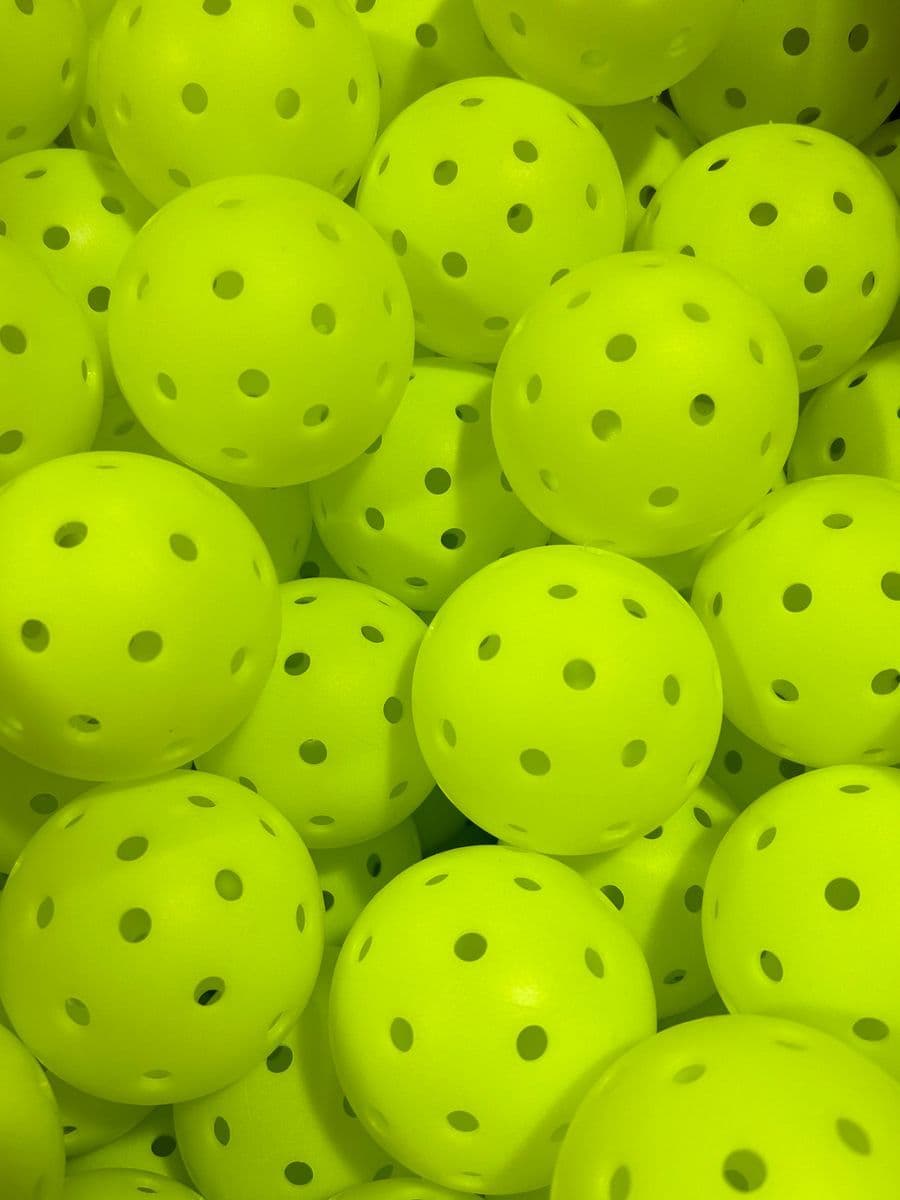
Glow pickleball is the rare accessory category that sells itself: clubs run "glow nights" as sold-out events, communities without lit courts get their evenings back, and retail buyers grab a glow 4-pack as an impulse add-on that a standard yellow ball never triggers. Yet most wholesale catalogs treat glow balls as an afterthought — one photo, no specs, no honest answer about how they're actually lit. That gap is the opportunity, and it's also the trap.
Because "glow pickleball" isn't one product. It's three different technologies — photoluminescent charge-glow, UV/blacklight-reactive, and battery LED — with different price points, different failure modes, and different buyers. Order the wrong type for your channel and the novelty that should have printed margin comes back as complaints. This guide breaks the category down the way a buyer needs it: how each type works, who each one is for, what to put on the spec sheet, and where the quality risks hide.

Key Takeaways
- "Glow pickleball" covers three technologies: photoluminescent (charges under light, glows 10–30 min), UV-reactive (glows only under blacklight), and LED-core (battery lit, brightest, priciest). Each fits a different buyer.
- Clubs running glow-night events are the strongest channel — they buy UV-reactive balls plus blacklights as a package and reorder seasonally.
- Glow balls are event and recreation products, not tournament gear — no glow ball is on the USA Pickleball approved list, so never market them as sanctioned-play equipment.
- Spec the base ball first: a glow ball is still a 40-hole outdoor ball that must bounce and fly straight. Pigment or LED on a bad ball is a bad glow ball.
- The #1 quality risk by type: weak/short glow (photoluminescent), uneven pigment (UV), and dead batteries or rattling cores (LED). Sample-test all three in the dark, not the showroom.
- Margins run higher than standard balls — glow sells as a novelty premium — but only if the packaging shows the glow. A glow ball in a plain poly bag is invisible on the shelf.
The three glow technologies — and who each one is for
Everything in this category flows from how the ball produces light. Get this distinction clear and every sourcing decision downstream — price point, channel, packaging claim — falls into place.
| Factor | Photoluminescent | UV / blacklight-reactive | LED core |
|---|---|---|---|
| How it lights | Pigment charges under light, then glows | Fluorescent pigment lit by blacklight | Battery-powered LED inside the ball |
| Glow duration | ~10–30 min per charge, fades | Constant while under UV light | Hours, until battery dies |
| Relative cost | Low — pigment in the resin | Low — but needs venue blacklights | Highest — electronics inside |
| Play feel risk | Minimal if pigment is in-mold | Minimal if pigment is in-mold | Weight/balance shift; rattle if poorly built |
| Best-fit buyer | Retail impulse packs, casual backyard | Clubs & venues running glow events | Premium gift/novelty retail, rentals |
The channel logic writes itself from the bottom row. A sporting-goods buyer building an impulse SKU wants cheap photoluminescent 4-packs. A club running Friday glow nights wants UV-reactive balls by the bucket plus blacklight fixtures — and reorders every season the format keeps selling out. A gift catalog wants the LED ball's wow factor and will pay for it. Selling one type into the wrong channel is the category's classic mistake: a photoluminescent ball at a two-hour club event fades mid-game, and the complaint lands on your customer's desk, then yours.
A glow ball is still a ball: spec the base first
The most common quality failure in this category has nothing to do with the glow — it's factories treating glow balls as toys and skipping the ball fundamentals. Players notice immediately: a novelty ball that wobbles, bounces dead, or cracks on the first cold evening kills the repeat purchase that makes the category worth stocking.
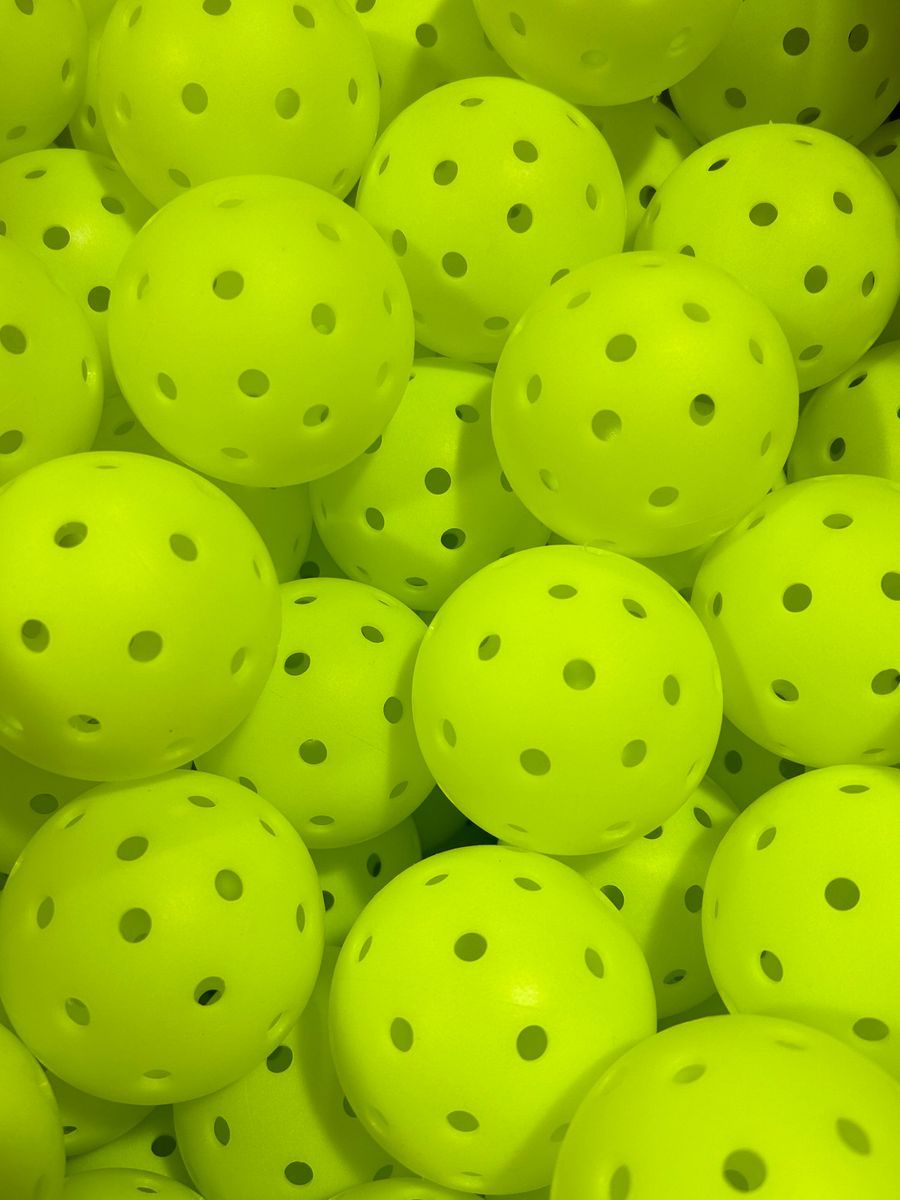
Spec the base ball exactly as you would a standard outdoor ball: 40-hole pattern for outdoor night play, weight in the 24.3–26.2 g window, round within tolerance, consistent bounce across the batch. The construction question matters here too — a seamless rotomolded ball versus a two-piece injection ball carries the same durability trade-offs in a glow version, with one addition: on injection glow balls, pigment concentration can vary between the two shells, which shows up as a ball that glows brighter on one hemisphere. In-mold pigment (mixed into the resin before molding) beats surface coating every time — coatings scuff off with play, and the glow goes with them. Run the same ball QC checks — bounce, roundness, seam, weight — on glow samples, then add the glow tests below.
The glow-specific QC checks buyers skip
Standard ball QC won't catch a glow failure — you have to test the light itself, and you have to do it in the dark. Four checks cover the category:
- Glow duration and brightness (photoluminescent): Charge sample balls under a defined light source for a defined time, then measure how long they stay usably visible in a dark room. Have the factory state the charge-to-glow ratio in writing; "glows in the dark" without numbers is not a spec.
- Pigment evenness (all types): In the dark, a good ball glows uniformly. Blotches, dim bands, or a bright seam line mean poor pigment dispersion — reject the sample, because it gets worse across a production run.
- Glow durability: Scuff-test a sample against court-like abrasion, then re-check the glow. In-mold pigment survives; coatings fail this test within minutes of simulated play.
- LED-specific checks: Confirm battery run-time against the claim, drop-test for rattle and LED mount failure, and check the on/off mechanism survives repeated activation. A rattling LED ball is the category's worst review — it plays wrong and sounds broken.
Test glow samples in an actual dark room, not the supplier's showroom. Every glow ball looks impressive under showroom lighting — the product only proves itself in the conditions your customers will use it.
Set the expectation: event gear, not tournament gear
One positioning rule protects you from the category's only real liability: glow balls are recreation and event products, and no glow ball sits on the USA Pickleball approved equipment list. That's fine — glow nights aren't sanctioned tournaments — but your packaging and listings must not blur the line. "USAPA-approved glow ball" is a claim that will eventually get a listing pulled or a retail account burned. If your buyer needs approved equipment for daytime league play, that's a different SKU; the certification landscape explains exactly which stamp matters where.
Position glow balls the way the successful club programs do: as the centerpiece of an event format. The strongest wholesale story in this category isn't the ball at all — it's the glow-night kit: UV-reactive balls, court-line tape, and a blacklight recommendation, sold to venues as a program they can ticket. Clubs that run one successful glow night reorder for the season, and the reorder is where this category's economics actually live.
Pricing, packaging, and the margin math
Glow balls carry a novelty premium at retail — typically selling well above a standard ball's price point while costing only modestly more to produce (pigment adds little; LED electronics add more). That spread is the reason to stock the category. But the premium only materializes if the shelf presentation earns it, and glow products have one non-negotiable packaging rule: the customer has to see the glow before they buy.
- Show the glow on the box: A night-play action photo or a glow-simulation panel outsells a plain product shot. A glow ball in a clear poly bag reads as a yellow ball with a higher price.
- Small pack sizes for retail: 4-packs and 6-packs match the impulse purchase; buckets fit the club channel. The private-label packaging options for standard balls all apply here, with the dark-panel print treatment added.
- State the technology honestly: "Charges in light, glows 15+ minutes" or "requires blacklight" on the front panel prevents the mismatch returns that kill novelty SKUs.
- Seasonality: demand skews to autumn and winter — shorter evenings are the category's sales engine. Time your order so stock lands before the clocks change, not after.
What we check on every glow ball batch
Because glow versions run on the same lines as our standard rotomolded outdoor balls, every glow batch clears the standard ball QC first, then the glow layer:
- Base ball QC: weight window, diameter and roundness, bounce cluster, wall and hole consistency — identical to the standard batch checks.
- In-mold pigment verification: pigment is mixed into the resin, not coated on — confirmed by scuff-testing samples and re-checking glow.
- Dark-room batch sampling: sampled balls charged and checked for even glow and usable duration before packing.
- Packaging claim match: the glow duration printed on the box is the one the batch actually tested to — not a marketing number.
Ask any glow ball supplier for their dark-room test protocol in writing. A factory that can't describe how it verifies glow duration and pigment evenness is selling you a yellow ball with a story.
Conclusion
Glow pickleball is a real category with real reorder economics — clubs ticket glow nights, retailers print novelty margin, and communities without lit courts buy their evenings back. But it's three technologies, not one product: photoluminescent for impulse retail, UV-reactive for the club event channel, LED for premium novelty. Match the type to the channel, spec the base ball like the outdoor ball it is, and add the dark-room checks that standard QC misses.
Order samples of the types side by side, test them in actual darkness, and build the packaging around showing the glow. Do that and you're stocking a differentiated SKU most competitors treat as an afterthought — which is exactly why it's worth doing properly.
Frequently Asked Questions
How do glow-in-the-dark pickleballs work?
Three ways: photoluminescent balls charge under light and glow for roughly 10–30 minutes; UV-reactive balls fluoresce continuously under blacklight; LED balls carry a small battery-powered light inside and glow for hours. Each suits a different buyer — impulse retail, club glow events, and premium novelty respectively.
Are glow pickleballs USAPA approved for tournaments?
No — glow balls are recreation and event products, and none appear on the USA Pickleball approved equipment list. They're built for glow nights, backyard play, and unlit courts. Never market them as sanctioned tournament equipment; use an approved standard ball for league play.
Which glow ball type should a club buy for glow-night events?
UV/blacklight-reactive balls. They glow continuously as long as the venue's blacklights are on — no fading mid-game like photoluminescent balls and no batteries to die like LED balls. Pair them with blacklight fixtures and fluorescent court-line tape as an event kit.
Do glow pickleballs play the same as regular balls?
Pigment-based glow balls (photoluminescent and UV-reactive) play essentially the same when the pigment is mixed in-mold and the base ball is built to standard outdoor specs. LED balls carry electronics inside, so expect a slight weight and balance shift — acceptable for casual night play, noticeable to serious players.
What should I check when sourcing glow pickleballs wholesale?
Run standard ball QC first — weight, roundness, bounce, seam or wall integrity — then dark-room test the glow: duration and brightness against the claim, pigment evenness, and glow survival after scuffing. For LED balls, add battery run-time and a rattle drop-test. Insist the factory states its glow test protocol in writing.
Want to source this quality for your brand?
Contact our factory directly on WhatsApp for an instant MOQ and pricing quote.