Wholesale Pickleball Nets: Portable vs Permanent for Clubs & Retail
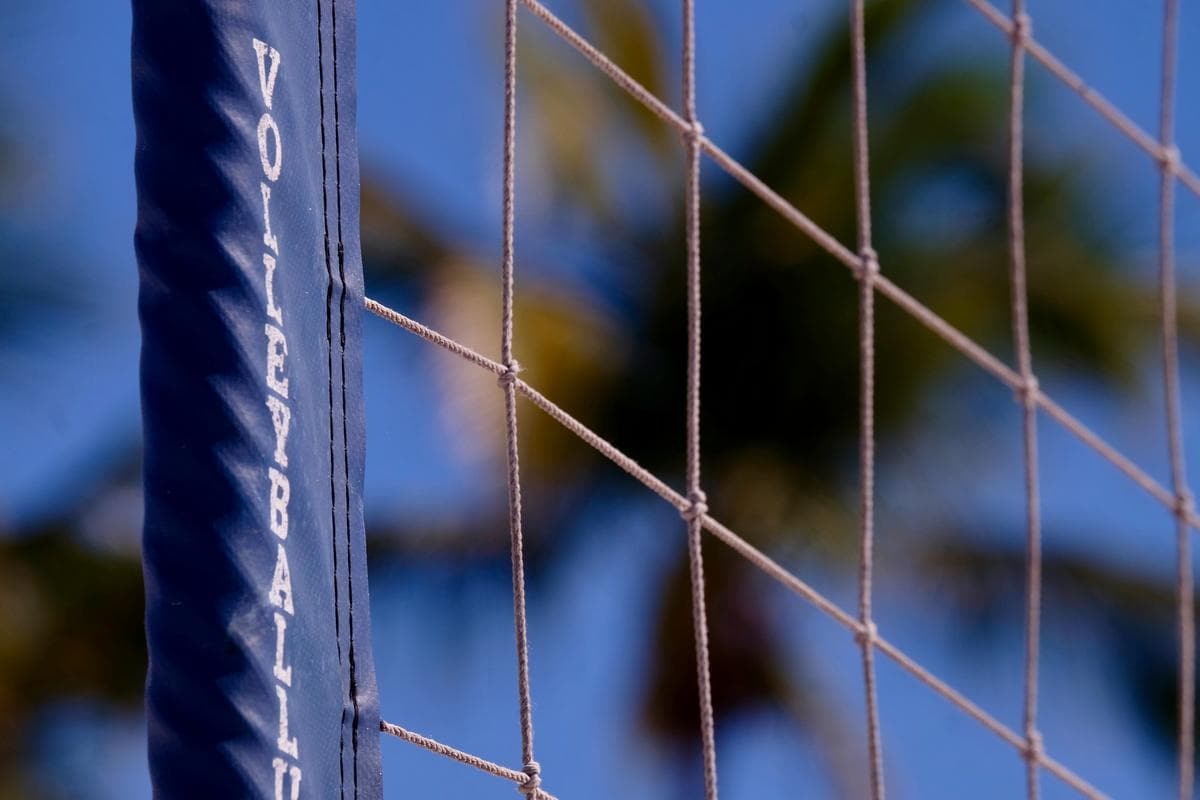
A pickleball net looks like the easiest accessory to spec — regulation height, tape across the top, done. Buy on that assumption at wholesale volume and you'll find out otherwise the first week they're deployed. A club discovers the "portable" net takes twenty minutes to set up because the base fills with water; a retailer's returns queue fills up because the tape rusts through in a coastal store; a facility installs permanent posts and then can't shift lines when the sport re-lines the court. Every one of these is a spec problem that should have been caught at purchase.
This guide is the buying framework we walk clubs, chain retailers, and distributors through when they're sourcing nets from a factory rather than reselling a brand catalog. It covers when a portable net is the right call and when it isn't, how to read a frame material spec that won't rust or bend, what the actual regulation dimensions are, and the wholesale-specific numbers — MOQ, packaging, replacement-parts stock — that decide whether a net program pays for itself or bleeds margin.

Key Takeaways
- Portable nets serve clubs and retail where courts flex or players carry gear; permanent nets belong on dedicated single-purpose courts where daily setup is not on anyone's job description.
- Regulation height is 36 inches at the posts and 34 inches at the center; a net that measures differently isn't tournament-legal and can't be sold as one.
- Powder-coated steel is the honest workhorse frame for portable nets — aluminum is lighter but bends at the base joint; unfinished steel rusts within a season anywhere near a coastline.
- A center strap is not a nice-to-have — it's what holds the 2-inch height drop from post to center, and its absence is the single biggest tell that a supplier cut corners on regulation compliance.
- Nets ship as heavy, bulky freight with awkward cube; a container of nets carries fewer revenue units than a container of paddles, which changes the FOB-to-landed math clubs need to run before pulling the trigger.
- The wholesale program that lasts isn't the cheapest quote — it's the one where replacement nets, tape, and center straps stay in stock, because the frame outlives the fabric two to one.
Portable vs permanent: which one your buyers actually need
The portable-vs-permanent decision looks like a spec question and is really a workflow question. It's decided by who sets the net up, how often, and whether the court hosts anything else. Get that wrong and even a well-built net becomes a source of complaints.
| Buyer | Portable | Permanent |
|---|---|---|
| Multi-purpose court (tennis, basketball, pickleball share space) | Required — nets come on and off daily | Not viable |
| Dedicated club with 4+ pickleball-only courts | Wastes staff time on daily setup | Correct — sleeved posts, one-time install |
| Retail (chain sporting goods, e-commerce) | The only SKU that matters — customers can't install permanent posts | Rare, niche B2B item only |
| Park district, municipal outdoor courts | Vandalism risk if left out | Sleeve system with removable post — the practical middle path |
| Rental / rec-center fleet | Correct — floor storage between sessions | Only if the floor is single-use |
The pattern most B2B buyers miss: portable nets dominate wholesale volume because that's what retail moves and that's what shared-use courts need. Permanent nets are lower volume, higher-margin, longer-cycle sales — good business, but different business.
Regulation dimensions — and why "official size" isn't always what you think
A regulation pickleball net has fixed dimensions that show up in every governing body's rulebook. If you're selling into clubs, schools, or any tournament-adjacent market, mis-spec here isn't a return, it's a legal-play problem that pulls the SKU off the shelf.
- Overall length: 22 feet minimum from post to post — the court is 20 feet wide, and the net has to overhang cleanly.
- Height at posts: 36 inches. Measured from the top of the tape to the playing surface, not from the ground beside the post.
- Height at center: 34 inches. This is where the center strap does its work — a net without one sags to 32 or 33 inches under its own tension, which is out of spec and plays noticeably lower.
- Top tape: 2 inches wide, typically white, holding a steel cable or rope that gives the top edge its line. When a net looks droopy in a store display, the cable is under-tensioned or the tape is fabric-only without a cable inside.
- Mesh: fine enough that a pickleball cannot pass through — practically, that's a 1.75–2 mm cord in a knotless mesh. Coarse mesh looks industrial but lets balls through on hard drives, which is a return-generating flaw for a retailer.
A "regulation" portable net without a center strap is a contradiction. That single 12-inch nylon strap and its hook are the difference between a 34-inch center and a 32-inch center — meaning the difference between tournament-legal and not.
Frame material: what a factory-spec net is actually made of
Frame is where cheap nets fail. It's also where three-quarters of the weight and cube of the shipment lives, which means it's where the biggest sourcing decisions get made.
Powder-coated steel (the honest default)
Powder-coated steel is what most professional-grade portable nets are built from. Steel gives the joints stiffness under net tension so the posts don't flex inward and lower the top tape. The powder coat, applied thick and cured properly, resists rust for years in normal indoor and dry outdoor use. Weight is real — a full portable system runs 20–30 pounds — which is a feature, not a bug: a light net gets pulled out of position by a hard ball. Failure mode when it happens is the powder coat scuffing at the wheel-cart contact points and rust starting there; the fix is a decent carry bag on the SKU and touch-up paint on service parts.
Aluminum (lighter, thinner margin for error)
Aluminum frames drop the total weight to the mid-teens of pounds, which retail customers love and clubs are indifferent to. The trade-off is that aluminum at the wall thickness required to keep the system affordable will visibly bow at the base joint under a season of transport and setup. Aluminum is the right call for a retail SKU where the primary buyer is a family that sets up on a driveway a dozen times a summer; it's the wrong call for a rental fleet putting nets up and down twice a day.
Permanent-post options: steel-in-sleeve vs concrete-set
On permanent installations, the meaningful choice is between a steel post that drops into a ground sleeve and a steel post permanently concreted in. Sleeved posts are the standard for anywhere the court might be re-lined, resurfaced, or share space seasonally with anything else. Concrete-set is only correct on courts that will unquestionably be single-use pickleball for the life of the surface. From a wholesale perspective, sleeved systems ship as one carton of hardware plus the net; the sleeve itself is a locally sourced install cost that shouldn't be quoted in your FOB.
The net itself: mesh, tape, and center strap
Frame is what buyers notice; the net cloth is what fails first. A wholesale program that treats the fabric as an afterthought has a warranty-return problem waiting for it.
Mesh construction
The industry-standard mesh is a knotless polyethylene or nylon at roughly 1.75–2 mm cord thickness. Knotless (heat-fused) is the practical spec: it holds its square dimension over time and doesn't have knot bumps that catch on the frame during setup. A knotted mesh looks more "traditional" and is cheaper by a few pennies, but it distorts into rhomboids after months of tension and its knots snag balls. UV-resistant polyethylene outperforms nylon outdoors — nylon absorbs moisture and elongates, which drops the top edge over time.
Top tape and cable
The top tape is where the eye lands and where regulation says the height must be. A tape that's fabric-only without an internal cable or rope will sag by the second month of use — the tape needs a load-bearing spine. On premium nets, that spine is a coated steel cable; on mid-market nets, a heavy polypropylene rope; on cheap nets, nothing, which is the tell. The tape hem should be double-stitched, not single-line — this is a five-second check when a sample arrives.
Center strap
The center strap is often overlooked in a quote because it's not glamorous, but it's the piece that enforces the 34-inch center height. It's a 12-inch nylon web with a metal buckle or hook that anchors to the court surface — either to a permanent floor anchor on a fixed court or to a weighted base on portable systems. If the sample net doesn't include it, the sample net is not regulation. The typical failure mode is the plastic buckle cracking after a year of tension cycling, so factor a replacement-part budget for straps into any multi-year club program.
Wholesale MOQ, packaging, and freight — the numbers that actually matter
Nets are where the sourcing math looks different from paddles or balls. The unit is bigger, heavier, and cubes out a container faster, so decisions get made on freight economics as much as on unit price.
- Typical MOQ from a source factory: 100–300 units on portable systems for a repeat customer, higher for first orders. Custom color powder-coating or custom branded carry bag usually raises MOQ to 500+.
- Carton dimensions: a portable system usually ships in one carton around 32 x 12 x 6 inches, roughly 25 pounds. Two systems can fit in a shared carton but retailers generally prefer one-per-box for shelf storage.
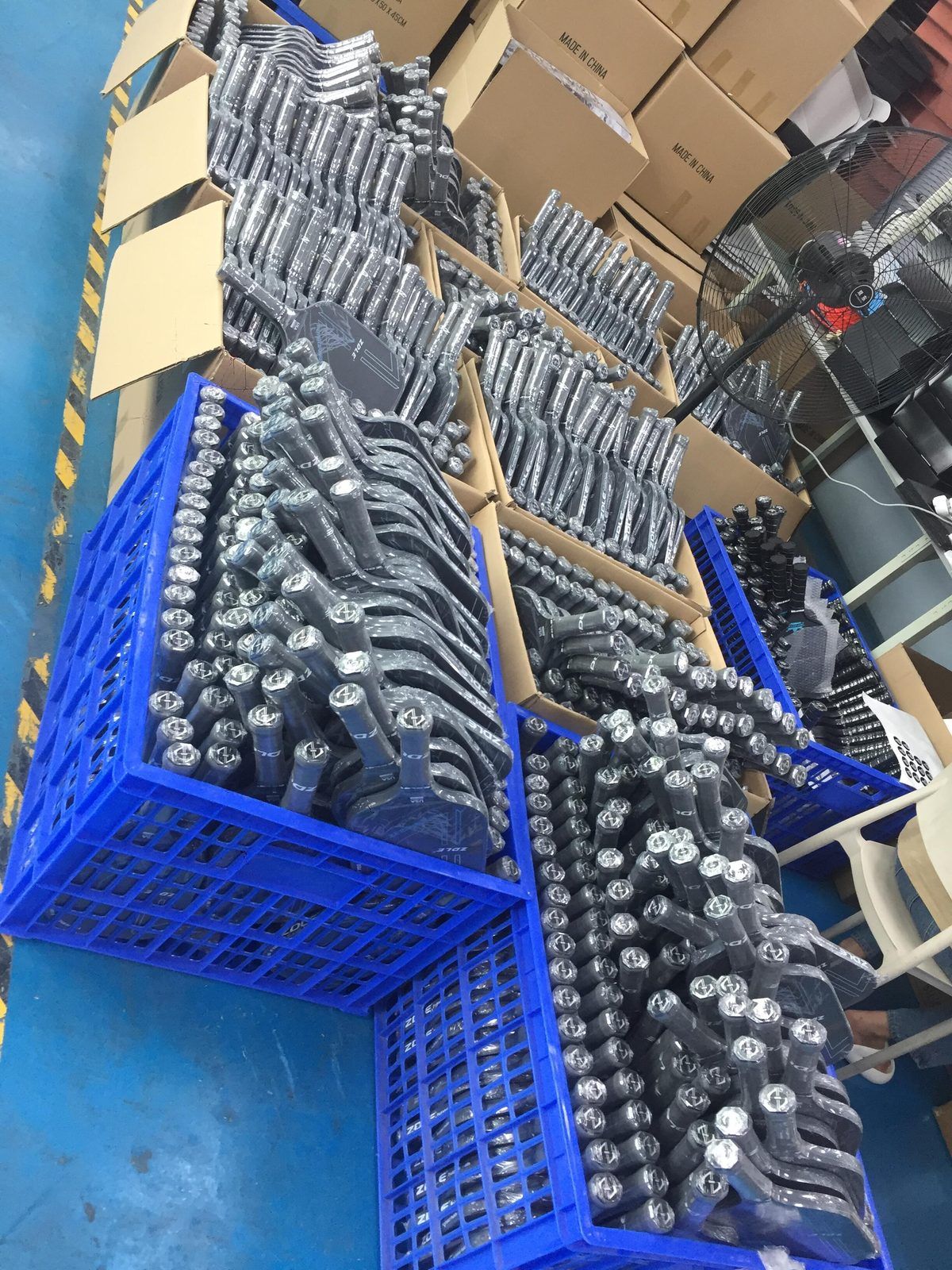
- Container math: a 20-foot container holds roughly 400–500 portable systems in their retail cartons, versus thousands of paddles or tens of thousands of balls. That's why nets are usually consolidated with other SKUs — a pure net container is rarely the cheapest way to ship them.
- Sea vs air: nets go by sea only — the density makes air freight economically absurd except for genuine emergency top-ups. Plan lead time accordingly. Our breakdown of the two routes for pickleball goods is in sea vs air freight for pickleball imports.
- HS classification: pickleball nets typically clear under HS 9506.99 (articles for general physical exercise, gymnastics, athletics, other sports) with the exact subheading depending on destination — get it confirmed with your customs broker rather than reused from a paddle quote.
Custom branding: powder-coat colors, printed tape, custom carry bags
Retail SKUs are increasingly private-labelled, and clubs are increasingly buying nets with facility branding. Two customizations are cost-effective, one is expensive-for-the-payoff.
- Printed top tape (cost-effective): your logo repeats along the 2-inch top edge. It's visible from any camera angle covering the court, which is why facilities and sponsored events love it. Setup is a screen or sublimation job on the tape roll — adds cents per unit at reasonable volume.
- Custom carry bag (cost-effective): the black or navy nylon bag the net rolls into is a natural branding surface for retail. Screen or embroidery on the bag adds modest cost and is the highest-visibility piece of branding once the customer takes it home.
- Custom powder-coat color on the frame (expensive): non-black frames require an isolated powder-coating batch and quickly push MOQ into the low thousands. Cool in a rendering, hard to justify in a first-order P&L.
Warranty, replacement parts, and the total-cost picture
A net purchase isn't finished the day the container clears customs — it's finished when the warranty period ends without a wave of returns you can't service. Two disciplines separate a program that pays back from one that doesn't.
First, warranty terms. Frame-only warranty of 1–2 years and net-cloth warranty of 6 months is the industry-honest position: the frame is a metal fabrication that either arrives functional or reveals a defect within weeks, and the cloth is a wear item exposed to sun, sweat, and impact. Any supplier offering "3-year full warranty" on the net cloth is either selling a fictional promise or padding the price to fund replacements. The B2B warranty framework we recommend for pickleball equipment is in paddle defect replacement clauses — the same clause language transfers to nets with the wear-part carve-out.
Second, replacement-parts stock. The frame outlives the net fabric roughly two to one on a heavy-use system. Any club program that isn't stocking replacement net fabric, top-tape sections, and center straps by the second year will end up replacing whole systems for repairable failures, which triples the cost per year of service. The wholesale supplier that keeps those spares available at reasonable minimums is the one you build a multi-year relationship with. A related discipline for rental-fleet economics is covered in our guide to pickleball rental fleet durability.
The winning wholesale net program isn't the one with the lowest unit price on the initial container — it's the one where replacement net fabric ships from the same supplier at MOQ 20, not MOQ 500. If your supplier can't do that, you'll be buying whole systems to fix torn tape.
Frequently Asked Questions
What is the regulation height of a pickleball net?
Regulation height is 36 inches at the posts and 34 inches at the center, measured from the top of the tape to the playing surface. The 2-inch drop is enforced by a center strap that anchors the net down to that height. A net without a center strap will sag below regulation under its own tension, which is why the strap is not an optional accessory.
What is a realistic wholesale MOQ for pickleball nets?
A source factory will typically start at 100–300 units on portable systems for a repeat B2B customer and higher for a first order. Custom powder-coat color or a fully custom branded carry bag pushes MOQ toward 500 or more, because those customizations require isolated production batches. Below 100 units, you're usually working through a trading company reselling stock inventory.
Should retail SKUs be portable or permanent nets?
Retail is almost entirely portable. End customers can't install permanent posts in the driveway, the community court, or the school gym they're borrowing. The rare permanent-net retail SKU serves institutional buyers — HOAs, schools, city recreation departments — and moves as a B2B item even inside a consumer catalog.
How long does a pickleball net last in club use?
Frame life on a well-built powder-coated steel portable system is 5–7 years in typical club use. Net-cloth life is closer to 18–30 months depending on court exposure to sun and impact. The mismatch is why replacement-parts availability decides total cost of ownership — replacing only the net fabric costs a fraction of replacing the system.
Can we consolidate nets with paddles and balls in the same container?
Yes — consolidation is the standard approach because a pure net container cubes out at a few hundred units, while paddles and balls fill remaining volume efficiently. The freight cost per unit drops substantially compared with shipping nets alone. Any competent B2B supplier will help you optimize the packing list; if they resist consolidation, that's a signal the supplier's export desk isn't equipped for a full wholesale program.
What HS code do pickleball nets ship under?
Pickleball nets typically classify under HS 9506.99 (articles for general physical exercise, gymnastics, athletics, other sports and equipment not elsewhere specified), with the specific subheading depending on destination country. The exact classification is confirmed by your customs broker for the receiving country — don't reuse the classification from a paddle quote, since the tariff structure can differ.
Is a metal center strap worth paying extra for versus plastic?
On a club or rental system that sees setup twice a day, yes — plastic buckles crack after roughly a year of tension cycling and become a warranty item you'll be replacing under a service agreement. On a retail SKU used a dozen times per summer, plastic is adequate and holds the price point retail expects. Spec by end-use, not by principle.
Want to source this quality for your brand?
Contact our factory directly on WhatsApp for an instant MOQ and pricing quote.