Pickleball Paddle Certification Process: Adding a Foam-Core SKU in the Right Order
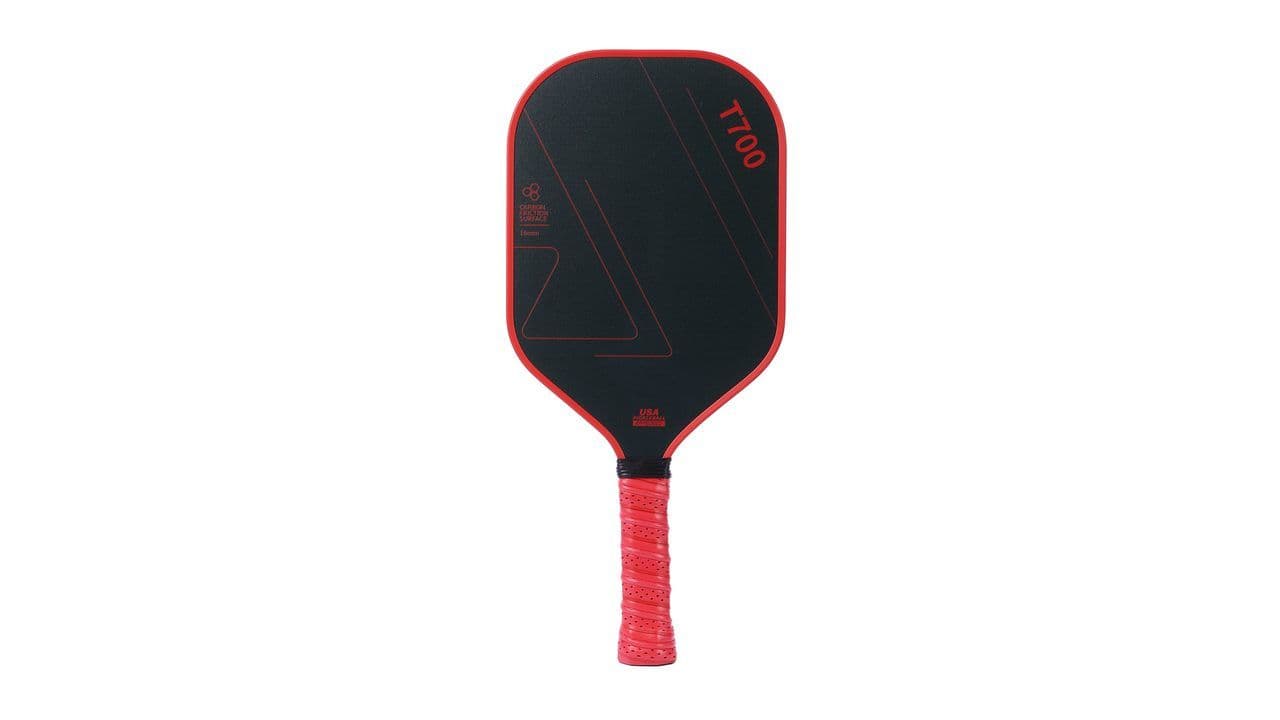
A brand with one approved 16 mm honeycomb paddle decides to add a foam-core version of the same shape. The factory calls it "basically the same paddle," so the mould is cut first — it is the long-lead item — and the plan is to send units for testing once production settles. Eleven weeks later the tooling is paid for, the first run is in cartons, and the submission comes back needing a different model designation, artwork that was never printed, and nine paddles nobody budgeted for.
Nothing in that sequence was incompetent. Every step was reasonable on its own, and the order they were done in is what cost the money. A core change is not a variant of an approved model — it is a new model, a new submission, a set of units that never come back, and, timed badly this autumn, a submission judged against a standard that did not exist when the brief was written. The mould is not the risk. The sequence is.
Key takeaways
- A foam core cannot ride your existing approval. A Similarity Submission requires identical materials; a different core is a full new submission under a unique model designation.
- USA Pickleball wants nine paddles shipped to six separate locations — not the six paddles repeated across most guides — and none of them come back.
- The model designation must be settled before graphics, and graphics before submission. USAP requires final artwork on the face at submission; UPA-A requires no artwork at all.
- 1 October 2026 is a hard boundary. Paddles submitted from that date must measure 2,100 RPM or less on the new Spin Rate Test.
- Foam is squeezed from both ends: PBCoR caps rebound at 0.43, while UPA-A's ADF test demands a minimum of 46 lb of stiffness on both faces.
- Budget the account before the model. USA Pickleball charges a USD 2,500.00 manufacturer registration fee before you may submit anything.
What this guide covers
- Why a foam core restarts the certification clock
- What the submission actually costs you in samples and calendar
- Freeze these four things before you cut steel
- The October 2026 boundary and the two-body problem
- A worked sequence for a single foam SKU
- What triggers a re-test after approval
- What we check, and where this guide stops
Why a Foam Core Restarts the Certification Clock
The hope behind most foam-core projects is the Similarity Submission — a cheaper, faster route for a paddle that is essentially one you already got approved. It is a real route, and it is the first thing worth ruling out, because ruling it out changes the entire project plan.
USA Pickleball defines a Similarity Submission as a paddle that uses identical materials, manufacturing, and surface finishing processes as a previously approved paddle, with a differentiated model name. Two further limits apply: a similarity submission may only reference a paddle that has been fully tested, never another similarity submission, and only paddles certified after 1 January 2021 may serve as an origin paddle.
Read the first clause against your project. Swapping a polypropylene honeycomb core for a moulded foam core changes the material and, in almost every case, the manufacturing process with it. There is no reading of "identical materials" that survives a core swap. Your foam SKU is a new submission.
The rulebook side agrees. Clause 2.E.7 of the Equipment Standards Manual requires that paddles with different core material, surface material, or other significant differences carry a unique model name or number, and that the brand and model name be clearly marked on the paddle alongside the USA Pickleball Approved seal or text treatment. The core determines the model designation, and the model designation determines what gets printed on the face.
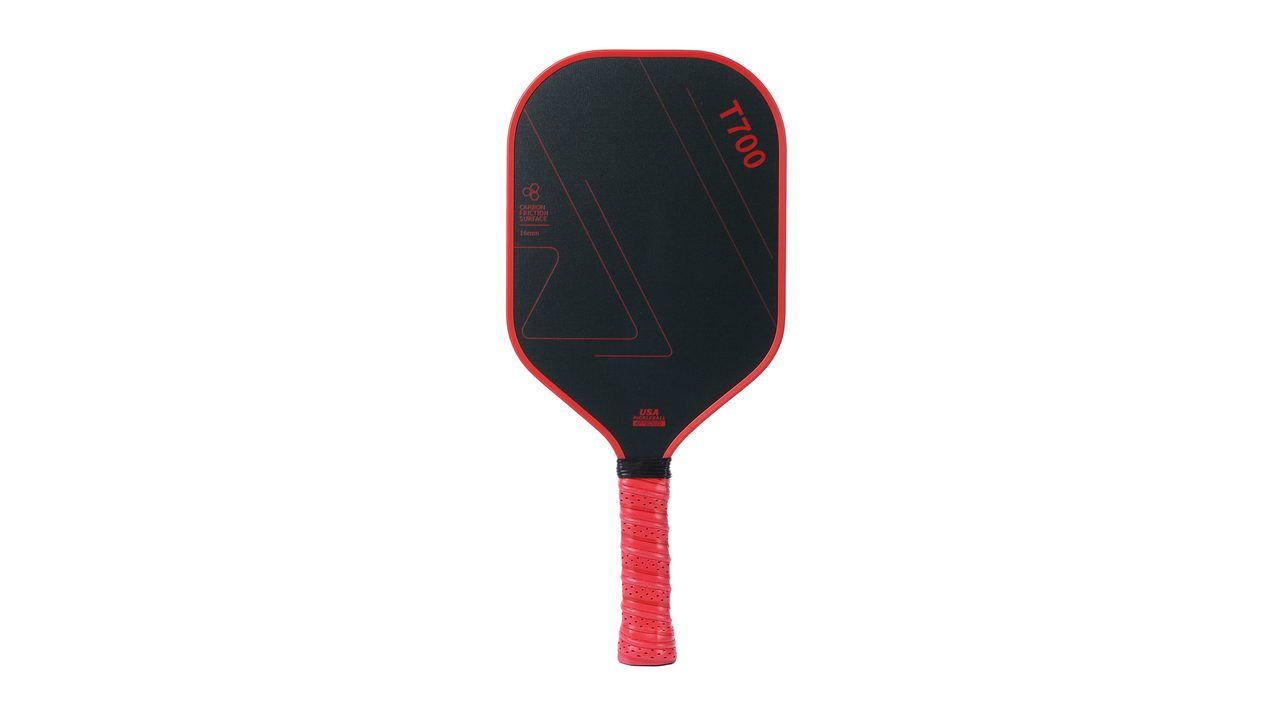
This is where the sequencing error does its damage. If you cut the mould before the model designation is settled, you have committed steel to a SKU whose name, artwork placement and seal treatment are still open — and every one of those has to be final on the units you eventually send to the lab.
What the Submission Actually Costs You in Samples and Calendar
Most published guides to this process state that you send six paddles. USA Pickleball's own Equipment Submission FAQ says otherwise: paddle submissions currently require nine paddles shipped to six separate locations. Different colourways are accepted across the recipients, provided the paddle is otherwise identical in graphics and finishing process.
Ball submissions, for reference, require twelve balls to five locations. And none of it comes back — USA Pickleball states plainly that submitted equipment is not returned, because non-destructive testing cannot be guaranteed and copies are retained for future reference.
Nine units off a brand-new foam tool is not a trivial ask. Early shots out of a new mould are exactly the ones most likely to be off-nominal, so the practical requirement is a tool stable enough to produce nine paddles you would be content to be judged on, plus your own retains, before you ship anything.
The published clocks, side by side
Both certification bodies publish their turnaround. The chart below is built only from those published figures — no estimates, no blended averages.
| Certification route | Published turnaround (weeks) |
|---|---|
| USAP expedited | 1.6 |
| USAP standard | 6 |
| UPA-A super expedited | 2 |
| UPA-A expedited | 4 |
| UPA-A standard | 8 |
Two things about that chart matter more than the bars. First, USA Pickleball notes that its expedited window begins the day after the paddle arrives at the testing facility — international freight sits outside the clock entirely. Second, testing time is not the same as time-to-market, because approval only puts you on a list that players and tournament desks then have to see.
What is knowable about cost, and what is not
Cost splits into three parts, and only some of it is publicly verifiable. Before you may submit anything, you need an approved manufacturer account, and USA Pickleball's manufacturer registration form carries a Manufacturer Registration Fee of USD 2,500.00. That is a brand-level fee, paid once to get through the door, not a per-model charge.
The per-model submission fee is a different matter. USA Pickleball's fee schedule sits behind an authenticated manufacturer account — the public link redirects to an access-denied page, and no dollar figure is served in the page a non-account-holder receives. Figures circulate in secondary write-ups. We are not going to repeat them here as fact, because we could not read them at the source, and a certification budget built on a number nobody can check is not a budget.
UPA-A, by contrast, publishes its 2026 schedule openly: USD 10,000 annually per brand, USD 3,000 per paddle valid for 24 months, USD 2,500 for expedited service, USD 7,500 for super expedited, and USD 2,000 to re-submit a failed paddle. That last line is the one to write into your risk register — a failure is not just a delay, it has a price.
| Fee item | UPA-A published 2026 fee (USD) |
|---|---|
| Re-submission (failed) | 2000 |
| Expedited service | 2500 |
| Per paddle model | 3000 |
| Super expedited | 7500 |
| Annual, per brand | 10000 |
Ask before you budget: when you request a quotation for a foam SKU, ask your factory in writing whether tooling, sampling and the certification submission are quoted separately, and who holds the manufacturer account the submission is filed under. The account holder's name is attached to the model designation, and that is not a detail to resolve after approval.
Freeze These Four Things Before You Cut Steel
Tooling is the irreversible step. Everything upstream of it is cheap to change and everything downstream is not, which is why these four decisions belong before the mould and not after it.
1. The model designation
Settle the name and number of the new SKU before artwork, because artwork has to carry it and USA Pickleball requires final graphics — manufacturer name and model name on the face, plus the licensed logo or text treatment — on the paddles you submit. A paddle submitted with placeholder artwork is not a submission.
2. Which body you are certifying for
This one is genuinely awkward, and it is the reason a single sample build may not serve. USA Pickleball wants final graphics on the face. UPA-A's 2026 checklist requires the opposite: paddles submitted without production artwork, with no UPA-A certification logos or markings present, though brand name, model name and model number must still be permanently marked and the grip must be installed. If you intend to certify with both, you are producing two visually different sample sets off the same tool, and that has to be in the sampling plan before the tool exists.
3. The foam density, against two opposing limits
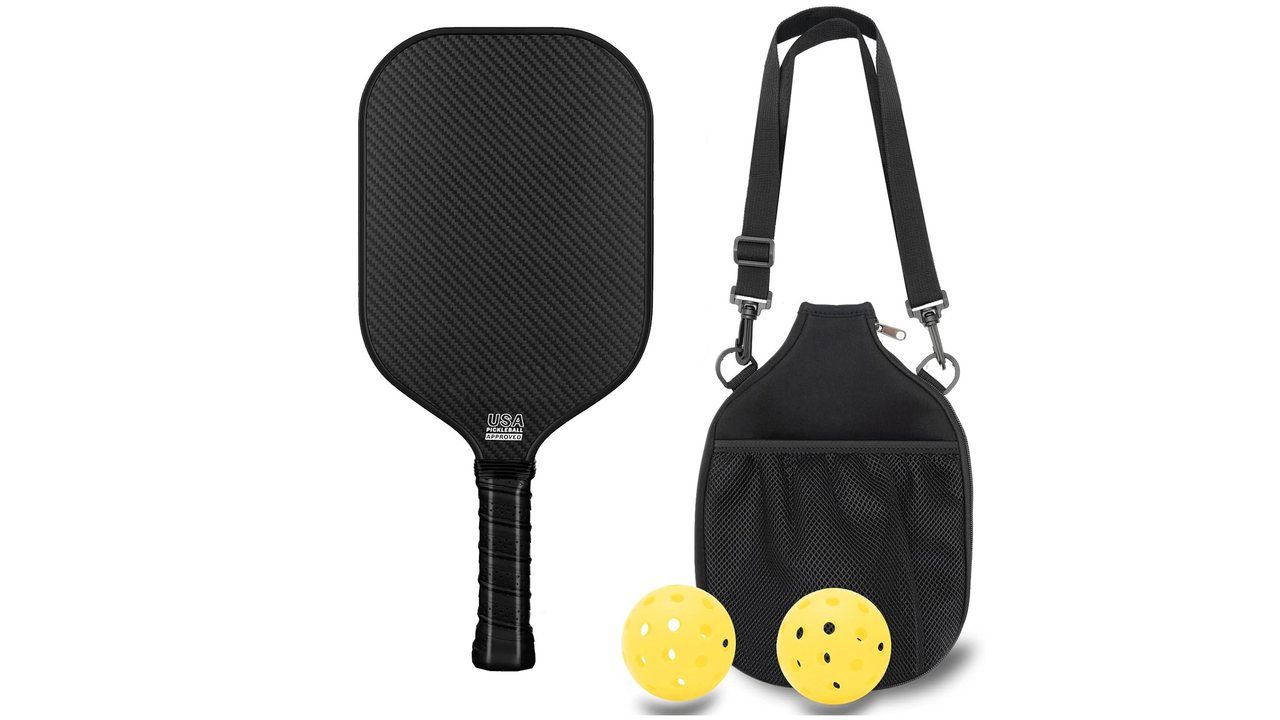
Here is the trap specific to foam, and the reason a core swap is a genuine engineering risk rather than a paperwork exercise. PBCoR limits rebound from above: the not-to-exceed limit is 0.43, having been reduced from 0.44 on 1 November 2025. Push the core livelier and you fail.
But UPA-A's Average Deflection Force test pushes from the other side. Both faces of the paddle must show an ADF of 46 lb or more at ambient conditioning of 70–75°F, measured by compressing to 0.0625 inch beyond a 5 lb preload at a crosshead speed of 0.05 in/s. That is a stiffness floor. A core soft enough to feel plush and stay comfortably under PBCoR can be too soft to clear ADF.
Moulded EPP is available across a wide density range — Kaneka's EPERAN-PP black grades alone span roughly 30–45 g/L at the light end to 280–330 g/L at the heavy end — so the density window that satisfies both limits exists, but it is narrower than the catalogue makes it look, and it interacts with face lay-up and thickness. Commercial polypropylene honeycomb, for comparison, arrives at a known 80.0 kg/m³ typical density with 275 psi (1.89 MPa) bare compression strength; a foam core is a variable you are now controlling yourself.
Useful and underused: USA Pickleball offers pre-production and prototype testing, and releases its test platform fixtures, configurations and profiles to manufacturers with compatible equipment. That is how you find out where a density sits before nine finished paddles leave the building. If your factory's published build envelope is 13 mm and 16 mm honeycomb with raw T700 carbon and fiberglass faces, a foam programme is a new construction for them too — which is precisely the conversation to have before steel is cut, not after.
4. Who signs the material declaration
Certification is not only a physical test. Manufacturers must also provide attestations about the materials and construction of their products. This matters more than it sounds: USA Pickleball states that equipment is decertified when it fails the conditions of its certification, including any inaccuracies in its initial disclosures. A declaration describing the foam in the brief rather than the foam actually in the tool is a decertification ground independent of how the paddle performs.
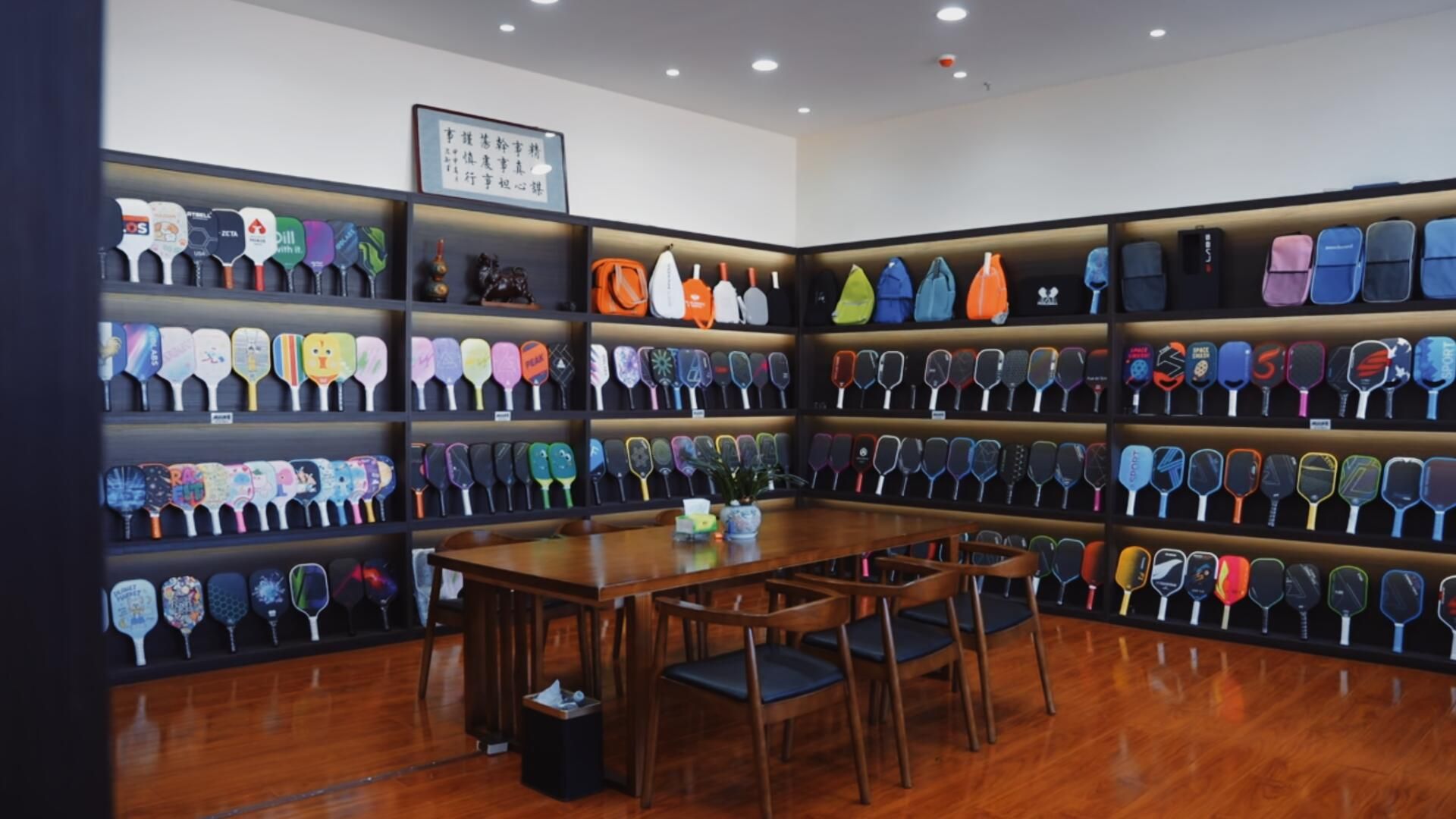
For importers, distributors and procurement leads who already have one approved model and are deciding what the next SKU is built from. Our OEM page sets out the build envelope we actually run — raw T700 carbon and fiberglass faces on 13 mm and 16 mm polypropylene honeycomb cores, thermoformed or cold-pressed, with the reference-unit approval and outgoing quality checks described there. Start there, tell us the shape and target weight you are working to, and we will talk through what the tooling sequence looks like before anything is cut. Our published paddle minimum is 50 pieces.
See the OEM build envelopeThe October 2026 Boundary and the Two-Body Problem
If you are planning a submission this quarter, one date governs everything. From 1 October 2026, all paddles submitted to USA Pickleball for certification must achieve a measured spin rate of 2,100 RPM or less. The Standard Operating Procedure for the test was distributed to manufacturers on 15 July 2026, per USA Pickleball's spin rate test implementation notice.
The change is not only an added limit. The Surface Roughness and Coefficient of Friction upper thresholds are replaced by a measurement of record — the numbers are still taken, but the pass/fail weight moves to the spin figure. The test itself uses a dual-camera system developed with Image Systems, with software that calculates RPM automatically rather than by manual frame counting.
The transition rules are where sequencing bites. Until 1 October 2026, paddles meeting the current roughness and friction requirements can still be certified under the existing standards. Manufacturers may submit voluntarily under the Spin Rate Test now, but such paddles will not appear on the Approved Paddle List before 1 October 2026. And the governing principle behind both: all certified paddles must comply with the standards in effect at the time of certification.
What that means for a paddle in the post this month
Consider a foam SKU whose samples reach the lab in mid-September 2026 on standard timing. Four to six weeks of testing lands the result in mid-to-late October — after the boundary, but assessed under the standard in force when it was certified. The practical risk is not the calendar arithmetic, it is the surface: a foam-core build often pairs with a raw, high-grit face precisely because the softer core is being compensated for with bite. That is the combination the spin test is aimed at.
So if the face texture on your foam SKU is doing real work in the paddle's feel, treat 2,100 RPM as a live design constraint now rather than a next-year problem, and use the pre-production testing route to find out where you sit before you commit nine samples to the post.
Two bodies, two numbers
The second complication is that "certified" no longer means one thing. UPA-A certification is required for all professional events at PPA and MLP. Amateur competition accepts UPA-A standards but does not require them, provided the paddle holds USA Pickleball certification and appears on the USAP Approved Paddle List.
| Requirement | USA Pickleball | UPA-A |
|---|---|---|
| Samples per submission | 9, to 6 separate locations | 5, to one lab |
| Artwork at submission | Final graphics required on the face | No production artwork; no UPA-A marks |
| Spin limit | 2,100 RPM from 1 Oct 2026 | 2,200 RPM at any angle |
| Stiffness floor | Not specified as an ADF minimum | ADF ≥ 46 lb, both faces |
| Published fee schedule | Account-gated; USD 2,500.00 registration is public | Public, per-model and annual |
| Required for | USAP-sanctioned tournament play | PPA and MLP professional events |
Where the two disagree, the tighter number governs a dual-certified SKU. If you want the paddle legal in both worlds, you are designing to 2,100 RPM and to an ADF of at least 46 lb simultaneously, on a core material chosen to stay under PBCoR 0.43. If you only sell into club and amateur channels, USAP alone is the requirement, and the UPA-A fee schedule is not your problem. Decide which before you pick a density — the answer changes the target. Our comparison of USAP, UPA-A and IFP certification covers how the three regimes divide the market.
A Worked Sequence for a Single Foam SKU
Putting the constraints in order gives a sequence that looks slower at the front and is faster overall, because it removes the two failure modes that cost a full cycle: a mould committed to an unsettled designation, and samples built to the wrong artwork rule.
| Step | Do this | Why it sits here |
|---|---|---|
| 1 | Confirm or open the manufacturer account | USD 2,500.00 registration, and no submission is possible without it |
| 2 | Take the EEC onboarding call | Scheduled within a week of approval; includes a confidential design review |
| 3 | Decide USAP-only or USAP plus UPA-A | Sets the spin target and whether ADF ≥ 46 lb applies |
| 4 | Fix the model designation and artwork | Clause 2.E.7; artwork must be final for USAP, absent for UPA-A |
| 5 | Prototype the density and face against both limits | Pre-production testing exists; use it before the tool is final |
| 6 | Cut the production tool | The first irreversible spend, and now it is informed |
| 7 | Build and sample across cavities and cure time | Moulded EPP is governed by dry weight after cure, not wet weight at ejection |
| 8 | Send 9 paddles to 6 locations; sign the material declaration | Submitted units are not returned; disclosures must match the tool |
| 9 | Hold mass production until listing | Marketing as Approved before listing is not permitted |
Step 2 is the one most brands skip, and it is free. On account approval USA Pickleball sends a package covering specifications, testing details and equipment recommendations, and the Equipment Evaluation Committee schedules a video conference within one week to discuss manufacturing quality processes, supply-chain identification, and a confidential design review if needed. For a novel core material, that call is the cheapest technical review in the whole project.
Step 7 deserves its own note because foam behaves unlike honeycomb here. Moulded EPP is controlled by a wet weight taken immediately on ejection from the press and a dry finished weight after cure, and the dry weight is what governs the finished part. A weight spread sampled only across cavities, on the day of moulding, can look tight and still drift once the parts are cured — so sample across cure time as well as across cavities. Our guide to golden-sample approval covers how to lock that reference unit once you have it.
Two planning numbers people ask for at this point, answered as honestly as we can. Our published minimum order quantity is 50 pieces for paddles, which is low enough that a certification-blocked SKU does not strand a container of stock. Production lead time we will not put a number on here: it moves with tooling status, face material availability and how many sampling rounds the density work needs, so it is quoted per project rather than published. What you can plan around are the certification clocks above, because those are the bodies' own published figures rather than ours.
Best for, and not for
This sequence is worth the discipline if your foam SKU is going into tournament or club channels where the Approved List is checked, if you are selling through retailers who require certification on the line sheet, or if you plan to certify with both bodies.
It is more process than you need if the foam paddle is a recreational or promotional SKU that will never enter sanctioned play. Decertification applies to sanctioned tournament play; players can still use uncertified paddles recreationally. That is a legitimate product strategy — just make it a decision rather than an accident.
What Triggers a Re-Test After Approval
Approval is a snapshot of the paddles you sent. Keeping it is a production discipline, and the standards are explicit about that. Manufacturers are subject to ongoing compliance testing to ensure all products as produced and sold are identical to the paddle that was tested and certified.
Clause 2.F.2.a goes further with what it calls degrade to benefit: paddles must remain compliant to all requirements over the entire useful life of the paddle, inclusive of any degradation that works in the player's favour. A foam core that softens with use, or a face that breaks in, is not exempt because it passed when new.
Enforcement is real and public. USA Pickleball publishes a Paddle Compliance Report; as of 1 September 2026 it listed five brands, with one model removed from the Approved List on 24 March 2026 and two more under investigation as of late May 2026. Separately, approval may be revoked by the Board of Directors on 18 months' notice where equipment is found to have been materially changed by the manufacturer, or where it materially degrades under ordinary use.
The changes that quietly restart the process
- A different foam supplier or grade. Core material is named in clause 2.E.7 as requiring a unique model designation, and it is in your material declaration.
- A face lay-up change. Surface material sits in the same clause as core material.
- A second tool for capacity. If it changes what comes out, ongoing compliance applies to what you ship, not to the cavity you tested.
- A "cosmetic" finishing change. Surface finishing is named in the similarity definition; a texture change is not cosmetic to a spin test.
| Change you are considering | New model designation? | Governing clause or rule |
|---|---|---|
| Honeycomb core to foam core | Yes — new submission | ESM 2.E.7 (core material); Similarity requires identical materials |
| Different foam grade or supplier | Yes — core material changed | ESM 2.E.7; also named in your material declaration |
| Face lay-up change (e.g. fiberglass to T700) | Yes — surface material | ESM 2.E.7 names surface material alongside core |
| Surface texture or finishing process change | Treat as yes | Finishing is named in the Similarity definition; texture drives the spin test |
| New colourway only, paddle otherwise identical | No, for paddles | Colourways accepted across recipients in one submission (paddles only — ball colours differ) |
| Second tool cut for extra capacity | Not automatically — but ongoing compliance applies | ESM 2.F.2: products as produced and sold must be identical to what was certified |
The practical control is that USA Pickleball inspects market samples — retail units, bought as a customer would — to confirm they still match the certified specification. The question worth asking your factory is not whether the golden sample passed, but what stops the third production run from differing from it. If you are also weighing whether to keep tooling in one factory's hands, our note on mould ownership and IP is the companion piece, and the PBCoR compliance guide goes deeper on the test itself.
Watch a paddle being tested
USA Pickleball's own explanation of why the testing programme exists is worth four minutes before you commit a budget to it.
Importance of Paddle Testing — USA Pickleball. Opens on YouTube.
What We Check, and Where This Guide Stops
Everything above is drawn from what USA Pickleball and UPA-A publish themselves, and each figure is dated because these rules move. What we check before quoting a foam programme is narrower than what a certification body checks. We can tell you whether a shape fits inside the 24 in (60.96 cm) combined length-plus-width envelope and the 17 in (43.18 cm) length limit, whether a face lay-up and target weight are buildable on tooling built for 13 mm and 16 mm cores, and whether a proposed density sits inside the range our press handles. We cannot tell you a paddle will measure under PBCoR 0.43, clear an ADF of 46 lb, or come in below 2,100 RPM. Those are lab results, not quotations.
Three things we deliberately do not state on this page, because we cannot evidence them. We do not publish a PBCoR or ADF reading for any build, because we hold no lab report we could show you. We do not quote the USA Pickleball per-model submission fee, because the schedule is behind a manufacturer login we cannot read. And we do not claim a certification service — the submission is filed by the account holder, and who that is should be settled in writing before tooling. If a supplier tells you a foam core is "the same paddle" as your approved model, that is the moment to ask which of those three they are willing to put in the contract.
Frequently Asked Questions
Can I add a foam core as a Similarity Submission to my approved paddle?
No. A Similarity Submission requires identical materials, manufacturing and surface finishing processes as the approved origin paddle. A core change fails the materials test, so it is a new submission with its own model designation.
How many paddles does USA Pickleball require for a submission?
Nine paddles, shipped to six separate locations. Different colourways are accepted provided the paddle is otherwise identical. Submitted paddles are not returned, because non-destructive testing cannot be guaranteed.
What does USA Pickleball paddle certification cost?
The manufacturer registration fee is USD 2,500.00, charged at account level before any submission. The per-model submission fee sits behind an authenticated manufacturer account and is not publicly published, so confirm it directly with USA Pickleball rather than from secondary sources.
How long does paddle certification take?
USA Pickleball quotes 4 to 6 weeks for standard testing and 3 to 8 business days expedited, counted from the day after samples arrive at the lab. UPA-A quotes up to 8 weeks standard, 4 weeks expedited and 2 weeks super expedited.
Does the October 2026 spin rate test affect a paddle I submit now?
Paddles are judged against the standards in effect at the time of certification, and a 2,100 RPM limit applies to paddles submitted from 1 October 2026. Paddles submitted voluntarily under the new test before then will not be listed until that date.
Why can a foam core fail even if it passes PBCoR?
Because UPA-A's Average Deflection Force test sets a minimum, not a maximum: both faces must reach 46 lb or more. PBCoR caps liveliness from above while ADF demands stiffness from below, so a very soft core can fail the second while comfortably passing the first.
Can I start mass production while testing is underway?
You can build, but you cannot market the paddle as USA Pickleball Approved before testing completes and the model is listed. Producing at volume before results also means a failure lands against finished stock rather than against samples.
What It Costs to Get This Wrong
The failure mode this article exists to prevent is not a failed test. It is a tool that was correct for a SKU nobody had finished defining. Cut steel before the model designation and the artwork rule are settled and you can lose the mould entirely — not because it was machined badly, but because the paddle it makes cannot be submitted as the thing you intended to sell.
The second risk is quieter and lands later. Approval is granted against the units you sent and held against what leaves your factory afterwards. Retail stock is pulled and inspected, and inaccurate initial disclosures are treated as grounds for decertification in their own right. A foam density that drifts between production runs, or a declaration written from the brief rather than the tool, does not fail on day one — it fails after the stock is sold, when a paddle comes off the Approved List and every unit in your channel becomes unusable in sanctioned play. That is the one worth over-engineering the front of the project to avoid.
Want to source this quality for your brand?
Contact our factory directly on WhatsApp for an instant MOQ and pricing quote.