Pickleball OEM Mold Ownership: NNN, IP and Mould Release Terms to Fix Before You Sign
If you are about to pay a tooling charge to a Chinese paddle factory, the sentence that decides what you own is not on the invoice. It is in whichever agreement you signed first — and if that agreement is your company's standard NDA, translated into English only, governed by the law of your home state, you have protected almost none of what you think you have protected.
This is a factory's account of how the paperwork around a paddle mould actually works: which instrument does which job, what a Chinese court will and will not enforce, and how the steel physically comes back when a relationship ends. It is written for buyers, not lawyers, and it is not legal advice — every operative term below belongs in front of your own China-qualified counsel before it goes into a contract.
Key takeaways
- A paddle programme owns three separate assets — the steel, the design IP, and the USA Pickleball approval. Each transfers by a different mechanism. Paying the tooling charge addresses only the first.
- A Western-style NDA fails here for an evidentiary reason, not a patriotic one: winning an NDA claim means proving a disclosure event, and a factory quietly running your mould on a night shift never produces one.
- The enforceable instrument is an NNN — non-disclosure, non-use, non-circumvention — drafted in Chinese, governed by PRC law, venued in China, and binding the affiliates and subcontractors who physically hold the tool.
- Its teeth are the damages figure. PRC Civil Code Article 585 lets a court adjust that figure in either direction on a party's application, and practice treats an amount more than 30% above proven loss as excessive and reducible.
- The approval does not travel with the steel. Under the USA Pickleball Equipment Standards Manual it attaches to a named brand and model, and can be revoked on 18 months' notice where a manufacturer has materially changed the equipment.
On this page
- The Three Assets a Paddle Programme Actually Owns
- Why Your NDA Does Not Work Here
- The Damages Number Is the Whole Agreement
- Getting the Mould Back: The Exit Clause Nobody Drafts
- The Approval Does Not Travel With the Steel
- Registering the Design Before You Send the File
- What to Put in Writing Before You Sign
- Frequently Asked Questions

Neutral background viewing: Protecting Your IP in China Pt 1: NDA vs. NNN Agreements (CPG). Useful framing on why the two instruments behave differently — the paddle-specific and statutory detail below is ours.
The Three Assets a Paddle Programme Actually Owns
Most tooling disputes start with a category error. The buyer believes he bought "the paddle" and discovers, usually at the worst possible moment, that he bought up to three unrelated things and secured only one of them.
The first asset is the steel: a physical object sitting on a factory floor in a jurisdiction that is not yours, whose ownership is a property question. The second is the design intellectual property — the CAD geometry, the lay-up schedule, the shape itself — which is an IP question and, in China, largely a filing question. The third is the USA Pickleball approval, which is neither. It is a permission attached to a named brand and model, held in a register, and it does not move because a mould moved.
These three transfer by different mechanisms, on different timelines, under different documents. That is why the sourcing-legal literature is consistent that an NNN agreement and a mould-ownership agreement are two separate instruments — the NNN protects the idea, the mould agreement protects the object. Blending them, along with quality standards and production commitments, into one master agreement is the drafting mistake practitioners name most often.
What "I paid for the tooling" actually establishes
Less than buyers expect. An invoice line reading "tooling cost" records that money changed hands for a service; it is not, on its own, a conveyance of title in a specific asset. If you want the position argued in full — including the four jobs an ownership clause has to do and how the four manufacturing models differ on who holds title — that is the subject of our companion piece on OEM, ODM and contract manufacturing and who owns the paddle mould. Read that one first if you have not yet chosen a model. This page assumes you have, and deals with the documents.
Why Your NDA Does Not Work Here
The usual explanation — that Chinese courts ignore foreign contracts — is roughly true but obscures the more useful reason. The deeper problem is evidentiary, and it survives even a translated NDA.
To win on a non-disclosure agreement you generally have to prove a specific disclosure event: information went from A to B on a date. Now consider what a factory actually does when it decides to profit from your paddle. It runs your mould after hours. It quotes your geometry to a buyer who found it at a trade show. It sells a near-identical shape under its own catalogue name. In none of those cases has your confidential information been disclosed to anyone. It has been used, internally, by the party you handed it to — and a document addressed to disclosure has nothing to say about it.
Practitioners writing on China manufacturing contracts make the same point from the drafting side: a standard NDA is directed at the wrong issues, because the manufacturer competing with your own design is not disclosure at all.
That is the gap the three N's exist to close. Non-disclosure covers the sharing. Non-use covers the factory manufacturing your design for its own benefit, which is the clause an NDA structurally lacks. Non-circumvention covers the factory going around you to your customer — the failure that costs a distributor his account rather than his margin.
The four elements that decide whether it bites
Practitioner guidance is unusually consistent on what an NNN needs to be enforceable against a Chinese manufacturer, and the four requirements are cheap to specify at drafting and impossible to retrofit after a breach.
| Element | What it must say | Why an English-only NDA fails it |
|---|---|---|
| Language | Chinese as the official text | A Chinese court works in Chinese; an English original becomes a translation argument before it becomes a claim |
| Governing law | PRC law | Foreign governing law against a domestic party is the standard reason a claim goes nowhere |
| Venue | A Chinese court, or Chinese arbitration | A judgment from your home court is a piece of paper where the factory's assets are not |
| Parties bound | Subcontractors, affiliates and related group companies | Paddle work is routinely subcontracted; an agreement binding only the sales entity misses whoever holds the tool |
The last row deserves more weight than it usually gets in a paddle programme specifically. Composite pressing, edge-guard assembly and printing are frequently split across related workshops. An agreement signed by a trading company, covering a mould sitting two provinces away in a subcontractor's building, protects you against a party that never touches your tooling.
The Damages Number Is the Whole Agreement
Here is where most published guidance stops being useful. It will tell you, correctly, that an NNN needs a contractual damages figure and that Chinese courts enforce them. The most-cited practitioner blog in this field states that liquidated damages are "favored by statute" — and cites no statute at all. So the buyer is left knowing he needs a number and having no idea how to size it.
The provision is Article 585 of the PRC Civil Code, and its operative text cuts both ways: where agreed liquidated damages are lower than the losses caused, a people's court or arbitration institution may increase the amount upon the request of a party; where they are excessively higher than the losses caused, the court or institution may make an appropriate reduction upon the request of a party.
Read the qualifier carefully, because it is the part that protects you. Adjustment happens upon the request of a party. A court does not sit down and revalue your contract on its own initiative — the factory has to ask, and the burden of showing the figure is unreasonably high sits on the side asking for the cut.
Where "excessively higher" starts
The threshold that matters in practice comes from the Supreme People's Court, in its Interpretation on Several Issues Concerning the Application of the General Provisions of the Contract Part of the Civil Code, promulgated and effective on 5 December 2023. Liquidated damages exceeding the losses caused by more than 30% are generally treated as significantly higher than those losses, and a court can cut them back on the breaching party's application.
Two things follow, and buyers routinely get both backwards.
First, 30% is a ceiling-shaped risk, not a target. It is the point at which a court starts trimming — not a premium to build into your clause. Anyone who tells you to "set damages 30% above your loss" has inverted the rule, and the figure is measured against loss proved in litigation, which nobody knows on the day of signature.
Second, the denominator is larger than the tooling invoice. The scope of recoverable loss under Article 584 includes lost expected profits, bounded by what was foreseeable when the contract was made. For a paddle brand, that is the point: if a factory sells your shape into your market, the loss is not the price of the steel — it is the margin on the units you did not sell, and a damages figure sized against foreseeable lost profit is defensible in a way that a figure plucked from the air is not.
One further asymmetry is worth building into the clause. Where the breaching party has acted in bad faith — intentional default, deliberate copying — courts generally decline to reduce the figure even where it looks high against proven loss. And while the Chinese system does not award punitive or extensive consequential damages, judges have very wide power to seize assets to satisfy a money judgment once one exists. That combination is the actual argument for the NNN over the NDA: it converts an evidentiary problem into a debt, and a debt is a thing a Chinese court is well equipped to collect.

Getting the Mould Back: The Exit Clause Nobody Drafts
Every guide tells you to make sure you own the mould. Almost none describes what happens on the day you want it, which is the only day the clause is ever read.
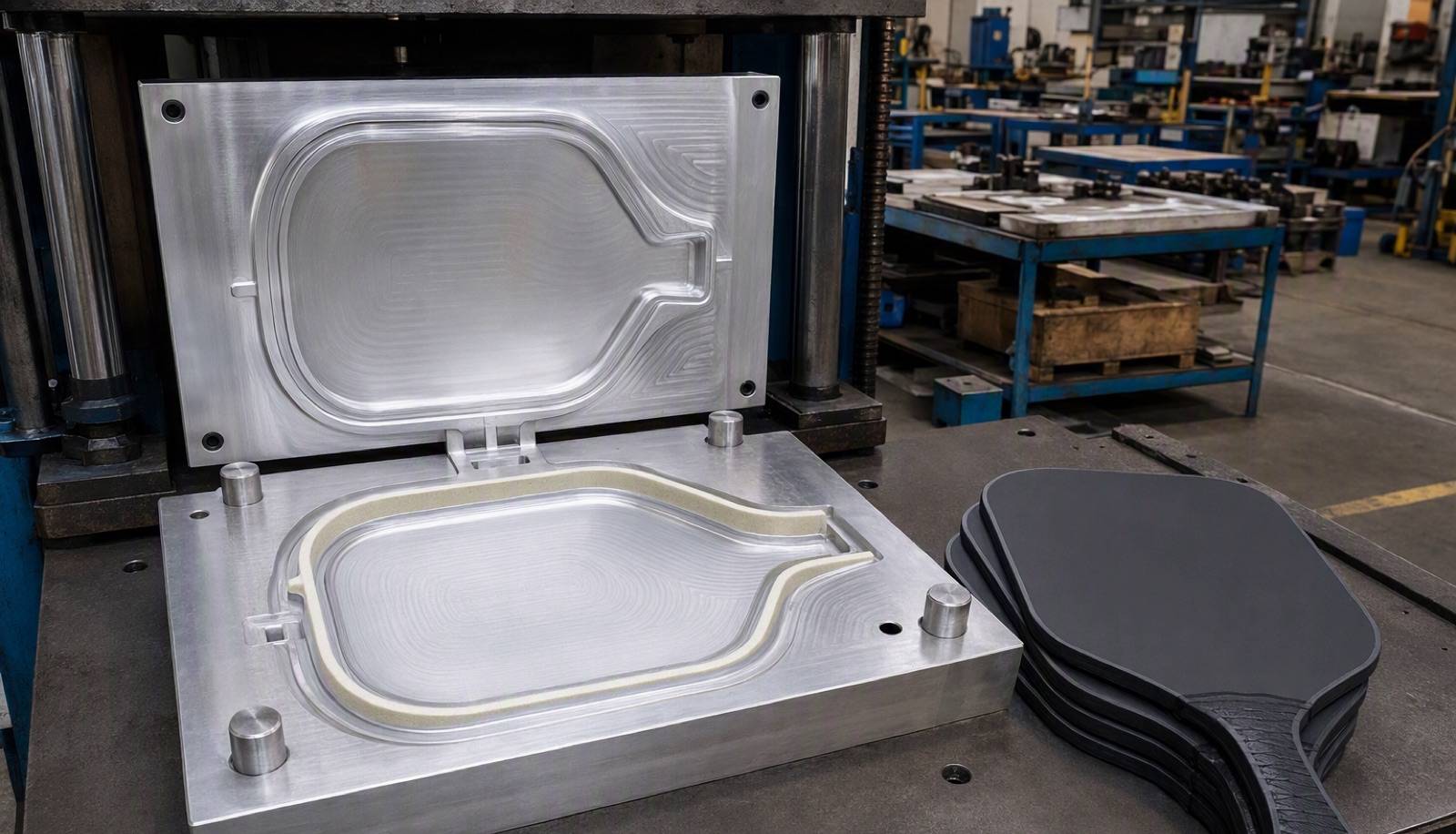
A mould-ownership agreement that works has to survive an uncooperative counterparty, so each of its parts answers a specific way the handover fails.
- Record the specification the tool was cut to. The ownership clause should attach the specification range the mould produces — face material and weave, core material and thickness, moulded shape and dimensions, and the surface treatment — because that is what makes the asset identifiable and what a second factory needs to reproduce the part. The available spec range depends on the construction you choose — face material, core thickness and moulding method all bound it — and the ranges that apply to your programme belong in the written quotation rather than in a blog table.
- Identify the tool by number. A clause vesting title in "the tooling" is a clause about nothing in particular. Name the mould number, and have it physically marked — engraving the owner's name on the tool is a cheap evidentiary anchor in a dispute about which steel is whose.
- Vest title, grant use. The factory holds a right of use for the life of the agreement, and that interest expires with the agreement. Ownership and possession are different things and the document should say so explicitly.
- Name a release window, dated from written request. "On termination" is not a deadline. ZetarMold, which publishes drafting guidance on these agreements, recommends specifying exactly 30 days from written request — treat that as one practitioner's suggested figure rather than a legal deadline or an industry norm, but take the underlying point seriously: an unnamed window is unenforceable in practice because there is no date on which the factory is late.
- Allocate storage, maintenance and insurance. Who pays to keep the tool serviceable, who insures it and for how much — full replacement cost is the sensible specification — and a requirement that customer-owned tooling is stored physically separately from the factory's own inventory.
- Carve the tool out of insolvency. The clause practitioners flag and buyers omit: the mould is excluded from any creditor claim, pledge or lien by the factory or its affiliates. A factory going under is exactly when you need your tooling and exactly when a liquidator has other ideas.
- Demand the files at signature. The physical mould without its CAD data is a partial asset — you can run it, but you cannot easily modify it, re-cut it or hand it to another toolmaker. Ask for the design files when the relationship is good, not at the divorce.
A worked exit, end to end
Suppose you have run a proprietary elongated shape for two years, quality has drifted, and you have found a second factory. What actually happens is this.
- Send a written release request citing the ownership clause by name and the mould by number, with the contractual deadline stated.
- Settle what you owe — any outstanding maintenance the agreement makes you liable for.
- Arrange and pay for freight and insurance unless the contract says otherwise. Assume you are paying unless you negotiated otherwise, because a factory with no obligation to fund your exit will not fund it.
- Inspect before it moves. A mould can be returned worn, damaged, or missing inserts, and you have far less leverage once it is on a truck. Treat this the way you treat a golden-sample approval at the start of a programme: an independent verification step with a written report, not a photo on a messaging app.
- Collect the CAD files as a separate deliverable, because nobody hands them over unprompted.
If the factory refuses, what you have is the instrument you drafted at the beginning: a named asset, a missed deadline, a stated penalty, and a Chinese forum in which to claim it. If you drafted none of those, what you have is a negotiation from the weaker side of a border. This is also the moment to be honest about what varies between suppliers — release windows, storage duration, whether storage is chargeable, and whether an exclusivity window is offered at all are commercial terms that differ per supplier and per project, ours included. They belong in a written quotation, which is precisely what our OEM paddle programme page exists to start.
For brand owners, importers and procurement buyers who already have a paddle specification and are reviewing a supplier's contract before signing. Send us the spec and attach your tooling and IP questions to it — our written quotation covers construction, materials, MOQ and QC, and any tooling ownership, storage or release terms you need are answered in the same document rather than left to a phone call.
Request a written quotationThe Approval Does Not Travel With the Steel
This is the asset buyers forget entirely, and it produces the most expensive surprise in the set: you win your mould back, ship it to a new factory, and discover you cannot sell the output as an approved paddle.
The USA Pickleball Equipment Standards Manual (January 2025) is explicit that an approval is tied to a named identity rather than to a piece of tooling. Section 2.E.7 requires a clearly marked brand and model name or number on the paddle alongside the approval seal, and states that paddles with different core material, surface material, or other significant differences must carry a unique name or number. Approval itself is granted by the USA Pickleball Board of Directors acting on a recommendation of the Equipment Evaluation Committee — a register entry about a specific article, not a property of the shape.
Two provisions then govern what happens after that entry exists. Under section 2.F.2, manufacturers are subject to ongoing compliance testing to ensure that products as produced and sold are identical to the paddle that was tested and certified. And under section 2.F.1, approval may be revoked on 18 months' notice where the equipment is found to have been materially changed by the manufacturer.
Why this bites during a factory move
A mould defines geometry. It does not define the lay-up, the resin system, the press schedule, the core supplier or the edge-guard bond — and those are exactly the variables that change when the same steel starts running in a different building. A paddle that is dimensionally identical and materially different is, in the manual's language, a candidate for a unique model designation and its own testing, not an inheritance of the old one.
There is a second timing trap that has nothing to do with your supplier. Tooling outlives specifications. The PBCoR not-to-exceed limit was set at 0.44 effective 1 November 2024 and reduced to 0.43 effective 1 November 2025 — so a mould cut against the older ceiling is running today against the tighter one. When you plan a tooling investment, plan it against the limit that will be in force for the life of the tool, not the one in force when the CAD was signed off. If you need to check the current status of a specific model, we keep a walkthrough on how to verify a paddle's USA Pickleball approval.
For distributors and retail house-brand buyers weighing a proprietary shape against a stock one. This product page lists the already-tooled variants by face material and core thickness — 3K carbon and T700 options at 13mm and 16mm — so you can see what runs on existing tooling before deciding whether a bespoke mould, and the ownership questions above, apply to you at all.
See the tooled paddle variantsRegistering the Design Before You Send the File
The third asset is the one with a deadline attached, and the deadline is earlier than most buyers realise.
China is a first-to-file jurisdiction. Where two or more applicants file for the identical design, the patent goes to whoever filed first — irrespective of who used the design first, who built the brand around it, or how well known it is in another market. Prior use abroad does not reserve your position, which means the protective step has to happen before the disclosure, not in response to it.
For a paddle programme the sequence is fixed: file, then disclose, then tool. A registered Chinese design patent runs 15 years from the filing date, extended from ten under the 2021 Patent Law amendment. Examination for designs is a formalities review rather than a full substantive search, and typically concludes within about six months — a timeline worth treating as indicative rather than guaranteed, but which sits comfortably inside a normal tooling and sampling schedule if you start it at the right point. A foreign applicant without a Chinese establishment must appoint a CNIPA-authorised agency to file, so allow lead time for engaging one.
The practical failure mode is mundane. A brand sends a full CAD package to four factories during quotation, picks one, and files nothing. Three factories now hold a design they did not pay for, in a jurisdiction where the first filer wins, and the buyer's only remaining protection is whatever the NNN said — which is exactly why the non-use clause and the filing decision belong to the same conversation. If you want the downstream version of this problem, we have written separately about how cloned paddles reach the market.
What to Put in Writing Before You Sign
Everything above reduces to a short list of questions. Send them as written questions and keep the written answers — the answers are the point, and a supplier's willingness to put them in a document is itself the most reliable signal you will get before money moves.
| Ask this | A good answer looks like | Treat as a warning |
|---|---|---|
| Which legal entity signs, and does it hold the tooling? | A named entity that is the one physically storing the mould | A trading company signing for a factory it will not name |
| What mould number will appear in the ownership clause? | An actual identifier, marked on the tool | "The tooling for your model" |
| How many days from written request to release, and who pays freight? | A number of days and a named payer | "On termination, of course" |
| Are the CAD and design files delivered with the tool? | Yes, listed as a deliverable | Silence, or "the files are ours" |
| Is storage chargeable, and for how long is the tool held? | A period and a rate, or an explicit "no charge for X months" | An answer that arrives only after you ask twice |
| Is exclusivity available on this shape, on what terms and for how long? | A defined scope and term, priced | A verbal promise not repeated in the quotation |
| Will you sign a Chinese-language NNN under PRC law with Chinese venue? | Yes, with the affiliates named | "We prefer your standard NDA" |
A word on our own position, since it would be dishonest to publish that table without it. Tooling ownership options, exclusivity scope and duration, mould storage periods and release costs are quoted per project here rather than published as a price list, because they move with order size, tooling type and programme length. Ask us for them in writing and they come back in the quotation. What should not vary — from us or anyone else — is a supplier's willingness to answer the seven questions above on paper before you pay a tooling charge. If a supplier will not, you have learned the most useful thing available at that stage of a relationship.
The order to check these in
Everything above has a cheapest moment, and it is always earlier than buyers expect. The sequence below costs nothing at quotation stage and a great deal afterwards.
- Fix the specification in writing.
- Confirm the entity signing is the entity that will physically hold the tool.
- Get the ownership and release language into the quotation, not into a later addendum.
- File the design, if you intend to register it, before the CAD package circulates for quoting.
- Have the mould number assigned and recorded before cutting starts, so the asset named in the clause and the asset on the factory floor are provably the same object.
Reverse any of those steps and you are negotiating for something you have already handed over.
Who this page is for, and who it is not for
Useful if you are commissioning a proprietary shape, moving an existing programme between factories, or reviewing a supplier agreement before signing. Less relevant if you are buying a catalogue paddle with your logo on it — in a stock-shape private-label programme there is no bespoke tool to own, and the questions that matter are MOQ, colour matching and packaging rather than tooling title. Our guide to custom paddle sourcing, specs and MOQ is the better starting point in that case.
For importers and wholesale buyers about to commit tooling money who want ownership and release terms settled in writing first. Send your paddle specification and we will come back with a written quotation covering construction, materials, MOQ, QC and shipping — with the tooling ownership, storage and release terms for your specific programme answered in the same document.
Send your spec and questionsFrequently Asked Questions
Is an NDA completely useless with a Chinese paddle factory?
Not useless, but it addresses the wrong risk. It covers disclosure to third parties and leaves the factory's own use of your design uncovered, which is the loss that actually happens. An NNN adds non-use and non-circumvention.
What damages figure should I put in an NNN?
One your counsel can defend as a reasonable estimate of foreseeable lost profit. Article 585 lets a court reduce a figure excessively higher than proven loss, and practice treats more than 30% above that loss as excessive.
Does owning the mould mean I can move production freely?
Physically yes, commercially not automatically. Your USA Pickleball approval attaches to a named brand and model and to the article that was tested, so a material change in construction can require its own designation and testing.
How long does a Chinese design patent last?
Fifteen years from the filing date, extended from ten by the 2021 Patent Law amendment. A foreign applicant without a Chinese establishment must file through a CNIPA-authorised agency.
Should I file the design before or after choosing a factory?
Before you send the CAD package out for quotation. China is first-to-file, so prior use in another market does not reserve your position once several factories hold your drawings.
Who pays to ship a released mould?
Whoever the contract says, and if it says nothing, you. Name the payer in the ownership clause alongside the release deadline, because an unpriced obligation is the one a departing supplier declines.
What if the factory becomes insolvent?
Your tool can be swept into the estate unless the agreement excludes it from creditor claims, pledges and liens. That carve-out is standard drafting advice and routinely omitted by buyers.
Is any of this legal advice?
No. It is a manufacturer's summary of published contract mechanics and standards. Governing law, venue and damages drafting turn on your own circumstances and belong with a China-qualified lawyer.
Want to source this quality for your brand?
Contact our factory directly on WhatsApp for an instant MOQ and pricing quote.