OEM vs ODM vs Contract Manufacturing: Who Owns the Paddle Mould
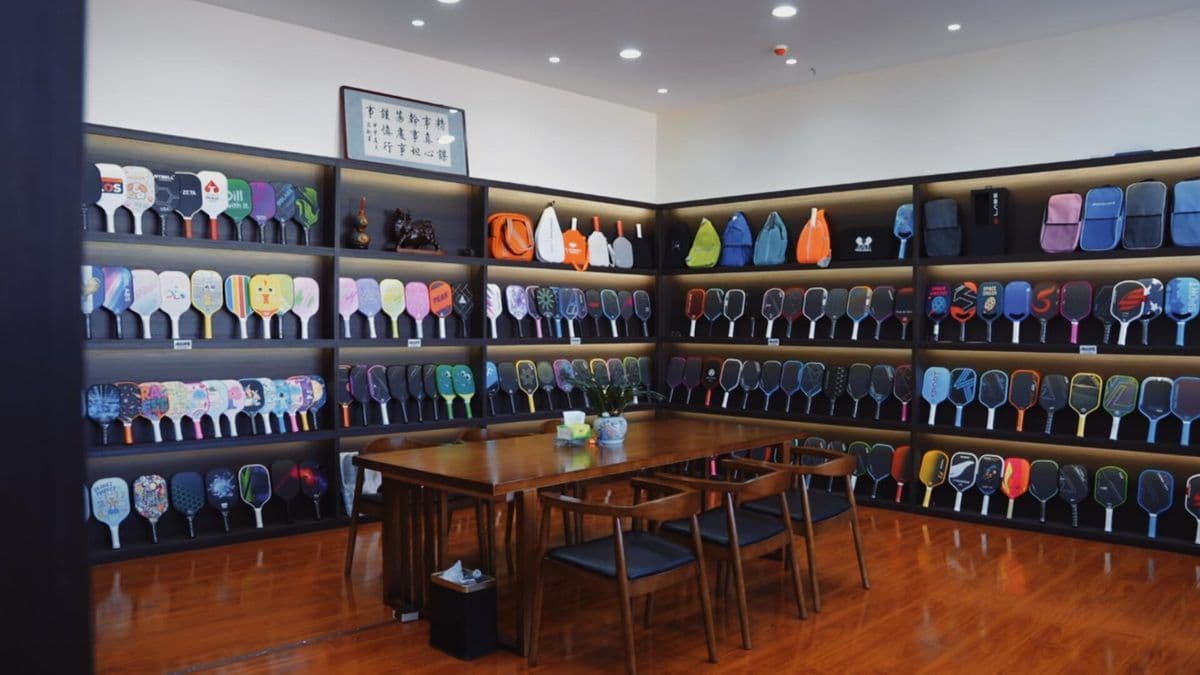
Ask four paddle factories to explain OEM versus ODM and you will get four versions of the same paragraph. OEM means you bring the design. ODM means the factory brings the design. Contract manufacturing means someone builds to your drawing. White-label means you put a sticker on a finished paddle. All of that is correct, and none of it helps, because by the time a buyer types the acronyms into a search box he already knows the definitions. What he does not know is the part that decides how the relationship ends.
The four sourcing models differ in exactly three places, and all three are questions of title rather than description. Who owns the tooling. Who owns the design. Who holds the USA Pickleball certification. Get those three answers in writing and the model names stop mattering; leave them vague and the model name on your purchase order will not protect you when the relationship ends and the mould stays in the factory.
What does "OEM paddle" mean?
An OEM paddle is a pickleball paddle built by a factory to another company's specification and sold under that company's brand — OEM stands for Original Equipment Manufacturer, and it names the factory, not the paddle. In player forums the term has drifted: "OEM paddle" there usually means an unbranded or lightly branded paddle sold as coming from "the same factory" as a big brand, at a fraction of the price. Read those listings carefully. The factory may be real, but the paddle is not the branded model, is not covered by that brand's warranty, and is not on the USA Pickleball approved list under the name on its face — so it is not legal for sanctioned play.
This article uses the first meaning throughout. If you arrived from the second, the section on who holds the USA Pickleball approval explains why a "same factory" paddle and the approved branded paddle are not the same product on paper.
Key takeaways
- The four models are separated by who holds title to three assets — tooling, design, certification — not by how much customisation you get.
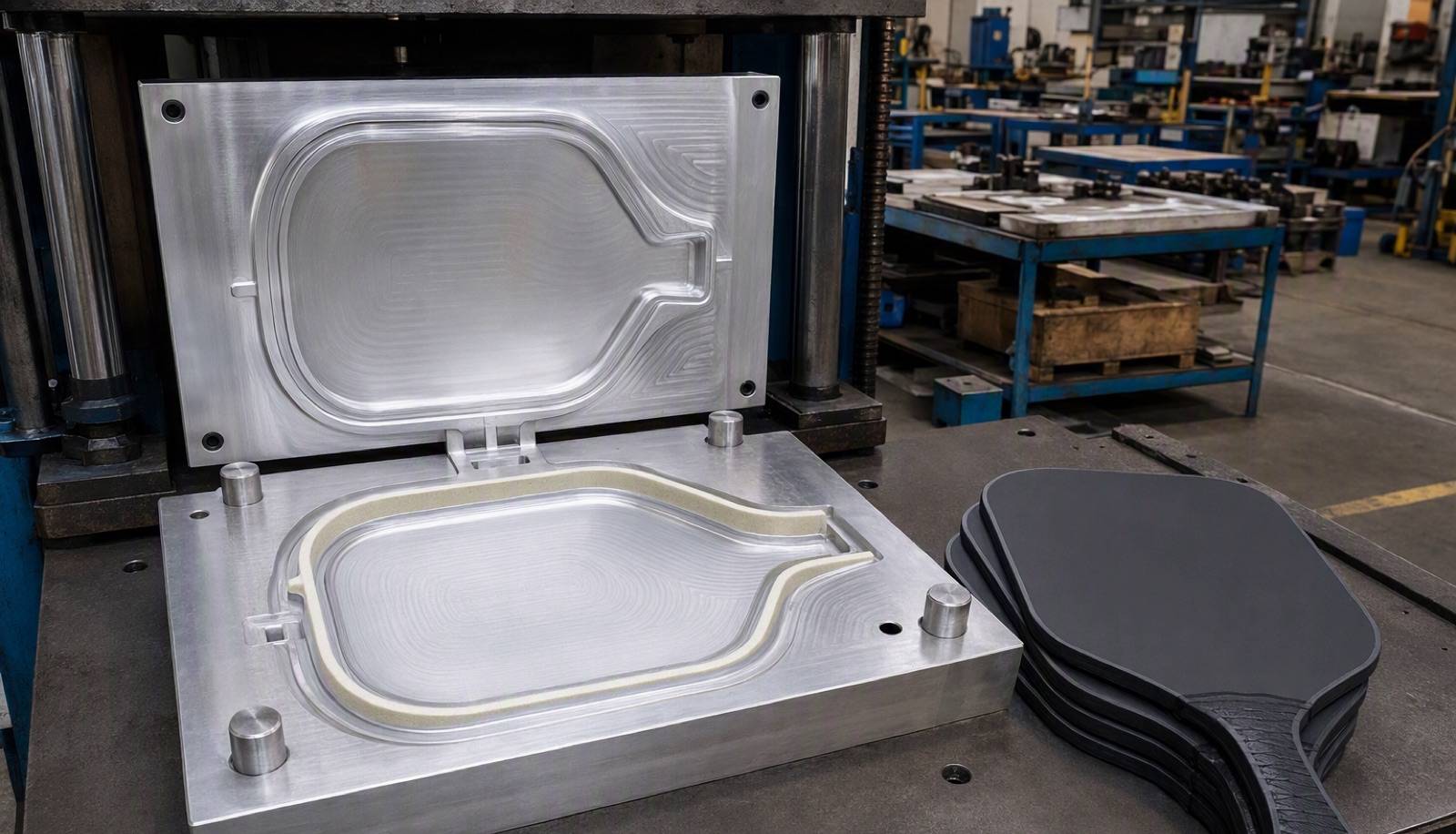
- Paying a tooling charge does not make the mould yours. An invoice line labelled "tooling cost" is, in the words of one China-sourcing guide, "legally insufficient to establish ownership".
- An ownership clause has to do four jobs: identify the mould by number, vest title, restrict use, and compel return with a stated deadline and a stated penalty.
- Exclusivity and IP protection are different instruments. Exclusivity restrains who the factory may sell to; an NNN agreement stops it circumventing you. Blending both into one contract is a documented way to end up with neither.
- USA Pickleball certification is held through a manufacturer account, and the paddle face must carry that manufacturer's name — which is why an ODM approval does not simply follow you to a new supplier.
- Normal certification testing runs 4 to 6 weeks; expedited is 3 to 8 business days. Submitted paddles are never returned.
On this page
- What does "OEM paddle" mean?
- The Four Models, Decided by Who Holds Title
- Who Owns the Mould When the Relationship Ends
- Exclusivity: What It Does and Does Not Buy You
- The Certification Nobody Mentions: Who Holds the USA Pickleball Approval
- Which Model Each Buyer Type Actually Picks
- Before You Sign: The Ownership Questions to Put in Writing
- Frequently asked questions
The Four Models, Decided by Who Holds Title
Start with the three assets, because every real difference between the models is a difference in who holds one of them.
The tooling is the physical steel — the compression mould that gives a paddle its shape, and any fixtures cut specifically for your part. It is the only asset in this argument that can be sitting in a building you do not control.
The design is the geometry, the layup, the construction. It is the thing that makes your paddle play differently from the one beside it on the shelf. Under an ODM arrangement the factory owns it and you own your logo, your colourway and your packaging — and contract-manufacturing specialists put the same point in blunter terms: the ODM will usually retain the IP unless something in writing says otherwise.
The certification is the USA Pickleball approval that lets the paddle be used in sanctioned play. Buyers routinely treat it as a property of the paddle. It is not. It is a property of a manufacturer account, and that distinction gets its own section below because it is where most of the surprises live.
Now the matrix. Read the last column first — it is the one that decides what you can do when you want to leave.
| Model | Who designs it | Who normally holds tooling title | Can the factory sell the same paddle to others? | What you can take with you |
|---|---|---|---|---|
| OEM | You specify; the factory engineers to your spec | Buyer, if the clause says so. The customer owns rights to external designs and custom tools they paid for; the factory keeps rights to its own internal designs | Yes, absent an exclusivity clause — one manufacturer commonly makes products for several competing brands | Your spec, and the mould if the clause vests title and compels return |
| ODM | The factory. You choose from its catalogue and brand it | Factory. The mould predates you and is amortised across every brand using that shape | Yes, by design — and it is selling that shape to other brands already | Your logo, colourway and packaging. Not the shape |
| Contract manufacturing | You, completely — including drawings, validation and engineering | Buyer. The customer holds rights to the product design and the product tooling; IP is described as far more clear-cut than under OEM | Not the same product — it is built to your drawing and nobody else has it | Everything, in principle. That is the point of the model, and the reason it costs you engineering effort |
| White-label | The supplier. You change nothing about the product | Supplier. Design, tooling and other IP belong to it | Yes — many resellers can carry the identical product simultaneously | Your brand name and your customer list. Nothing physical |
Two things fall out of that table immediately. The first is that OEM is the only row where the tooling answer is genuinely negotiable — in the other three the default is settled before you arrive, which makes OEM the only model where a weak contract can cost you an asset you thought you had bought. The second is that "customisation" and "ownership" are not the same axis. A heavily customised ODM paddle with your artwork wrapped edge to edge is still built on a mould you do not own, and the factory can run your competitor's artwork on it next Tuesday.
If the question you actually care about is retail margin rather than title — how the models price out on a shelf and what each does to your turn rate — that is a different argument and it has its own page: OEM vs private label paddles, from the retail margin side. This page stays on ownership.
▶ What is OEM? Original Equipment Manufacturer Explained (Limble)
Who Owns the Mould When the Relationship Ends
Here is the scenario that puts buyers in a lawyer's office. You commission a paddle. You pay a tooling charge on the first invoice. Two years later the relationship sours — quality drifts, a price rise lands badly, you find a better factory. You ask for your mould. The factory says the mould is its property.
Most buyers assume this is straightforward, on the reasoning that they paid for it. That reasoning does not survive contact with the contract. The clearest statement of the problem comes from a China-sourcing risk guide published by CMGM, which puts it flatly: an invoice line item labelled "tooling cost" is legally insufficient to establish ownership, and "I paid for it" is "the starting point, not the end of the story". Harris Sliwoski, a law firm that writes extensively on China manufacturing contracts, frames the same failure from the drafting side — unless the agreement clearly states that you own the tooling, ownership of the tooling often becomes an issue.
Note what neither source says. Neither says you lose. They say the question is open, and an open question about a physical asset held by the other party, in that party's jurisdiction, is not a position you want to negotiate from.
The four jobs an ownership clause has to do
Ownership language that actually protects a buyer does four separate things, and buyers commonly get the first one and skip the rest.
- Identify the specific mould. CMGM's recommended construction names the asset: the mould referenced in this agreement, by mould number, is owned by the buyer, and the factory holds only a right of use for the duration of the agreement. A clause that vests title in "the tooling" without a number is a clause about nothing in particular.
- Vest title, and grant use rather than ownership. The right-of-use framing matters. It says the factory may run the mould while the agreement lives, and that its interest expires with the agreement.
- Restrict the scope of use, with a number attached. The same guidance is explicit that the clause must prohibit the factory from using the tooling for other clients' products and specify a concrete penalty amount for violations. A prohibition with no figure beside it is a request.
- Compel return, on a deadline, at a stated cost, with consequences. Specify the timeframe within which tooling must be returned once the relationship ends, who bears shipping costs, and what penalties apply if the factory refuses. Harris Sliwoski's version is the same instrument seen from the enforcement end: all tooling, jigs and moulds belong to you, and if your manufacturer is slow in returning them it should be required to pay contract damages. A lump-sum penalty is, in most countries, the most effective way to prevent these disputes.
There is a fifth item that is not about the steel at all. The physical mould without its data is a partial asset — you can run it, but you cannot easily modify it, re-cut it, or hand it to another toolmaker to copy. The guidance is to explicitly require the factory to hand over complete drawings and 3D CAD files alongside the physical tooling. Ask for the files at signature, not at divorce.
The clause that is worthless in the wrong language
One further point decides whether any of the above is real. A tooling agreement drafted in English under English or US law, covering steel sitting in a Chinese factory, is a document about a dispute you would have to win somewhere else first. The consistent guidance is that the agreement should be governed by local law and enforceable in local courts, which in practice means a local-language contract with an English copy — and, critically, that Chinese courts treat the Chinese portion as the official contract and disregard the English. The Chinese version has to be a complete rewrite by someone who knows what the terms mean in that system, not a translation of your English draft.
That single fact reorders the buyer's priorities. A beautifully drafted English ownership clause is worth less than a plain, correct Chinese one.
For brand owners and importers weighing an ODM catalogue shape against their own tooling: our OEM and ODM page sets out what is actually customisable here — raw T700 carbon and fibreglass faces, 13mm and 16mm polypropylene honeycomb cores, thermoformed unibody or cold-pressed construction, surface texture, edge guard, grip and full private-label branding — so you can see which of the four models your spec really requires before anyone quotes tooling.
See what OEM and ODM cover hereExclusivity: What It Does and Does Not Buy You
Exclusivity is the clause buyers ask for by name and understand least. It is worth separating three protections that get bundled together in conversation and must not be bundled together in paperwork.
Exclusivity governs who your factory may sell to, or who you may buy from. The framing worth internalising is that it cuts in both directions: an exclusive agreement can either limit your ability to work with another partner, or limit your manufacturing partner's right to work with other buyers. Buyers ask for the second and sometimes sign the first. Read which one you are getting, because a mutual exclusivity clause on a factory that later cannot hold your quality is a cage.
Non-circumvention is a different problem: the factory going around you to your customer. That is the job of an NNN agreement — non-disclosure, non-use, non-circumvention — and the reason it exists as a distinct instrument is that a standard Western NDA addresses only the first of the three. Your manufacturer should not circumvent you and sell directly to your customers, and appropriately drafted, country-specific NNN provisions include language to prevent exactly that.
Tooling title, as covered above, is a property question and neither of the other two answers it.
Why these belong in separate documents
The instinct is to put all of it in one master agreement. The sourcing-legal literature is unusually consistent that this is the mistake. When NNN obligations, tooling rights, product-development duties, quality standards and production commitments are blended into one instrument, the contract becomes ineffective — and the practical version of the same advice is that an NNN agreement and a mould-ownership agreement are two separate documents, because the NNN protects your intellectual property while the mould agreement protects your physical asset. One protects an idea, the other protects a piece of steel; they are enforced differently and they fail differently.
There is also a signature question that is easy to get wrong. The mould agreement needs to be signed by the entity physically holding the steel. A document signed by a trading company, covering a mould sitting in a subcontracted factory two provinces away, protects you against the wrong party.
What exclusivity is actually worth per model
| Model | What exclusivity can realistically cover | What it cannot fix |
|---|---|---|
| OEM | Your specific shape and spec, for named markets or a named term | It does not give you the mould. Exclusivity plus factory-held tooling still leaves the asset there when you leave |
| ODM | At best a territory or a channel on a catalogue shape, usually for a term and usually against volume | The shape existed before you and will outlive you. Nothing makes a catalogue design yours |
| Contract manufacturing | Least needed here — the product is built to your drawing, so exclusivity is closer to a belt beside the braces | It is not a substitute for the NNN. Design theft is a non-use problem, not an exclusivity problem |
| White-label | Little to nothing. Simultaneous multi-brand supply is the model's economic basis | It cannot make a shared product distinctive. If differentiation matters, the model is wrong, not the clause |
The useful conclusion is unglamorous: exclusivity is worth most exactly where you least need it, and worth least where buyers ask for it hardest. A brand asking a factory for exclusivity on a catalogue shape is asking for a term-limited promise about an asset that will never be its own. A brand that has funded its own mould and secured title has already achieved most of what it wanted exclusivity to deliver.
The Certification Nobody Mentions: Who Holds the USA Pickleball Approval
This is the axis that no competing explainer covers, and in practice it decides more model choices than tooling does — because it is the one that bites when you try to move.
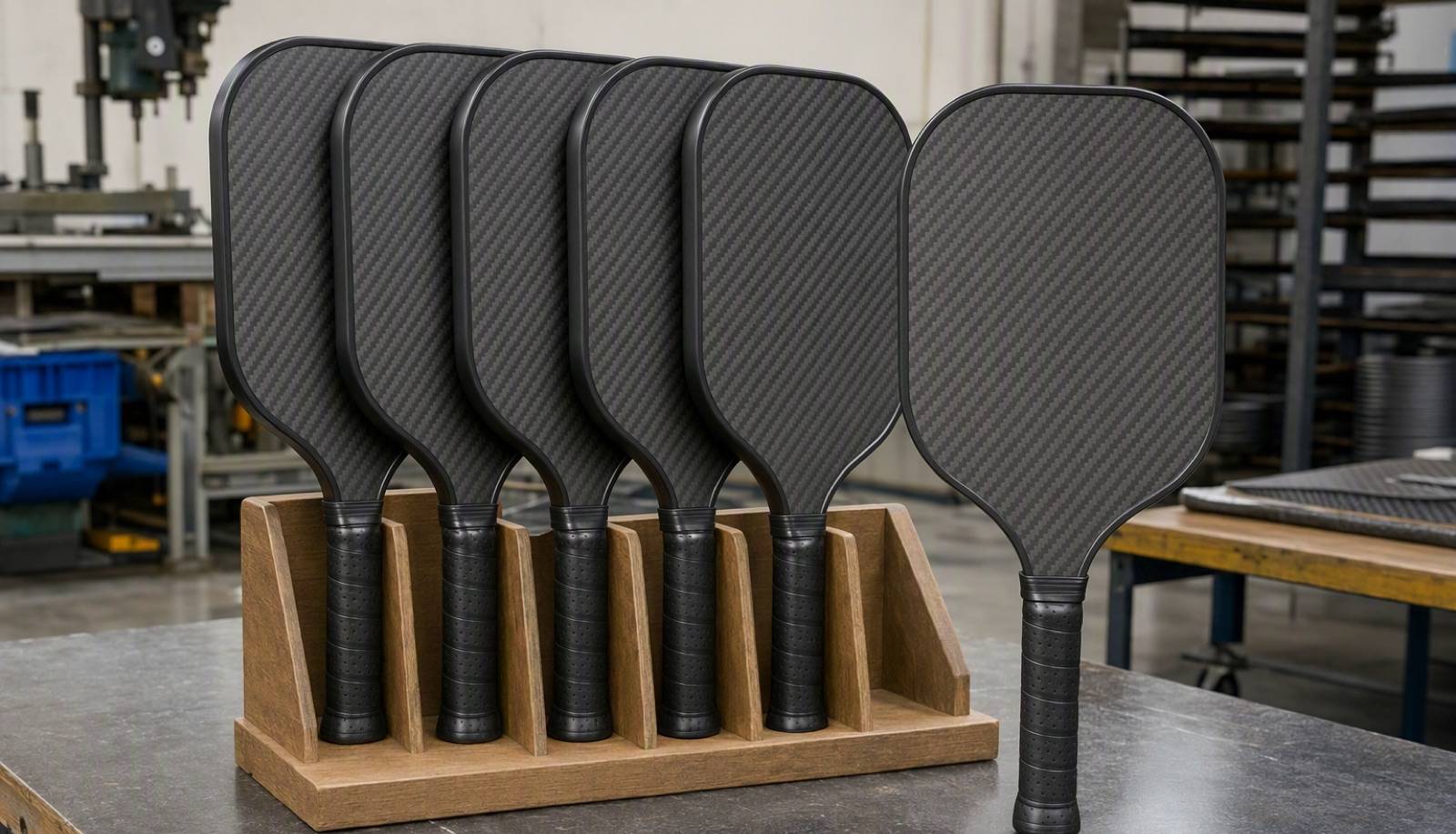
Start with how an approval comes into existence. USA Pickleball's published submission guidance is that a submitter first creates a manufacturer account and has it reviewed and accepted before any paddle can be submitted for certification. The paddle itself must display final graphics, and the rule is specific: the manufacturer's name and the model name must be on the face, along with the USA Pickleball licensed logo or text treatment.
Read that twice if you are considering an ODM paddle. The approval lives under an account, the face carries a manufacturer name, and neither of those is your purchase order. If a factory tells you its catalogue shape "is already approved", the accurate reading is that the factory's model is approved — which is genuinely useful, and is not the same as your branded version being approved.
The Similarity Submission, and its two limits
There is a mechanism for exactly this situation, and it is the single most useful rule in this article for anyone leaning ODM. USA Pickleball defines a Similarity Submission as a paddle that uses identical materials, manufacturing and surface finishing processes as a previously approved paddle, and its model name will need to be differentiated from the base paddle.
So a branded version of an approved catalogue shape has a defined, cheaper-than-new route to approval. Two limits govern it, and both are worth knowing before you commit:
- Similarity submissions may only be referenced to paddles that have been fully tested — not to previous Similarity submissions. You cannot chain a similarity off a similarity, which means a factory shape that itself entered the list by similarity is not a valid origin for yours.
- Only paddles certified after January 1, 2021 may be used as an origin paddle. An older catalogue approval, however solid it sounds in a sales conversation, does not qualify as an origin.
Both limits are answerable with one question to the factory before you order: which listed model is the origin, was it fully tested rather than similar, and when was it certified? A factory that can answer instantly is telling you something about how it works.
Timing, and the paddles you do not get back
Certification is also a schedule item, not just a cost item. USA Pickleball's published guidance is that normal testing time is 4 to 6 weeks, while expedited testing takes 3 to 8 business days to complete, with the expedited clock starting the day after the paddle arrives at the testing facility. Submitted equipment is not returned — paddles or balls submitted for testing are not returned, because non-destructive testing cannot be guaranteed and copies are retained for future reference.
Those are the figures to build a launch calendar around, and they sit on top of production lead time rather than inside it. Certification is a serial step, not a parallel one, because the paddle being tested has to exist in its final graphics first.
We do not publish a single production lead-time figure here, because it moves with the model you picked: a catalogue shape with your branding starts from an existing tooled configuration, while your own tooling adds a mould-cutting and sampling cycle ahead of the first production run. The sequence is set out in our production timeline breakdown.
We are not quoting a submission fee here: USA Pickleball publishes its fee schedule on a page that renders only in the browser, and the figures are not retrievable from the served page, so any number we printed would be a guess dressed as a fact. Ask the association directly, and treat any factory that quotes you a confident fee from memory with mild scepticism.
The obligation that does not end at approval
One last piece changes how the model choice should feel. Approval is not a certificate you frame. Once certified, manufacturers are responsible for ensuring that production units continue to meet the same specifications as the original certified samples, and USA Pickleball inspects market samples to confirm compliance. Equipment is decertified when it fails to meet the conditions of its certification — including any inaccuracies in its initial disclosures or failure to maintain consistent production standards — and a paddle must comply with all certification requirements throughout its entire lifecycle.
That is an ongoing exposure attached to whoever holds the certification. If it is the factory's approval on the factory's account, a drift in its production affects your listed paddle and you are not the party USA Pickleball is talking to. If the approval is yours, the compliance obligation is yours too — which is a real cost of control, and one no sales page mentions. For the eligibility mechanics of getting a specific build listed, we cover that separately in the USA Pickleball approved-paddle eligibility check.
Which Model Each Buyer Type Actually Picks
The abstract answer — "it depends on your volume and your ambition" — is true and useless. Here is the concrete version, organised by who you are, with the failure mode that follows from choosing wrong.
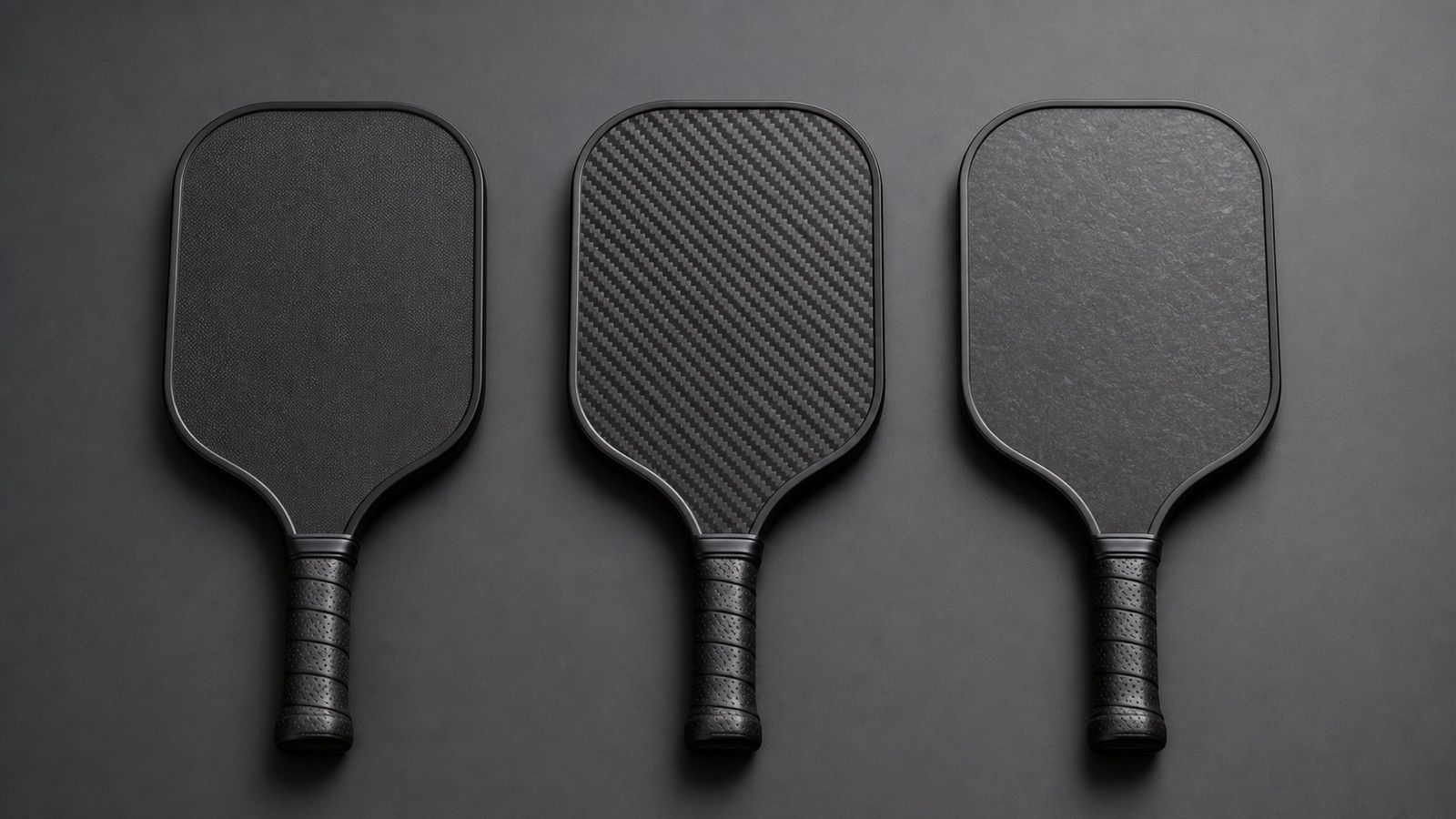
The first-time brand launcher. Best served by ODM, and the reason is risk rather than budget: an unproven brand paying to cut its own tooling is spending its scarcest capital on the asset with the longest payback. Not for you if your entire positioning is a proprietary feel — in that case you are buying a shared shape and calling it a brand, and your customers will find the same paddle under three other names. The realistic path is ODM first, then your own tooling once you know which SKU sells.
The established importer or distributor. Best served by OEM with a proper tooling clause. You have the volume to amortise a mould and the market knowledge to specify one. This is the buyer for whom the clause detail above is worth real money, because you are the buyer most likely to change factories in year three and most likely to discover then that "your" mould is not yours. Not for you if you are still testing whether the category works at your volume.
The retailer or chain building a house brand. Usually ODM, occasionally OEM on the hero SKU. The economics are shelf economics: a house brand needs adequate product at a controlled cost across many SKUs, not a proprietary construction on every one. The sensible structure is an ODM base range plus one owned-tooling flagship. Not for you: contract manufacturing, which asks you to fund product engineering you have no reason to build.
The club, facility or rental-fleet buyer. Usually white-label, and frequently just stock product with a logo. You are buying durability per dollar across a fleet that gets abused, and the ownership questions in this article are mostly irrelevant to you — which is a legitimate answer, not a lesser one. Not for you: paying tooling for a fleet paddle. Nobody in your rental queue cares whose mould it came from.
The floor you are actually working against
Two concrete numbers are worth having in mind while you place yourself above, because they set the real entry threshold rather than a theoretical one. On our own catalogue the stated minimums are 50 pieces for paddles and 1,000 pieces for balls. The paddle figure surprises people who have been told the category starts in the hundreds, and it matters to this decision: a 50-piece minimum means the branded-catalogue route is available to a buyer far too small to be thinking about tooling at all.
The available spec range is worth setting out as a list rather than a sentence, because it is the thing most buyers mis-scope. The material and grade range available here is: raw T700 carbon and fibreglass faces, polypropylene honeycomb cores in two thicknesses (13mm and 16mm — discrete options, not a continuous range), thermoformed unibody or cold-pressed construction, plus surface texture, edge guard, grip and full private-label branding, shipped DDP.
Read that list against the model you just picked. Most buyers who think they need OEM discover their entire requirement is a configuration choice inside an existing range — and most who think ODM is enough find one item on their spec sheet that a catalogue shape cannot deliver.
On price structure we will not print a per-unit figure here, and you should be wary of anyone who does in a general article: paddle pricing moves with face material, core thickness, construction method, order size and packaging, so a number without a build sheet attached is decoration. The honest version is that it is quoted per configuration against your volume. If you want the pricing logic itself, we have written it up separately in the custom paddle sourcing guide covering specs, MOQ and timeline, and the tooling side in what paddle tooling actually costs.
Before You Sign: The Ownership Questions to Put in Writing
Everything above collapses into six questions. Ask them by email, so the answers exist in writing, and judge the factory as much on the shape of the answer as on its content — a supplier that has had this conversation before answers in specifics, and one that has not answers in reassurance.
| Ask this | A straight answer sounds like | Which document carries it |
|---|---|---|
| If I pay for tooling, who holds title, and is the mould identified by number? | A named party and a mould number, with the factory holding a right of use only | Mould/tooling agreement, signed by the party physically holding the steel |
| May the mould be used for another client's product, and what happens if it is? | A flat prohibition with a stated penalty figure beside it | Mould/tooling agreement |
| If we stop working together, how many days to return it, who pays freight, what if you refuse? | A day count, a named payer, and contract damages for refusal | Mould/tooling agreement |
| Do the drawings and 3D CAD files come with the steel? | Yes, listed as a deliverable rather than described as a courtesy | Mould/tooling agreement |
| Is exclusivity mutual or one-way, and for which markets and term? | A direction, a territory list and an end date | Supply/OEM agreement — separate from the NNN |
| On an ODM shape: which listed model is the certification origin, was it fully tested, and when was it certified? | A model name, "fully tested", and a date after 1 January 2021 | Not a contract — a factual answer you verify against the published paddle list |
What we check on our side, and where we stop
To be useful rather than merely even-handed, here is where this factory sits against its own checklist. The documented procedure before a paddle programme reaches production is reference-unit approval followed by pre-shipment inspection: one paddle is signed off as the golden reference, and the run is then checked against that physical unit rather than against a written description. That sequence is the practical answer to question six in the table above, because a certification is granted against a tested configuration, and only a signed reference unit tells you months later whether the production run still matches what was approved.
Where we stop is worth stating just as plainly. Tooling charges and exclusivity terms here are quoted per programme rather than posted, which is exactly why no figure for either appears anywhere above — and an article that invented one would be making a commitment the factory would then have to walk back. The same restraint applies to the clause text below.
One caveat about this article that is worth stating plainly, because the alternative is pretending. The clause language quoted above is drawn from published China-sourcing legal guidance — CMGM's tooling-ownership guide and Harris Sliwoski's China manufacturing contract writing — and it is presented here as what that guidance says a buyer should require. It is not a reproduction of our own agreement text, and we have deliberately not dressed a generic template up as one. Nor have we printed a tooling price or an exclusivity minimum for our own programmes, because those are quoted per project and a made-up figure would be worse than none.
What we can tell you without qualification is on the record above: the minimums are 50 paddles and 1,000 balls, the configurable spec range is the faces, cores and constructions listed, and the certification rules are the association's own published text rather than anyone's interpretation of it. If you want the factory-side verification process that follows this decision, it is set out in the OEM factory vetting guide, and the reference-unit sign-off procedure in the golden reference approval workflow.
The Short Version
The four models are a spectrum of control, and control is bought with engineering effort and tooling capital rather than with a label on a purchase order. White-label costs you nothing and gives you nothing but a brand name. ODM buys speed and a low floor at the price of a shape you will always share. OEM is the only model where the ownership question is genuinely open — which makes it the model where the contract, not the relationship, decides what you keep. Contract manufacturing gives the cleanest title and charges you in engineering hours to get it.
If you take one thing: the sentence "we paid for the tooling" is not a legal position, and the paragraph that turns it into one is short, cheap to draft, and almost always missing. Get it written before the first payment, in the language of the court that would hear the dispute.
Frequently Asked Questions
Is an "OEM" paddle the same as the original branded paddle?
No. In trade language OEM means a factory building to a brand's spec; in resale listings "OEM paddle" usually means an unbranded paddle claimed to come from the same factory. Even if the factory is the same, it is a different SKU: no brand warranty, and not listed as USA Pickleball approved under that name, so it cannot be used in sanctioned play.
Does paying the tooling charge mean I own the mould?
Not by itself. Published China-sourcing guidance is explicit that an invoice line labelled "tooling cost" is legally insufficient to establish ownership. Title comes from a clause naming the mould by number and vesting ownership in you, with the factory holding only a right of use.
What is the actual difference between OEM and contract manufacturing?
Where the engineering burden and the tooling rights sit. Under contract manufacturing the customer holds rights to both the product design and the tooling, and supplies the drawings, validation and engineering. Under OEM the factory does more of that work and one manufacturer often supplies several competing brands.
Can the factory sell my ODM paddle to a competitor?
Yes, unless exclusivity is contracted. Under ODM the factory owns the base design and you own your logo, colourway and packaging. Exclusivity on a catalogue shape is typically limited by territory and term, and it never converts the design into your property.
Is an NNN agreement the same as an exclusivity clause?
No, and they belong in separate documents. An NNN covers non-disclosure, non-use and non-circumvention — it stops the factory selling around you to your customers. Exclusivity governs who each party may deal with. Blending them with tooling and quality terms into one contract is a documented way to weaken all of them.
If a factory's paddle is USA Pickleball approved, is my branded version approved too?
Not automatically. Certification runs through a manufacturer account and the face must carry that manufacturer's name and model name. A branded version normally goes in as a Similarity Submission, which requires identical materials, manufacturing and finishing, and a differentiated model name.
How long does paddle certification testing take?
USA Pickleball's published guidance is 4 to 6 weeks for normal testing, or 3 to 8 business days expedited, with the expedited clock starting the day after the paddle arrives at the facility. Submitted paddles are not returned.
Which sourcing model should a first-time brand choose?
Usually ODM, because tooling capital is the wrong first spend for an unproven SKU. Move to your own tooling once you know which model sells. The exception is a brand whose entire positioning depends on a proprietary feel that a catalogue shape cannot deliver.
What is the minimum order for custom paddles here?
The stated catalogue minimums are 50 pieces for paddles and 1,000 pieces for balls. Anything beyond a configuration change — new tooling in particular — is quoted per project, since the economics depend on the build sheet rather than on a single headline figure.
Want to source this quality for your brand?
Contact our factory directly on WhatsApp for an instant MOQ and pricing quote.