$40 Alibaba Paddle vs $200 Brand Paddle: What You Actually Get
Spend ten minutes on r/Pickleball and you'll find the thread that keeps every paddle brand up at night: someone bought a $40 Alibaba version of a $250 paddle and swears it plays "almost 100% identical." Two threads down, someone else's clone felt great for three weeks and then went dead. Both stories are true, and that's exactly what makes this topic so confusing, and so important if you're building a paddle brand or deciding what a premium price actually buys.
We're a paddle factory, so we sit on the side of this story most articles can't see. Here's the honest breakdown: what's genuinely identical between a cheap clone and a brand paddle, what's genuinely different, why some clones die in three months, and what the whole phenomenon means if you sell, or plan to sell, paddles under your own name.

Key Takeaways
- Three different things get called "clones": counterfeits (fake branding, illegal), lookalike open-mold paddles (legal), and genuine white-label/OEM builds (legal, and how most brands are actually made).
- The construction really is similar: a $40 and a $250 thermoformed carbon paddle can share the same architecture. The differences live in material grade, spec control, and batch consistency, none of which are visible in photos.
- The "died in 3 months" pattern Reddit reports is real and has a mechanical cause: lower-grade carbon and adhesives play fine out of the box, then break down under cyclic load.
- A bare paddle costs roughly $20–35 to build; the retail gap covers real things (testing, USAPA listing, warranty, consistency) and, at some brands, plain markup. The honest answer is "both."
- Clones can't hold a USAPA listing: counterfeit paddles are ineligible for sanctioned play, and a de-listed or fake paddle is a real risk for anyone competing or reselling.
- For brand builders, the lesson isn't "compete with $40"; it's that consistency and verifiable QC are the product. The brands Reddit turns on are the ones whose premium buys nothing visible.
First, sort out what a "clone" actually is
The Reddit debate stays confused because three very different products get called the same thing:
- Counterfeits: paddles carrying a brand's name and logo without authorization. Illegal to make, illegal to sell, and the buyer has no warranty, no approval status, and no recourse. This is what reviewers mean when they say the fake market is becoming a problem.
- Lookalike / open-mold paddles: unbranded paddles built on the same general architecture as popular models (elongated thermoformed carbon, 16mm core), sold as what they are. Legal, and this is most of what people actually buy on Alibaba for $30–50.
- White-label / OEM builds: a factory builds a paddle to a customer's locked spec, and the customer brands it. Legal, contractual, and (open secret) this is how the majority of paddle brands, including well-known ones, actually produce. The OEM process is the legitimate version of "made in the same factory."
Everything below is about the honest comparison: an unbranded lookalike versus a brand-name paddle. Counterfeits are a fraud problem, not a product comparison. Don't buy them, don't sell them.
Alibaba paddle questions, answered straight
Six questions come up every time someone searches for an Alibaba pickleball paddle. Short answers first, then the reasoning behind each.
Are pickleball paddles from Alibaba legit?
Unbranded paddles sold under the seller's own name are legitimate products; listings that print another brand's logo are counterfeits. Legitimate is not the same as tournament-legal, though. A paddle qualifies for sanctioned play only when its brand and model are listed as Pass on the USA Pickleball Approved Paddle List.
Which Alibaba pickleball paddle is considered the best?
No single listing earns that title, because a listing is not a spec: two orders from the same page can come from different material lots. The YouTube blind tests of a specific clone describe the batch that reviewer received. The useful shortlist is sellers who will ship a pre-production sample and put the face material and weight window in writing before you pay for a run.
What is the best pickleball paddle in China?
There is no single best Chinese paddle, because China builds most of the market, clones and brand paddles alike. Origin tells you very little about quality. What separates a good Chinese-built paddle from a bad one is what separates any two paddles: a locked spec, batch inspection, and a buyer with rejection rights.
What is the #1 rated pickleball paddle?
No governing body ranks paddles, so any "#1" is a reviewer's or retailer's opinion for one play style and one season. The only official status a paddle can hold is a Pass listing on the USA Pickleball Approved Paddle List, and that list approves models; it does not rank them.
What are the top 3 pickleball paddles?
Any top-three list is one reviewer's pick for one play style, and the names turn over every season. If you are weighing a $40 Alibaba paddle against a brand paddle, three checks beat any ranking: is the model listed as Pass, does the seller state a weight window, and will anyone honor a warranty after month three?
Are Selkirk paddles made in China?
Yes. Selkirk's own FAQ states that its paddles are designed in Coeur d'Alene, Idaho, and manufactured in a facility in China, and that it moved manufacturing to a larger production facility in July 2026. So "made in China" cannot be what separates a clone from a brand paddle. The spec, and who enforces it, does.
What's genuinely the same
Here's the part brands don't love hearing, and a factory can confirm: the basic construction of a modern performance paddle is not a secret. A thermoformed unibody with a raw carbon face and a polypropylene honeycomb core is a known recipe, produced on similar equipment across many factories in the same manufacturing regions. When a Redditor says their $40 paddle is "almost 100% identical to real Joola, from aesthetics to playing feel," that's not impossible: architecture drives most of the first impression, and the architecture genuinely is shared.
That's also why the cost numbers Reddit throws around are roughly right. A bare performance paddle runs in the neighborhood of $20–35 to manufacture depending on materials and volume. So when a thread says "paddles cost $25 or less to make" and the room concludes the industry is "a racket," the manufacturing number isn't the lie. The mistake is assuming the build cost is the whole story, because the things that separate a good paddle from a three-month paddle are exactly the things that don't show up in that number.
What's genuinely different, and invisible in photos
Two paddles with identical shapes, identical layups on paper, and identical marketing language can be very different products. The gap lives in four places:
- Material grade. "Carbon fiber" spans a wide quality range. Genuine T700 versus lower-grade or blended weaves looks the same in a listing photo and behaves differently after ten thousand ball impacts. Same for core density and, critically, the adhesives holding the sandwich together.
- Process control. A thermoformed build done with controlled temperature, pressure, and cure time versus one rushed through the press produces different internal bonding, invisible on day one, decisive by month three.
- Spec lock and QC. A brand order runs against a signed golden sample with weight windows, batch inspection, and rejection rights. A no-name clone run has none of that: whatever comes off the line ships. This is why clone experiences are so scattered: there is no spec being held.
- Consistency between paddles. Reddit itself supplies the punchline: even big brands get accused of being "all over the place paddle to paddle." Consistency is hard, costs money, and is precisely what uncontrolled production can't deliver. If a $250 brand struggles with it, an unspec'd $40 run doesn't stand a chance.
The most honest one-line summary a factory can give: the clone and the brand paddle often share a recipe, but nobody is contractually responsible for whether the clone actually follows it.
Why the clone that felt great died in three months
The most useful Reddit thread on this topic describes a pattern we recognize immediately from the production side: "out of the box the clones felt crisp and snappy, and for the first 2–3 weeks the paddle face softened into a sweet spot." Then performance fell off a cliff by month three. That timeline is a signature, not bad luck.
A carbon-face paddle is a laminate under cyclic load. Lower-grade fibers and cheaper adhesives handle the first few thousand impacts fine; that's the crisp early phase. The initial "softening" players enjoy is the structure micro-settling. On a well-built paddle that settling plateaus and holds for months; on a weak laminate it doesn't stop: the bonds keep degrading, the face goes dead or delaminates, and the paddle that "played at 90%" of the original now plays at 60%. The buyer got exactly what wasn't inspected: a paddle whose first month and sixth month are different products.
Do the per-month math Reddit eventually does on its own: a $40 paddle replaced quarterly costs more per year than a $130 paddle that holds its feel, before counting the games played on a dying face. Cheap can be a great deal or a subscription; the difference is whether anyone controlled the build.
The part nobody prices in: legality and approval
Two hard lines that don't depend on how the paddle plays. First, counterfeits (fake-branded paddles) are illegal to sell anywhere, and marketplaces and customs both enforce against them; if you're a reseller, one counterfeit lot can end an account. Second, approval: sanctioned play requires a paddle that's actually on the approved list, and an unlisted clone or fake fails that test by definition, a real issue the moment your buyers compete in leagues, covered in detail in our certification breakdown.
This is also where the legitimate path becomes obvious. Everything people like about the clone economics (factory-direct cost, same construction, no brand markup) exists legally as OEM/white-label. You lock your own spec, put your own name on it, get real QC and a real approval submission. That's not a loophole; it's how the industry actually works.
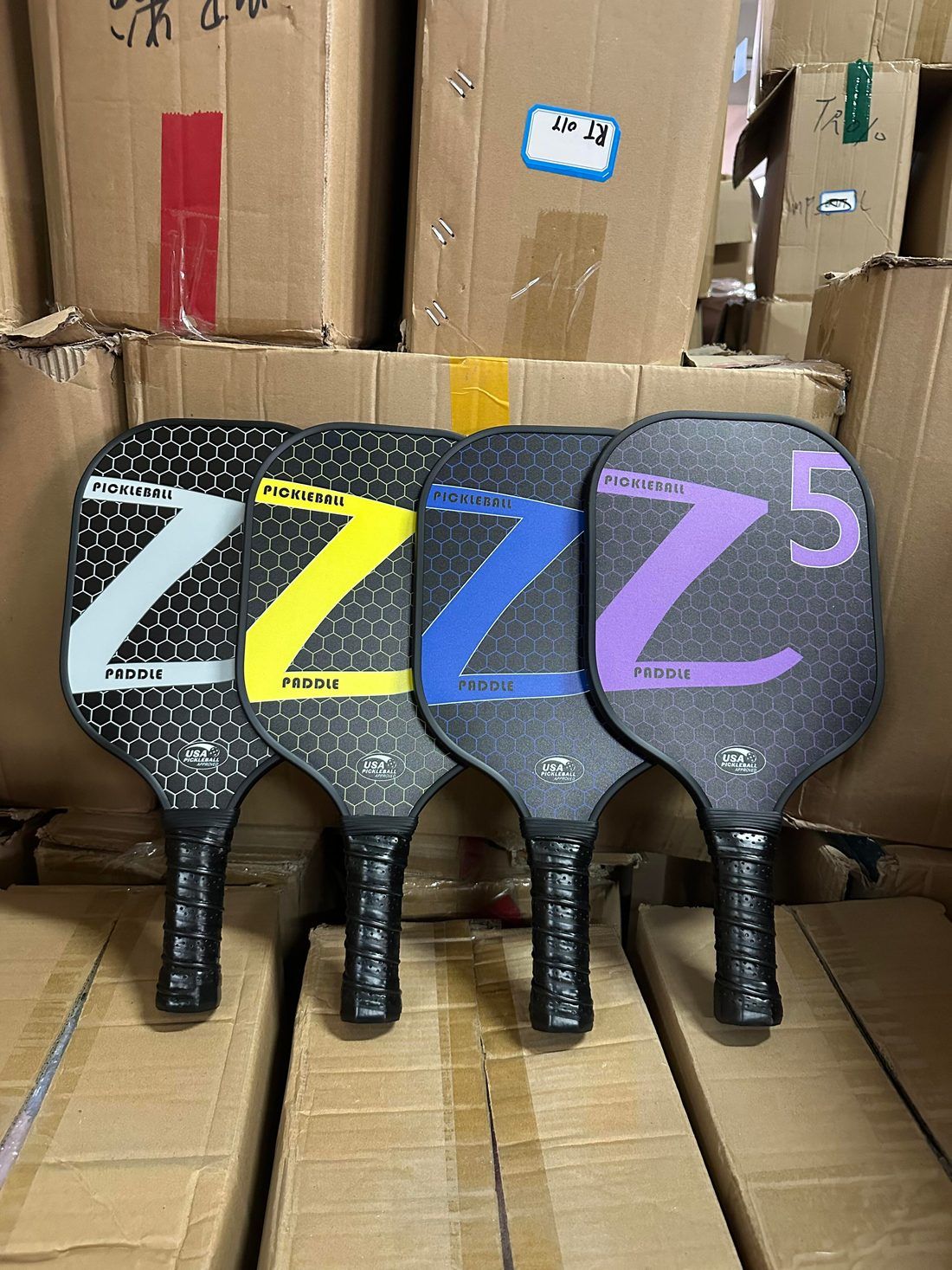
We build white-label and OEM carbon paddles to a locked spec: golden sample, batch QC, weight windows in writing. The same source-factory price the clones brag about, with someone contractually on the hook for quality. Best fit for brands ordering 100+ paddles.
Build Your Own LineFive checks an Alibaba listing has to pass before a tournament will
The USA Pickleball Equipment Standards Manual (Revision 3.0, January 2025) is the document behind the approved list, and two of its clauses explain the Reddit pattern better than any review. Clause 2.F.2 subjects manufacturers to ongoing compliance testing so that paddles "as produced and sold are identical to the paddle that has been tested/certified." Clause 2.F.2.a goes further: paddles must be compliant "over the entire useful life of the paddle," break-in and degradation included.
Read those next to the three-month clone story. A paddle that plays one way in week one and another way in month three is exactly the behavior that clause is written against. And a clone copied from a listed model inherits none of that listing, because approval attaches to the tested paddle and the production that must match it, not to the shape. Our guide on how to check whether a paddle is USAP approved walks through the database search step by step.
| Check (rule) | Limit (in / PBCoR) | Verifiable from the listing? | Verdict |
|---|---|---|---|
| Size (Rulebook 3.D.2) | Length + width ≤ 24 in; length ≤ 17 in | Yes, with a tape measure | Necessary, proves nothing about approval |
| Power (ESM 2.E.6.f) | PBCoR not to exceed 0.43 from Nov. 1, 2025 | No, needs lab testing | Read "max power" claims as a warning |
| Markings (Rulebook 3.D.1, ESM 2.E.7) | Brand, model name or number, approval seal | Partly, from product photos | A printed seal is a claim, not a listing |
| Listing (ESM 2.F.3) | Model listed as Pass | Yes, search the approved database | The only check that decides tournament use |
| Useful life (ESM 2.F.2.a) | Compliant over the entire useful life | No, only months of play show it | Where a controlled build beats a clone |
Source: USA Pickleball Official Rulebook (2026), Rules 3.D.1 and 3.D.2; USA Pickleball Equipment Standards Manual, Revision 3.0 (January 2025), clauses 2.E.6.f, 2.E.7, 2.F.2.a and 2.F.3. Both checked 23 September 2026.
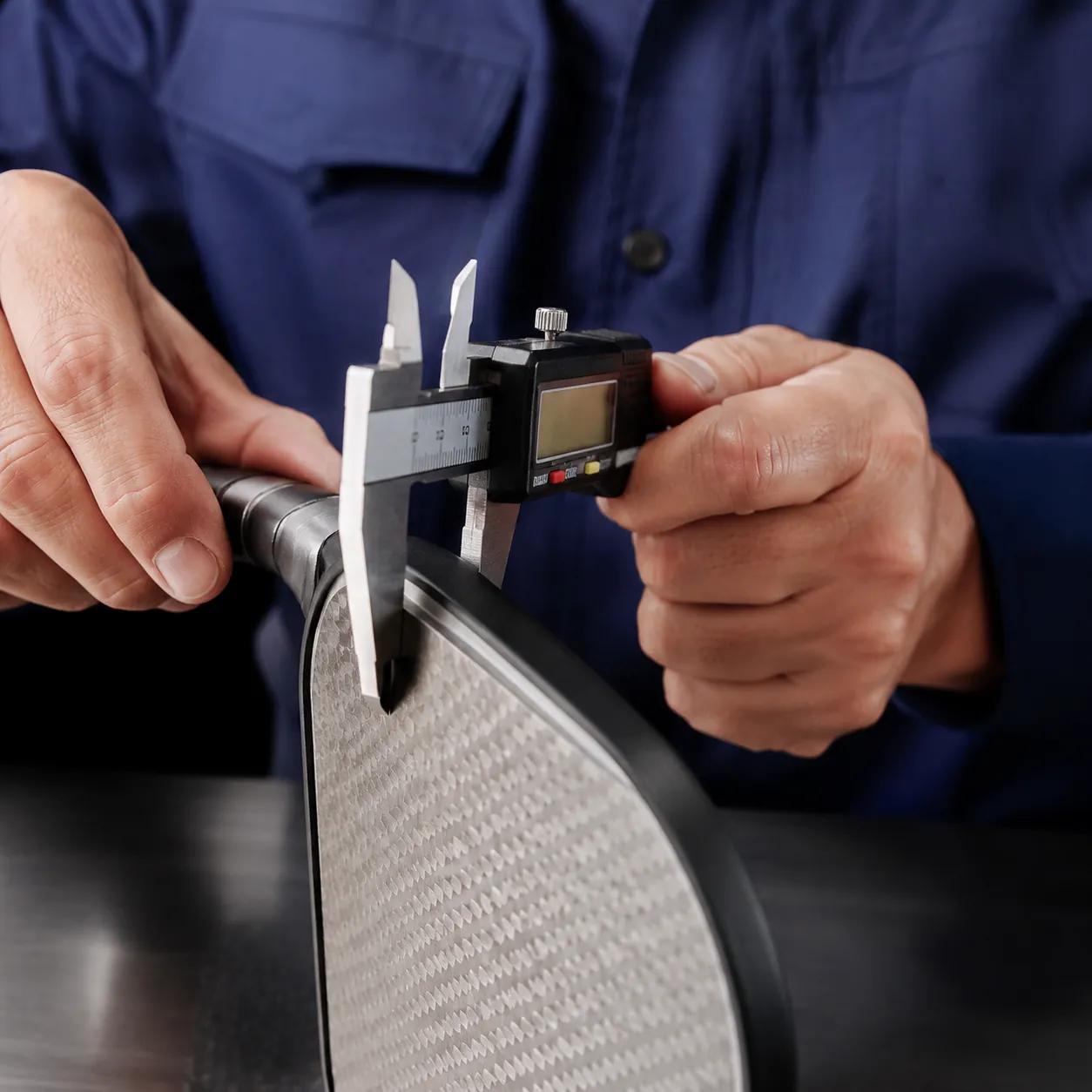
The manual is just as direct about the seal. Products "may not be marketed as USAP Approved prior to completion of any/all testing and must be listed on the USAP public Database in order to be legal for use in sanctioned events." So the only check that settles anything is a search of the USA Pickleball approved equipment database for the exact brand and model printed on the paddle.
The penalty side is spelled out as well: under clause 2.F.3.a, a player caught with an unlisted paddle before the match may switch to a listed one without penalty, but once the match has started the player or team forfeits the match being played. For a club or a reseller stocking league players, that is the practical cost of a clone in the bag. The power limit has its own explainer in our PBCoR testing guide.
If you're building a brand, this thread is about you
Read those Reddit threads as market research and the message to paddle brands is brutal but useful: buyers have figured out the build cost, and they're no longer paying premiums on faith. The brands getting roasted aren't the expensive ones; they're the ones whose premium buys nothing the buyer can verify. That's the actual competitive threat of the $40 clone: not its price, but the question it forces.
The answer isn't to race to $40. It's to make the invisible differences visible:
- Show the QC, don't claim it. Weight windows, batch inspection, factory photos, the golden-sample process: the receipts that a $40 run doesn't have.
- Sell consistency as the feature. "Every paddle plays like the one you demoed" attacks the clone market's actual weakness and the big brands' most common complaint at the same time.
- Hold a real approval listing and say so; it's a hard differentiator no clone can copy.
- Price the honest middle. The Reddit consensus buyer is fine paying $90–140 for a paddle with verifiable quality; the anger targets $250 for an unverifiable one. Position where the trust math works.
All of that starts with a factory relationship where the spec is yours and enforced, which is a known, plannable process, not a leap of faith.
Using Alibaba's supplier directory as a business buyer
The second result for this search is Alibaba's own supplier directory, and for a business that is a different transaction from buying a $40 listing. A listing sells you whatever the seller built. A factory order lets you define the paddle, and four questions decide whether you end up with a brand product or a bulk clone:
- Whose name is on the approval? Players look up the brand and model printed on the paddle, so a factory's listing under its own name does not cover your logo. Agree in writing who submits your model for testing and who pays.
- Sample before the run. Pay for a pre-production sample and sign it off as the golden sample that every production paddle is inspected against.
- A weight window in writing. A stated tolerance, checked batch by batch, is the consistency a clone listing cannot offer. Our weight-matching guide shows how to specify it.
- Vet the factory, not the storefront. A storefront may belong to a trading company rather than the plant that presses your paddles; our factory-vetting checklist covers how to tell.
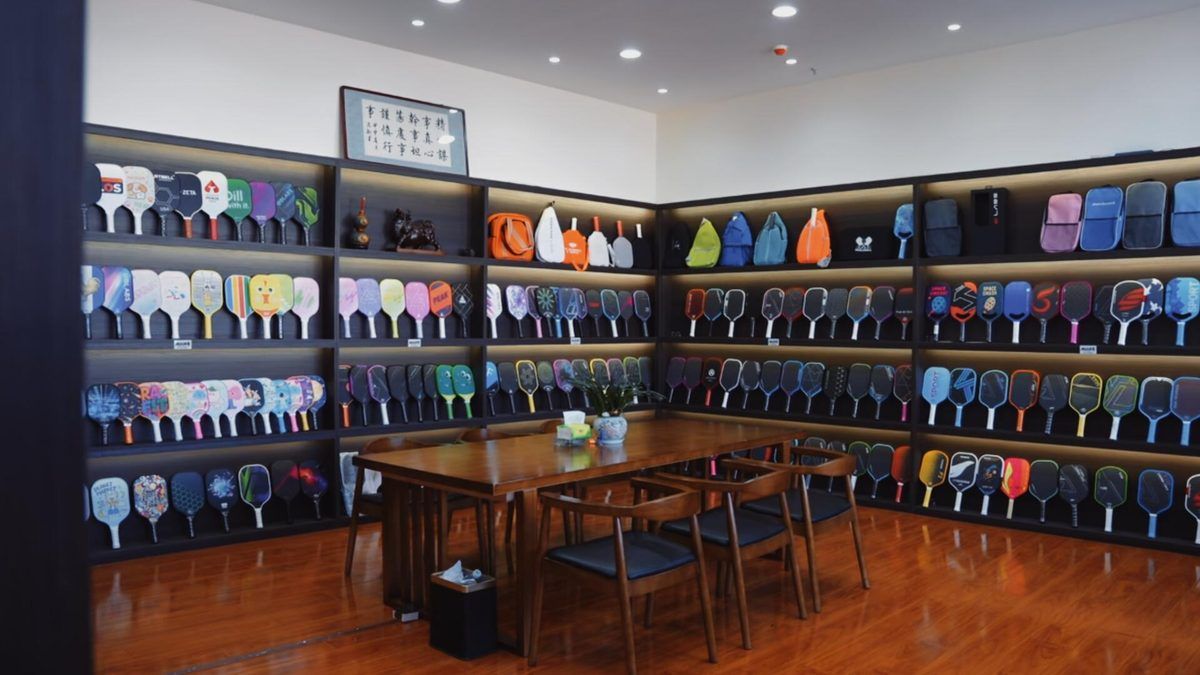
If you would rather skip the directory, our OEM and private-label program starts from those answers: your own spec, a signed golden sample, and batch QC in writing.
Conclusion
Both Reddit stories are true because "clone" isn't one product. The architecture of a modern carbon paddle is shared and the build cost is low; that part the internet got right. What the $200 price can legitimately buy is everything wrapped around the build: material grade, process control, a spec someone must hit, batch consistency, a real approval listing, and a warranty. When those are present, the premium is a product; when they're absent, it's a logo, and buyers have learned the difference.
If you're a player, buy from anyone who can show you their quality control, at any price point. If you're building a brand, be the company that can. The clone era doesn't kill paddle brands; it kills unverifiable ones.
Frequently Asked Questions
Are Alibaba pickleball paddle clones as good as brand paddles?
Sometimes at first, rarely over time. The architecture is often genuinely similar, so early play feel can match. The differences (material grade, adhesives, process control, and batch consistency) show up months later, which is why Reddit reports both "identical to the real one" and "dead in three months." Both are typical clone outcomes because no spec is being enforced.
How much does a pickleball paddle actually cost to make?
A bare performance paddle typically costs around $20–35 to manufacture depending on materials and volume. Retail prices above that cover real costs (R&D, testing, approval fees, QC, warranty, marketing) and brand margin. The build cost is real, but it excludes everything that determines whether the paddle still plays well in month six.
Why do cheap clone paddles break down after a few months?
Lower-grade carbon and adhesives survive early play, then degrade under repeated impact: the face goes dead or delaminates. A well-built laminate settles and then holds; a weak one keeps deteriorating. The "great for three weeks, dead by month three" pattern is the signature of uncontrolled materials and curing, not bad luck.
Is it legal to buy or sell clone paddles?
Unbranded lookalike paddles sold as what they are: legal. Counterfeits carrying a brand's name or logo without authorization: illegal to sell, enforced by marketplaces and customs, and they carry no warranty or approval status. For businesses, the legal route to factory-direct economics is OEM/white-label under your own brand.
Are brand paddles and clones really made in the same factories?
Sometimes the same region and similar equipment, occasionally the same factory, but that matters less than people think. A brand order runs against a locked spec, golden sample, and batch QC with rejection rights; a clone run has none of that. Same machines don't mean same product when nobody is contractually holding the spec.
Want to source this quality for your brand?
Contact our factory directly on WhatsApp for an instant MOQ and pricing quote.