Where 'Made In' Goes on a Paddle: US Origin Marking
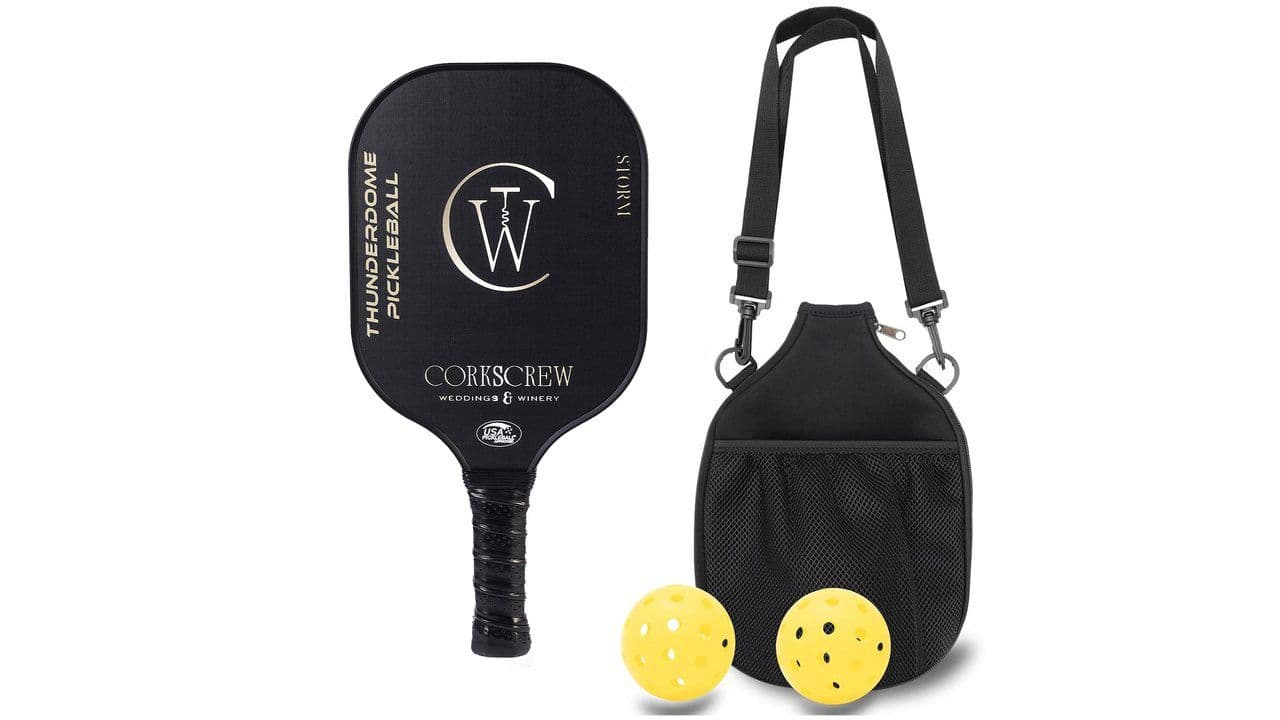
The general duty rate on a pickleball paddle entering the United States under HTSUS 9506.99.60 is 4%. The duty for getting the two words "Made in" wrong on that same paddle is 10% — and 19 U.S.C. 1304(i) says it "shall be deemed to have accrued at the time of importation," cannot be remitted, and applies even where the article would otherwise be duty-free.
The marking is not the paperwork around the shipment. It is a charge in its own right, and it is larger than the tariff it sits next to.
Two questions decide whether you pay it. The first is which country is legally the origin of your paddle, which is not the same question as where the final assembly line stands. The second is where on a paddle the resulting words have to be, in what form, so that they survive to the person who buys it. This page answers both from the statute, the regulation and three named CBP rulings on multi-component goods — two on sporting goods, one on an automotive part, and the third is included because it is the most recent statement of how the agency weighs a mixed bill of materials.
It does not restate tariff rates — the Section 301 tariff guide prices the duty once origin is settled, and the export carton marking spec covers the outside of the box. This one is about the article itself.
Key takeaways
- Origin follows substantial transformation, not the address of the assembly line. 19 CFR 134.1(b) makes the country of manufacture the origin unless later work gives the article a new name, character or use.
- CBP has already ruled on this fact pattern twice, in opposite directions. In HQ H313087 (27 May 2021) golf clubs assembled in Mexico from Chinese shafts, grips and head castings stayed Chinese. In N334756 (12 September 2023) clubs assembled in Vietnam were Vietnamese — because the head or the shaft was also made in Vietnam.
- The mark is written for the retail buyer, not your warehouse. 19 CFR 134.1(d) defines the ultimate purchaser as generally the last person in the US who receives the article in the form imported, and 19 CFR 134.41(b) requires that person to "find the marking easily and read it without strain."
- Your own US address on the handle changes the requirement. 19 CFR 134.46 then demands the country of origin in close proximity, in at least a comparable size, preceded by "Made in" or "Product of."
- A mixed-origin starter set can carry two countries of origin for marking while having one for duty. In N334756 CBP gave the set a single origin of Vietnam for tariff and Section 301 purposes, and held the package still had to name both China and Vietnam for marking.
- The enforcement ladder is 10% then 100%. The marking duty is 10% of entered value; miss the 30-day redelivery window in 19 CFR 134.54(a) and the demand is liquidated damages equal to the entered value of the goods.
On this page
- What country of origin legally means for a paddle
- The substantial transformation test, applied to a paddle
- Three CBP rulings that decide the third-country assembly question
- Where the mark physically goes on a paddle
- The private-label trap: your own US address on the handle
- Starter sets and multi-origin retail packs
- When the box may carry the mark instead of the paddle
- What customs checks, and what a wrong mark costs
- What to put in the PO and the artwork approval
- Conclusion
- Frequently asked questions
If you would rather hear the rules stated before reading them applied, this short explainer from Shipping Solutions — an export-documentation and trade-education company, not a paddle vendor — walks through what country-of-origin labeling asks of an importer and why the label is a customs obligation rather than a marketing choice. Watch it for the framing; the paddle-specific analysis, the rulings and the placement spec start below it.

What Country Of Origin Legally Means For A Paddle
19 CFR 134.1(b) gives the definition in one sentence. Country of origin is "the country of manufacture, production, or growth of any article of foreign origin entering the United States," and further work or material added in another country "must effect a substantial transformation in order to render such other country the 'country of origin.'"
That regulation implements section 304 of the Tariff Act of 1930. The definition has carried through every amendment since T.D. 72-262 was published at 37 FR 20318 on 29 September 1972, most recently by CBP Dec. 21-10 at 86 FR 35582 on 6 July 2021.
Read the sentence in the order it is written. The default is the country of manufacture. Anything done afterwards, anywhere else, is an exception that has to earn its way in. A commercial instinct that says "we assemble in Vietnam, so it is Vietnamese" has the burden of proof backwards.
The second definition matters as much and is skipped more often. 19 CFR 134.1(d) makes the "ultimate purchaser" generally "the last person in the United States who will receive the article in the form in which it was imported" — a separate wording applies to goods of a USMCA country, whose marking origin is decided under the Part 102 rules rather than by substantial transformation. For a paddle shipped from Asia and sold at retail, the ultimate purchaser is the player.
Not your 3PL, not the retail chain's distribution centre, not the buyer who signed the PO. Everything the regulation then asks — that the mark be conspicuous, legible, permanent, findable — is asked on behalf of a person who will open a sleeve in a store or a parcel at home, months after the container cleared.

That is why a shipping label satisfies nothing here. 19 U.S.C. 1304(a) puts the obligation on the article itself, in a conspicuous place, "as legibly, indelibly, and permanently as the nature of the article (or container) will permit," and 19 CFR 134.11 restates it verbatim at the regulatory level. Carton marks are a separate obligation with a separate spec. A container of paddles whose only origin statement is on the outer carton has marked the box, not the goods — and the 10% marking duty attaches to the goods.
The Substantial Transformation Test, Applied To A Paddle
The test is old and short. An article is substantially transformed when it emerges from a process with a new name, character or use, different from what it possessed before processing — Texas Instruments Inc. v. United States, 69 C.C.P.A. 151 (1982).
The determination is made on the totality of the evidence rather than on any single factor, which is the holding CBP cites from National Hand Tool Corp. v. United States, 16 C.I.T. 308 (1992), affirmed at 989 F.2d 1201 (Fed. Cir. 1993). CBP restated both, in those words, as recently as ruling N334756 in September 2023.
Apply that to what a paddle actually is. Four components arrive at a final assembly bench: a face skin, a honeycomb core, a handle or throat structure, and a grip. Assembly bonds them, trims the perimeter, fits an edge guard, wraps the grip and prints the graphics. Ask the three questions of that operation rather than of the country.
The three questions, asked of the operation rather than the country
Name. A bonded paddle is a paddle; the face skin was already a paddle face and the core was already a paddle core, cut to a paddle outline. Nothing acquires a new commercial name it did not already have.
Character. This is where the analysis usually settles, and it is worth being precise about why. Character is decided by what a component already is when it arrives. A cut-to-shape carbon face and a cut-to-shape polypropylene core arrive with the paddle's stiffness, thickness and outline already fixed.
Bonding realises that character; it does not create it. CBP has made exactly this move on adjacent goods — in HQ H313087 it found that after finishing operations in Mexico "the character of the cast head remains substantially unchanged and its intended use as a club head is predetermined at the time of its importation."
Use. A paddle face has no second career. Its intended use is fixed the moment it is cut, which is precisely the predetermination language above.
Two consequences follow that are worth stating plainly. First, cosmetic and finishing work almost never carries origin: painting, decal application, logo engraving, buffing and grip wrapping were all listed among the Mexican operations in H313087 and none of them moved the needle. Second, the analysis is component-led. Which country made the face and the core matters far more than which country ran the press.
Three CBP Rulings That Decide The Third-Country Assembly Question
There is no published CBP ruling on a pickleball paddle. There are three on goods built the same way, and read together they produce a rule you can apply before you commit to a factory. All three are ruling letters, which under 19 CFR 177.9(b)(1) bind CBP only to the facts the requester submitted — they tell you how the agency reasons, not what it will conclude about your build.
What each ruling actually held
HQ H313087, 27 May 2021. Golf clubs assembled in Mexico from a Chinese shaft, a Chinese grip and a driver head finished in Mexico from raw Chinese castings. The Mexican operations were extensive on paper: welding, machining, grinding, sandblasting, polishing, masking, painting, logo engraving, ink fill, machine buffing, decal application.
CBP held that they "provide the aesthetic to the cast head" and that "the assembly operations in Mexico are a relatively simple assembly process of almost all finished parts and do not substantially transform the shaft, grip, and head." Origin: China. Section 301 measures applied.
N334756, 12 September 2023. A golf club set assembled in Vietnam. Under both submitted scenarios, either the head or the shaft of every club was also manufactured in Vietnam.
CBP wrote the operative rule out: "where the driver head or shaft is of the same origin as the country where the assembly of the golf club occurs, the country of origin of the club is the country of its assembly." Origin of the clubs: Vietnam. The difference from H313087 is not the sophistication of the assembly. It is that a major component was made where the assembly happened.
N357277, 16 January 2026. Not a sporting good — automotive control arms — but the most recent statement of how the agency weighs a mixed bill of materials.
CBP restated that "the assembly of components does not result in a substantial transformation," located the article's character in one sub-assembly, and then found origin in Vietnam because most components were Vietnamese and "the cost of the Vietnamese components and labor is over 64 percent in each model." That 64% is a fact of that case, not a threshold. No regulation sets a percentage, and a competitor page that quotes one as a rule is inventing it.
The rule those three produce for a paddle is uncomfortable but usable: moving the assembly bench changes nothing on its own. Origin follows the country that makes the components carrying the paddle's character — in practice the face skin and the core. Move those, and the assembly country becomes arguable. Move only the press, and CBP's reasoning in H313087 is sitting there waiting.
| Paddle component | Carries the character? | Closest ruling analogue | Verdict if only this moves country |
|---|---|---|---|
| Face skin, cut to outline | Yes — stiffness and outline fixed at cutting | Club head casting, HQ H313087 | Origin likely follows this component |
| Honeycomb core, cut to outline | Yes — thickness and cell size fixed at cutting | Shaft, N334756 | Origin likely follows this component |
| Handle or throat structure | Partly — shapes the grip, not the play | Shaft, N334756 | Arguable only alongside face or core |
| Grip wrap | No — consumable, replaced by the player | Grip, HQ H313087 | No effect on origin |
| Bonding, edge guard, paint, decals | No — CBP called this aesthetic | Mexican finishing, HQ H313087 | No effect on origin |
Where The Mark Physically Goes On A Paddle
Once origin is settled the question becomes mechanical, and the regulation is more helpful here than importers expect. 19 CFR 134.41(a) states that marking requirements "are best met by marking worked into the article at the time of manufacture," and gives worked examples by material — on metal articles the origin should be "die sunk, molded in or etched."
A paddle is not metal, but the principle transfers. The mark belongs in the moulding or the print layer of a component, applied while the paddle is built, not added afterwards by a labelling line.
Two tests then govern. 19 CFR 134.41(b) sets permanence: the degree "should be at least sufficient to insure that in any reasonably foreseeable circumstance, the marking shall remain on the article (or its container) until it reaches the ultimate purchaser unless it is deliberately removed."
The same paragraph sets legibility. The ultimate purchaser "must be able to find the marking easily and read it without strain." 19 CFR 134.44 then opens the door to any method clearing the permanence bar.
Reasonably foreseeable circumstances are what decides between candidate locations on a paddle, and paddles have an unusual problem here: the two surfaces a buyer looks at first are also the two that get abraded, over-wrapped or replaced.
Grip tape is a consumable, and a player who re-wraps a handle in week three removes anything printed on the original wrap without deliberately removing a country-of-origin mark. An edge-guard print sits on the part most likely to be scuffed on a court surface or replaced after a delamination repair. Neither is a safe home for the only origin statement on the paddle.
| Location and method | Permanence risk | Found without strain? | Verdict |
|---|---|---|---|
| Moulded into the butt cap | Lowest — survives re-gripping and wear | Yes, if raised and unpainted | Best for a single permanent mark |
| Printed in the face graphics, under clear coat | Low — protected by the coat | Yes, if not reversed out at 4 pt | Strong second, pairs with 134.46 |
| Printed on the throat below the grip line | Medium — over-wrap can cover it | Only while unwrapped | Acceptable only as a second mark |
| Printed on the grip tape | High — a consumable the player replaces | Yes, until re-wrapped | Not for the sole origin mark |
| Adhesive sticker on the face | High — peels, and retailers remove it | Yes, while attached | Not for the sole origin mark |
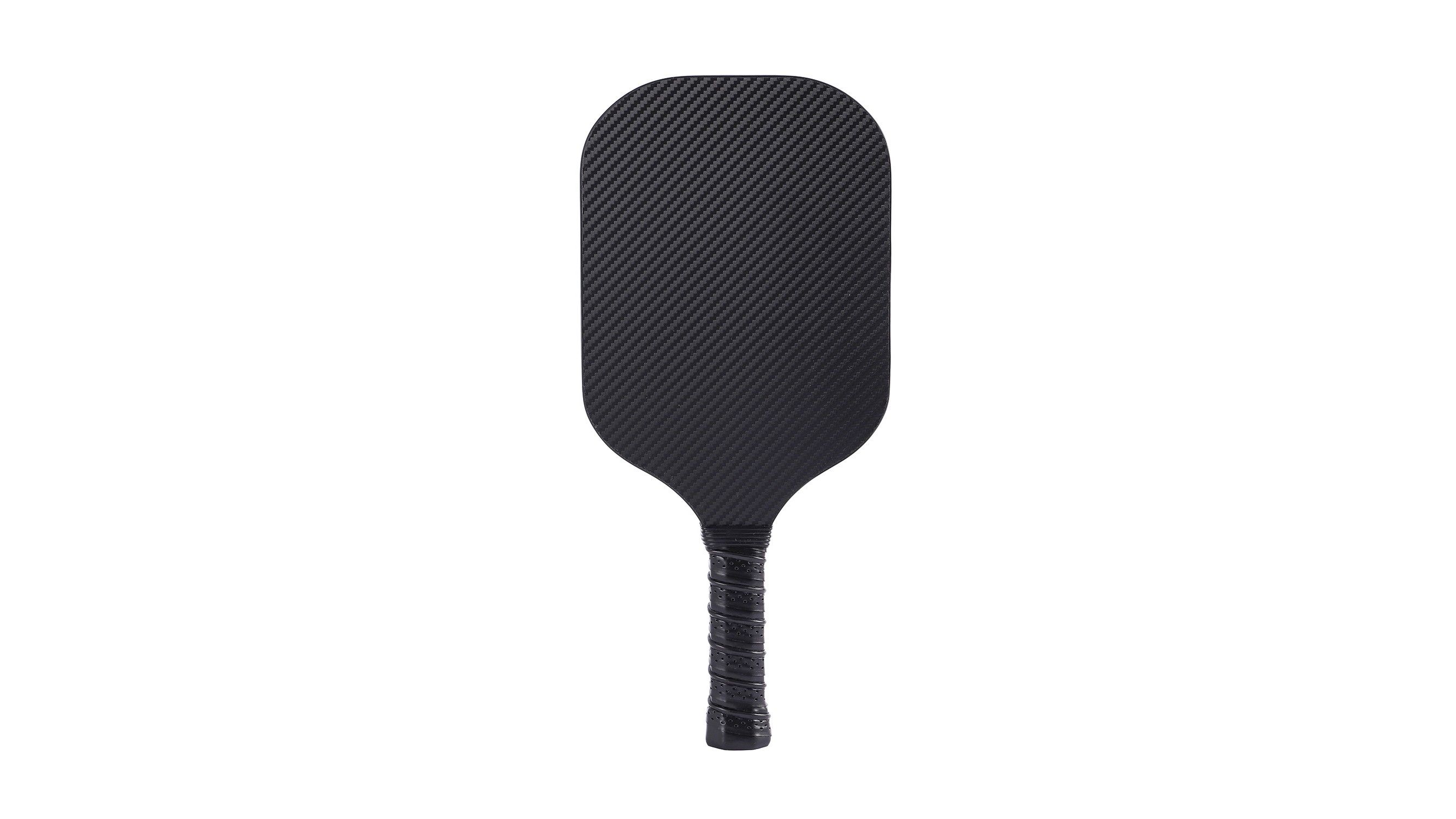
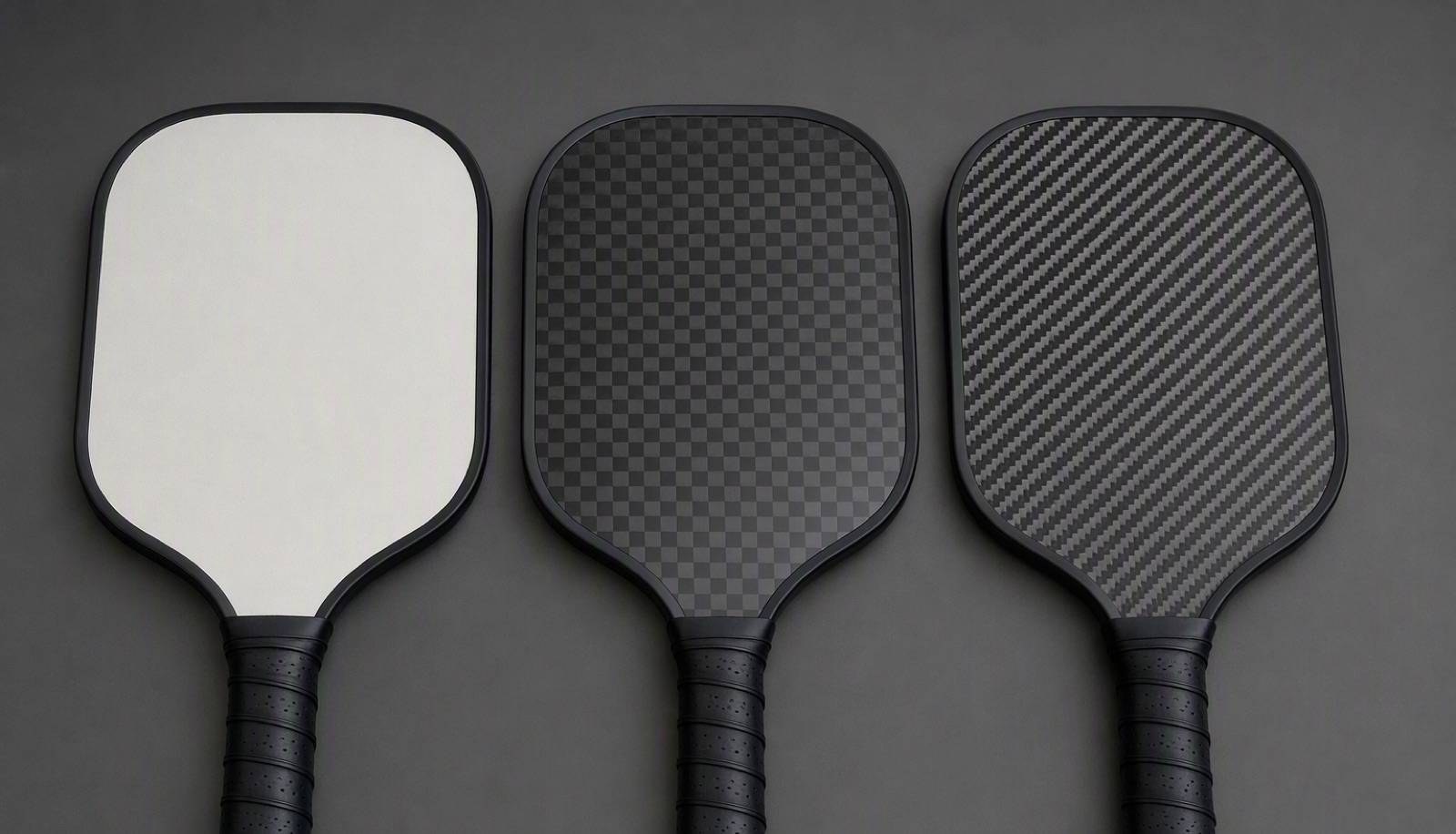
For private-label brands and importers who are approving paddle artwork and want the origin mark specified in the purchase order rather than discovered at the port. Our OEM page sets out the build envelope we actually run — raw T700 carbon and fiberglass faces on 13 mm and 16 mm polypropylene honeycomb cores, thermoformed or cold-pressed — which is the level at which a moulded butt-cap mark or an under-clear-coat face mark has to be decided. Tell us the shape and the graphics you are working to and we will confirm what the mark can be worked into.
See the OEM build envelopeThe Private-Label Trap: Your Own US Address On The Handle
Here is the failure that catches brands rather than importers, and it is triggered by something a brand does on purpose. Print "Austin, TX" or "Denver, Colorado" or a US website on the paddle, and 19 CFR 134.46 changes what the origin mark has to look like.
The rule reads on any appearance of the words "United States" or "American," the letters "U.S.A.," any variation of those, the name of any US city or location, or the name of any foreign country other than the country of manufacture — where those words "may mislead or deceive the ultimate purchaser as to the actual country of origin."
When that happens, "there shall appear legibly and permanently in close proximity to such words, letters or name, and in at least a comparable size, the name of the country of origin preceded by 'Made in,' 'Product of,' or other words of similar meaning." That text has been in force since T.D. 97-72, published at 62 FR 44214 on 20 August 1997.
Close proximity, comparable size, and the prescribed words
Three obligations, and brands routinely satisfy one of them. Close proximity means beside the address, not on the opposite face and not on the butt cap while the address sits on the throat. At least comparable size means the origin cannot be set smaller than the city name — a 14 pt brand address (roughly 5 mm cap height) above a 6 pt "Made in China" fails on its face.
And the words themselves are prescribed: a bare country name is not enough, because the rule specifies the preceding "Made in" or "Product of."
A separate rule runs alongside it and is enforced by a different agency. The FTC Made in USA Labeling Rule, 16 CFR Part 323, took effect on 13 August 2021. An unqualified "Made in USA" claim on a label requires that final assembly or processing occurs in the United States, that all significant processing occurs there, and that all or virtually all components are made and sourced there.
A paddle assembled in the United States from imported faces and cores does not meet that standard, and "Assembled in USA from imported components" is the qualified claim that describes it accurately. Deciding the mark at the point the tooling and artwork are specified is cheaper than deciding it at the port, because a moulded butt cap cannot be re-marked without a new tool.
Starter Sets And Multi-Origin Retail Packs
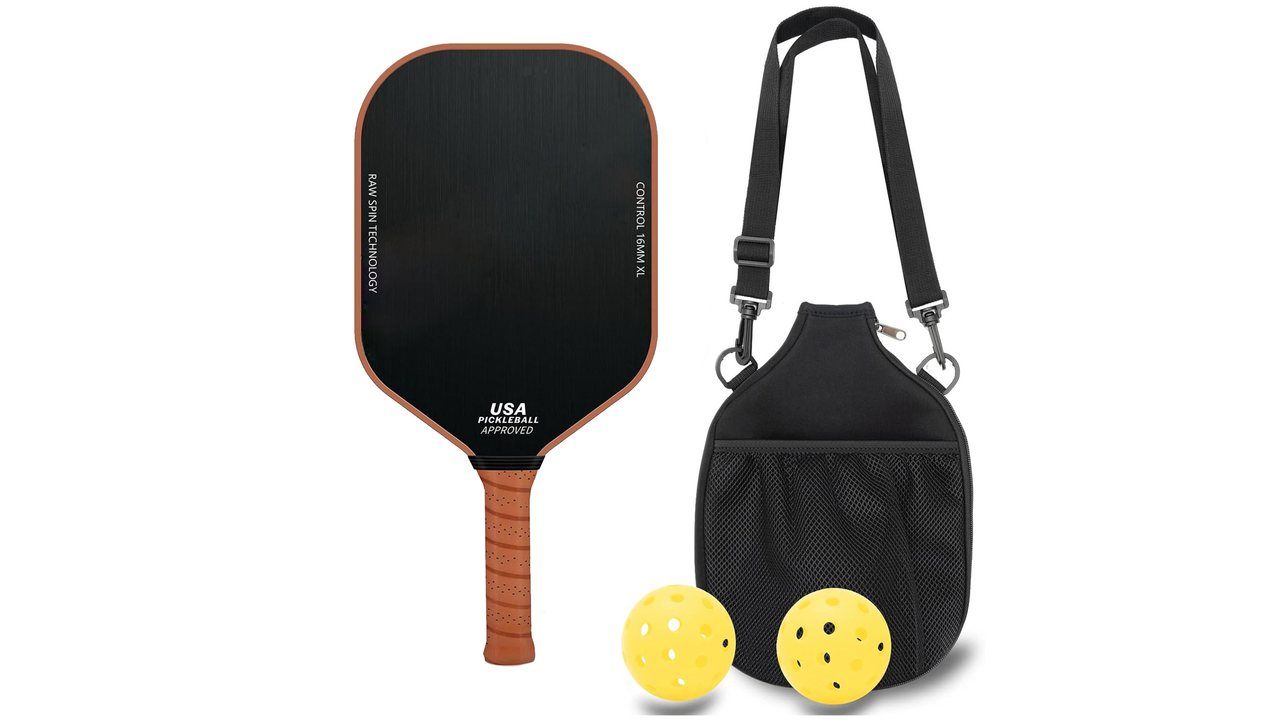
A pickleball starter set is the product most likely to break a single-origin assumption. Two paddles, four balls, a bag, sometimes a net — and it is common for those to come from different plants in different countries even when one brand sells them as one SKU.
CBP addressed this directly in N334756. The golf set at issue was assembled and packed in Vietnam, but the bag and the headcovers were wholly produced in China.
The agency held that those components "do not lose their identity as a result of being packaged together with the Vietnamese golf clubs in Vietnam," so the external packaging "should be marked in a conspicuous manner to indicate that the complete set contains components that are made in China and Vietnam." Its summary sentence is the one to keep: the set "has multiple countries of origin, China, and Vietnam for marking purposes."
The same ruling shows why that has to be said separately. For tariff purposes CBP classified the set as a whole under GRI 3(b), found its essential character imparted by the Vietnamese clubs, and concluded that "when imported together as a set, the country of origin of the Top Flite Adult XL Men's golf set is Vietnam. Therefore, the Section 301 Trade Remedy is not applicable." One origin for duty, two for marking, in the same ruling on the same box. Answering the duty question does not answer the label question.
Packing does not merge origins. If your paddles are made in one country and your balls in another, the retail package has to say both, and the marking on each article inside still stands on its own. A set label naming one of two origins is 50% correct and wholly non-compliant.
19 CFR 134.14 carries the same logic for an article usually combined with another after importation: the marking must clearly show that the origin indicated is that of the imported article only. A set label reading "Made in Vietnam" over a box holding Chinese balls is worse than no label, because it is affirmatively wrong about one of the goods.
When The Box May Carry The Mark Instead Of The Paddle
There is an exception, and it is narrower than the people who reach for it hope. 19 CFR 134.32(d) excepts "articles for which the marking of the containers will reasonably indicate the origin of the articles." 19 CFR 134.32(h) excepts articles whose ultimate purchaser "must necessarily know" the origin from the circumstances of importation or the character of the article. The exceptions list was last amended by CBP Dec. 21-10 at 86 FR 35582 on 6 July 2021.
Test 134.32(d) against how paddles are actually sold. The exception works when the container reaches the ultimate purchaser sealed and the article is never seen outside it.
Paddles fail that in the ordinary case: they are sold hanging on a peg with an open sleeve, pulled out and swung on the shop floor, demo'd at a club, and resold second-hand years later. Once the paddle and its packaging separate before or at the point of sale, the container mark stops indicating anything to the person the regulation cares about.
134.32(h) is narrower still. "Must necessarily know" is a high bar aimed at goods whose origin is inherent — it is not satisfied by a buyer who could reasonably guess, or by a category where one country dominates production. Neither exception is a reason to leave a paddle unmarked. Both are worth knowing because a customs broker will occasionally offer them as a shortcut, and they are the wrong shortcut for a retail paddle.
What Customs Checks, And What A Wrong Mark Costs
Marking is checked at examination, and the sequence when it fails is written down. Under 19 CFR 134.51(a), the Center director notifies the importer on Customs Form 4647, or its electronic equivalent, to arrange to properly mark the articles or containers — or to return all released articles to CBP custody.
That is the notice most importers meet first, and it arrives after the goods have already been released, which is what makes it expensive: the paddles are in a warehouse, or already allocated to retail, when the obligation to re-mark or redeliver attaches.
19 CFR 134.52 gives the cooperative path. Center directors may accept certificates of marking supported by samples of the articles, certifying that marking has been accomplished. Marking under CBP supervision, or exportation or destruction before liquidation, closes the file.
Miss the window and the numbers change character. 19 CFR 134.54(a) gives 30 days from the date of the notice of redelivery, or such additional period as the Center director may allow for good cause shown.
If the importer does not properly mark or redeliver all merchandise previously released, the port director "shall demand payment of liquidated damages incurred under the bond in an amount equal to the entered value of the articles not properly marked or redelivered." Separately, 19 U.S.C. 1304(i) imposes a marking duty of 10 per centum ad valorem, deemed to have accrued at the time of importation, which is not penal in nature and may not be remitted.
Set those against the duty on the paddle itself and the proportions become clear.
| Charge | Authority | Rate (% of entered value) | When it attaches |
|---|---|---|---|
| General duty rate | HTSUS 9506.99.60, General (column 1) | 4 | On every entry, correctly marked or not |
| Marking duty | 19 U.S.C. 1304(i) | 10 | Accrues at importation; cannot be remitted |
| Liquidated damages | 19 CFR 134.54(a) | 100 | If not marked or redelivered within 30 days |
Two operational readings follow. The marking duty is a charge you cannot negotiate down after the fact — remission is closed off by statute, so the only exits are marking, exporting or destroying before liquidation.
And the liquidated-damages exposure is not proportional to the error; it is measured against the entered value of the affected goods, which means a mark that is legible but printed at 6 pt beside a 14 pt US address is priced identically to no mark at all.
What To Put In The PO And The Artwork Approval
Marking is decided by documents written months before a container moves. Five of them, in the order they usually fail.
Record the origin determination with the operations it rests on. Not "Made in Vietnam" as an assertion, but a note of which country made the face skin, which made the core, which made the handle, and where assembly occurred. That record is what you hand CBP if origin is questioned, and under 19 CFR 177.9(b)(1) a ruling protects you only to the extent your facts match the ones submitted — so keep the facts.
Specify the mark as an inspection criterion, not a wish. Name the location, the method and the minimum type size: for example, moulded into the butt cap, raised, unpainted, with a cap height of at least 2 mm and legible without magnification. A specification an inspector can fail is a specification; "must be marked per US customs requirements" is not.
Write the 134.46 clause if any US or third-country name appears on the article. If the paddle carries a brand address, the PO should state that the origin mark sits in close proximity, at no less than the type size of that address, and is preceded by "Made in." This is the clause most often missing, and it costs a tool to fix after the fact.
State the rule for sets separately. Where a kit mixes origins, the retail package copy has to name every country represented, and the artwork approval is where that gets checked. Our note on private-label pickleball packaging covers the artwork side; the origin line belongs on the same approval sheet.
What we check on the golden sample — and where we stop
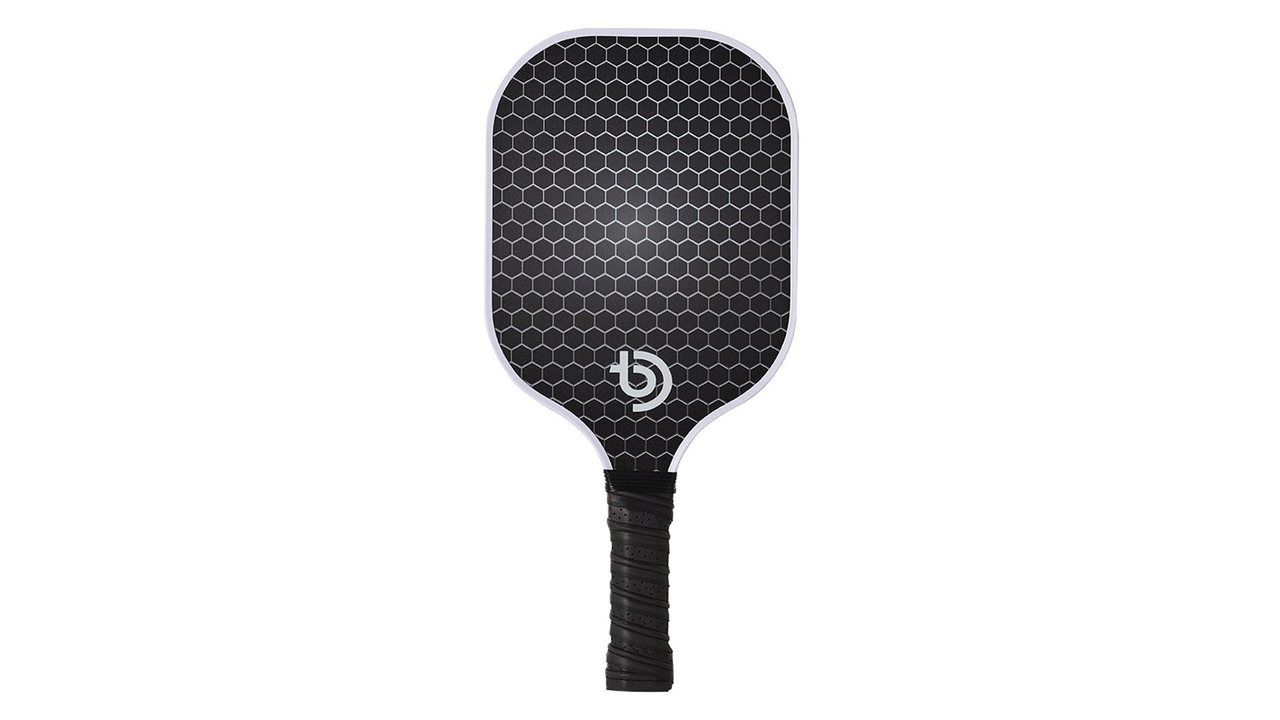
Check the mark on the golden sample, not on a proof. A print proof shows type size. It does not show whether a clear coat obscured the mark, whether the moulded lettering filled with paint, or whether the grip wrap covers the throat print. Those are visible on a physical unit and invisible on a PDF.
Conclusion
The trade-off worth naming is this: origin is expensive to change and cheap to record, while the mark is cheap to change and expensive to discover. Moving a paddle's origin means moving the face and the core, not the press, and CBP's reasoning in HQ H313087 explains why anything less rarely holds.
The mark, by contrast, costs almost nothing to get right at artwork approval — a butt cap tool and a type size — and costs 10% of entered value plus a bond claim to get wrong at the port.
If you are specifying a paddle now, settle the origin determination and the marking spec on the same page of the PO, and check both on the golden sample. If you want that written into a build before tooling is committed, that is the conversation our OEM page is for.
Frequently Asked Questions
Does assembling paddles in a third country make them that country's product?
Not on its own. In HQ H313087 CBP found Mexican assembly of Chinese golf-club parts was "a relatively simple assembly process of almost all finished parts" and left origin in China. Origin moved in N334756 only because a major component was made where assembly happened.
Where should the country of origin go on a pickleball paddle?
Moulded into the butt cap is the safest single location, because it survives re-gripping and edge-guard replacement. 19 CFR 134.41(a) says marking is best worked into the article at manufacture, and 134.41(b) requires it to remain until the retail buyer receives it.
Can I mark only the box instead of the paddle?
Rarely for retail paddles. 19 CFR 134.32(d) allows container marking only where it reasonably indicates origin to the ultimate purchaser, and a paddle pulled from an open sleeve on a shop floor separates from its container before the sale.
My brand's US city is printed on the paddle. Does that change anything?
Yes. 19 CFR 134.46 then requires the country of origin in close proximity to that address, in at least a comparable size, preceded by "Made in" or "Product of." A small origin line beside a large brand address does not satisfy it.
What happens if a container of paddles arrives unmarked?
CBP issues a marking notice on Customs Form 4647 under 19 CFR 134.51(a). You have 30 days under 134.54(a) to mark or redeliver; miss it and the demand is liquidated damages equal to the entered value, alongside the 10% marking duty in 19 U.S.C. 1304(i).
Can a paddle assembled in the United States be labelled "Made in USA"?
Only if it meets the FTC Made in USA Labeling Rule, 16 CFR Part 323, effective 13 August 2021: final assembly, all significant processing, and all or virtually all components must be American. A paddle built from imported faces and cores needs a qualified claim instead.
Want to source this quality for your brand?
Contact our factory directly on WhatsApp for an instant MOQ and pricing quote.