Tariff Engineering for Pickleball Imports: Substantial Transformation, First Sale and Where the Line Is
Tariff engineering is legal. Designing a product, or a supply chain, so that it attracts a lower duty rate is something importers have been entitled to do since 1881, and Cornell’s legal encyclopedia still puts it plainly: unlike evasion, tariff engineering is lawful. What is not lawful is misdescribing what you did. Two levers do the real work for a paddle or ball importer: substantial transformation, which moves origin, and First Sale for Export, which moves the dutiable value. Both fail on evidence more often than on structure.
This is not legal or customs advice. Have a licensed customs broker or counsel apply it to your own bill of materials and contracts; only a binding ruling under 19 CFR part 177 settles a product in advance.
Key Takeaways
- The line is disclosure, not motive. Merritt v. Welsh: where goods are truly invoiced and honestly presented, “no fraud is committed, no penalty is incurred.”
- Two origin rules exist. For USMCA goods, part 102 sets marking origin while substantial transformation sets origin for Section 301 duty.
- Minimal assembly does not move origin. The test is a new name, character or use, on the totality of the evidence.
- CBP has blessed offshore assembly of a sporting good, but there the two major components were already non-Chinese.
- First Sale is an evidence problem. One importer met two of three conditions and still lost, because its invoices contradicted each other.
- A false statement is a violation even with no duty lost, and penalties reach four times the lost duty at gross negligence.
On this page
CBP’s own Inside CBP short on who investigates a suspect entry and what they examine.

Tariff Engineering Is Lawful; Concealment Is Not
The founding case concerns sugar graded for duty by colour, which importers kept below the break. Told this was deliberate, the Court in Merritt v. Welsh, 104 U.S. 694 answered that it is what every manufacturer does: “so to manufacture his goods as to avoid the burden of high duties.” Then it drew the boundary that still governs: “So long as no deception is practised, so long as the goods are truly invoiced and freely and honestly exposed to the officers of customs for their examination, no fraud is committed, no penalty is incurred.”
That is an evidentiary standard, not a permission slip: it protects the importer whose goods are what the entry says, and nobody else.
| Lever | Controlling authority | What you must prove | How it fails | Verdict |
|---|---|---|---|---|
| Substantial transformation | Substantial transformation test; 19 CFR 134.1(b) for marking | New name, character or use in the third country | Assembly is minimal or cosmetic | Best for a genuine plant move, not a relabel |
| First Sale for Export | Nissho Iwai, 982 F.2d 505 (Fed. Cir. 1992); T.D. 96-87 | Bona fide sale, destined for the US, arm’s-length price | Invoices and Incoterms disagree | Best for disciplined multi-tier buyers |
| Condition as imported | Merritt v. Welsh, 104 U.S. 694 | The article at the border has the claimed characteristics | The feature is a sham | Best decided at the design stage |
| Binding ruling | 19 CFR part 177 | Complete, accurate description before importation | Request incomplete; file closed after 30 days | Best when the money justifies certainty |
Origin for Duty Is Not Origin for the Label
The costliest misunderstanding here is treating “country of origin” as one answer. It is two. 19 CFR 134.1(b) defines origin as the country of manufacture unless later work effects a substantial transformation, but qualifies that as applying “within the meaning of this part,” and part 134 is the marking part. For USMCA goods it carves out entirely: the part 102 rules govern.
CBP states the split in one sentence. In ruling N305769 it wrote, citing HQ H301619 of 6 November 2018, that while the part 102 marking rules “will determine the country of origin for marking purposes, the substantial transformation test will determine the country of origin for purposes of the Section 301 measures.” Two tests, one shipment. An importer can be correct that a paddle is marked Made in Mexico and still owe Section 301 duty, because the tariff question was never asked under the rule that produced the label.
A supplier’s origin statement is a starting point, not an answer. Marking is a separate discipline, in our guide to country-of-origin marking; classification sits in the HTS classification method for sporting goods.
What Substantial Transformation Actually Requires
The test asks whether an article emerges with a new name, character or use, different from what it had before processing, the standard in Texas Instruments Inc. v. United States, 69 C.C.P.A. 151 (1982). CBP applies it on the totality of the evidence, citing National Hand Tool Corp. v. United States, 16 C.I.T. 308 (1992), aff’d 989 F.2d 1201 (Fed. Cir. 1993), and adds the sentence that kills most schemes: no one factor is decisive, and minimal assembly operations will generally not result in a substantial transformation.
The golf-club ruling, and the limit on reading it
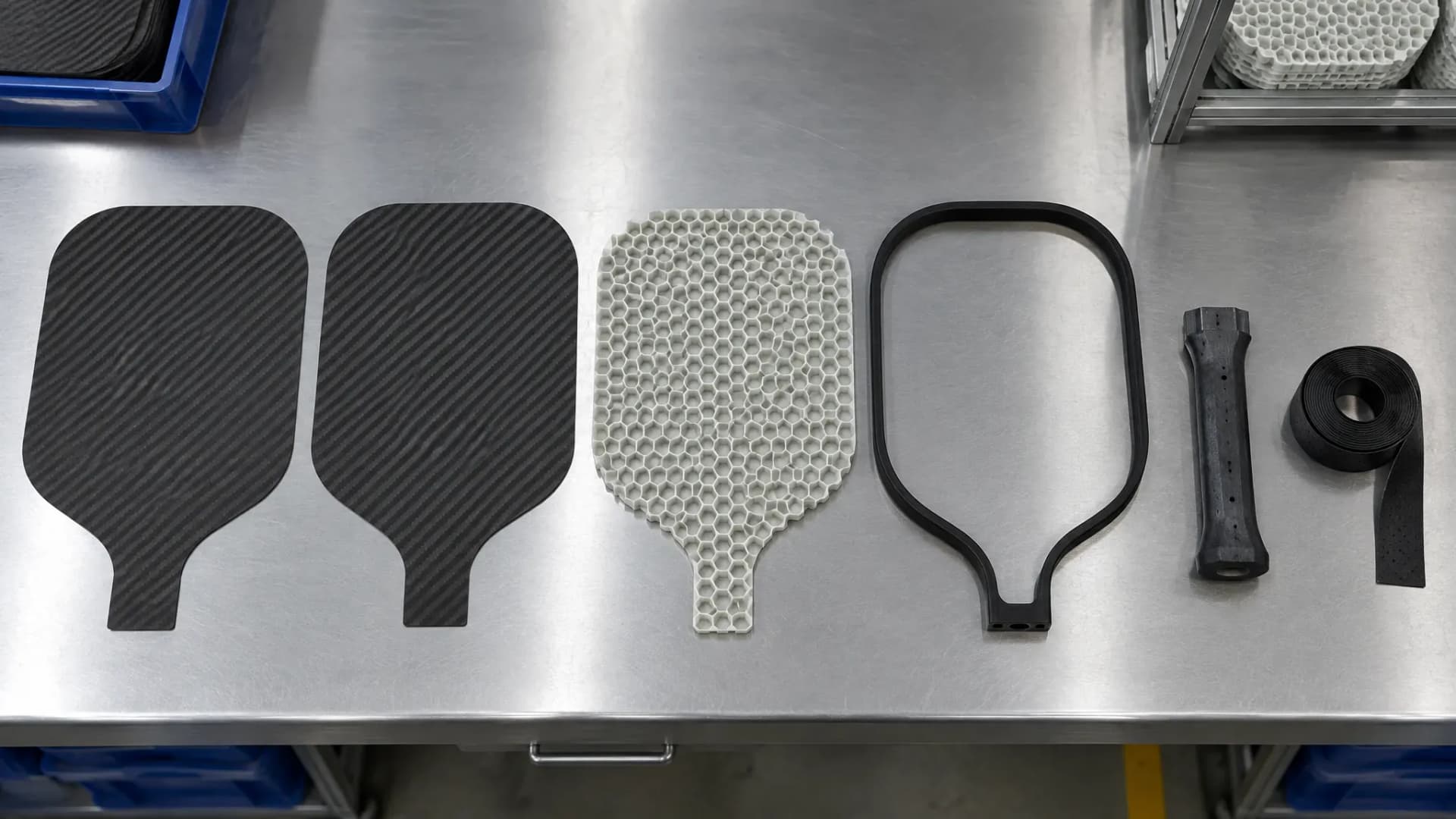
The closest published analogue to a paddle is a golf club. In N305769 (12 September 2019) CBP looked at Callaway Epic Flash clubs assembled in Vietnam and Mexico. The operations were bonding head to shaft, moulding the grip on, then polishing and painting. CBP found the components substantially transformed there, so the clubs were products of Vietnam and Mexico and “Section 301 trade remedies are not applicable.”
Read the facts before borrowing the outcome. In both accepted scenarios the head was Taiwanese and the shaft Vietnamese or Mexican. Only the grip came from China. The ruling does not hold that Chinese components assembled offshore escape Section 301, and CBP referred the closest scenario to Headquarters as new and novel. The rate side sits in our Section 301 tariff analysis for paddles.
So ask a factory for a bill of materials broken out by component, origin and value, plus a written description of the operations performed at the assembly site, not a finished-goods origin declaration. On timing, get written dates for tooling transfer, first-article approval and plant re-qualification, which all sit on the critical path. An incomplete ruling request is not merely slow: CBP allows 30 days from its notice to cure a deficiency, after which the file is administratively closed. We work through those questions in our OEM and private-label programme.
First Sale Fails on Paperwork, Not on Structure
Where substantial transformation changes the rate, First Sale changes the base. In a factory–middleman–importer chain the dutiable value defaults to what the importer paid. Nissho Iwai American Corp. v. United States, 982 F.2d 505, 509 (Fed. Cir. 1992) allows the earlier factory price instead, on three conditions: a bona fide sale, goods clearly destined for the United States when the middleman buys, and parties dealing at arm’s length. Under T.D. 96-87, published 2 January 1997, the importer must rebut CBP’s presumption of its own price; unrelated parties are presumed to be at arm’s length, so the fight is almost always over the first condition.
A real structure that still lost
Ruling HQ H221835 (13 August 2012) is the one to study, because the goods are a sporting good bought the way paddles are: bicycles made in Taiwan, sold through a Swiss middleman to a US distributor. The importer met two of the three conditions on three of its four protests and still lost. CBP held there was “insufficient and inconsistent evidence to substantiate a bona fide sale,” and appraised on the price the distributor paid.
The defects were clerical and fatal. Incoterms on purchase orders and invoices contradicted each other, at points putting title with the US buyer first. Not a single entry across four protests carried a complete set of documents stating the terms of sale, and factory invoices were dated after the middleman’s invoices to the importer. An affidavit calling this clerical error cured nothing, because no contracts or payment records showed the real arrangement. Under T.D. 86-56, discrepancies in entry documentation raise a presumption that the documents contain false or erroneous information.

What Crossing the Line Costs
Start with what most summaries omit: under 19 U.S.C. § 1592(a), entering merchandise by means of a material false statement or omission is a violation “without regard to whether the United States is or may be deprived” of any duty. Revenue loss is not an element. Clerical errors are excepted unless they form a pattern of negligent conduct, which is what a run of contradictory invoices looks like from outside.
| Culpability tier | Ceiling where duty was lost | Ceiling where no duty was lost | Ceiling after prior disclosure |
|---|---|---|---|
| Negligence | Lesser of domestic value, or 2× the lost duties | 20% of dutiable value | Interest on the unpaid duties only |
| Gross negligence | Lesser of domestic value, or 4× the lost duties | 40% of dutiable value | Interest on the unpaid duties only |
| Fraud | Domestic value of the merchandise | 10% of dutiable value | 100% of the lawful duties |
The limitations rule is where careful readers slip. 19 U.S.C. § 1621 gives five years, but the clock starts in two places: for an ordinary § 1592 violation it runs from the date of the violation; only where the violation arises out of fraud does it run from discovery. Quoting the discovery trigger at a negligence case overstates exposure, and assuming the other covers fraud understates it badly.
One more clock, scoped correctly. Under 19 U.S.C. § 1517, the Enforce and Protect Act, an interested party, including a competitor, can allege evasion. CBP initiates within 15 business days, can suspend liquidation and demand cash deposits within 90 calendar days, and decides within 300. But EAPA reaches only “covered merchandise,” goods under an antidumping or countervailing duty order. It is not a Section 301 mechanism. For a mistake already filed, prior disclosure is the route that exists.
| Culpability tier (violation that did not affect the assessment of duties) | Ceiling where no duty was lost (% of dutiable value) |
|---|---|
| Negligence | 20 |
| Gross negligence | 40 |
| Fraud | 10 |
For importers and distributors weighing where production should sit: we document components, origins and the operations performed at each site, in the form your broker or counsel needs.
See how our OEM programme documents originConclusion
Both levers are real, both are lawful, and neither is bought off a shelf. Substantial transformation trades a longer, costlier supply chain for a lower rate; minimal assembly will not buy it. First Sale trades administrative discipline for a lower base, and collapses when two documents disagree, as in H221835. Weigh both against the downside: up to four times the lost duty at gross negligence, and five years in which to be asked. The requirement named in 1881 still governs: the paperwork has to describe what actually happened.
Frequently Asked Questions
Is tariff engineering legal?
Yes, and it has been since Merritt v. Welsh, 104 U.S. 694. The boundary is disclosure: goods must be truly invoiced and honestly presented. Misdescribing what was done is a false statement, not engineering.
Does assembling in Vietnam remove Section 301 duties?
Not automatically. Origin for Section 301 turns on substantial transformation, and minimal assembly generally does not qualify. In CBP ruling N305769 golf clubs assembled in Vietnam took Vietnamese origin, but the head and shaft were already non-Chinese. A different bill of materials can reach the opposite result.
What does First Sale for Export require?
Three things, all documented: a bona fide sale between factory and middleman, goods clearly destined for the United States when that sale occurs, and an arm’s-length price. Under T.D. 96-87 the importer carries the burden.
What is the penalty for getting origin or value wrong?
Under 19 U.S.C. § 1592, ceilings run to twice the lost duties for negligence, four times for gross negligence, and the full domestic value for fraud. A false statement is a violation even where no duty was lost. Prior disclosure cuts that exposure sharply.
Want to source this quality for your brand?
Contact our factory directly on WhatsApp for an instant MOQ and pricing quote.