USA Pickleball Ball Approval: Cost, Samples and the Colour Rule
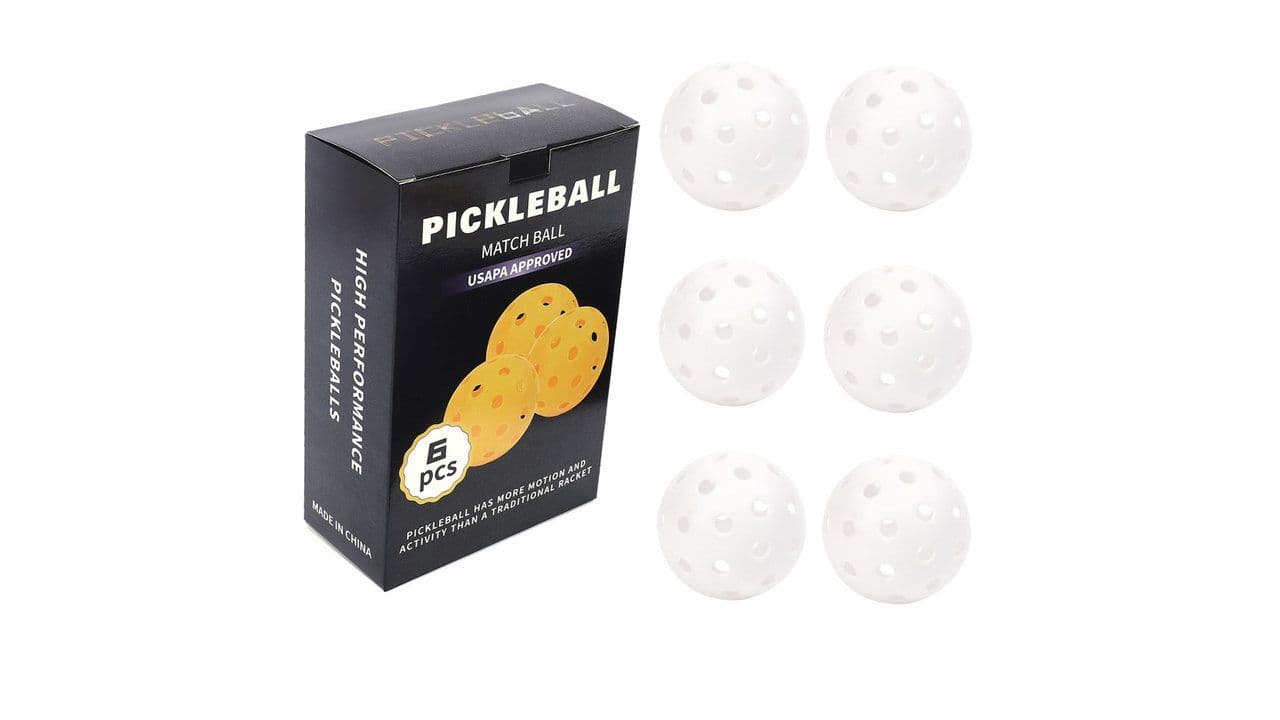
A brand owner signs off four colourways for a new ball line — neon yellow, neon green, glossy yellow, glossy orange. The factory quotes tooling. Cartons go to artwork with the USA Pickleball Approved seal in the corner, because the plan is to launch approved. Somebody costs the certification by reading a guide online: one submission, roughly fifteen hundred dollars, four to six weeks. It all fits the launch calendar.
Every step in that sequence is wrong, and none of the errors surface until money has been committed. Four colours are four separate submissions, not one. The guide that supplied the fee was written about paddles, which consume a different number of samples on a different schedule. And printing that seal before the model appears on the public list is a compliance breach on the packaging itself.
The document that would have prevented all of it is published by USA Pickleball on a portal that, checked from outside the United States in August 2026, answers a plain request with a country block.
This article is the manufacturer's side of the question, for balls specifically: what a submission consumes, what the governing body's own documents say about who grants approval, and what obligations continue after your model appears on the list. It does not restate the dimensional spec — the size, weight and tolerance envelope is decoded in full here — and it does not repeat how to check a supplier's claim, which the certification and sourcing guide already covers. It picks up where those stop.
Key takeaways
- A ball submission consumes twelve balls sent to five separate locations, and none of them come back. USA Pickleball states it cannot guarantee non-destructive testing. The paddle path is nine paddles to six locations — different quantities, different logistics.
- Every colour is a separate product. The governing body's stated reason is that dyes interact with the material chemistry and yield different properties. A four-colour range is four submissions, not one, and it is the single biggest cost driver most brand plans miss.
- Approval is granted by the USA Pickleball Board of Directors on a recommendation of the Equipment Evaluation Committee (Equipment Standards Manual 2.F) — not by the lab that runs the tests.
- An approval can be revoked on 18 months' notice under 2.F.1, either because the equipment was materially changed or because it degrades under ordinary use. Manufacturers are subject to ongoing compliance testing and market-sample inspection.
- You may not market a ball as USA Pickleball Approved before testing completes, and it must appear on the public database to be legal in sanctioned events. That is a packaging-artwork deadline, not a formality.
- Published testing time is 4 to 6 weeks normally, 3 to 8 business days expedited, with expedited service unavailable in the two weeks before the US Open and USA Pickleball Nationals.
On this page
- What a ball submission actually costs before a single ball is sold
- Why the paddle guides you have been reading do not describe your path
- Every colour is a different ball
- Who actually grants the approval, and who tests it
- Approval is a licence with conditions, not a certificate you file away
- When you may print the seal, and whose name goes on the listing
What a ball submission actually costs before a single ball is sold
Start with the money, because it is the number that decides whether a private-label ball programme happens at all.
USA Pickleball's published fee schedule — Appendix A, in the revision released 1 October 2021 — lists Competition Ball Certification and Licensing at USD 1,500, tested against the USAP Ball Certification Test Standard JULY 2020_R1. A Ball Re-Submission is listed at USD 550, described as the same standard, subset as needed. That re-submission line is the one worth reading twice: it is what a failed or altered ball costs to put back through, and it is why the sequencing advice further down this page matters.
An important caveat about that schedule, stated plainly because the alternative is misleading you. The 1 October 2021 revision is the most recent version that was ever served publicly. Checked on 12 August 2026, the fee page no longer returns a schedule at all — it returns a login wall reading "Manufacturer only page. This page can only be accessed by registered manufacturers." So treat these as the last published figures and the right order of magnitude for planning, not as a quotation. Confirm the current number when you open your account, because five years is long enough for a fee to move.
| Line item (ball) | Last published figure | What it buys |
|---|---|---|
| Competition Ball Certification & Licensing | USD 1,500 | A full submission of one model, one colour, against the USAP Ball Certification Test Standard |
| Ball Re-Submission | USD 550 | Putting a changed or previously failed ball back through, as a subset of the same standard |
| CT scan | USD 450 per ball | Internal imaging; listed at USD 750 per paddle on the same document |
| Expedite, 3-day turnaround | USD 2,000 | Inclusive of full licensing |
| Expedite, same-day testing and results | USD 2,500 | Inclusive of full licensing |
Source: USA Pickleball Appendix A Equipment Certification & Licensing Fee Schedule, revision released 1 October 2021 — the last publicly served version. Confirm current figures at registration.
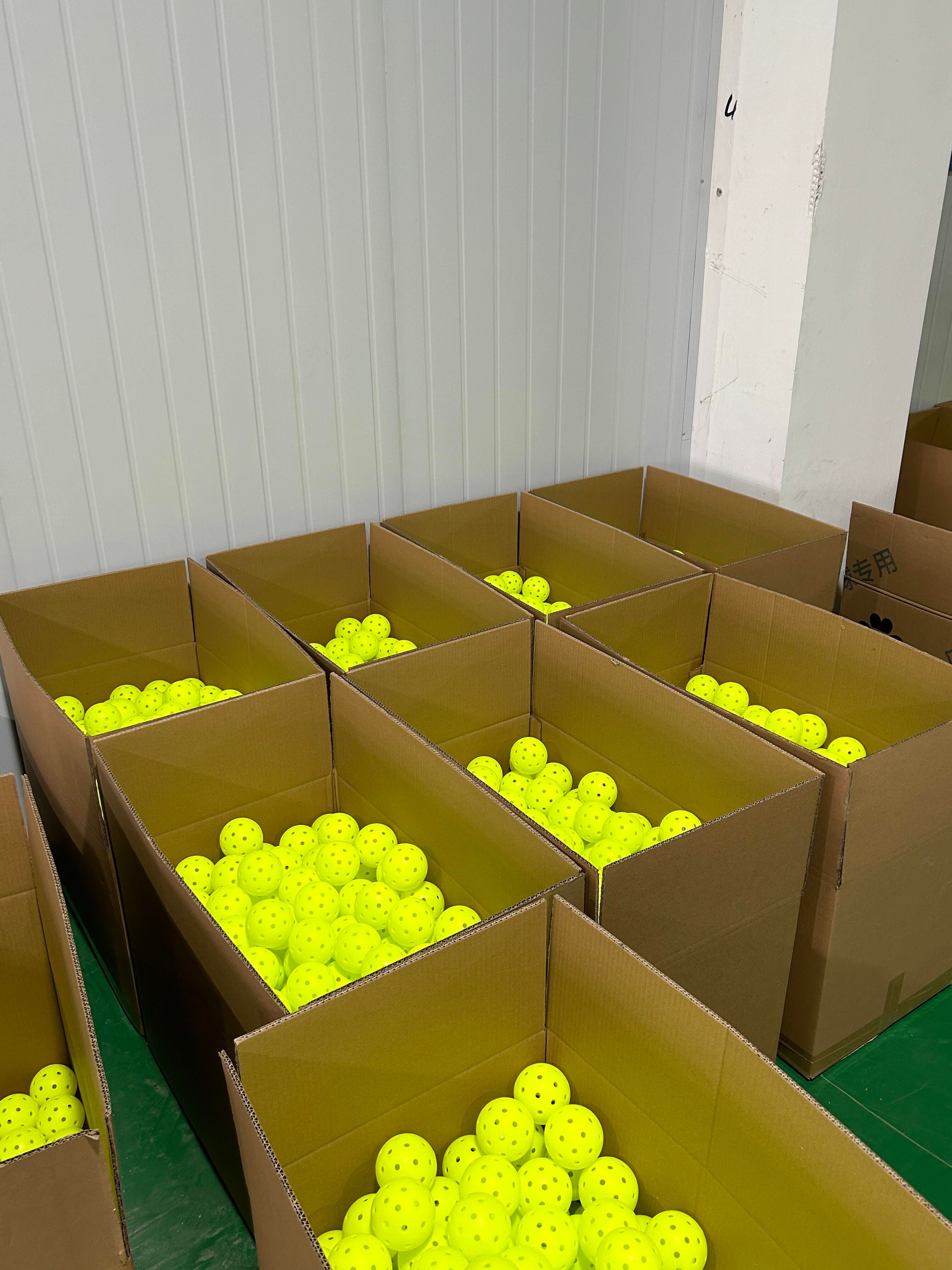
The fee is not the whole cost, and the part people forget is physical. USA Pickleball's Equipment Submission FAQ requires twelve balls shipped to five separate locations for a ball submission, and answers the obvious follow-up bluntly: "No, paddles or balls submitted for testing are not returned. We cannot guarantee non-destructive testing." Twelve units leave your inventory permanently, and they leave it as five separate international shipments, each with its own freight and customs paperwork. On a first production run that has not yet earned anything, that is real.
Then there is time. Published guidance puts normal testing at 4 to 6 weeks and expedited testing at 3 to 8 business days, with the expedited clock starting the day after the equipment arrives at the testing facility — not the day you ship it. USA Pickleball notes that timelines move with volume. It also notes a blackout that will not appear in any budget spreadsheet: expedited services are not available in the two weeks preceding the US Open and USA Pickleball Nationals. If your launch was timed to a tournament season, that is precisely when you cannot buy your way out of a delay.
Why the paddle guides you have been reading do not describe your path
Almost everything written about USA Pickleball approval describes the paddle process, and readers reasonably assume balls work the same way. They do not, and the differences are not cosmetic.
The sample requirement diverges first. Paddle submissions require nine paddles to six separate locations; ball submissions require twelve balls to five. More units, fewer destinations. If you have costed your submission by reading a paddle guide, you have under-counted your sample consumption by a third.
The test menu diverges too. USA Pickleball lists individually priced ball tests — diameter, weight, bounce, hardness and compression — keyed to their own ball test numbers 6.5 through 6.9, distinct from the paddle tests of the same numbering. Those individual tests exist because you can buy them separately, and that is the single most useful piece of process design available to a ball maker on a budget.
The sequencing decision. With a full submission at USD 1,500 and a re-submission at USD 550, the question is whether to submit a ball you are not certain about. Work through it in this order:
- Is the ball a new geometry, a new resin, or a new supplier? If yes, the individual pre-production tests exist for exactly this. Buying a bounce and a compression reading before submitting is cheaper than a re-submission, and far cheaper than a re-submission plus another twelve balls.
- Is it a colour change to something already tested? Then it is not a pre-production question at all — it is a separate submission, for the reason set out in the next section.
- Is it a running product from a line you have already certified? Then your risk is not the test, it is the ongoing-compliance duty covered further down.
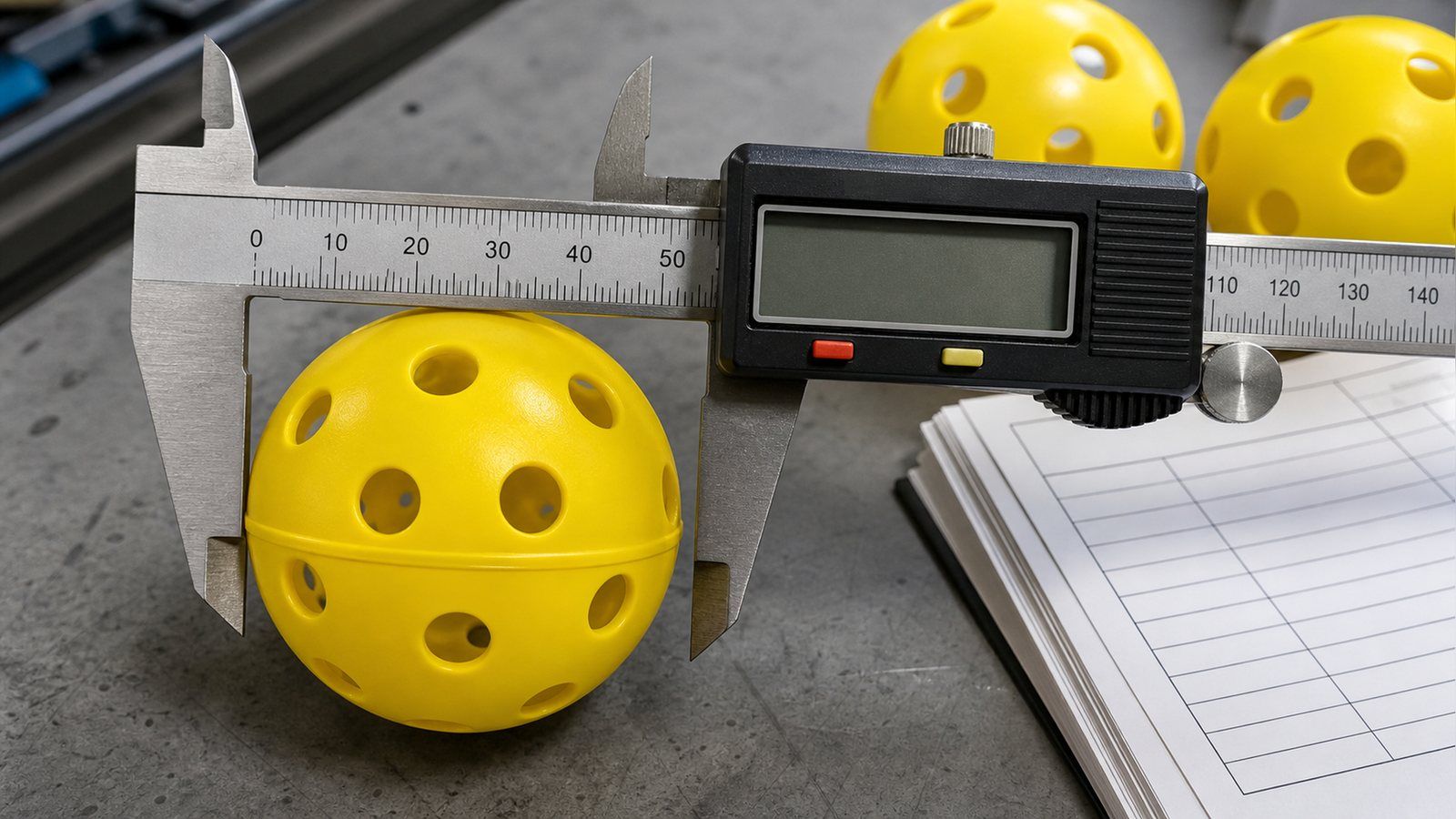
USA Pickleball also states that manufacturers can conduct their own internal testing using the same fixtures, configurations and profiles, if they have compatible equipment — and that pre-production and prototype testing services are offered where they do not. For a factory-supplied brand this reframes the conversation with your supplier: the question is not "will it pass" but "what have you measured, on what fixture, before we spend the submission fee."
Every colour is a different ball
This is the rule that reshapes a private-label plan, and it appears on none of the paddle guides.
Asked directly whether different coloured balls need to be submitted as different products, USA Pickleball answers: "Yes, dyes will interact with the material chemistry and yield different properties." The naming convention it accepts makes the consequence concrete — a differential designation such as XXXXXX-Neon and XXXXXX-Yellow, meaning the colour is part of the model identity rather than a variant of it.
Read that against the fee schedule and the sample requirement and the arithmetic is unforgiving. A brand launching one ball in four colours — which is an entirely normal retail range, and is exactly the four-colourway structure of a typical outdoor tournament ball line — is not making one submission. It is making four, each consuming twelve balls to five locations, each carrying its own certification and licensing fee, each with its own 4-to-6-week clock.
| Range plan | Submissions | Balls consumed |
|---|---|---|
| One model, one colour | 1 | 12 to 5 locations |
| One model, two colours | 2 | 24 |
| One model, four colours | 4 | 48 |
The strategic move follows directly, and it is the opposite of what most brands do. Launch approved in your highest-volume colour, and treat additional colours as a funded second phase rather than a launch requirement — because a colour you approve and then drop has cost you a full submission for nothing. Decide your hero colour before you submit anything, not after the range meeting.
There is a second obligation hiding in the ball design clause that catches private-label buyers late. The Equipment Standards Manual, Revision 3.0 (January 2025), at clause 2.D.8, requires the ball to carry "a Manufacturers or supplier's name or logo printed or embossed on the surface," and requires the "USA Pickleball Approved" seal or text treatment on the ball packaging for balls intended for competition. Branding on the ball is not a marketing decision you can defer to the artwork stage — it is a condition of the ball itself, so it has to exist in the tooling or the print step of the units you submit.
Who actually grants the approval, and who tests it
Most people assume the laboratory approves the ball. It does not, and knowing the actual chain of authority changes how you read a supplier's promises.
Equipment Standards Manual 2.F is explicit: "The approval of equipment authorized for sanctioned tournament play shall be made by the USA Pickleball Board of Directors acting on a recommendation of the Equipment Evaluation Committee (EEC)." The lab produces results. The EEC recommends. The Board approves. Anyone telling you a lab result equals an approval has skipped two steps.
- The laboratory runs the tests and produces results. It does not approve anything.
- The Equipment Evaluation Committee reviews those results and makes a recommendation.
- The Board of Directors makes the approval decision, under Equipment Standards Manual 2.F.
The testing itself runs at a named independent third-party facility — Element U.S. Space & Defense — and USA Pickleball states that manufacturers have full visibility into the standards, specifications and testing protocols, may visit the lab, and may observe testing of their products remotely. That last option is worth using. Remote observation on a first submission is the cheapest education available in this process, and it costs nothing but a scheduled hour.
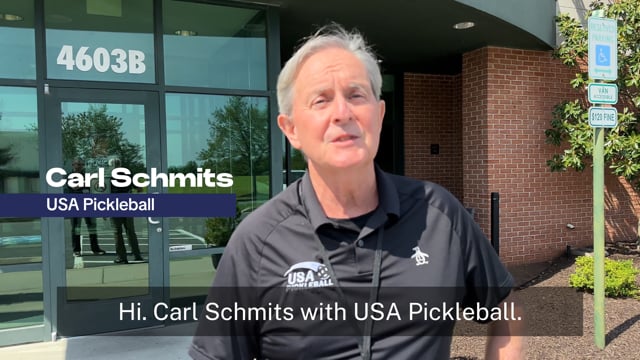
Certification is also not purely a test outcome. USA Pickleball requires that "in addition to certification by test, manufacturers must provide attestations about the materials and construction of their products," including declarations on materials and compliance with construction standards. You are signing statements about what the ball is made of. Those declarations become the baseline your production is later measured against, which is what makes the next section a live risk rather than a theoretical one.
The account step is heavier than a web form, too. USA Pickleball's registration page states that on approval you receive a package of specifications and testing details, and that the EEC schedules a video conference within one week to discuss manufacturing quality processes, ongoing compliance and supply-chain identification, with a confidential design review if needed. If your ball is made by a contract factory, that call is where the supply chain behind it gets named.
One honest gap here. The registration fee amount is not published on that page — the field renders as a price with no figure attached, and it stayed empty when checked again on 12 August 2026 with full page rendering. Third-party blogs quote a number; no primary source confirms it, so this article does not repeat one. Ask at registration.
Approval is a licence with conditions, not a certificate you file away
If there is one idea to take from this page, it is this one. Approval is not a certificate you earn once and frame. It is a status with continuing conditions, and the conditions have teeth.
Equipment Standards Manual 2.F.2 states that "manufacturers are subject to ongoing compliance testing to ensure that all products as produced and sold are identical to the paddle that has been tested/certified and is compliant with all requirements." Note the wording honestly: the clause as printed says paddle. But USA Pickleball states the same duty in product-neutral terms elsewhere — "once certified, manufacturers are responsible for ensuring that production units continue to meet the same specifications as the original certified samples. USA Pickleball inspects market samples to confirm compliance." Market samples means balls bought off a shelf, not the ones you chose to send.
That is the practical bridge between a certificate and a container. Your approval attaches to what you submitted; your commercial risk lives in what you shipped six months later. It is also the regulatory reason batch inspection exists rather than being optional diligence — the bounce, roundness, seam and weight routine is what keeps production matching the sample that was approved.
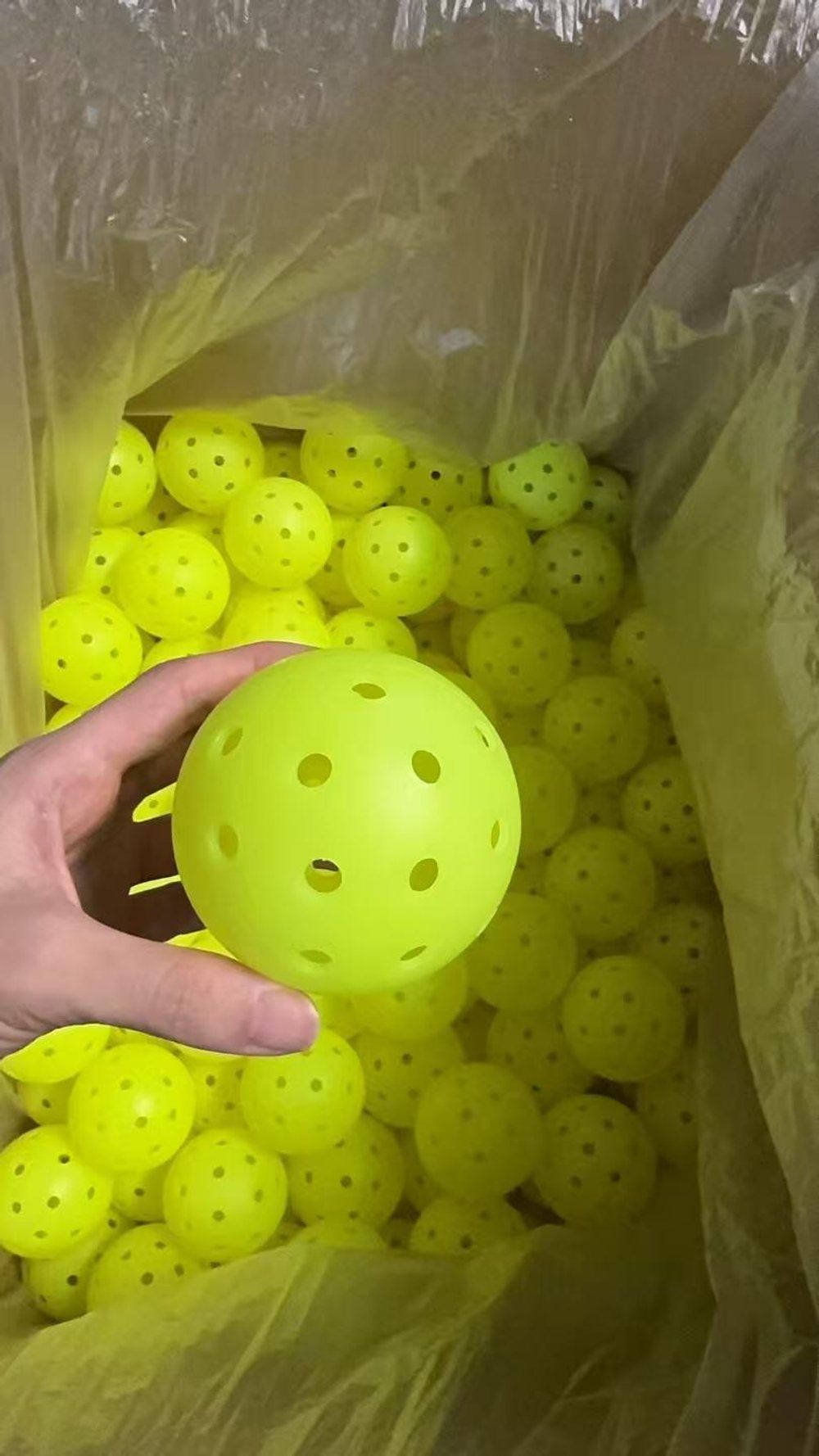
Decertification follows from failing those conditions. USA Pickleball states that "equipment is decertified when it fails to meet the conditions of its certification. This includes any inaccuracies in its initial disclosures or failure to maintain consistent production standards." Inaccurate initial disclosures is the phrase to sit with, because it points back at the attestations you signed about materials and construction. A resin substitution your supplier made quietly, and you declared inaccurately, is a decertification trigger rather than a quality complaint.
Removal is not instant, and the notice period is generous by design. Under 2.F.1, approval "may be revoked by the Board of Directors upon 18 months' notice," where equipment "is found to have been materially changed by the manufacturer or if the equipment materially degrades or changes under ordinary use so as to significantly alter the nature of the sport." USA Pickleball describes this gap between announcement and effective date as the sunset period, typically 18 months.
Typically, but not always — and the exception is the part worth planning around. In the PBCoR decertification, USA Pickleball implemented a shorter timeline because of urgent concerns about power. That was a paddle action, and no equivalent ball precedent exists publicly, so do not read it as a forecast for balls. Read it as evidence that the 18 months is a norm the governing body will compress when it judges the integrity of the sport to be at stake.
| Continuing obligation | Where it comes from | What breaches it |
|---|---|---|
| Production must match the certified sample | ESM 2.F.2, plus USA Pickleball's market-compliance statement | A resin, colour or process change made after approval |
| Declarations must be accurate | Attestations on materials and construction | "Inaccuracies in its initial disclosures" — an explicit decertification cause |
| The ball must not degrade into non-compliance | ESM 2.F.1 | Material change by the maker, or degradation under ordinary use |
| Marketing may not run ahead of the listing | ESM front matter on use of the Approved logo | Seal on packaging before testing completes and the model is listed |
One last mechanism completes the picture. The standard itself can move underneath an approved model: USA Pickleball "reviews equipment testing standards periodically and, with proper notification (via Notice of Proposed Rulemaking — NPRM process) to Manufacturers, reserves the right to modify equipment specifications." The current controlling document is Revision 3.0, dated January 2025. A brand whose entire value proposition is "approved" should be reading NPRM notices, because that is where the next version of the requirement appears first.
When you may print the seal, and whose name goes on the listing
Two decisions remain, and both are usually made too late — one at artwork stage, one at supplier-selection stage.
The first is timing, and it is a hard prohibition rather than etiquette. The Equipment Standards Manual states that use of the Approved logo "is a declaration that the product is compliant to all USAP requirements," and that products "may not be marketed as USAP Approved prior to completion of any/all testing and must be listed on the USAP public Database in order to be legal for use in sanctioned events (no pro prototypes or unreleased special editions)."
Two conditions, both required: testing complete, and the model actually listed. Printing cartons with the seal while a submission is still in progress is a compliance breach on your own packaging — and it is a common one, because carton lead times tempt everyone to start artwork early.
The second is ownership, and it is the question this whole article exists to surface for a private-label buyer. The submission is made through a manufacturer account. If your factory holds that account, the approval and its listing sit with the factory's brand and model designation. If you hold it, they sit with yours. That single choice determines whether your approval is portable when you change suppliers, or whether it stays behind with the factory that made the ball.
Settle these in writing before tooling, not after the first passing test report:
- Whose manufacturer account is the submission made under, which determines whose name appears on the public listing.
- What the model designation will be, including the colour suffix, since colour is part of the identity.
- Who pays for a re-submission if a production change triggers one — and what counts as a change requiring one.
- Who signs the material and construction attestations, and how you verify what is being declared on your behalf.
- What happens on a market-sample failure: who fixes it, who funds it, and how quickly production stops.
The commercial arithmetic is where the colour rule stops being a compliance detail and starts setting your opening cheque. Our own published minimum, printed on every product page on this site including our tournament ball line, is 1,000 pcs for balls against 50 pcs for paddles — and that twenty-to-one gap is not a pricing preference, it is the rotomoulding tool and the resin changeover. A paddle programme can afford to launch six graphics because 50 pieces a variant is a 300-unit commitment. A ball programme cannot, because each approved colour is a separate 1,000-piece run on top of a separate submission fee. Two approved colourways is a 2,000-ball opening position before a single ball is sold.
Production lead time is a separate clock from the 4-to-6-week testing window. It depends on whether your colourway is already running, whether the ball carries printed branding, and whether new tooling is involved. Ask for both against your specific configuration rather than accepting a headline number, and treat any supplier who quotes one before seeing your spec with suspicion.
For brand owners and importers planning a private-label ball line. We are a rotomoulding ball factory in Yiwu, China, running one-piece seamless 40-hole outdoor balls, and our published ball MOQ is 1,000 pcs — so multiply that by your colour count before you decide how wide the range launches. Send us the colour count and who you expect to hold the manufacturer account, and we will tell you what the submission maths looks like against that specific configuration. If your total requirement is under 1,000 balls, or a single colourway is all you need, we are the wrong call and a retailer will serve you better.
Talk through the account question on WhatsAppConclusion
Approval buys tournament eligibility, retail credibility and the right to print a seal buyers recognise. It costs a four-figure fee per colour, twelve balls per submission that never come back, four to six weeks of calendar, and a permanent obligation to keep making the ball you said you would make. Whether that trade is worth taking depends on your channel — and the certification-versus-spec-compliance decision is worked through here.
If you are taking it, work down this list before anything is committed:
- Fix the hero colour first. Approve one colourway, launch on it, and fund additional colours as a second phase. A colour you approve and then drop has cost a full submission for nothing.
- Re-cost from ball figures, not paddle figures. Twelve balls to five locations, consumed permanently, plus five separate shipments — not the nine-to-six paddle path most guides describe.
- Confirm the current fee at registration. The published schedule dates to 1 October 2021 and now sits behind a manufacturer login. Plan with it; do not quote it.
- Buy the individual tests before the submission if the ball is a new geometry, resin or supplier. Diameter, weight, bounce and compression are priced separately for exactly this reason.
- Settle the account holder in writing. Whoever holds the manufacturer account owns the listing and the model designation — and with it whether the approval survives a change of supplier.
- Put brand marking in the tooling, not in the artwork stage. 2.D.8 requires it on the ball surface, so it has to be on the units you submit.
- Hold the seal until the listing is live. Testing complete AND listed, both, before the carton prints.
- Plan for the ongoing obligation now. USA Pickleball inspects balls bought from the market, not the twelve units you chose to send — so batch QC is a condition of keeping the approval, not optional diligence.
What fails is the middle path: budgeting from a paddle guide, printing the seal before the listing appears, approving four colours because the range deck said four, and discovering after a market-sample inspection that ongoing compliance was a condition rather than a formality. The documents are unusually clear about all of it. They are just published somewhere a large part of the industry cannot open.
Frequently Asked Questions
How much does it cost to get a pickleball USA Pickleball approved?
USA Pickleball's last publicly served fee schedule, revised 1 October 2021, lists Competition Ball Certification and Licensing at USD 1,500 and a Ball Re-Submission at USD 550. That page now sits behind a manufacturer login, so treat these as planning figures and confirm the current amount when you register.
How many balls do you have to send for approval?
Twelve balls, shipped to five separate locations. They are not returned, because USA Pickleball cannot guarantee that testing is non-destructive. Paddle submissions differ: nine paddles to six locations.
Do different coloured balls need separate approval?
Yes. USA Pickleball states that dyes interact with the material chemistry and yield different properties, so each colour is submitted as a different product under a differential name such as XXXXXX-Neon or XXXXXX-Yellow. A four-colour range means four submissions.
How long does USA Pickleball ball testing take?
Published guidance is 4 to 6 weeks for normal testing and 3 to 8 business days expedited, counted from the day after arrival at the facility. Timelines move with volume, and expedited service is unavailable in the two weeks before the US Open and USA Pickleball Nationals.
Can a USA Pickleball approval be revoked?
Yes. Under Equipment Standards Manual 2.F.1 the Board of Directors may revoke approval on 18 months' notice where equipment has been materially changed or degrades under ordinary use. Manufacturers are also subject to ongoing compliance testing and market-sample inspection.
Who owns the approval, the factory or the brand?
Whoever holds the manufacturer account the submission was made under. That determines the brand and model designation on the public listing, and whether the approval is portable if you change suppliers. Settle it in writing before tooling.
Want to source this quality for your brand?
Contact our factory directly on WhatsApp for an instant MOQ and pricing quote.