Edgeless or Edge-Guarded: What the Construction Choice Does to Tooling, Yield and Warranty
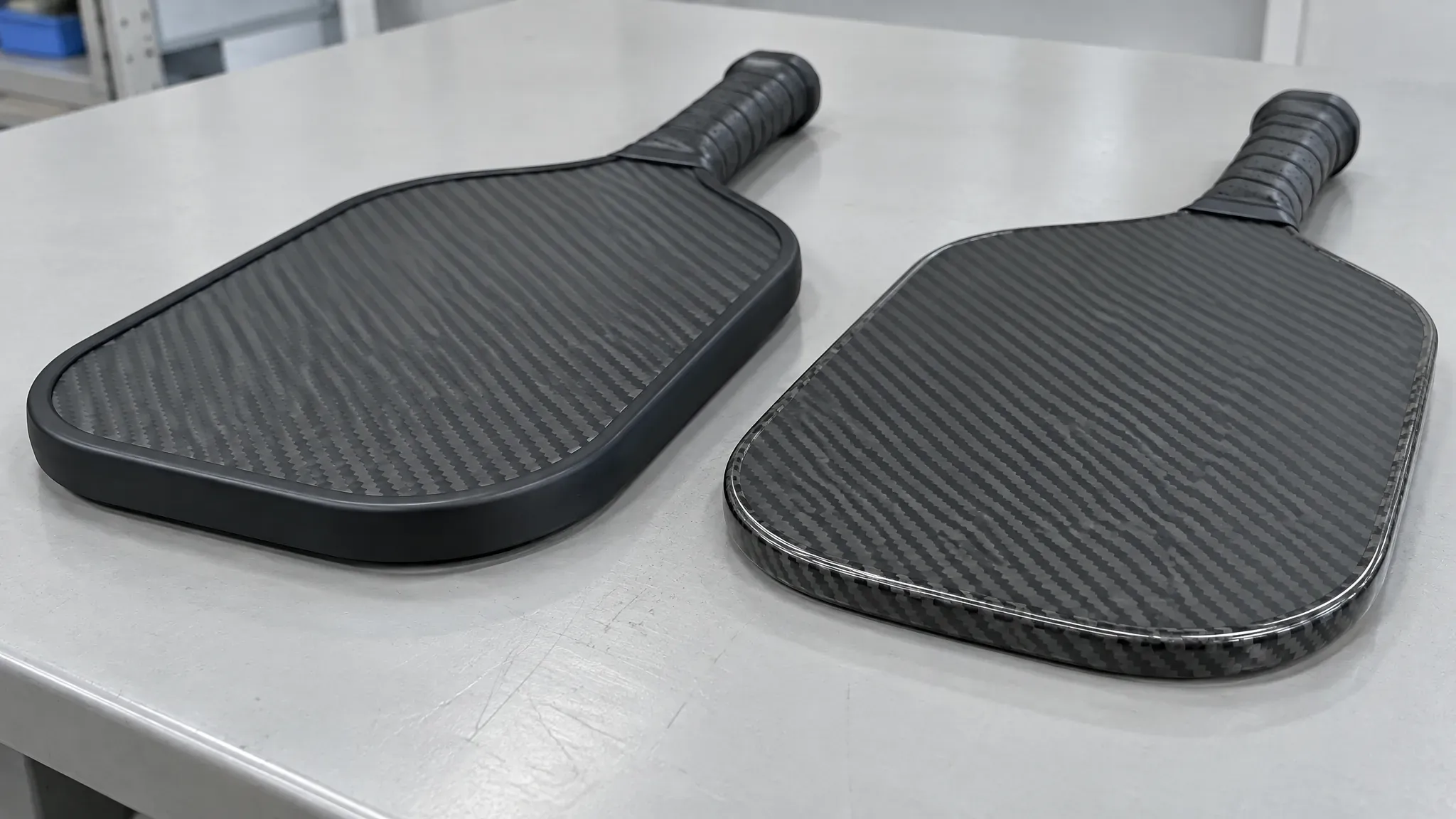
Ask three paddle brands which perimeter costs more to build and you get both answers. One US maker that sells only guarded paddles writes that trimless paddles are "much easier and less expensive to manufacture". Two brands with edgeless lines write the opposite, because the face and its bond to the core take over the guard's structural job. On a private-label quote, that argument sits on the wrong line.
The short answer: specify an edge guard for club, rental and first-run private-label paddles, and choose edgeless only for a performance line where you have budgeted its own approval and a replacement-only warranty. Under the 2026 USA Pickleball Official Rulebook, Rule 3.D.6.a allows a player to add or replace edge guard tape, so a guard that lifts is a part swap. An edgeless rim has no replaceable part, and Rule 3.D.5.a bars holes, cracks, delamination, or indentations that break the paddle skin or surface on the hitting surface. If you only want to know which one plays better, that is a feel preference; this page is about ordering them.
Key Takeaways
- Rule 3.D.2: the combined length and width of the paddle, including any edge guard and butt cap, must not exceed 24 inches (60.96 cm).
- Rule 3.D.6.a allows a player to add or replace edge guard tape; an edgeless rim has nothing a player may replace.
- A crack that breaks the face skin is a prohibited surface feature under Rule 3.D.5.a.
- ESM 2.E.2.b: paddles and edge guards, no measurement exceeding 80 GU, measured at 60 degrees.
- ESM 2.F.2 subjects manufacturers to ongoing testing that all products as produced and sold are identical to the paddle that has been tested/certified.
- Ask for lead time per stage and whether the 50-paddle minimum applies per perimeter build.
On this page
- Side by side
- What the rulebook says
- Approval and tooling
- Line checkpoints
- Warranty exposure
- Lead time, MOQ, price lines
- Which build fits
- Choosing on looks alone
- FAQ
Two brands with edgeless lines argue the face and its bond to the core take over the guard’s job. This short teardown from an independent paddle-review channel shows where that joint sits.

Edgeless vs edge-guarded, side by side
Page 1 for "edgeless pickleball paddle" (720 US searches a month) is shop pages and feel comparisons. This table compares what a buyer carries once the reference unit is signed off: the 24 in (60.96 cm) size budget, what an end user may repair, where a crack lands, and what the approval covers.
| Factor | Edge-guarded | Edgeless | Verdict |
|---|---|---|---|
| Size budget (24 in / 60.96 cm) | Guard counts inside the limit | Face can use the full limit | Edgeless, if outline is tight |
| End-user repair | Guard tape replaceable (3.D.6.a) | No replaceable perimeter part | Guarded |
| Crack exposure | Guard takes court strikes first | Rim is exposed composite; skin crack fails 3.D.5.a | Guarded |
| Gloss (80 GU max, 60°) | Guard is measured | Rim coating is measured | Neutral: test both |
| Separate model name (ESM 2.E.7) | Manual silent on perimeter | Manual silent on perimeter | Neutral: ask in writing |
| Extra line steps | Guard fitting and bonding | Rim trimming, sanding, coating | Neutral: ask days per stage |
What the rulebook does with the perimeter
Rule 3.D.2 says the combined length and width of the paddle, including any edge guard and butt cap, must not exceed 24 inches (60.96 cm). The guard sits inside that budget, so an edgeless outline carries a larger face at the same finished size. The trap runs the other way: design an edgeless paddle at 24.0 inches, and a club that wraps it in edge guard tape owns a paddle over the limit, because Rule 3.D.6 says altered paddles must meet all specifications. Leave room for tape and ask for the finished-dimension tolerance.
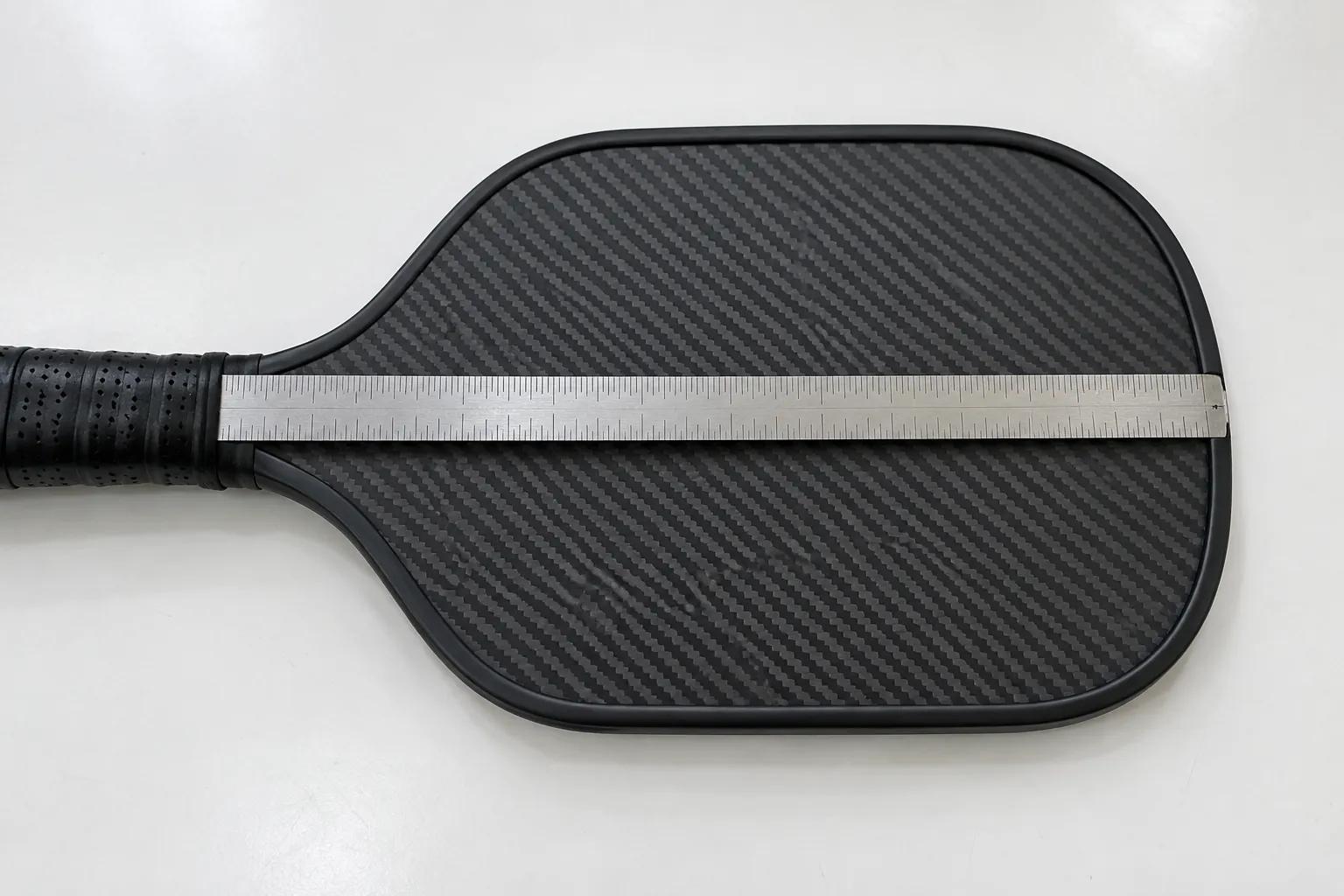
Rule 3.D.7 adds a placement line: tape on the face may sit no more than 0.5 inch (1.27 cm) inside the outer edge, or inside the guard where one is fitted. The Equipment Standards Manual, Revision 3.0 (January 2025) added coverage for "shiny edge guards", and clause 2.E.2.b sets, for paddles and edge guards alike, no measurement exceeding 80 GU, measured at 60 degrees. A glossy guard or a clear-coated rim can fail a paddle whose face passes.
One approval or two: tooling and model designation
ESM 2.E.7 says paddles with different core material, surface material, or other significant differences must have a unique name or number. It does not say whether the perimeter counts, and we will not guess.
It does settle ESM 2.F.2, which subjects manufacturers to ongoing testing that all products as produced and sold are identical to the paddle that has been tested/certified. An edgeless unit is not identical to a guarded paddle that was tested, so it cannot ride that approval, and a mid-programme switch risks the "materially changed" case: ESM 2.F.1 allows revocation on 18 months' notice when equipment is materially changed. Get USA Pickleball's answer in writing before tools are cut; our certification sequence for a new core SKU shows the steps.
Tooling follows the geometry. Remove the guard and keep the face, and the finished paddle shrinks by the guard's width on every side, so an edgeless version of an existing shape needs a new face outline to keep the same finished size inside the 24 in (60.96 cm) limit. Ask whether that means a new mould or cutting die, its cost, and who owns it; the tooling cost breakdown covers the ownership clause. Our OEM programme page lists the builds we quote.
Where each build loses units on the line
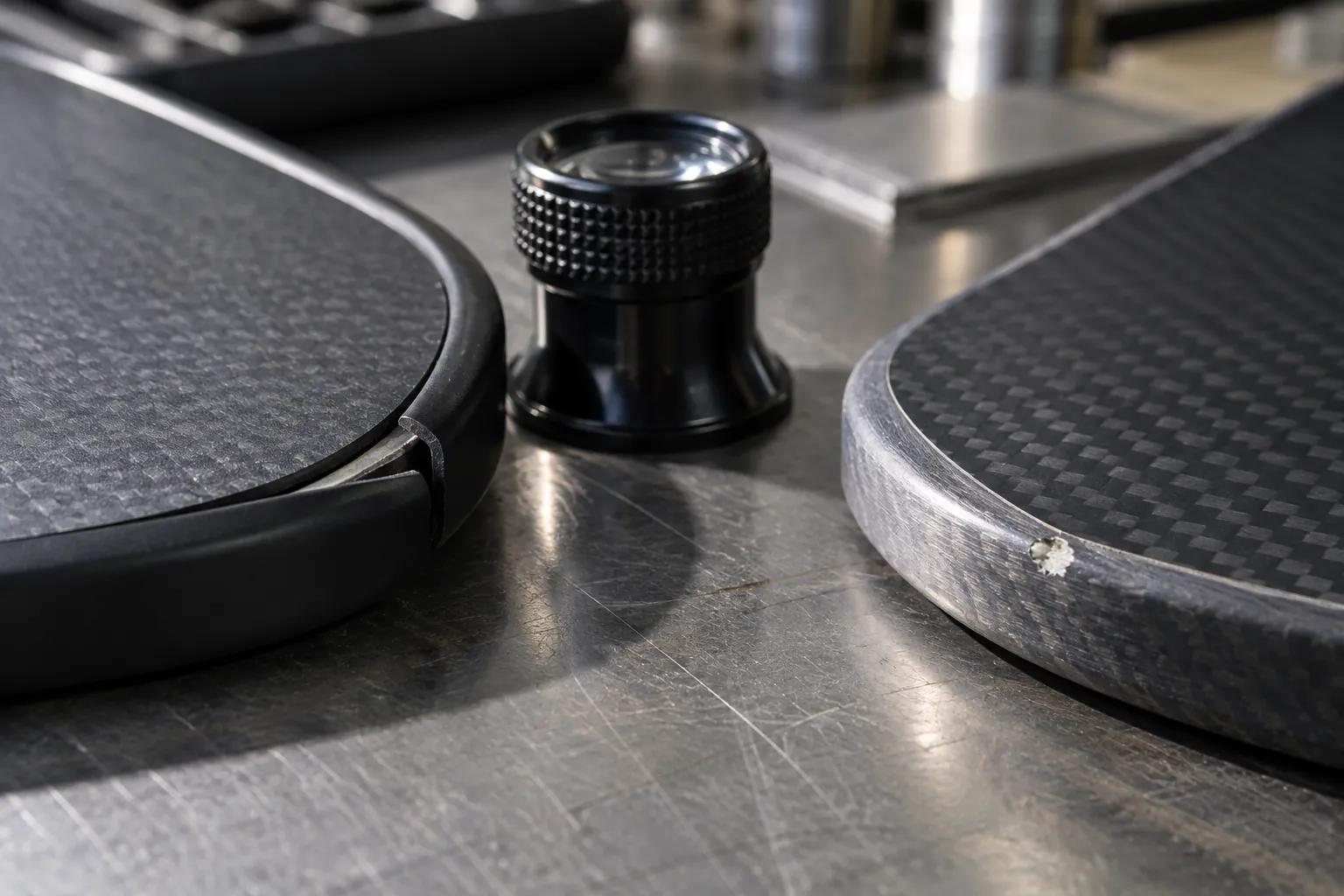
Neither build has a published yield figure, ours included, so ask for each build's first-pass yield over the last three lots and the reject split behind it. Then hold every lot to checkpoints you can see, with a 10x loupe and a gloss meter set to 60 degrees:
| Checkpoint | Build | How to check | Reject when |
|---|---|---|---|
| Guard gap at tip and throat | Guarded | Visual, light behind | Any gap shows light |
| Adhesive on the face | Guarded | Raking light | Residue on the hitting surface |
| Guard lift after heat | Guarded | Heat-soak three units, then hand pull | Any lift |
| Rim chips from trimming | Edgeless | 10x loupe along the rim | Chip reaches the face skin |
| Rim voids | Edgeless | Coin tap around the perimeter | Dull note against the rest |
| Gloss (80 GU max) | Both | Gloss meter at 60° | Any reading above 80 GU |
The checkpoints split the way the builds do: guarded rejects come from fit and bond, edgeless rejects from the rim finish. Grade both on the same defect classification so the two yields compare.
Warranty: a replaceable part against a structural edge
On a guarded paddle the familiar edge complaint is a lifting guard, and our guide to peeling edge guards covers the fix. The rules keep that claim cheap: ESM 2.E.5.a lists "edge guard tape/replacements" among permitted player alterations, and 2.E.6.e exempts them from the ban on removable parts. Ship tape or a guard, and the paddle stays legal as long as face tape sits no more than 0.5 inch (1.27 cm) inside the edge guard (Rule 3.D.7).
An edgeless claim has no part to ship. A side-wall scuff is cosmetic; a crack into the face skin is a prohibited surface feature under Rule 3.D.5.a, and in a sanctioned tournament a paddle found out of spec mid-match brings a forfeit under Rule 18.A.2. That claim costs a whole paddle. The guarded-only maker concedes edgeless may reduce loose-trim warranty issues; the edge claims that remain cost a full unit once a crack reaches the face.
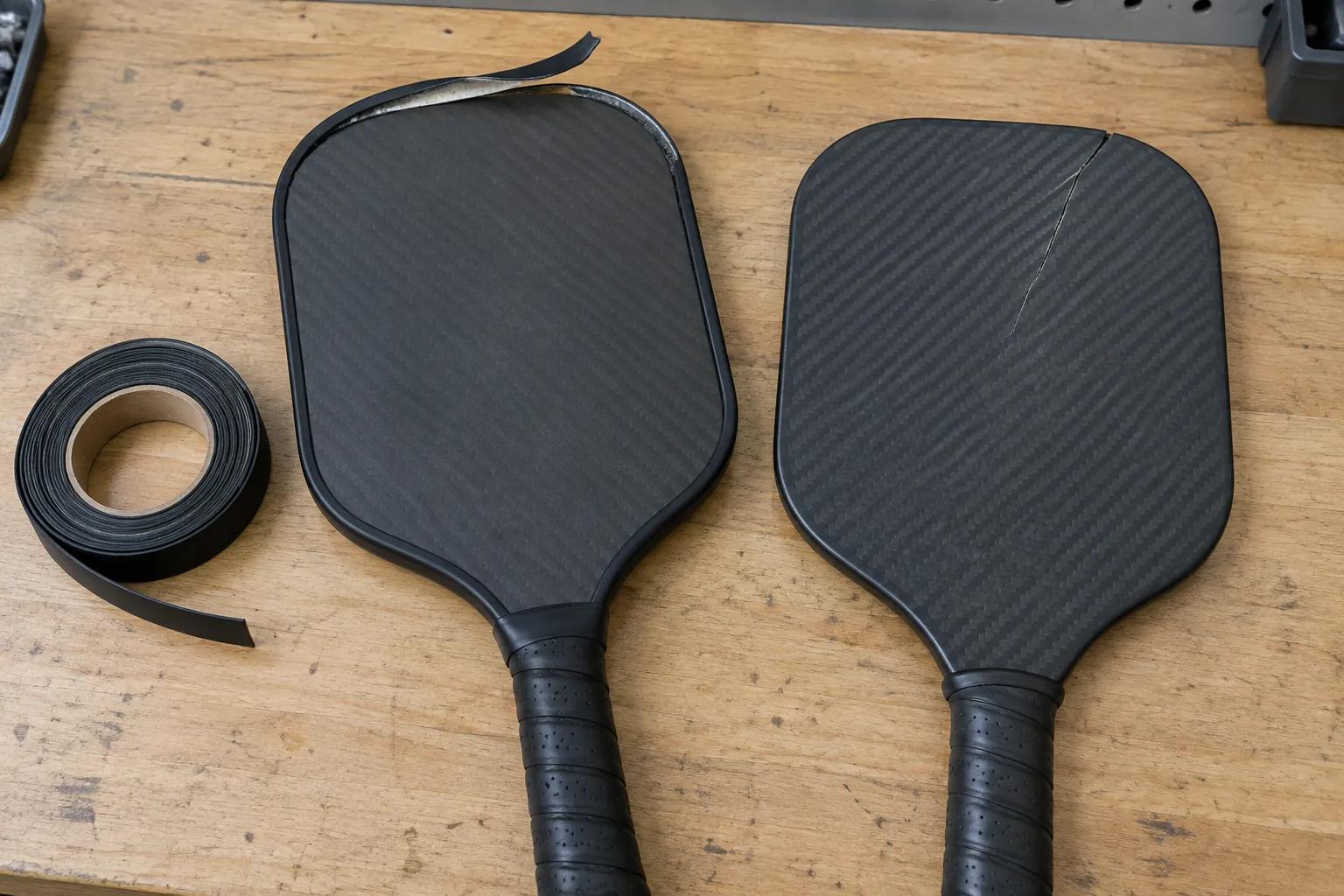
Write the clause around evidence: bond failure (a guard lifting, or a rim separating, with no impact mark) is covered; impact damage (crushed fibre at the contact point) is excluded. Our warranty policy design guide has clause wording to adapt.
Lead time, MOQ and price structure to ask for
Our published minimum of 50 paddles is the figure on our site; it does not say whether it applies per model, per colour or per perimeter build. Ask that before splitting 50 units across two builds. We publish no lead time, so here is what moves it:
- Guarded: stock guard profile and colour, or a custom extrusion? If custom, ask the extruder's minimum run and the days it adds, plus bond cure before packing.
- Edgeless: days for rim trimming, sanding and coating, plus coating cure before gloss testing.
- Both: if the variant counts as a new model, approval testing goes into the plan before any launch date.
On price, ask for separate lines: guard part plus fitting labour, rim finishing labour, any one-time die or mould, and testing fees per model. Our published offer names the edge guard among our options; ask us directly whether an edgeless finish is available for your shape.
Which build fits your line
The verdict turns on who handles the paddle after it ships, and how many of your first 50 units you can absorb as full replacements. An edgeless face earns its place only where a player values using the whole 24 in (60.96 cm) budget.
| Channel | Best for | Reason | Verdict |
|---|---|---|---|
| Club or rental fleet | Edge-guarded | Guard swap keeps fleet paddles legal | Guarded |
| First private-label run (50 units) | Edge-guarded | One approval, part-swap claims | Guarded |
| Performance line for tournament players | Edgeless | Face uses the full 24 in budget | Edgeless, with its own approval |
| Retailer with an approved guarded model | Keep guarded | A switch raises ESM 2.F.2 | Guarded |
Clubs weighing durability across a fleet can read our club paddle durability guide next.
For brand owners and distributors with an outline drawing: send the length, width and core thickness, and we will quote the builds we run for that shape, line by line.
Request a perimeter quoteWhat breaks if you choose on looks alone
- An outline at 24.0 inches: the first customer who adds edge guard tape owns a paddle outside Rule 3.D.2.
- Edgeless units under a guarded approval: they are not identical to the tested paddle under ESM 2.F.2.
- A warranty reserve priced for guard swaps: edgeless rim claims that crack the face skin are whole-paddle replacements.
- An unmeasured guard: a glossy guard above 80 GU fails a paddle whose face passes.
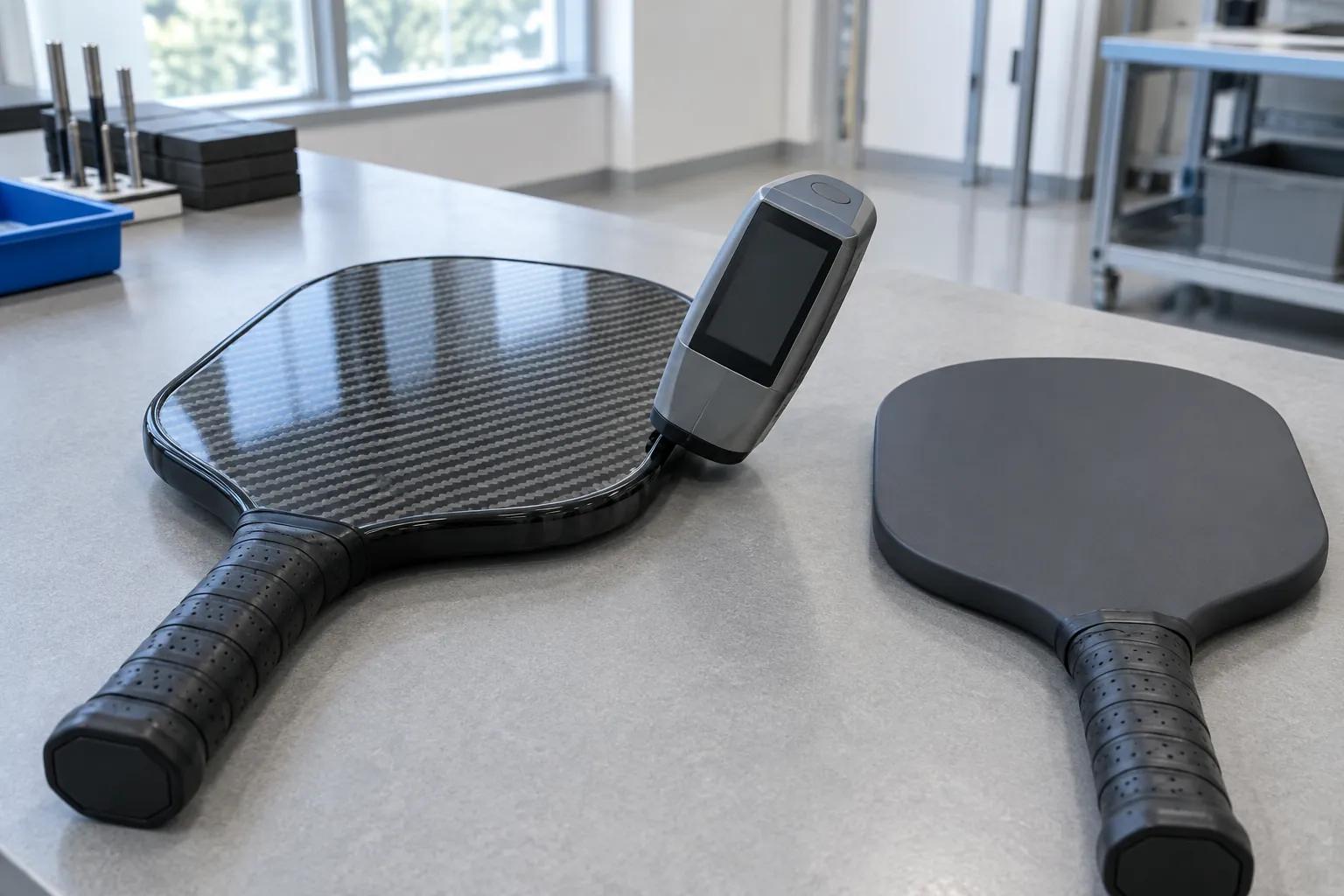
Settle approval in writing first, then choose the perimeter.
For buyers with dimensions ready who need lead time per stage and the MOQ per build: message us the outline, core thickness and guarded or edgeless.
WhatsApp the outlineFrequently asked questions
What is a pickleball paddle with no edge?
It is an edgeless, or trimless, paddle: no edge guard is bonded around the perimeter, and the face and core are finished at a sanded, coated rim instead. For an order, that means the rim itself is structure, not a replaceable part.
Is an edgeless pickleball paddle better than one with an edge guard?
For play, it is a feel preference; no rule favours either. For an order, the guard is easier to support: Rule 3.D.6.a allows a player to add or replace edge guard tape, while edgeless rim damage has no part to replace.
Are edgeless pickleball paddles legal in USA Pickleball play?
Yes, when the model is on the USA Pickleball Approved Paddle List; no rule bans the build. Rule 3.D.5.a still bars holes, cracks, delamination, or indentations that break the paddle skin or surface on the hitting surface.
Can you put edge guard tape on an edgeless paddle?
Yes. Rule 3.D.6.a allows a player to add or replace edge guard tape, but Rule 3.D.6 says altered paddles must meet all specifications, so the tape counts inside the 24-inch limit.
Does removing the edge guard make a paddle lighter?
We have no measured figure to publish. Ask the factory to weigh ten finished units of each build on the same shape and core, and compare the averages.
What is the minimum order for a custom paddle with or without an edge guard?
Our published minimum of 50 paddles is the figure on our site. Ask in writing whether it applies per model, per colour or per perimeter build.
Want to source this quality for your brand?
Contact our factory directly on WhatsApp for an instant MOQ and pricing quote.