Defect Classification Your Paddle Supplier Cannot Argue With
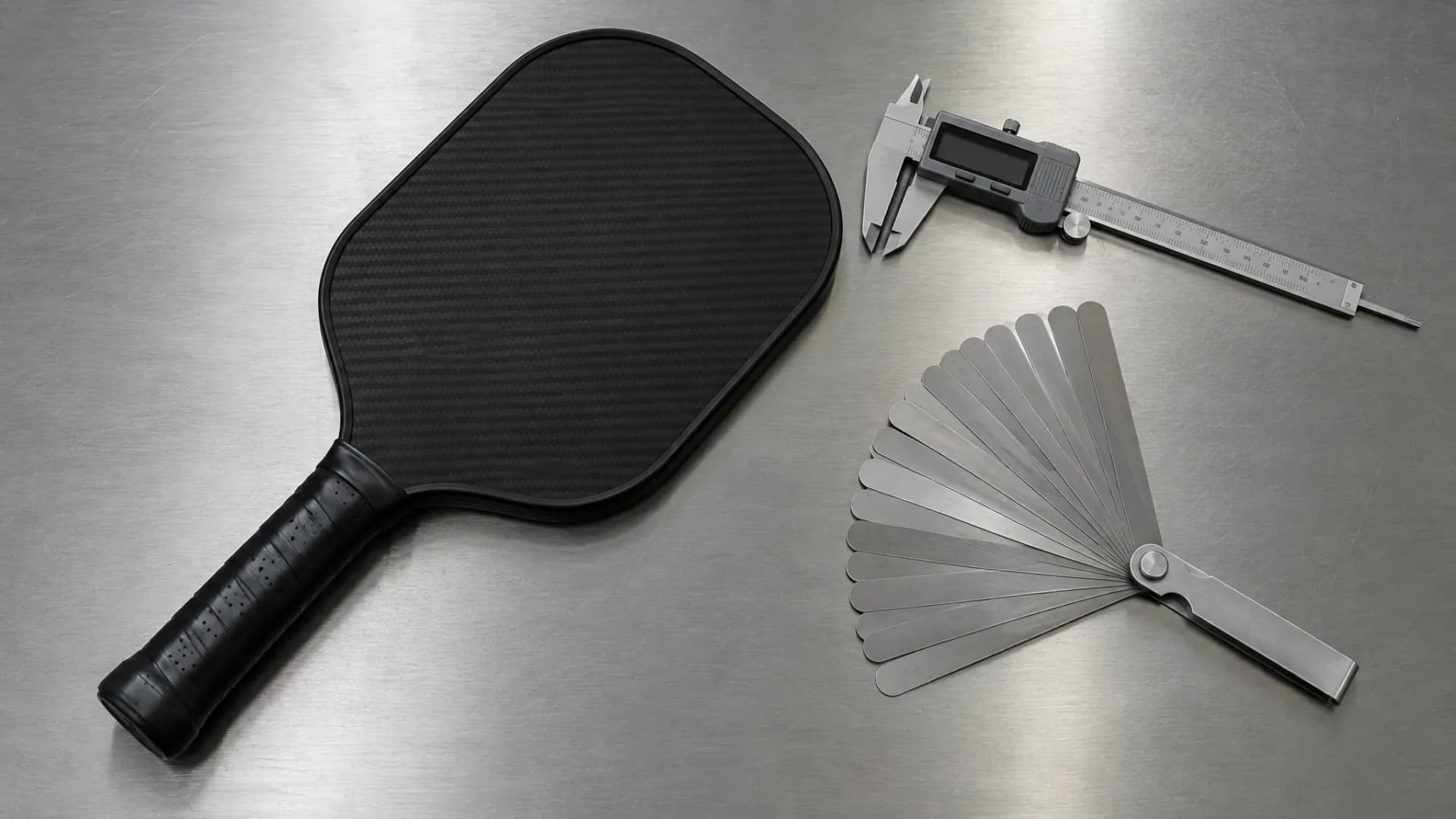
Your inspection report says three edge-guard gaps, class minor, lot accepted. Your reading of the same three paddles says major, and the container sailed on Tuesday. Nobody misapplied the sampling table; the defect classification attached to the order, if one was attached, never said which reading was right.
No standard writes that document for you. ISO 2859-1 hands the assignment of classes to the contract, so a paddle defect classification is enforceable only when every line carries a class, a criterion written as a dimension, position or count, a method, and, wherever one exists, a clause of a published rule.
The three-class definitions are judgement language drafted for military procurement in 1989. They do not decide whether a 3 mm gap is major. Your document does.
Key Takeaways
- Critical, major and minor are MIL-STD-105E words (clauses 3.4 to 3.16, dated 10 May 1989). ISO 2859-1 never uses them; it classes nonconformities A, B and C by seriousness and leaves the assignment to the contract.
- The edition to name is ISO 2859-1:2026, published on 22 January 2026, which cancels and replaces the 1999 edition.
- An enforceable line has four fields: class, a criterion written as dimension, position or count, the method and instrument, and a clause anchor where a public rule exists.
- Delamination is a critical defect you can anchor: Rule 3.D.5.a of the 2026 USA Pickleball Official Rulebook prohibits holes, cracks, delamination or indentations that break the paddle skin or surface.
- Weight has no rule limit (Rule 3.D.3), so a weight criterion exists only in your specification. Every paddle we ship is individually weighed to ±3 g.
- A 3,000-paddle lot at AQL 2.5 major / 4.0 minor passes with up to 17 nonconformities among 125 sampled paddles. The classification decides what those 17 are allowed to be.
On this page
- Origin of the three classes, and why ISO 2859-1 never says them
- One test per class on a composite paddle
- Writing a criterion an inspector can measure
- The paddle defect classification template
- Three arguments a vague classification loses
- Conclusion: the document in five steps
- Frequently asked questions
Before drafting, watch a third-party inspection firm walk the three classes: minor, major and critical run from 1:36, and at 4:55 the presenter turns to building the defect list itself, the document this article writes.

Where Critical, Major and Minor Actually Come From (and Why ISO 2859-1 Never Says Them)
The vocabulary is older than the ISO standard most purchase orders cite. MIL-STD-105E, the United States Department of Defense sampling standard dated 10 May 1989, defines a classification of defects in clause 3.4 as "the enumeration of possible defects of the unit of product classified according to their seriousness."
Clause 3.5: a critical defect "would result in hazardous or unsafe conditions for individuals using, maintaining, or depending upon the product." Clause 3.14: a major defect is "likely to result in failure, or to reduce materially the usability of the unit of product for its intended purpose." Clause 3.16: a minor defect "is not likely to reduce materially the usability of the unit of product for its intended purpose."
Read the verbs. Likely to. Materially. Those are judgement words, and the standard was cancelled in 1995.
ISO 2859-1 does something more useful for a buyer. In a note to clause 3.1.5 of the 1999 edition it classes nonconformities by seriousness as Class A, "of the highest concern," and Class B, "the next lower degree of concern," with a Class C "if a third class exists." Note 4 adds that the assignment into a class and the AQL for each "should be appropriate to the quality requirements of the specific situation." The classification is yours to write.
Note 2 to clause 3.1.6 warns that "since the term 'defect' now has definite meaning within the law, it should not be used as a general term," which is why the template below says nonconformity.
The edition has moved: ISO 2859-1:2026, published on 22 January 2026, cancels and replaces the 1999 edition and keeps clause 4.2 on classification of nonconformities and clause 7.5 on critical classes. The definitions quoted here are from the 1999 text; name the 2026 edition in the order.
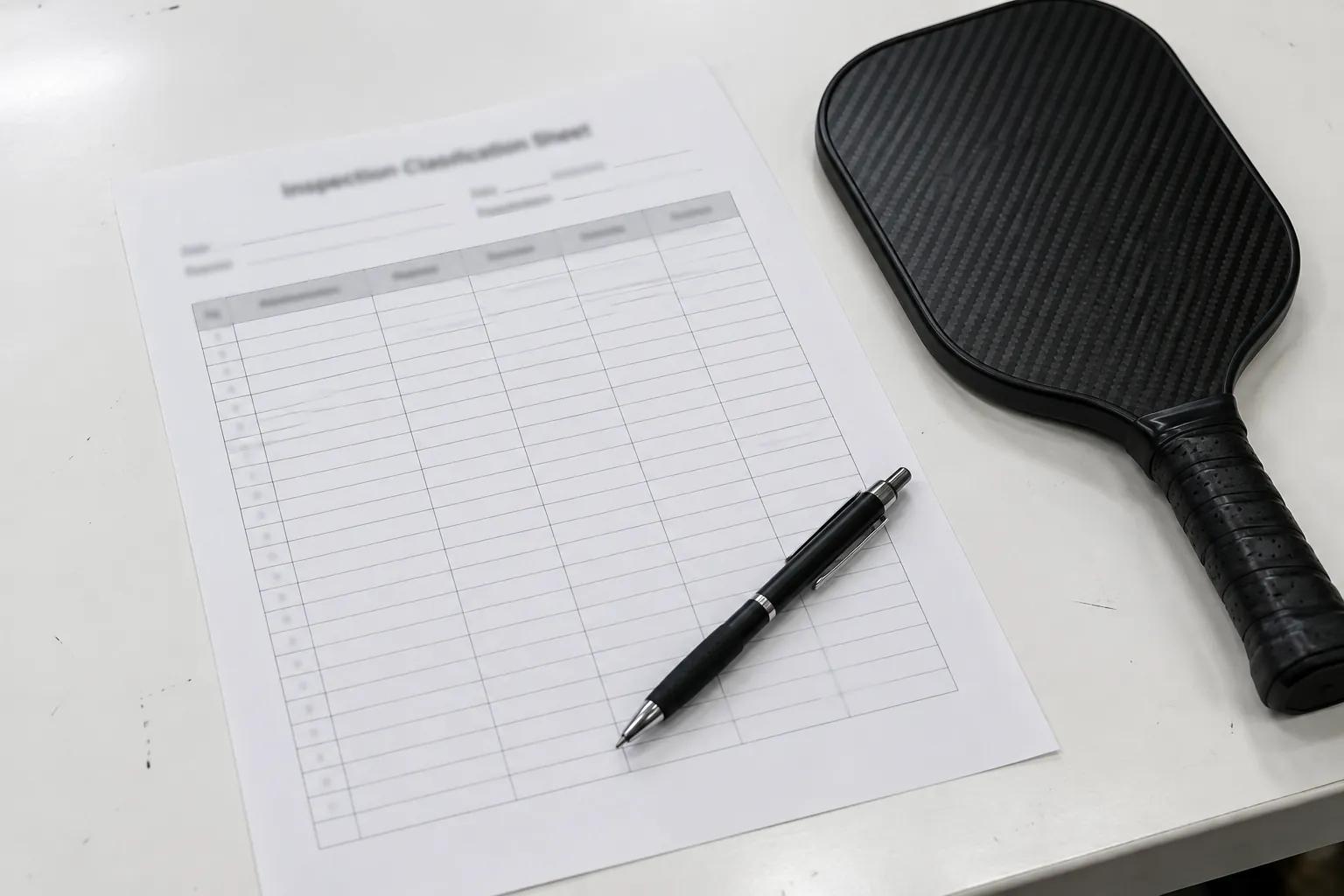
One Test per Class: What Critical, Major and Minor Mean on a Composite Paddle
Pickleball has an equipment standard with numeric limits and a rulebook that names construction failures, so the top class can be anchored to text both sides already accept.
The test runs as a branch. A fault that makes the paddle illegal to play or unsafe to hold is critical. One that makes the paddle unusable, or measurably outside the specification you bought, is major. Anything inside every limit and only visible is minor. Apply the branches in that order, because clause 3.1.7 classes an item by its worst nonconformity: a paddle with one Class A fault and three Class C faults is a Class A item.
Critical: illegal or unsafe, with a clause number
Rule 3.D.5.a of the 2026 USA Pickleball Official Rulebook prohibits, on the hitting surface, "holes, cracks, delamination, or indentations that break the paddle skin or surface." Rule 3.D.2 caps combined length and width, including any edge guard and butt cap, at 24 inches (60.96 cm) and length at 17 inches (43.18 cm).
The Equipment Standards Manual, Revision 3.0 (January 2025), sets face roughness limits in clause 2.E.2.a.1 and a gloss limit of 80 GU in clause 2.E.2.b. Rule 3.D.1 requires a clearly marked brand and model name or number and, on an approved model, the "USA Pickleball Approved" seal or text treatment. Each is a critical line, because a lot that fails it cannot be sold as what was ordered.
Major: unusable or outside your specification
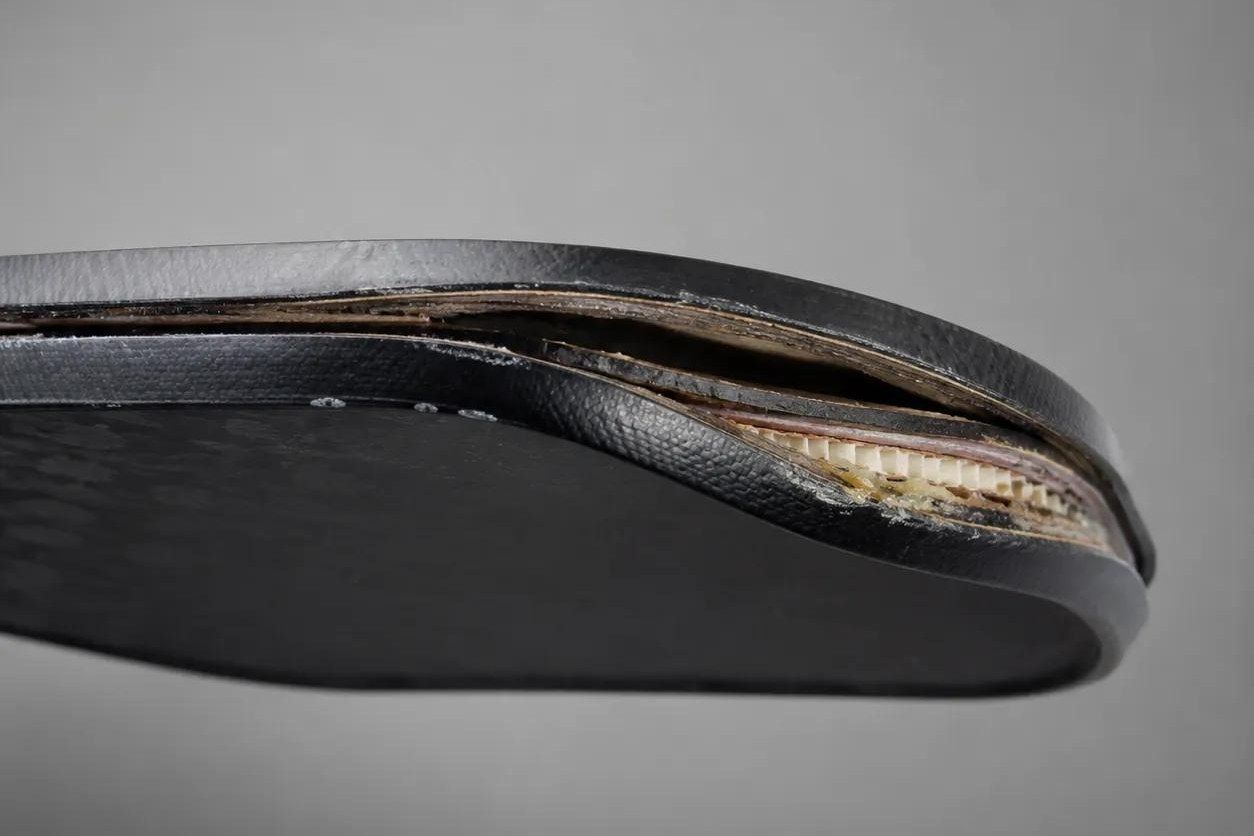
A dead spot, a grip fitted off the handle axis, an edge-guard bond gap that admits a feeler blade, a bubble under the laminate: none has a rulebook clause, and each stops the paddle doing the job it was bought for.
Weight is the trap. Rule 3.D.3 says "there is no restriction on paddle weight," so a weight nonconformity exists only if your specification created a band. Every paddle we ship is individually weighed to ±3 g; whether a 4 g deviation is major depends on the band your order wrote down, and the paddle weight tolerance clause is the companion document for that band.
Minor: inside every limit, visible only
A registration shift inside your tolerance, a scuff on the throat under the length you allowed. Minor lines still need numbers, because "slight" is the word a factory reads generously. Keep three classes: clause 7.4 gives each its own acceptance number on a common sample.
Writing a Criterion an Inspector Can Measure: Dimension, Position, Count, Method
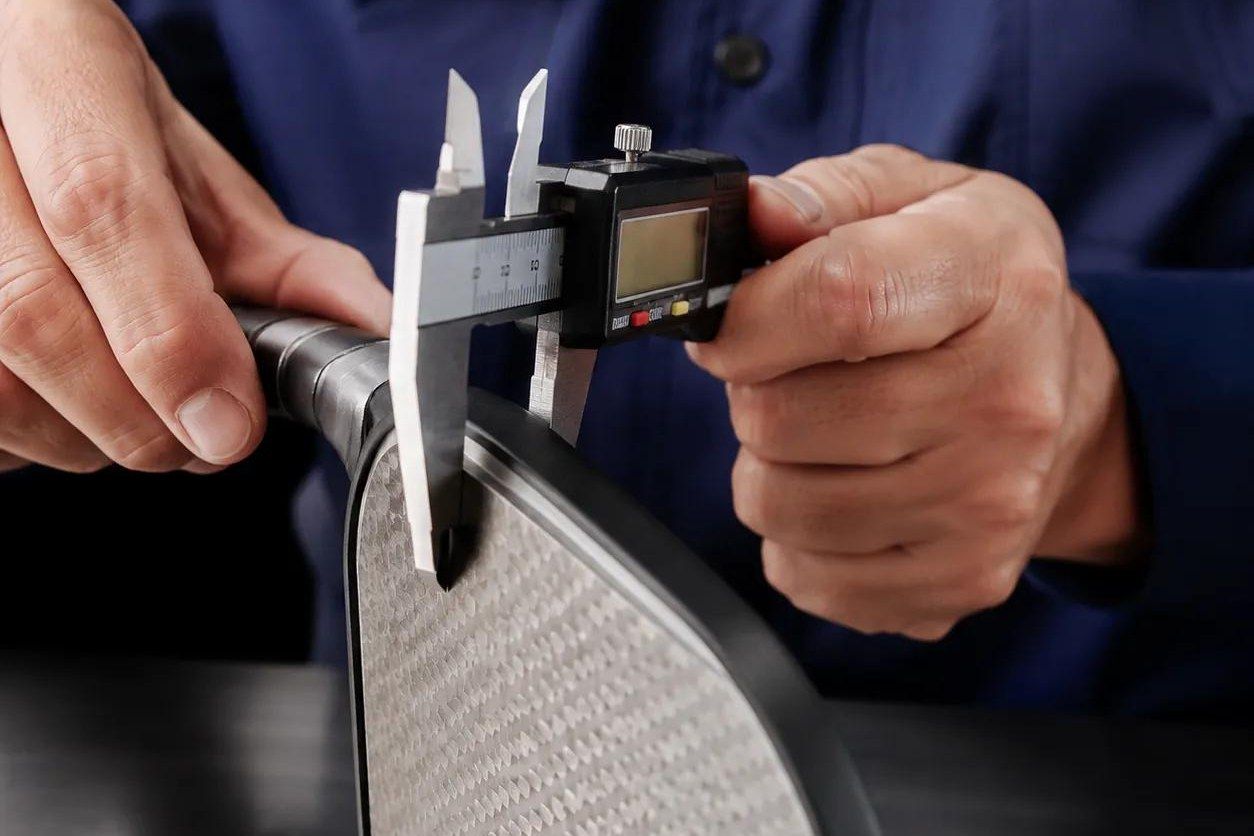
A line holds when a second inspector, with the same instrument and no phone call, reaches the same class. That takes four fields on every row: the class; a criterion written as a dimension, a position or a count; the method and instrument; and the anchor, a rule clause or your own specification with its version number. "Obvious delamination" is a debate about the word obvious; "delamination: any separation detectable by tap test at any point on either face, 3.D.5.a" is a reading.
Two rewrites show the pattern. "Edge guard must be well bonded" becomes "edge-guard bond gap: no gap admitting a 0.20 mm feeler blade at any point on the perimeter; major above 0.20 mm." "Print should look correct" becomes "logo registration: no printed edge more than 1.0 mm from the golden-sample position, steel rule at the two longest edges; minor above 1.0 mm."
The 0.20 mm, the 1.0 mm and the 4 g deviation above are example values that illustrate the form; your thresholds come from your golden sample and your channel's tolerance for returns.
What we check on our own line, and where we stop
Every paddle we ship is individually weighed to ±3 g. Our order process runs on golden-sample approval before production and QC before dispatch. Where we stop: we do not publish a house AQL per class or a defect rate, because neither is a number this page can stand behind; the AQL per class is yours to set. The classification only works if it says which golden sample, by date and signature, the criteria point at. Give the document a version, a date and both signatures. An unversioned classification is a draft, and a draft is what "minor by our standard" gets measured against.
The Paddle Defect Classification Template
The table is the document in miniature. Copy the rows, replace every example value with the threshold your golden sample supports, and attach it to the order by version number.
| Nonconformity | Class | Criterion (ex.) | Method | Anchor |
|---|---|---|---|---|
| Face delamination, crack or hole | Critical | Any separation, crack or hole breaking the skin, either face | Tap test plus visual, both faces, 100 % of lot | Rulebook 3.D.5.a; ISO 2859-1 clause 7.5 |
| Envelope over limit | Critical | Length + width over 24 in (60.96 cm) or length over 17 in (43.18 cm) | Steel rule, edge guard and butt cap included | Rulebook 3.D.2 |
| Face roughness over limit | Critical | Rz avg over 30 µm or Rt avg over 40 µm (single reading 33/44 µm) | Starrett SR160/SR300 or equivalent, six directions per face | Manual 2.E.2.a.1 |
| Reflective finish | Critical | Any reading over 80 GU on face or edge guard | Gloss meter at 60 degrees | Manual 2.E.2.b; Rulebook 3.D.5.h |
| Brand, model or seal missing | Critical | Model name or number, or approved seal, absent or illegible at arm's length | Visual against golden sample | Rulebook 3.D.1 |
| Edge-guard bond gap | Major | Gap admits a 0.20 mm feeler blade at any point | Feeler gauge, full perimeter | Buyer specification v3 |
| Dead spot | Major | Tap tone changes at any point inside the marked hitting zone | Tap test on 25 mm grid | Buyer specification v3 |
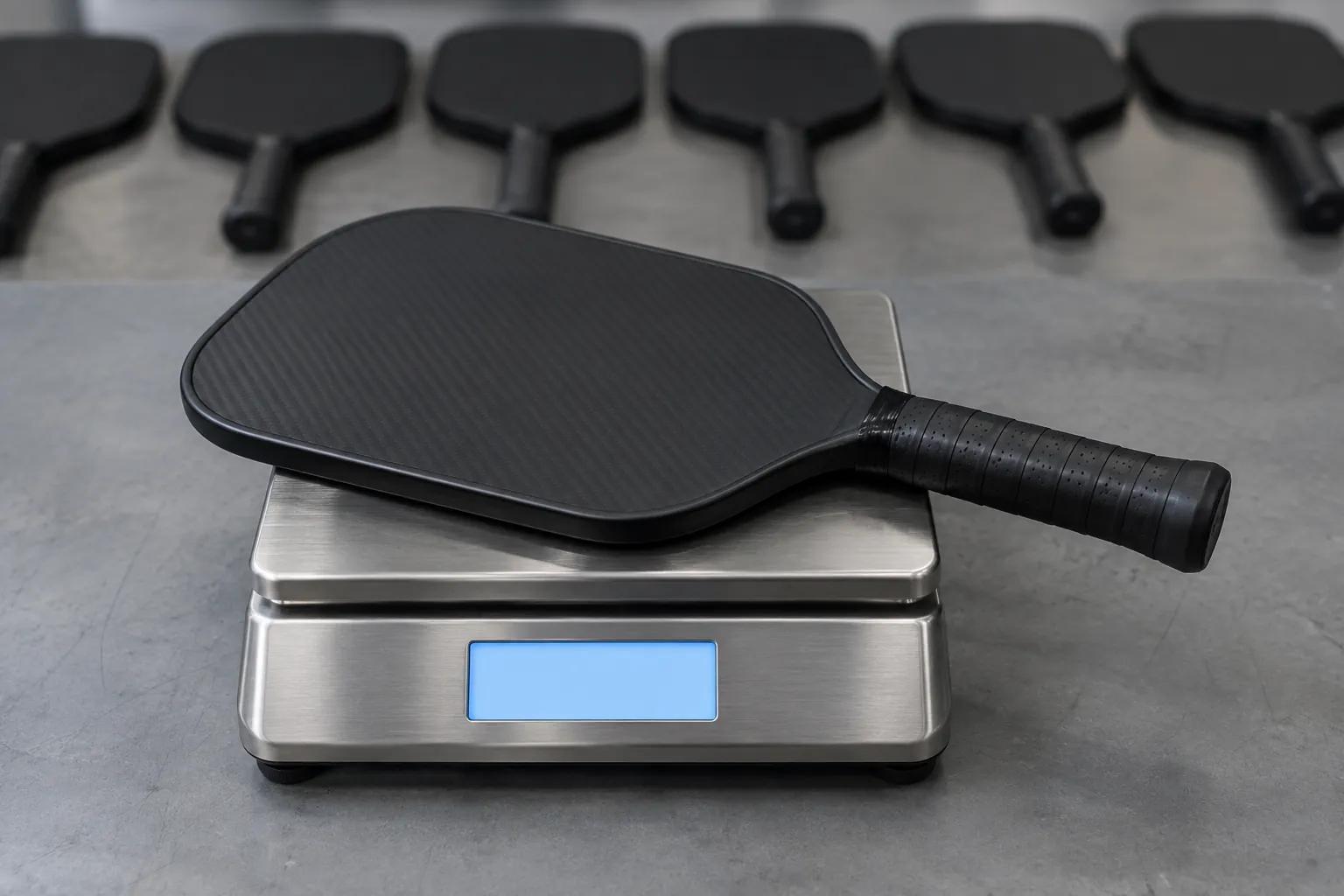
| Static weight outside band | Major | Outside the band stated in the specification | 0.1 g bench scale, each unit | Buyer specification v3; Rulebook 3.D.3 sets no limit |
| Grip off axis | Major | Butt-cap centre more than 1.5 mm from the face centreline | Jig with centreline scribe | Buyer specification v3 |
| Logo registration shift | Minor | Printed edge more than 1.0 mm from golden-sample position | Steel rule, two longest edges | Buyer specification v3 |
| Cosmetic scuff outside hitting zone | Minor | Longest mark over 5 mm, or more than two marks per paddle | Visual at 500 mm, ruler | Buyer specification v3 |
Two decisions sit outside the rows. First, the critical class need not go through sampling at all: clause 7.5 of ISO 2859-1 reserves to the responsible authority the right to inspect every item for designated critical nonconformities and to reject the lot on one. Write that in. Second, each remaining class gets its own AQL under clause 7.4; the value is the buyer's number, and the AQL sampling table lookup shows what each value permits on your lot size.
Name the build: a criterion written for a cold-pressed paddle does not describe the separation modes of a thermoformed one, and our OEM paddle programme offers both constructions, on 13 mm and 16 mm polypropylene honeycomb cores with raw T700 carbon or fibreglass faces. The six paddle failure modes supply the rows this template omits.
For importers and private-label brands writing a defect classification into a paddle order, from the 50-paddle MOQ upward. Golden-sample approval before production and QC before dispatch mean the rows above are checked against the build, not argued about after it. Send your classification and AQL per class and we will say plainly whether we sign to it.
See the OEM build and QC processThree Arguments a Vague Classification Loses After the Container Sails
"Minor by our standard." If the order attached no versioned classification, the factory's internal list is the only one that exists, and the inspector applied it in good faith. The fix is the version line: the report cites the classification named in the order, by number and date, or it is not a report against the order.
"It passed AQL." True, and silent about what was inside it. A 3,000-paddle lot at general inspection level II draws a sample of 125 paddles, code letter K, and at AQL 2.5 major / 4.0 minor it is accepted with up to 7 major and 10 minor nonconformities in that sample, 17 in a passing lot.
Which 17 were allowed is decided by the classification alone: a lot can pass with 7 lifted edge guards or fail on 8 registration shifts depending on the class each was written into. If you cannot afford 7 of something in a passing sample, it is not major.
"That is not a defect." The word has a legal meaning the factory can retreat into, which is what the note to clause 3.1.6 warns about. Write nonconformity, state the requirement it fails, and where the requirement is a rule clause, quote the clause. A face separating from its core stops being opinion once Rule 3.D.5.a is on the page. The warranty side is a separate document, and the warranty policy design article draws that line; the pre-shipment inspection walkthrough shows where the classification is applied on the day.
Conclusion: The Document in Five Steps
Write the classification before the sampling clause, because the sampling clause is arithmetic applied to it. (1) List every fault your returns and golden-sample review have shown, with the six failure modes as the checklist. (2) Sort each into critical, major or minor with the branch test, anchoring every critical line to a rulebook or manual clause.
(3) Rewrite every line as dimension, position or count, with the instrument. (4) Name the golden sample, the version, the date and both signatures. (5) Attach the AQL per class, invoke clause 7.5 for the critical class, and name ISO 2859-1:2026. The answer flips only if your channel can absorb the 17: a rental fleet that reglues edge guards in house can call the gap minor and mean it.
Then put the draft beside the last inspection report and ask whether the inspector could have reached each class without calling you. Rewrite the row where the answer is no first.
Frequently Asked Questions
What is the difference between critical, major and minor defects?
In MIL-STD-105E, a critical defect would result in hazardous or unsafe conditions for individuals using, maintaining, or depending upon the product; a major defect is likely to result in failure, or to reduce materially the usability of the unit of product for its intended purpose; a minor defect is not likely to reduce materially the usability of the unit of product for its intended purpose. For a paddle, read them as illegal or unsafe, unusable or out of specification, and visible only.
Does ISO 2859-1 define critical, major and minor defects?
No. ISO 2859-1 classes nonconformities as Class A, Class B and Class C by degree of seriousness and states that the assignment into a class and the AQL for each class should be appropriate to the specific situation. The critical, major and minor definitions come from MIL-STD-105E, dated 10 May 1989 and cancelled in 1995.
Is a minor defect a fail?
Not by itself. A minor nonconformity counts against the minor acceptance number for the sample, and the lot fails only when that count reaches the rejection number for its class. A paddle with one critical fault is a critical item regardless of how many minor faults it also carries.
Can I classify delamination as a critical defect?
Yes, and you can anchor it. Rule 3.D.5.a of the 2026 USA Pickleball Official Rulebook prohibits holes, cracks, delamination or indentations that break the paddle skin or surface, so a delaminated face is a rulebook nonconformity, not a cosmetic one. Write the criterion as any separation detectable by tap test on either face.
Which edition of ISO 2859-1 should the classification name?
ISO 2859-1:2026, published on 22 January 2026, which cancels and replaces the 1999 edition. Name the edition, the inspection level and the AQL per class together with the classification version, because none of the four identifies the sampling plan alone.
Want to source this quality for your brand?
Contact our factory directly on WhatsApp for an instant MOQ and pricing quote.