Pickleball Ball Mold: Cavities, Hole-Pattern IP and Cost
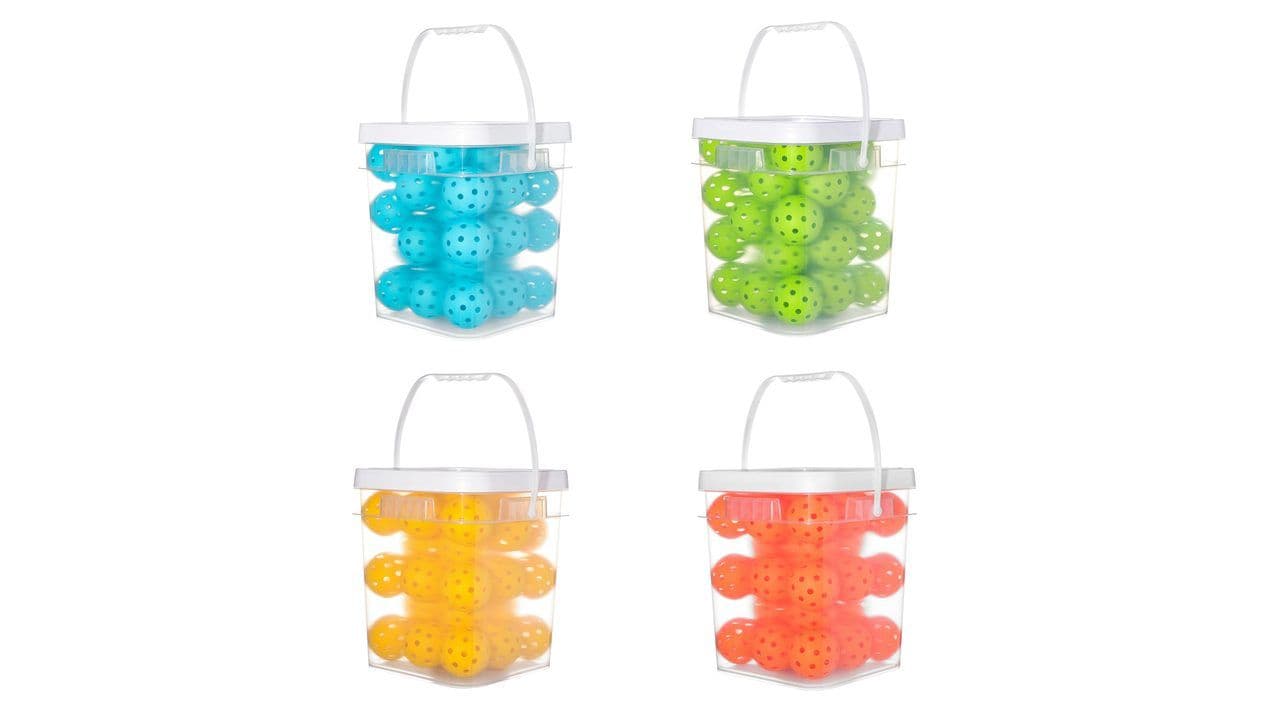
The quotation says "tooling: to be confirmed after CAD." You have a hole pattern you like, a colour, a logo, and a forecast. What you do not have is any idea whether that line item is one tool or two, whether it will cost four figures or five, or whether the pattern you picked is somebody else's property until 2030.
That last one is not hypothetical. The two-size hole layout that makes one of the market's best-known outdoor balls fly the way it does sits inside a live United States patent, and almost every article that mentions it names the wrong owner. If your first ball programme copies that pattern, you find out who actually holds the paper after you have paid for the tool.
Key Takeaways
- On a rotomolded ball the mould forms a sealed shell and the holes are added afterwards, so your hole pattern usually lives in a separate drill fixture — ask for the two line items separately.
- The tolerance the tool has to hold is tight: USA Pickleball §2.D.3 allows out-of-round variance of no more than +/-0.020 inch (0.51 mm).
- Your legal hole window is 26 to 40 circular holes (§2.D.8) — and the spacing must conform to flight characteristics, which is a design constraint, not a formality.
- US patent 8,357,062 B2, covering two dimensionally different hole sizes, is listed as Active, expires 2030-12-30. The recorded assignee is Singaball Pte Ltd of Singapore — not the brand most sources name.
- A uniform-diameter hole layout sits outside that claim's central feature and is simpler to drill repeatably. Confirm any design-around with your own IP counsel, not with a supplier's assurance.
- Ball hardness is no longer a compliance requirement (§2.D.7 records it "for corollary data only") — do not let a supplier argue durometer at you as if it were a pass/fail gate.
- Most first-time buyers should not commission a tool at all. Below the volume crossover, running an existing approvable ball is the cheaper answer.
On this page
- Mould or drill fixture: what you are actually being quoted
- The tolerances your tool has to hold
- The hole pattern is an IP decision before it is an engineering one
- Mould type and cavity count: where the money actually goes
- Lead time from CAD to first shot
- Who owns the tool after you pay for it
- Is commissioning your own ball tool right for you?
- Frequently asked questions
Mould or Drill Fixture: What You Are Actually Being Quoted
Start here, because everything downstream depends on it. A pickleball can be made two ways, and the two ways put your hole pattern in completely different pieces of hardware.
An injection-moulded ball is produced as two hemispheres and then bonded, which leaves the seam you can feel around the equator of a cheap ball. Those hemispheres come out of a steel or aluminium cavity, and the holes are formed by pins in that cavity. Your hole pattern is machined into the mould itself. Change the pattern, change the mould.
A rotationally moulded ball is formed as one piece. Resin goes into a closed mould, the mould turns through a heated cycle until the material fuses against the wall, and what comes out is a sealed hollow shell with no seam. There is no way for a closed cavity to produce 40 apertures. The holes go in afterwards, in a separate operation on a fixture that positions the ball and controls depth.
Why this costs people money
Buyers read "tooling" as a single number and budget for a single number. Then the second invoice arrives, or worse, the pattern turns out not to be theirs to take when they change supplier. A drill fixture is a distinct asset from the mould. It can be built by a different shop, held by a different party, and quoted on a different line.
Ask for the quotation broken out. Three questions do it:
- Is the hole pattern produced in the mould cavity or in a post-mould fixture?
- If it is a fixture, is that fixture quoted, invoiced and owned separately from the mould?
- If I change my hole layout in year two, which of these two assets do I pay for again?
A supplier who answers those three cleanly is a supplier who has done this before. One who treats the distinction as pedantic is telling you something too.
The Tolerances Your Tool Has To Hold
A tool is not judged on how it looks. It is judged on whether the balls coming off it land inside the published windows, batch after batch, in a factory where the ambient temperature moves. These are the numbers from the USA Pickleball Equipment Standards Manual (January 2025) that your tooling decisions have to satisfy.
| Clause | Requirement | What it constrains in tooling |
|---|---|---|
| §2.D.3 Size | 2.87 in (7.29 cm) to 2.97 in (7.54 cm) diameter; out-of-round variance not greater than +/-0.020 in (0.51 mm) | Cavity dimension and, more importantly, cooling uniformity — roundness is lost in the cooling cycle, not in the machining |
| §2.D.4 Weight | 0.78 to 0.935 oz (22.1 to 26.5 g) | Charge weight and wall thickness, which the mould's heat transfer governs |
| §2.D.5 Bounce | 30 to 34 in (76.2 to 86.4 cm) rebound, dropped from 78 in (198.1 cm) onto a granite plate at least 12 x 12 x 4 in, at 70 °F +/-5 °F | Resin selection plus wall section — a tool that produces uneven walls produces inconsistent bounce |
| §2.D.6 Compression | Average <43 LBF tested to ASTM F1888-09; seamless balls tested once at random and once about 90° away | The 90° retest is a direct check on wall consistency around the shell |
| §2.D.7 Hardness | 40 to 50 Durometer D at 70 °F +/-5 °F — recorded "for corollary data only, this is no longer a compliance requirement" | Nothing. Useful as process data; not a gate you can fail |
| §2.D.8 Design | 26 to 40 circular holes, spacing and overall design conforming to flight characteristics; maker name or logo printed or embossed on the ball | Drill fixture layout, and whether your logo is engraved into the tool or applied later |
| §2.D.1 Surface | Smooth, free of texturing, one uniform colour except identification markings; a slight seam ridge is allowed if it does not significantly affect flight | Mould surface finish, and the polish schedule that keeps it that way over a tool's life |
The number that should worry you
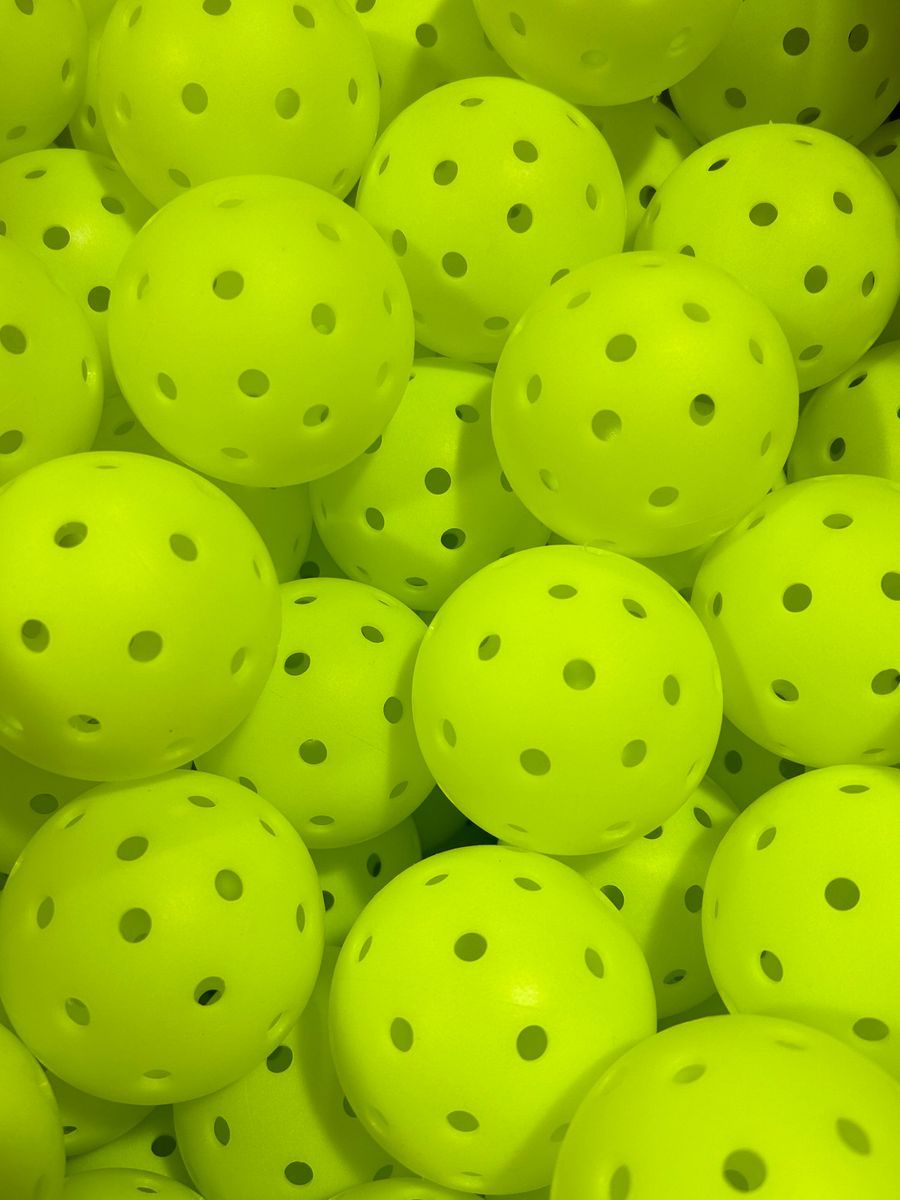
Of everything above, +/-0.020 inch is the one to hold in your head. It is roughly half a millimetre of permitted out-of-roundness on a ball just under three inches across. For context on what tooling can deliver, published rotational moulding design guidance puts cast-mould dimensional tolerance at about +/-0.005 in/in, noting it "may vary for small dimensions +/-0.030 inch."
Read those two numbers together and the picture is honest rather than alarming: the process is capable, but the margin is not generous, and it is consumed by cooling behaviour and cycle discipline rather than by the quality of the machining. That is why roundness complaints are a production-control story, not a "buy a better mould" story.
What this means for your specification
Write the tolerance into your purchase specification and into your inspection plan, not just into the tooling brief. A tool that produced round balls during sampling can drift when cycle times are shortened to hit a shipping date. If you want the sampling numbers to mean something twelve months later, the roundness check has to be a standing quality-control item — the same discipline covered in the site's guide to bounce, roundness, seam and weight checks on wholesale ball orders.
The Hole Pattern Is an IP Decision Before It Is an Engineering One
Here is where a private-label ball programme most often walks into something expensive, and where the published advice is most often simply wrong about the facts.
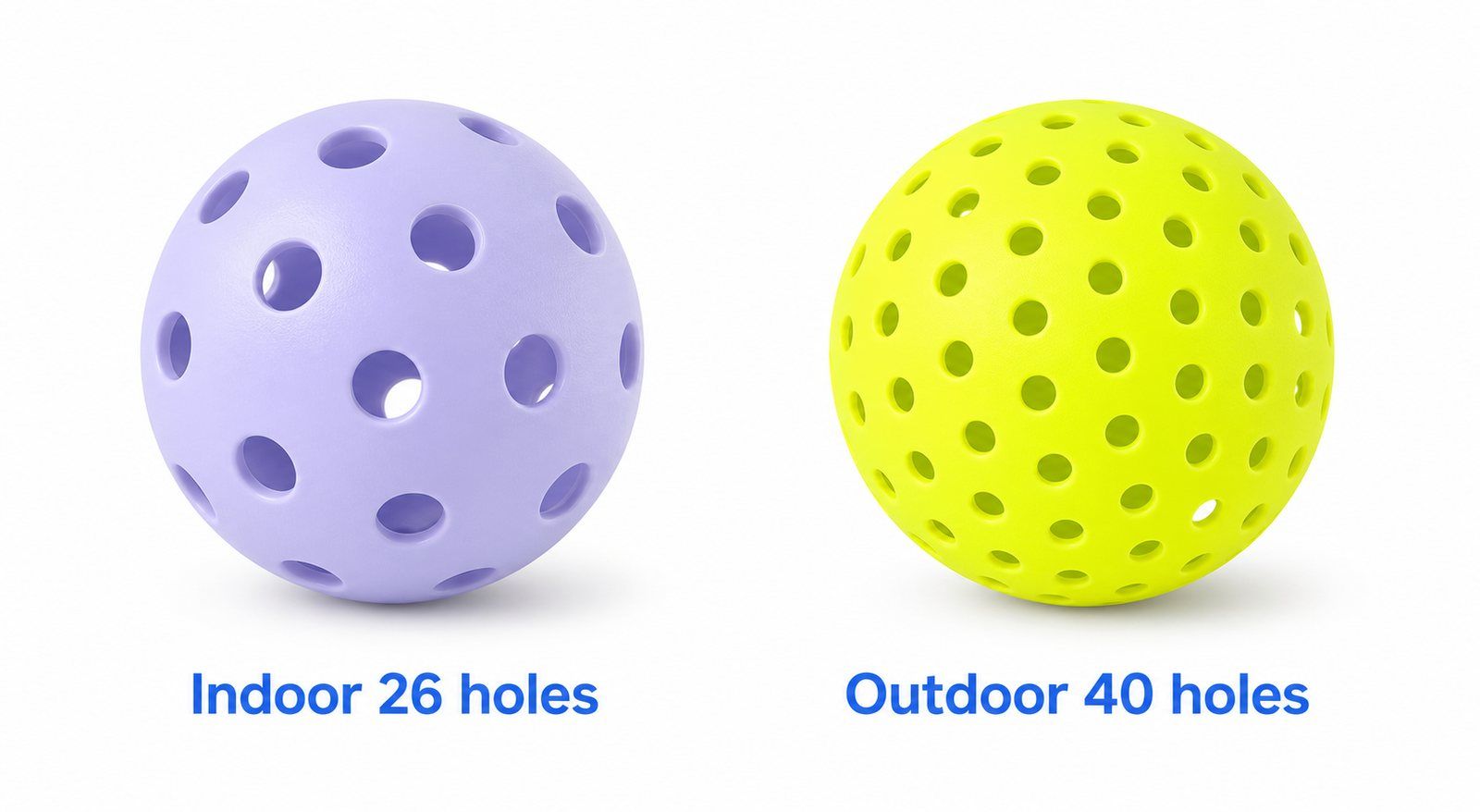
The standard gives you a wide window: a minimum of 26 and a maximum of 40 circular holes, with the spacing and overall design conforming to flight characteristics. Inside that window, one specific idea is patented.
What the patent actually claims
US patent 8,357,062 B2, titled "Game ball," describes a hollow spherical shell with an equatorial band, carrying two sets of apertures where one set is dimensionally larger than the other. In the claimed arrangement the smaller apertures sit fully within the equatorial band and the larger ones sit away from it. The stated purpose is reducing damage to the ball in play.
In plain procurement terms: two different hole diameters, arranged so the small ones ring the equator, is the protected idea. Not "holes in a ball," and not "40 holes." The two-size arrangement.
The correction worth having: secondary sources routinely state that the brand selling the best-known two-size ball owns this patent. The register does not say that. Google Patents shows the current assignee as Singaball Pte Ltd (Singapore), from a single assignment recorded effective 2010-04-26, with no later reassignment on record. Onix's own legal page lists the patent number against five Dura Fast 40 SKUs under the wording "ONIX utilizes patented technologies" — it markets under the patent, and claims no ownership on that page. If you ever need to ask permission, write to a different company than the internet will tell you to.
The other fact that matters commercially: the patent's legal status is shown as Active, expires 2030-12-30. It was filed in 2010 and granted in 2013. This is not an expired patent you can safely ignore, and it does not lapse during the life of a tool you commission this year.
The route most programmes take
A uniform-diameter pattern — every hole the same size — does not have the two-size feature that the claim is built around, which is why it is the common default for private-label outdoor balls. It also drills more repeatably, because one drill size and one feed rate is a simpler thing to hold across a shift than two.
Two cautions, and they are real ones. Patent scope depends on claim language and varies by country, so a design that is comfortable in one market may need separate advice for another. And a supplier telling you "no problem, many factories do this" is not a legal opinion — it is a sales answer to a legal question. Confirm your specific hole layout with qualified IP counsel before you commit tooling, particularly if you are drawn to anything that varies hole size deliberately.
If you are working from a well-known ball as your reference, the trade-offs of building an equivalent rather than a copy are covered in the site's breakdown of the private-label outdoor ball built to X-40-equivalent specifications.
Mould Type and Cavity Count: Where the Money Actually Goes
Now the capital decision. Two variables move the number on the quotation more than anything else: how the tool is built, and how many balls it makes per cycle.
How the tool is built
Rotational moulds are made four documented ways, and they rank predictably on cost. According to mould-maker Roto Dynamics, fabricated sheet-metal tooling is "lower cost than cast and CNC molds" with lead times that "are rapid depending on complexity"; cast aluminium is "relatively low compared to CNC molds"; and CNC-machined tooling is "higher cost than cast and fabricated molds" but offers "quick lead times." Electroformed tooling is the fourth option. For a sphere, cast aluminium is the workhorse — the alloy generally used for cast rotational moulds is 356 aluminium, chosen for heat transfer, strength and malleability, and cast mould walls typically run 1/4 or 3/8 inch.
Heat transfer is the reason a sphere is friendlier than it looks. A ball has no thick corners and no deep ribs, so the wall builds evenly if the mould's own wall is even. That is the same property that makes roundness achievable, and it is why cast aluminium keeps winning this particular job.
How many cavities
Rotational tooling is described in three documented configurations: single-cavity moulds, back-to-back moulds, and multi-cavity moulds. More cavities on the arm means more balls per heating cycle, which is where the unit cost falls — the oven time is the expensive part, and it is shared.
An honest gap, stated plainly: no published source gives a cavity count for pickleball ball tooling specifically. Anyone quoting you "ball moulds have eight cavities" as a general fact is extrapolating. The number is set per factory, per arm size and per oven, and it is a question to ask your supplier rather than a figure to look up. What is documented is the direction of the trade-off, and the shape of the class table below.
The clearest current figures for what tooling classes cost come from injection moulding, where they are published and dated. Jaycon's 2026 Injection Molding Pricing Report (9 July 2026) sets out this table. Read it as an orientation to how class, cavity count, cost and lead time move together — and note the report is written explicitly "from the perspective of a US-based molder," so these are US tooling prices, not Chinese factory tooling prices. The per-class bands below are as reported by Jaycon in July 2026 and are reproduced for orientation; confirm the current figures at jaycon.com before you build a budget on them.
| SPI class | Material / cavities | Cost range (US basis) | Lead time |
|---|---|---|---|
| 105 | Aluminium 7075, 1 cavity | $1,500–$8,000 | 2–3 weeks |
| 104 | Pre-hardened P20, 1–2 cavities | $8,000–$25,000 | 4–6 weeks |
| 103 | P20 / H13, 2–8 cavities | $25,000–$60,000 | 6–8 weeks |
| 101 | Hardened H13 / S136 at 48–52 HRC, 4–32+ cavities | $60,000–$150,000+ | 10–14 weeks |
The one absolute figure published for a rotational mould is a non-sport reference point, and it is worth stating as exactly that: Roto Dynamics gives an example where "for a 6" cube you could expect to pay $4000 for a mold and $15 for a part." A six-inch cube is not a pickleball. Use it as an order of magnitude for simple rotational tooling and nothing more.
On when cavities start to pay, the 2026 report is direct: "aluminum tooling is most useful below roughly 5K units, single-cavity steel can make sense once repeatable production is needed, and multi-cavity steel becomes increasingly attractive above mid-volume demand," with the crossover depending on "part geometry, material, tolerance requirements, finish, and annual forecast." Applied to balls, the practical reading is that cavity count is a function of your annual forecast, and buying cavities for a forecast you have not yet earned is the most common way to overspend on a first programme.
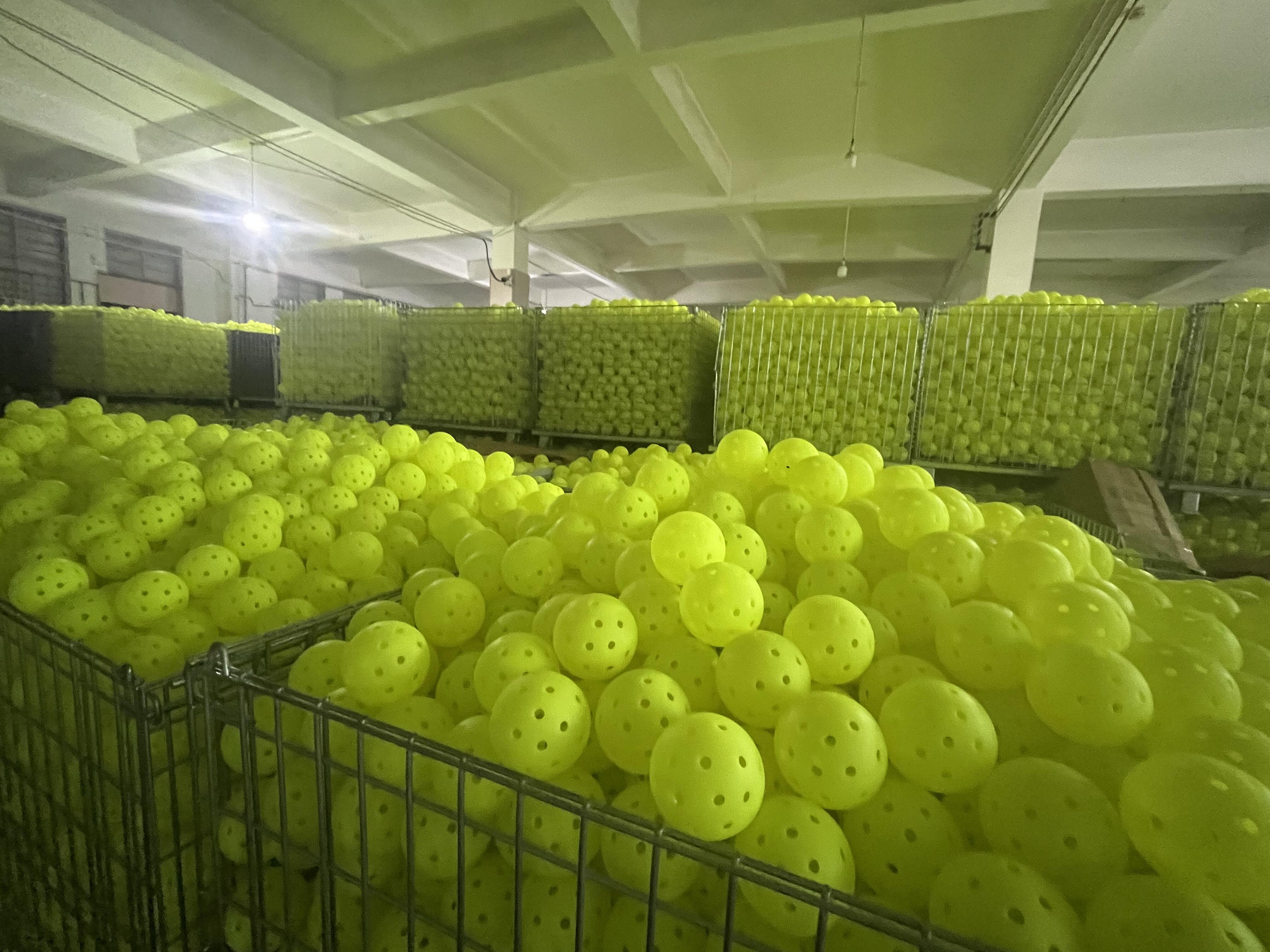
The logo decision hiding in this section
Section 2.D.8 requires the manufacturer's or supplier's name or logo to be "printed or embossed on the surface" of the ball itself. Embossed means it is in the tool. Printed means it is a post-process step. That choice belongs in this conversation, not in the packaging conversation, because embossing changes the tool and printing changes the line — and only one of the two is expensive to reverse later.
This one is for importers, distributors and private-label brand owners who have a forecast and a hole layout in mind and want the tooling question answered before the deposit. Send the hole count, the volume you can commit annually, and whether you need your logo embossed or printed — those three answers decide whether tooling is the right route at all. Ball orders start at an MOQ of 1,000 pieces.
Ask about ball tooling on WhatsApp →Lead Time From CAD to First Shot
"How long until I can hold one?" is the question every brand owner asks, and it is the question most often answered with a single misleading number.
The published part of the answer is tooling build time. The 2026 report puts it plainly: "Prototype aluminum tools may take 2–3 weeks. Hardened steel production tooling typically takes 8–14 weeks, with complex multi-cavity tools taking longer." Those are US injection figures, and they scale with class exactly as the table above shows.
What that figure does not include
Tool build is not the schedule. After first shot you still have sampling and iteration, and that is where the calendar quietly expands. A first article has to be measured against §2.D.3 for diameter and roundness, dropped against §2.D.5 for bounce, and compression-tested to ASTM F1888-09 — and on a seamless ball that compression test is run twice, once at a random point and once roughly 90 degrees away. If a result sits outside the window, you adjust charge weight or resin or cycle and you run it again.
The number of iteration rounds is not published anywhere, and this article is not going to invent one. It depends on how close the first tool lands and how tight your own acceptance criteria are. What you can do is force the question into the quotation: ask the supplier to state, in writing, how many sampling rounds are included before revisions become chargeable. That single line converts an unknown into a commitment.
How to verify before you commit
Sampling is the verification step that matters here, and it is worth being explicit about what it does and does not cover. A pre-tooling sample of an existing ball tells you about the factory’s process control, its colour consistency and its finishing quality; it cannot tell you anything about a tool that does not exist yet. A first-article sample off your own new tool is the one that proves the geometry, and it is the one to hold your acceptance criteria against.
Sample cost, courier terms and turnaround are set per project rather than published as a standing rate, so ask for them in writing alongside the tooling quotation. Request the measured first-article results too — diameter, roundness, weight, bounce and compression against the clauses above — rather than a pass/fail assurance. A supplier who reports numbers is one you can hold to numbers later.
Watch this before your first tooling call
 ▶ "How do they make pickleballs?" — DP MACHINERY
A machinery maker's footage of the process. Useful for seeing what the mould and the finishing steps physically are before you discuss them.
Who Owns the Tool After You Pay For It
You paid for the tooling. That does not automatically mean you own it, and it certainly does not mean you can put it in a van.
Tooling ownership is a contract clause, and it is separate from the supply agreement it usually sits inside. The clause needs to answer three things: who holds title to the mould, who holds title to the drill fixture, and who owns the drawing that defines the hole layout. Those can have three different answers, which is exactly the problem.
The specific trap in ball programmes
Because the hole pattern lives in a fixture rather than in the mould, it is possible to own the mould outright and still not control your own hole layout. If the fixture was built by the factory to its own drawing, then moving your tool to a second supplier gets you a machine that makes blank shells. The pattern — the thing your players actually recognise — stays behind.
Settle it before the deposit, not after the relationship sours:
- Name both assets separately in the agreement — mould and hole fixture — with title for each.
- Have the hole layout issued as your drawing, with your part number, and keep the native file.
- Agree in advance what happens on termination: released, transferred, or destroyed with evidence.
- Confirm who is named on any approval submission made using the tool, because that is a separate register from the tooling.
This is the ball-side version of a question that runs through every private-label programme, and the ownership matrix behind it — who holds tooling, design and certification under each contracting model — is set out in the guide to OEM, ODM and contract manufacturing. If you are commissioning tooling as part of a broader private-label build, the OEM and custom manufacturing service pages set out how custom ball and paddle programmes are structured.
Is Commissioning Your Own Ball Tool Right For You?
Most people reading this should not commission a tool, and a supplier who tells you otherwise on the first call is selling rather than advising.
| Own tooling makes sense | Own tooling does not |
|---|---|
| You need a hole layout or ball geometry no stock ball offers | You want your logo on a ball — that is printing or embossing, not a new mould |
| You have an annual forecast you can defend, not a launch hope | It is your first order and the volume is untested |
| You are protecting a design position and want title to the assets | A single-season or promotional programme that ends before payback |
| You can absorb the sampling calendar without missing a season | You need stock in hand this quarter |
An illustrative walkthrough
This example is illustrative rather than an account of a specific customer order — it shows how the decisions above chain together.
A distributor wants a club-grade outdoor ball for a market with cold spring play. He wants 40 holes, uniform diameter, his logo, and high visibility. Working through this article's sequence: the uniform pattern keeps him clear of the two-size claim, so no counsel escalation is needed beyond a confirmation. Forty holes sits inside the §2.D.8 window. Uniform colour with identification markings satisfies §2.D.1, so the neon he wants is fine.
His forecast is the deciding input. If it sits below the crossover the 2026 report describes, the answer is to run an existing approvable ball with printed branding and revisit tooling in year two. If it sits above, the conversation becomes cast aluminium tooling, cavity count matched to his forecast rather than to his ambition, an embossed-versus-printed logo decision, and a written sampling-round commitment before the deposit. Either way he leaves the first call knowing which of the two paths he is on — which is the thing the standard supplier conversation does not give him.
What to bring to the first conversation
Six answers make a tooling quotation meaningful instead of a placeholder: hole count and whether diameters are uniform; your defensible annual volume; embossed or printed branding; the market the ball ships to; whether you need it on an approved list; and how many sampling rounds you expect included. If a supplier will not put those into a written quotation, the number they give you is not one you can plan against.
For retailers, clubs and first-time importers whose volume does not yet justify a tool: the rotational 40-hole tournament ball is an existing product with existing tooling, available for wholesale and private-label runs from an MOQ of 1,000 pieces. It is the cheaper answer for a first season, and it keeps the tooling decision available for year two.
See the rotational tournament ball →Frequently Asked Questions
Does a pickleball mould contain the holes?
On a rotomolded ball, no — the mould forms a sealed one-piece shell and the holes are added afterwards on a fixture. On a two-piece injection ball the holes are formed in the cavity itself.
How many holes is a pickleball allowed to have?
USA Pickleball §2.D.8 permits a minimum of 26 and a maximum of 40 circular holes, with hole spacing and overall design conforming to flight characteristics.
Is the two-size hole pattern still patented?
Yes. US 8,357,062 B2 is listed as active with an expiry of 2030-12-30. The recorded assignee is Singaball Pte Ltd, not the brand most commonly named in secondary sources.
How many cavities does a pickleball mould have?
No published source states a cavity count for pickleball tooling specifically. It is set by the factory's arm and oven size. Ask your supplier directly rather than relying on a general figure.
What tolerance does the tool have to hold?
Diameter must fall between 2.87 and 2.97 inches, with out-of-round variance no greater than +/-0.020 inch (0.51 mm) under §2.D.3. Roundness is mostly won or lost in cooling discipline.
Does ball hardness still have to pass a test?
No. §2.D.7 records 40 to 50 Durometer D but states it is "for corollary data only, this is no longer a compliance requirement." Compression under ASTM F1888-09 is the live measure.
Can I move my ball tooling to another factory?
Only if the contract gives you title to both the mould and the hole fixture, and the hole layout is issued as your drawing. Owning the mould alone can leave you with blank shells.
Commissioning ball tooling is a smaller decision than it feels like, provided you separate the four questions inside it: which piece of hardware carries your holes, whether your pattern is legally yours to use, what your forecast actually justifies in cavities, and who holds title when the relationship ends. Answer those in that order and the quotation stops being a placeholder. Get them in the wrong order and the expensive discovery happens after the deposit.
Want to source this quality for your brand?
Contact our factory directly on WhatsApp for an instant MOQ and pricing quote.