Court Windscreens: The Four Fabric Numbers to Demand Before You Order
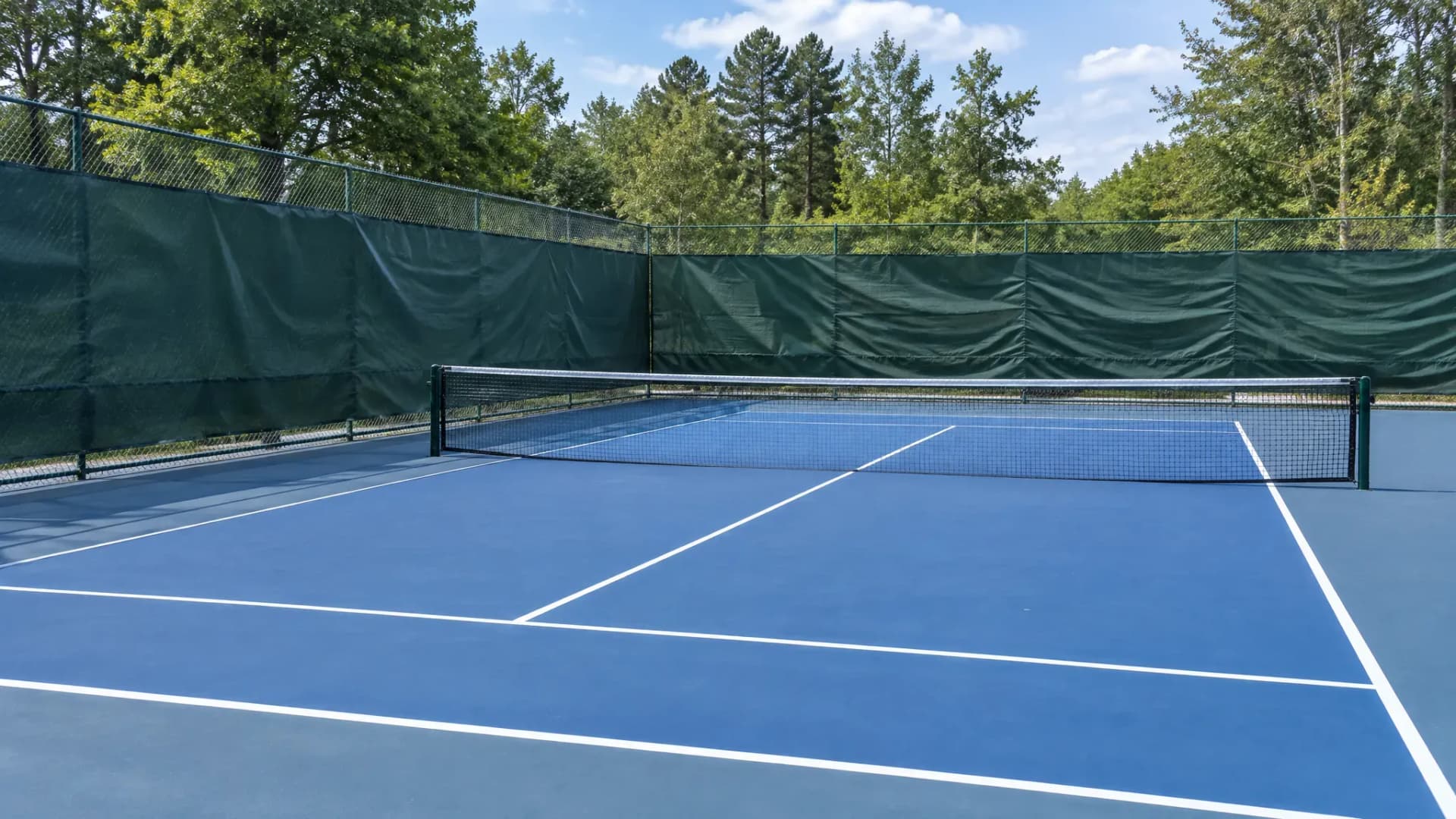
A court windscreen quote should state four fabric numbers, each tied to a test you can ask to see. The first is solidity, the share of the panel that is solid, backed by an ASTM D737 air-permeability result. Next comes weight, as mass per unit area under ASTM D3776, read against the material. Then strength at the hem, from an ASTM D5034 grab test on woven fabric, a D3786 burst test on knits or D751 on coated fabric. Last is UV resistance, stated as strength kept after a named number of exposure hours under ASTM D4355 or G154.
We found no ASTM standard that sets windscreen fabric values, so two datasheets only compare when each names its method. One check sits outside the fabric. Under ASCE 7, a sign or freestanding wall with openings less than 30% of its gross area is classified as solid, and chain-link designed for bare mesh may not carry a screen that closes it up.
Key Takeaways
- Ask for four numbers with methods: solidity with ASTM D737 airflow, D3776 weight, grab/burst/tear strength, and UV strength retained after stated hours.
- ASCE 7 classifies a sign or freestanding wall with openings less than 30% of its gross area as solid. At 80% solid the permitted force factor is still 0.91.
- CLFMI's June 2016 tables, 10 ft fence, 105 mph, Exposure B: a 2-7/8 in post allows 1.5 ft spacing for a solid panel, against 10 ft for bare #9 x 2 in mesh.
- ASBA / USA Pickleball: standard heights are 6 ft and 9 ft; in heavy-wind areas consider 6 ft screens and open mesh, with the fence engineered by a professional engineer.
- Lead time and MOQ have no published norm: order from a measured diagram of the built fence and get production and freight weeks as separate lines.
A pickleball club’s own footage of a windscreen install on its courts, from the Sun City West Pickleball Club channel:

The four numbers and the test behind each
Of the two windscreen pages we checked for this guide, one court-supply page stated no weight, blockage, strength, UV or grommet figure. The other gave a fabric weight and a grommet spacing with no test method behind either.
We found no fabric standard to fall back on. ASTM F3684-24, the guide for tennis court fencing and other perimeter enclosures, lists screening the court from wind and visual distractions among an enclosure's jobs. Its published summary gives no fabric values. The method name is what makes one supplier's figure comparable with another's, so it belongs on the quote next to the number.
| Number | Test method | Ask the supplier for | Reject the quote if |
|---|---|---|---|
| Solidity | ASTM D737-18(2023) air permeability | Solid share of the panel and the D737 result | A blockage % with no method |
| Weight | ASTM D3776/D3776M-20(2025) | oz/yd² or g/m², with base fabric and coating named | Weight given without the material |
| Strength | D5034-21(2025) woven; D3786/D3786M-18(2023) knit; D751-26 coated | Breaking or burst figure plus a tear figure | A grab result quoted for a high-stretch knit |
| UV resistance | D4355/D4355M-21 xenon, or G154-23 fluorescent UV | Exposure hours and % strength retained | "UV treated" with no hours |
Solidity is the number your fence feels
The ASBA / USA Pickleball construction manual (2020 edition) frames the choice as open mesh against closed mesh. Open mesh is generally less expensive and in many situations gives adequate background contrast, windbreak and ventilation. Closed mesh gives a darker background and reduces wind more, and that wind is load on the fence.
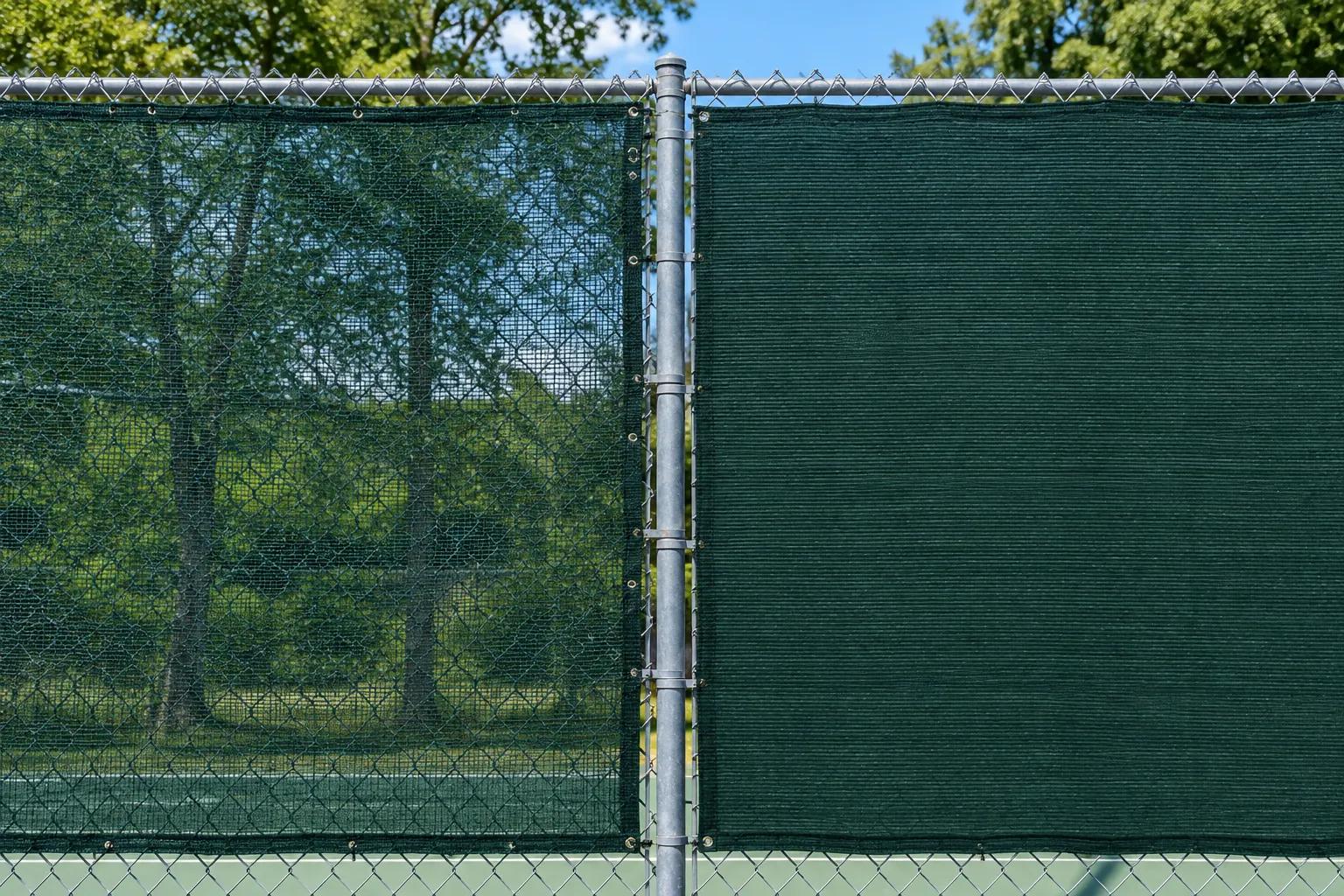
A 90% screen does not take 10% off the load. Under ASCE 7, a sign or freestanding wall with openings less than 30% of its gross area is classified as solid. Its force coefficient may then be multiplied by a reduction factor of 1 - (1 - e)^1.5, where e is the solid share of the area. ASCE writes this for signs and freestanding walls; whether a screened chain-link fence is checked this way is the engineer's call. The ASCE 7-10 note is reproduced in the CLFMI Wind Load Guide, and ASCE 7-16 keeps it in Figure 29.3-1.
| Solid share e (ratio) | Openings (% of area) | Force factor vs solid (ratio) | Verdict under the rule |
|---|---|---|---|
| 0.70 | 30 | 0.84 | At the 30% line; engineer decides the class |
| 0.80 | 20 | 0.91 | Classed solid under the rule |
| 0.90 | 10 | 0.97 | Classed solid; factor 0.97 |
| 1.00 | 0 | 1.00 | Classed solid; no reduction |
So the solidity figure has to be one an engineer can use. A datasheet "blockage" percentage does not say whether it measures light, sight lines or air. ASTM D737-18(2023) measures the air permeability of textile fabrics, woven and knitted alike, so ask for that result beside the solid share.
What a covered panel does to post spacing
The Chain Link Fence Manufacturers Institute (CLFMI) sizes line posts on a solid-panel basis, then multiplies the allowed spacing by a coefficient for the fabric's free area: S' = S x Cf1 x Cf2 x Cf3. For a solid panel Cf1 is 1. For #9 gauge wire in 2 in (50.8 mm) mesh it is 7.26. The guide also caps spacing at 10 ft. Run a 10 ft court fence through its June 2016 tables and the gap is large.
| Line post OD (in) | Bare #9 x 2 in mesh (ft) | Solid panel (ft) | Verdict |
|---|---|---|---|
| 2-7/8 | 10 (10.9 before cap) | 1.5 | Engineer before any screen goes up |
| 3-1/2 | 10 (18.2 before cap) | 2.5 | Engineer; expect added posts or bracing |
| 4 | 10 (26.1 before cap) | 3.6 | Engineer; open mesh or lower screen |
A fence spaced for bare mesh at 10 ft sits well past what the same post allows for a solid panel. Open terrain makes it tighter again: CLFMI's Exposure C coefficient is 0.67. A screen hung a foot off the top and bottom rails is not a full-height solid panel, so the real case needs its own calculation. CLFMI released a 2023 edition based on ASCE 7-22, and that is the one your engineer should use.
| Line post OD (in) | Bare mesh (ft) | Solid panel (ft) |
|---|---|---|
| 2-7/8 | 10 | 1.5 |
| 3-1/2 | 10 | 2.5 |
| 4 | 10 | 3.6 |
Hence the ASBA manual's advice: fencing that will carry windscreens should be engineered by a professional engineer, and heavy-wind sites should consider 6 ft screens and open mesh. Fence runs for a battery of courts are in our multi-court layout plan.
Weight only means something next to the material
Fabric weight comes from ASTM D3776/D3776M-20(2025), in oz/yd² or g/m²; 1 oz/yd² is 33.9 g/m². The figure covers everything in the fabric as sold, coating included. That is why a heavier number does not settle the choice on its own: the ASBA manual describes three materials that behave differently at any weight.
| Material | Wind resistance | Shrink, stretch, fade | Best for |
|---|---|---|---|
| Polypropylene, heavier grades | Effective | Shrinks, stretches and fades | Dense background at reasonable cost |
| Vinyl-coated polyester | Less than polypropylene | Less prone to all three | Stable size and colour, at higher price |
| Polyethylene, unfabricated roll | Modest | Does not fade; will stretch | Cheap runs you patch or replace yourself |
Polypropylene and vinyl-coated polyester arrive fabricated, hemmed on the edges with grommets. Unfabricated polyethylene is cut from the roll by the buyer and hung through button holes in the woven edge. Put the material, the coating and the D3776 weight on one line of the quote, then compare like with like.
Strength belongs at the hem and grommets
The ASBA manual's maintenance chapter describes how a windscreen fails: a broken fastener lets a section whip in the wind, the whipping stresses the remaining grommets, and the windscreen can tear. Strength figures matter most where the fabric is held.
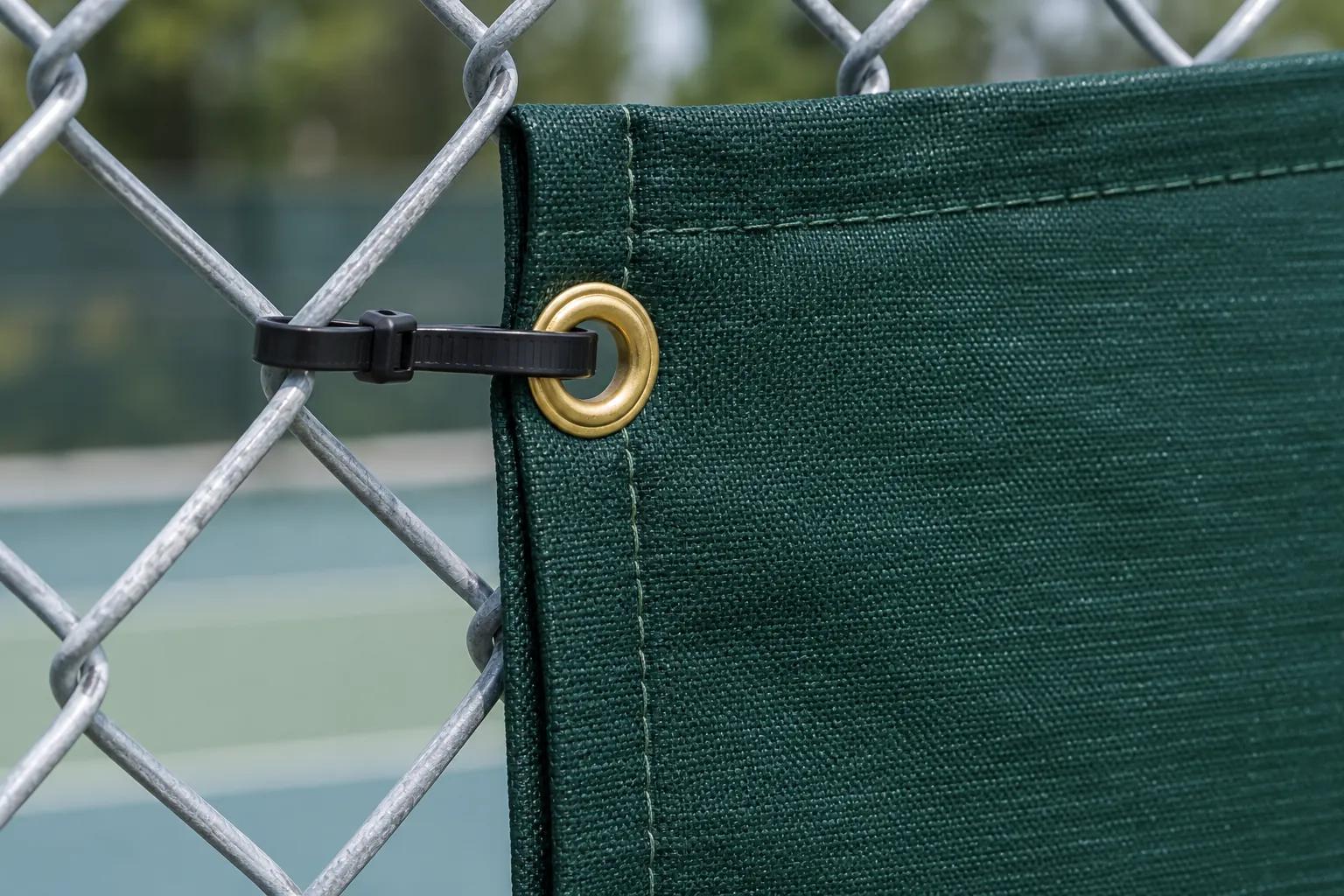
Check that the method fits the fabric. ASTM D5034-21(2025), the grab test, is not recommended for knitted fabrics and other fabrics with high stretch, more than 11%. For a knit, ASTM D3786/D3786M-18(2023) burst strength covers knitted, nonwoven and woven fabric. For coated fabric, ASTM D751-26 includes grab breaking strength, tongue and trapezoid tear, coating adhesion and seam strength. Its scope is written for coated products such as tarpaulins.
Ask for a tear figure as well as a breaking one, a seam strength if the hem is sewn, and the hem construction and grommet spacing in writing. Keep spare fasteners on site: a loose one is where the tear starts.
UV: ask for strength kept after a stated number of hours
"UV treated" and "UV stabilized" are claims, and neither is a number. ASTM D4355/D4355M-21 measures the loss of tensile strength after xenon arc exposure with moisture and heat. It was written for geotextiles and does not simulate pollution or salt water. ASTM G154-23 is a practice for running fluorescent UV exposure, so it produces no rating of its own. A usable UV line names the method, the exposure hours and the percentage of strength retained.
Colour is part of the same question. The ASBA manual prefers black or dark green for ball visibility, and it notes that polypropylene fades while vinyl-coated polyester is less prone to it. It also says removing windscreens for indoor storage in harsh winters will greatly prolong their life. Our net fabric UV spec guide covers the same weathering methods for nets.
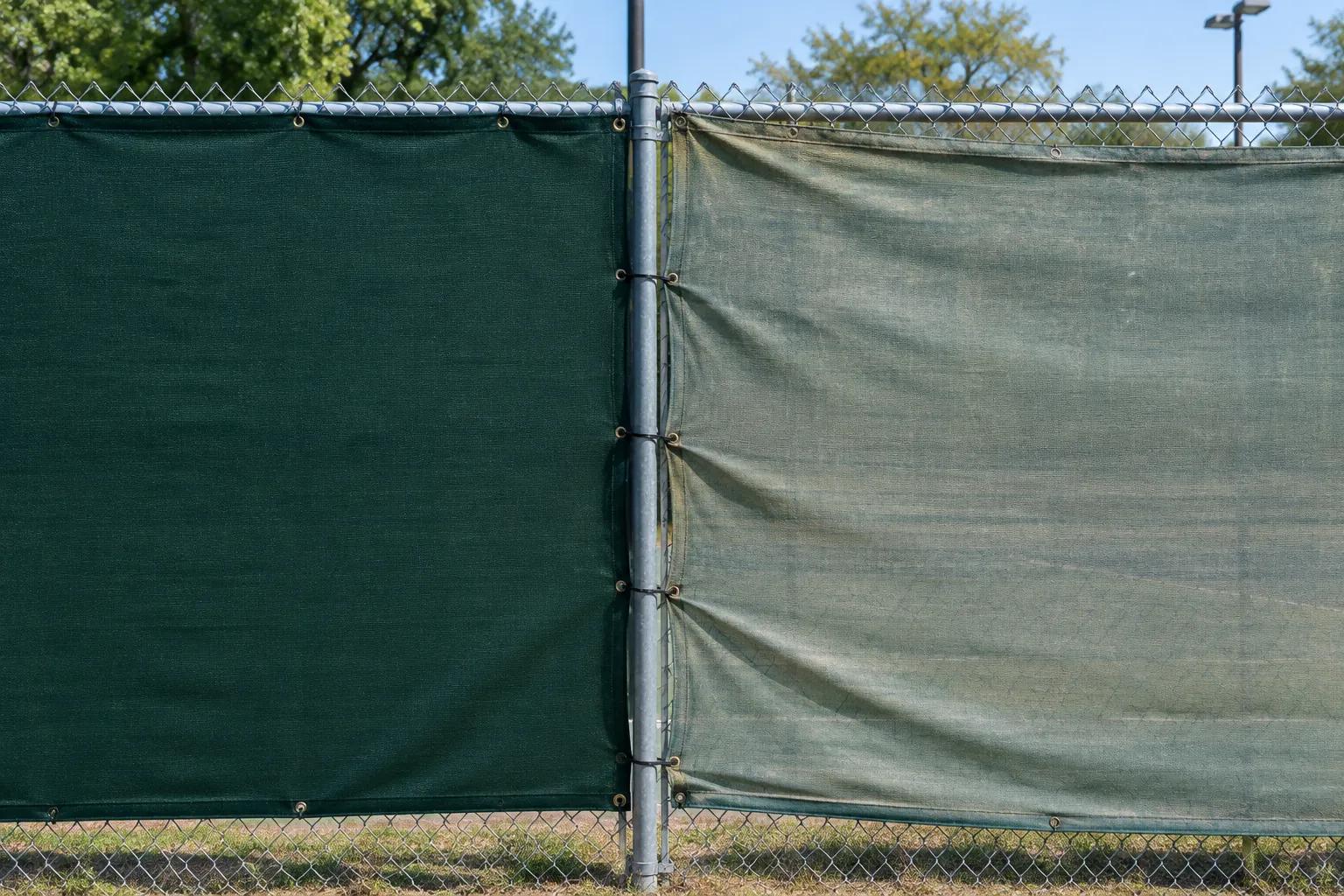
If a screen or divider curtain will hang indoors, ask whether it has been tested to NFPA 701 (2023 edition), the fire test for flame propagation of textiles and films, and for the report.
Measuring, lead time and MOQ
Windscreens are cut to a fence that already exists. The ASBA manual measures length from terminal post to terminal post, inside tension bar to inside tension bar, and height from the bottom of the top rail to the top of the bottom rail. The screen usually hangs one or more feet in from the top and bottom. Record exact feet and inches, since no two fences are identical, and send the diagram so every panel arrives labelled.
Lead time
We found no published lead-time norm for custom windscreens. Two things drive the date: the fence must be built before it can be measured, and printed or custom-size panels are made to that diagram. Ask each supplier for production weeks, counted from receipt of the measured diagram, and freight weeks as separate lines. Ask too whether a printed logo adds to either. Our lead time guide explains how to read a split quote.
MOQ
No public source sets a minimum order for windscreen. Ask whether the price is per panel, per roll or per print design, and what the minimum is for a custom print.
Where we stop
We do not make windscreens. We make the paddles and balls played on the court behind them, as an OEM pickleball factory. The sound side of a fence project is covered in our acoustic barrier fence guide.
For clubs, HOAs and facility buyers ordering private-label paddles or rotomolded balls at wholesale volume, from a low MOQ.
See OEM paddles and ballsThe quote checklist
Send every supplier the same five lines, and compare only the answers that come back with a method attached.
- Solidity. Solid share of the panel and an ASTM D737-18(2023) air-permeability result.
- Weight. ASTM D3776 mass per unit area, with base fabric and coating named.
- Strength. A breaking or burst figure matched to the fabric, a tear figure, and hem and grommet construction in writing.
- UV. Method, exposure hours and % strength retained; NFPA 701 report if the screen goes indoors.
- Fence and schedule. An engineer's check of posts for the chosen solidity, a measured diagram of the built fence, and production and freight weeks quoted apart.
Frequently asked questions
Do tennis windscreens work on pickleball courts?
Yes. The ASBA / USA Pickleball manual says windscreens give visual contrast so players see the ball better, reduce and deflect the wind, cut sun glare off chain-link, add privacy and screen out distractions.
How much do court windscreens cost?
We could not verify a public price. The ASBA manual gives the drivers: open mesh is generally less expensive than closed mesh, vinyl-coated polyester costs more than polypropylene, and unfabricated polyethylene is inexpensive.
What height windscreen should a pickleball court use?
Standard heights are 6 ft and 9 ft, with custom sizes available. In heavy-wind areas the ASBA manual suggests 6 ft screens and open mesh, on fencing engineered by a professional engineer.
Should windscreens come down in winter?
In harsh winters, yes. The ASBA manual says indoor storage greatly prolongs their life: hose down, dry, tag each section, then roll rather than fold. In milder winters, detach the bottom and sides and roll them up on the fence.
Want to source this quality for your brand?
Contact our factory directly on WhatsApp for an instant MOQ and pricing quote.