Durability Testing Paddles Before You Ship 5,000: Protocols and Pass Criteria
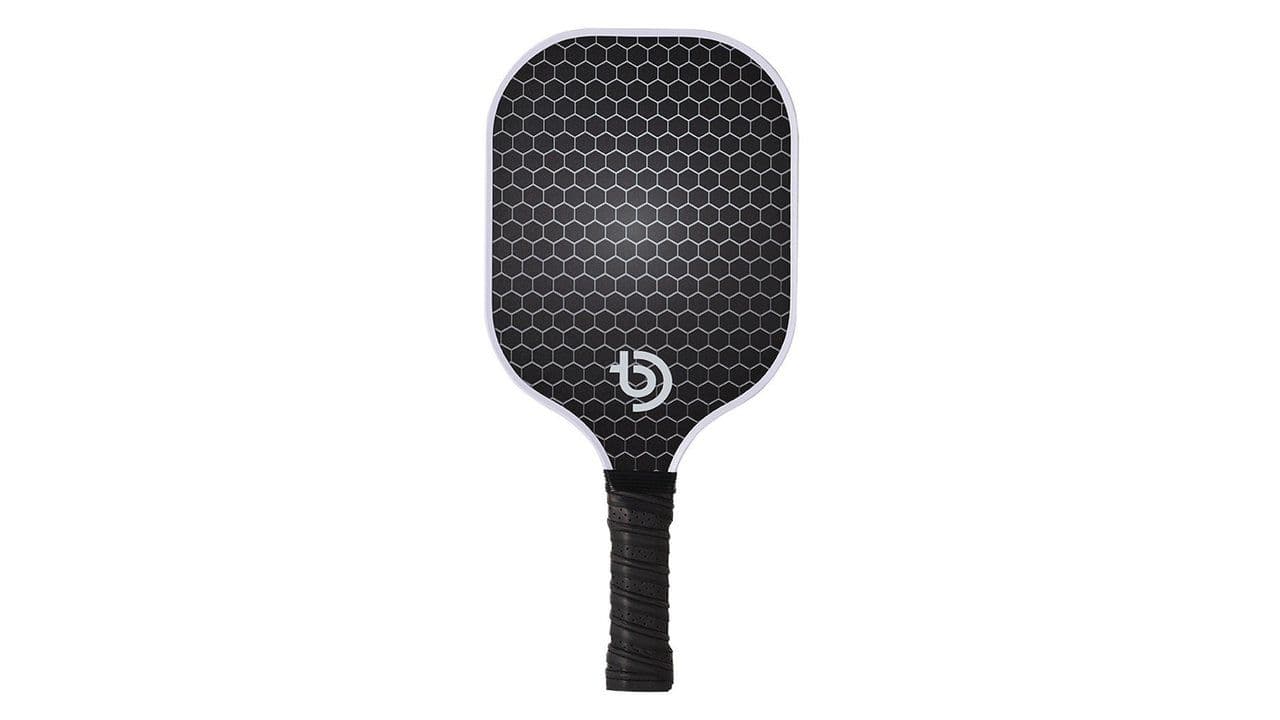
USA Pickleball requires every approved paddle to stay compliant over the entire useful life of the paddle — failure modes, break-in periods, and degradation included. That is Rule 2.F.2.a of the Equipment Standards Manual, Rev 3.0. Yet no governing body has ever run a fatigue test to enforce it. Approval testing is a point-in-time measurement on submitted samples. Nobody hits a paddle ten thousand times before granting a logo.
Durability is a requirement with no regulator behind it. When a 5,000-paddle order lands in your warehouse, the gap between that rule and reality is yours to close. Pickleball paddle durability testing before shipment is the only step standing between a clean golden sample and a season of dead-spot returns.
This article defines a four-test durability acceptance protocol: repeated ball impact, edge and face drop, heat-and-humidity soak, and throat torsion. Every parameter is quoted from a published standard or derived openly in the text. It is written to be pasted into a purchase order or handed to a third-party lab.
Key takeaways
- Rule 2.F.2.a requires paddles to stay compliant over their entire useful life, including failure modes, break-in, and degradation — but approval tests run once, on submitted samples. Nobody tests your lot to failure.
- The only dynamic test a regulator runs fires a ball at 60 MPH, once, on one paddle. The method is built on ASTM F2219-14. It measures rebound, not fatigue.
- The PBCoR ceiling is NTE 0.43, effective November 1 2025. Surface friction caps at 0.1875 and gloss at 80 GU. All point-in-time numbers.
- The buyer-set protocol in this article: 3,000 impact cycles at 60 MPH baseline, and edge drops from 1.0 m and 1.2 m. Add a 40 °C / 90–95% RH soak of at least 96 hours and a 20 N·m torque hold on the throat.
- Destructive testing is separate from appearance AQL. Pull samples from at least three cartons and two production days, and always compare against your own golden sample.
Citations verified against primary documents August 16 2026. Buyer-set thresholds are derived in the text, not quoted from standards.
On this page
- Why Play Testing Cannot Validate 5,000 Paddles
- What Certification Testing Covers and What It Misses
- Repeated Ball Impact Test for Fatigue
- Edge and Face Drop Test on Hard Surfaces
- Heat and Humidity Soak for Container Transit
- Torsional Load Test on Throat and Handle
- Sampling Plan for Destructive Durability Tests
- Writing Durability Pass Criteria Into the PO
- Conclusion
- Frequently Asked Questions
Why Play Testing Cannot Validate 5,000 Paddles
The golden sample that survived your weekend of rallies is one unit, built under trial conditions. Mass production changes resin batches, cure schedules, and edge-guard adhesive lots between sample and production. Sample approval says one paddle could perform; lot acceptance says thousands of them do. A sound quality control program treats those as separate gates, and most buyers run only the first one.
Visual and dimensional checks catch surface defects: scratches, print errors, roughness outside spec. They cannot see a face-core bond that cured short, or honeycomb cells crushed during press closure. Those latent defects pass inspection cleanly and fail at hour twenty of play. Only stress testing brings them out before the container ships.
The protocol below closes that gap with four tests, each mapped to a named field failure mode. When a unit fails, you know exactly what would have come back as a return — and which PO clause was breached.
| Test | Field failure reproduced | Buyer-set core parameter | Method reference |
|---|---|---|---|
| Repeated ball impact | Dead spots, face-core delamination | 3,000 cycles at 60 MPH | ASTM D7136 impact principle |
| Edge and face drop | Edge-guard separation, edge cracks | Drops from 1.0 m and 1.2 m | ASTM D7136 / D5276 practice |
| Heat and humidity soak | Bond softening during transit | 40 °C, 90–95% RH, 96–168 h | IEC 60068-2-78 method |
| Throat torsion | Handle twist-out, throat cracks | 20 N·m static hold, 60 s | Composite torsion practice |
The regulators enforce only point-in-time numbers: PBCoR no greater than 0.43, surface friction no greater than 0.1875, gloss no greater than 80 GU. Since 2016, USA Pickleball's Equipment Evaluation Committee has tested more than 5,000 paddles and 400 balls — none of them to failure. Durability is unregulated, so your own protocol must carry it.
What Certification Testing Covers and What It Misses
USA Pickleball approval runs a defined battery on submitted samples. PBCoR — the paddle's coefficient of restitution — is capped at NTE 0.43 from November 1 2025. Surface roughness Rz averages no more than 30 µm. Friction sits at or below 0.1875 per ASTM D1894-14, and gloss caps at 80 GU. Dimensions fall under a 24-inch combined length-plus-width limit. The full PBCoR mechanics are covered in our explainer on what the PBCoR standard actually measures.
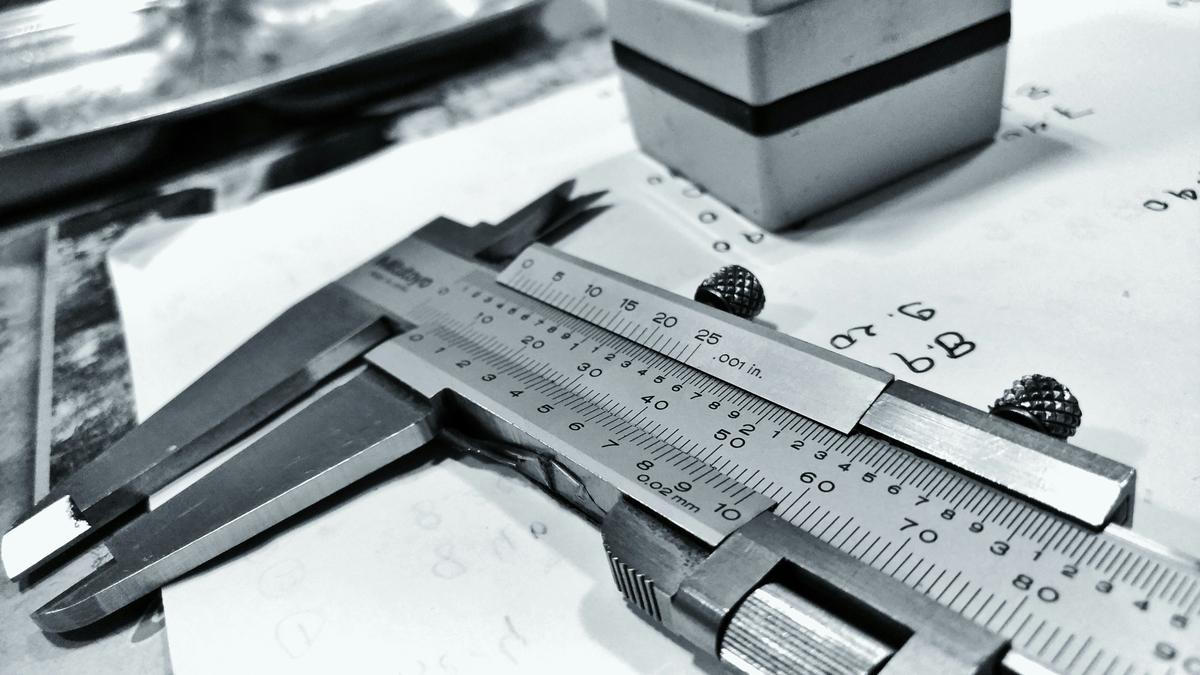
The one dynamic test in that battery fires a ball from an air cannon at 60 MPH into the paddle face, a method built on ASTM F2219-14. USA Pickleball's own rulemaking found the earlier static 3-point beam deflection test limited, which is why the dynamic method replaced it. One rebound event, on one paddle, is still not fatigue. The compliance testing walkthrough shows how thin that single event is.
The standards still reach toward durability, just without a test. Rule 2.F.2.a requires paddles to remain compliant over the entire useful life of the paddle, including failure modes, break-in periods, and degradation. Rule 2.F.1 lets USA Pickleball revoke a paddle's approval with 18 months' notice if it degrades materially in ordinary use. Both clauses are enforced after the fact, on market evidence — never by testing your production lot.
UPA-A approval goes further in public reporting. Pickle Pro Labs runs a PEF Scan for power, an ADF test for toughness and recovery, spin measurement, and artificial break-in testing, and a paddle must pass all of it. Published coverage puts more than 40% of USAP-approved paddles outside UPA-A approval. Even so, neither body runs impact-cycle counts, drop tests, or container-climate soaks.
| Body | Tests run | Proves | Does not prove |
|---|---|---|---|
| USA Pickleball | PBCoR, roughness, friction, gloss, dimensions | Sample meets point-in-time specs | Lot consistency, fatigue life |
| UPA-A / Pickle Pro Labs | PEF scan, ADF, spin, artificial break-in | Match-play performance floor | Transit survival, lot consistency |
| Buyer's acceptance protocol | Impact, drop, soak, torsion | Your lot survives use and shipping | Anything you do not write down |
That boundary defines your job. Above the line, certification is already regulated. Below it — fatigue, drops, transit climate — the protocol must be yours.
Repeated Ball Impact Test for Fatigue
The repeat-impact test is the closest lab proxy to real play. Clamp the paddle in a fixture, fire approved balls at the face, and count cycles. The principle mirrors ASTM D7136/D7136M, the standard drop-weight method for measuring impact damage resistance in fiber-reinforced composites: a defined impactor, a defined energy, damage assessed after the event.
Write the impactor down in the protocol. USA Pickleball's ball specification gives you the window: 0.78–0.935 oz (22.1–26.5 g) mass and 2.87–2.97 in diameter. Add 26–40 holes and a 30–34 in bounce when dropped 78 in onto granite at 70 °F. An impactor outside that window changes the test. An unspecified ball lets a factory choose the softest one on the shelf.
Set impact velocity against known ball speeds. The regulator's own cannon fires at 60 MPH, and the fastest measured professional serve is Ben Johns at 68.35 MPH. Run a baseline tier at 60 MPH and a severe tier at 70 MPH, bracketing everything a paddle meets in play.
Cycle count is a buyer-set acceptance threshold, and the derivation belongs in the protocol. Assume a league paddle sees hard exchanges at four shots per minute for fifteen minutes per session over forty sessions: about 2,400 hard strikes per season. Set the threshold at 3,000 cycles — roughly 25% margin — with inspections at 1,000, 2,000, and 3,000.
At each interval, check what actually fails in the field: face-core bond softening around the sweet spot, honeycomb cell crush, and edge-guard loosening. Core cell geometry drives how crush starts and spreads. Pass means no delamination on tap inspection, no new dead spot on rebound check, no rattle, and no meaningful mass change. A failing unit sends the lot to containment, not to the port.
Edge and Face Drop Test on Hard Surfaces
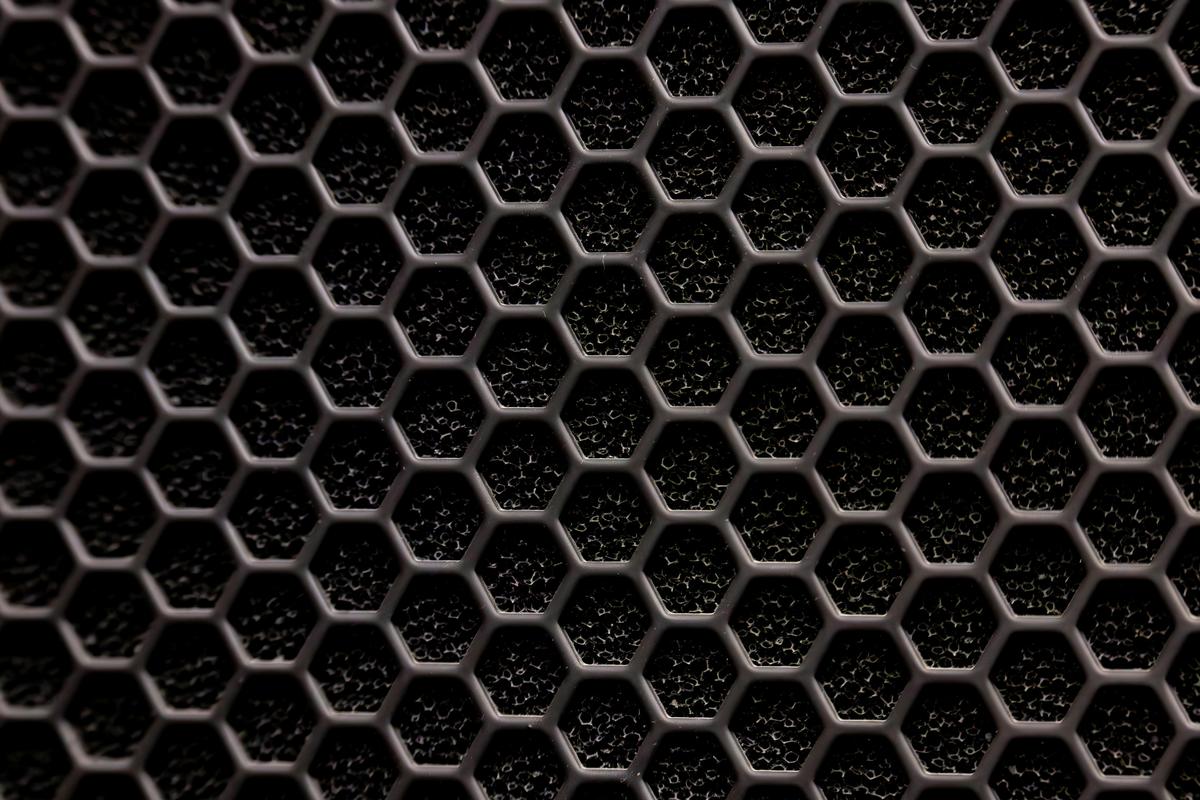
Drop a paddle and the edge takes the load. The edge guard, the face margin, and the core's outer wall form the structural weak plane of every paddle. Play reproduces the impact constantly: low dinks clipped into the court surface, paddles set down or dropped on concrete between games. Edge-guard separation is a visible warranty return, which is exactly why it deserves its own test; the guide to edge guard durability for club paddles covers the product side.
Two published methods anchor the setup. ASTM D7136/D7136M supplies the drop-weight impact principle for composites. ASTM D5276, the free-fall drop test for loaded containers, supplies the logic of setting drop severity by weight class. The exact height tables inside D5276 sit behind the standard's paywall, so the heights below are buyer-set.
Drop two paddles from 1.0 m — waist height, the kitchen-line slip scenario — onto a concrete slab or steel plate. Drop two more from 1.2 m as the severe case. Run each paddle edge-first on the guard side, face-flat, and throat-first. Weigh every unit before and after, and listen: a new rattle is a failed bond, not a cosmetic note.
Pass means no visible crack, no edge-guard separation, no new rattle, and mass unchanged beyond the scale's resolution. Any crack at the edge margin fails the unit even if the paddle still plays, because cracks propagate with moisture and impact. This test is cheap to run and catches the failure your customers photograph first.
Before you sign for 5,000 units, see how QC and testing run on the line. Walk the floor, watch the inspection stations at work, and ask what durability evidence the factory can show for the exact construction you are buying.
QC station walkthrough | Line-side testing review | Durability evidence on request
See our QC and testing evidence in personHeat and Humidity Soak for Container Transit
An ocean container is a climate chamber. Steel boxes swing through wide temperature ranges between port and destination. A rapid 8–10 °C temperature drop can push the air inside to saturation and trigger condensation, known as container rain. Moisture-damage risk climbs once relative humidity passes about 40%. Your paddles ride through all of it for weeks, glued and foamed.
The soak borrows a named method. IEC 60068-2-78 — Test Cab, damp heat, steady state — is the international standard for this conditioning, and its current edition dates to 2025. The standard defines the method, not your severity: the temperature and humidity levels below are a buyer-set acceptance threshold, chosen to bracket container conditions with margin.
Soak two paddles at 40 °C and 90–95% RH for a minimum of 96 hours, and for 168 hours if the order ships a hot-season route. Condition samples at standard laboratory conditions per ASTM D618 before the soak, and again before any re-test. ASTM D3045 — the practice for heat aging plastics without load — supplies the logic by analogy: sustained heat, no mechanical stress, defined duration. The soak adds humidity, which D3045 does not cover.
After the soak, run one unit through a short repeat-impact session, then inspect the bonds the moisture attacked: edge-guard adhesive, face-to-core bond, and on thermoformed paddles the fused edge wall. Adhesive joints that hold in the lab can let go after two weeks at sea. A unit that survives only dry has not been tested for your supply chain.
Torsional Load Test on Throat and Handle
Off-center hits twist the head around the handle axis, and the throat joint carries that load every time. Blocked drives and late volleys load it hardest. The field failures are handle twist-out and cracks at the throat junction — both expensive, both invisible until they happen in a customer's hand.
Run a static torque hold and a short cyclic twist on a fixture that grips the handle and turns the head. The torque level is buyer-set, and the derivation belongs in the protocol. Assume a peak reaction of 50–80 N at the face edge, roughly 0.19 m from the handle axis: the joint sees 9.5–15.2 N·m. Hold 20 N·m for 60 seconds, then run 500 cycles at ±10 N·m.
Measure head angle before and after. Pass means no permanent set, no crack at the throat junction, and no grip rotation relative to the blade. Torsion is the cheapest rig in this protocol. A protractor, a lever, and a calibrated force gauge will build it — and it covers the failure mode nobody else tests at all.
Sampling Plan for Destructive Durability Tests
Durability testing destroys the unit, so it never shares a sample pool with appearance inspection. Pre-shipment AQL sampling checks look and dimension across a statistical draw; destructive testing runs on a small, deliberately chosen set. Two programs, two sample pools, one lot.
Pull samples from at least three cartons and two production days, because resin lots and press operators change across a run. Include the heaviest and lightest units inside your weight tolerance band: extremes of core density are where cell crush and dead spots concentrate. Never accept a sample the factory selected and packed on its own.
| Lot size | Paddles destroyed | Logic |
|---|---|---|
| Up to 500 | 2 | One severe-case unit per test family, shared where possible |
| 501–2,000 | 3 | Dedicated impact unit plus shared drop and soak units |
| 2,001–10,000 | 4–6 | Each test gets a dedicated unit; one kept untested as reference |
These counts are buyer-set guidance: each destroyed unit costs one paddle but protects thousands. Every result is compared against the golden sample — the approved pre-production unit that anchors the build spec, held in your control per the golden sample approval process. If the golden sample and a lot unit diverge on weight or ring tone before testing starts, you already have your answer.
Writing Durability Pass Criteria Into the PO
A protocol only binds when it sits in the purchase order. Write each test as one clause line with six fields: method and reference, exact parameters, pass criterion, sample count and source, executor, and cost owner. Spell out velocity, cycles, temperature, and torque in the parameters field. Vague language — "paddle must be durable" — is unenforceable. "3,000 impact cycles at 60 MPH with inspection every 1,000 cycles" is enforceable.
Three execution models work. The factory runs it in-house with witnessed video: cheapest, and only as honest as your witness. A third-party lab or inspection agency runs it: neutral, billable, and the report carries weight in a dispute. You witness the run yourself during a factory visit: best evidence, highest travel cost. Pick by order value — a 5,000-unit order justifies the lab.
Whichever model you choose, request the same evidence pack. Rig photos with the sample mounted, cycle logs with timestamps, before-and-after photos of each unit, and calibration records for every gauge used — torque wrench, scale, temperature logger. A report without calibration data is a claim, not a measurement.
A factory visit exists for exactly this: seeing the rig, the logs, and the person who operates them. If a supplier cannot show durability evidence on site, the clause in your PO will be as thin as the test behind it. A factory tour verifies it before money moves.
When a lot does fail, recovery depends on the negotiated warranty. The durability clause and the bulk paddle warranty terms should reference each other.
Conclusion
Certification tells you a sample met a point-in-time spec. Your protocol tells you the lot will survive play, drops, and the ocean crossing. Four tests, written into the PO, close the gap no regulator covers.
- Rule 2.F.2.a requires compliance over the paddle's entire useful life, and no fatigue test enforces it before shipment. The buyer's protocol is the enforcement.
- Set the thresholds in writing: 3,000 impact cycles at 60 MPH baseline, and drops from 1.0 m and 1.2 m. Soak at 40 °C / 90–95% RH for at least 96 hours, and hold 20 N·m of torque.
- Destroy samples pulled from multiple cartons and production days, never the factory's own selection, and compare every result against your golden sample.
- Every clause names its method, parameters, pass criterion, sample count, executor, and cost owner. Anything less is unenforceable.
If you want to see these rigs and records before you sign, walk the line first. Book a factory tour and inspect the durability evidence in person.
Frequently Asked Questions
How many hits should a pickleball paddle survive in a repeat-impact test?
No governing body publishes a required hit count, so the number is buyer-set. This article's protocol sets 3,000 cycles at 60 MPH — derived from roughly 2,400 hard strikes per league season plus 25% margin — with inspections every 1,000 cycles.
Can I run durability tests on paddle samples without a lab?
Partially. Edge drops and a supervised hitting session need no lab equipment. Repeat impact at a controlled 60 MPH needs a ball machine and a fixture, and the soak needs a climate chamber — a third-party lab's job.
Does USA Pickleball approval mean a paddle is durable?
No. Approval tests are point-in-time measurements on submitted samples. Rule 2.F.2.a requires the paddle to stay compliant over its useful life. Enforcement relies on post-market review and revocation under Rule 2.F.1 — not fatigue testing of your production lot.
Which of the four durability tests best predicts field returns?
Repeated ball impact, because it exercises the face-core bond and the sweet-spot core cells where most field failures start. Pair it with the edge drop if your channel is club and recreational play, where court contact dominates.
Who pays for third-party durability testing on a paddle order?
Negotiate it in the PO before the order is placed. A common split: the buyer funds the first protocol run on samples, and the factory absorbs retest and rework costs when a lot fails the agreed criteria.
Want to source this quality for your brand?
Contact our factory directly on WhatsApp for an instant MOQ and pricing quote.