Prop 65 for Importers: Warnings, Limits, Liability
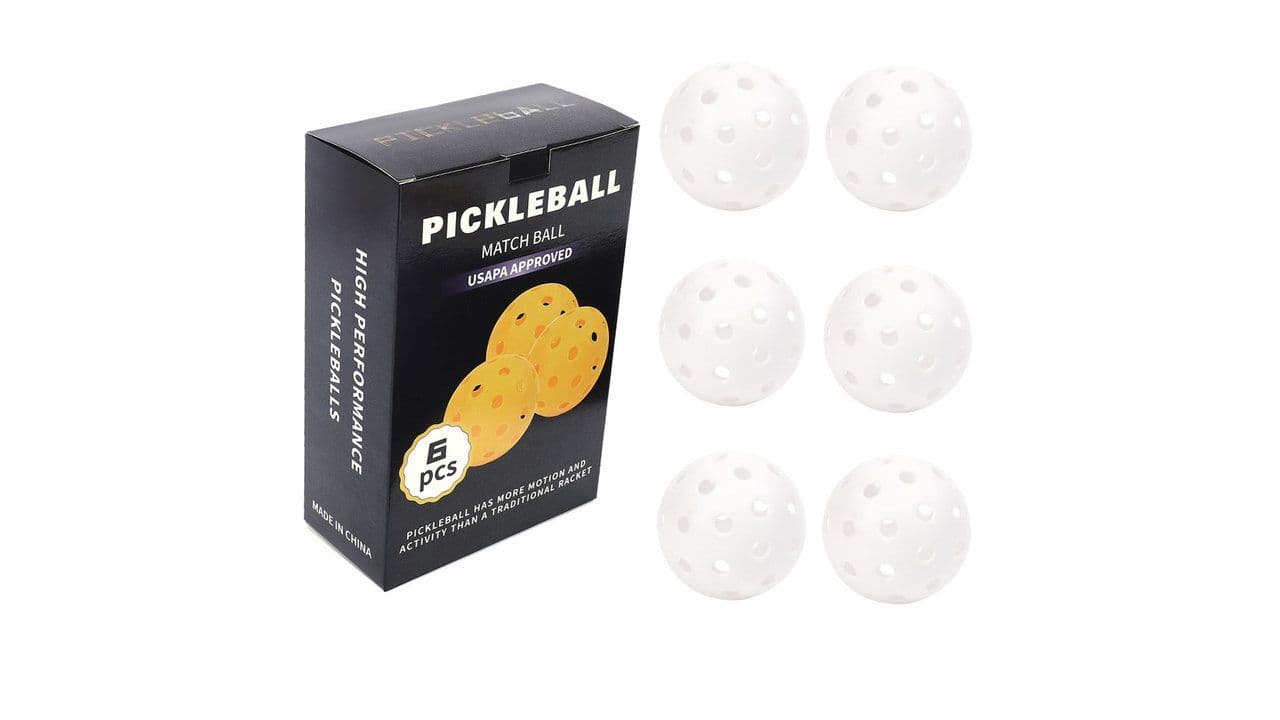
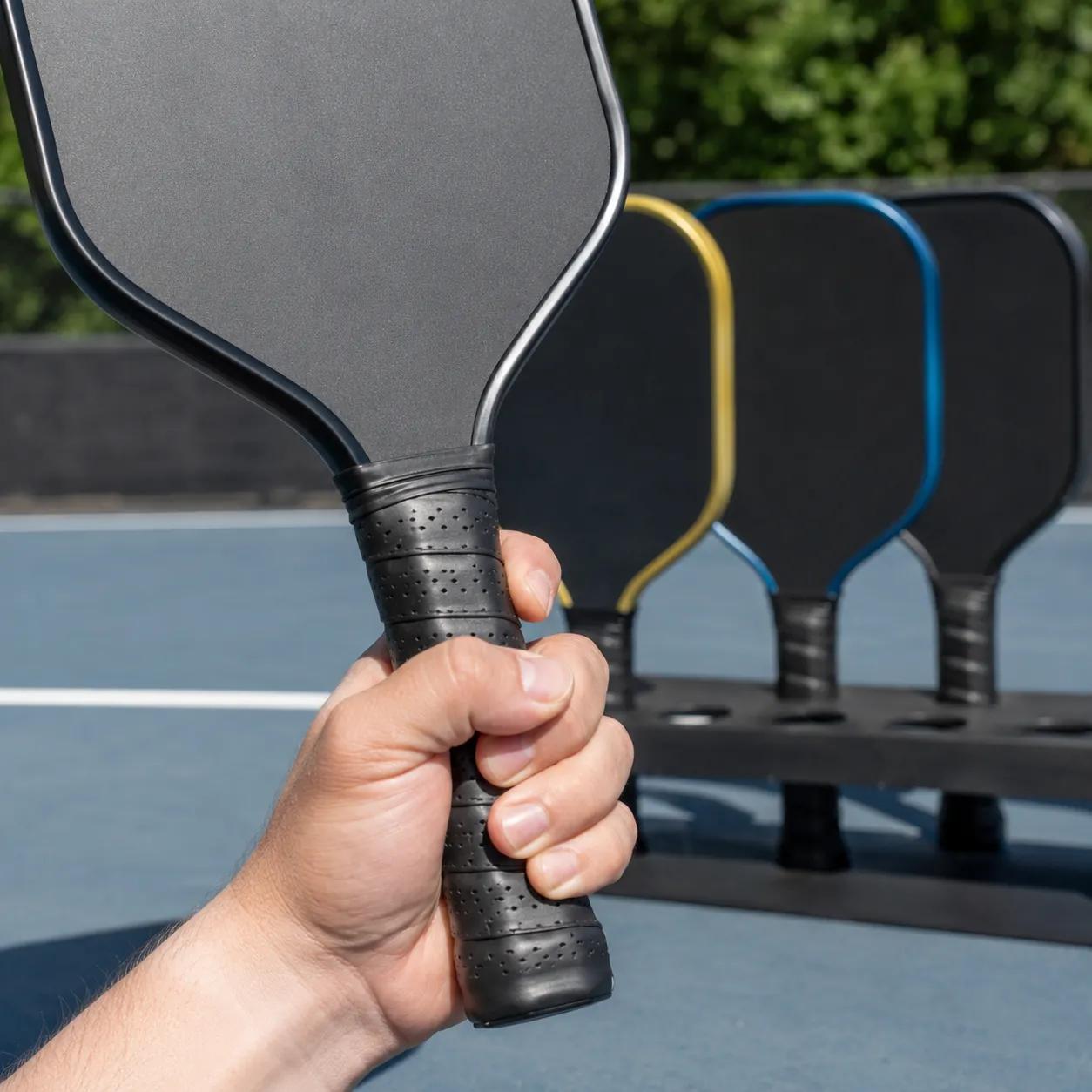
Search the California Attorney General’s public 60-day notice database for “pickleball” and it returns no records. Search the same field for “grip” and the results run for pages. DEHP in vinyl tool grips. DINP in a Wilson Sporting Goods grip, notice AG 2025-01378, filed 1 May 2025. Hexavalent chromium in Meister Elite weight-lifting grips sold through Target, notice AG 2026-01452. Private enforcement has not reached this category. It reached the component every paddle is finished with some time ago.
The short answer for an importer. Proposition 65 is a warning law, not a content limit. California Health and Safety Code section 25249.6 lets you sell a product containing a listed chemical. What it forbids is knowingly exposing a Californian to that chemical above its published safe-harbour level without a clear and reasonable warning.
The duty has an order. Under 27 CCR 25600.2 it lands on the manufacturer, producer, packager, importer, supplier and distributor before it reaches the retail seller. In practice that means the US importer of record, not the factory in Asia. The warning wording itself changed on 1 January 2025, and stock manufactured and labelled on or after 1 January 2028 has to carry the new text.
Key Takeaways
- The test is a daily dose, not a percentage of the part. Lead’s MADL is 0.5 micrograms a day, or 0.0000005 g of intake. Content limits belong to CPSIA and REACH.
- The importer of record carries it. 27 CCR 25600.2 names the upstream chain first and gives the retail seller only placement, maintenance and a five-business-day cure.
- Grips are where the enforcement already is. DEHP and DINP notices on vinyl and PVC grips are filed continuously; nothing on record names a pickleball paddle yet.
- 1 January 2028 is a manufacture-and-label date. Old artwork is grandfathered by when the goods were made, not by when they sell through.
- Your listing is a second surface. 27 CCR 25602(b)(1) puts a separate warning duty on the product display page.
On this page
- Whether your SKU needs a warning at all
- Where the listed chemicals sit in a paddle, a ball and a net
- Who actually owes the warning
- The short-form warning changed, and 2028 is the deadline
- Your product page is a second warning surface
- What a 60-day notice does to a purchase order
- What to write into the supply contract
- Where we stop, and where an advisor starts
Five minutes of orientation first. The clip below walks through the amended warning-label rules this page then applies to a bill of materials.

Whether Your SKU Needs A Warning At All
Most importers reach for the label too early. The duty attaches to an exposure, and California publishes the numbers that define one.
The Office of Environmental Health Hazard Assessment sets two kinds of safe-harbour levels: a No Significant Risk Level for chemicals listed as carcinogens, and a Maximum Allowable Dose Level for chemicals listed as reproductive toxicants. An exposure at or below the published level needs no warning. Both are expressed as micrograms of intake per day.
That unit is what trips up buyers arriving from a CPSIA or REACH background. Lead’s MADL is 0.5 micrograms a day, roughly 0.0000005 g of daily intake. The number says nothing about how much lead is in the part. A bill-of-materials percentage will not answer it.
What An Exposure Assessment Actually Measures
A safe-harbour comparison is not a lab result you can order off a price list. The assessment estimates how much of the chemical a person takes in during ordinary use: how long a hand sits on the grip, how much migrates onto skin in that time, how often the product is played with. Assume a paddle held for 90 min, three sessions a week, and you get one number. Assume a hand tool picked up twice a year and you get another.
The same grip compound can land on either side of the line depending on which use pattern is assumed. Sorting that out is the work a qualified advisor does. A supplier’s material declaration is an input to the answer, not the answer.
Where OEHHA has published no level for a listed chemical, the business has to establish the level itself, which is the practical reason so many importers warn instead of test.
Two exemptions are worth knowing before you spend anything. A business with fewer than 10 employees sits outside the requirement, and 27 CCR 25102(h) counts every full-time and part-time employee on the date the exposure occurs. And a newly listed chemical carries a grace period: the warning duty begins 12 months after listing, with the discharge prohibition following at 20 months. The list itself is republished as chemicals are added, and the version current when this page was written carries the list date 31 July 2026.
Where The Listed Chemicals Sit In A Paddle, A Ball And A Net
Read the notice database by component rather than by category and the risk map for pickleball gear draws itself. Grips, coatings and PVC-coated fabric carry it. The carbon face and the polypropylene core, so far, do not.
Bureau Veritas, aggregating the Attorney General’s own records, reported that 50% of all 60-day notices in the first quarter of 2025 named metals, with 411 for lead alone, and a further 24% named phthalates. That mix maps almost exactly onto the soft, printed and plated parts of sporting goods rather than onto their structural parts.
| Component | Listed chemical | Safe-harbour level (µg/day) | Filed notice on this component class |
|---|---|---|---|
| PVC or PU grip wrap | DEHP | NSRL 310 | AG 2026-01021, Fit RX grip wraps |
| Overgrip, moulded handle sleeve | DINP | NSRL 146 | AG 2025-01378, Wilson Sporting Goods grip |
| Printed graphics, inks, decals | Lead | MADL 0.5; NSRL 15 oral | AG 2025-03522, hand tools with grips |
| Plated hardware, edge-guard fixings | Cadmium | MADL 4.1 oral; NSRL 0.05 inhaled | None on record for paddle hardware |
| Epoxy face coat, some ball resins | Bisphenol A | MADL 3 dermal, solid materials | None on record for paddles or balls |
| PVC-coated net fabric, vinyl bags | DEHP | NSRL 310 | AG 2025-01285, vinyl cases and hoses |
Two cautions about that table. DEHP’s MADL is route- and age-specific and spans roughly 20 to 4,200 micrograms a day across OEHHA’s scenarios, so the single NSRL figure is the honest one to quote. And an empty cell in the last column records the absence of a filed notice, not the absence of a chemical. If a paddle line is being specified from scratch, the grip is the part to specify first.

Who Actually Owes The Warning
This is the section importers get wrong, and it is the reason a factory’s reassurance is worth so little.
27 CCR 25600.2 sets the order. Primary responsibility sits with the manufacturer, producer, packager, importer, supplier or distributor. Each of those parties discharges it one of two ways: by putting the warning on the product label or labelling, or by sending written notice with the warning materials to the authorised agent of the downstream business and getting an acknowledgment back. The retail seller’s duty is narrower, covering the placement and maintenance of warning materials it receives under section 25600.2(d), and a store served with a notice has a five-business-day cure period under section 25600.2(f).
Nothing in that chain excuses an overseas manufacturer in principle. In practice a private enforcer sues the parties a California court can reach and a settlement can bind. That is the US importer of record, its distributor and the retailer, and the exposure a notice prices at up to 2,500 USD per day for each violation. Your supplier agreement is what moves the cost back upstream. The regulation itself does not.
The Acknowledgment Nobody Collects
The common version runs like this. A brand asks its factory whether the grips are Prop 65 compliant, gets a one-line email back saying yes, and files it. That email is not the 25600.2 mechanism. The mechanism needs warning materials sent to a named authorised agent, and an acknowledgment recorded coming back, and a plaintiff’s first document request will show whether either exists. A brand holding 12 months of acknowledgments has a record of where the duty sat. A brand holding a reassurance email has proof that the question was asked and never answered.
The one thing a factory can genuinely do for you is the 25600.2 notice route: send you the warning materials in writing, and take your acknowledgment. Written into a purchase order, that turns a verbal assurance into an allocation of duty. Left out, the acknowledgment never happens and every party assumes someone upstream handled it.
The Short-Form Warning Changed, And 1 January 2028 Is The Deadline
The Office of Administrative Law approved the amended warning regulations on 26 November 2024, and they took effect on 1 January 2025. Of the four page-1 importer guides measured for this article on 4 September 2026, 100% still show the pre-amendment short-form text as current.
The change that matters commercially is naming. The legacy short-form warning let a label say “Cancer and Reproductive Harm” and stop; the amended version requires the name of at least one listed chemical for each endpoint being warned about. A paddle programme that warns generically today has to decide, before 2028, which chemical it is willing to print on the handle. That decision usually sends the question back to the grip supplier, which is the point of the rule.
| Element | Legacy short form | Amended short form |
|---|---|---|
| Symbol | Yellow triangle, black exclamation point | Unchanged |
| Signal word | WARNING | WARNING, CA WARNING or CALIFORNIA WARNING |
| Chemical named | Not required | At least one listed chemical per endpoint |
| Wording, both endpoints | Cancer and Reproductive Harm – www.P65Warnings.ca.gov | Risk of cancer and reproductive harm from exposure to [chemical]. See www.P65Warnings.ca.gov |
| Minimum type size | 6 point | 6 point |
| Usable until | Goods made and labelled before 1 January 2028 | Available now, required after that date |
Read the last row precisely. 27 CCR 25603(c) grandfathers products “manufactured and labeled prior to January 1, 2028… regardless of when the product is sold”. It is a production date, not a sell-through date, so a container that leaves the factory in December 2027 keeps the old artwork for the life of the stock, and one that ships in February 2028 does not. Paddle artwork and tooling cycles being what they are, the practical deadline for a private-label brand is the last artwork release before that production window, not the date itself.
Your Product Page Is A Second Warning Surface
A correct label does not cover an online sale. 27 CCR 25602(b)(1) treats the internet purchase as its own exposure. It asks for the warning on the product display page, or a clearly marked hyperlink using the word WARNING, CA WARNING or CALIFORNIA WARNING, or the warning shown to the buyer before the purchase completes. Section 25602(c) applies the same logic to a printed catalogue, where the warning has to be associated clearly with the item being bought.
The Reseller Problem
Take the case that actually bites. You warn correctly on the box. Your own store shows the warning on the product page. Then a distributor lists the same SKU on a marketplace with your images and an empty warning field. The listing is an exposure, your brand is on the carton, and the cure window of 5 days in 25600.2(f) belongs to the store rather than to you. Naming the required display text and the WARNING hyperlink wording in your distribution terms costs a paragraph. Recovering the cost afterwards depends on an indemnity you either wrote or did not.
For a brand running its own storefront this is a template edit. For a marketplace listing it is a governance problem: you are responsible for a field you may not fully control, and a reseller who lists your SKU without the warning creates an exposure with your name on the box. Naming the required display text in your distribution terms is cheaper than arguing about it after a notice lands.

What A 60-Day Notice Does To A Purchase Order
Proposition 65 is enforced by the Attorney General, district attorneys and, in most cases, by private parties suing in the public interest. The private route has a fixed shape, and knowing it removes most of the panic from the first letter.
One detail in that sequence changes how the first letter should be read. Under 11 CCR 3100 the notice has to arrive with a Certificate of Merit attached, plus a separate Attorney General copy carrying the supporting documentation. Under 11 CCR 3101 and 3102 the certifier must declare that consulted experts reviewed the exposure data and that the case is reasonable and meritorious. None of that file has to be shown to you. The practical consequence is that a test result usually exists before you hear about it, so the productive first question is which lot and which component it describes, rather than whether the claimant has any data at all.
| Stage | What happens | Authority |
|---|---|---|
| Notice served | 60 days notice to you and the Attorney General | H&S 25249.7(d) |
| Certificate of merit | Expert review of exposure data attached to the notice | 11 CCR 3100 to 3102 |
| Retailer cure | Store has five business days to post your materials | 27 CCR 25600.2(f) |
| Penalty ceiling | Up to $2,500 per day for each violation | H&S 25249.7(b) |
| Penalty split | 75% to OEHHA, 25% to the private plaintiff | H&S 25249.12(c)(1) |
| Settlement | Reported to the Attorney General; fees reviewed by the court | 11 CCR 3003, 3008, 3201 |
What The First 60 Days Look Like
Operationally, the notice reaches your retailer as often as it reaches you, and the retailer’s reflex is to stop shipping the SKU and open a chargeback. Those 60 days are the window in which a claim can be resolved before an action is filed. The useful work in it is documentary: which component, which lot, which supplier declaration, and whether a warning was in fact given. A brand that can produce a dated per-component declaration on day 3 is in a different negotiation from one starting a document hunt.

The split in that table explains the economics better than any settlement average. A private plaintiff keeps 25% of penalties, so the money in these cases is in the negotiated fee award, which the Attorney General’s regulations subject to review against Code of Civil Procedure section 1021.5 and a lodestar test.
Nor is the settlement a private matter between the two of you. Under 11 CCR 3003 and 3008 the enforcer has to serve the Attorney General with the settlement and a Report of Settlement form, and a motion for judicial approval of a section 25249.7(d) settlement requires 45 days notice to that office. That oversight is why the published record of these cases is as complete as it is, and why a settled notice against a comparable component is something an importer can actually read before deciding what a demand is worth.
One settled example on the public record shows the shape: AG 2025-01285, Summit Tool Company, resolved on 19 March 2026 for a 500 USD civil penalty against 17,500 USD in attorney fees and costs, 18,000 USD in total, without going to court. That is one settlement rather than an average, and averages for this are not published. That is also why notices cluster on cheap, repeatable product classes. A vinyl grip is easy to buy, easy to test and easy to compare against a published NSRL. It is also why a paddle importer with a broad catalogue and one uncontrolled grip supplier is a more attractive defendant than a single-SKU brand.
What To Write Into The Supply Contract Before The Next PO
Everything above turns into four clauses. None of them requires a testing budget on day one.
- A per-component material declaration. Ask for it by component, keyed to the chemicals in the table above, rather than a single statement for the finished paddle. The finished good is not what gets tested by a plaintiff; the grip is.
- Upstream documentation, held not promised. Safety data sheets and any existing test reports from the grip, ink, coating and hardware vendors, with the version and date, delivered up front, before the first shipment, rather than hunted down inside the 60 days a notice gives you.
- The 25600.2 notice mechanism, written in. If the supplier chooses to warn by notice rather than by label, the terms should say who sends the warning materials, to which authorised agent, and how the acknowledgment is recorded and renewed.
- Artwork control and the 2028 relabel. Name who owns the plate change, who pays for it, and which party is on the hook if a 2028 production run leaves with legacy short-form text. This is a costed obligation, not an assumption.
If the same programme is also entering Europe or being sized for children, solve those surfaces in the same week. Our CE, CPSIA and REACH guide covers the market-by-market picture. The children’s-product test decides whether a junior paddle pulls a different testing regime, and origin marking sits on the same artwork release, covered in where the Made In mark goes on a paddle.
A factory that already builds to a declared bill of materials can answer clause one from the OEM programme file rather than chasing it after the PO is placed.
For importers and distributors placing a private-label paddle or ball programme: the grip, ink and coating vendors are named in the build sheet here, so a per-component material declaration is a production input rather than a document hunt after the fact.
Where We Stop, And Where A Compliance Advisor Starts
This page explains the published clauses and the published numbers. It is sourcing guidance, and it is not legal advice on your own SKUs. Whether a specific paddle creates an exposure above a safe-harbour level is an exposure-assessment question. It turns on materials, use pattern and test data. A qualified Proposition 65 advisor is the right person to answer it, before you either print a warning or decide not to. The gap between those two answers is priced at up to 2,500 USD per day for each violation, which is usually enough to pay for one opinion.
Three things change the answer. A new listing brings a chemical inside the scheme and starts the 12-month clock; the list has been accreting for 40 years and is republished as entries are added. A newly published or revised safe-harbour level moves the threshold under a product that has not changed. And any substitution in the grip, ink, coating or hardware resets the assessment, even when the paddle looks identical on the shelf.
Frequently Asked Questions
Does Proposition 65 apply to my Chinese factory or to me?
27 CCR 25600.2 places primary responsibility on the manufacturer, producer, packager, importer, supplier and distributor. A private enforcer in California generally proceeds against the parties it can serve and bind, which is normally the US importer of record and its customers. Moving that cost back to the factory is a contract question, not a regulatory one.
Can I just put a warning on every SKU and stop worrying?
Over-warning is common, and it has costs: a warning is a statement about your product that retailers, marketplaces and buyers read, and the amended short-form now requires you to name a chemical rather than warn generically. From 2028 that means printing a specific chemical name on goods you may never have tested.
Does a CPSIA phthalate test report satisfy Proposition 65?
No. CPSIA sets a content limit in children’s products; Proposition 65 asks about a daily exposure measured against an NSRL or MADL. A report showing DEHP content below a CPSIA limit does not by itself establish that exposure falls below the 310 microgram-a-day NSRL, although it is useful evidence to hold.
When exactly does the old short-form warning stop being usable?
27 CCR 25603(c) allows the legacy content on products manufactured and labelled before 1 January 2028, regardless of when they are sold. Goods produced on or after that date need the amended wording, which includes naming at least one listed chemical for each endpoint.
Have any pickleball products actually been targeted?
A product-term search of the Attorney General’s 60-day notice database on 4 September 2026 returned no records for pickleball or paddle. The same search for grip returned a long list dominated by DEHP and lead, including a notice against Wilson Sporting Goods over a grip. The component class is being enforced even though the category has not been named.
What does a 60-day notice cost if it lands?
Statutory penalties run up to $2,500 per day for each violation, split 75% to OEHHA and 25% to the plaintiff, so the negotiated attorney fee is usually the larger number in a settlement. Fee awards are reviewed against Code of Civil Procedure section 1021.5 under the Attorney General’s regulations.
Conclusion
The expensive version of this is not the penalty. It is a notice that lands while a container is still on the water, against a SKU whose grip supplier changed between runs and whose material declarations were never collected. Statutory penalties reach 2,500 USD per day for each violation, but the one settled case on this page shows where the money goes: 500 USD in penalty against 17,500 USD in fees and costs. An exposure claim is cheap to allege and slow to disprove once the goods have shipped.
Two clocks make that worse if they run unattended. A newly listed chemical starts a 12-month warning duty under a product that has not changed at all, and 1 January 2028 is a manufacture-and-label date rather than a sell-through date, so the operative deadline is the last artwork release before that production window. A programme that cannot name the chemical it would print, the component that chemical sits in, and the dated declaration behind it has not answered the question yet. The 60 days a notice gives you is an expensive place to start answering it.
Want to source this quality for your brand?
Contact our factory directly on WhatsApp for an instant MOQ and pricing quote.