Aramid (Kevlar) Hybrid Paddle Faces: What They Cost a Factory to Build
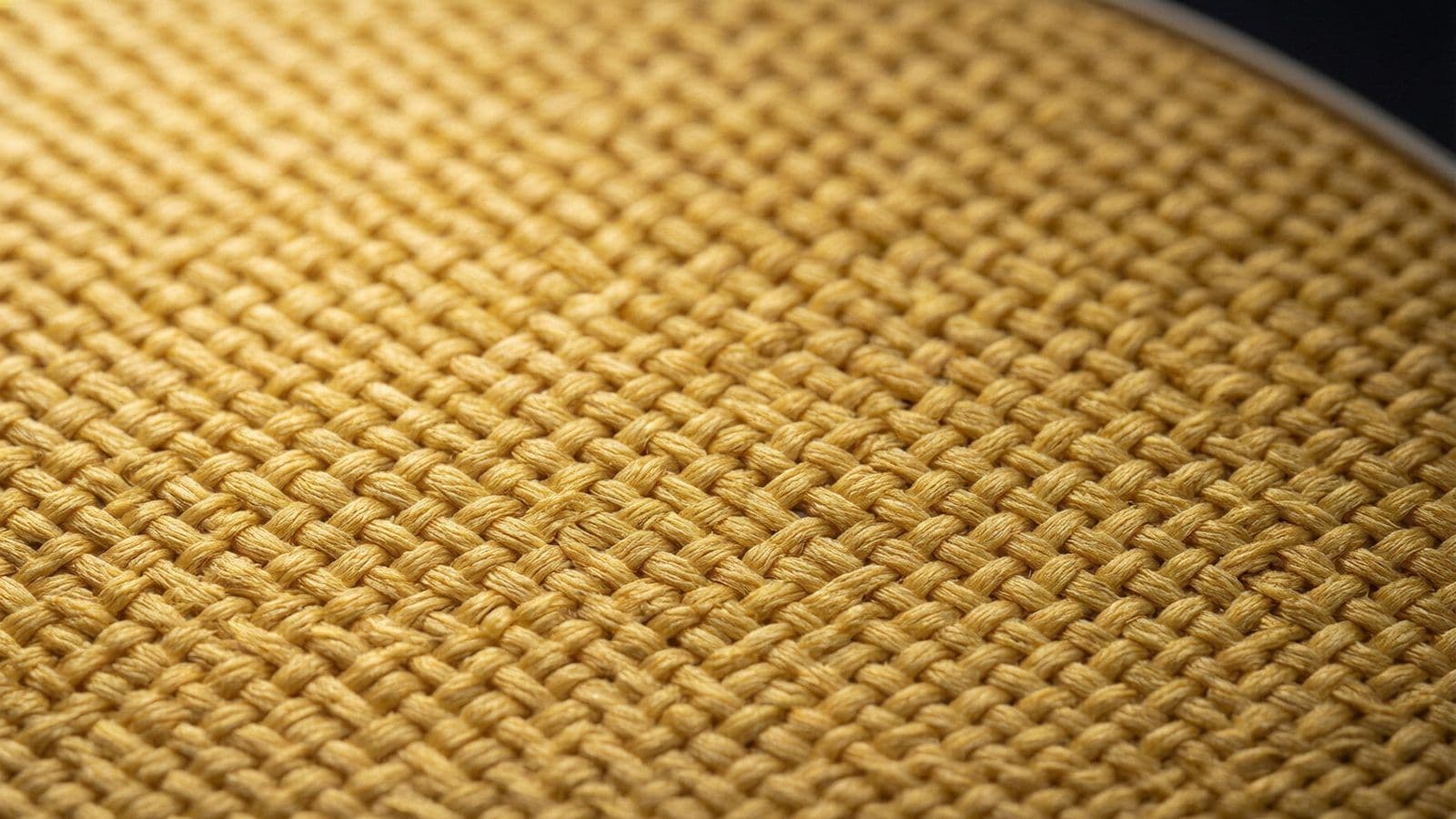
An aramid face changes three things on a paddle production line, and none of them is the marketing story. Aramid fibres do not shear cleanly at the cut edge the way carbon does, so cutting slows down, blades dull faster, and the scrap allowance around each blank grows. Aramid will not take an applied grit or a peel-ply texture the way a raw carbon weave does, so the spin surface has to be built into the layup as a resin-rich layer rather than blasted on after cure.
And aramid is weak in compression relative to its own tensile strength, which is why the version of this face that most brands should order is not a pure aramid skin but an aramid-carbon hybrid. This guide is about those factory-side consequences: what an aramid face costs a line to build, where the cost comes from, and how to write the specification so the face you approve is the face you receive.
- An aramid face is legal in principle — the fibre is not prohibited — but the rulebook constrains the surface, not the material. Spin has to come from a compliant finish, never from added texture or anti-skid paint.
- The real cost driver is not the raw fibre. It is the cutting scrap allowance, the surface-finish step, and the extra handling aramid needs to stay inside the roughness limit.
- Pure aramid is usually the wrong order. An aramid-carbon hybrid keeps the feel and the story while letting a carbon layer carry the compressive load and the durable spin surface.
- What aramid actually is on a paddle face
- Why brands put aramid in a face at all
- Is an aramid face legal? What the rulebook constrains
- What aramid does to the cutting step
- Why you cannot grit an aramid face like carbon
- Pure aramid vs aramid-hybrid: the order most brands make
- What to put on the spec sheet
- MOQ, sampling and lead time
- Should your line order an aramid face at all?
What Aramid Actually Is on a Paddle Face
"Aramid" is a fibre family, not a single product. The name is short for aromatic polyamide, and the fibres used in a paddle face are para-aramids — chemically poly(1,4-phenylene terephthalamide), usually abbreviated PPTA. Kevlar is the best-known brand; DuPont introduced the first such fibre under that name in the 1960s. Twaron is a second manufacturer's trade name for much the same chemistry. When a supplier quotes you an "aramid face," the honest question back is always: which aramid, and which grade?
The grade matters because para-aramid is sold in distinct variants tuned for strength, modulus and thermal resistance. Kevlar 29 is the standard grade for cables, parachutes and general reinforcement; Kevlar 49 is a high-modulus type for stiff composite parts; Kevlar 149 is an ultra-high-modulus grade for advanced composites; and KM2 is a toughness-oriented grade built for armour.
These are not interchangeable. A face built from a high-modulus grade behaves differently at the press and at the edge than one built from a standard grade, and the price band differs too. A spec sheet that says "aramid" without naming a grade is one a factory can satisfy in several ways you did not intend.
Two properties explain both the appeal and the difficulty. Para-aramid has very high tensile strength at very low weight, with high stiffness, low creep and low elongation at break — the profile that makes it famous in ballistic armour and aerospace. But the same fibre that is exceptionally strong in tension is comparatively weak in compression, and it degrades under ultraviolet light. Those two limitations, not the strength, are what shape every manufacturing decision that follows. They are also why the fibre is so often paired with carbon in a paddle face rather than used alone.
It is worth separating this material question from a different one the market keeps blurring. "Aramid" and "carbon" are genuinely different fibres. "Graphite" and "carbon fiber," by contrast, are largely the same marketing category sold under two words — a confusion our own graphite-vs-carbon-fiber face guide exists to clear up. An aramid face is a real material choice; a "graphite vs carbon" face usually is not.
Why Brands Put Aramid in a Face at All
The pull is mostly marketing, and there is nothing wrong with that if the engineering is honest. Aramid carries an armour-grade reputation. A brand launching a premium line can put "aramid-reinforced face" on the box and the buyer immediately pictures body armour and aerospace — exactly the association the material earns. In a catalogue full of identical-looking carbon paddles, that story has real shelf value.
There is a mechanical reason underneath it too. Because aramid is so light for its strength, a designer can place reinforcement where it is needed without spending the whole weight budget on the face; the saved grams move into the handle, the edge guard or the swing-weight balance. Aramid's low elongation also contributes a lively feel at impact that players call "pop." That feel is a player-experience question, covered more completely in our paddle materials overview. This guide is about the other half of the trade: what it costs the line to produce.
The honest framing for a buyer: aramid buys a story and a weight-saving lever. It does not buy free performance, and it carries a manufacturing penalty. The brands that get burned order it for the brochure and discover, at the cutting table and the finishing bench, that the brochure was the cheap part.
Is an Aramid Face Legal? What the Rulebook Actually Constrains
This is the question that surprises people, because the answer is the opposite of what the marketing implies. An aramid face is not a legality problem at the material level. The 2026 USA Pickleball Official Rulebook requires, in clause 3.D.4, that a paddle be "made of material deemed safe and not prohibited by these rules" and of "rigid, non-compressible material meeting the criteria specified in the USA Pickleball Equipment Standards Manual." Para-aramid composite is neither prohibited nor compressible in the way the rule targets. A rigid aramid-composite face clears that bar in principle.
The constraint is the surface, and it is strict. Clause 3.D.5 lists what the hitting surface must not contain: holes, cracks, delamination or indentations that break the skin; rough texturing; sandpaper characteristics; natural or synthetic rubber; moving parts that can increase head momentum; and anti-skid paint. You cannot add grit. You cannot texture the skin. You cannot paint on an anti-skid layer to manufacture the spin that a smooth aramid surface will not give you on its own.
The Equipment Standards Manual sets the quantitative ceiling behind those prohibitions. The USA Pickleball roughness limit is an average no greater than 30 micrometres on Rz and 40 micrometres on Rt, read in six directions, with no single point above 33 µm Rz or 44 µm Rt. The manual also requires paddles to stay compliant across their entire useful life, "inclusive of any degradation to benefit" — so a surface that starts legal and then wears into extra grip is a failure, not a feature.
Those Equipment Standards Manual figures are published by USA Pickleball. The manual itself was not re-fetchable from this environment at the time of writing, so they are cited by name and paired here with the rulebook clauses above, which were.
The practical consequence is the rest of this article. Because you cannot add spin to aramid after the fact, it has to be engineered into the surface during layup — and held under a hard micrometre ceiling — while the fibre underneath is doing its best to fuzz, fray and degrade in the sun. The next two sections are where that gets expensive.
What Aramid Does to the Cutting Step
Carbon-fibre laminate is brittle. When a blade or a router cuts it, the fibres snap cleanly and the edge comes away sharp. Aramid is the opposite: tough, ductile, and famous for resisting exactly the kind of fracture that makes a clean cut. The fibres tend to fuzz and fibrillate at the cut edge instead of shearing, leaving a halo of loose filaments where a carbon edge would be crisp.
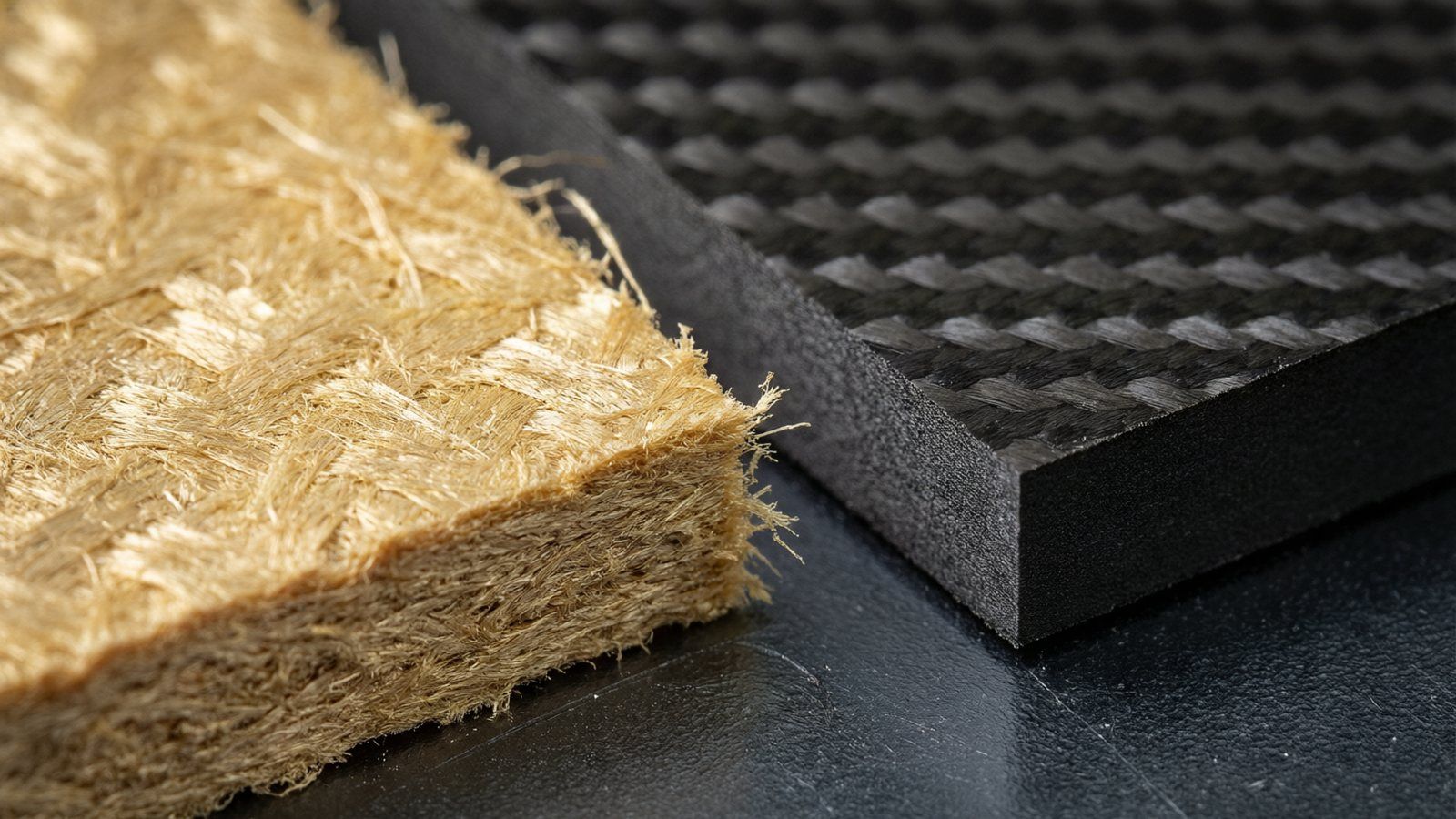
That behaviour has three cost consequences on the line. First, blades and cutters wear faster against aramid than against carbon, so tooling is consumed more quickly per hundred blanks. Second, the edge rarely comes off the cutter ready to bond; it usually needs a secondary trim or a sealing step to knock the fuzz down before the face can be mated to the core.
Third, and most important for the quote, the scrap allowance grows. A factory cutting aramid blanks typically leaves more margin around each part and rejects more edge-quality failures than it would on a carbon run, which means more raw material consumed per good paddle.
We are deliberately not printing a scrap-rate percentage or a blade-life count here, because those numbers are programme-specific: they move with the aramid grade, the weave, the core thickness, the cutter and the part geometry. Quoting a standing figure would be inventing precision we do not have.
What is stable is the direction — aramid raises cutting cost and cutting scrap relative to carbon — and the right way to get the magnitude is to ask for it per programme at the sample stage, in writing, against your own blank size. That request belongs on the spec sheet, which we come to below.
Why You Cannot Grit an Aramid Face Like Carbon
Here is where the legality section and the material section collide. On a raw carbon face, spin is commonly built by giving the weave a mechanical key — a peel-ply texture pulled at cure, or a light abrasive blast that opens the surface so the ball can grab. Carbon is brittle enough that this works: the surface micro-fractures into a controlled roughness that sits under the limit.
Aramid does not cooperate. A smooth, resin-rich aramid surface gives an applied grit very little to bite, and the fibre's ductility resists the brittle micro-fracture that makes a blasted carbon weave textured in the first place. The same toughness that makes aramid hard to cut makes it hard to texture.
And even if you could roughen it, remember clause 3.D.5: you are not allowed to add texture, grit or anti-skid paint to manufacture spin. So the only legal route to a spin-capable aramid face is to build the surface into the layup. In practice that means a controlled resin-rich surface layer — a thin, consistent skin whose roughness is set by the mould and the resin system, not by post-cure abrasion, and whose job is to land under the 30 µm Rz / 40 µm Rt ceiling and stay there for the life of the paddle.
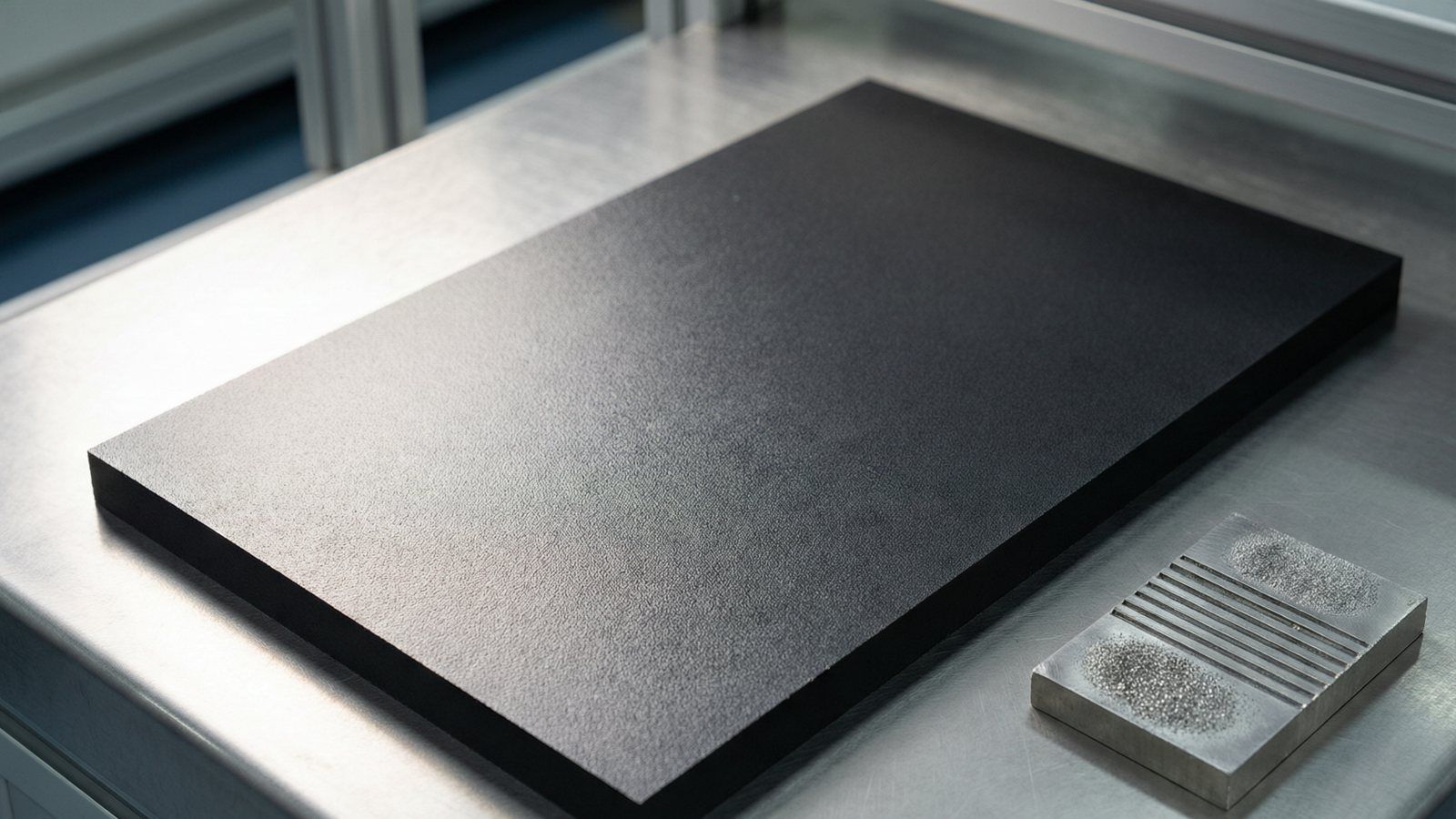
That is a harder, slower, more expensive step than blasting a carbon face, and it is the second place the cost hides. A resin-rich surface has to be consistent panel to panel, because a face that comes out of the mould too smooth has no spin and one that comes out too rough fails the meter. The process-control burden is higher and the reject band is tighter.
It is also the step most exposed to the rulebook's "compliant over the entire useful life" requirement: a resin-rich skin that wears down to reveal fuzzy aramid underneath is both a spin failure and a compliance failure. Aramid's known weakness under ultraviolet light is one more reason that surface layer has to do real work, sealing and stabilising the fibre beneath it.
Pure Aramid vs Aramid-Hybrid: the Order Most Brands Actually Make
Given the cutting penalty, the surface-finish burden and aramid's poor compressive behaviour, a 100% aramid face is rarely the right order. Aramid is strong in tension but comparatively weak in compression, and a paddle face spends a good part of its life being compressed at impact. A pure aramid skin asks that fibre to do the one job it is worst at, while also carrying the full cutting and finishing penalty.
The version that makes engineering sense — and the one most programmes should specify — is a hybrid: an aramid layer paired with a carbon layer, each doing what it is good at.
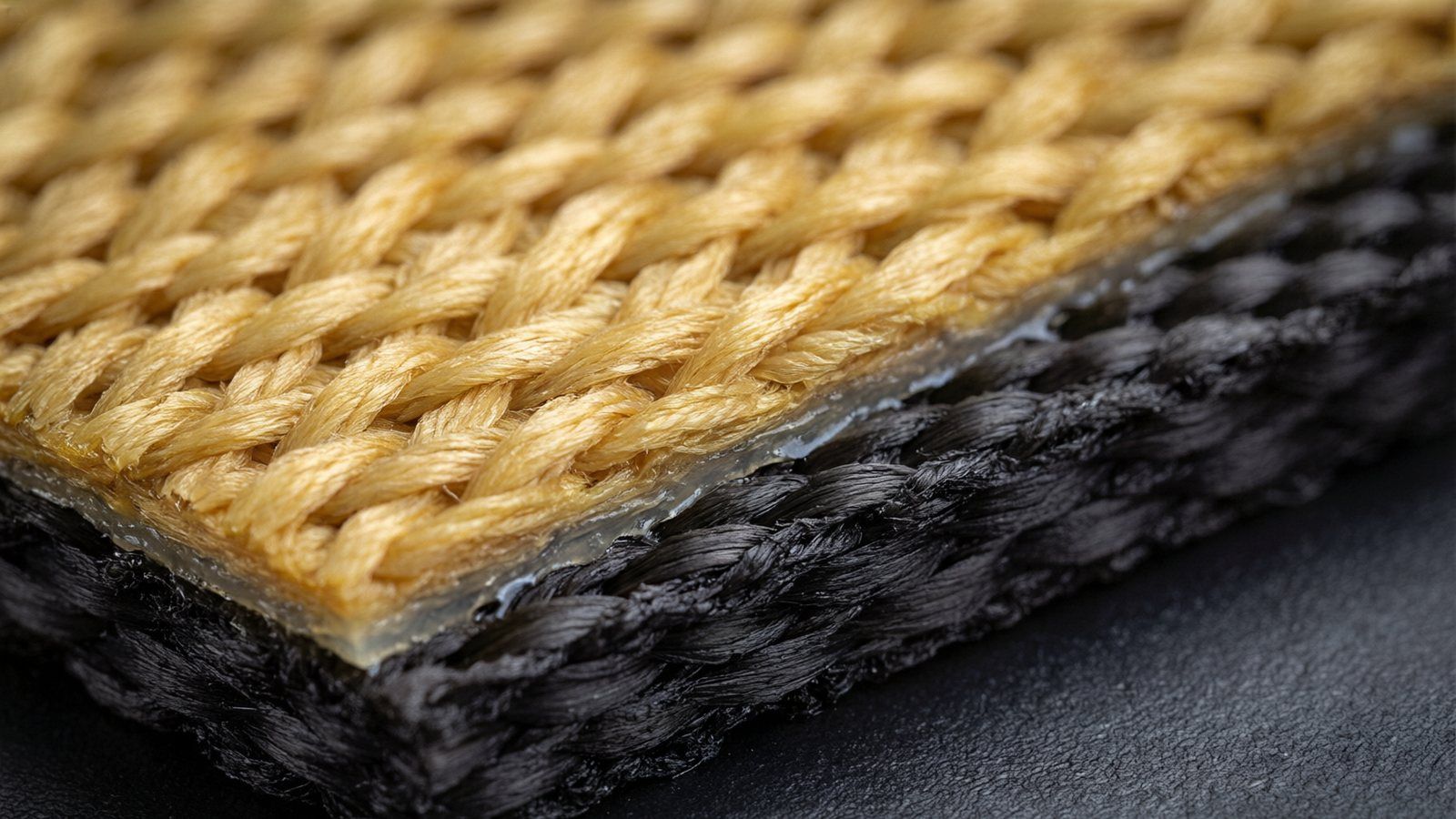
In a typical hybrid, the carbon layer carries the compressive load and provides the durable, controllable spin surface, while the aramid layer contributes its light weight, its toughness and its story. The result keeps the marketing and the feel that sold the programme in the first place, while letting carbon handle the two things aramid does badly. The decision a buyer actually makes is therefore not "aramid or carbon" — it is "how much aramid, and in what arrangement." The table below is built around that decision.
| Factor | Pure aramid face | Aramid-carbon hybrid face |
|---|---|---|
| Compressive load at impact | Carried by aramid, which is weak in compression | Carried by the carbon layer; aramid contributes toughness |
| Spin surface | Must be a resin-rich layup layer; hard to texture, tight process window | Carbon layer takes a durable, controllable finish; easier to hold under the limit |
| Cutting scrap allowance | Higher — every cut edge is aramid and fuzzes | Lower at the carbon-dominated edges; aramid still adds some allowance |
| UV / long-term surface stability | Aramid degrades under UV; surface layer must seal it fully | Carbon shields the aramid layer; less exposed fibre to stabilise |
| Marketing story | Full "aramid face" claim | "Aramid-reinforced" / "aramid-carbon hybrid" claim — still strong, and accurate |
| Best fit | A niche, story-led flagship where the full claim is the product | Most production lines — the story and feel with carbon doing the hard work |
For reference, the carbon side of that hybrid is the same material our catalogue is already built on. Our standard platform uses a 3K carbon face over a 16 mm polypropylene honeycomb core, and the 3K carbon fiber paddle is the running example of a face we cut, finish and certify at volume. Adding an aramid layer to that platform is a layup change, not a new factory.
What to Put on the Spec Sheet for an Aramid-Hybrid Face
Loose specifications survive first orders and drift on reorders. An aramid programme punishes that harder than a carbon one, because the things that can drift — grade, layer arrangement, surface roughness — are exactly the things that change both the cost and the legality. A spec sheet that says "aramid hybrid face" is an invitation to receive whichever hybrid was cheapest to make that week. The version below removes the wiggle room.
| Spec line | What to write | Why it matters |
|---|---|---|
| Fibre and grade | Named para-aramid grade (e.g. Kevlar 49 or equivalent), not just "aramid" | Grades differ in modulus, price and press behaviour; "aramid" alone can be satisfied several ways |
| Layer arrangement | Which layer is outermost, ply order, and which face carries the spin surface | Determines whether carbon or aramid carries compression and surface finish |
| Surface roughness target | A target under the USAP ceiling (≤30 µm Rz / ≤40 µm Rt) with a measurement method | The spin surface is a layup property; without a target it cannot be held panel to panel |
| Core and construction | Core material and thickness; thermoformed unibody or cold-pressed | Construction method changes edge behaviour and how the layers bond |
| Cut-edge acceptance | Edge-quality standard and the scrap allowance the price assumes | This is where aramid cost hides; pin it in writing per blank size |
| Approval model name | The exact model designation this face will be submitted under | A face-material change is a new model and a new approval, not a free swap |
That last line is the one buyers miss. Under the Equipment Standards Manual, paddles with a different surface material or other significant differences must carry a unique name or number. Moving an existing programme from a carbon face to an aramid-hybrid face is therefore not a silent substitution: it is a new model designation and a fresh submission. If your current face is already approved, budget for the approval work the swap triggers, and confirm the listing route with the relevant database before you promise a ship date. Our guide to checking an approved paddle covers how that verification works.
MOQ, Sampling and Lead Time on an Aramid Programme
An aramid or aramid-hybrid face does not change the commercial skeleton of an order with us — it changes the lead time and the sampling discipline inside it. Our platform is built for low minimums: the paddle MOQ is 50 pieces, and we run golden-piece approval, pre-dispatch QC and worldwide DDP delivery. A brand can therefore trial an aramid-hybrid variant at a genuinely small quantity before committing to a production run, which is exactly how we recommend approaching a material this sensitive to process control.
What does change is the front end. Because the spin surface is a layup property rather than a post-cure step, the golden sample carries more weight on an aramid programme than on a carbon one. You are not just approving a look; you are approving a roughness, a layer arrangement and an edge standard that the whole run has to reproduce. Approve the sample against the spec sheet above, with a roughness reading, not against a photograph. Our golden-sample approval guide walks through what to check before you sign off.
Lead time tends to stretch for two reasons: the cutting step is slower and generates more scrap, and the surface-finish step needs tighter control and more inspection. Both are reasons to build extra time into the calendar before the launch date depends on it. And because the construction method interacts with how the layers bond and the edges behave, decide thermoformed versus cold-pressed deliberately rather than accepting the default — our thermoformed-vs-cold-pressed guide sets out that trade, and the raw carbon and fiberglass face guide covers the carbon grades the hybrid pairs with.
Should Your Line Order an Aramid Face at All?
For most brands, the answer is "yes, as a hybrid, in a defined place in the line" — not "yes, as a pure aramid flagship." An aramid-carbon hybrid earns its keep when you are building a premium or story-led tier and want a material narrative that carbon alone does not give you, and when you will spec the grade, the layer arrangement and the surface target tightly enough that the face you approve is the face you receive.
It earns its keep less well when the only reason is the brochure. If the buyer will never see the fibre and the feel is not differentiated enough to matter, a well-built carbon face delivers the same compliance and durability with a lower cutting penalty and an easier finish.
The deciding question is whether your programme can absorb the three costs this article keeps returning to — the cutting scrap allowance, the surface-finish step, and the recertification a face swap triggers. If it can, an aramid-hybrid face is a strong choice. If it cannot, spend the money on core and construction instead.
For brand owners and importers specifying an aramid face at wholesale volume.
Tell us the tier you are building and the grade you have in mind. We will confirm whether an aramid-hybrid face fits your programme, and what it costs at your MOQ — before you commit to a run.
Confirm availability and pricing for your programmeFrequently Asked Questions
Is "Kevlar" different from "aramid" on a paddle spec sheet?
Kevlar is a brand name for a para-aramid fibre; "aramid" is the family. Twaron is another brand of the same chemistry. On a spec sheet, "aramid" alone is too vague — it should name a grade (such as Kevlar 29, 49 or 149), because the grades differ in stiffness, price and how they behave at the press and the cut edge.
Does an aramid face make a paddle illegal?
No. The fibre is not prohibited, and a rigid aramid-composite face meets the rulebook's material requirement in principle. What the rules police is the surface: no added texture, grit or anti-skid paint, and a roughness that stays under the USA Pickleball ceiling for the life of the paddle. An aramid face is legal; a badly finished one is not.
Why not just build a 100% aramid face?
Because aramid is comparatively weak in compression, and a paddle face is repeatedly compressed at impact. A pure aramid skin asks the fibre to do the job it is worst at while also carrying the full cutting and finishing penalty. A hybrid lets a carbon layer carry the compressive load and the spin surface, while the aramid contributes weight savings, toughness and the story.
Can we add an aramid face to an existing approved paddle model?
Not as a silent swap. A change of surface material is treated as a significant difference, which means a unique model designation and a fresh approval submission. Budget for that work, and verify the listing, before you set a ship date around the new face.
The Bottom Line
An aramid face is a real material decision with a real manufacturing bill, and the bill is paid mostly at the cutting table and the finishing bench, not at the fibre order. The fibre is legal; the surface is the hard part. The story sells; the hybrid is what you should usually build. Spec the grade, the layer arrangement and the roughness target tightly, approve the golden sample against a meter rather than a photograph, and build the extra cutting and finishing time into the calendar before the launch depends on it.
If you are weighing an aramid-hybrid face for a premium tier, the next step is a short conversation about the tier and the grade you have in mind. Use the request above and we will confirm availability, grade options and the MOQ for your programme — and put the cutting allowance and surface target in writing before you commit.
Want to source this quality for your brand?
Contact our factory directly on WhatsApp for an instant MOQ and pricing quote.