Pickleball Ball Cold Weather Cracking: What to Put in the Spec
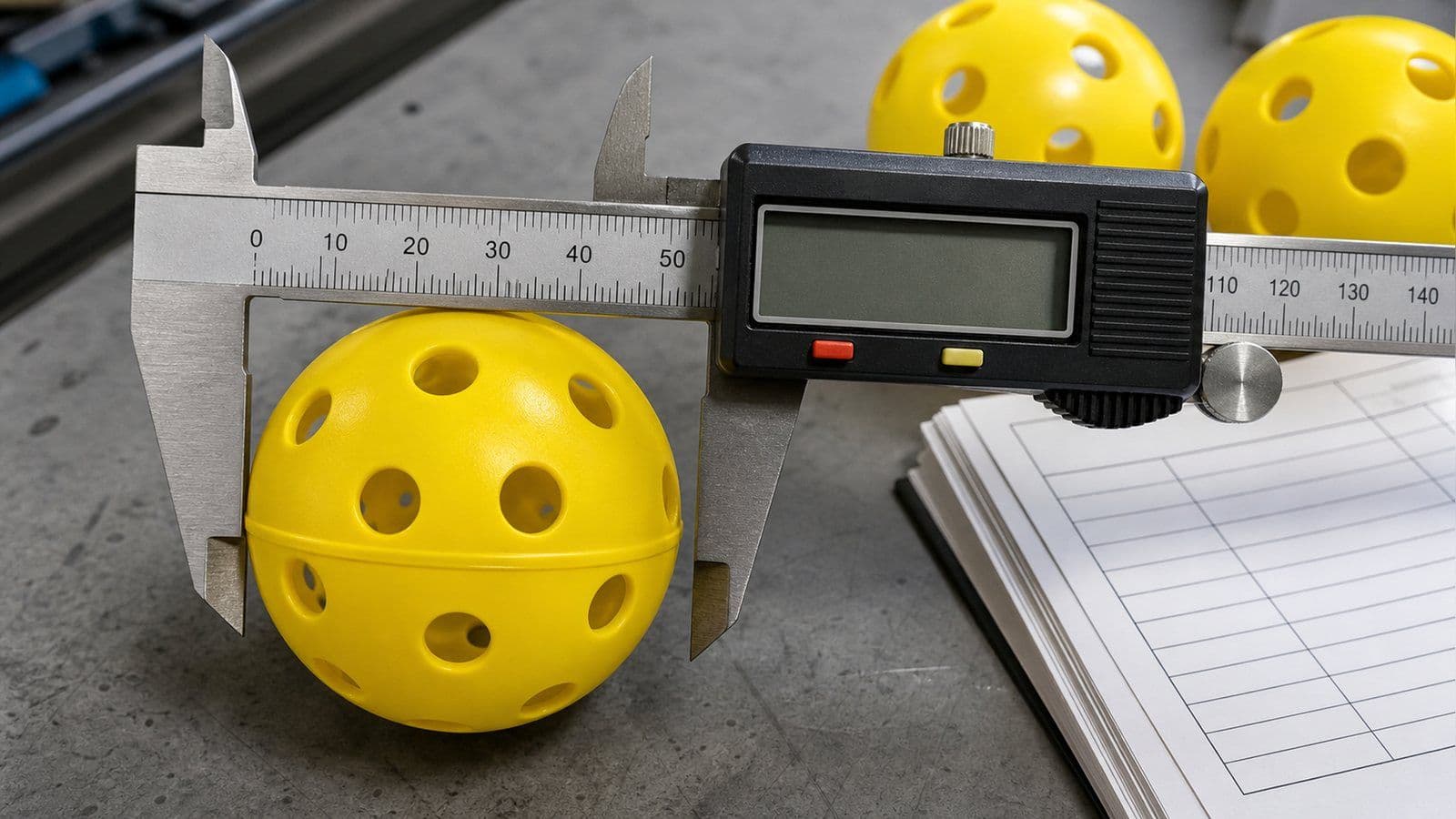
The ball your customer is complaining about was approved at 70°F, give or take five. That is not an inference. It is written into section 2.D.5 of the USA Pickleball Equipment Standards Manual, and it is the reason a January warranty argument is so hard to win: the buyer, the retailer and the factory are all discussing a product whose acceptance criteria stop describing it somewhere around 65°F.
Search this problem today and page one hands you player advice. Keep them indoors. Let them warm up in the car. Buy a softer ball. Useful if you own three balls, useless if you own twenty thousand and a chargeback request. Not one of the pages currently ranking cites the standard, states a test temperature, or tells you what could have gone into the purchase specification to make the question answerable before the season started. This article does those three things.
- USAP ball testing is conditioned to 70°F ±5°F (21.1°C ±2.8°C) for both bounce (2.D.5) and hardness (2.D.7). Approval describes a ball at room temperature; it makes no statement about one at −2°C.
- The popular explanation is wrong for this polymer family. Measured ductile-to-brittle transition for the HDPE grades in the peer-reviewed literature sits below −70°C — far colder than any court. Cracking is caused by the steep loss of impact energy long before that point.
- Two winter failures look alike and are not: cracking has no written USAP tolerance, while cold-set out-of-round is testable against 2.D.3's ±0.020 in variance limit. Only one of them is a defensible claim.
- There is a named method for exactly this argument — ASTM D746 / ISO 974, brittleness temperature by impact — but it tests a flat specimen, not a finished ball. Specify both or you have specified nothing.
- What this article does not have: our own chamber data. No impact counts at 20/10/0/−5°C, no durometer readings at two temperatures, no crack rates. Those numbers do not exist here, and inventing them would be worse than omitting them.
- Why a ball that passed every test still cracks in January
- The brittleness story everyone repeats is the wrong one
- Two different winter failures, and only one is measurable
- What the compound can and cannot buy you
- Writing a cold-weather clause your supplier can answer
- Transit, storage and the data nobody publishes
- What nobody has measured, including us
- The decision checklist before you commit a cold-season order
- Frequently asked questions
Why a ball that passed every test still cracks in January
Open the USA Pickleball Equipment Standards Manual, Revision 3.0 dated January 2025, at section 2.D.5. The bounce requirement reads: 30 to 34 inches (76.2 to 86.4 cm) measured to the top of the ball, dropped from 78 inches (198.1 cm) onto a granite surface plate of at least 12 by 12 by 4 inches. Then the sentence that almost nobody quotes: the test is to be performed at an ambient temperature of 70 degrees F plus or minus 5 degrees F.
Convert it and the envelope is narrow. Seventy Fahrenheit plus or minus five is 18.3°C to 23.9°C. A shaded outdoor court in Michigan in November is not in that band. Neither is a warehouse in Rotterdam in February, nor a shipping container sitting on a rail siding outside Chicago. The approval was granted on a bench, in a room, at office temperature.
Section 2.D.7 repeats the condition for hardness: 40 to 50 on a Durometer D scale, again at 70°F ±5°F. And it carries a qualifier worth knowing before you cite it at anyone, because the manual states it in capitals: the hardness figure is recorded for corollary data only, this is no longer a compliance requirement. A supplier who tells you his ball "meets the 40 to 50 durometer standard" is quoting a clause that USAP itself has demoted to a data point.
Several widely-circulated specification summaries state that USAP hardness and bounce are tested at 75 to 80°F. The primary document says 70°F ±5°F in both 2.D.5 and 2.D.7. Secondary sources agreeing with one another is not verification — if a number matters to a clause you are signing, read it in the manual, not in a summary of the manual.
What approval actually certifies, and what it never promised
This reframes the complaint entirely. When a club manager says the balls have gone brittle, he is not alleging that they fail the standard. He is reporting behaviour from a region of the temperature range the standard never described.
The manual's own introduction is candid about what the programme is: an evaluation committee in place since 2016, working with testing labs, that has assessed over 5,000 paddles and 400 balls. It is a laboratory conformance programme. It was never a field durability warranty, and it does not claim to be one.
So the first thing to do with a winter complaint is stop asking whether the ball is compliant. It almost certainly is. The useful question is narrower and answerable: which of the winter failure modes are you actually looking at, and is there a written tolerance anywhere that it violates?
The brittleness story everyone repeats is the wrong one
The standard explanation goes like this: plastic has a temperature below which it turns brittle, winter pushes the ball past it, and the ball cracks. It is repeated on retail pages, in club newsletters and by suppliers. It is intuitive, it is memorable, and for the polymer family pickleballs are actually made from, it does not survive contact with the measurements.
The transition temperature is nowhere near a pickleball court
Salakhov and colleagues published a systematic study of low-temperature mechanical behaviour in high-density and low-density polyethylene in Polymers in 2021. They measured the ductile-to-brittle transition temperature for every HDPE sample in the set. It came back below −70°C. Not −7°C. Below minus seventy. There is no outdoor court on this planet, in any season, that takes a polyethylene ball anywhere near its formal brittle transition.
What the same study shows is far more useful to a buyer, because it explains the failure without the folklore. Impact strength does not hold steady until some cliff edge and then collapse. It bleeds away continuously across the ordinary range. Izod impact strength for the high molecular weight samples measured roughly 380 J/m at +23°C and fell to 58 to 64 J/m at −40°C for the lower molecular weight material. Relative elongation at break ran 735 to 900 percent at +23°C and dropped to somewhere between 46 and 250 percent at −45°C depending on molecular weight.
What actually happens: toughness bleeds away, it does not switch off
Read that as a buyer rather than as a chemist. The material has not changed state. It has quietly lost most of its capacity to absorb a hit and most of its ability to stretch before it tears. An impact the ball comfortably swallowed in September — a hard drive into the fence post, a foot stepping on it, a paddle catching it wrong — now has nowhere to go.
The energy that used to be spent deforming the shell goes into starting a crack instead.
One honest limitation, because it matters if you intend to quote any of this. Those figures are for bulk resin specimens under a laboratory impact test. A pickleball is a thin rotomoulded shell perforated with 26 to 40 holes, and every one of those holes is a stress concentration that a flat test bar does not have. The direction of the effect transfers. The absolute numbers do not. Anyone who quotes you a J/m figure for a finished ball is quoting something nobody published.
If cold cracking were a phase change at a threshold, you would specify a ball rated below that threshold and the problem would be solved. Because it is a gradual loss of toughness instead, there is no threshold to specify — which is exactly why "cold weather ball" claims have no number attached to them. The lever that does exist is the compound, and it buys a margin, not immunity.
Two different winter failures, and only one is measurable
A returned winter batch arrives as a single undifferentiated complaint: "these balls are no good in the cold." Before anyone writes to the factory, that pile needs sorting into three categories, because they have entirely different remedies and only one of them is a claim you can win on paper.
| What you are seeing | Written tolerance it can be tested against | Is it a defensible claim? |
|---|---|---|
| Cracks and seam splits after impact | None. USAP 2.D has no crack, cyclic-impact or durability clause of any kind. | Only against a contract clause you wrote yourself. Not against the standard. |
| Balls no longer round; wobble on the roll | Yes — 2.D.3: diameter 2.87 to 2.97 in, out-of-round variance not greater than ±0.020 in (0.51 mm). | Yes, if measured after conditioning to 70°F ±5°F. This is the strong claim. |
| Bounce feels dead; ball sits low | 2.D.5 gives 30 to 34 in from 78 in — but only at 70°F ±5°F. | Not if measured cold. Measured cold it proves nothing about the ball. |
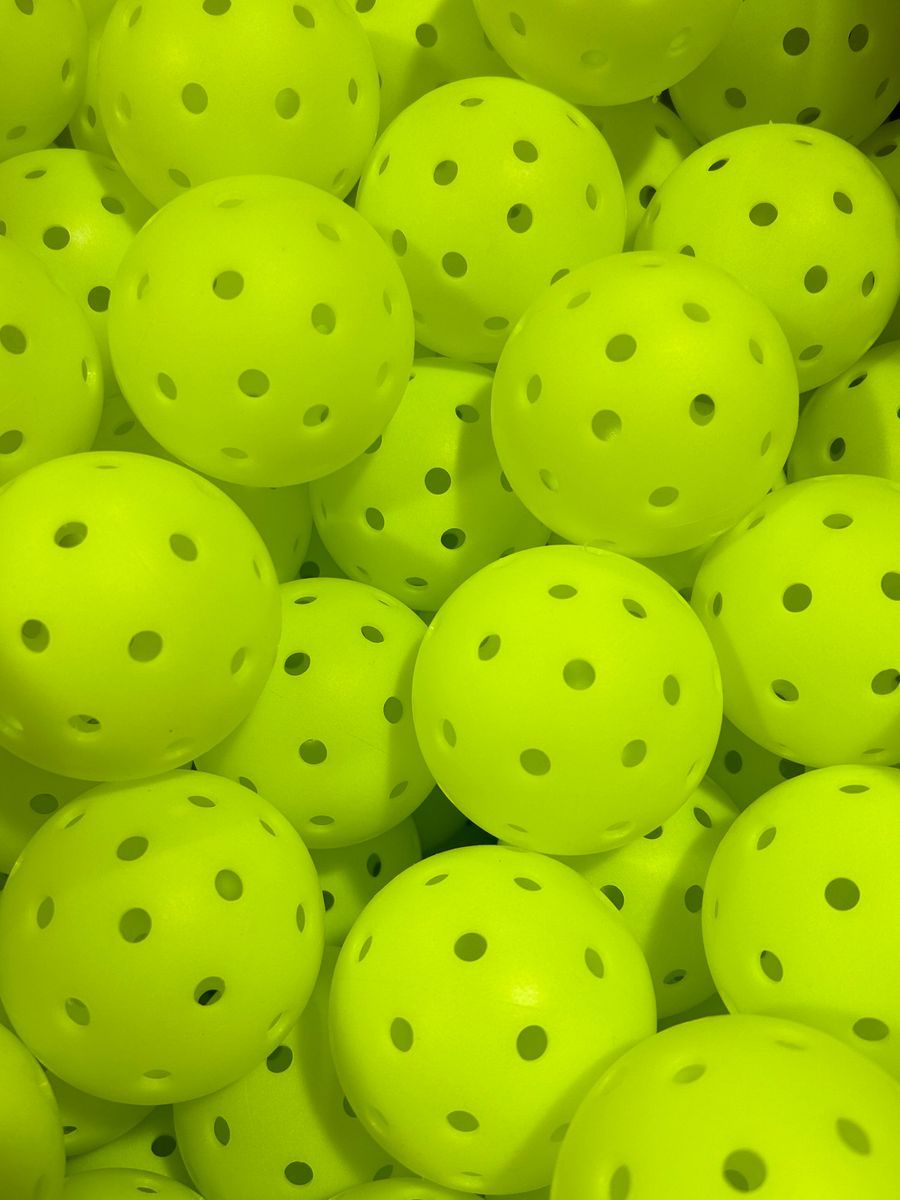
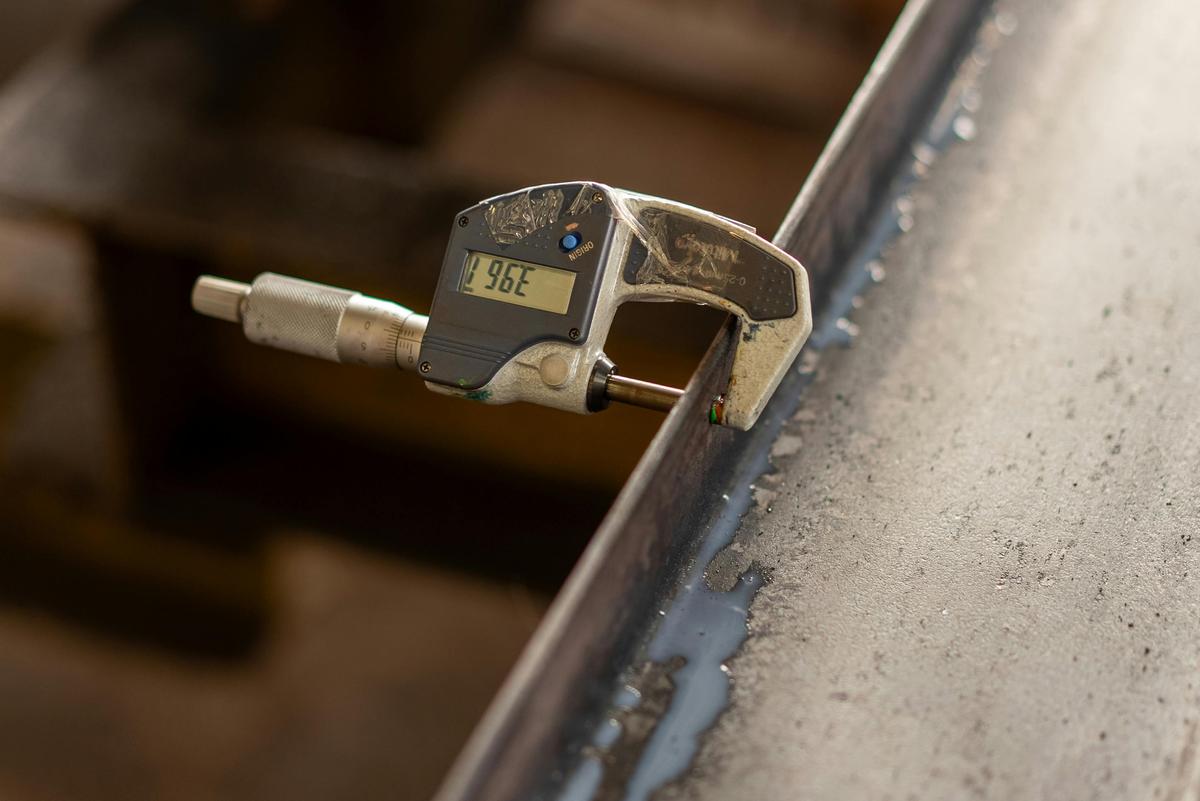
The middle row is where a buyer has actual leverage, and it is the row most people skip past. Out-of-round is a dimensional property with a number attached to it, and 0.020 inch is a tight number — roughly half a millimetre of permitted variance on a ball just under three inches across. A batch that has taken a cold set, deformed under load in a stacked carton in an unheated warehouse and stayed deformed, can be measured against that limit with a gauge on a bench.
If it fails, it fails a written specification, and the conversation with the supplier becomes short.
The first row is where most complaints actually sit, and it is where most buyers over-reach. There is no crack tolerance in the standard. None. A ball can split on its first cold morning and remain fully compliant with every clause in 2.D, because compliance was never about durability. If your contract says nothing about cracking, then a cracked ball is a commercial negotiation, not a specification failure, and pretending otherwise weakens your position with a supplier who has read the manual.
The third row is the one that costs credibility fastest. A club manager drops a ball on a cold court, watches it come up short, and reports a bounce failure. He has measured a ball outside the test's stated conditions on a surface that is not a granite plate, from a height he estimated.
The reading is real; it just is not evidence. Retest that same ball after a proper soak at room temperature and it will very often be back inside 30 to 34 inches, which tells you the ball was never out of spec — the court was cold.
What the compound can and cannot buy you
The obvious fix — make the ball out of something softer and tougher — runs into a design constraint immediately. The Durometer window sits at 40 to 50 Shore D. Rigid high-density polyethylene straight off the shelf measures roughly 60 to 80 Shore D, well above the window, which is why outdoor balls use a rotomoulding-grade polyethylene compound tuned down into range rather than the hardest available material.
You can read how that trade-off is set at the raw-material stage in our breakdown of what pickleballs are actually made of. The formulator is already working inside a box, and low-temperature toughness is one of several things competing for the same room.
Blending is where the published evidence is genuinely encouraging. In the same 2021 study, a 70/30 blend of HDPE with linear low-density polyethylene held 180 percent relative elongation at break at −45°C, against 85 percent for the pure HDPE control. Roughly double the remaining ductility at deep cold, from a formulation change rather than a material change. The gap between polymer families at low temperature is wider still: LLDPE held above 300 percent at −45°C in that work, with a terpolymer grade reaching 415 percent, while conventional LDPE managed 50 percent.
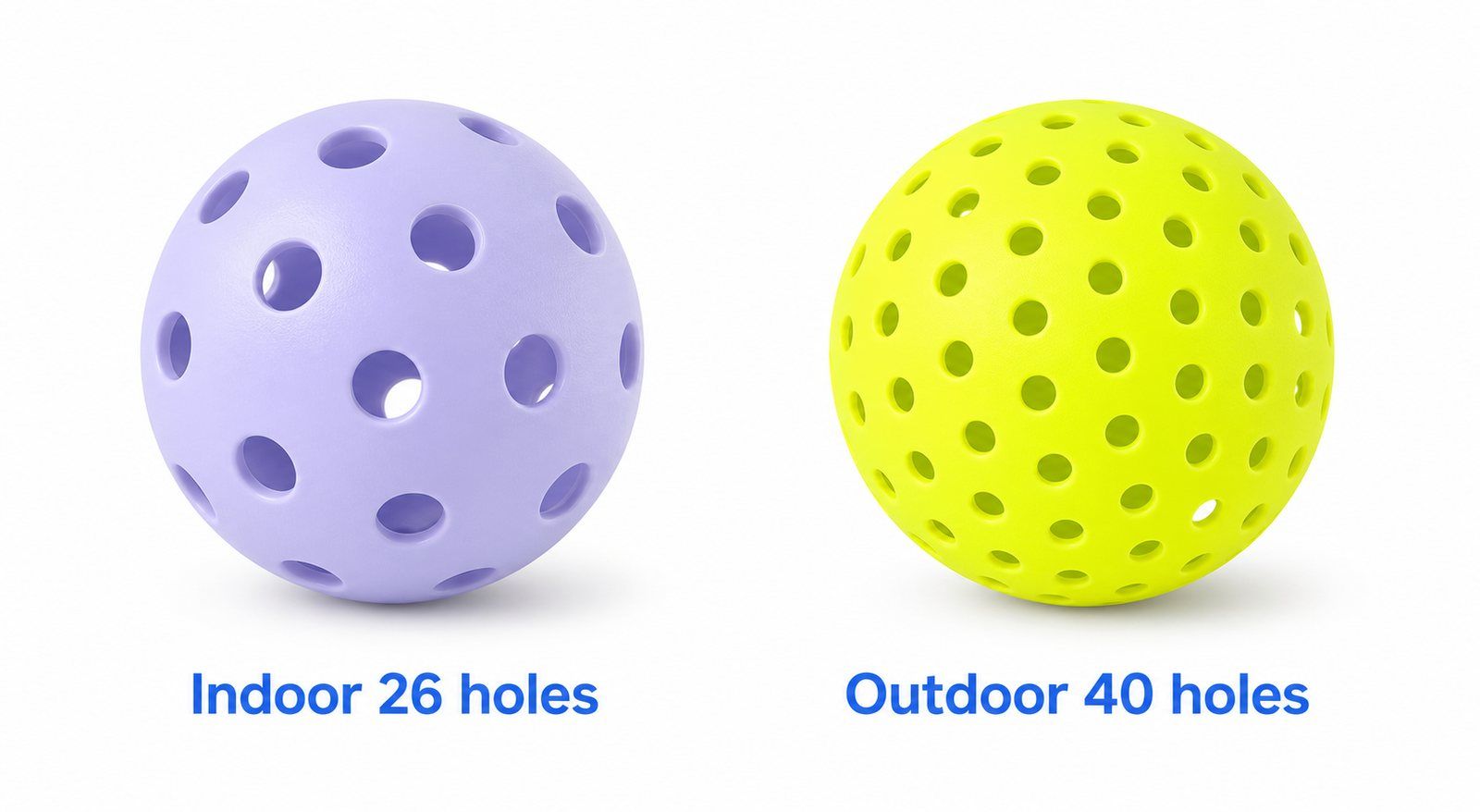
Where this lands in practice is the configuration you start from. The conventional 40-hole outdoor build is the baseline most cold-season programmes are specified against. Look at what a typical outdoor ball listing actually publishes, ours included, and the pattern is the same everywhere: colour, finish and pack format, and nothing at all about resin grade or low-temperature behaviour — not even the hole count in most cases. That is precisely why those lines have to come from the specification rather than the catalogue.
That is the honest case for a cold-service compound. It is a real, measured, published lever. It is also not a cure, it does not come with a temperature rating for a finished ball, and it trades against other things you care about — a compound with more low-temperature give will tend toward the softer, go-out-of-round failure mode rather than the crack failure mode. You are not eliminating winter failure. You are choosing which winter failure you would rather manage.
| Service environment | What to prioritise in the spec | Failure you are accepting |
|---|---|---|
| Year-round warm / indoor-dominant | Standard outdoor compound. Spend the specification effort on roundness and seam quality instead. | Gradual wear and go-soft, not cracking. |
| Four-season, play continues below 10°C | Ask for the low-temperature ductility position explicitly, and name a brittleness test method (below). | Slightly more out-of-round drift in warm months. |
| Cold-season programmes, unheated venues | Blend position plus a conditioned acceptance protocol. Treat balls as a consumable with a seasonal reorder rate. | Higher unit cost and a softer feel some players will notice. |
| Mixed portfolio across climates | Two SKUs beats one compromise SKU. Split the range rather than the difference. | Inventory complexity and a second MOQ. |
Which brings us to what is being sold. Cold-weather crack resistance is now an active marketing claim at wholesale — one 100-pack SKU is listed as cracking less at freezing temperatures than six named competitor brands. Read that claim as a buyer and notice what is missing: no test method, no sample size, no temperature, and no definition of what counted as a crack. It may well be true. There is simply no way for you to evaluate it, and no way to hold anyone to it after the season.
The remedy is not to distrust the claim. It is to replace it with one that has a method attached.
Writing a cold-weather clause your supplier can answer
Here is the part page one does not have. There is an established, purchasable, third-party-runnable test method that measures exactly the property everyone has been arguing about qualitatively: ASTM D746, Standard Test Method for Brittleness Temperature of Plastics and Elastomers by Impact, with ISO 974 as the international equivalent.
Its definitions do the hardest part of the drafting for you. Brittleness temperature is defined as the temperature at which 50 percent of tested specimens exhibit brittle failure under the specified impact conditions. Brittle failure is defined as fracture into two or more pieces, or any crack visible to the unaided eye. That second clause is the one worth reading twice, because "what counts as a crack" is the single most common thing two parties discover they never agreed on, at the worst possible moment.
Specimens are conditioned in a bath at the specified temperature and struck at 2000 ±200 mm/s.
Now the limitation, stated plainly, because a clause built on a misunderstanding is worse than no clause. D746 tests a flat specimen of material, not a finished ball. It characterises the compound your supplier is running. It says nothing directly about a perforated rotomoulded shell with a seam. Specify it as what it is — a material qualification — and pair it with an acceptance test on actual product, or you will have bought a certificate that does not describe the thing in the carton.
- Material qualification. Brittleness temperature of the ball compound reported per ASTM D746 (or ISO 974), with the report naming the specimen type and the laboratory. One test, at qualification, not per shipment.
- Conditioning before any acceptance test. All dimensional and bounce checks performed after a stated soak at 70°F ±5°F. Name the soak duration explicitly. Without this line, every test either party runs is arguable.
- The dimensional clause with teeth. Diameter 2.87 to 2.97 in and out-of-round variance not greater than ±0.020 in per USAP 2.D.3, verified on the conditioned sample. This is your measurable claim; do not leave it implicit.
- A written definition of failure. Borrow D746's: fracture into two or more pieces, or any crack visible to the unaided eye. Agree it before the season, not during the argument.
- Who pays for the lab, and when. Name the party, the trigger and the tie-break laboratory. A test nobody has agreed to fund does not get run.
One drafting precision point, and it is not pedantry. The USAP manual cites the compression method as ASTM F1888-09, requiring an average result under 43 LBF. That method's current active edition is ASTM F1888-09(2022), reapproved in September 2022 — and its title is Standard Test Method for Compression-Displacement of Baseballs and Softballs, borrowed for pickleball use. If your specification copies a designation without its reapproval year, you have left an ambiguity that a supplier can resolve in whichever direction suits him.
Cite the edition. It costs four characters.
Note also what the compression clause is not. Section 2.D.6 attaches no ambient temperature of its own, and it is a static compression measurement, not an impact test. It is not the clause a cold-cracking dispute lives under, and reaching for it because it is the only number to hand is how buyers end up arguing the wrong case.
For the full decode of which USAP clause governs what, our ball approval spec decoder walks each section in order, and the routine bench checks live in the wholesale ball QC guide covering bounce, roundness, seam and weight.
For distributors and private-label brands specifying a ball programme — not for players buying a 3-pack for the weekend. Concretely, what is already tooled here: four rotomoulded outdoor variants in two surface finishes — frosted in neon yellow and neon green, glossy in yellow and orange — run out of Yiwu, Zhejiang at a ball MOQ of 1,000 pcs. The finish split matters to this article's subject: frosted and glossy are different surface treatments on the same rotomoulded shell, so if you are trialling winter behaviour, hold the finish constant between batches or you are comparing two variables at once.
What is not published, stated plainly so you do not go looking: no durometer figure, no resin grade, no cold-weather rating, and no cold-chamber impact data — the same gap this article declines to fill for anyone else. Bring the D746 line and your conditioning clause to the conversation; they are the questions to put to a factory, not ones a catalogue page can answer.
See the outdoor ball configurationTransit, storage and the data nobody publishes
A standard dry container has no active temperature control. It is a steel box, and its interior follows the ambient conditions of wherever it happens to be — a winter quayside, a rail siding, an unheated cross-dock. Keeping freight above freezing is not a property of the container; it is a separate service you buy, usually sold as protect-from-freeze, which uses heated equipment to hold cargo above 32°F (0°C).
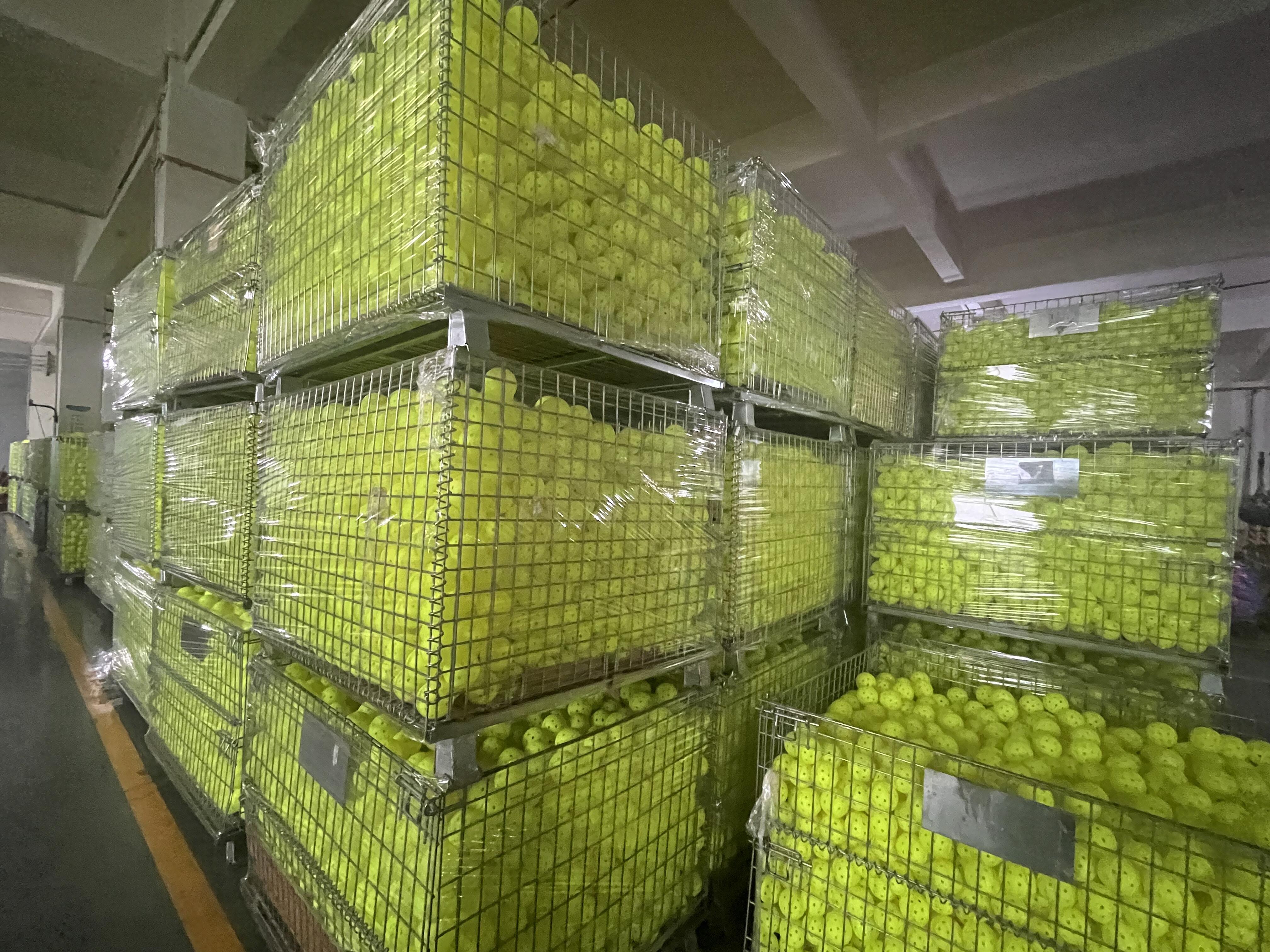
Whether that service is worth buying for balls is a judgement, and it depends on something nobody has published: what a carton of pickleballs actually experiences inside an unheated box on a January routing. The practical consequence is not really about damage in transit anyway — it is about what arrives on the receiving dock and gets inspected an hour later. A pallet that has spent a week near freezing is not at 70°F when your inspector opens it, and every dimensional and bounce number he takes in that first hour describes the journey rather than the product.
Which is why the conditioning line in your spec earns its place. It is not a courtesy to the supplier. It is the only thing that makes an incoming inspection mean anything in the winter half of the year, and it protects you as much as it protects him — a batch that genuinely is out of round will still be out of round after it warms up, and now nobody can wave the result away.
- Pull the sample cold and split it. Take your sample from the pallet as received. Set half aside untouched as the cold group.
- Soak the other half indoors at 18 to 24°C until it is genuinely at room temperature throughout, not just to the touch. Record how long you left it — that duration becomes the number you write into the spec.
- Measure both groups the same way. Diameter and out-of-round with a gauge, against 2.87 to 2.97 in and ±0.020 in. Bounce from 78 in onto a hard flat surface, against 30 to 34 in, acknowledging your floor is not a granite plate.
- Read the difference, not the absolute. If the conditioned group is in spec and the cold group is not, you have measured temperature. If the conditioned group is also out of round, you have a product finding worth raising — with a number attached.
- Photograph the cracked units separately and count them as a rate, not an anecdote. Cracking has no tolerance to fail, but a rate is still the input to a commercial conversation.
What nobody has measured, including us
Two things belong on the record before you plan a cold-season programme, and they are both about what is missing. First, there is no published field durability standard for pickleballs at all — no cycle count, no impact count, no crack rate that any issuing body has defined. You will see figures of that kind quoted around the industry; they do not appear in the Equipment Standards Manual, and we could not trace one to an issuing body. Treat any such number as a supplier's internal claim until someone shows you the method behind it.
Second, and this article should be held to the same standard it asks of everyone else: we are not publishing our own cold-chamber results here, because we do not have them. No impact counts at 20, 10, 0 and −5°C across two compounds. No durometer readings taken at two temperatures. No interior temperature log from a winter container. Those are precisely the numbers this topic deserves, they would be the most useful part of the page, and the honest thing to do with a gap that size is to name it rather than fill it with something plausible. Everything above is either a primary standard you can open yourself or a peer-reviewed measurement with a DOI.
If you are sizing a seasonal reorder off the back of this, the ordering mechanics sit alongside it: how ball MOQs are structured, what moves a quotation and how compound choice interacts with both are covered in the wholesale ball specs, MOQ and compliance guide, and the process side of a rotomoulded ball — where wall thickness and seam quality are actually decided — is in rotomoulded versus injection-moulded balls. MOQ on balls is quoted per project against the colour and print breakdown rather than as a single headline figure, so it is a question to ask with your SKU split in hand, not one a catalogue page can answer.
Lead time follows the same logic: a repeat of an already-tooled configuration and a new colour with a new print run are different calendars.
If you have a cracked winter batch in front of you right now and want it sorted into the three categories above before you raise it with your supplier, send a few photographs and the pallet's routing on WhatsApp — the published standard on this desk is a quote back inside 5 minutes, and triage runs the same way during Yiwu working hours. Send the crack-rate count and the finish variant with the photos — without those two the sort cannot be done remotely, and it is the sort that decides whether you are writing a specification claim or a commercial one.

The decision checklist before you commit a cold-season order
Cold cracking is not a defect and not a mystery. It is a well-understood loss of toughness happening outside the temperature envelope the approval was written in, and the reason it turns into an argument every winter is that almost nobody writes the envelope into the contract. Six decisions close that gap.
- Decide the service environment first, before the compound. Play continuing below 10°C is a different product decision from a warm-climate programme, and one SKU across both is usually the expensive answer.
- Put the conditioning line in before anything else. Acceptance testing after a stated soak at 70°F ±5°F is the single clause that makes every other number in the specification meaningful.
- Claim on out-of-round, not on cracking. ±0.020 in under 2.D.3 is a written limit you can measure. Cracking has no tolerance anywhere in the standard, so handle it commercially and know that is what you are doing.
- Name ASTM D746 for the compound — and pair it with a product-level acceptance test, because a material qualification is not a ball certification.
- Define failure in writing, in advance. Borrow D746's wording: fracture into two or more pieces, or any crack visible to the unaided eye.
- Treat any undocumented cold claim as unpriced. If a supplier's cold-weather advantage has no test behind it, do not pay for it and do not plan inventory around it.
None of this makes a ball survive a February morning it was never designed for. What it does is convert next winter's complaint from an argument about whose fault it is into a test that both parties agreed to before the season, with a number at the end of it. That is the whole return on an afternoon spent on the specification.
Frequently asked questions
No issuing body publishes one, and the circulating 50°F and 60°F figures trace to no test method. Toughness declines continuously rather than at a cliff edge, so the answerable version is a brittleness temperature reported per ASTM D746.
No. Sections 2.D.5 and 2.D.7 both specify an ambient temperature of 70°F ±5°F for bounce and hardness. Approval describes performance at room temperature and makes no statement about behaviour in the cold.
Not against the standard, which contains no crack or durability tolerance. It is only a specification failure if your own contract defines one. Out-of-round is the exception: that has a written limit of ±0.020 in under 2.D.3.
After conditioning to 70°F ±5°F, because that is the state the tolerances describe. Testing both groups is better still: the difference between them separates a temperature effect from a genuine product finding.
The lever is real: published blend data shows roughly double the elongation at break at −45°C for an HDPE/LLDPE blend versus pure HDPE. What is usually missing is a method behind the product claim — which a D746 line replaces.
Directionally yes: a stiffer compound has less capacity to absorb an impact once cold has cut its toughness. The trade is that softer compounds drift out of round instead, so you are choosing a failure mode, not avoiding one.
Want to source this quality for your brand?
Contact our factory directly on WhatsApp for an instant MOQ and pricing quote.